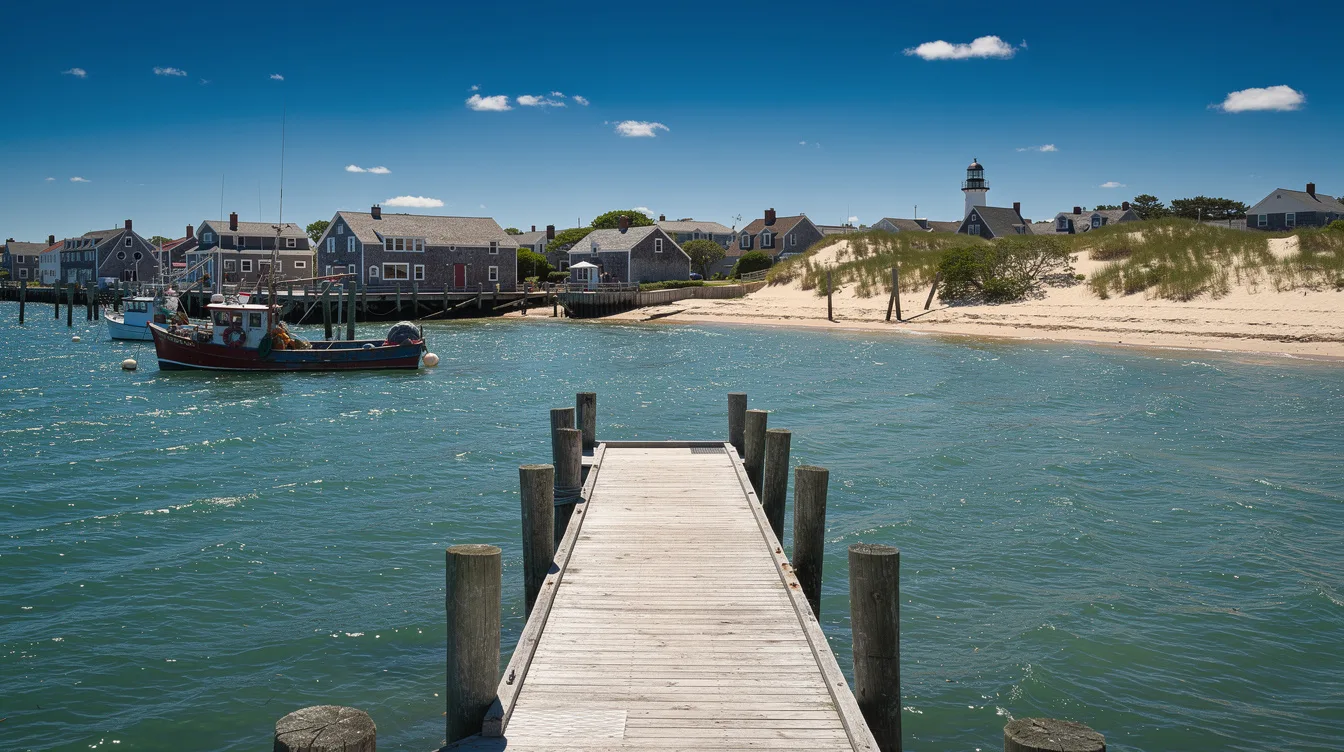
Provincetown Harbor came before Plymouth in the Mayflower story. In 1620, after rough winter seas stopped the ship’s push south, the Mayflower anchored here at Cape Cod’s tip, and its passengers drew up and signed the Mayflower Compact before choosing Plymouth across the bay.
That detail changes the way you see town. Plymouth gets the classroom version, but Provincetown has the harbor where the political decision began, with boats still knocking gently against the piers and the sandy hook of Cape Cod stretching behind it.
1620 happened here, before Plymouth
The Mayflower sighted Cape Cod on November 9, 1620. After two unsuccessful days trying to sail south, strong winter seas sent it back to the protected harbor now called Provincetown Harbor, where the Compact was signed aboard the ship.
But this isn’t a town that asks you to stay in a history lesson. Pilgrim Monument commemorates the 1620 arrival, and its view takes in the harbor, Cape Cod Bay, and dunes. You can see why a crew looking for shelter stopped here.
The pilgrims later settled in Plymouth, which is why Provincetown’s role often gets skipped. Yet the first landing took place here in the West End, and a sculpture near the monument recalls the Compact’s signing.
And the harbor remains the point. It is naturally deep and protected from wind and waves, so it once made sense as a working refuge and still makes sense when you arrive by boat.
A town of 3,664 that swells to 60,000
3,664 year-round residents lived in Provincetown at the 2020 census. In summer, the population can reach 60,000, which explains why a compact seaside town can feel intimate at breakfast and intensely social by late afternoon.
Commercial Street is where that summer energy gathers. Galleries, small shops, restaurants, bars, and shows line the central street, and you’ll hear conversations spill toward the harbor as daylight softens.
But lively doesn’t mean anonymous. Provincetown’s visible LGBTQ+ culture is central to its character, with businesses, events, lodging, and nightlife built around an inclusive visitor community. It feels festive, but it also feels established.
The town’s art history matters too. Provincetown is considered the country’s oldest continuous artists’ colony, and the Provincetown Art Association and Museum gives you a useful entry point before you start browsing galleries on instinct.
Race Point and Herring Cove pull you away from town
Race Point Beach is the better choice when you want open Atlantic-facing sand and a wilder mood. Dunes rise behind the beach, and sunset is the time to go if you prefer wind, wide sky, and fewer reasons to look at your phone.
Herring Cove Beach offers another way to spend the day. Both sit within the Cape Cod National Seashore environment, where dunes, coastal ground, and bike routes make town feel farther away than its busy streets suggest.
And the Province Lands Bike Trail is worth making time for. It crosses sand, pines, and protected coastal areas, so you get movement and quiet without pretending you came only for museums or dinner reservations.
There’s a practical limit: summer crowds and high lodging prices are real. If your trip is built around beaches and biking, consider staying near the west side, Herring Cove, Race Point, or Province Lands rather than insisting on the center.
Boston is away, but the ferry changes the mood
Provincetown sits at the far end of Cape Cod. A drive can take about two and a half hours in smooth conditions, but summer weekends can turn that simple plan into a much longer one.
That’s why the seasonal ferry from Boston is often the smarter arrival. It reaches MacMillan Pier and avoids Cape Cod traffic, so you step into town by water, which is still the most convincing way to understand it.
But don’t arrive expecting a cheap, empty beach town from June through August. This is peak season for shows, restaurants, and events, and reservations matter because the town is small and demand is heavy.
September is the sharper compromise. The crowds thin, local life is still active, and the light along the harbor has a calmer feel. October goes quieter, while winter brings more seasonal closures.
Can you see whales from Provincetown?
Yes, boat trips leave from MacMillan Pier during the warmer part of the year. Provincetown is one of New England’s major departure points for whale watching, though the experience depends on getting out on the water rather than scanning from Commercial Street.
Before dinner, walk the harborfront and let the day slow down. By the time the seasonal ferry pulls away from MacMillan Pier, the water darkens, the street noise eases, and Provincetown feels briefly sized for the people who stay.