
Cooling dog beds work best when airflow, shade, washable fabrics, and room placement support the bed itself. A low-profile cot beside a fan can feel more comfortable than a thick cushion on warm flooring. These 18 ideas pair practical cooling choices with earthy, welcoming rooms, so your dog’s sleeping zone feels intentional instead of temporary.
- Frame the cooling bed with a breezy linen canopy
- Float an elevated cot beside the nightstand
- Layer a washable mat beneath the cooling cushion
- Tuck the raised bed beneath an open window
- Anchor the outdoor bed under a shaded pergola
- Pair cooling gel pads with pale terrazzo flooring
- Style a cedar platform beside the bedroom fan
- Build a tiled cooling nook near the doorway
- Suspend a mesh bed above heat-trapping floors
- Place the dog bed against a ventilated wall
- Surround the cooling lounger with potted palms
- Choose slatted wood for continuous airflow
- Create a shaded balcony station with waterproof bedding
- Contrast icy blue bedding against warm walls
- Set the elevated bed on breathable jute
- Install a low wall shelf for cooling towels
- Arrange twin cooling beds in separate zones
- Highlight the cooling bed with soft night lighting
1Frame the cooling bed with a breezy linen canopy
A loose canopy can shade a cooling dog bed without trapping warm air around your dog. Choose airy Belgian flax linen in a pale terracotta tone, then keep the sides open so your dog can move toward cooler airflow. A low cot with a cerused white oak frame works well against stone flooring and olive-painted walls.
Keep the fabric several inches away from the bed’s edges, and choose a washable panel rather than a heavy lined curtain. You’ll want the canopy high enough to avoid brushing your dog’s back.
A small stainless-steel water bowl, a woven basket, and a breathable mat can complete the corner. The escape route should stay clear!
Typical cost by tier (US averages):
2Float an elevated cot beside the nightstand
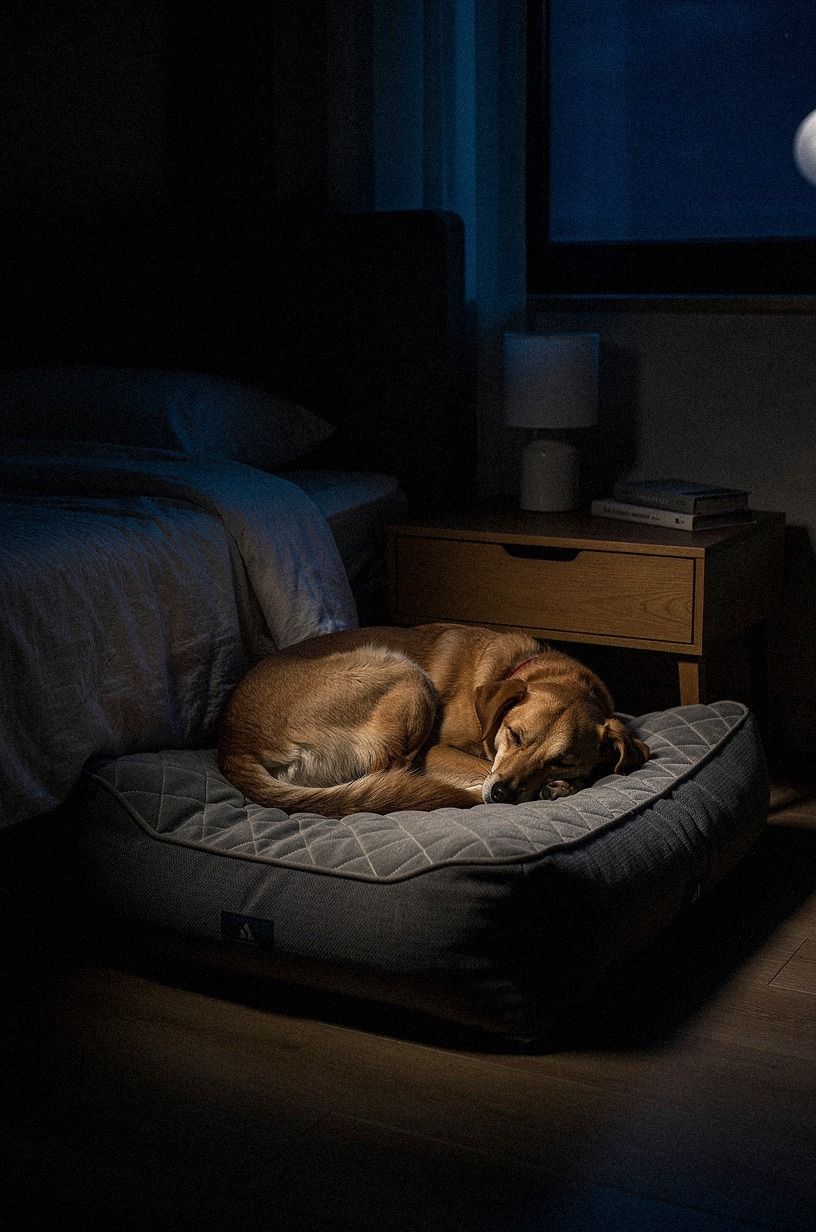
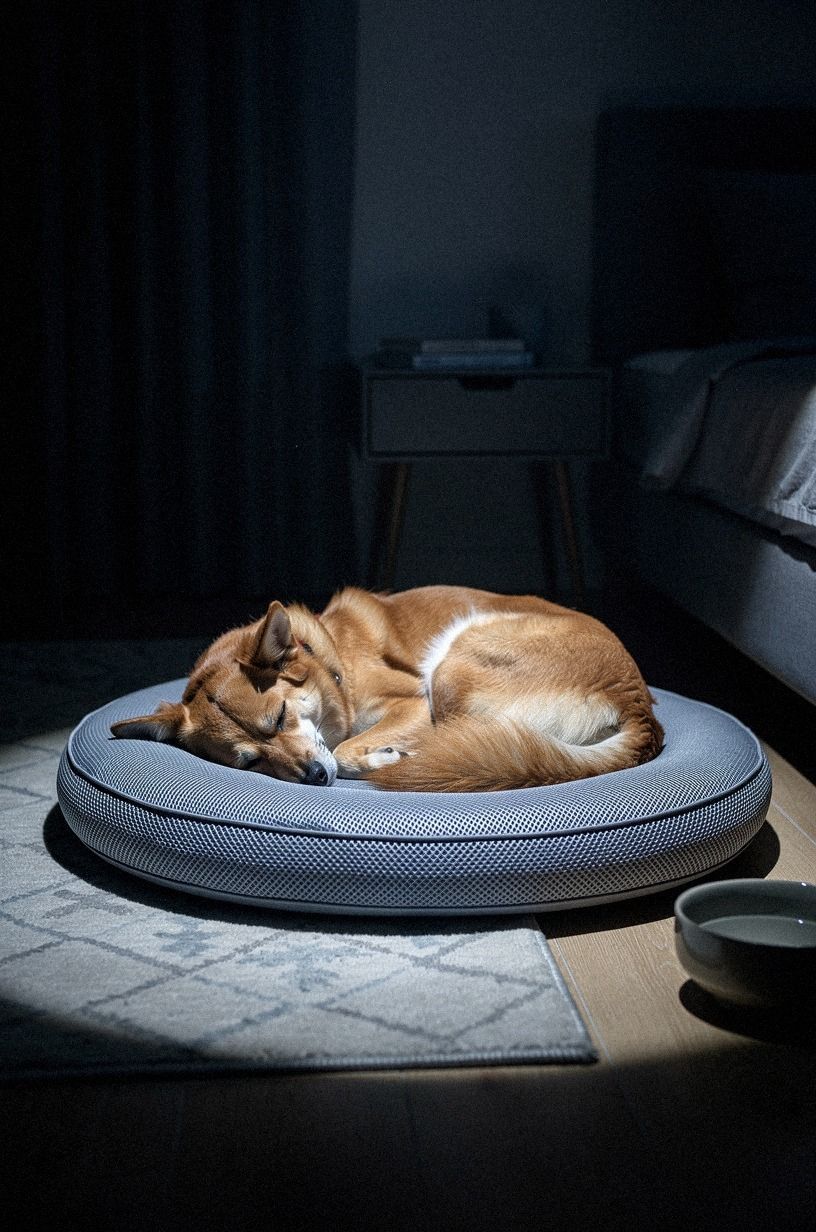
An elevated dog bed beside the nightstand keeps fabric away from warm floorboards and lets air pass below the sleeping surface. Pick a cot with a tightly woven mesh panel and a slim frame in aged brass or dark oak. The clay, linen, and brass palette looks soft beside a backlit translucent onyx wall.
Leave a narrow gap between the cot and nightstand so you can lift the cover without moving furniture. You’ll also want enough clearance for cleaning beneath the bed.
A washable 18 oz cotton canvas cover adds durability without the heat of deep foam. If a thick mattress feels too warm, an elevated cot can be the better first move.
Compare frame styles in this elevated dog bed comparison before choosing a height.
3Layer a washable mat beneath the cooling cushion
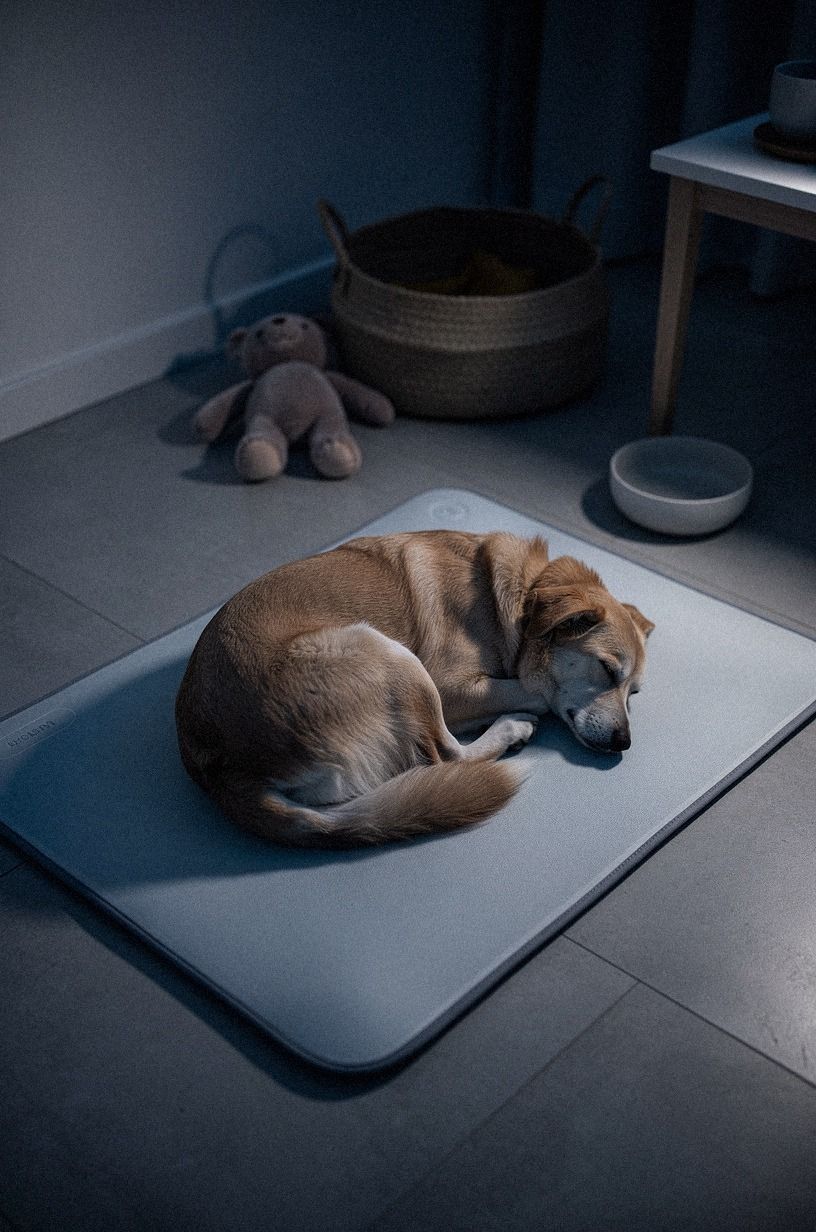
A cooling cushion can slide across hardwood or polished flooring, especially when a dog circles before settling. A thin washable rubber-backed mat adds grip and protects the floor without building a thick heat-trapping layer. In a plum, grey, and rose gold room, a muted grey mat balances a book-matched walnut wall.
Choose a mat with a low rubberized backing and a smooth surface that won’t catch claws. Your dog can still reach the cooler cushion, while you’ll have a simple layer to wash after muddy paws or spilled water.
Skip shag, thick fleece, and dense pile beneath the bed. They’re soft, but they hold warmth.
A rose-gold metal tray nearby can hold a water bowl and folded towel without crowding the sleeping zone.
4Tuck the raised bed beneath an open window
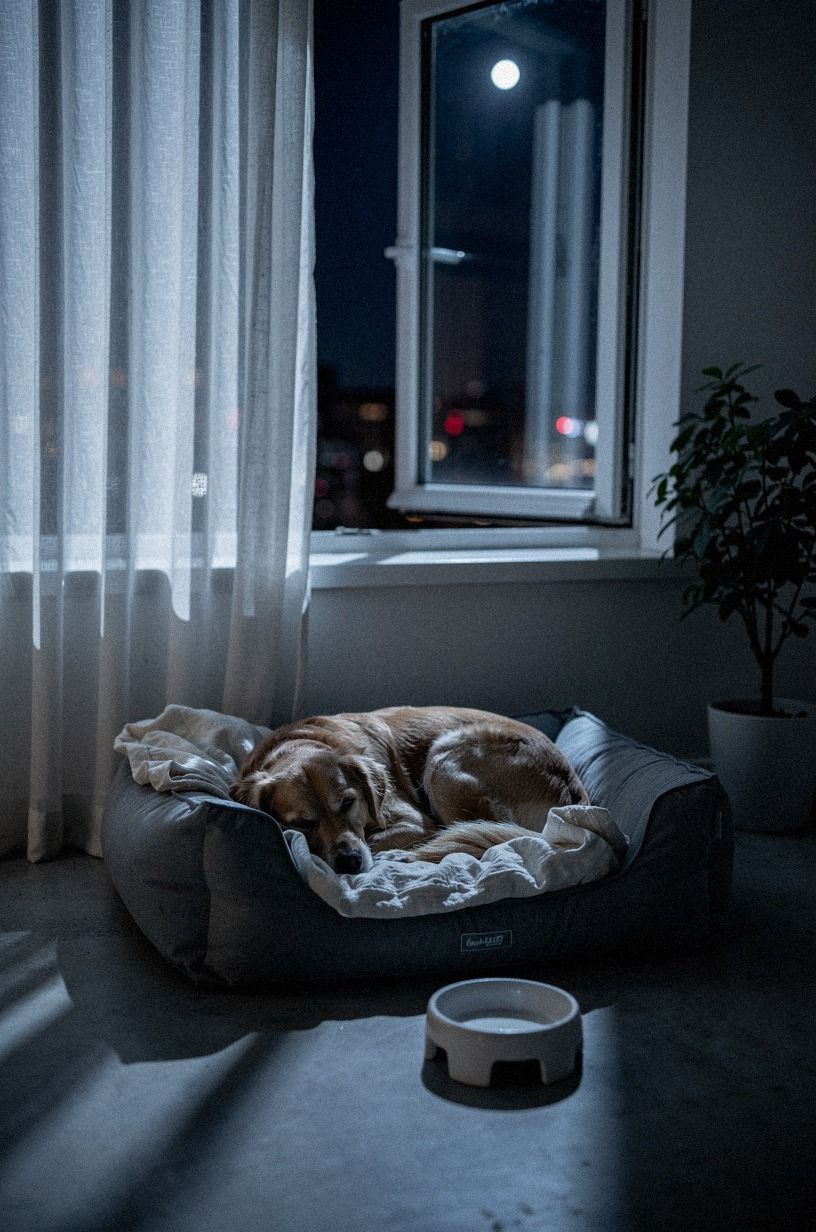
A raised dog bed under an open window can benefit from natural air movement, but placement matters. Keep the bed away from direct afternoon sun and avoid a draft that blows constantly across your dog’s face. A navy, white, and walnut palette feels crisp beside warm travertine, especially with a classic sealed walnut frame.
Set the bed far enough from the sill that curtains won’t fall across the sleeping surface. Floor-length curtains should hang from a rod positioned 4 to 6 inches above the frame, with the hem reaching the floor.
You’ll want a breathable 600gsm Turkish cotton cover that can handle frequent washing. If your dog prefers a firmer surface, a raised platform with a thin mesh insert may feel more comfortable than a plush pillow.
5Anchor the outdoor bed under a shaded pergola
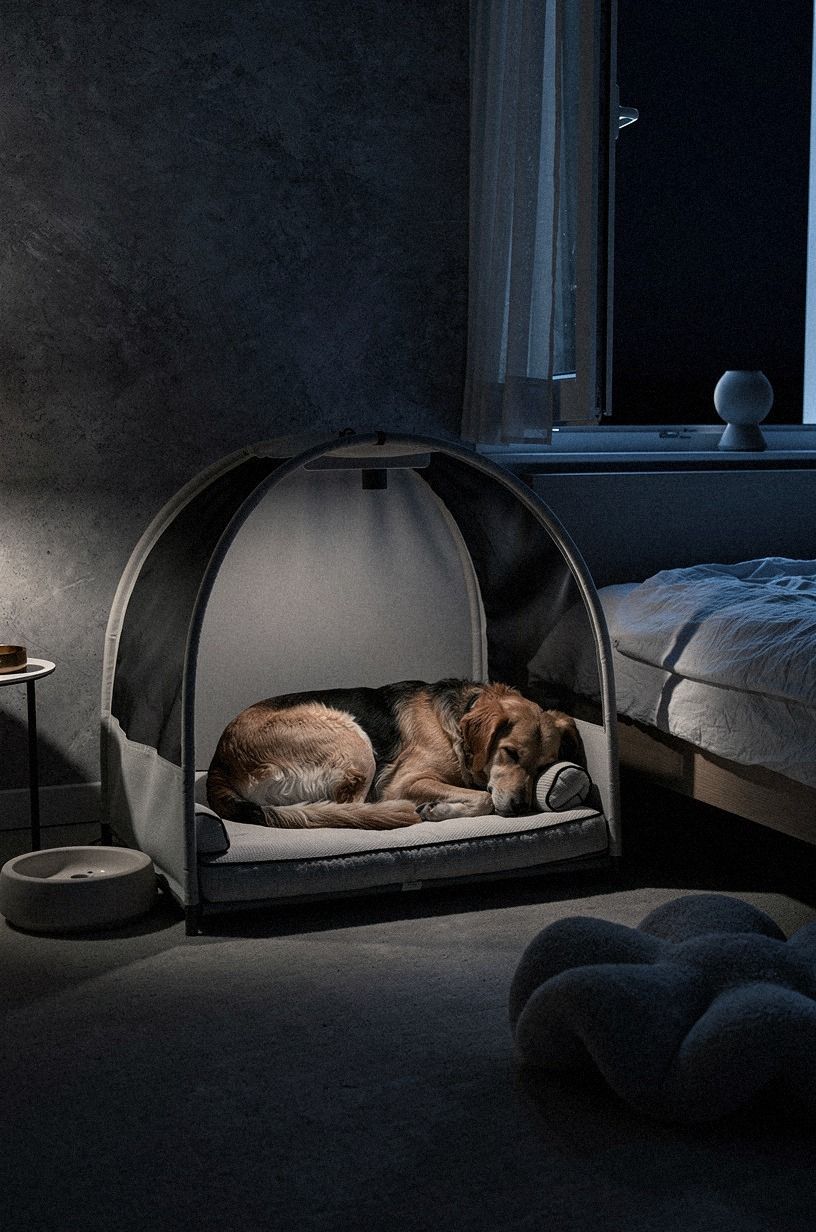
An outdoor dog bed needs shade, drainage, and a surface that dries quickly after dew or rain.
6Pair cooling gel pads with pale terrazzo flooring
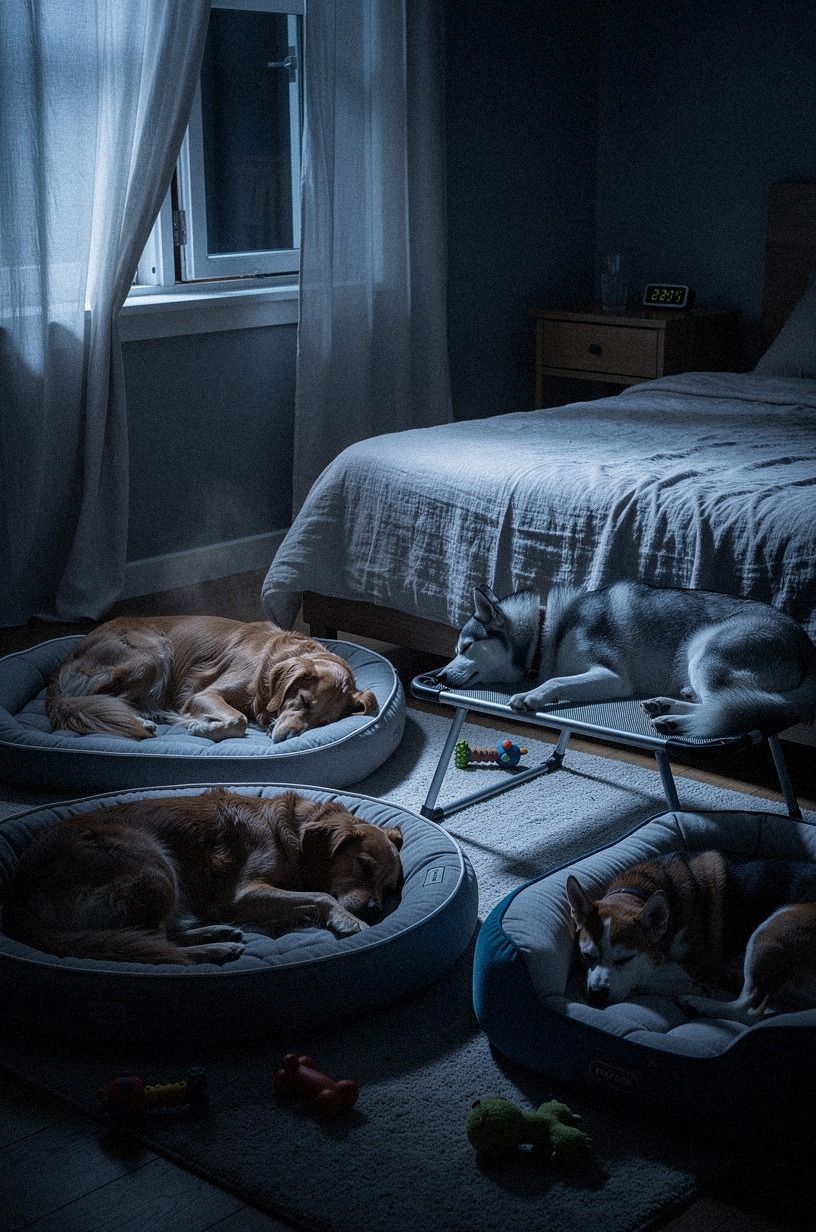
Cooling gel pads work best on a stable, clean surface where the pad can lie flat. Pale, oversized-chip terrazzo flooring makes the forest green, rust, and natural oak palette feel bright, while an oak tray can hold a folded cover and water bowl beside the bed. Choose a gel pad with a puncture-resistant cover and rounded edges.
Keep the pad away from sharp furniture corners, direct sunlight, and heated vents. Your dog should be able to step off it easily if the surface feels too cool.
A low natural oak platform can frame the pad without covering its entire underside. You’ll want to inspect the cover regularly for claw damage. For dogs that prefer pressure relief, compare gel pads with memory foam and regular dog beds before layering extra material.
7Style a cedar platform beside the bedroom fan
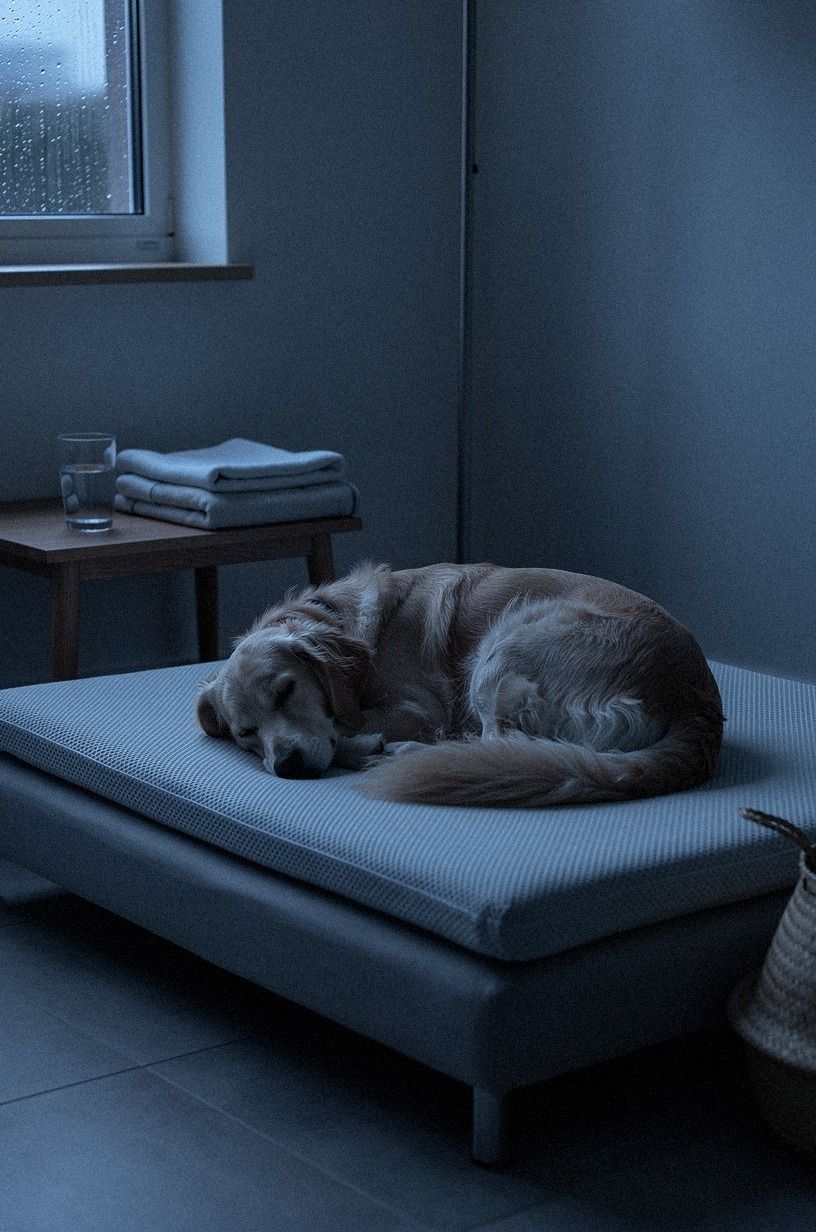
A cedar platform beside a bedroom fan creates a breathable sleep station with a warm, earthy finish. Choose dusty rose bedding, charcoal mesh, and small brass details to echo the hand-applied Venetian plaster on the wall. Cedar adds a dry, aromatic note, but the sleeping surface should still have a washable cotton cover rather than exposed wood.
Aim the fan across the room instead of directly at your dog’s face. This creates gentle circulation without forcing constant airflow onto the bed.
You’ll want a platform with slats beneath the cushion, plus enough spacing for dust to pass through during cleaning. A 3/4-inch solid cedar board gives the structure weight without making it visually bulky.
Skip a sealed foam topper if the room already runs warm. A thin cotton cover is the more comfortable choice, and it’s easier to wash after shedding or damp paws. Keep the fan cord out of reach and check that the airflow doesn’t shift loose bedding.
8Build a tiled cooling nook near the doorway
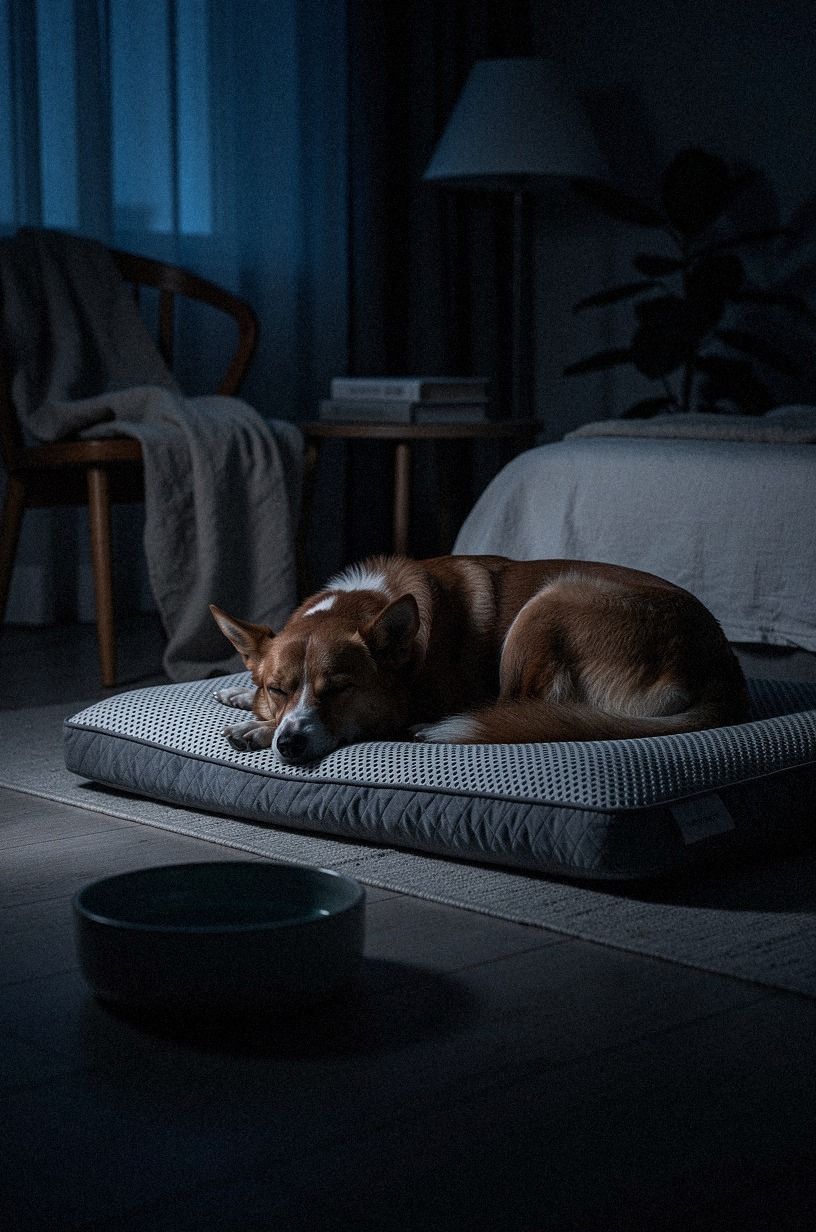
A tiled cooling nook near the doorway gives your dog a defined place to rest while keeping the bed away from warmer bedroom zones. Warm white walls, camel upholstery, and black accents pair well with shagreen panels and a simple low platform. Use cool porcelain tile beneath the bed, then add a removable cushion with a breathable surface.
Keep the nook wide enough for your dog to turn around without scraping against the wall. You’ll want a slim threshold so paws can move easily between tile and surrounding flooring. A matte black steel frame adds contrast, while a camel cotton cover softens the space.
If the entry receives afternoon sun, use a woven shade or leave the doorway open. Your dog gets a cooler retreat, and the room still feels calm rather than clinical. Keep the exit clear!
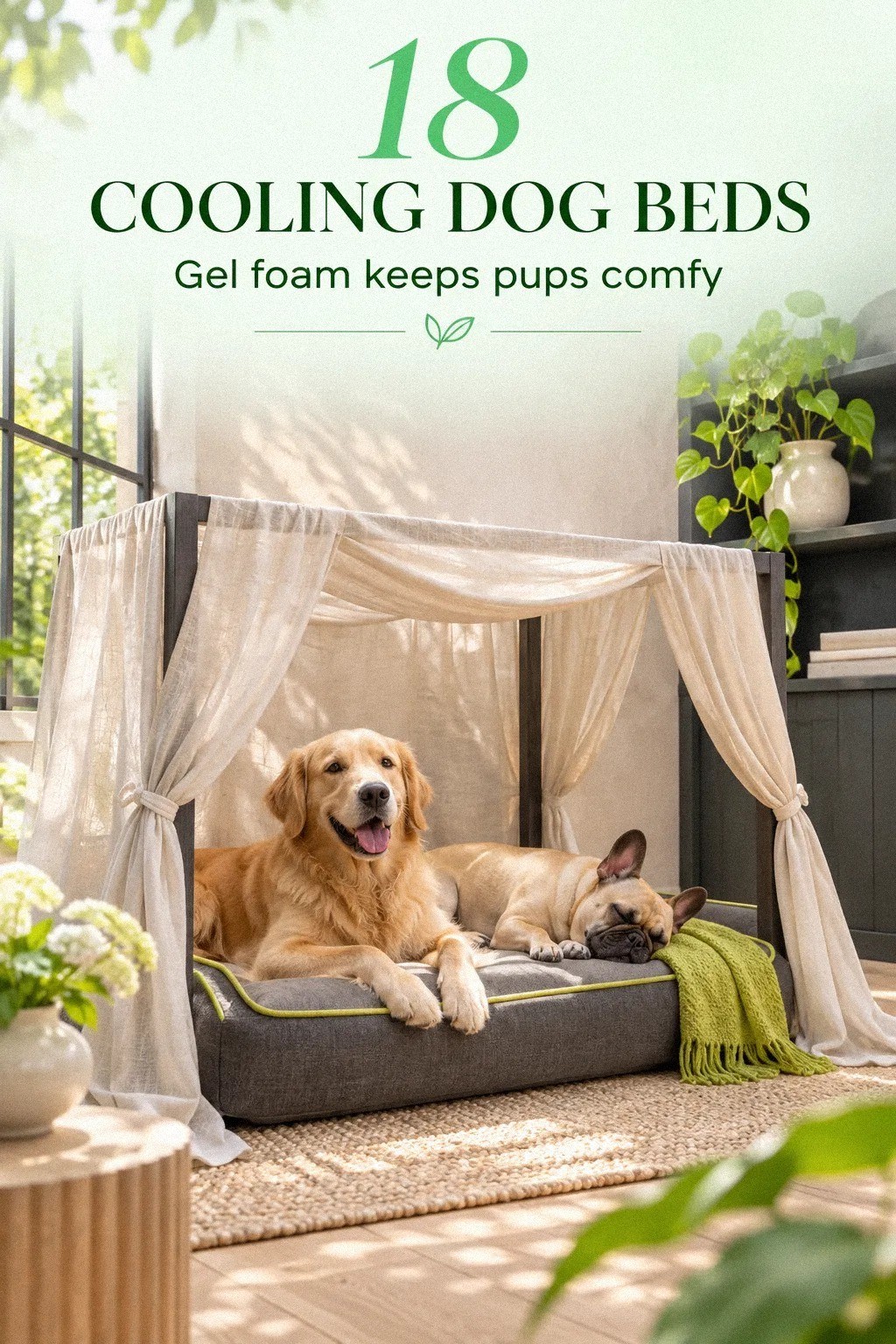
9Suspend a mesh bed above heat-trapping floors
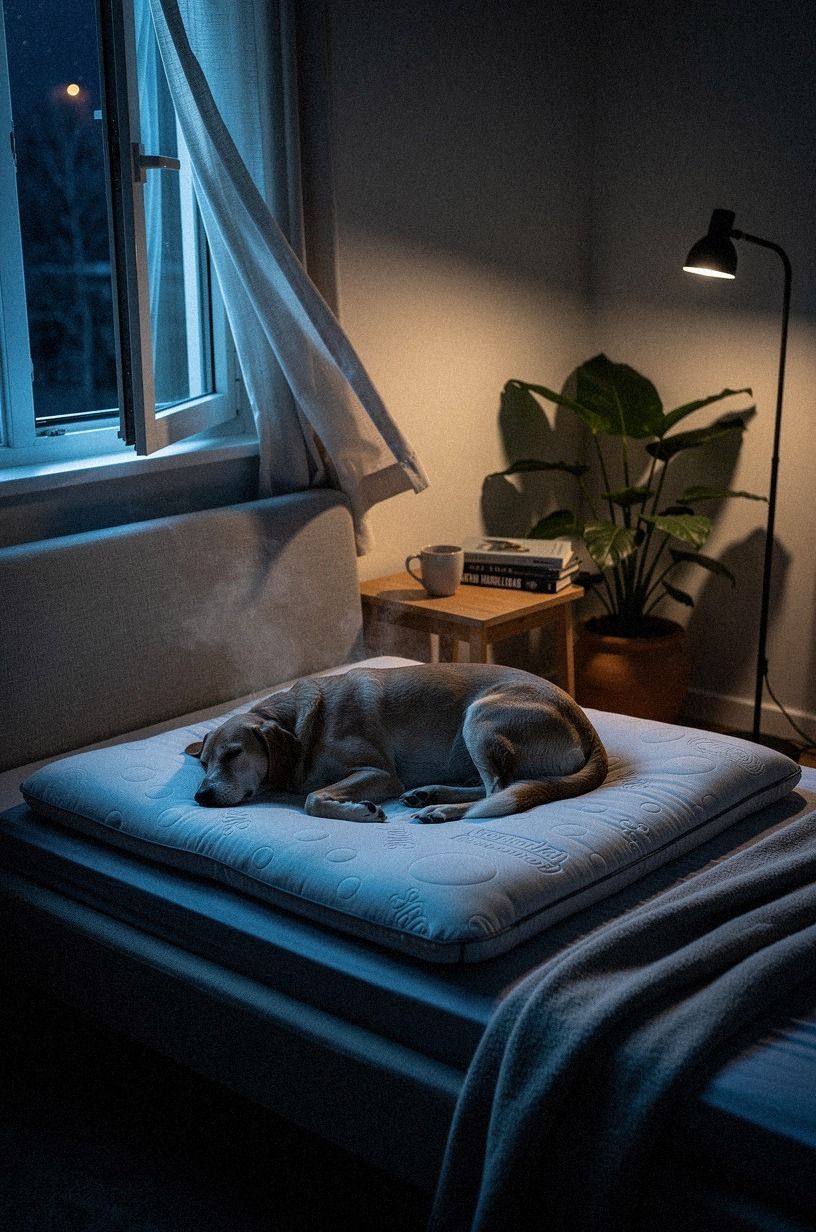
A suspended mesh bed separates your dog from dark flooring that can hold heat well into the evening. Midnight blue, copper, and ivory create a dramatic but peaceful palette, especially with washed Belgian linen on the nearby chair. Choose a mesh cot with four stable legs and a taut sleeping panel that won’t sag toward the floor.
Place the bed where your dog can see the room, not in a narrow corner behind furniture. You’ll want at least one open side for entry and two clear sides for airflow. A copper water bowl adds warmth, while ivory cotton towels keep the area soft.
Skip dense rugs beneath the cot, since they can block the airflow that makes the mesh useful.
The elevated versus raised bed comparison can help clarify which frame style suits your dog’s mobility. A low step or open approach may be useful for older dogs, while a taller cot can suit dogs that enjoy a firmer, cooler surface.
10Place the dog bed against a ventilated wall
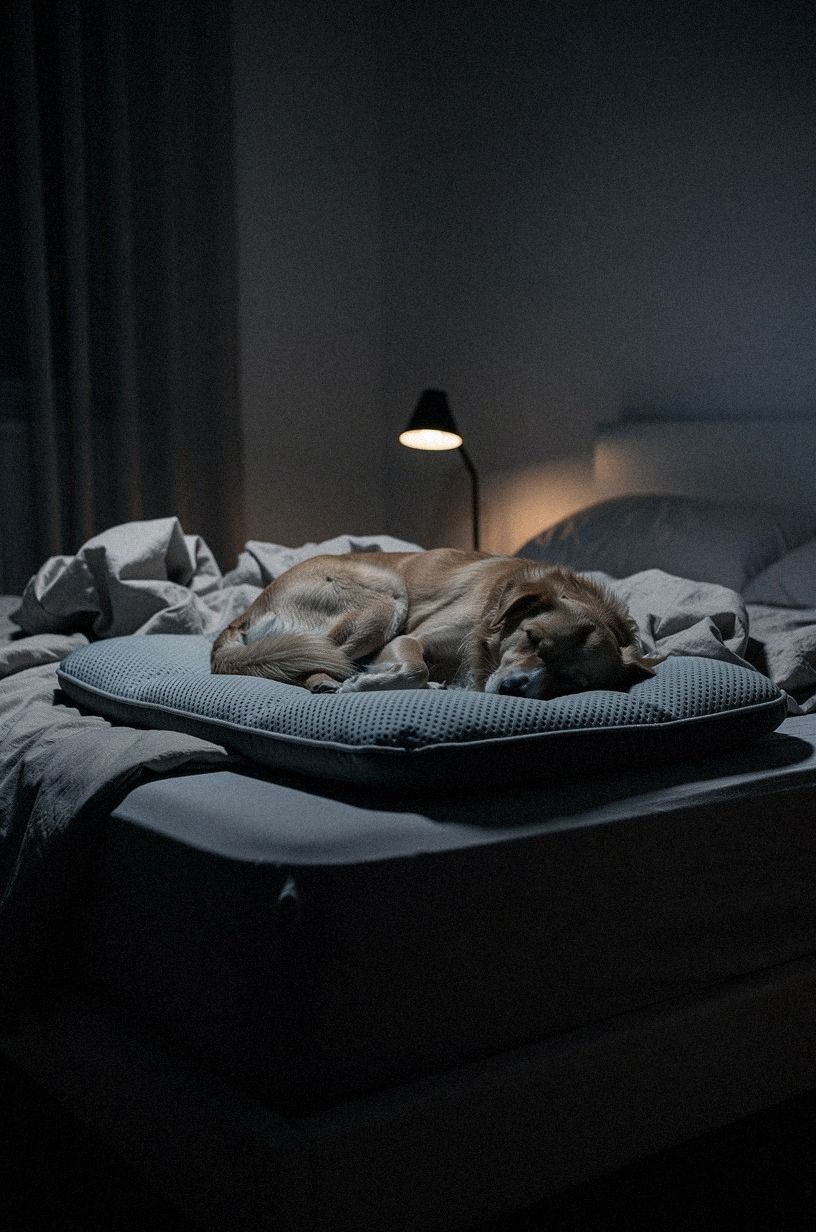
A ventilated wall can support a cooler sleeping zone when it includes open shelving, slatted panels, or a small gap behind the bed.
11Surround the cooling lounger with potted palms
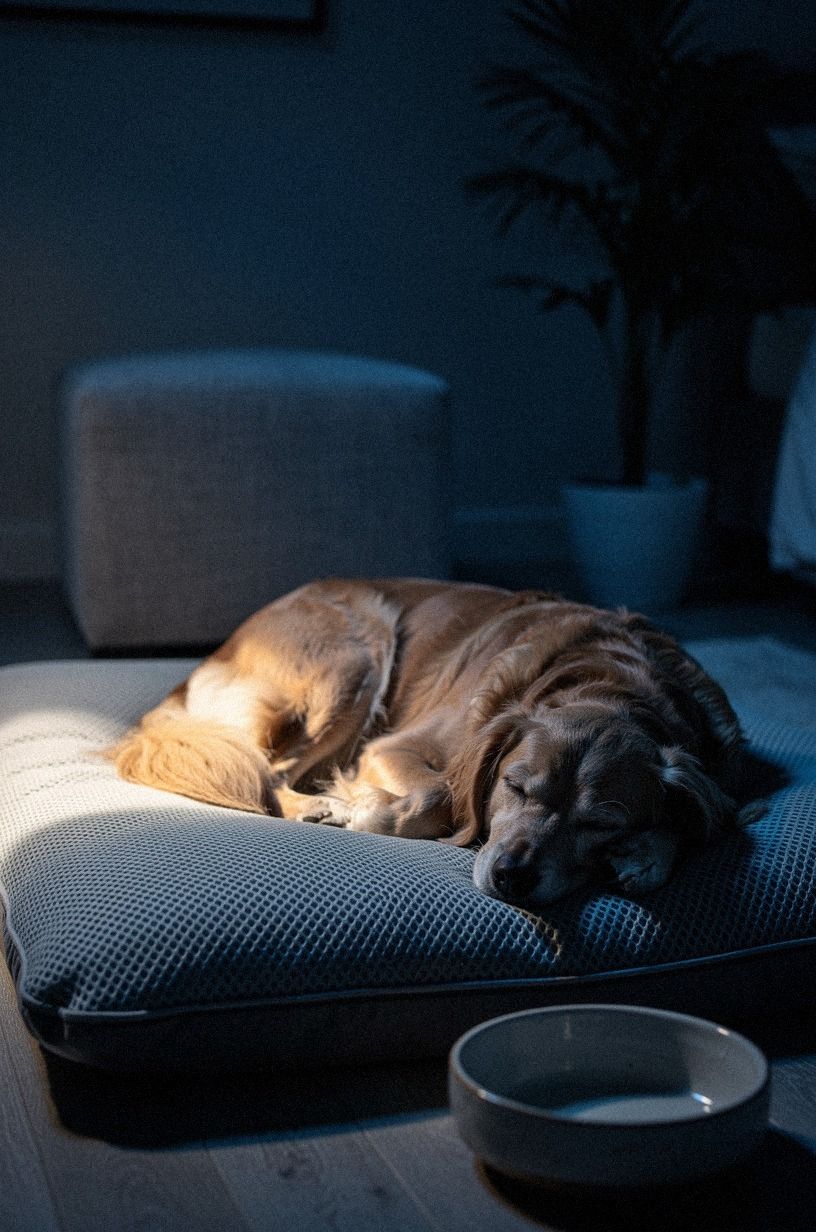
Potted palms can shade a cooling lounger visually, but the plants should never block airflow around the bed. Use terracotta planters, olive foliage, and pale stone to create a relaxed corner with a Nero Marquina black marble side surface. Keep all pots stable and choose pet-safe plants for the room.
A low lounger with a washable cream cover gives your dog a clear place to stretch, while the palms soften the hard lines around it. You’ll want the nearest plant several inches away from the sleeping surface, with no leaves hanging over your dog’s face. A Nero Marquina marble tray can hold water without absorbing spills.
Skip delicate pots at tail height. Heavy planters are quieter and less likely to tip during nighttime movement. Check leaves regularly for fallen debris, and keep the floor beneath the plants easy to wipe.
12Choose slatted wood for continuous airflow
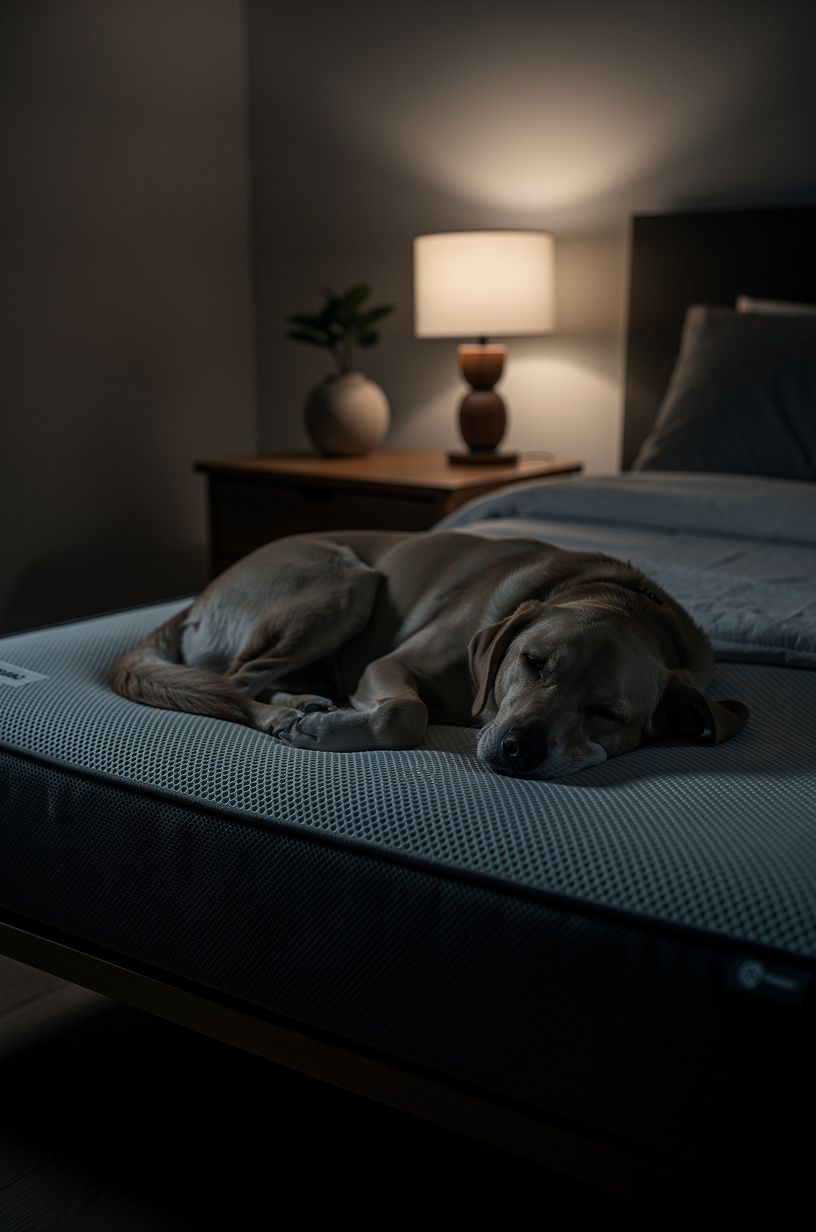
Slatted wood beneath a cooling cushion allows air to move under the bed and adds structure without a bulky base. Clay walls, linen bedding, aged brass, and deep-pile mohair velvet create a rich palette, but the dog bed itself should stay light and washable. Choose rounded wood slats with a smooth sealed finish.
Leave enough space between slats for airflow without creating gaps that could catch a paw. You’ll want a thin sage mohair velvet accent nearby, not directly beneath the dog, since dense pile can hold warmth. A slatted platform works especially well for dogs that dislike cold gel surfaces but still need a more breathable base.
The wood brings a refined feel, while the open underside keeps the sleeping zone from feeling sealed in. Check the screws and joints regularly so the platform doesn’t loosen with movement.
13Create a shaded balcony station with waterproof bedding
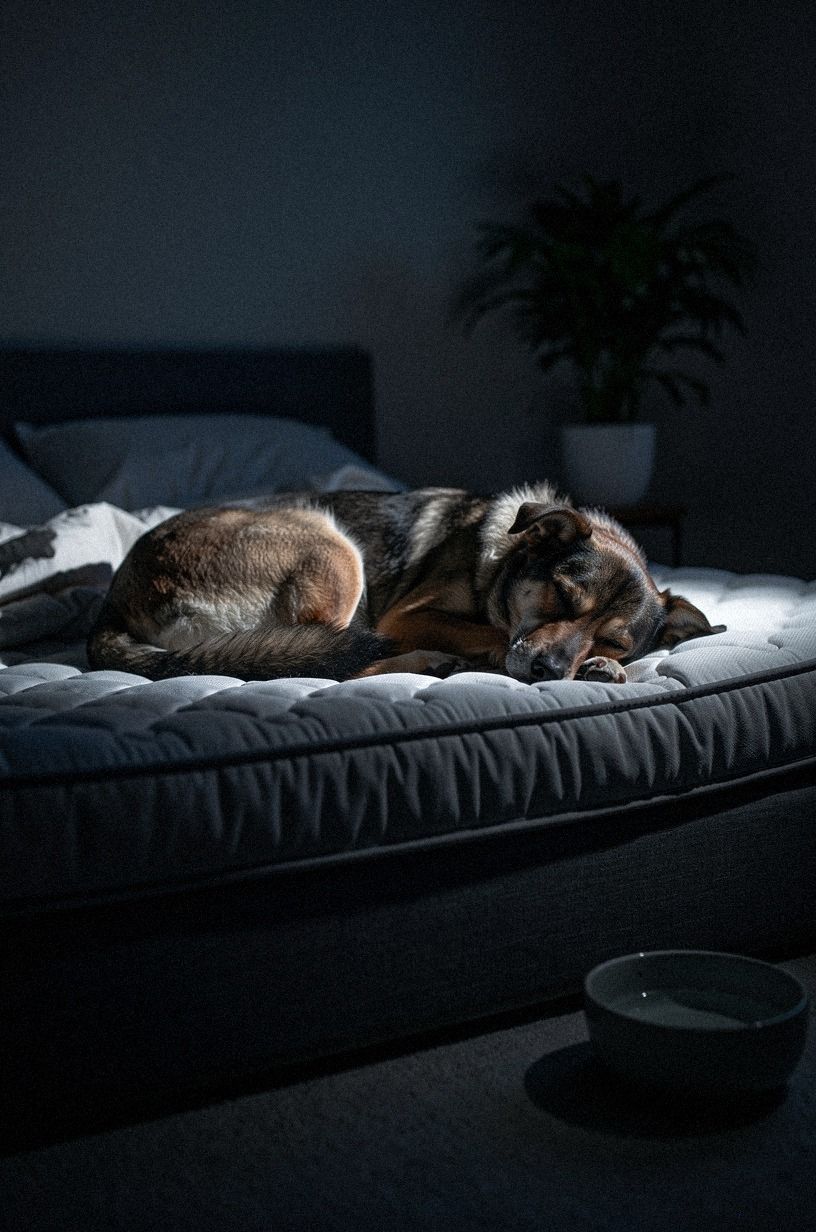
A shaded balcony station can give your dog fresh air without exposing the bed to direct sun.
14Contrast icy blue bedding against warm walls
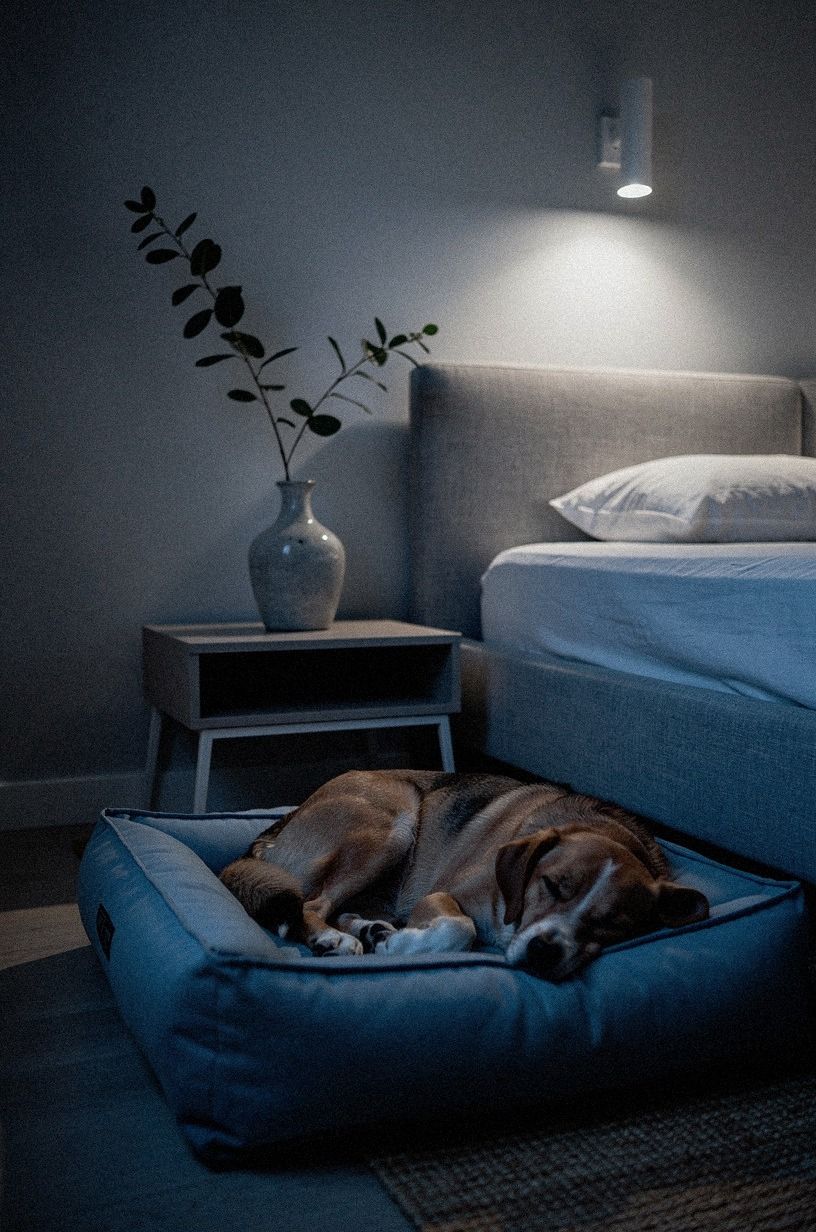
Icy blue bedding can look fresh against warm walls without making the room feel cold. Pair the bed with navy details, white textiles, walnut furniture, and reclaimed weathered teak. A thin cooling cover in pale blue gives your dog a breathable surface, while the warm wall color keeps the room welcoming.
Choose a cover with a smooth weave rather than a plush finish. You’ll want the bed placed away from radiators, sunny glass, and enclosed corners. A reclaimed weathered teak stool can hold a water bowl and towel, but it shouldn’t block the bed’s entry side.
Skip excessive layers. One washable cover, one thin mat, and open floor around the frame are usually easier to keep clean and comfortable. A lighter arrangement also makes nighttime cleaning faster.
15Set the elevated bed on breathable jute
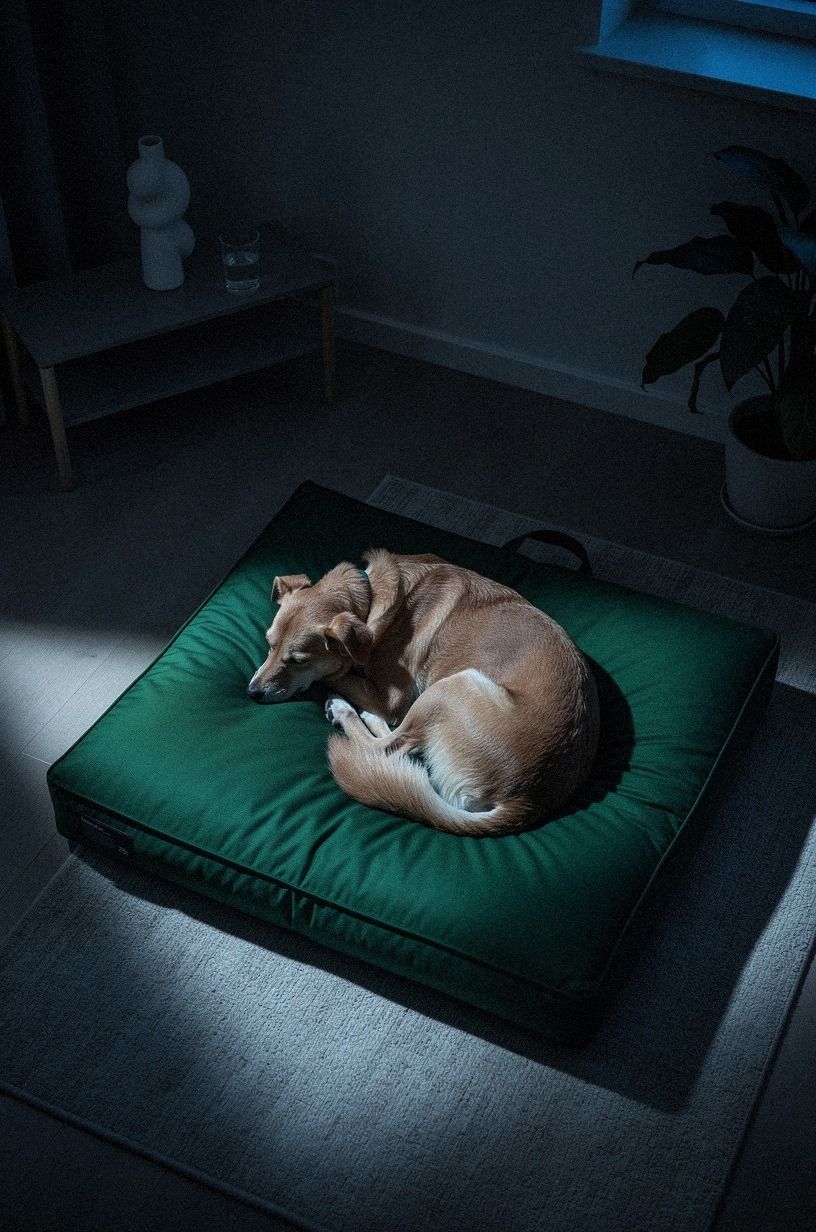
Breathable jute beneath an elevated bed gives the room texture while keeping the frame visually grounded. Emerald, gold, and cream create a welcoming palette beside Calacatta marble with gold veining. Choose a tightly woven jute rug with enough space around the bed for paws to step on and off safely.
The rug should sit beneath the outer legs, not wrap tightly around the cushion. You’ll want a low pile that won’t retain as much warmth as thick shag. A rounded marble side table adds a polished note, but smooth edges are safer near active dogs.
If your dog likes to stretch out, select a frame that extends beyond the shoulder and hip area rather than forcing a curled position. Jute can shed fibers when new, so vacuum the surrounding floor and monitor loose strands.
16Install a low wall shelf for cooling towels
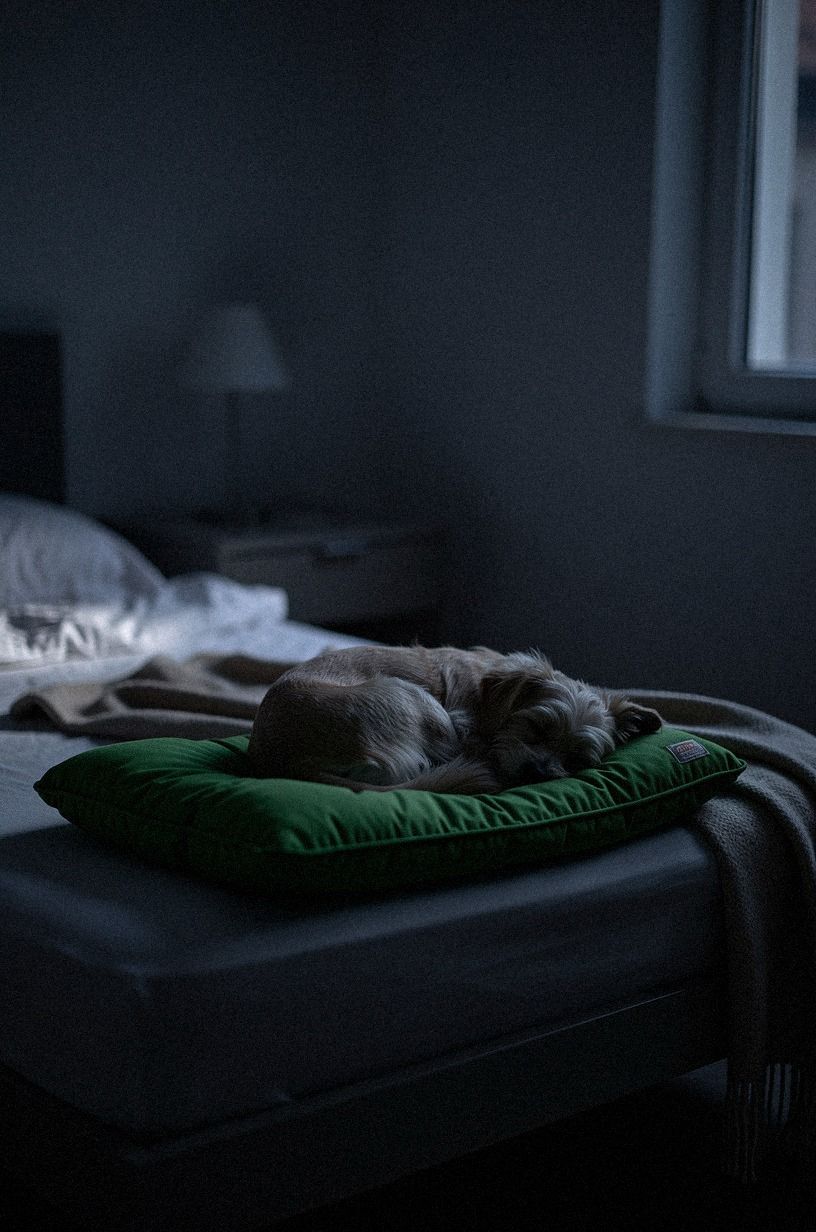
A low wall shelf can keep cooling towels, a spare cover, and a water bottle within reach without crowding the bed. Forest green, rust, and natural oak suit a cerused white oak shelf with aged metal brackets. Keep the shelf high enough to avoid a bump but low enough for quick nighttime access.
Choose folded 600gsm Turkish cotton towels that absorb water without becoming excessively heavy. You’ll want one dry towel available whenever a damp cooling cloth is in use. Avoid hanging anything directly above the bed that could fall during movement.
A narrow shelf also works well in a rental because it can replace a bulky cabinet. Your dog gets more floor space, and you’ll spend less time searching for supplies. Anchor the shelf properly, and keep small items away from curious mouths.
17Arrange twin cooling beds in separate zones
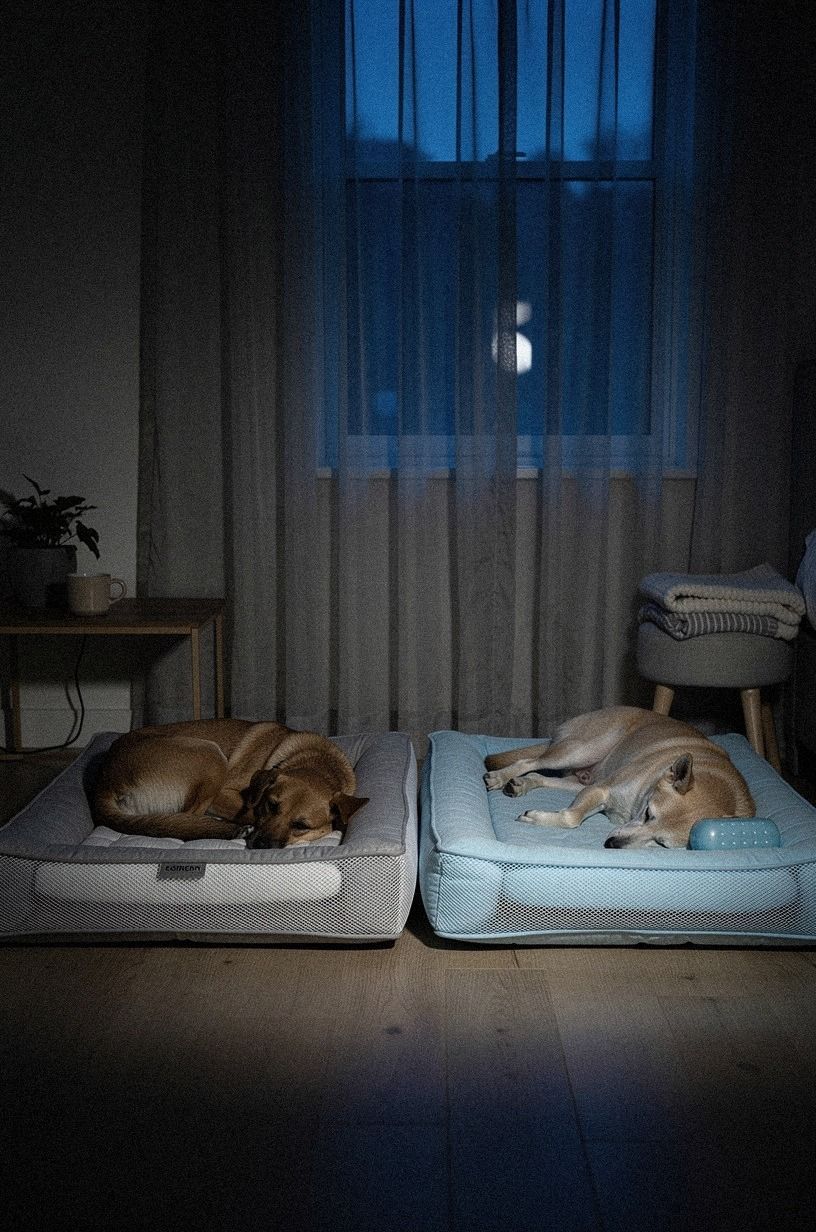
Twin cooling beds can reduce crowding when two dogs prefer different sleeping temperatures or personal space.
18Highlight the cooling bed with soft night lighting
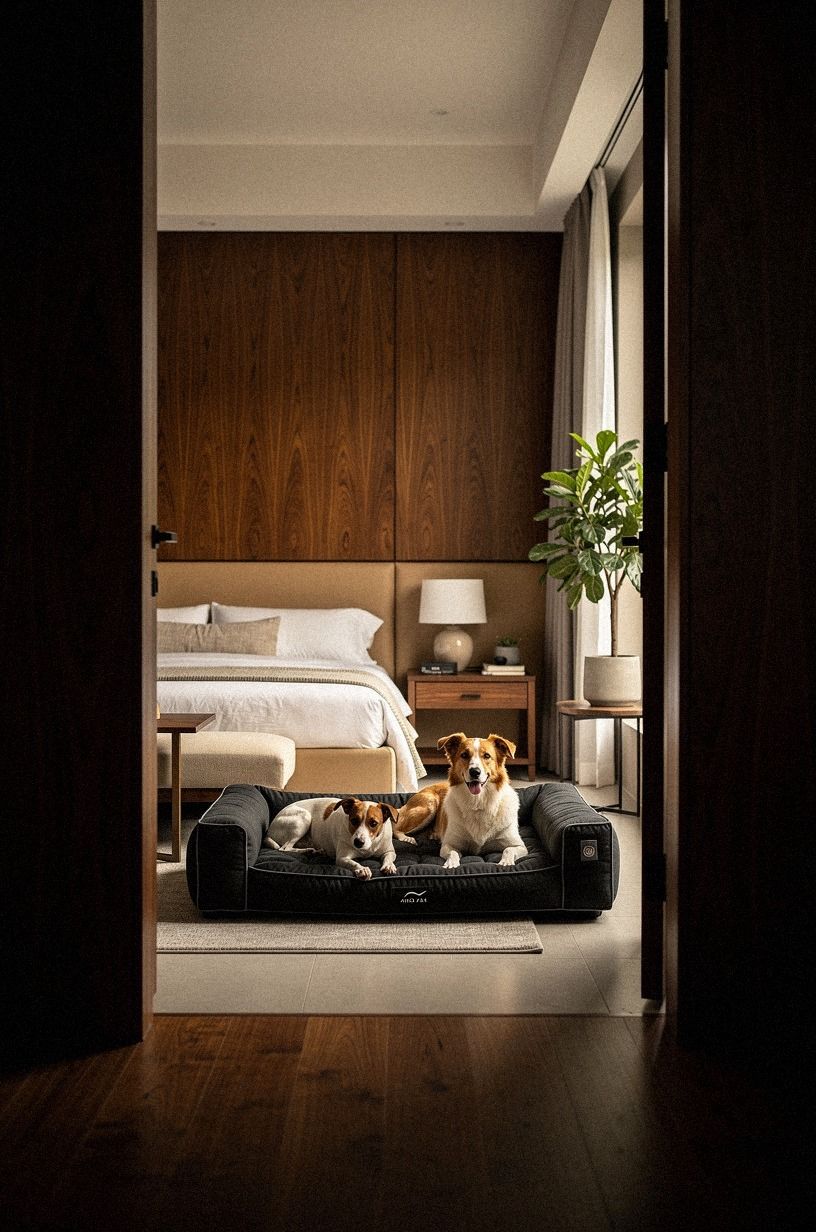
Soft lighting can make a cooling bed easier to find without adding heat near the sleeping surface. Warm white walls, camel textiles, black accents, and book-matched walnut create a welcoming nighttime setting. Choose a dimmable lamp positioned to the side, never directly above the dog’s face.
Three light sources per room offer useful flexibility: overhead, task, and ambient. You’ll want the ambient source to be the lowest and gentlest, with the cord tucked safely away from paws. A book-matched walnut table can hold the lamp and water bowl, while a pale cooling cover keeps the bed visually quiet.
Skip blue-toned bulbs if the room should feel restful. A low amber glow makes the entire corner feel softer without turning the bed into a spotlight. Use a cool-to-touch lamp and keep fabric away from the bulb.
The Cooling Bed Decision That Matters Most
The best cooling dog bed is rarely the thickest or most expensive option. Air movement, room placement, and easy washing matter more than decorative padding.
A mesh cot may suit a dog that overheats on rugs, while a gel pad may suit a dog that prefers a low surface. The right choice depends on movement, coat, age, and preferred sleeping position.
A cooling bed also needs a surrounding plan. A shaded window, pale flooring, a nearby water bowl, and a washable cotton cover can support comfort better than a single specialized material.
You’ll want to observe where your dog naturally settles before moving the bed there. That small choice often reveals whether the room needs elevation, shade, or a cooler surface.
For a simple budget, begin with placement and airflow before buying new furniture. A washable mat, a low fan pointed across the room, and a breathable cover may be enough to create a calmer station.
If your dog pants heavily, seems distressed, or shows unusual weakness, contact a veterinarian promptly. Design can support comfort, but it doesn’t replace professional care.
What is the best cooling dog bed for a small space?
An elevated mesh cot is often a strong small-space choice because air can move beneath it and the frame takes less visual space than a thick cushion. A compact side table can hold water nearby. Open airflow matters more than extra padding when floor area is limited.
Where can you buy cooling dog bed pieces on a budget?
Large home retailers, resale platforms, and local thrift shops often carry washable mats, small tables, and breathable textiles. Choose pieces with smooth surfaces and washable covers.
Focus on fit, ventilation, and cleaning access rather than decorative extras. A secondhand frame can work well when joints are stable and the fabric is replaceable.
How much does a cooling dog bed makeover cost?
A small setup may cost about $100 to $300, depending on the bed, mat, shade, and storage pieces. Free changes include moving the bed away from sun, clearing airflow, and using existing washable cotton. Premium furniture can cost more, but it isn’t required for a comfortable station.
Can a cooling dog bed setup work on a budget?
Yes, and three affordable changes can make a meaningful difference: move the bed to a shaded airflow path, place a washable low-pile mat underneath, and use a cotton cover instead of dense fleece. A secondhand side table can hold water and towels without using much floor space.
Is a cooling dog bed worth it in a small space?
Yes, especially when the bed replaces a bulky cushion that traps warmth. An elevated cot beside a wall or under a window uses vertical clearance while keeping the floor open. Choose a frame with rounded edges, a washable mesh cover, and enough room for your dog to turn comfortably.
Is a cooling dog bed a good idea for a rental?
Yes. Use a removable cooling mat, a tension-rod shade, and a freestanding elevated cot. Peel-and-stick hooks can hold lightweight towels, while a washable jute runner can define the zone without permanent changes.
Keep all shelves and lamps stable, and avoid drilling unless the lease permits it.
Where to Start First
Start with an elevated mesh cot beside a cross-room fan. Its open underside keeps air moving, the cover washes easily, and the frame works on rugs or hard flooring.
Adjust shade and water access before adding extra layers or décor. Small changes matter!