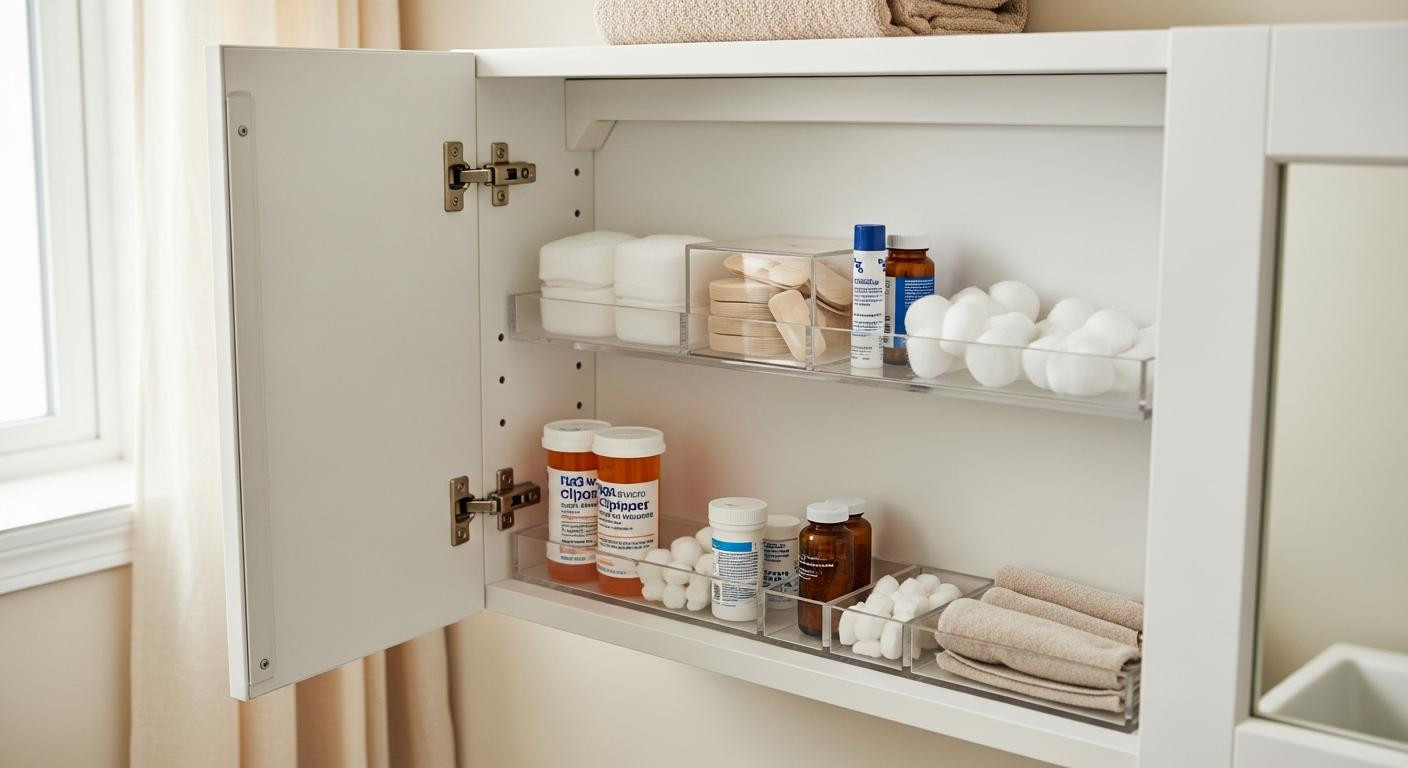
Your medicine cabinet measured 3.2 inches deep on a Tuesday morning when you stood holding the $12 clear bin from Amazon that every organizing video promised would fix the chaos. The bin didn’t fit. Not even close. The internet’s favorite solution for expired pill bottles and forgotten cold medicine requires 4 inches of depth, but 60% of US medicine cabinets measure 3 to 3.5 inches according to standard builder specs. The gap between viral transformations and actual bathroom architecture isn’t your failure. It’s physics meeting particle board.
And that’s the problem no one mentions in the 20-minute transformation videos. The bins look perfect in wide-angle shots, but they don’t account for the metal door hinge that eats another half-inch of clearance.
The 4-inch depth rule that breaks most medicine cabinet hacks
Standard recessed medicine cabinets measure 3 to 4 inches deep between the mirror door and the wall cavity. Builder-grade contractor models bottom out at 3 inches. Clear storage bins promoted in organizing content, the medium 10-inch by 6-inch by 5-inch size, require 5.2 inches of actual clearance when you account for the door swing and handle protrusion.
The depth limitation isn’t pickiness. It’s geometry. If your cabinet measures under 4 inches, bins create more problems than they solve by blocking access to items behind them.
But shallow cabinets aren’t doomed to chaos. You just need different containers.
What actually fits in shallow cabinets and what makes the mess worse
Acrylic trays measuring 8 inches by 4 inches by 2 inches from Container Store sit flush on shelves without blocking visibility. They cost around $10 and hold enough cotton balls, Band-Aids, and sample packets to clear the clutter. Magnetic strips adhered to door interiors hold tweezers, nail clippers, and scissors in 0.5 inches of space.
Slim over-door pockets in mesh use vertical real estate without consuming depth. The cool metal of the magnetic strip against your palm when you grab nail clippers at 7am feels more intentional than digging through a toppled bin.
Clear bins with 5-inch heights tip forward when you pull the door open because there’s no rear wall support in shallow cabinets. Tiered shelf risers create dead zones where items roll into corners beyond arm’s reach. And expandable drawer organizers compress to 3 inches but spring back after two weeks, jamming the door.
Design experts featured in home organizing publications confirm that containers taller than the cabinet’s interior depth create access problems, not solutions. The result is a space that looks organized in photos but frustrates you daily.
The 20-minute reset for cabinets that measure 3.5 to 4.5 inches
Pull everything out. Medication expires faster than you think, most lose potency 1 to 2 years past dates. Toss expired items, duplicates, mystery pills. Group by category: pain relief, allergy, first aid, daily vitamins. This isn’t sentiment. It’s making sure you can actually see what you own when you’re sick at 2am.
Measure depth with a ruler before buying anything. If you measure 3.8 inches, buy containers rated for 3 inches or less to account for door clearance. Place tallest items like contact solution and cough syrup bottles directly on shelves without containers. Bins don’t add value for items you use weekly.
Reserve bins for small chaos: bandages, sample packets, thermometer batteries. Label with painter’s tape and Sharpie if you don’t own a label maker. The slightly rough texture of the tape against smooth acrylic creates enough contrast to read labels in dim morning light.
A standard shelf measuring 12 inches wide by 3.5 inches deep holds 16 prescription bottles when you arrange them directly on the surface. That same shelf holds zero bottles when a 5-inch bin blocks access. Professional organizers with residential portfolios note that visible storage beats hidden chaos every time.
If you need help maximizing vertical space in tight bathrooms, check this approach for the 54 inches above your toilet that applies the same accessibility principles.
When to abandon the cabinet entirely
Cabinets measuring under 3 inches deep don’t deserve 20 minutes of organizing effort. They deserve replacement or abandonment. IKEA’s LILLÅNGEN mirror cabinet offers 5.5 inches of depth in the same 15-inch wall footprint as builder-grade models. It runs around $79 and actually fits standard organizing products.
For renters, a rolling cart positioned beside the vanity holds more than a shallow cabinet ever will. IKEA’s RÅSKOG cart costs $29.99 and offers 10 inches of depth across three tiers. Sometimes the honest answer isn’t better bins. It’s admitting the architecture can’t support the function you need.
And if you’re looking for mirror storage that hides products completely, this oval mirror solution offers depth without visible clutter.
Your questions about medicine cabinet organization in 20 minutes answered
What if my cabinet has glass shelves I can’t remove
Glass shelves limit vertical customization but magnetic solutions still work on door interiors. Use adhesive-backed magnetic strips on the door’s inner frame to hold metal tools. Slim trays sit on glass without modification. If shelf height doesn’t match your tallest bottles, consider storing daily-use items outside the cabinet in counter canisters.
Do wood bins look better than acrylic in medicine cabinets
Wood and bamboo bins photograph beautifully but add unnecessary visual weight in a 12-inch-wide space you open twice daily. Acrylic creates the illusion of more space through transparency. Save wood aesthetics for open shelving where guests see the storage. Medicine cabinets prioritize function over appearance.
The same pull-out access principles work here as in this Target organizer for deep cabinets, though shallow medicine cabinets need different solutions.
How much should I spend on organizers for a rental bathroom
Thirty dollars maximum. Invest in portable solutions like magnetic strips at $8 and slim trays at $10 that move with you. Avoid permanent changes like shelf liner or adhesive organizers that damage paint. A rolling cart offers more storage flexibility for the same price as cabinet-specific organizers you’ll leave behind.
For bathrooms where cabinet depth fails completely, mobile cart storage provides better access without fighting architecture.
Wednesday morning light hits the newly organized shelves through the open mirror door. Seven clear sections, each holding exactly what you reach for without excavating. The Advil sits where your hand knows to find it at 6:47am when your head hurts and you haven’t had coffee yet.