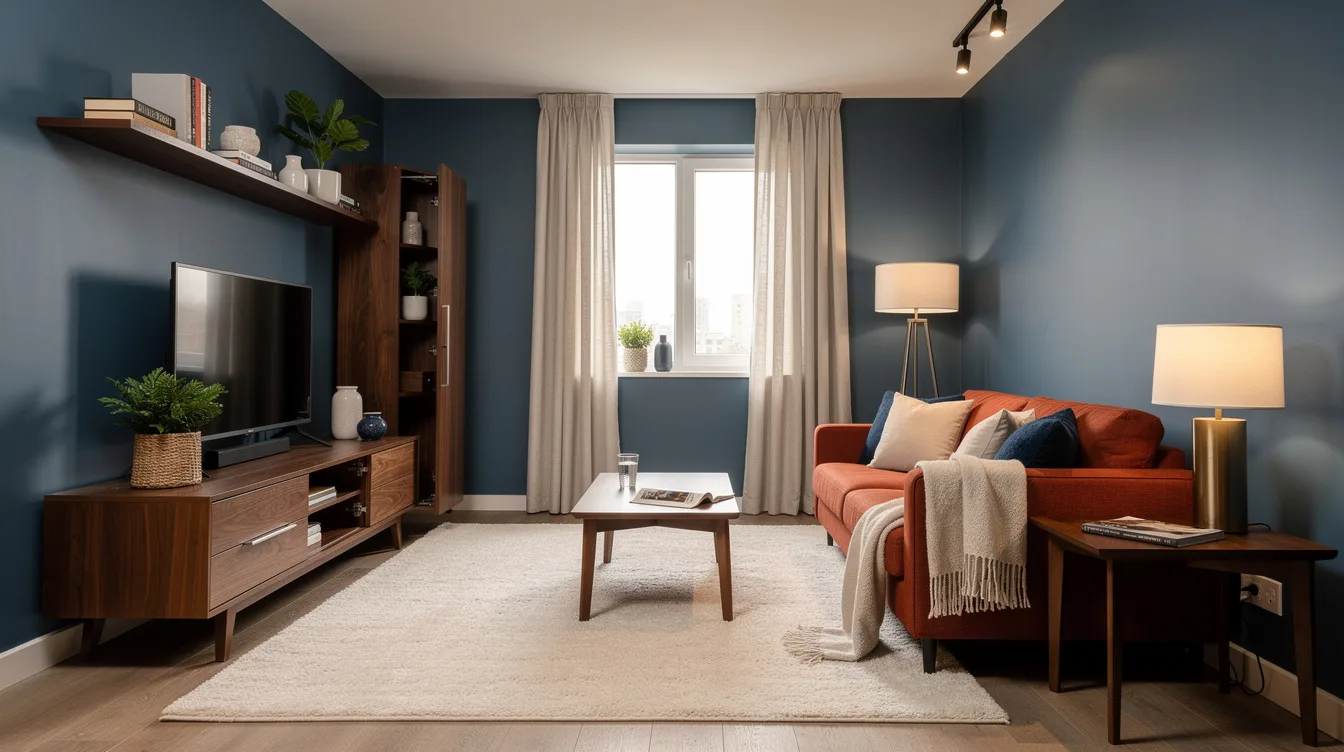
You know the feeling: the entry chair has become a laundry drop, the coffee table holds mail you meant to sort yesterday, and the room somehow feels full even when you have not bought much. Small apartments rarely need more stuff first, they need a few sharper decisions.
The ideas people keep searching for are usually the same ones that actually work. Better lighting, smarter storage, furniture that earns its footprint, and a little discipline about scale.
Lift clutter off the floor
The fastest apartment upgrade is vertical storage, because the floor is where small homes start to feel cramped. A narrow IKEA BILLY bookcase or a simple wall rail keeps daily stuff visible without letting it sprawl.
I like open storage only when it has limits. One shelf for books, one basket for cables, one tray for keys, and stop there.
A typical basic bookcase from Target, Walmart, or IKEA often lands around $40 to $90, which is cheaper than buying three random organizers that never quite fix the problem.
Choose double duty furniture first
In a small living room, the coffee table should work harder than the sofa pillows. A Wayfair lift-top coffee table or a storage ottoman gives you a place to hide remotes, chargers, and the throw blanket that always ends up on the arm of the couch.
Designers push this idea for a reason, it cuts visual noise fast. A typical storage ottoman from Amazon or Target is often in the $50 to $120 range, and that is money better spent than another side table.
I also think hidden storage looks cleaner than exposed bins in the main seating area. You want the room to feel edited, not busy.
Hang curtains higher than feels obvious
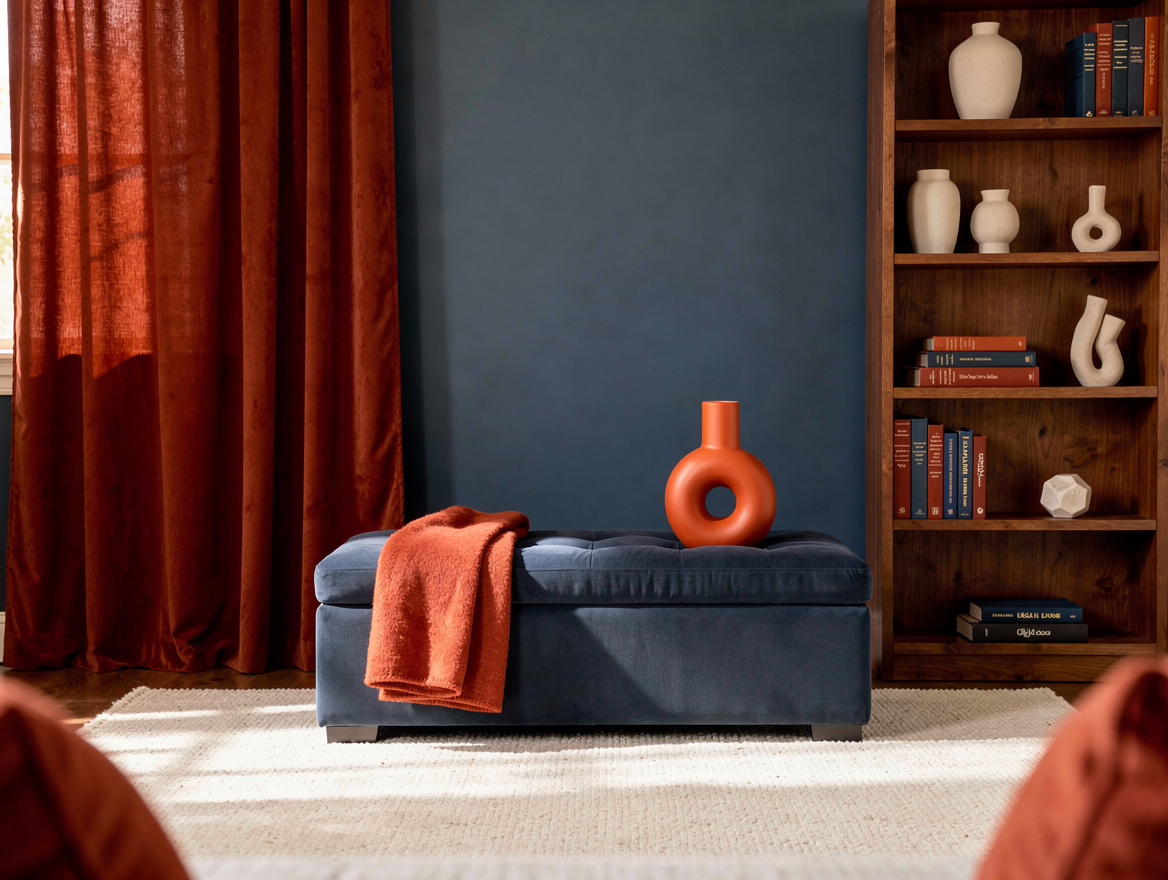
This is the move renters skip because it seems fussy, but it changes the room in ten minutes. Mount the rod closer to the ceiling and let Target blackout curtains drop almost to the floor, even if the window itself is short.
The eye reads height before it reads square footage. A typical curtain panel is around 84 to 96 inches long, and using the longer option usually makes the room feel more grown-up.
A basic curtain rod from Home Depot or Walmart often costs about $15 to $35, so this is one of the lowest-cost fixes with the biggest payoff. Skip tiny panels that barely cover the glass, they make walls look chopped up.
Swap cold lighting for layered lamps
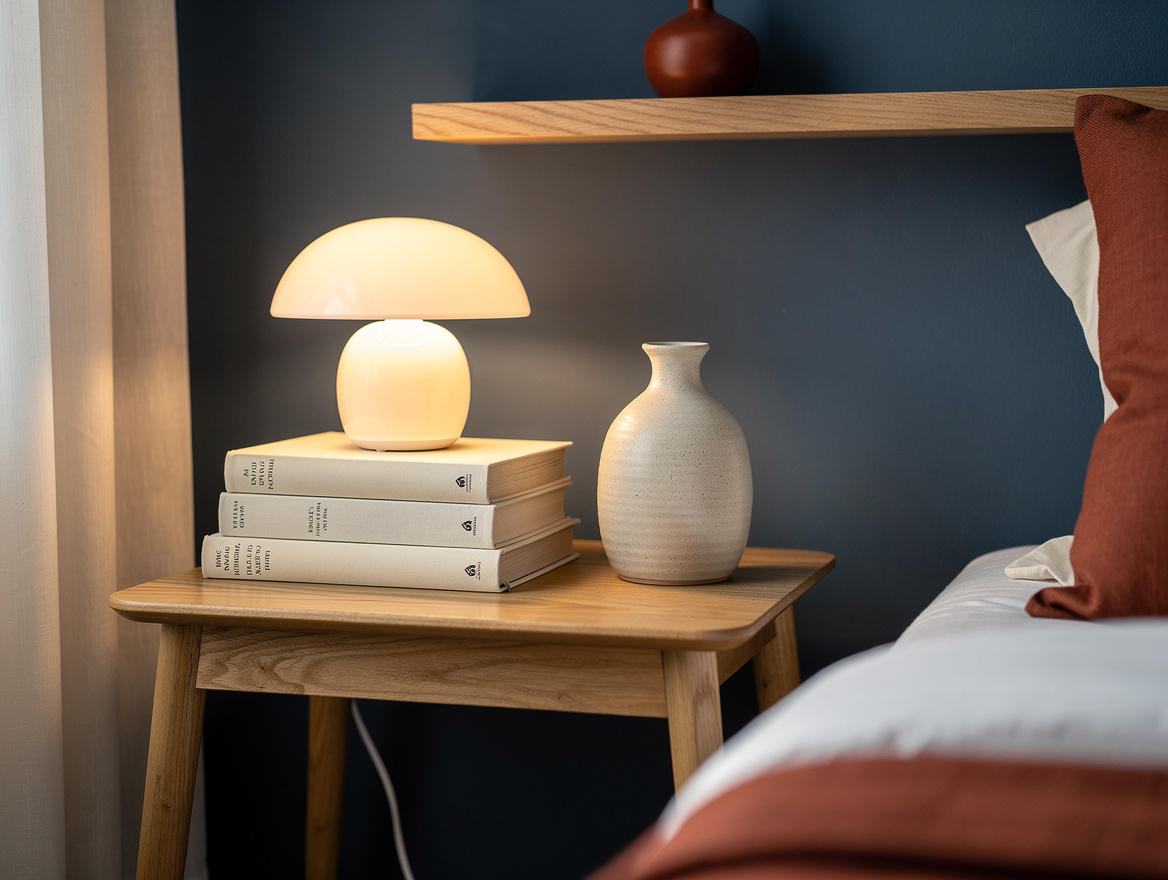
Overhead light is useful, but relying on one bright ceiling fixture gives most apartments that flat, washed look. Add a IKEA SINNERLIG pendant if you can hardwire, or go simpler with a table lamp and a floor lamp placed at different heights.
A warm bulb matters more than people think. I look for soft white LEDs around 2700K, because daylight-bright bulbs can make beige walls and wood furniture look dull.
A typical table lamp from Target, Amazon, or Lowe’s often starts around $25 to $60. One pool of light by the sofa, another by a console, and suddenly the room has shape.
Use one hard-working rug to zone the room
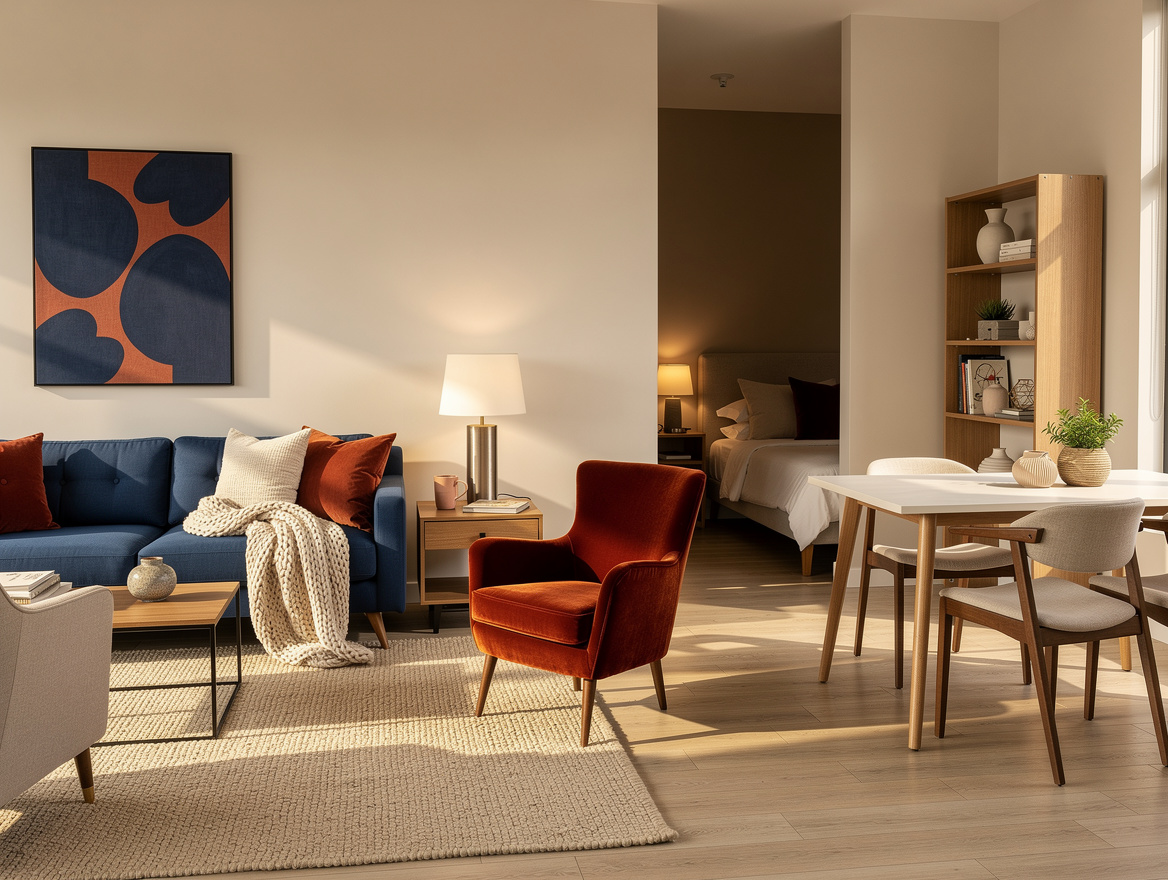
Studios and open-plan rentals need boundaries, even when there are no walls to help. A large Wayfair area rug under the sofa and front legs of the chairs tells the eye where the living room starts and stops.
Too-small rugs are one of the most common apartment mistakes, and I am firm on this one. An 8-by-10 rug is a typical starting point for many living rooms, while a 5-by-7 often floats awkwardly unless the space is genuinely tiny.
You do not need a luxury wool rug to get the effect. Flatweave and washable styles from Amazon, Costco, or Target often run from about $80 to $200 in common living room sizes.
Bring in texture before you add more color
When a room feels bland, most people start shopping for more decor in more colors. I would rather see one Home Depot oak shelf, a linen-look pillow, and a ceramic lamp than six trendy accents fighting for attention.
Texture makes a rental feel settled. Wood grain, cotton, boucle, rattan, brushed metal, matte ceramic, those materials do more for depth than another splashy print ever will.
A small shelf board and brackets from Home Depot or Ace Hardware typically cost around $20 to $50 total, depending on length and finish. That is a smart place to start if your walls feel blank but you do not want clutter.
Start with the one surface that annoys you most, usually the coffee table, entry console, or nightstand. Once that zone has storage, better light, and one strong texture, the rest of the apartment gets easier to read.
Mia Carter writes about small-space living and budget home makeovers. She has restyled three rentals and tests most ideas in her own 45 sqm flat.