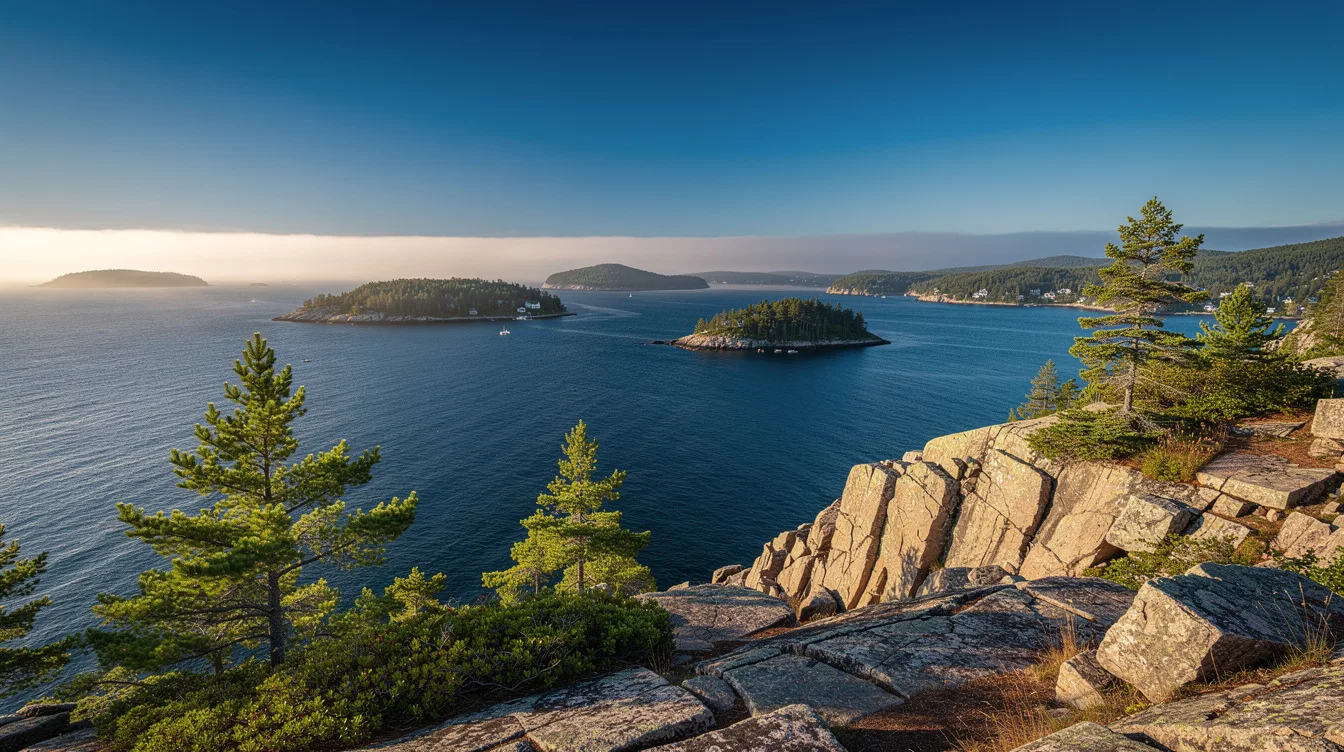
Bar Harbor changes shape when the tide drops. A sandy bar appears between town and Bar Island twice a day, and for a brief window you can walk across water that was there earlier.
That rhythm gives this Maine harbor town its best trick. You arrive for Acadia, then find yourself watching Frenchman Bay and planning your afternoon around the exposed sand.
The sandbar is the reason Bar Harbor has its name
The town sits on Frenchman Bay, on the northeast side of Mount Desert Island. At low tide, its namesake sandbar rises from the bay and connects the waterfront to Bar Island, so the harbor suddenly feels smaller and more intimate.
And this is not a decorative shoreline stroll. You need to check the tide timetable before crossing, because the route disappears again when the water returns.
Bar Harbor became its current name in 1918, after that very strip of sand. The detail matters because it explains why the town feels tied to the water in a way many coastal resort towns do not.
But don’t expect solitude at the crossing in peak summer. The town is a major outdoor destination, and visitors notice a path appearing where open bay had been only hours before.
Bar Island makes a short walk feel like an event
Crossing to Bar Island is the kind of small adventure that changes the pace of a harbor day. You are walking over a natural sandbar, with town behind you and the wide bay opening around your feet.
And the timing is the whole point. If you want to make the crossing, build your day around low tide instead of treating it as an afterthought between lunch and shopping.
The setting is lively, but the tide creates its own pause. When the sand is exposed, people move across the bay; when it vanishes, the island is separated again and the waterfront resumes its usual view.
You should give yourself room for the return. The trade-off is simple: this is a memorable walk because it is temporary, and temporary plans require attention.
Acadia gives the town its bigger reason to stay
Bar Harbor is the main gateway to Acadia National Park, which is why the town fills with hikers, cyclists, and drivers in the warmer visitor season. Granite coastlines, forests, carriage roads, lakes, Sand Beach, and Thunder Hole are all part of the nearby draw.
But Bar Harbor works best when you don’t try to conquer every landmark. Spend one part of the day in the park, then come back to the waterfront when the salt air and harbor activity feel more appealing than another trail.
Cadillac Mountain is one of Acadia’s signature viewpoints, and you can drive or hike there. Vehicle access on Cadillac Summit Road is seasonally reservation-controlled, so check the rules before you assume you can simply drive up.
And that limitation can improve the day. You will make better choices if you treat the summit as a planned stop, not a spontaneous detour after the town’s parking has already tightened.
September is the smarter time to see it
The best window is early September through mid-October, when summer crowds begin to thin and fall color starts to arrive. You still get the harbor, Acadia, and the low-tide crossing, but with less of the peak-season squeeze.
Summer is busy for a reason, though. Lodging, restaurants, parking, and popular Acadia access points can all become crowded, so book early if those months are your only option.
Bar Harbor is about 46 miles from Bangor, and Hancock County-Bar Harbor Airport has Boston connections. You can also reach Mount Desert Island by road, then let the tide dictate one of your most memorable walks.
By the time the water covers the sand again, Bar Island is back across the bay, and the harbor has changed its mind.