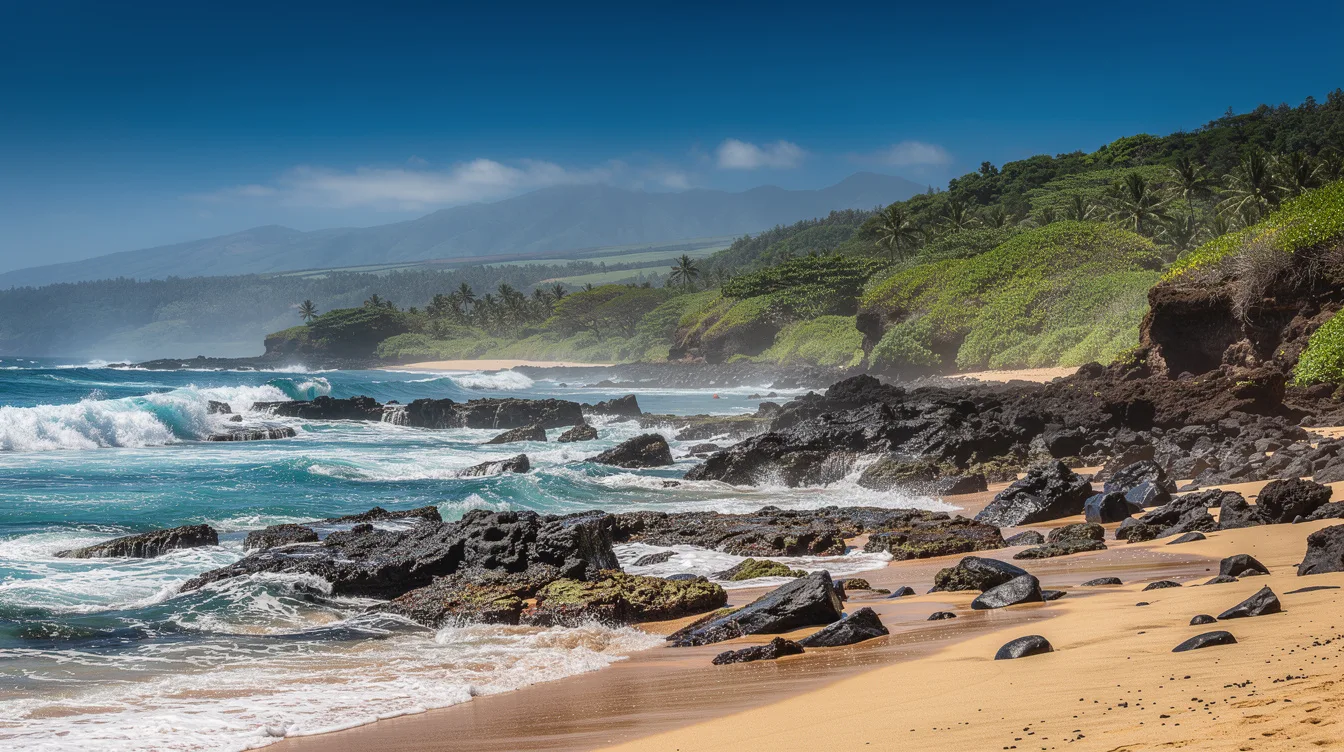
Pāʻia sits 3.7 miles east of Kahului on Maui’s North Shore. At Ho‘okipa Beach Park, regular winds helped make this Hawaii town a windsurfing capital.
But the water is the real reason to stop. Windsurfers, kitesurfers, and surfers turn the shoreline into a moving theater, while green Hawaiian sea turtles are frequently seen on the sand. You can watch from shore without pretending Ho‘okipa is a gentle swimming beach.
And that distinction matters. Ho‘okipa is better for watching and riding than for floating quietly, especially when winter brings stronger swell. My opinion is simple: this is the kind of coastal stop that can erase an afternoon from your itinerary.
Why Ho‘okipa put Pāʻia on the map
And Pāʻia is often called the world’s windsurfing capital because of this famous spot and its steady winds. The town’s identity follows the weather, so the experience changes sharply between summer and winter.
In summer, the sea is generally more accessible and calmer along this coast. But winter attracts more riders and can bring powerful surf, which makes the beach exciting to watch and less dependable for swimming.
If you’re visiting Maui for wind sports, Pāʻia gives you a useful base with a strong point of view. It feels like a town, even when tourism fills the sidewalks.
A former sugar town with a casual center
And the town itself is small, with 2,470 residents recorded in the 2020 census. Pāʻia grew from its sugar-town past into a relaxed center filled with colorful facades, independent shops, galleries, surf stores, cafés, and restaurants.
But “casual” doesn’t mean inexpensive. Lodging is limited and can be costly, particularly if you want to stay near the North Shore rather than choose a large resort around Wailea or Kāʻanapali.
Walk the center slowly and you’ll notice the contrast. The streets feel bohemian and easygoing, yet the town remains thoroughly touristed. I’d choose it for atmosphere and access, not for full-service hotel luxury.
Two beaches, two very different days
Can you swim at Ho‘okipa?
But Ho‘okipa isn’t the place to assume calm water. Winter conditions can be dangerous, and the beach works best as a viewing point for surfers, windsurfers, kitesurfers, and turtles.
And Baldwin Beach Park gives you a better chance at a slower beach day. Its long stretch of white sand is more suited to relaxing, while the Baby Beach area has a lagoon that is generally calmer.
You still need to check the flags, swell, and local guidance before entering the water. Conditions change, so a beach that looks inviting from the sand may not be suitable for swimming. That honesty is part of Pāʻia’s appeal: it doesn’t promise an easy ocean every day.
The last practical stop before Hāna
And Pāʻia is an especially smart stop before the Road to Hāna. It’s the last convenient place to buy water, fuel, snacks, and provisions before heading east on the Hana Highway.
That makes the town useful even if you don’t stay overnight. You can stock up, eat, and take in Ho‘okipa before the road becomes the main event. Mana Foods is a well-known grocery option, and the center has plenty of cafés and small restaurants.
But don’t expect a quiet, empty launch point during busy travel periods. If you’re driving toward Hāna, plan your supplies before leaving town, because convenience becomes harder to find once you’re on the road.
When Pāʻia makes the most sense
And summer is the easier season if your priority is a more accessible sea and calmer beach conditions. Winter is the better choice for watching powerful surf and seeing the town’s wind-sport culture at full volume.
If you want a resort pool, polished service, and guaranteed swimming, Pāʻia may frustrate you. But if you prefer a village base near the North Shore, the Road to Hāna, and Ho‘okipa, it earns its place.
Food ranges from the simple popularity of Paia Fish Market to the high-end draw of Mama’s Fish House, where booking well ahead is sensible. By late afternoon, the wind still moves across Ho‘okipa.