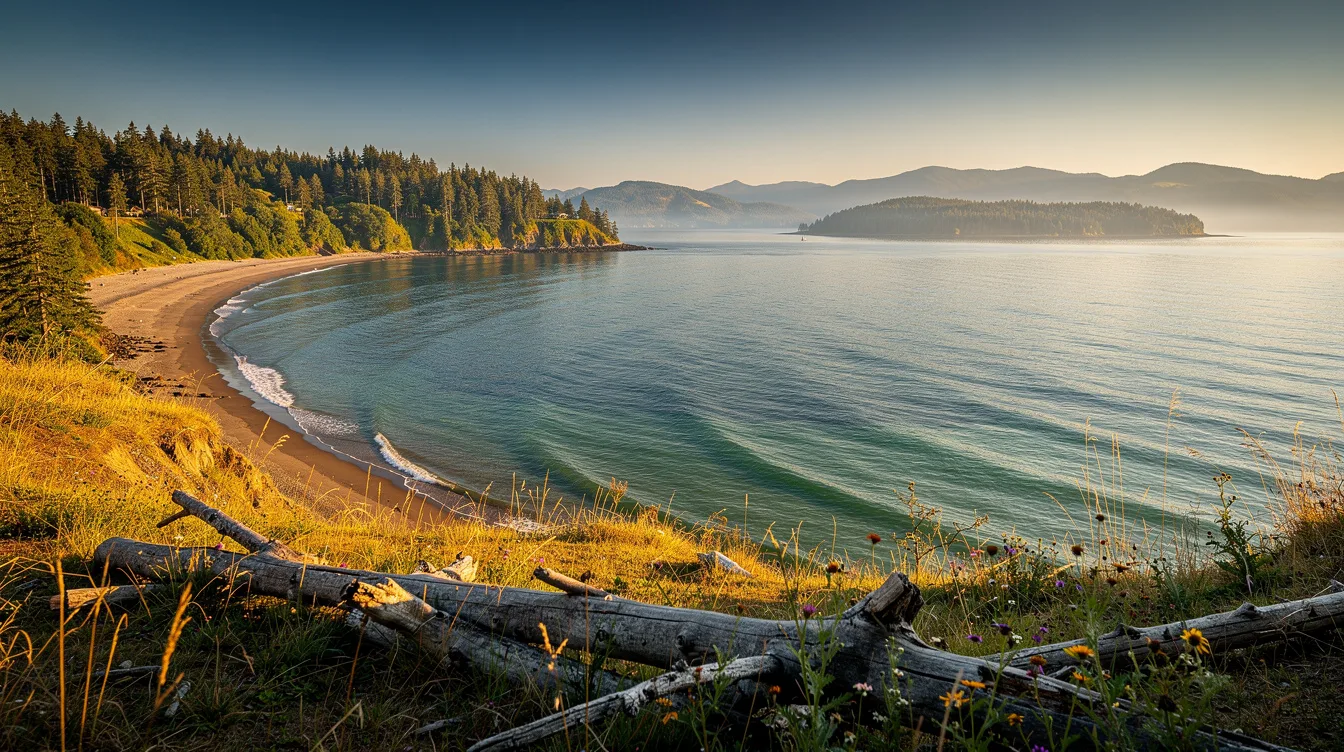
Langley is associated with whale watching along Saratoga Passage, but a sighting isn’t the whole reason to come. At the southern end of Whidbey Island, this small Washington town gives you water views, a walkable center, and a slower kind of afternoon.
And the setting does much of the work. Langley sits above the passage facing Camano Island, so the horizon stays part of the conversation wherever you wander.
Whale watching gives Langley its focus
The town’s connection to whale watching begins with the Saratoga Passage. Conditions matter, and the available information doesn’t specify a best season, so you shouldn’t plan around a guaranteed sighting.
But that uncertainty is part of the appeal. You can watch the water, listen for the quiet changes around the shoreline, and still have a worthwhile day if no whale appears.
And the view reaches beyond the passage. When conditions allow, the Cascades come into sight, giving the town a larger backdrop without making it feel busy.
A small town with enough to fill a day
Langley had 1,147 residents in the 2020 census, and that scale shapes the visit. The downtown is historic and walkable, which means you can explore without turning the day into a driving itinerary.
But small doesn’t mean empty. Galleries, boutiques, a theater, and restaurants give you reasons to linger between looks across the water.
And I’d make the center your starting point. Walk first, browse second, and leave room for an unplanned pause near the edge of town.
Washington travel often gets framed around big outdoor scenery, but Langley works through smaller pleasures. You hear footsteps, doors, and passing conversation before the water pulls your attention back.
Getting to Langley from Seattle takes a ferry
Langley isn’t on the mainland, so the trip from Seattle begins with the Mukilteo-Clinton ferry. From Clinton, continue south on WA-525 toward Langley at the southern end of Whidbey Island.
But don’t treat this as a quick urban outing. The ferry crossing makes the journey feel like a transition, and the town suits a relaxed one- or two-day stay better than a rushed visit.
Can you visit without planning around a whale sighting?
Yes. Whale watching is an association, not a promise, and the town has enough grounded activities for a day even when the passage stays quiet.
And you should check current ferry information before leaving Seattle. The research notes don’t provide sailing times, so build flexibility into your plans.
Whidbey Island rewards that patience. The ferry, the road, and the water-facing town create a trip with a clear rhythm, even when your schedule stays loose.
Look toward Camano Island, then slow down
Langley faces Camano Island, and that orientation gives the town its strongest visual pull. The water sits below the center, while changing conditions decide how much of the distant view you see.
But the town isn’t only a lookout. You can move from a gallery to a restaurant, then return to the water without needing a car between each stop.
And that’s where Langley earns my vote. It’s coastal, but never overcomplicated, with enough activity to keep an afternoon moving and enough quiet to let it breathe.
The best visits here leave room for weather. Clear conditions may open the view toward the Cascades, while softer skies turn attention toward the passage and the boats crossing it.
Know which Langley you’re visiting
There is another Langley in British Columbia, Canada, in the Vancouver metropolitan region. This one is in Island County, Washington, on Whidbey Island, and the distinction matters when you search for directions or lodging.
But the Washington town has a clear identity of its own. It incorporated on February 26, 1913, and its present-day appeal remains tied to the water, the walkable center, and the whale-watching connection.
And you don’t need to force the experience into a packed itinerary. Come for the passage, stay for the galleries and shops, and let the ferry ride set the pace.
Puget Sound is close enough to shape every view, but Langley feels most itself when the town grows quiet and the water takes over the afternoon.