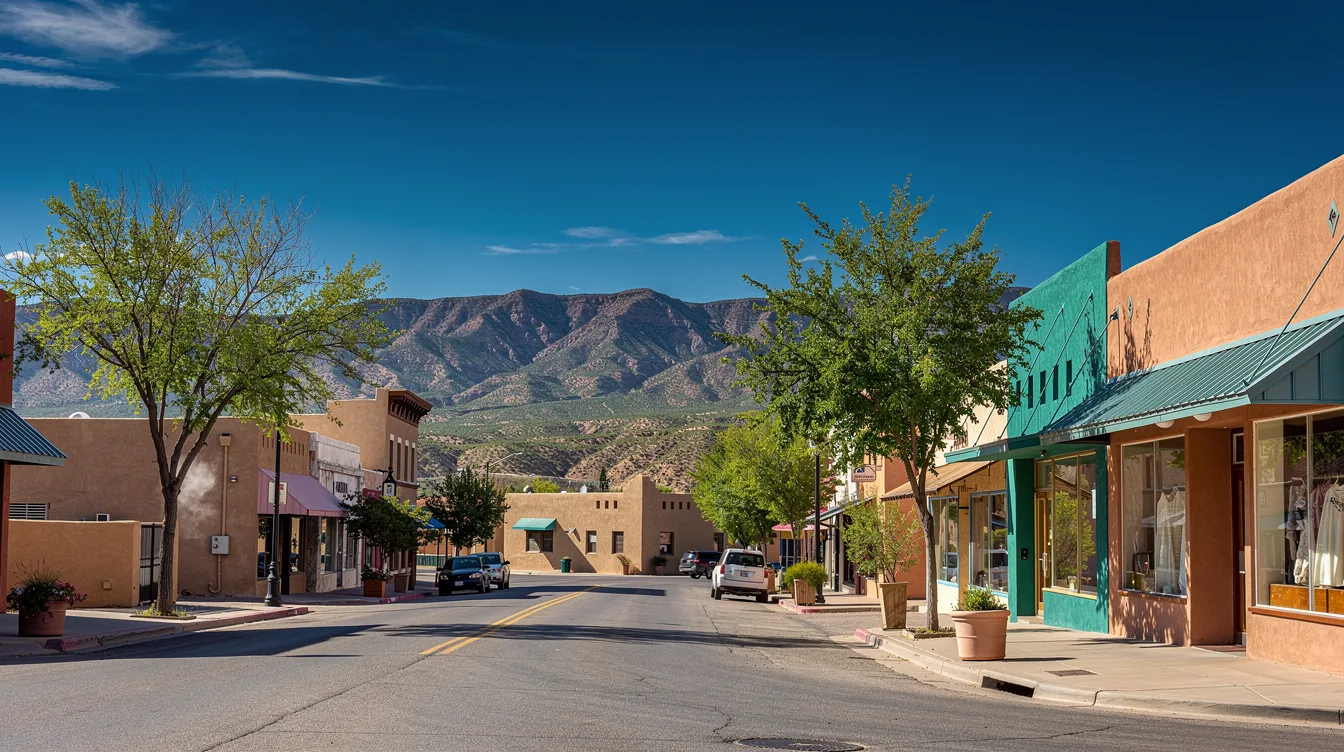
Truth or Consequences, New Mexico, changed its name for a radio promotion, and it never changed back. The town was Hot Springs until residents agreed in 1950 to borrow the title of a popular quiz show. The new name became official in 1951.
That is a strange civic decision by any standard. But it also makes immediate sense once you learn what still draws people here: geothermal mineral water, old bathhouse routines, and a town that seems comfortable being a little odd.
You’ll hear the shorthand T or C often, which is mercifully easier to say. The formal municipal name has no hyphens, though informal versions with hyphens remain common.
A radio stunt gave Hot Springs a permanent identity
The original name, Hot Springs, told visitors exactly what was here. Then a national radio show offered a publicity opening, and the town took it. You can call that a stunt, but it was a remarkably durable one.
The show mixed quiz questions with deliberately silly consequences for contestants who missed them. Its title had already reached listeners across the country, so the rename gave this small New Mexico town a name nobody casually forgets.
And the promise of the title is not some museum-piece footnote. It is the town’s central fact, printed on signs and repeated with the matter-of-fact confidence of a place that has lived with its unusual choice for decades.
You don’t need to know old radio history to enjoy the joke. But knowing it changes the town from a roadside curiosity into a story about a community deciding publicity was worth a permanent answer to an awkward question.
The water is why the name still fits
The name may have come from a broadcast, but geothermal mineral hot springs are the real reason to stop. Private soaks, historic bathhouses, and wellness-oriented lodging give the town a quiet purpose beyond the sign-photo.
You can expect a slower rhythm here. Steam rising from a soak and the hush of a bathhouse feel far removed from the comic energy that inspired the name, which is exactly the contrast that makes T or C work.
But this is a spa town with limits, not a polished resort district. The appeal is laid-back and personal, so travelers who want a packed schedule or a huge menu of organized attractions may find the pace too gentle.
If you come for the water, give yourself permission to do less. A private soak is the kind of plan that can make the rest of an afternoon feel unnecessary, especially when the desert light starts to soften.
The Rio Grande puts T or C near two lake escapes
T or C sits in Sierra County, near the Rio Grande and Elephant Butte Reservoir. That placement gives the town a useful split personality: soak in town, then head toward water and open desert beyond it.
Elephant Butte Reservoir is close by, and Caballo Lake is another nearby option for boating, fishing, and outdoor time. You can use the town as a base without pretending it is only about spa robes and mineral water.
And that combination matters because the day can be shaped around your mood. A quiet soak can follow time on the water, while a desert outing can end somewhere warmer and more still.
There is no need to force a grand itinerary. The town’s strength is its flexibility, though visitors expecting a major city’s nonstop choices should treat it as a relaxed base rather than a full-scale entertainment stop.
A small city that chose an unforgettable answer
The 2020 census counted 6,052 residents, which helps explain the town’s intimate scale. You are not arriving at a giant resort center. You are arriving in a small county seat with a famous name and a practical reason for it.
But small does not mean anonymous. The radio-show origin gives every soak, storefront, and turn through town a slightly offbeat frame, and that lingering oddness is more appealing than a forced attempt at polish.
If the name makes you laugh, good. It was born from a publicity promotion, yet the warm-water ritual beneath it is serious enough to hold your attention after the joke wears off.
By evening, the town’s long name still sits on the signs, while the mineral water does what it has always done: send up a little steam in the New Mexico air.