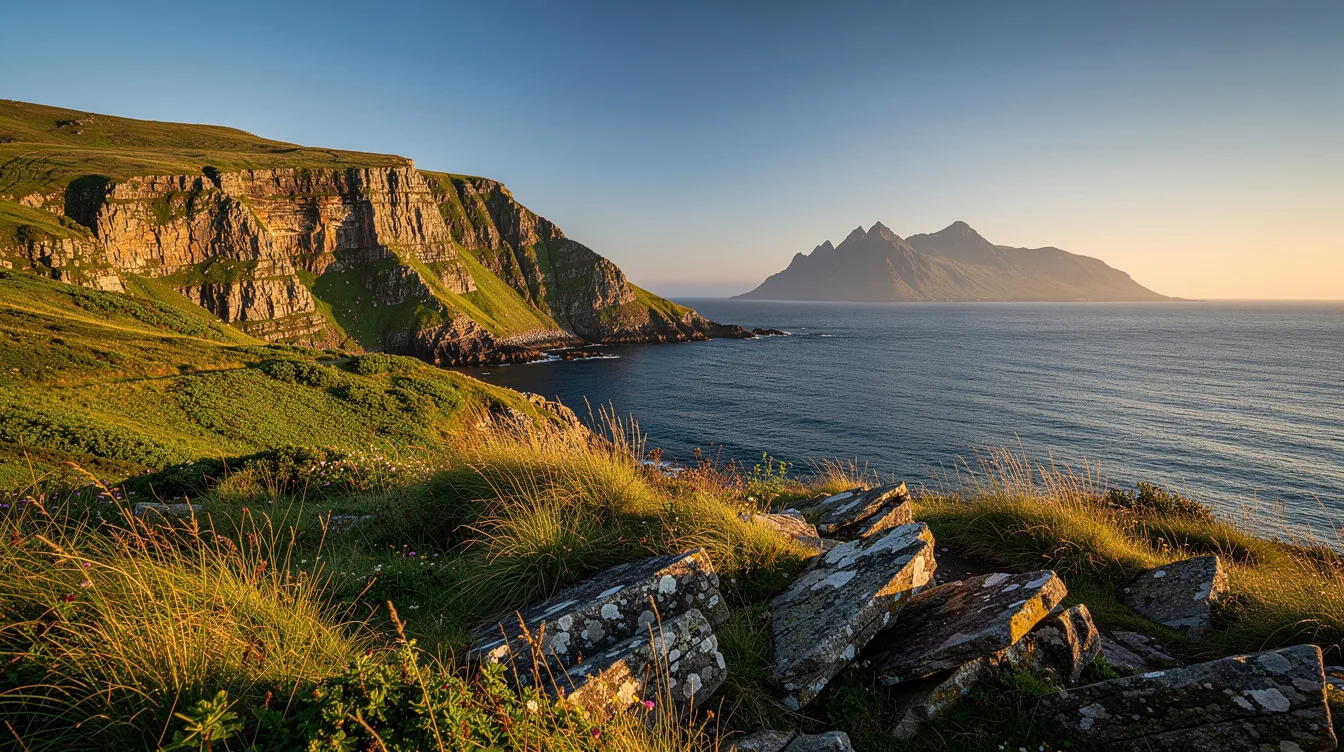
In 2020, a fossilized limb bone found on Eigg may have belonged to a Middle Jurassic stegosaur. That makes this small Scottish island more than a quiet stop in the Inner Hebrides. It holds the first confirmed dinosaur fossil found in Scotland outside Skye, which is a strong reason to look down while you walk.
The bone came from exposed Valtos Sandstone along the coast. Scientists consider a stegosaur the most likely source, but the wording matters: it may be from one. You won’t see the fossil on a casual beach walk, yet its discovery changes how Eigg feels.
The island’s rocks are no longer just scenery.
Eigg keeps its biggest surprise beside the sea
And the fossil is only one reason to visit. Eigg measures about 5.6 miles by 3.1 miles, so you can cross much of it on foot without spending your trip in a car. Visitors generally can’t bring cars, which makes the island slower in the best possible way.
But Eigg isn’t empty or difficult for the sake of it. The community has owned and managed the island through the Isle of Eigg Heritage Trust since 1997. If you like places with a clear local identity, this is my kind of Scottish island: practical, weather-beaten, and still shaped by the people who live here.
An Sgùrr gives the island its hard edge
And the walk to An Sgùrr supplies the physical challenge. The pitchstone ridge rises to 1,289 feet, and the route can take about four hours depending on conditions and your chosen path. You should be comfortable on mountain ground before setting out.
But the summit isn’t a quick viewpoint beside a road. Bring water, hiking shoes, waterproof layers, and offline navigation because the weather can turn a straightforward walk into a tiring one. In clear conditions, you’ll see toward Rùm, Skye, Mull, the Outer Hebrides, and mainland mountains near Lochaber.
Can you walk Eigg without a car?
Yes. And that limitation improves the experience. You can explore by foot, bicycle, or e-bike, then follow the coast toward Laig Bay and the Singing Sands.
Dry quartz sand squeaks under your steps, a small sound that makes the beach feel wonderfully strange.
The west coast is made for a slower afternoon
And Laig Bay is where I would spend the first unhurried day. The beach faces the ridges of Rùm, and the water can suit swimming when conditions allow. You don’t need a packed schedule here.
Let the tide, wind, and light decide how long you stay.
But the coast has limits, especially if you’re expecting resort convenience. Eigg has limited supplies, limited infrastructure, and weather that can interrupt plans. The trade-off is worth it: after a walk, you’ll hear wind over grass instead of traffic, with only the sea filling the gaps.
Beyond the beach, you can choose a guided water outing, kayaking, paddleboarding, or snorkeling. The island also has seals, birds of prey including golden eagles and white-tailed eagles, and marine mammals that are most visible from July through September. Wildlife sightings aren’t guaranteed, so keep your expectations flexible.
Plan around the ferry, not around wishful thinking
And reaching Eigg starts at Mallaig, on Scotland’s west coast. CalMac runs ferries from Mallaig to Eigg and the other Small Isles, with the exact crossing and island stops varying by day. Check the timetable and reserve before building the rest of your trip.
But don’t treat Eigg as a rushed day trip. A minimum of two nights gives you room to walk and absorb a weather change. I prefer three nights, because a ferry schedule shouldn’t dictate every hour of a place this compact.
When should you visit Eigg?
September is the smartest compromise if you want fewer midges and a quieter feel. And May and June bring birds and flowers, while July through September improves your chances of seeing marine mammals. Bring backup food because local supplies depend on the boats.
Accommodation includes cottages, cabins, bothies, pods, B&Bs, a hostel, and camping. You can visit the Crofting Museum, walk to the abandoned village of Grulin, or see Massacre Cave, but leave space between plans. By evening, the ferry sounds fade, and the island settles into wind, grass, and dark water.