Small modern front porch ideas for sleek curb appeal work best when one strong architectural move does the heavy lifting: a charcoal door, a narrow light, or a measured planter pair. The low-maintenance approach isn’t bare. It’s edited around weatherproof materials, clean sightlines, and details you’ll still like next season. Start small. Spend with intent!
- Paint the door a crisp charcoal (The Charcoal Anchor)
- Mount a slim sconce beside the entry (The Three-Height Light Stack)
- Layer a flatweave runner over concrete (Over Concrete, Not Under It)
- Frame the steps with matching planters (The Paired-Planter Rule)
- Swap bulky seating for a built-in bench (Can a Bench Make the Porch Feel Larger?)
- Repeat black metal in rails and accents (The Black-Line Rule)
- Hang one oversized house number (The Address Landmark)
- Tuck a narrow console under the window (The Window-Weight Balance)
- Use vertical slats to stretch the ceiling (Why Do Vertical Slats Work?)
- Float a round mirror opposite the door (The Reflection Pause)
- Soften the threshold with sculptural grasses (Grasses Over Fussy Flowers)
1Paint the door a crisp charcoal (The Charcoal Anchor)
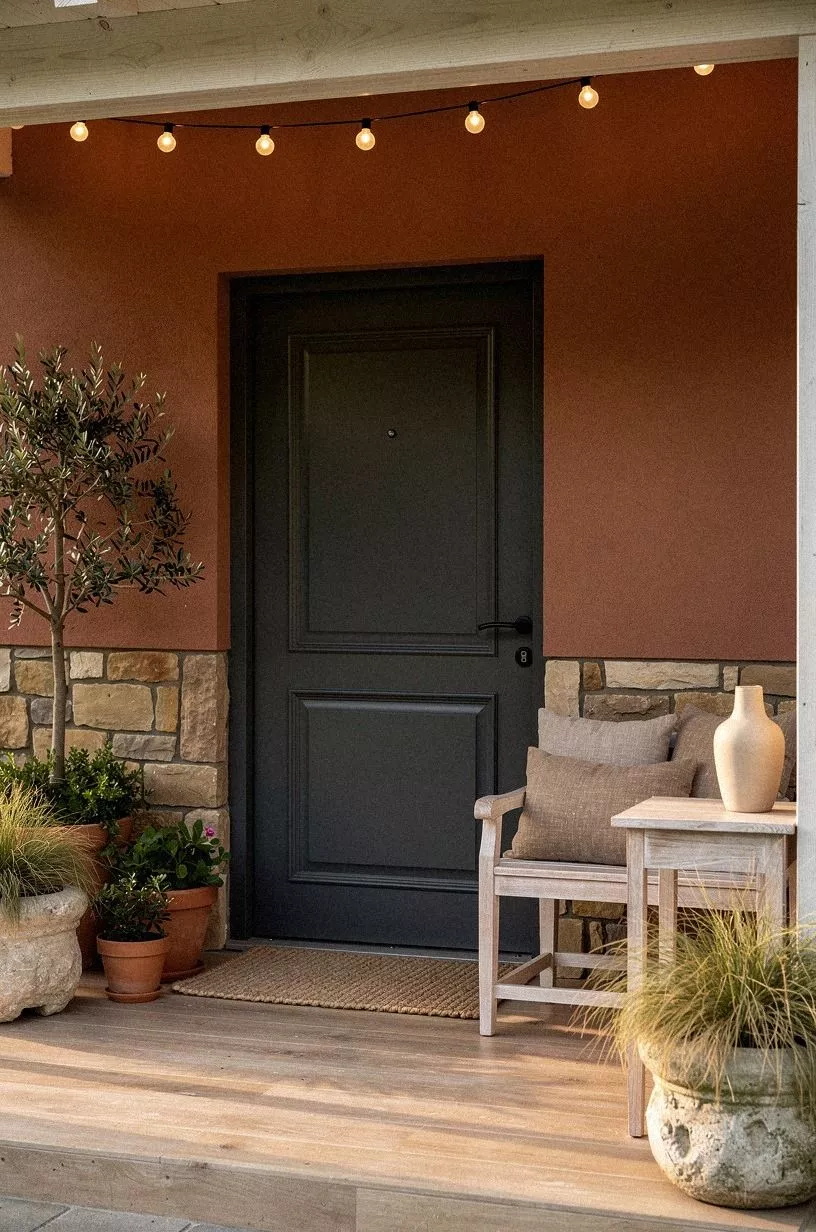
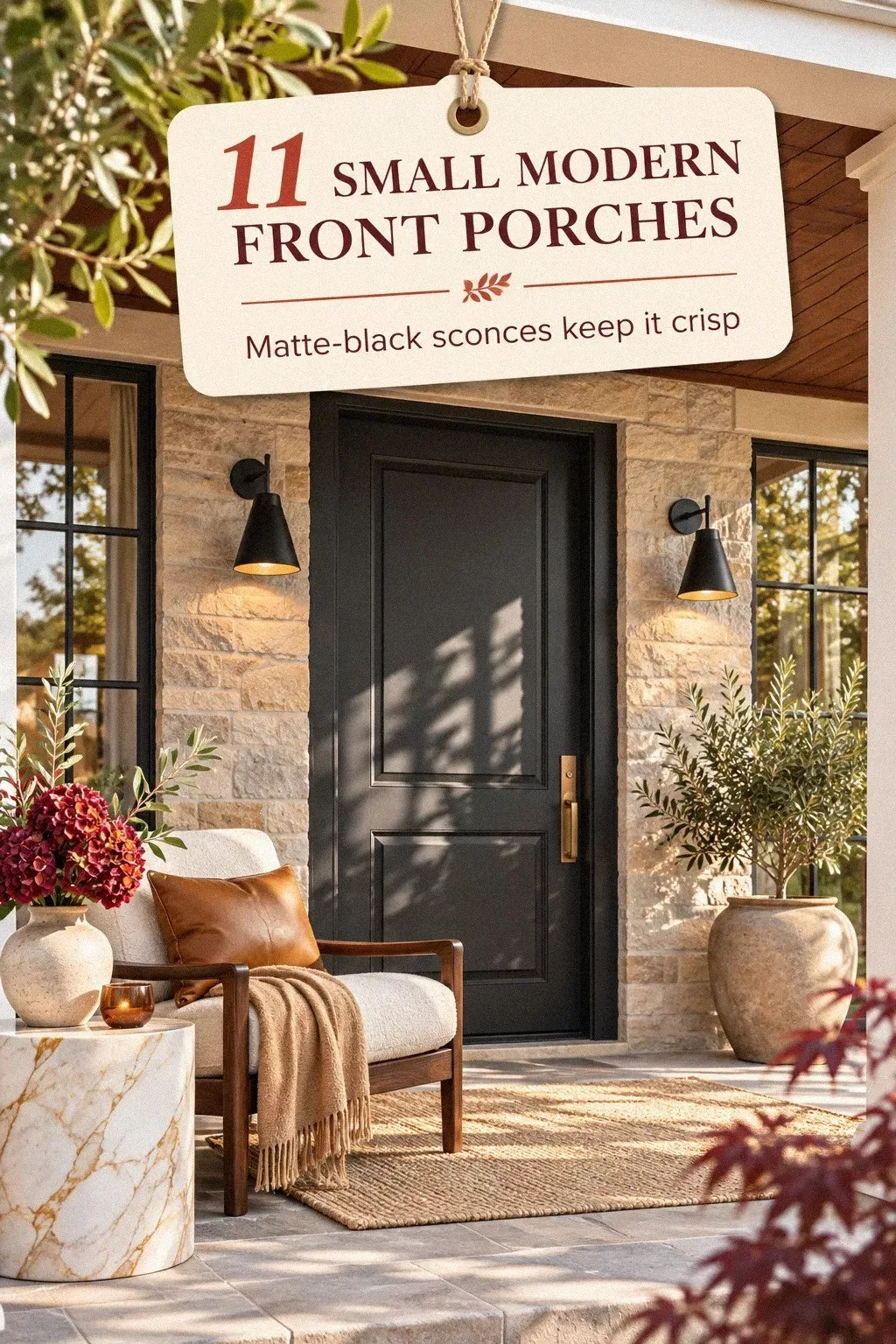
A charcoal door gives your porch an immediate focal point without adding anything that needs watering, polishing, or seasonal storage. Benjamin Moore Aura Exterior in deep charcoal works well against terracotta, pale stone, and olive foliage. You’re creating contrast, but the finish still feels calm rather than flashy.
For a balanced palette, pair the door with a cerused white oak threshold or a narrow bench in cerused white oak. The grain keeps the dark paint from feeling flat. Terracotta and stone tones stop the entry from looking overly formal.
Don’t use a blue-black if your porch sits in deep shade. It can read colder than expected.
A satin finish or low-lustre finish hides small scuffs better than a glossy surface. You’ll want a clean edge around the hinges, handle, and trim.
Sloppy borders show quickly against charcoal. A small porch has limited visual space, so every line counts.
If you’re comparing door colors, save these front door color inspiration ideas before buying paint. The strongest modern choice isn’t always the darkest one. It’s the shade that makes your existing stone, siding, and hardware look intentional.
2Mount a slim sconce beside the entry (The Three-Height Light Stack)
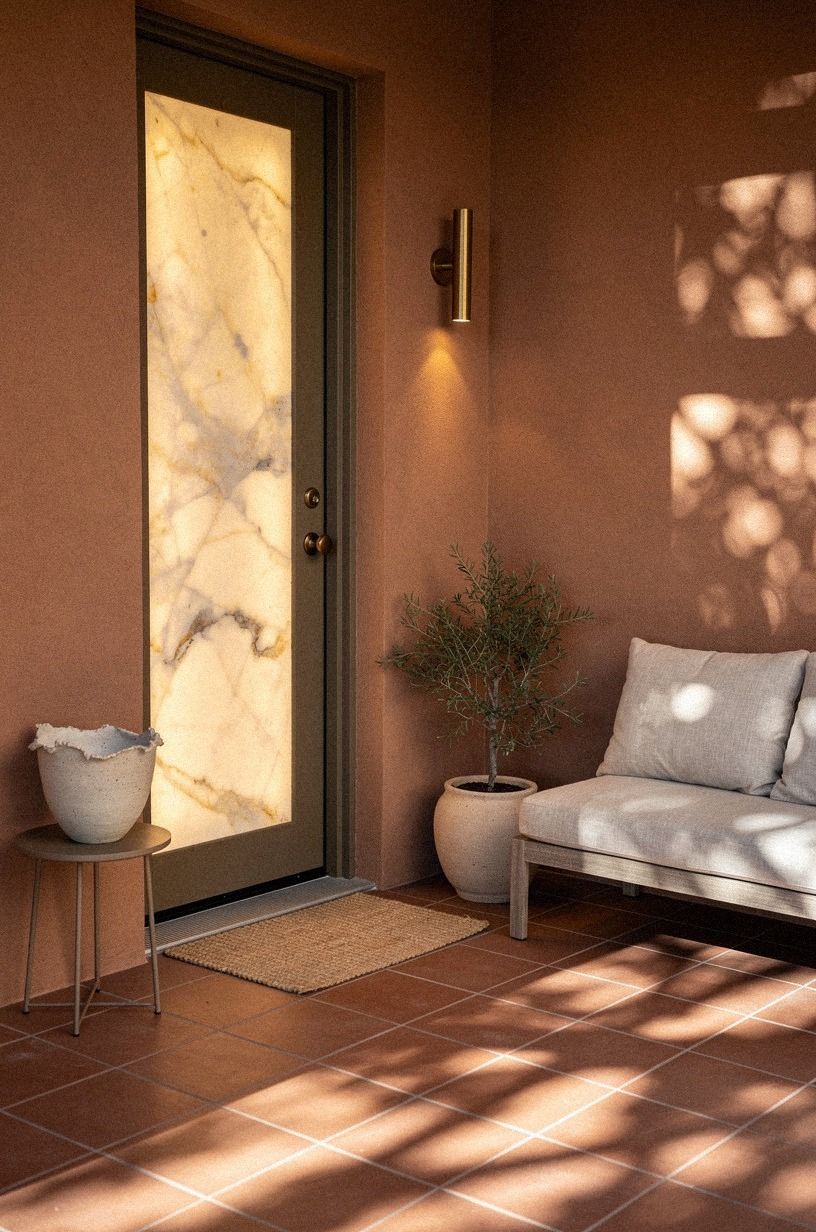
A slim sconce brings a soft clay, linen, and aged-brass palette to the entry while keeping the porch open. Choose a vertical fixture with a translucent diffuser, such as backlit translucent onyx, so the light spreads gently instead of producing a harsh circle on the wall. You’re adding atmosphere without adding clutter.
The three-height light stack works because your eye can move from the low threshold to the handle, then to the upper edge of the fixture. A narrow IKEA Nymåne style can suit a budget update.
A hand-finished aged-brass fixture gives a more refined look. Don’t pair a tiny light with an oversized door.
The scale will feel accidental.
Warm bulbs make the linen and clay tones feel inviting after sunset. You’ll want a pool of light that reaches the step, not a spotlight aimed at passing traffic. If the porch receives strong afternoon sun, a softened diffuser keeps the fixture from competing with the architecture.
For more placement ideas, browse these small porch fall decor examples. You’ll notice that the best entries usually have one clear light source, one grounding texture, and enough empty wall to let both breathe.
3Layer a flatweave runner over concrete (Over Concrete, Not Under It)
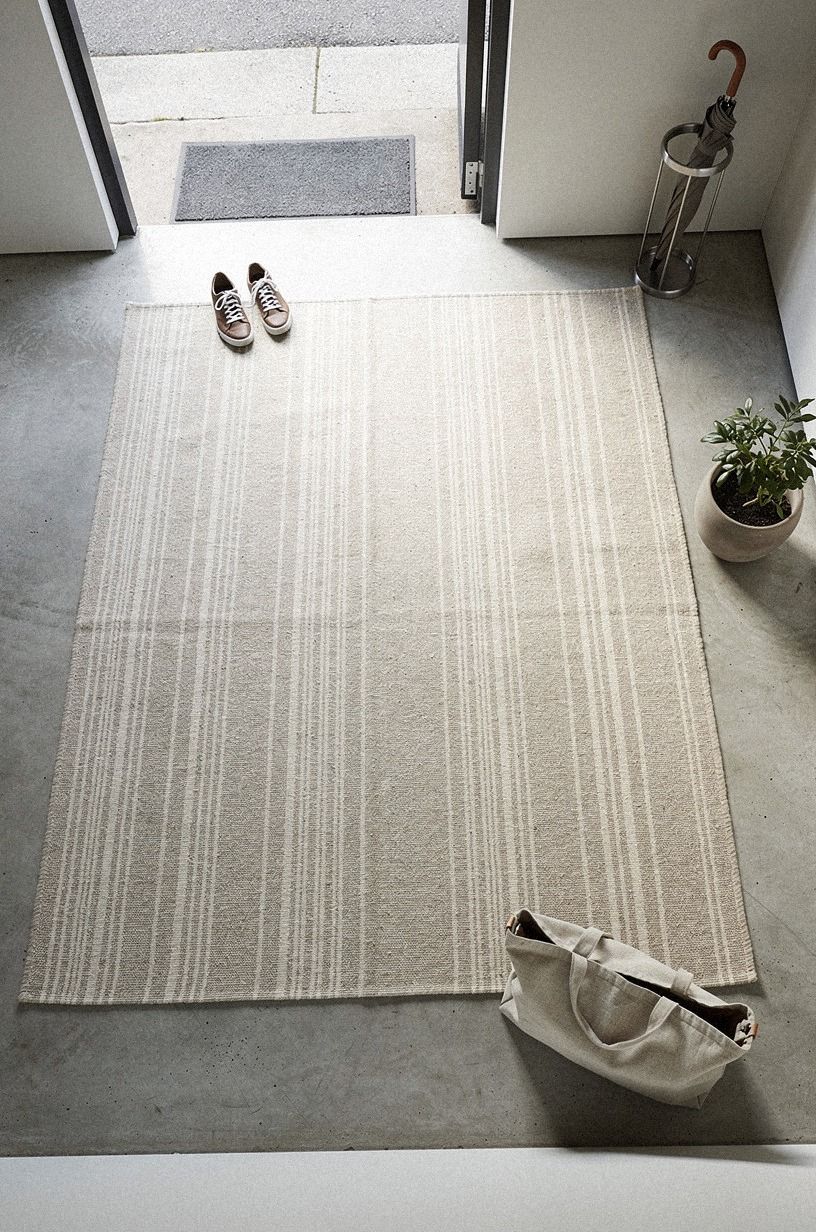
A flatweave runner gives a hard concrete porch a plum, gray, and rose-gold note without introducing a thick edge that catches shoes. Choose a weather-resistant polypropylene flatweave with a low profile and a pattern that can disguise dust. You’re softening the approach while keeping the walking path easy to sweep.
A runner should support the entry rather than fill every inch. Let the concrete remain visible at both sides, especially if the porch is narrow. A book-matched walnut door or console can warm the palette.
A muted rose-gold accent keeps the plum from feeling heavy. Don’t choose a shag texture outdoors.
It traps grit and dries slowly.
The practical placement rule is simple. The runner should sit firmly beneath the main approach, with no curled ends near the threshold.
You’ll want a rug pad rated for exterior use if the surface allows it. If the concrete gets wet often, select a design that lifts and rinses easily.
For another seasonal layer, compare these small porch summer decor ideas. They show how a flat textile can make the entry feel airy without fragile accessories or excessive color.
4Frame the steps with matching planters (The Paired-Planter Rule)
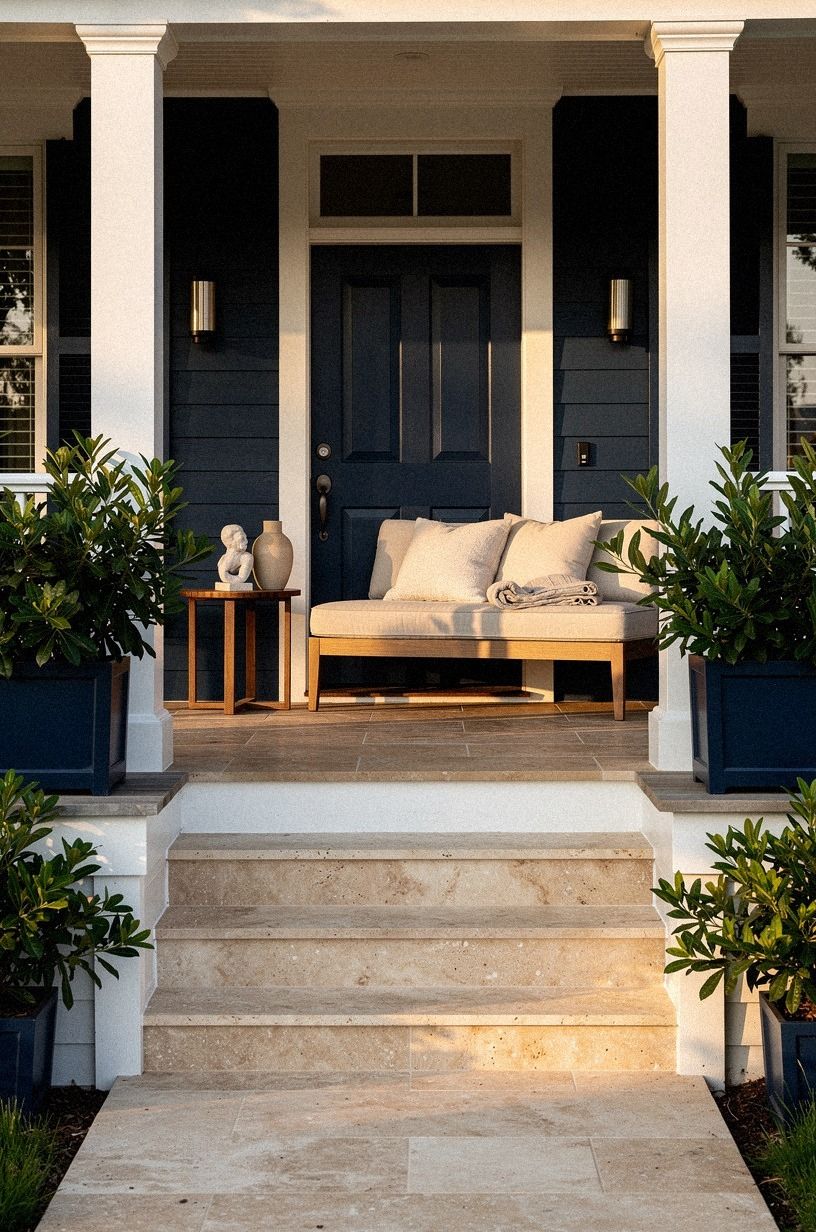
Matching planters create a navy, white, and walnut composition that makes the steps look wider and more settled. Use two tall vessels with warm travertine tones or a lightly textured mineral finish. You’re giving the entrance a visual frame, so the door reads as the destination rather than one object floating above the steps.
The paired-planter rule works best when both vessels share a shape, even if the plants differ slightly. A broad warm travertine planter can hold an olive tree.
A narrower companion can support a clipped evergreen. Don’t place either container where it reduces the walking path below 36 inches.
For low maintenance, choose plants suited to the actual sun exposure instead of copying a dramatic reference. You can use artificial branches on a sheltered covered porch. Natural foliage usually gives a more convincing shadow pattern.
A navy door with white siding benefits from walnut-toned stems because the wood keeps the scheme from becoming too crisp.
Use the strongest existing colors in the entry when the steps feel disconnected from the landing. Repeating height, color, and texture usually works better than filling every tread with small pots.
5Swap bulky seating for a built-in bench (Can a Bench Make the Porch Feel Larger?)
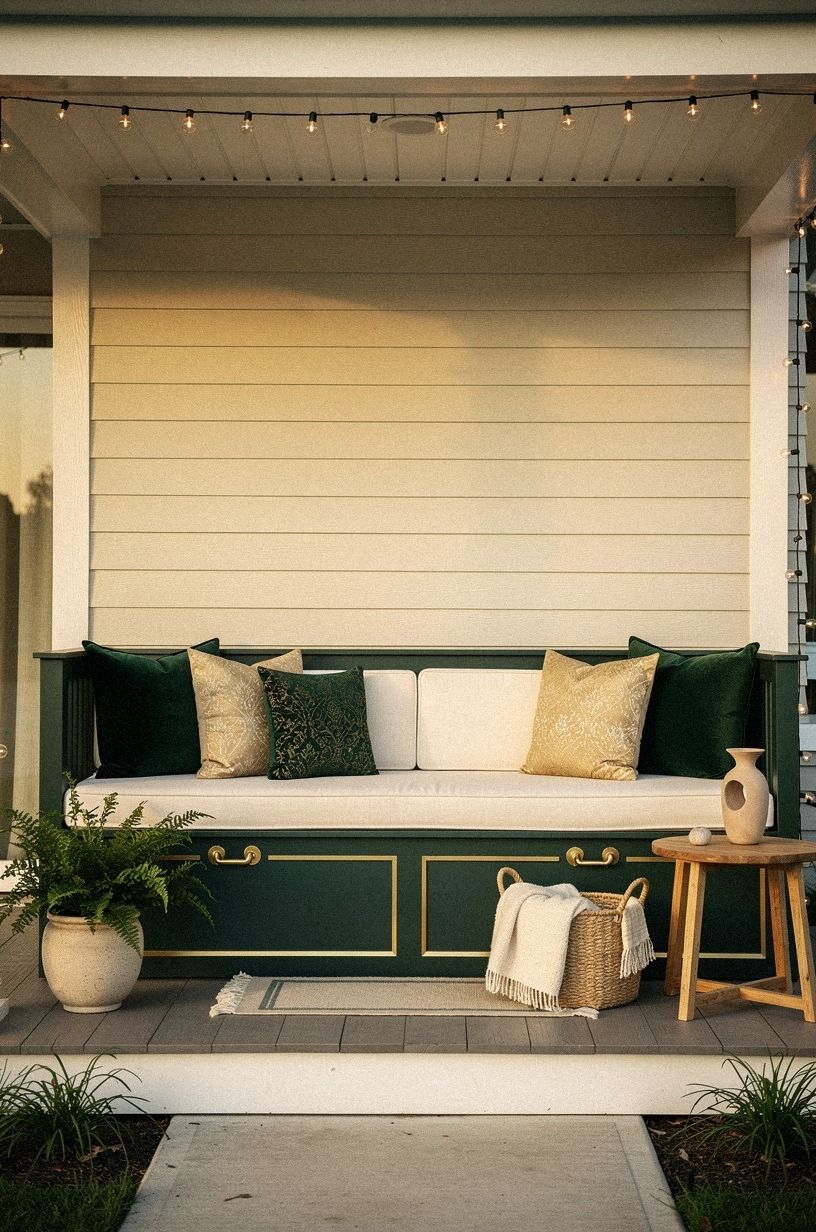
Yes, a shallow built-in bench can make a small porch feel more open because it keeps the floor clear. The emerald, gold, and cream palette works with an unlacquered brass rail or bracket, which will develop a soft outdoor patina. You’re replacing visual bulk with one continuous horizontal line!
Choose a bench depth that leaves comfortable circulation in front. Add a cushion in weatherproof fabric rather than indoor upholstery. A cream base with emerald piping can echo surrounding foliage.
A gold-toned throw brings warmth without adding another large object. Don’t use a deep lounge chair if the porch already feels tight.
The seat may block the door swing.
For a quick cost reality check, outdoor updates can range from a small textile refresh to a full structural project.
The budget tier can cover paint, planters, and a cushion. A built-in bench may require more labor depending on the wall and floor.
You’ll want to keep the seating visually light. A simple Article Sven style in weatherproof upholstery may work better than an oversized club chair.
6Repeat black metal in rails and accents (The Black-Line Rule)
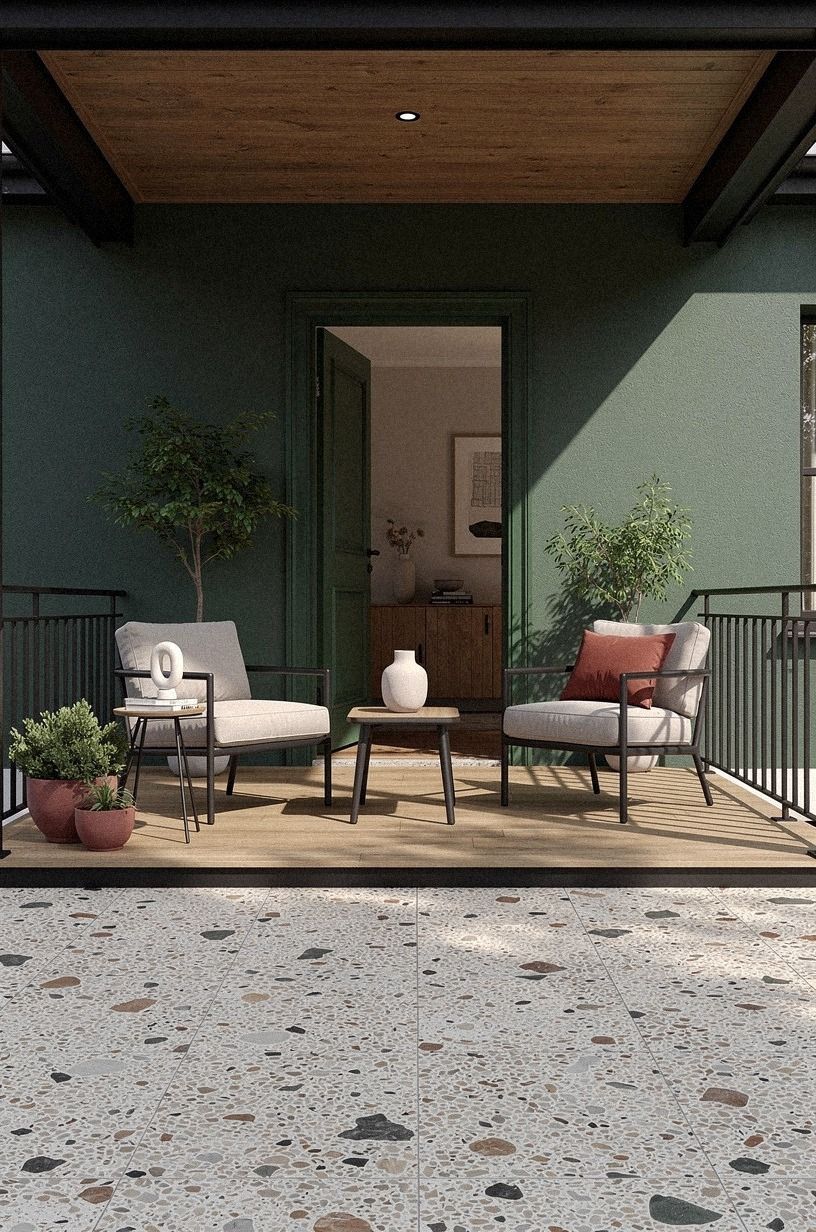
Repeating black metal across the rail, door handle, planter rim, and light fixture gives a forest-green, rust, and natural-oak porch a sharper outline. The black-line rule keeps the palette connected without forcing every piece to match. You’re using the dark tone as punctuation.
A rail with oversized-chip terrazzo beside it adds lively surface contrast. The terrazzo chips catch daylight.
Black metal keeps the composition grounded. Don’t mix three different black finishes in a small area.
Glossy, matte, and hammered surfaces can make the porch feel busy.
Natural oak prevents the scheme from becoming severe. A narrow oak stool, a slatted planter, or a simple threshold strip is enough. You’ll want the rust tone to appear only once or twice, perhaps in a cushion or ceramic pot.
That keeps forest green dominant.
If your porch needs more seasonal warmth, these small porch spring decor ideas show how to change flowers and textiles while keeping the black framework in place. The structure stays steady, but accents can shift.
7Hang one oversized house number (The Address Landmark)
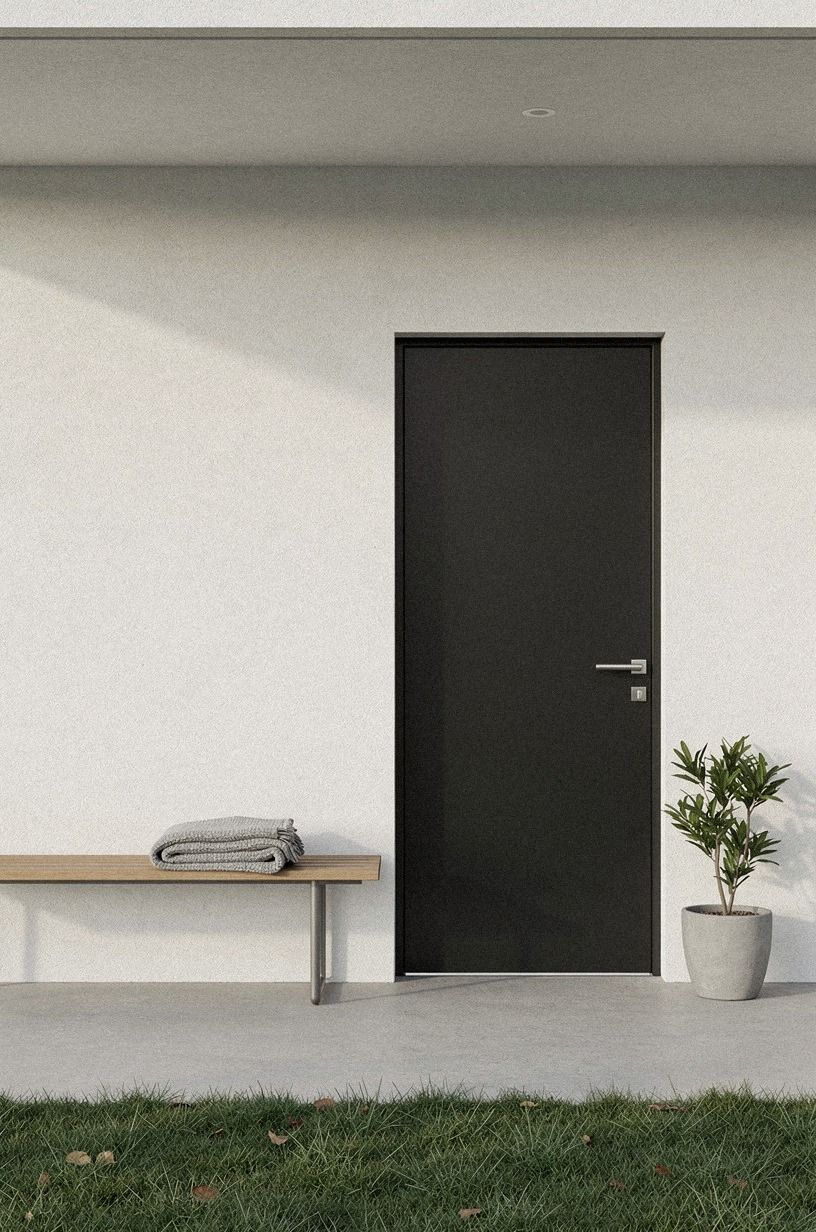
One oversized number gives the dusty-rose, charcoal, and brass palette a clear point of focus. Choose a single large brushed brass house number with enough contrast against the wall to read from the sidewalk. You’re improving identification and adding a graphic shape at the same time.
A hand-applied Venetian plaster wall can carry a sculptural number especially well because its slight variation catches side light. If the wall is smooth, a raised number with a shadow gap creates similar depth. Don’t scatter several small digits across the entry.
A single strong scale feels more modern and stays easier to read.
The number should align with the door hardware or the centerline of the porch. Don’t place it wherever a screw happens to land. You’ll want to test the position with removable tape first, especially if the siding has a strong horizontal seam.
For more plant and address balance, browse these small porch topiary ideas references. They show how one vertical living form can support a large number without competing with it.
8Tuck a narrow console under the window (The Window-Weight Balance)
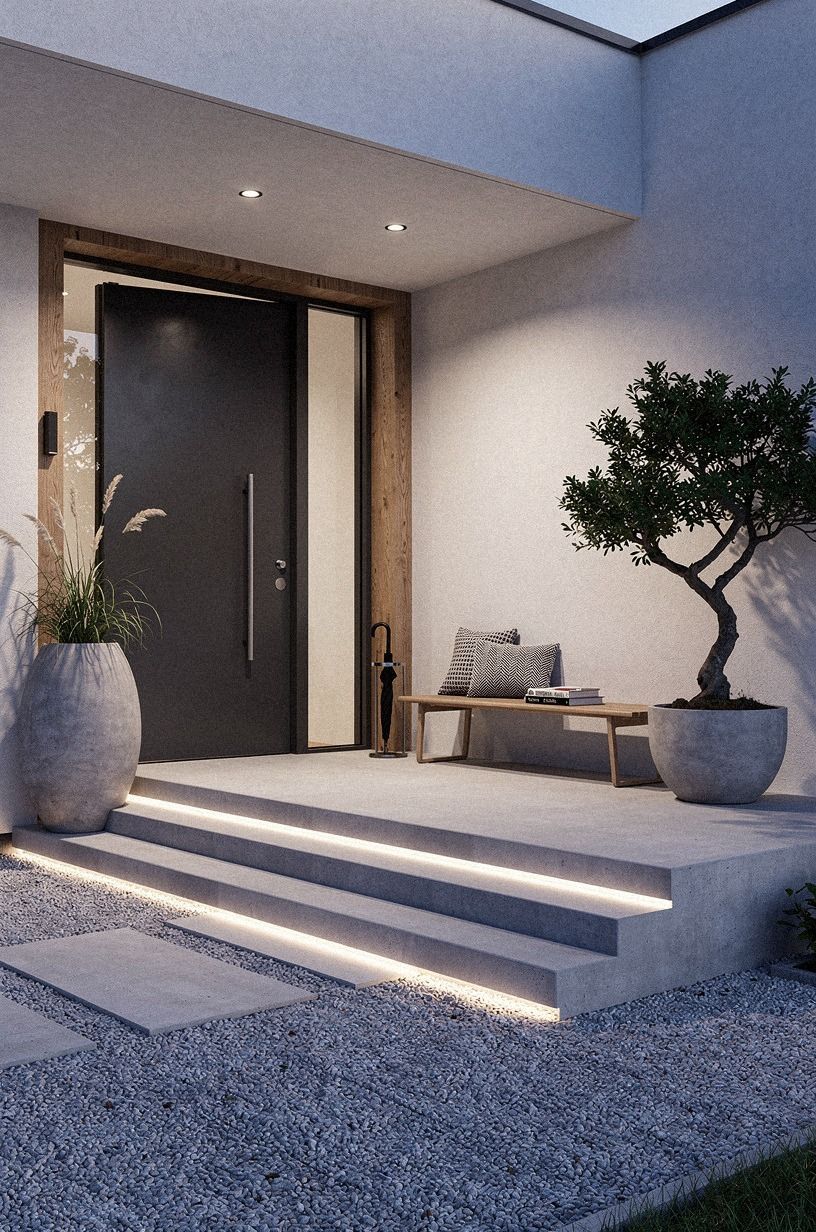
A narrow console under the window gives a warm-white, camel, and black porch a useful landing zone for keys, mail, or one weather-safe bowl.
9Use vertical slats to stretch the ceiling (Why Do Vertical Slats Work?)
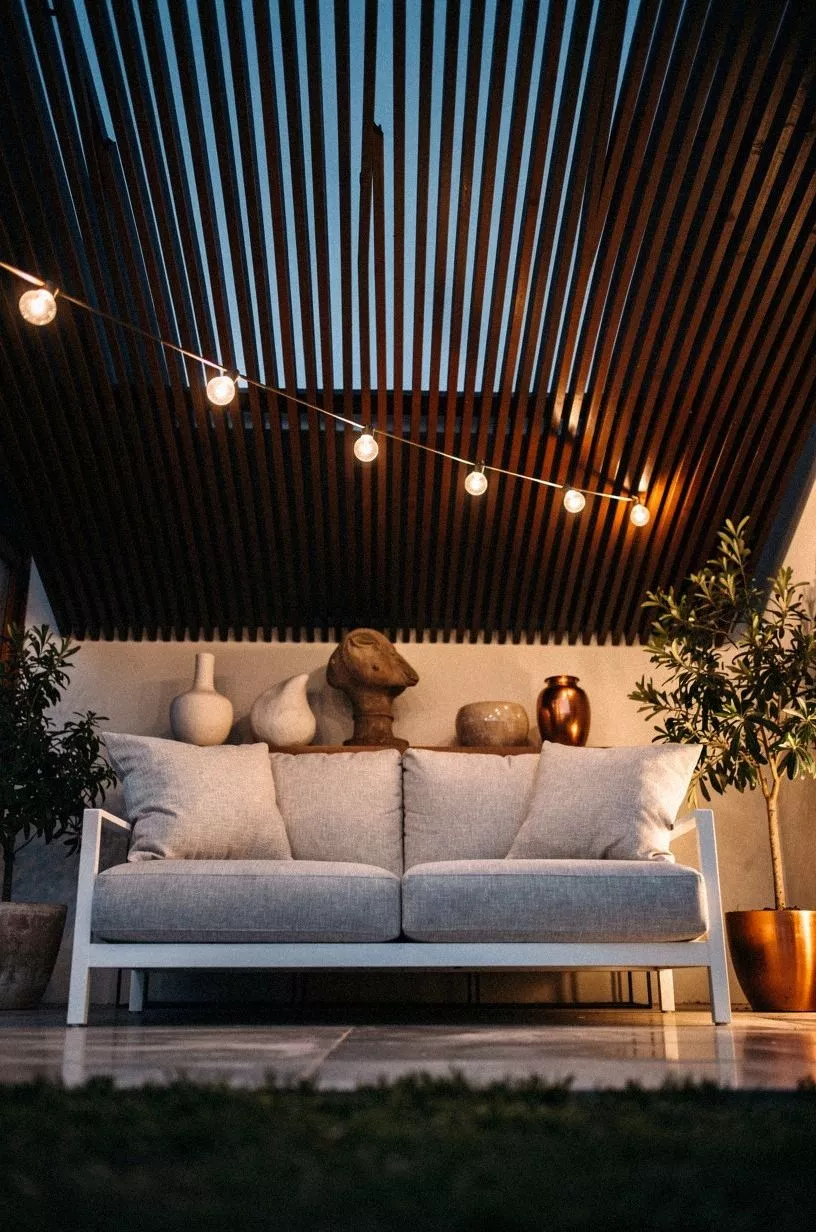
Vertical slats draw the eye upward, which can make a low porch feel more spacious without changing its footprint. The midnight-blue, copper, and ivory palette suits washed Belgian linen with lived-in texture, giving the ceiling a relaxed quality. You’re creating rhythm, not visual noise.
Use evenly spaced slats in a weather-appropriate finish. Repeat the same wood tone in one small accessory.
Don’t mix multiple slat widths on a short wall. The pattern can look restless.
A single vertical panel behind the door or bench is often enough.
Copper hardware adds a warm flash against midnight blue. Ivory fabric prevents the ceiling from feeling dark.
You’ll want to keep the number of accents low because the slats already provide repetition. If the porch faces a busy street, vertical lines can direct attention back toward the entry.
For a softer seasonal version, review these small porch budget decor details references. They show how linen, dried stems, and warm-toned accessories can work with architectural rhythm.
10Float a round mirror opposite the door (The Reflection Pause)
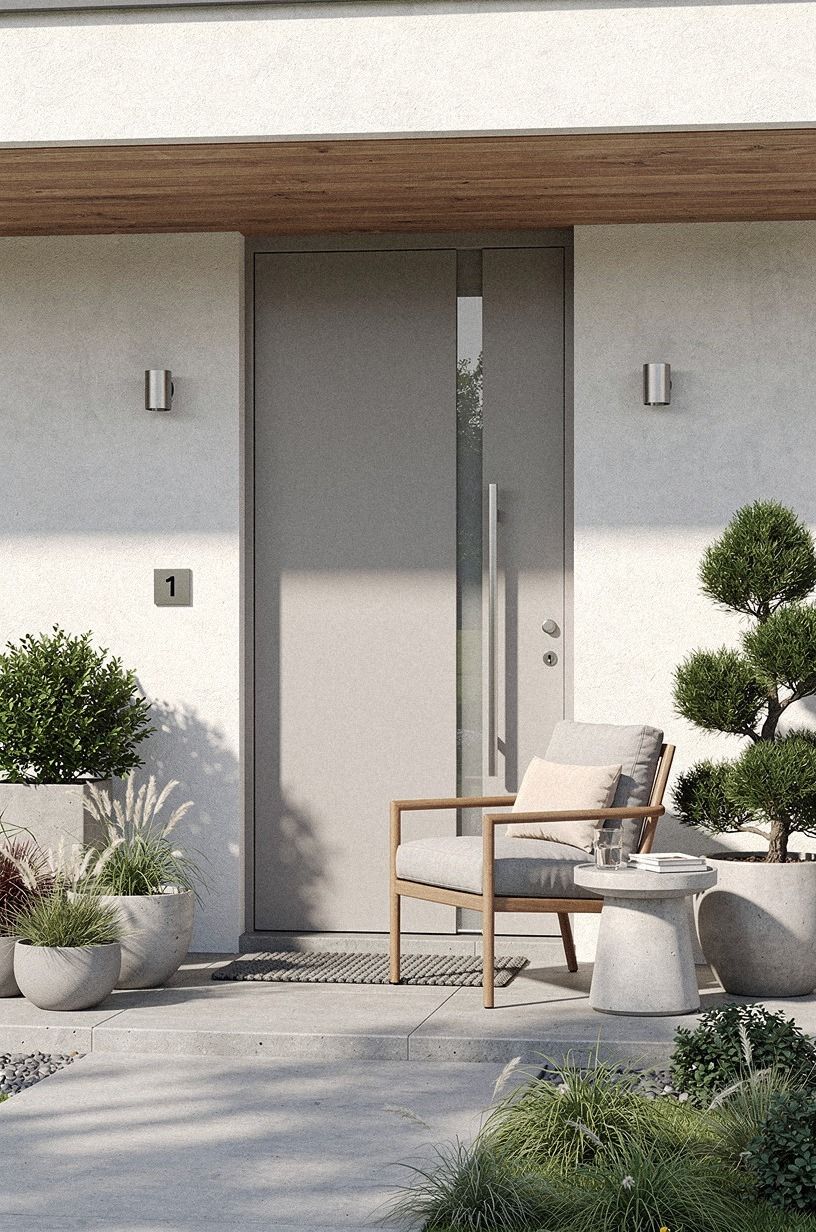
A round mirror opposite the door adds a sage-green, warm-cream, and natural-wood composition while reflecting light across the porch.
11Soften the threshold with sculptural grasses (Grasses Over Fussy Flowers)
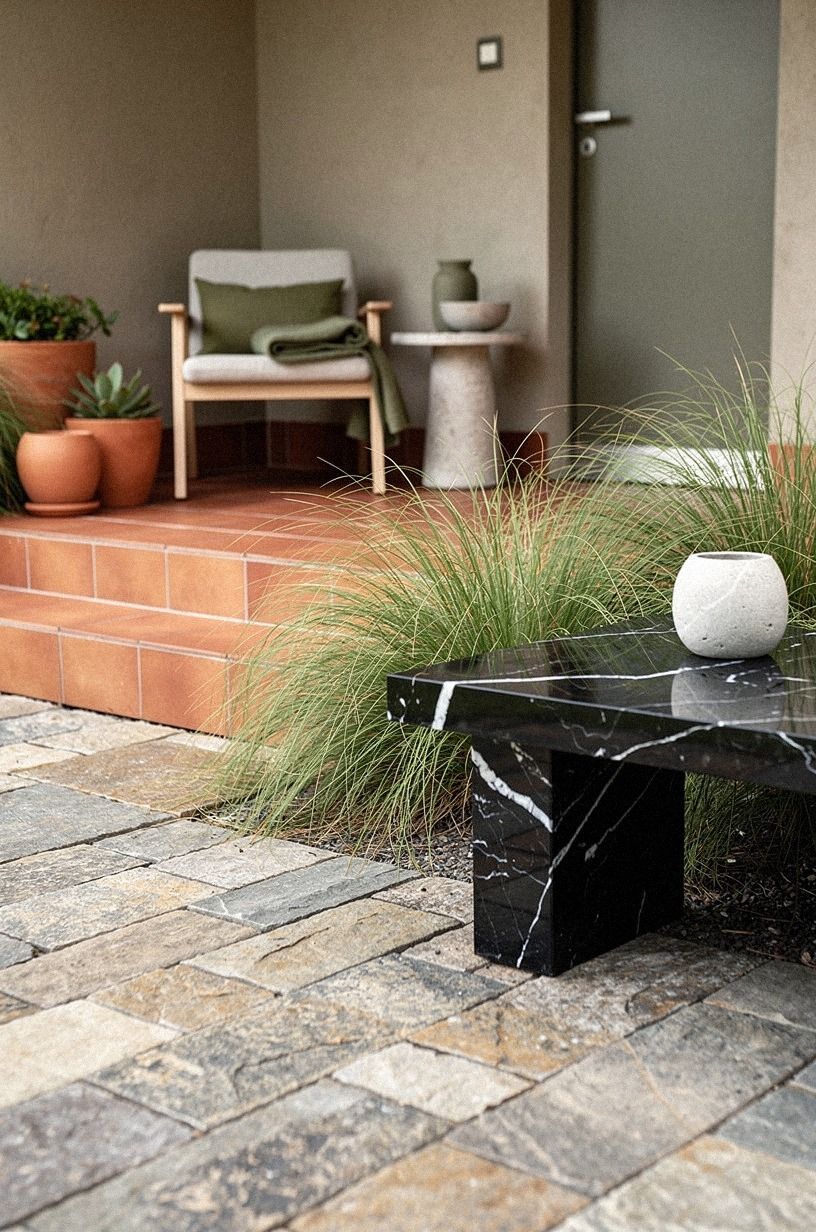
Sculptural grasses soften a terracotta, stone, and olive entry while keeping the threshold easy to maintain. Use tall, airy stems in a Nero Marquina black marble planter or a sealed stone vessel. The dark base connects with charcoal hardware.
You’re adding movement without relying on delicate blooms.
Choose grasses that hold their form through wind and changing light. A mass of narrow stems can make the door feel more welcoming.
A single oversized vessel keeps the footprint controlled. Don’t place feathery foliage directly across the handle or step.
The threshold should stay clear and easy to approach.
The stone and olive palette feels earthy beside cerused wood, especially when the planter has visible veining or natural variation. You’ll want to repeat one warm terracotta note in a pot, cushion, or tile. A simple composition stays inviting after the seasonal display disappears.
For more plant scale ideas, use these small porch topiary references as a reference. The strongest arrangements give your eye one tall form, one low anchor, and enough open space between them.
Edit the Palette Before Adding More
Start with three main colors and one repeating metal. A charcoal, warm white, and natural wood palette can feel complete with very few objects. You’ll know the scheme is working when each new item supports an existing tone.
If the porch already has brick, stone, or painted siding, let that surface lead. Don’t add a new accent color just because it looks attractive in a store.
Use one small test object first. It can reveal whether the shade feels calm or too sharp.
For more combinations, compare the existing porch colors before shopping. A clear palette makes paint, planters, and hardware easier to choose.
Spend on Contact Surfaces
Prioritize the door handle, threshold, walkway, and lighting. These are the parts your household sees and uses most often. A solid metal handle, sealed threshold, and weather-rated fixture can make a modest porch feel considered.
You don’t need premium materials everywhere. A durable polypropylene runner can handle regular traffic.
A simple powder-coated planter can hold its finish with limited care. Choose the surface that receives the most contact, then save on less-used accents.
When costs need trimming, these low-cost porch decor details can help. You’ll find practical ways to keep the entry polished without filling it with disposable objects.
Make Every Seasonal Swap Earn Its Place
Seasonal changes work best when the structure stays fixed. Keep the black metal, wood tone, and main planter forms consistent. Then switch one textile, plant, or small ceramic accent.
Don’t let seasonal decor block the door swing or walkway. You can use a rust cushion in autumn, pale linen in summer, and fresh green foliage in spring. Each swap should add color or texture that the porch does not already have.
For more restrained transitions, compare these small porch welcoming arrangements references. You’ll see how a few deliberate changes can shift the mood without creating storage problems.
Protect the Walkway
A sleek porch still needs easy movement. Keep at least 36 inches for the main path where possible. Check the distance after adding a planter, bench, runner, or console.
You’ll want to open the door fully before final placement. Don’t let a container sit where shoes naturally land. A clear route makes every design choice feel more generous.
Why the Low-Maintenance Porch Works Now
The strongest modern porch updates aren’t built around constant replacement. They rely on durable decisions: one paint color, one light shape, one repeated metal, and planting suited to actual conditions.
That approach matters because outdoor spaces face dust, rain, pollen, and hard sunlight. A porch that requires daily correction won’t stay inviting for long.
The best budget usually goes toward surfaces at eye level or areas receiving constant contact. A good exterior paint, a properly sealed threshold, and a fixture with a replaceable bulb can outperform a pile of decorative accessories. You’re also more likely to keep a simple layout clear, which protects the walkway and makes the entry feel generous.
There’s a useful design tension here. A porch should feel personal, but every object must survive weather and regular use.
That’s why Farrow & Ball Exterior Eggshell can be a better choice than a delicate indoor finish. Weatherproof textiles also deserve more attention than decorative pieces that cannot remain outside. The right question isn’t whether a porch can hold more.
It’s whether each addition earns its place.
This is also why modern curb appeal doesn’t require a complete renovation. A charcoal door, a narrow sconce, or a pair of matching planters can change the view from the street in one afternoon.
If the structure is sound, you don’t need to cover it. You need to clarify it, then let the materials do the work!
The Questions Worth Answering First
What are the best Small Modern Front Porch Ideas for Sleek Curb Appeal for a small front porch?
The strongest picks are a charcoal door and one slim wall sconce because both create high visual impact without taking floor space. An IKEA console or compact Article bench can add function, but keep the walkway open and let one architectural feature lead.
Where can you buy Small Modern Front Porch Ideas for Sleek Curb Appeal pieces on a budget?
IKEA, Wayfair, and Target offer accessible lighting, planters, cushions, and small consoles. Facebook Marketplace and local thrift shops can provide solid wood pieces at lower prices. You’re more likely to find a useful item when searching by size, finish, and material instead of style label.
How much does a Small Modern Front Porch Ideas for Sleek Curb Appeal makeover cost?
A small update can cost about $100 to $300 when paint, plants, and one textile do most of the work. The budget table lists typical US ranges from $200-$900 for basic outdoor updates to $1,500-$6,000 for a mid-level project. Free changes include editing clutter and rearranging existing pieces.
Can you create a Small Modern Front Porch Ideas for Sleek Curb Appeal look on a budget?
Yes, and the easiest route is to repaint the door, regroup existing planters, and add one weather-resistant runner. You can also shop secondhand for a narrow bench or console. A limited palette makes inexpensive pieces feel more connected, so you won’t need many accessories.
Is a Small Modern Front Porch Ideas for Sleek Curb Appeal update worth it in a small space?
Yes, because a compact porch rewards clear editing. One vertical light, one strong door color, and one grounded planter pair can create better sightlines than a full furniture set. Keep at least 36 inches for circulation, then use wall height for lighting, numbers, or a mirror.
Is Small Modern Front Porch Ideas for Sleek Curb Appeal a good idea for a rental?
Yes, especially when you choose no-damage swaps. Removable hooks, peel-and-stick accents, a tension-mounted textile, and freestanding planters can change the entry without permanent work. You’ll want to confirm building rules before adding exterior paint or hardware, even when the update seems minor.
Where to Start First
Start with the charcoal door. Its broad surface changes the porch from the street, costs less than structural work, and gives every later choice a clear reference point. Pin these small front porch curb appeal ideas for the next layer!