
Nighttime anxiety may respond to a calmer room, a shorter evening routine, and fewer bright signals. Small changes can cost $0 to $200, depending on materials, while the most useful shift is often simple: give your senses one gentle cue at a time. Your bedroom doesn’t need a full makeover.
- Layer warm bedside lighting behind a linen shade (The Three-Height Light Stack)
- Style a grounding stone tray beside the bed (The Touchpoint Rule)
- Hang blackout curtains with a soft botanical lining (Soft Darkness Over Heavy Drapes)
- Place lavender sachets inside the bedside drawer (Can Scent Help You Settle?)
- Build a calming tea station on a nightstand (The Two-Minute Tea Landing)
- Anchor the bed with a textured wool runner (The Warm-Path Rule)
- Arrange a worry-release journal beside the lamp (The Worry-Release Ledger)
- Display eucalyptus branches in a ceramic bedside vase (Why Eucalyptus Beats Clutter)
- Create a phone-free charging nook across the room (The Far-Field Boundary)
- Drape a weighted throw neatly across the bed (The Gentle Weight Rule)
- Paint the sleep corner in muted sage (Muted Sage Over Stark White)
1Layer warm bedside lighting behind a linen shade (The Three-Height Light Stack)
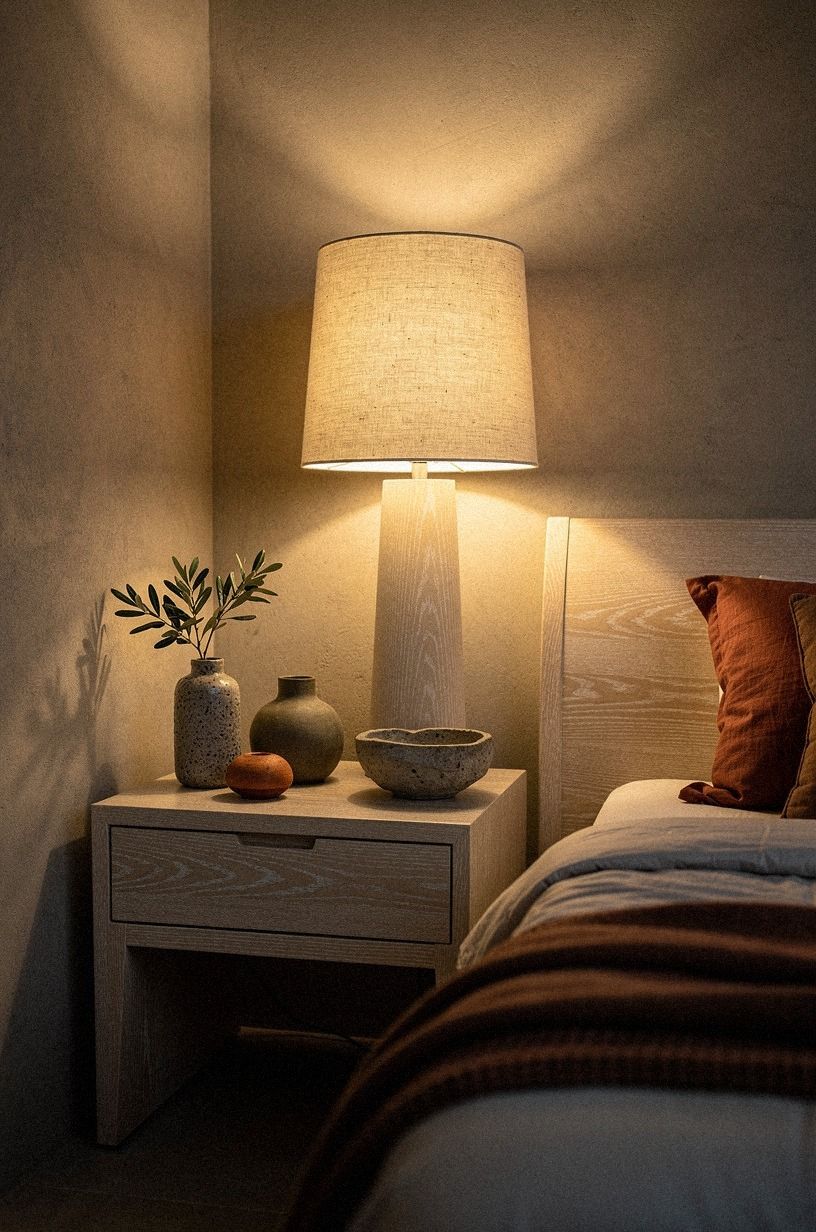
Three light sources can make a bedroom feel calmer than one harsh ceiling fixture. Keep the overhead light off during the final part of the evening, then combine a low bedside lamp, a soft wall glow, and a small ambient source across the room. A linen shade filters the bulb into a warm wash, while a cerused white oak base keeps a terracotta, stone, and olive palette grounded.
Choose a lamp with a warm bulb and a dimmer, then position the shade slightly below eye level from the bed. You’ll want the brightest pool near the book or journal, not across the whole room.
The room won’t feel as alert when your eyes aren’t chasing sharp shadows. The layered effect feels inviting without turning the bedside table into a glowing control panel.
A useful rule is three sources per room: overhead, task, and ambient. For a budget version, keep the existing lamp and add a small plug-in night-light behind the headboard. A cerused white oak finish will look softer than glossy white beside natural linen, especially when the lamp is dimmed before bed.
The color temperature matters. Bulbs around 2200K to 2700K create a golden atmosphere, while cooler bulbs can feel crisp and active.
You don’t need a complicated lighting system. A dimmer, a shaded lamp, and a low-level glow can change the entire final hour.
For a polished morning transition, pair the lighting routine with these 10-minute morning hair routine steps. The bedroom can support a calmer evening while the next day stays easier to manage.
2Style a grounding stone tray beside the bed (The Touchpoint Rule)
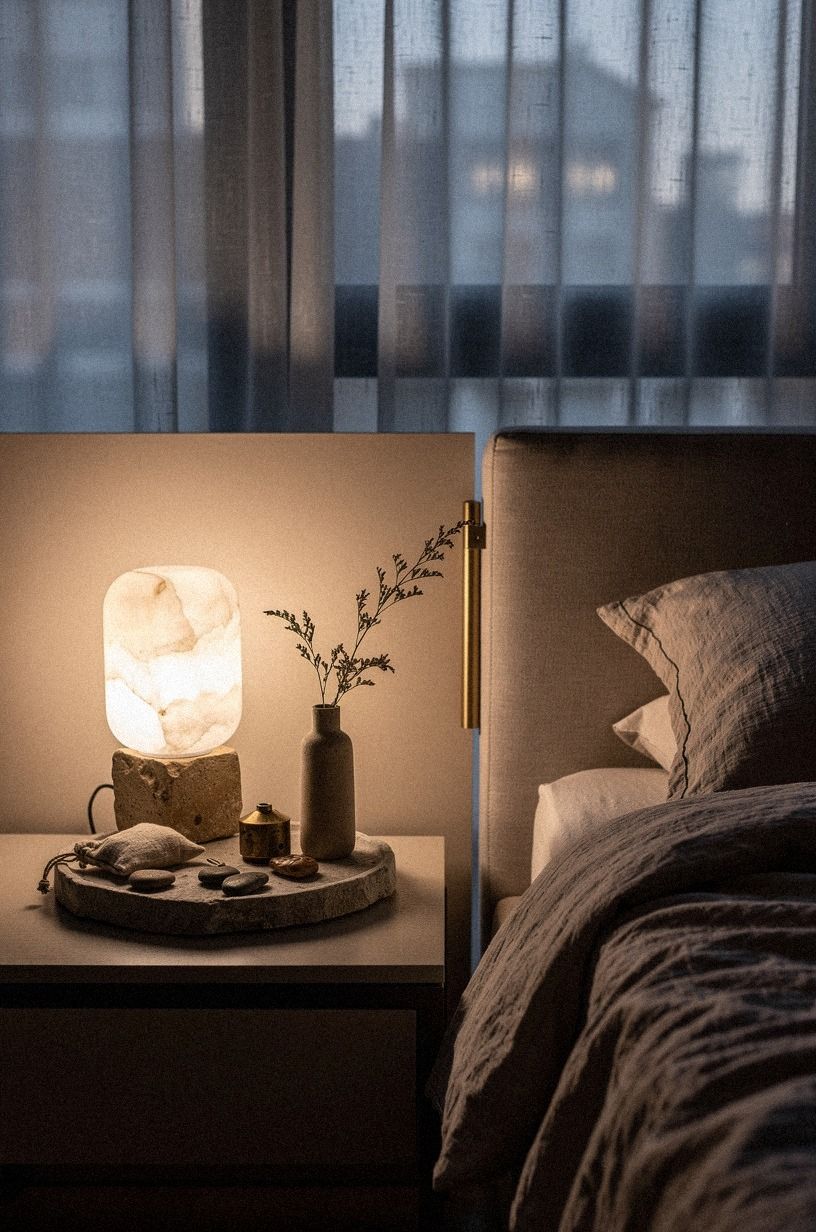
A backlit translucent onyx tray gives your hands one quiet place to land during a restless evening. Its clay, linen, and aged brass palette adds warmth without overwhelming the bedside surface.
3Hang blackout curtains with a soft botanical lining (Soft Darkness Over Heavy Drapes)
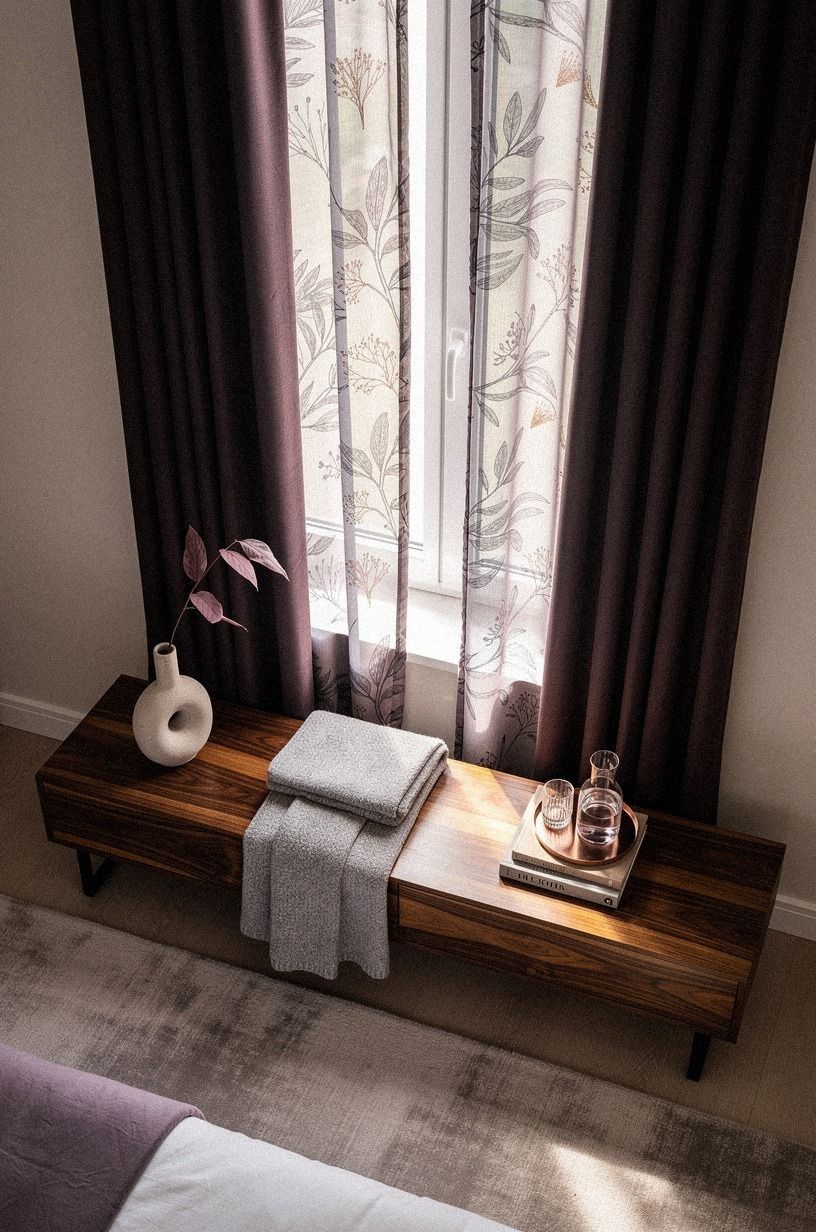
Darkness can feel more settled when it arrives gradually. Heavy blackout curtains can help limit streetlight, headlights, and early-morning glare, but the fabric shouldn’t make the room feel sealed or theatrical.
Choose plum, grey, or rose gold to echo a softer, more atmospheric palette. A botanical lining adds quiet detail when the curtains are open, while a dense backing controls brightness after dusk.
You don’t need floor-to-ceiling panels if the window is small. A properly fitted rod and curtains that reach the floor can create a cleaner visual boundary.
Install the rod slightly above the window frame and extend it beyond both sides. You’ll gain more coverage when the panels are closed, and the open curtains won’t crowd the glass. A book-matched walnut surround can add warmth around the window, while simple fabric panels keep the overall effect relaxed.
If total darkness feels uncomfortable, leave a narrow gap near the floor or add a low amber night-light outside the direct sightline. The goal isn’t a pitch-black room at all costs. The goal is a softer transition from evening activity to rest.
Curtain color can also shape the room’s emotional temperature. Plum feels cocooning, grey feels restrained, and rose gold adds a muted glow without becoming bright. Test fabric samples against the wall before committing to a full set.
4Place lavender sachets inside the bedside drawer (Can Scent Help You Settle?)
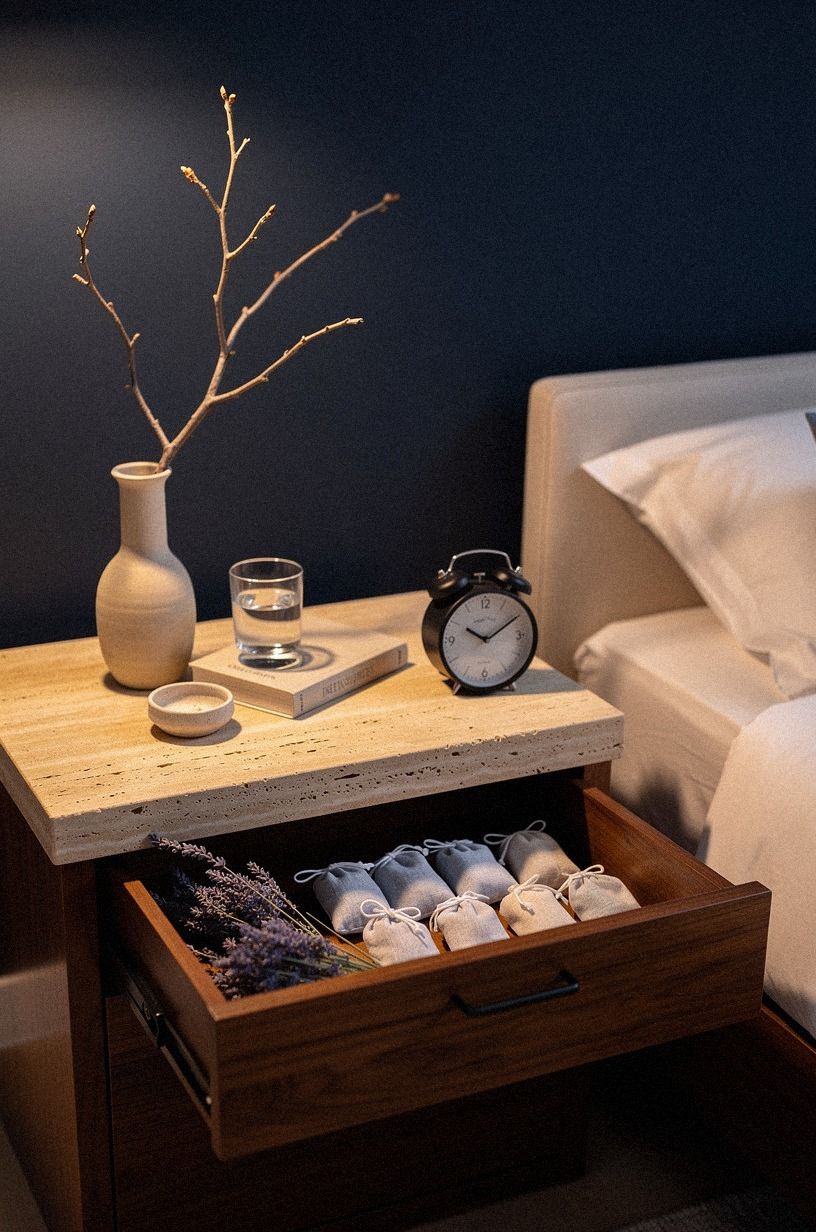
A lavender sachet can give your evening routine a gentle sensory marker, especially when the scent stays tucked inside a drawer rather than filling the whole room. A warm travertine surface nearby can keep the navy, white, and walnut palette feeling natural.
5Build a calming tea station on a nightstand (The Two-Minute Tea Landing)
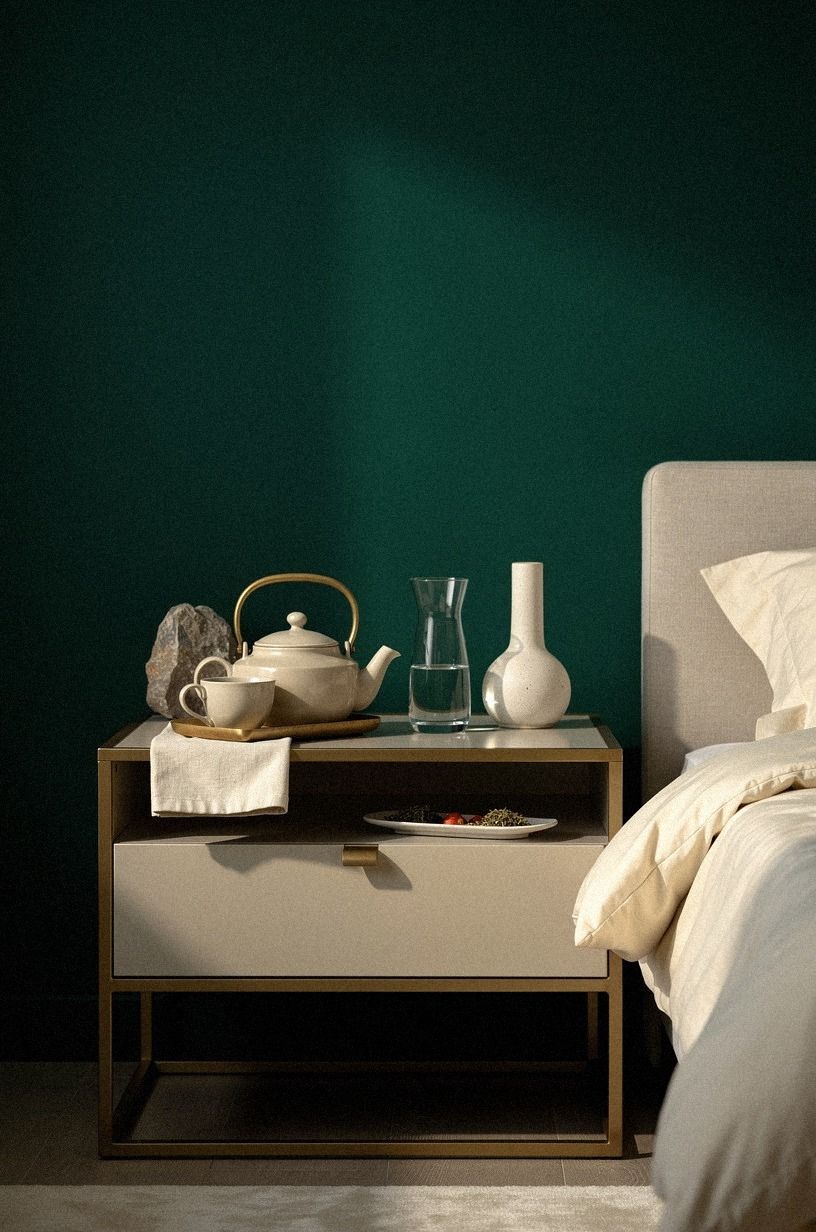
A tea station works best when it removes decisions. Set out one favorite mug, a small container of tea, a coaster, and a covered water carafe. This compact arrangement makes the final drink feel intentional without turning the nightstand into a second kitchen.
Choose caffeine-free options such as rooibos, peppermint, ginger, or chamomile, depending on personal tolerance and dietary needs. You don’t need a large assortment. Too many choices can keep the brain in shopping mode when the evening should be winding down.
An emerald tray, cream stoneware mug, and unlacquered brass spoon create a warm material mix. Over time, the brass can develop a natural patina that suits the gold-and-cream palette.
Keep the tray away from books, charging cables, and open skincare containers. A contained station is easier to clear in the morning and less likely to become another unfinished task.
Hot drinks require care around children, pets, and loose bedding. Use a lidded carafe, place the mug on a stable surface, and finish the drink before getting under the covers. If nighttime bathroom trips are disruptive, choose a smaller serving and finish it earlier.
A tea station can also become a visual cue for the end of work. Once the mug is prepared, close the laptop, lower the lights, and leave unfinished tasks outside the bedroom. The ritual feels small, but its simplicity can be surprisingly comforting.

6Anchor the bed with a textured wool runner (The Warm-Path Rule)
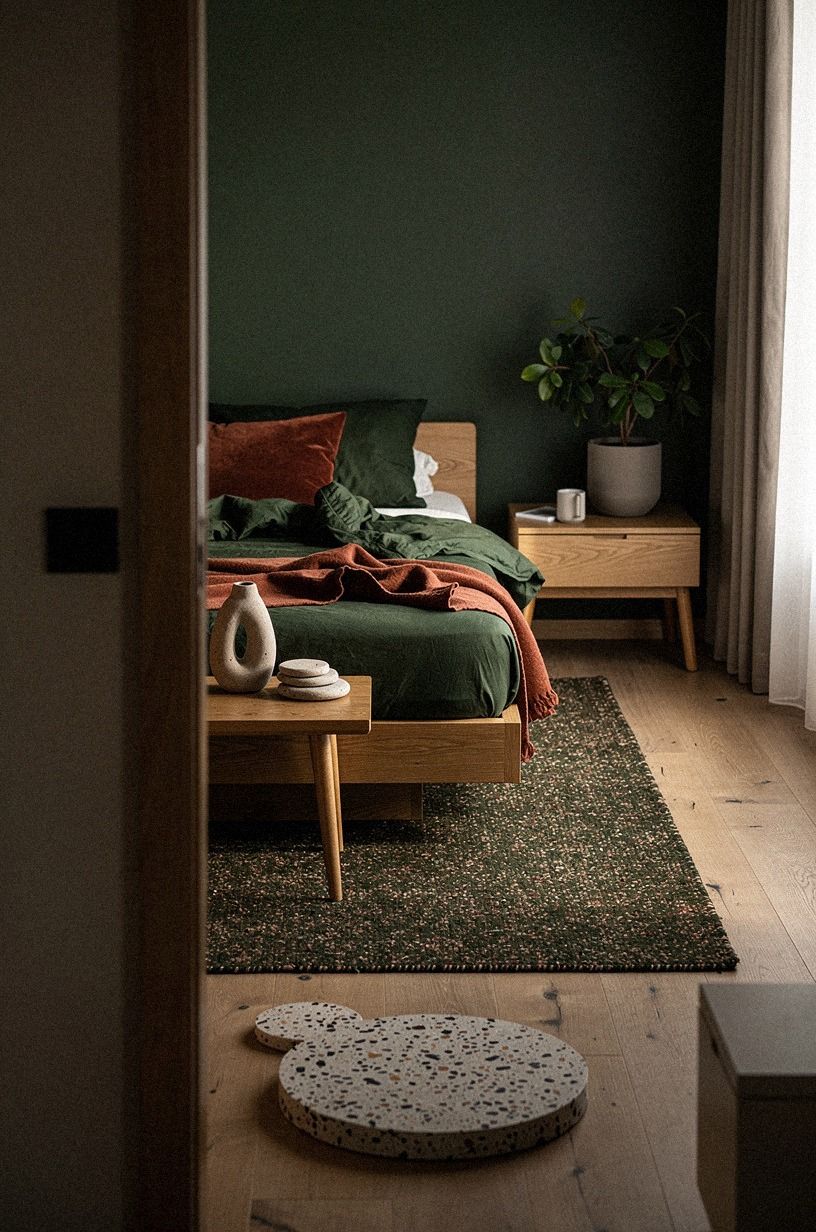
A wool runner beside the bed changes the first physical moment of the morning and the final one at night. Choose textured wool with low, irregular loops in forest green, rust, or a natural oak tone. The surface should feel substantial beneath bare feet, not slippery or overly plush.
A runner doesn’t need to cover the entire floor. It only needs to sit where your feet land, with enough length to create a clear path from the bed toward the door. You’ll want the furniture to overlap the rug slightly if the room allows, so the piece looks anchored rather than dropped into the center.
An oversized-chip terrazzo floor can give the runner a grounded base, while natural oak keeps the forest green and rust palette warm. Skip a thin synthetic mat that curls at the corners, especially near a dark bed frame.
That small trip hazard can keep the body alert. A stable rug edge feels far more calming than a decorative layer that shifts every night.
Measure before shopping. Check the door swing, walking path, and clearance beneath the bed.
A narrow runner may work better than a wide rug in a compact room. You’ll get the tactile benefit without creating a crowded route.
A runner also gives the room a finished visual line. Natural oak softens dark furniture, rust adds energy, and forest green brings depth without relying on bright color. Choose the shade that works with existing bedding instead of creating another decorating problem.
7Arrange a worry-release journal beside the lamp (The Worry-Release Ledger)
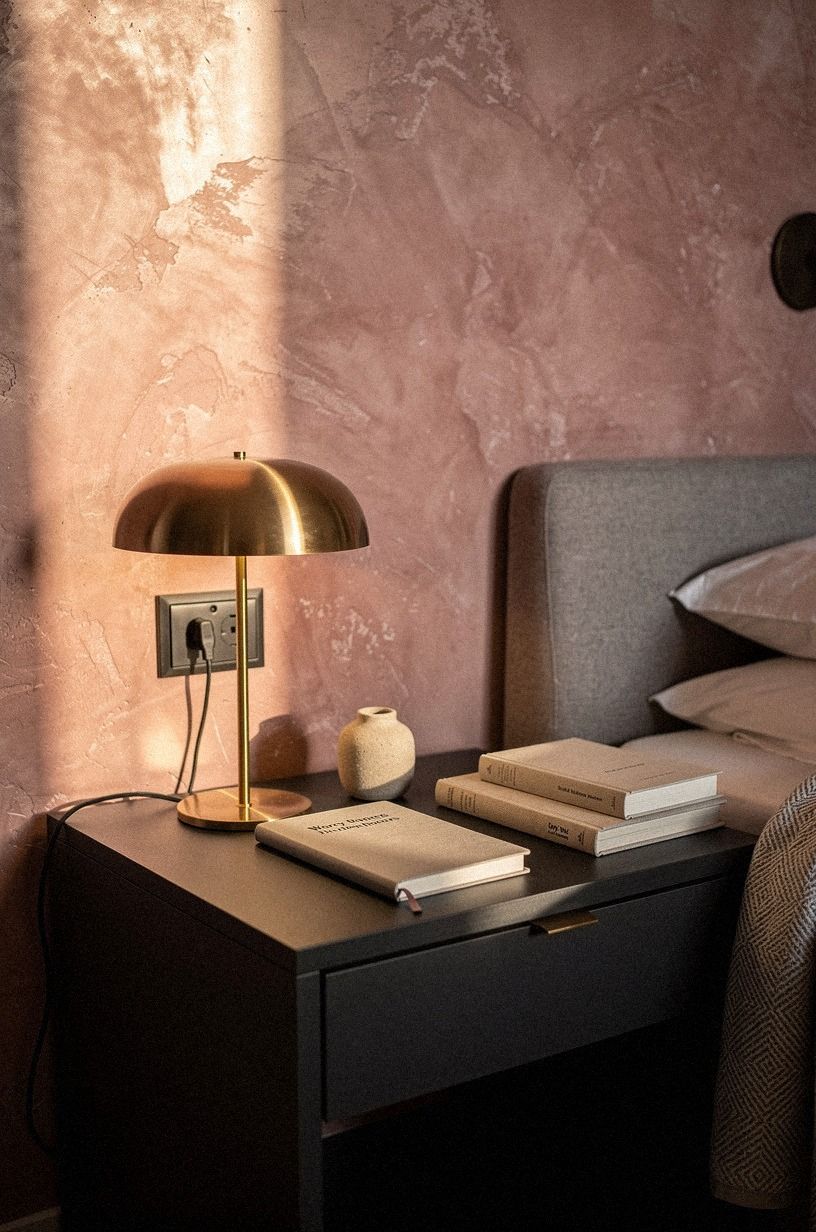
A journal can help separate evening thoughts from the place where you sleep. Choose a compact notebook with a matte cover, a smooth pencil, and enough room for three short lines. The dusty rose, charcoal, and brass palette adds softness without making the bedside surface look childish.
Use three prompts: “What needs attention tomorrow?”, “What can wait?”, and “What feels finished for tonight?” You don’t need a long entry or polished language. A few direct words can make a concern feel more contained. If writing increases pressure, use a simple list of tasks and close the notebook immediately afterward.
Keep the journal beside the lamp rather than under the pillow. You’ll want the object visible but not dominant. Charcoal paper works well with a brass clip and a muted rose cover, while a wall finished in hand-applied Venetian plaster adds gentle texture behind the bedside arrangement.
A useful limit is five minutes. Set a gentle boundary before opening the notebook, write the practical details, then close it.
The ritual works best when it stays short enough for tired evenings. What does a useful practice look like? Usually, it’s the one short enough to repeat when energy is low.
A journal should feel like a container, not another assignment. Choose wide lines, a comfortable pencil, and a cover that feels pleasing to touch. The small details matter because they can make the routine feel welcoming instead of demanding.
8Display eucalyptus branches in a ceramic bedside vase (Why Eucalyptus Beats Clutter)
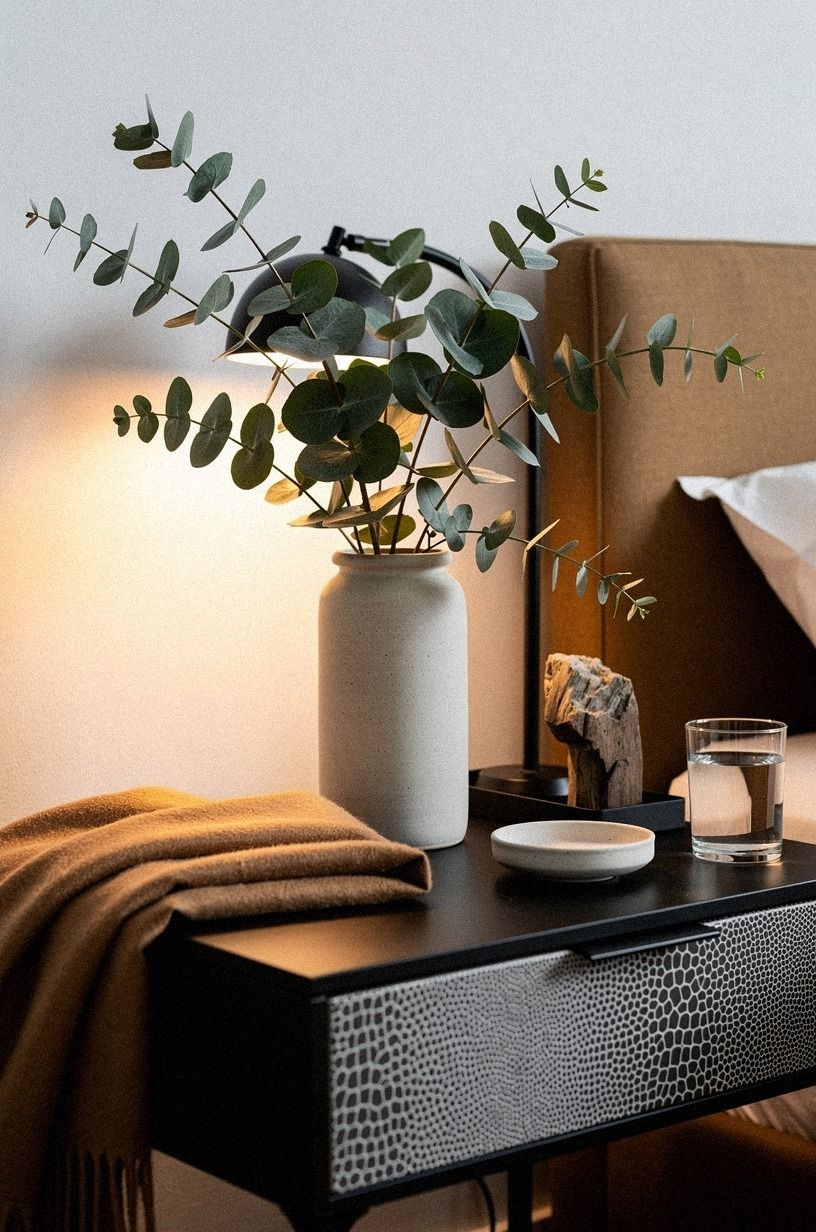
One branch arrangement can soften a bedside corner without creating another task. Choose two or three eucalyptus stems in a narrow warm white ceramic vase, then place the arrangement where it won’t brush against pillows, lamps, or open drawers.
Fresh eucalyptus has a crisp scent, while dried stems offer a longer-lasting sculptural shape. If fragrance feels too strong, select olive branches, willow, dried grasses, or completely unscented foliage. A calm room doesn’t require a particular plant.
The vase should occupy less than one-third of the available surface. You’ll want enough room for a book, water, and a lamp switch. Tall branches can add height beside a low headboard, while a squat vessel works better beneath a wall sconce.
Avoid unstable glass, sharp stems, and arrangements that shed heavily. A low-maintenance display is more useful than a beautiful object that creates daily cleanup. Keep pets and young children in mind when choosing branches and containers.
For a more graphic look, use one sculptural stem in a shagreen-accented vessel. For a softer corner, combine dried grasses with camel-toned accents and a low black object nearby. The arrangement should create one attractive pause, not compete with every other object nearby.
9Create a phone-free charging nook across the room (The Far-Field Boundary)
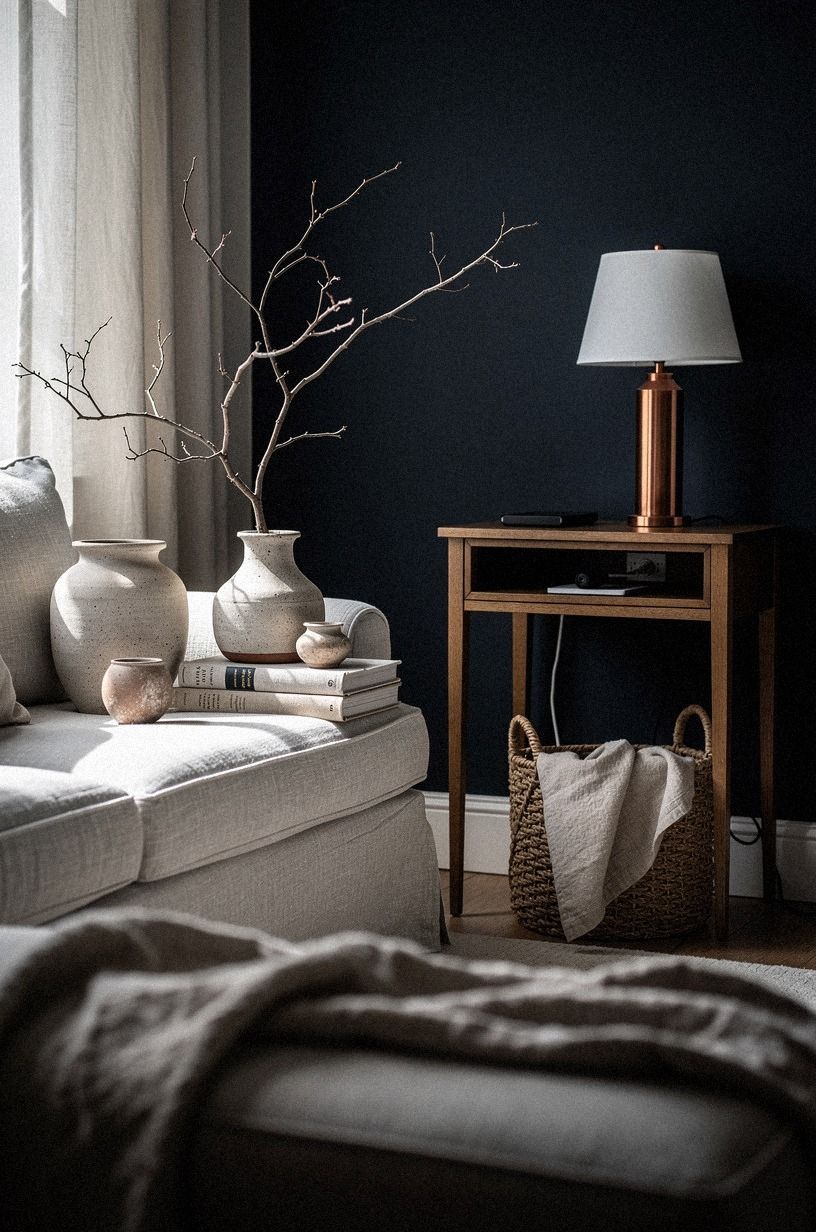
A charging nook across the room creates a physical pause between bedtime and endless scrolling. Use a small console, a wall shelf, or a narrow cabinet in midnight blue, copper, and ivory. Place the charger there, then keep the bed area free from bright screens and tangled cables.
You’ll want the charging surface to remain easy to reach in the morning but inconvenient to grab without standing up. A strip of washed Belgian linen can soften the surface and add lived-in texture, while a copper cable sleeve keeps the setup from looking temporary.
Avoid placing the phone inside a drawer if notifications still flash through the gaps. The goal is a clear boundary, not hidden clutter.
Pair the nook with a short evening routine that includes washing up, preparing clothing, and setting an alarm. These 10-minute morning hair routine ideas can support a more organized morning, but the charging nook itself should remain focused on reducing late-night decisions.
You don’t need a costly cabinet. A stable shelf can do the job.
Turn on a device’s do-not-disturb setting, silence nonessential alerts, and place the screen face down before walking away. The extra steps matter because they make the boundary visible.
A charging nook feels more intentional when the cord is short, the surface is uncluttered, and the plug is easy to access. Midnight blue, copper, and ivory create a handsome palette that makes the practical station feel like part of the room.
10Drape a weighted throw neatly across the bed (The Gentle Weight Rule)
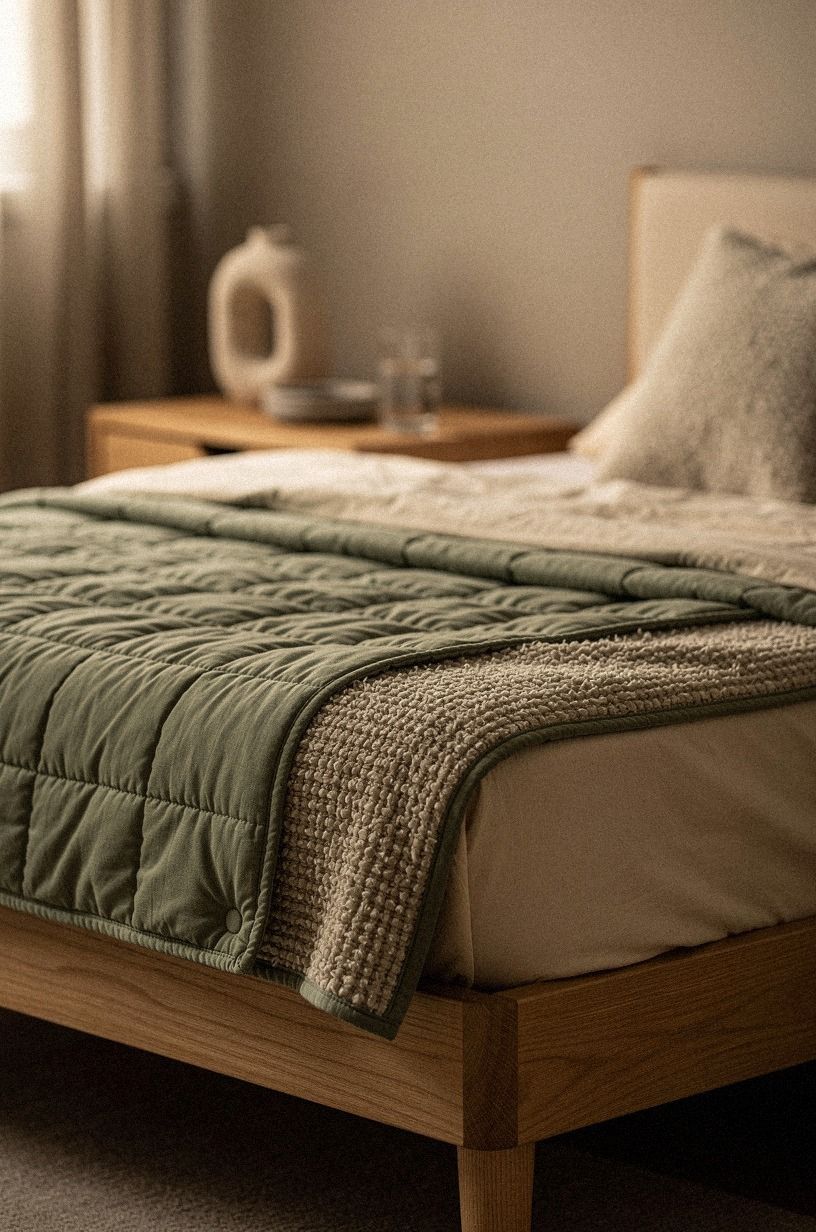
A weighted throw can add visual and physical comfort when it’s used as a neat top layer rather than a tangled pile. Choose a breathable cotton knit, a quilted coverlet, or an organic bouclé blanket in sage green, warm cream, or a shade that supports the natural wood nearby.
Weight preferences vary widely. A blanket that feels comforting for one person may feel restrictive for another.
Start with a lighter option, keep the edges easy to move, and stop using it if breathing, movement, or temperature becomes uncomfortable. Children and pets require extra care around weighted bedding.
Fold the throw into thirds and place it across the lower half of the bed. This creates a composed finish without demanding perfect styling. Organic bouclé, washed cotton, and matte linen offer different levels of warmth and texture.
A breathable layer is especially useful when the room runs warm. You’ll want the bed to feel inviting without trapping excessive heat. Wash the cover regularly, and keep the throw clear of floor dust, cords, and walkways.
A weighted throw should never make movement difficult or create overheating. When in doubt, choose a light quilt or woven cotton blanket instead. The most attractive layer is the one that remains easy to lift, wash, and fold.
11Paint the sleep corner in muted sage (Muted Sage Over Stark White)
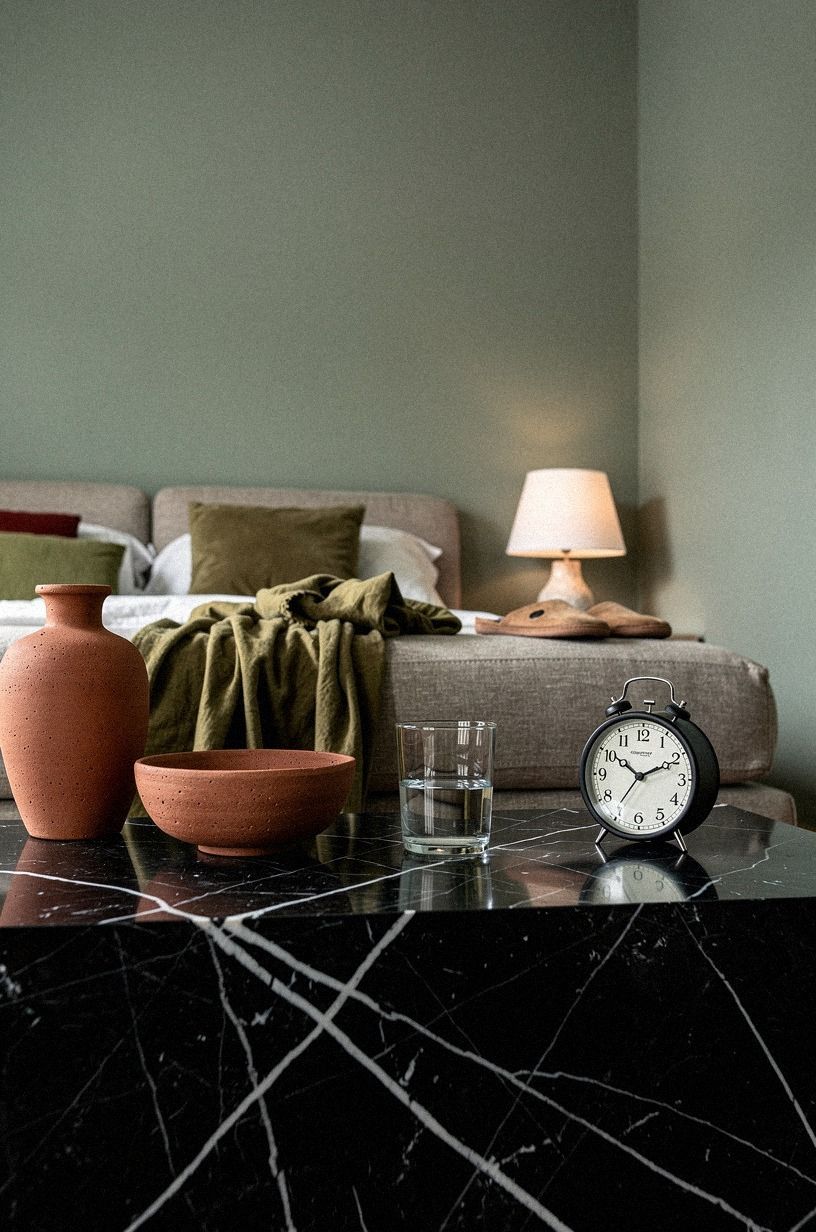
Muted sage can make a sleep corner feel grounded without pushing the room into heavy darkness. Sherwin-Williams Agreeable Gray SW 7029 offers a quiet neutral direction, while Farrow & Ball Pigeon No. 25 brings more blue-grey depth. Benjamin Moore White Dove OC-17 can balance either shade on trim or a nearby wall.
Test the color in morning, afternoon, and lamplight before painting the full area. You’ll want to see how the shade behaves beside terracotta, stone, olive, and Nero Marquina black marble. A sample board is more reliable than judging a tiny swatch against a bright store wall.
For a rental, use a large removable mural panel or paint only a freestanding screen. For a permanent room, keep the ceiling and trim lighter so the corner doesn’t feel compressed.
Stark white may look clean, but it can reflect every blue screen and streetlight. Muted sage usually feels softer because it absorbs some visual noise.
A color test should stay in place for at least one full day. Watch the wall during cloudy weather, bright daylight, and low lamp light. The strongest choice is the shade that still feels comfortable after the lamp goes off.
If sage feels too green, move toward blue-grey, mushroom, or warm greige. If the room lacks natural light, a lighter paint sample may feel more open. Color becomes most successful when the surrounding fabrics, metals, and wood tones support it.
The Low-Light Sequence
The order of changes matters more than the price of each item. Start by switching off the overhead fixture. Then turn on the bedside lamp, close the curtains, and clear the visible surfaces.
This sequence tells the room that active tasks are ending.
You’ll want the final light to come from one or two warm sources rather than several scattered points. A reading lamp can stay on until the last page, while a low lamp across the room creates a gentle path. When the room is ready, the remaining steps feel simpler.
Try the sequence for three evenings before adding another purchase. You may discover that better timing, lower brightness, and fewer objects create more ease than a new accessory.
The sequence can be adjusted for family routines. Children’s bedtime, late work shifts, and shared bedrooms may require different timing. Keep the order consistent even when the clock changes: lower brightness, close active tasks, clear the bed area, and move the phone away.
What Belongs Outside the Bedroom
Laundry piles, work bags, unopened packages, school forms, and bright charging stations can keep the room connected to tomorrow’s demands. Move those items to a basket, bench, hallway shelf, or closed cabinet whenever possible.
You don’t need a perfect home. You only need one clear visual zone around the bed. A woven basket can hold clothing, a lidded box can contain small items, and a wooden hook rail can keep bags off the floor.
If space is limited, choose one container for everything that doesn’t belong beside the bed. Empty it during the morning reset. The bedroom will feel lighter without requiring a complete decluttering project.
A closed container often feels calmer than several open organizers. Natural rattan adds warmth, painted wood looks more tailored, and canvas works well for soft laundry. Pick one storage language so the room doesn’t feel busy.
A Five-Minute Reset
A short reset can keep the room from drifting back into visual noise. Set a timer, then complete five actions: return the mug, close the drawer, fold the throw, place clothing in its basket, and move the phone to its charging nook.
You’ll want the reset to be predictable and forgiving. If one step gets skipped, continue with the next. A routine that survives busy nights is more valuable than a detailed system that requires perfect energy.
Children can help with simple tasks such as placing books in a basket or returning a blanket to the bed. Keep breakable objects, hot drinks, and small fragrance items out of reach. The room can feel orderly without becoming precious.
A reset works best when every action has a visible destination. The mug returns to the tray, clothing returns to the basket, and the phone returns to the shelf. Fewer choices make the routine faster and less frustrating.
The Budget Ladder for Better Boundaries
A free refresh starts with moving the charger, lowering the lights, closing the curtains, and clearing one surface. A low-cost refresh adds a tray, a secondhand lamp, a washable runner, or a small vase.
The next tier may include paint, custom curtains, a wool rug, or a narrow charging console. You’ll want to choose one meaningful upgrade rather than several decorative purchases that compete for attention.
A practical budget ladder might look like this:
Prices vary by region, material, and installation. The most helpful change may still be the least expensive one.
For a dramatic result on a small budget, start with lighting and the charging boundary. For a softer tactile result, choose a runner or cotton throw. For the strongest visual change, test paint before buying new furniture.
The Room Rule That Makes These Changes Work
A calmer bedroom rarely comes from one dramatic purchase. It comes from reducing competing signals. Bright light, open tasks, visible laundry, phone alerts, and cluttered surfaces all ask for attention at the same time.
A warm lamp, a closed drawer, a clear charging boundary, and one tactile object can lower that visual demand without promising a medical result.
The most useful order is sensory first, storage second, decoration third. Start with light because it affects the whole room. Then remove the phone from the bed area.
After that, add one texture, one scent if tolerated, and one repeatable action.
You’ll notice that this order costs less than buying several decorative pieces at once. It also makes the bedroom easier to maintain on a busy evening. Natural materials can support a feeling of calm, but they don’t need to be expensive.
Cotton, wool, clay, unfinished oak, and linen each bring a distinct surface. Choose the material that feels pleasant under your hand or feet.
Avoid filling the room with objects labeled as relaxing when the result is more cleaning, more choices, and more visual work. The room should help you stop managing it.
A good room rule is simple: every calming object must earn its place. If a lamp adds glare, adjust it.
If a vase crowds the table, move it. If a throw creates heat or clutter, fold it away. The room can stay beautiful while remaining easy to use.
What People Always Want to Know
What is the best way to make a nighttime anxiety corner feel calmer?
A dimmable bedside lamp paired with a clear surface and a phone-free charging spot is a practical starting point. Lower visual stimulation often matters more than adding decorative objects. A Target lamp, a secondhand tray, or an Article-style wool runner can create a warm setup without a full room makeover.
Where can affordable pieces be found for this bedroom setup?
Target, Wayfair, local thrift shops, and Facebook Marketplace can be useful places to search for trays, lamps, ceramic vases, and wool runners. Secondhand texture saves money when condition, dimensions, and cleaning needs are checked first. Look for natural linen, solid wood, ceramic, and cotton instead of buying a matching bedroom set.
How much does a calming bedroom makeover cost?
A small refresh may cost about $100 to $300 when paint, a lamp, a tray, and one textile are included. Existing furniture, free rearranging, and a phone-free charging station can cost nothing. Larger room projects vary widely across the United States.
Can a calmer bedroom be created on a budget?
Yes, and the first steps can be free. Move the phone charger across the room, switch off the overhead fixture, clear one bedside surface, and fold an existing throw across the bed. Small boundaries cost nothing when furniture and textiles already available are used.
Is this approach worthwhile in a small space?
Yes, because a small room needs fewer objects to feel finished. A narrow tray, a wall-mounted lamp, and a 2-foot-wide runner can create a clear bedtime zone without crowding the floor. Less furniture makes the routine easier when every item has one obvious place.
Is a calmer sleep corner suitable for a rental?
Yes. Use a tension rod for curtains, removable wallpaper panels behind the bed, plug-in lighting, and a freestanding screen painted in muted sage.
No-damage swaps preserve flexibility while still changing the room’s light, color, and texture. Keep heavier pieces stable and follow property rules before painting.
Where to Start First
If one change deserves priority, start with the phone-free charging nook. Distance creates a real pause, while a darkened screen removes the sharpest competing signal from the bed. Place the charger across the room tonight, clear the bedside surface, and let the lighting stay low.
For a smoother morning, pair the charging boundary with busy-morning hair routine ideas. Small boundaries can carry the whole routine.