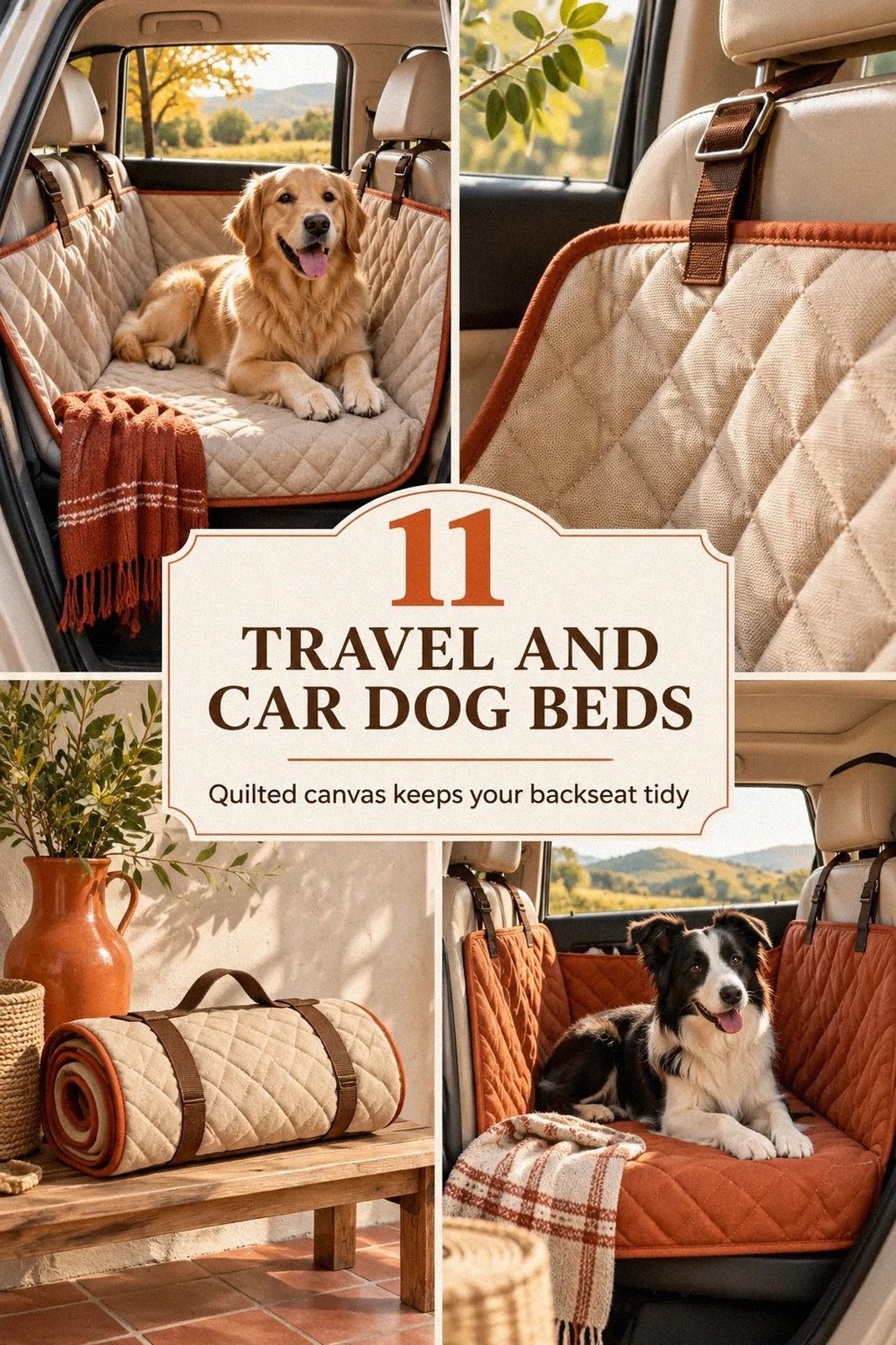
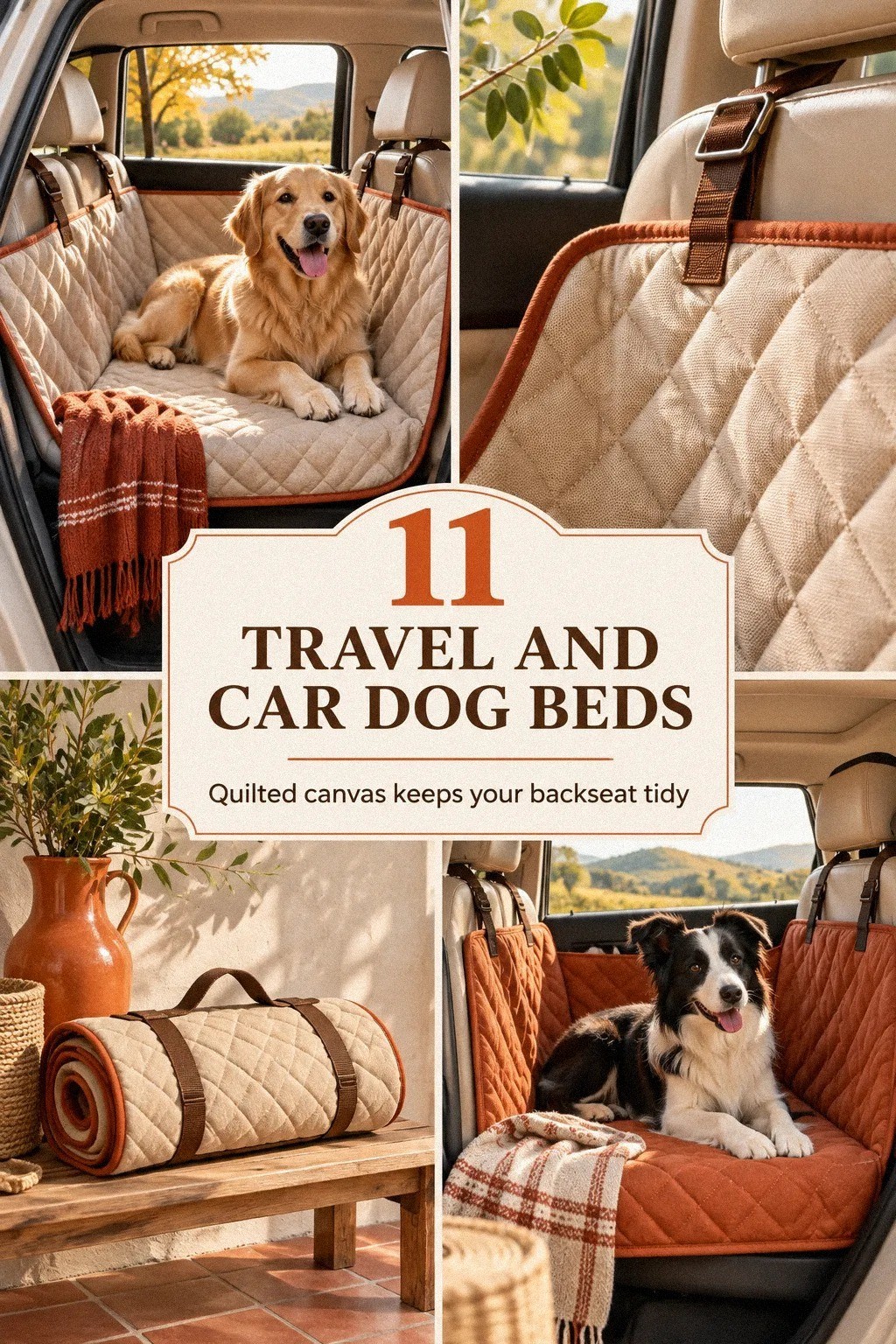
Travel and car dog beds for road trips with your pup work best when they stay anchored, washable, and familiar. A quilted base, waterproof liner, and soft edge can turn a moving vehicle into a calmer resting zone without blocking the driver’s view. The right setup doesn’t need to look temporary. It can feel warm, polished, and ready for miles!
A practical arrangement starts with restraint. Choose one sleeping surface, one washable barrier, and one familiar textile. That combination often works better than a crowded collection of cushions, toys, and loose blankets.
- Anchor a quilted travel bed behind the front seats
- Layer a waterproof liner under the car dog bed
- Build a padded window perch for scenic drives
- Clip the travel bed to a foldable crate
- Frame the car seat bed with washable bolsters
- Tuck a cooling mat beneath the road-trip cushion
- Style a canvas dog bed with contrast piping
- Mount a toy pocket beside the travel bed
- Fold a blanket into a raised sleeping platform
- Keep the dog car bed steady with colorful ties
- Create a cozy travel nook in the trunk
1Anchor a quilted travel bed behind the front seats
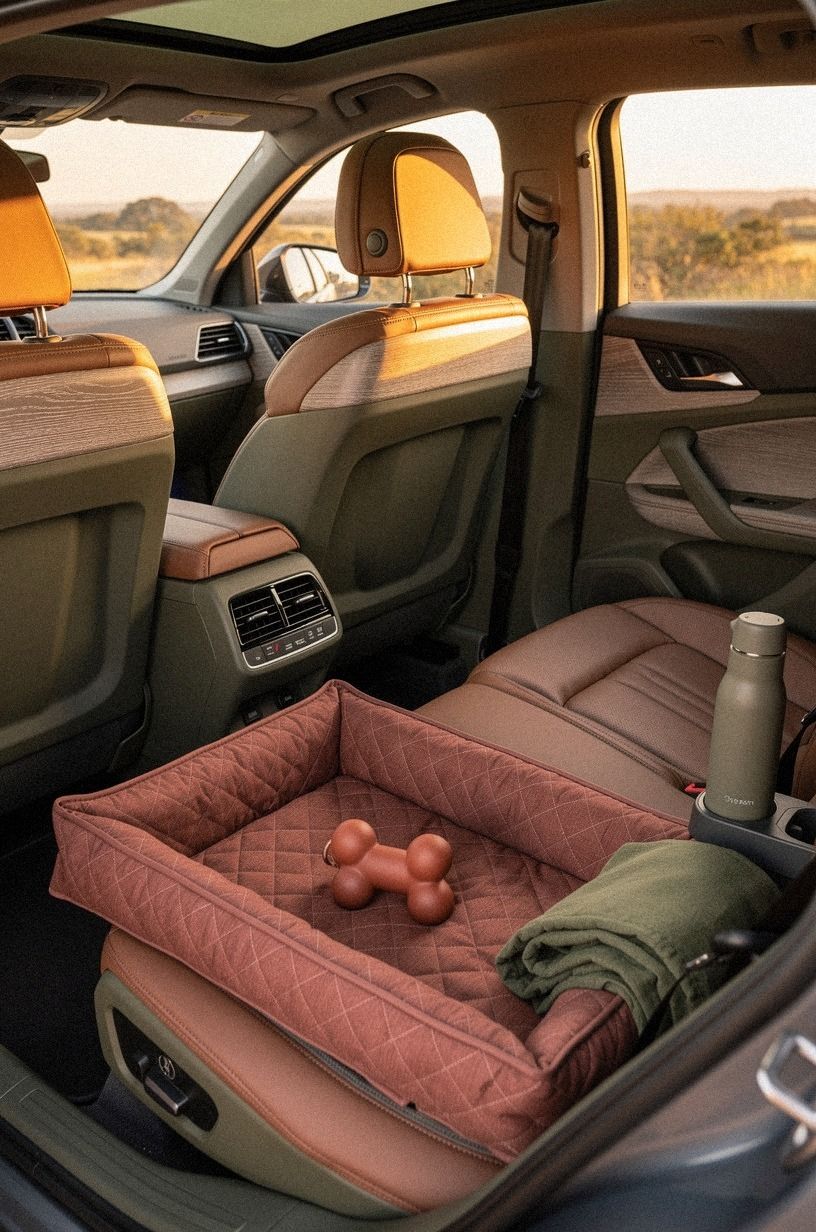
A quilted travel bed behind the front seats gives your dog a defined place to settle while leaving the center aisle available for bags. Choose a terracotta, stone, or olive cover so the bed feels connected to the car’s interior rather than dropped into it. A cerused white oak storage box beside the bed can hold leashes, wipes, and folded towels.
Measure the available floor area before choosing the cushion. You’ll want enough room for your dog to turn without pushing against the front seats.
A low-profile bed is safer than a tall basket because it won’t shift as easily during braking. The soft quilting matters, but the anchor matters more.
If the base slides, even a luxurious fabric won’t feel calming.
Use a nonslip underside, two adjustable straps, and a rolled blanket at the rear edge. The blanket creates a gentle boundary without taking away legroom.
If your dog already sleeps on a familiar cushion, bring that fabric along for the first trip. Familiar scent can make the new setting feel less strange.
For broader route planning, save these South American road-trip routes for scenic destination ideas.
2Layer a waterproof liner under the car dog bed
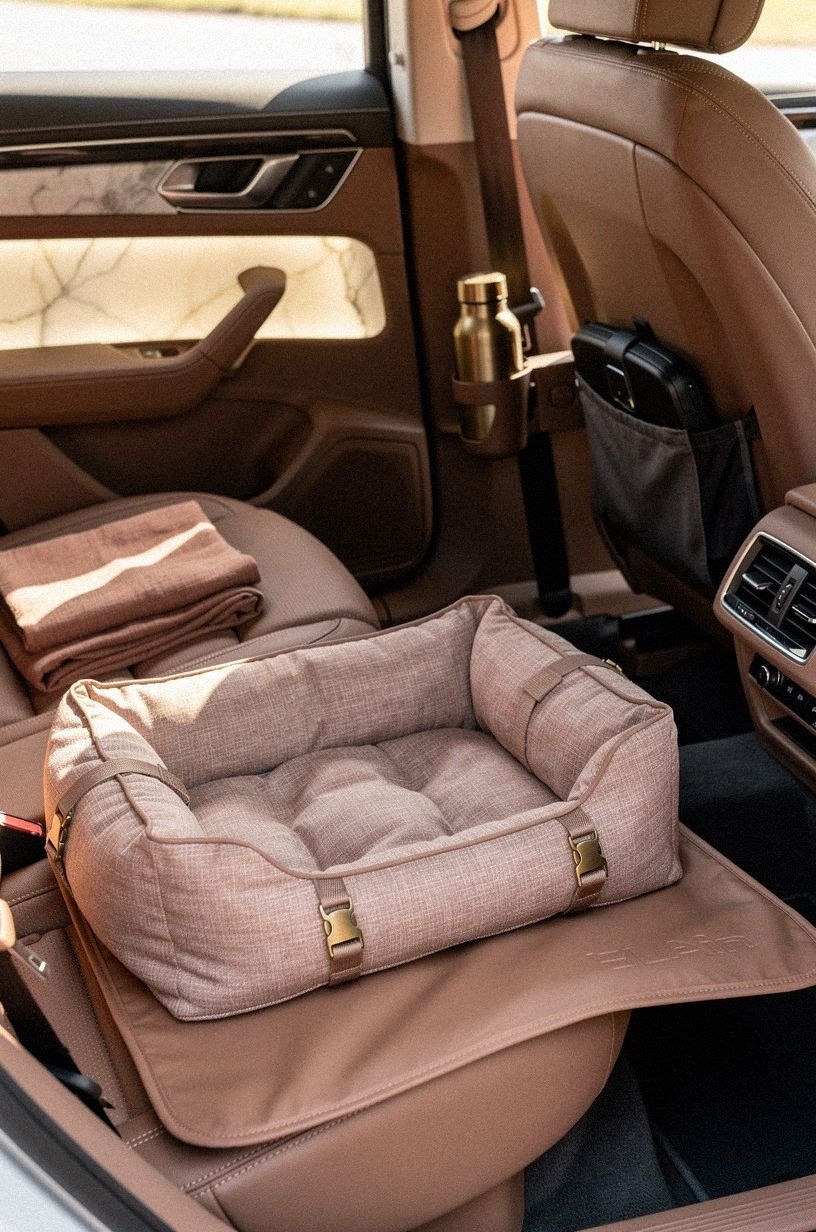
A waterproof liner under a car dog bed protects upholstery from wet paws, spilled water, and muddy stops.
3Build a padded window perch for scenic drives
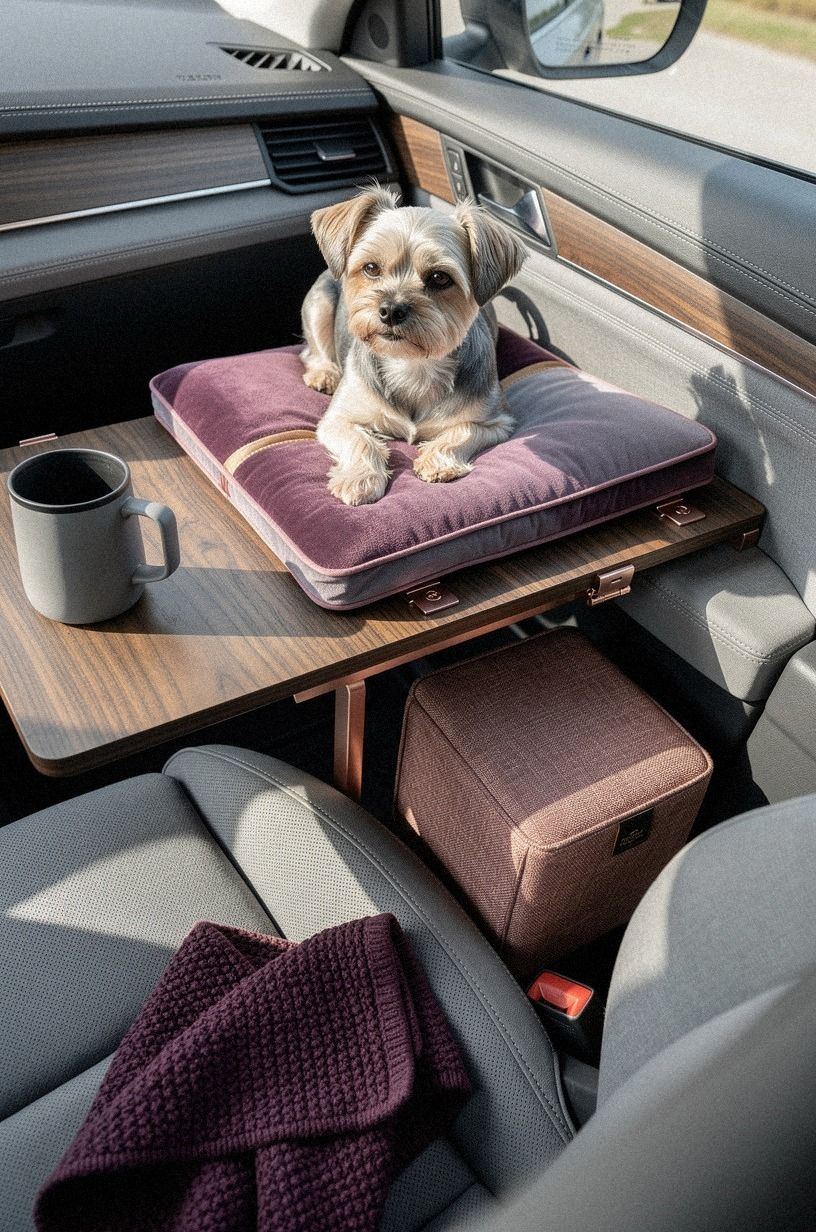
A padded window perch gives a small dog a raised view without asking the animal to stand on the door panel. The plum, grey, and rose gold palette works well with book-matched walnut, brushed metal, and a muted woven cushion. The result feels more like a compact lounge than a plastic booster seat.
Keep the perch low enough that the dog’s body remains supported. You’ll want a firm foam core, a washable outer cover, and a broad base that spreads weight across the seat. A 3/4-inch solid wood platform can add stability, but it should have rounded edges and a protective cover.
The window view can be soothing for some dogs, yet constant movement may overwhelm others. Watch for panting, trembling, repeated repositioning, or restless scanning.
If those signs appear, lower the visual exposure with a soft side panel. A dog doesn’t need a panoramic view to enjoy a road trip.
A rose gold buckle or stitched leather handle can make the bed easier to carry into a hotel. Choose hardware that feels reliable without creating sharp corners. Don’t place toys where they can block the driver’s sightline.
The perch belongs behind the passenger seat, never beside the steering wheel.
The broader route can stay just as inviting with these fall road-trip destinations saved for later planning. That small adjustment can change the whole ride!
4Clip the travel bed to a foldable crate
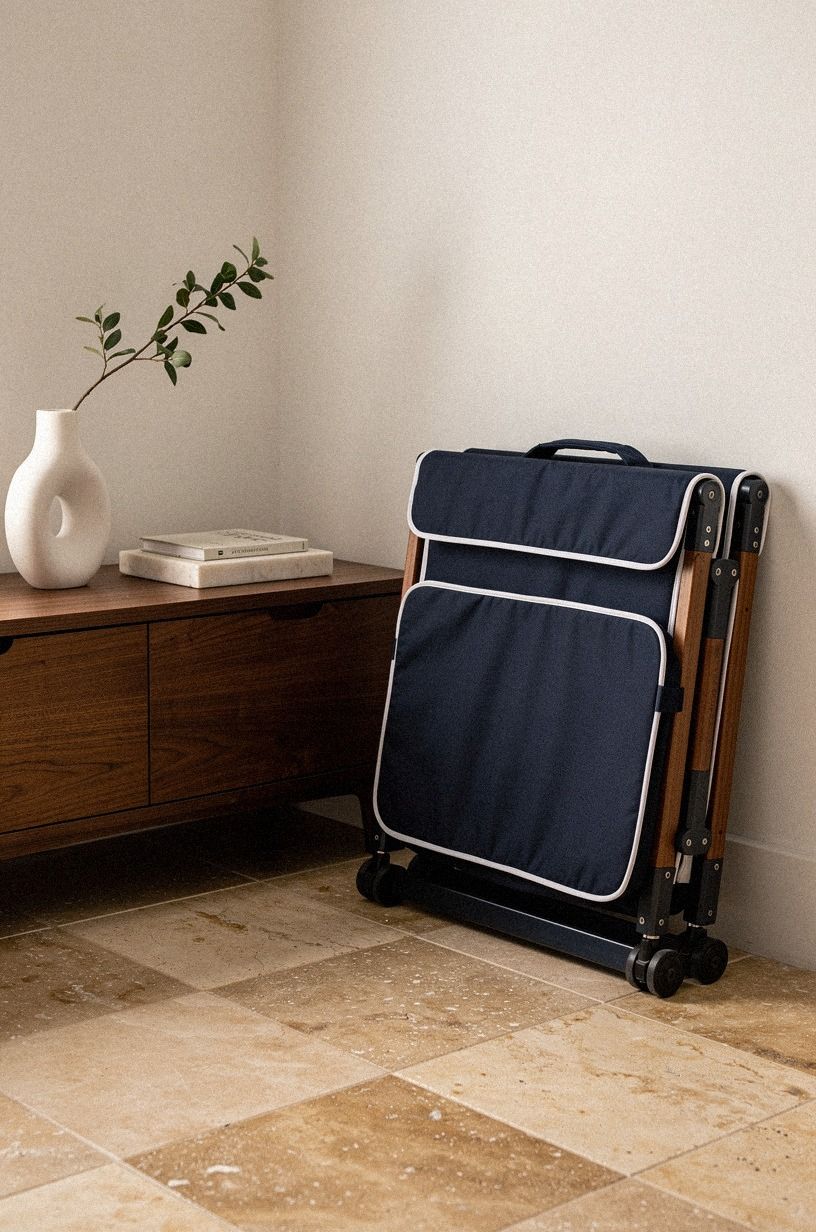
A foldable crate paired with a travel dog bed creates a flexible rest zone for motel rooms, campsites, and long stops. Navy, white, and walnut give the setup a classic look, while warm travertine tones keep it from feeling stark. The crate can stay open during calm stretches and close only when transport rules require it.
Choose a bed that fits the crate floor with minimal gaps. A loose cushion can fold upward and make the dog feel unstable.
You’ll want a dense foam pad, a removable cover, and clips that attach to the crate frame rather than the fabric. Simple carabiners can hold the rolled edge in place, but they shouldn’t be left where teeth can reach them.
A foldable crate works best when it becomes familiar before departure. Leave it open at home with the bed inside, and let your dog enter without pressure.
Recognition matters more than forced practice. The crate should read as a quiet room, not a punishment zone.
Add a navy canvas cover over one side for shade. Keep the opposite side open for airflow and visibility.
It’s a small adjustment, but it can make the enclosure feel calmer on bright travel days. The travel bed becomes portable furniture, and that’s exactly why this arrangement earns its space.
5Frame the car seat bed with washable bolsters
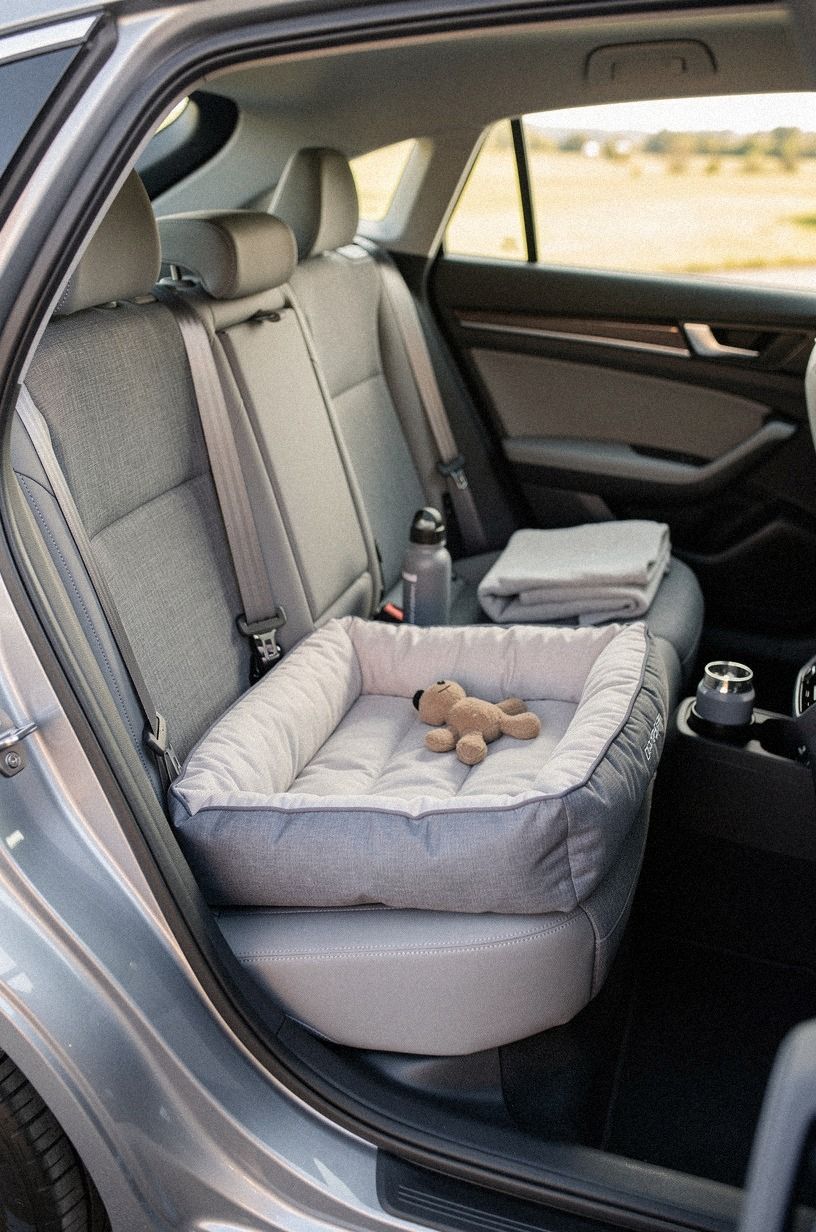
Washable bolsters frame a dog car seat bed and stop the cushion from spreading across the back seat.
6Tuck a cooling mat beneath the road-trip cushion
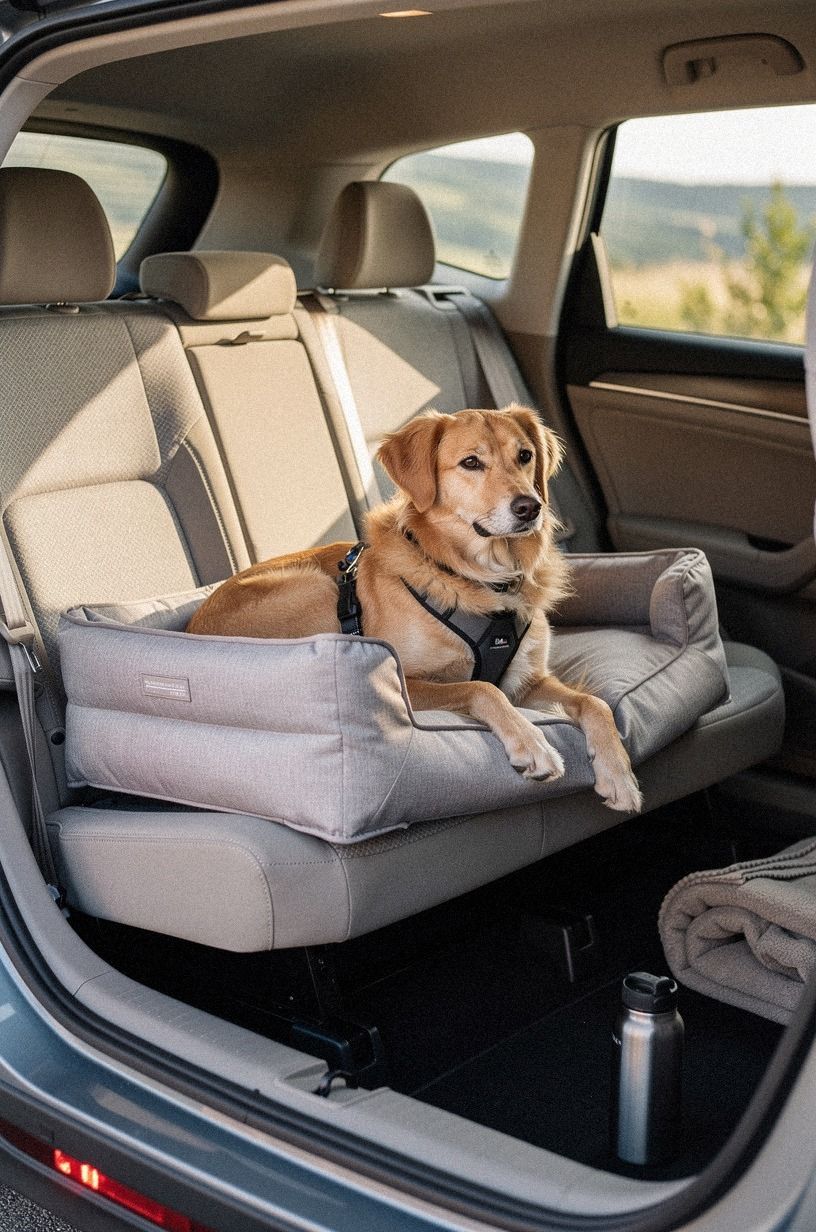
A cooling mat beneath a road-trip cushion helps create a layered resting surface for warm drives. Forest green, rust, and natural oak make the setup earthy and inviting, while an oversized-chip terrazzo detail adds a grounded material note. The cooling layer should sit flat, never folded beneath the ribs or shoulders.
Choose a mat that matches the bed’s footprint. You’ll want the dog to lie partly on the cooler surface and partly on the softer cushion, allowing natural movement between textures. A stable raised base can lift the bed slightly from a hot vehicle floor, but it must stay stable and well padded.
Cooling products vary widely, so check the care instructions before placing one inside a closed car. A mat isn’t a substitute for ventilation, water, shade, or regular stops.
If the cabin feels hot to a person, it can become uncomfortable for a dog much faster. Keep the setup practical.
The rust-colored blanket in this arrangement adds visual warmth without trapping excessive heat. Fold it at one end rather than covering the whole bed.
That way, your dog can choose the cooler or softer section. You’ll get a better result from choice than from piling on thick layers.
7Style a canvas dog bed with contrast piping
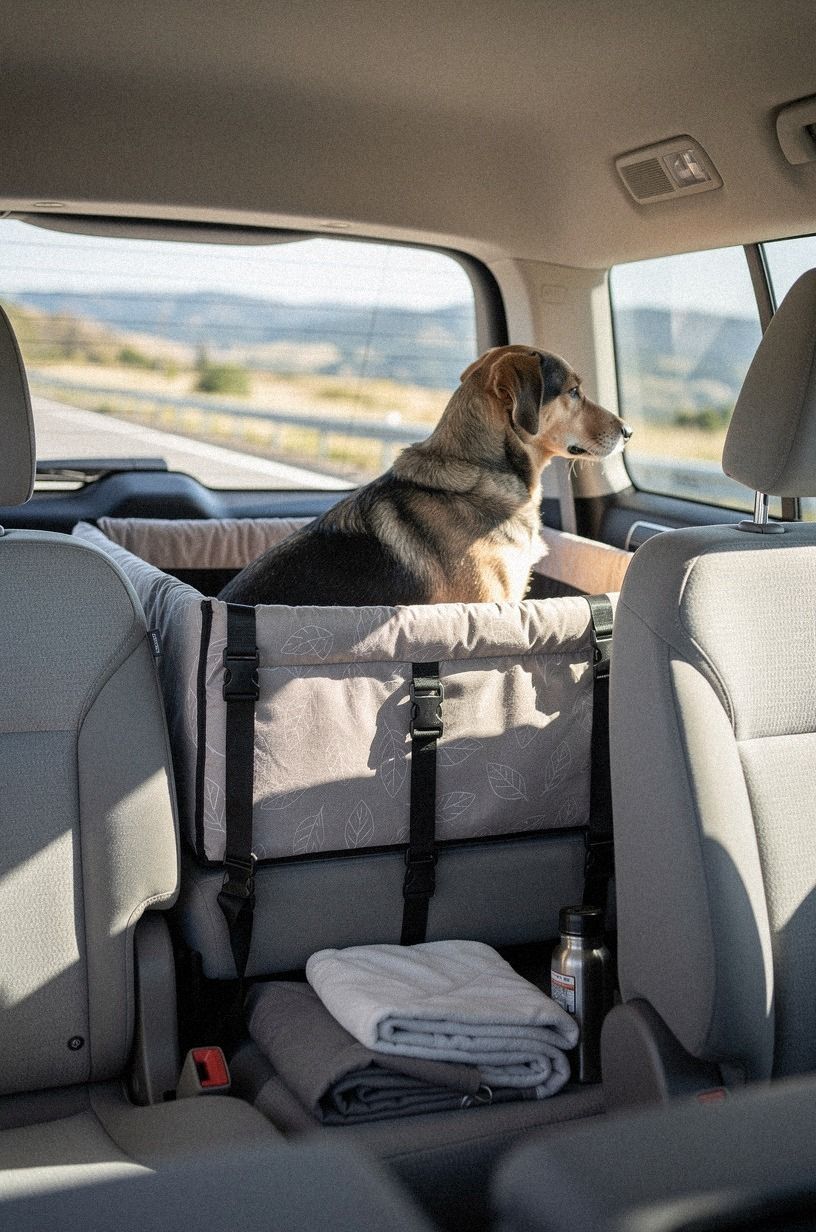
A canvas dog bed with contrast piping feels durable enough for travel while still looking polished in a hotel room or guest space. Dusty rose, charcoal, and brass create a soft contrast, especially beside hand-applied Venetian plaster. The dog remains visible, but the bed stays secondary to the full travel scene.
Use a tightly woven canvas with reinforced seams. You’ll want piping that defines the edge without becoming a chewable cord.
A removable charcoal canvas cover is practical for muddy paws, while a dusty rose insert can be washed separately. Keep one spare cover packed flat in the trunk.
The best travel bed has enough structure to hold its shape but isn’t so stiff that it becomes awkward to carry. A medium-density foam core can provide support without adding excessive weight. Don’t choose a very deep cushion if the bed needs to fit beneath luggage or inside a crate.
A small brass label or leather loop can identify the bed without adding noisy decoration. That detail looks refined, but it also helps prevent confusion at a rental cabin or boarding area. If the dog prefers a cooler surface, place a thin cotton throw over only one corner.
For material comparisons, review this memory foam and regular dog beds before selecting the insert.
8Mount a toy pocket beside the travel bed
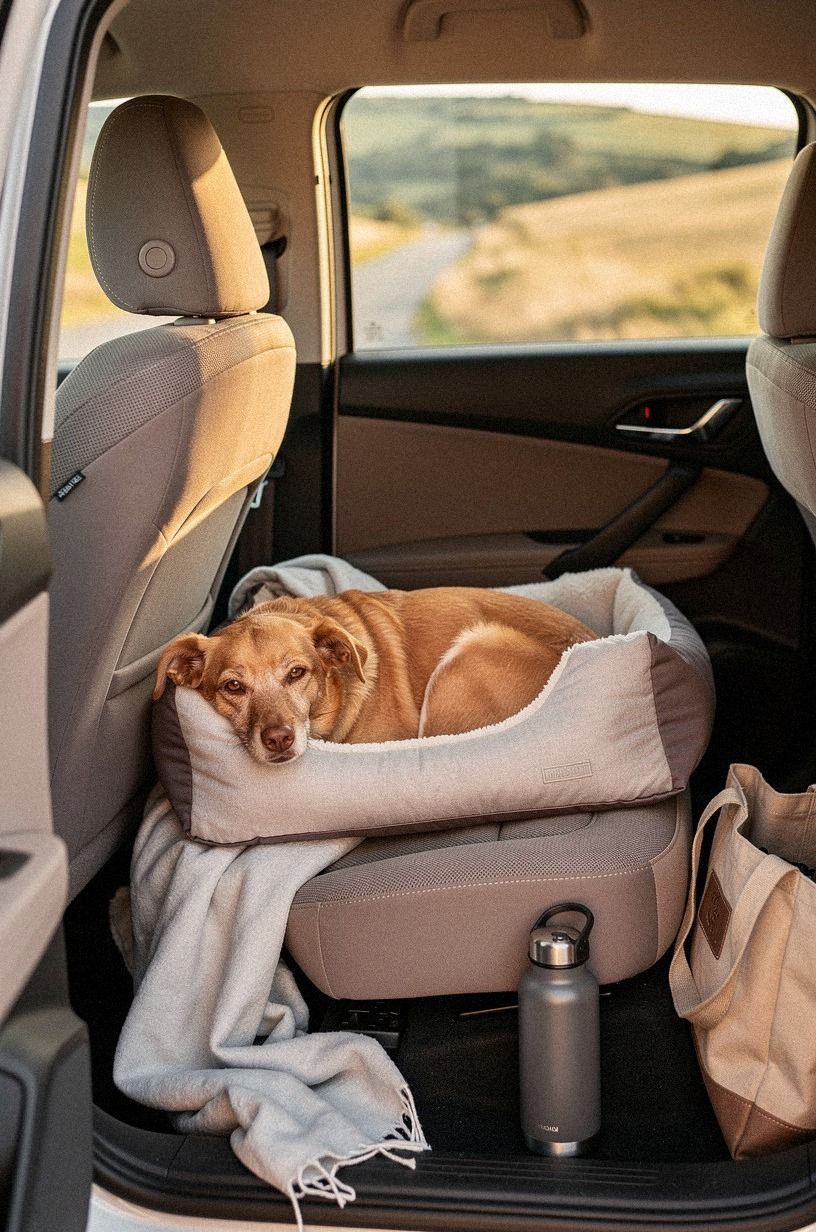
A toy pocket beside the travel bed keeps familiar objects within reach without scattering them across the footwell.
9Fold a blanket into a raised sleeping platform
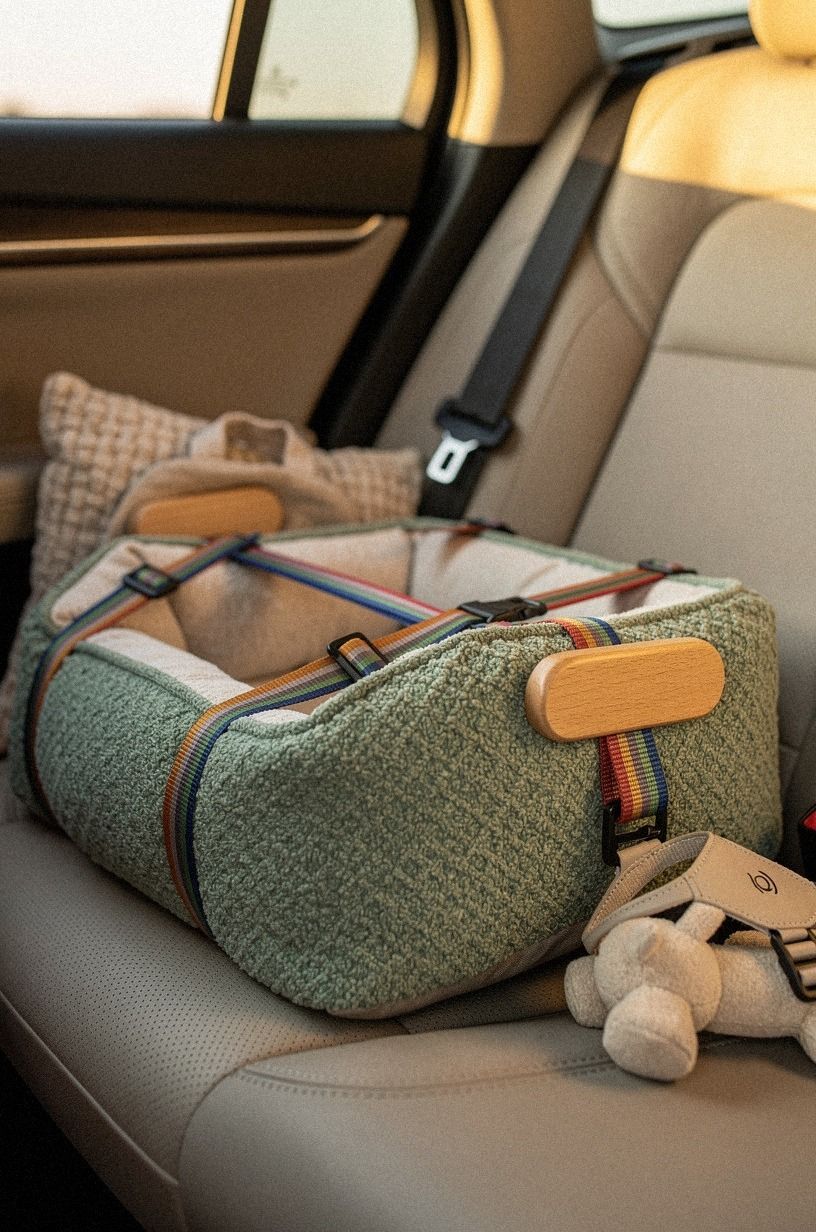
A folded blanket can create a raised sleeping platform when a full bed won’t fit. Midnight blue, copper, and ivory give the arrangement a rich road-trip palette, while washed Belgian linen keeps the texture breathable. The platform works on a flat trunk floor, inside a crate, or across a protected back seat.
Fold the blanket into a broad, even rectangle rather than a narrow roll. You’ll want the surface to stay level under the dog’s weight. A thin rubber mat beneath the blanket can reduce slipping, while a washed Belgian linen cover keeps the top layer soft and easy to launder.
This approach is useful for short trips or as an emergency backup, but it shouldn’t replace a supportive bed for every journey. If the blanket compresses into a hard ridge, add a flat foam insert. If it slides, reduce the fold height and improve the grip underneath.
Use copper-colored straps only as visual accents unless they’re designed for restraint. Decorative hardware can look strong while failing under force. The safest setup separates style from attachment.
When the blanket gets dirty, you’ll want a second one ready rather than relying on a damp fold.
10Keep the dog car bed steady with colorful ties
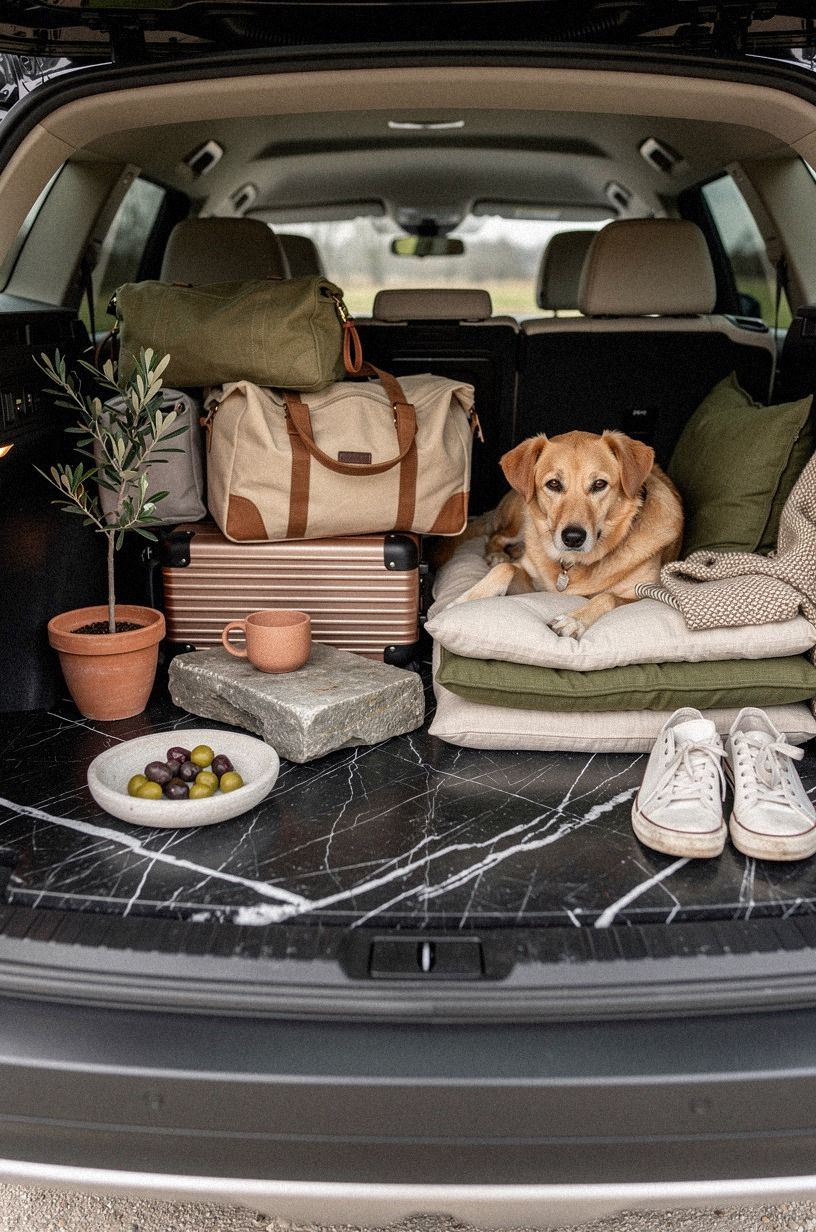
Colorful ties can keep a dog car bed from drifting across the seat, especially when the bed has a broad base and low sides. Sage green, warm cream, and natural wood create an organic palette, while bouclé adds a soft tactile finish. The straps should support the bed without pressing into the dog.
Choose flat, adjustable webbing with covered buckles. You’ll want the straps routed around the seat structure according to the vehicle and bed instructions. Never attach a tie to a loose headrest cover or a decorative handle that wasn’t designed to carry force.
A cream organic bouclé surface looks inviting, but it needs protection from claws and dirt. Place a washable cotton layer over the center and leave the bouclé visible around the border. That keeps the visual softness while making cleanup less dramatic.
Check the straps at every stop. They can loosen after repeated movement, especially if luggage presses against the bed.
A quick inspection takes less than a minute and can prevent the cushion from sliding under the dog. That small routine is worth keeping.
11Create a cozy travel nook in the trunk
A trunk travel nook gives a larger dog a dedicated resting zone with room for bedding, water, and a few essentials. Terracotta, stone, and olive work with Nero Marquina black marble accents, although the marble should remain decorative and never become an unstable surface beneath the bed.
Start with a level, protected floor. You’ll want a thick washable base, a nonslip mat, and enough clearance for ventilation.
Keep luggage to one side rather than stacking it around the dog. A low storage bin can separate supplies from the sleeping area without blocking airflow.
The nook feels more inviting when the palette repeats across several small details. A terracotta blanket, olive canvas bag, and stone-colored bolster create harmony without matching everything exactly. Avoid loose cords, dangling straps, and heavy objects that could shift during motion.
A trunk setup needs careful attention to heat and access. Don’t use a sealed cargo area without proper airflow, and never leave a dog unattended in a parked vehicle.
A beautiful nook still needs shade, water, ventilation, and regular checks. The design serves the dog first.
These Italian road-trip routes pair well with a carefully planned travel stop.
The Three-Layer Road-Trip Bed Method
The strongest setup usually has three layers: a stable base, a washable barrier, and a familiar top textile. You’ll get better results from that order than from buying the thickest cushion available. The base controls movement, the liner manages mess, and the top layer gives the dog a recognizable resting surface.
For a small vehicle, keep the visual palette restrained. Benjamin Moore White Dove OC-17, warm cream, and natural wood can make a compact cabin feel airy.
Farrow & Ball Pigeon No.25 brings more depth when the interior needs a muted blue-grey note. Sherwin-Williams Agreeable Gray SW 7029 works as a quiet neutral for washable covers.
The common mistake is choosing a bed by appearance alone. A soft bed that slides, overheats, or traps moisture won’t serve the journey. You’ll want to assess the underside, seams, cleaning method, and attachment points before considering color.
If a bed can’t be washed easily, it probably isn’t a smart road-trip bed.
Pack the Bed for Fast Stops
A travel bed becomes more useful when every part has a designated place. Keep the liner folded beneath the bed, store spare covers in one fabric tote, and place wipes, bags, and towels together. This arrangement means less searching after a muddy walk.
Use a waxed cotton tote for textiles and a shallow bin for hard supplies. Label the containers by function rather than by destination. “Bed,” “clean-up,” and “water” are easier to scan than a collection of mixed items.
Pack one familiar textile at the top of the tote. Your dog can settle on that layer while the rest of the setup is rebuilt. The routine stays simple, and the sleeping area returns quickly after every stop.
Check Heat, Airflow, and Movement
Heat deserves attention in every vehicle, including spacious cargo areas. A dark cover, closed windows, direct sun, and poor airflow can create uncomfortable conditions quickly. Keep water available, use shade when possible, and schedule regular breaks.
A lightweight cotton cover may feel more suitable than a thick synthetic throw during warm weather. Avoid covering every vent or sealing the dog into a crowded nook. Air movement matters more than visual polish.
Movement matters too. Luggage should stay low and separate from the sleeping surface.
Inspect straps, clips, crate doors, and liners whenever the vehicle stops. If any part has shifted, rebuild the arrangement before continuing.
What Does a Road-Trip Dog Bed Setup Cost?
Dog-bed costs vary by size, material, construction, and safety features. The table below gives broad planning ranges for common components rather than a promise of a final project total.
A budget-friendly travel nook can rely on an existing blanket, a washable cover, and a reused storage bin. A more substantial arrangement may include a fitted liner, structured bed, restraint system, crate, and spare textiles. You’ll want to spend first on stability and cleaning, then on decorative details.
For inspiration beyond bedding, these compact picnic boxes show how small travel organization can stay practical and attractive.
The Editorial Choice: Calm Comes From Familiar Structure
The most convincing travel dog bed setups don’t try to recreate a living room inside a vehicle. They create a small, repeatable pattern the dog can recognize. A familiar blanket, the same bowl, and a consistent resting position can matter more than a costly cushion or a decorative color story.
The strongest choice is a bed with a stable underside and a cover that can go straight into the wash. That decision may seem less glamorous than selecting bouclé or brass details, but travel exposes every weak point. Mud, water, hair, crumbs, and sudden movement reveal whether the design was built for use or only for display.
The car also needs visual restraint. Too many straps, toys, bags, and blankets can crowd the dog’s zone. A warm palette helps, but organization does the heavier work.
Keep the sleeping surface clear, place supplies in one container, and leave enough room for the dog to change position without pushing into luggage.
What makes a road-trip bed worth keeping? The answer is repeatability.
You’ll know the setup works when it can be rebuilt quickly at a rest stop, cleaned after a rainy walk, and carried into a rental room without becoming a complicated project. A calm visual isn’t enough.
The arrangement has to behave well under real travel conditions.
The Questions Worth Answering First
What is the best travel dog bed for a small travel and car dog?
A low-profile bed with a nonslip base and washable cover is usually the best starting point. Compact stability matters more than extra thickness.
Flat-pack storage textiles can create a soft travel layer, while a structured cushion may offer firmer support. Choose a bed that fits the seat without blocking restraints or airflow.
Where can you buy travel dog bed pieces on a budget?
Discount home stores, online marketplaces, and second-hand shops often carry washable textiles, storage bins, and compact cushions that can support a budget setup. Second-hand value works best when every textile is washed and every buckle, seam, and base is checked.
How much does a travel and car dog bed makeover cost?
A basic setup may cost about $100 to $300, depending on the bed, liner, and restraint system. Free improvements include reusing a familiar blanket, reorganizing the trunk, and removing loose objects. The most important paid feature is a stable, washable, properly attached resting surface.
Can you create a travel dog bed setup on a budget?
Yes, and a budget setup can still feel warm and intentional. Use a folded blanket, a washable towel liner, and a reused storage bin for supplies.
Low-cost organization often matters more than decorative upgrades. Add a fitted bed later if the temporary arrangement slides or compresses unevenly.
Is a dog car bed worth it in a small space?
Yes, when the bed fits the vehicle instead of crowding it. Defined boundaries can help keep bedding, toys, and luggage separated.
Choose a low cushion, use one compact organizer, and leave the dog enough room to turn. A smaller bed with a stable base is better than an oversized cushion.
Is a travel dog bed a good idea for a rental?
Yes, especially when the setup uses removable pieces. No-damage flexibility comes from washable blankets, tension organizers, permitted removable hooks, and foldable crates. Avoid permanent hardware or adhesive that could mark the vehicle.
Carry every piece in one labeled tote for easier arrival and departure.
Where to Start First
If one choice deserves priority, start with the anchored quilted travel bed behind the front seats. Its stable base, familiar textile, and low profile solve the biggest comfort problem before decorative details enter the picture. Save the arrangement for later, then pair it with a washable liner for cleaner stops and calmer returns.