
The trundle only helps when the room can accept its open footprint. In a guest room around 8 by 10 feet, a twin daybed against the longest wall can préservé a central zone for the second bed, while an IKEA VIHALS frame is listed at about $299 before mattresses and other charges.
The smartest layouts treat the pull-out bed as the room’s main movement problem. Once that path is protected, a desk, shelf, or storage drawer can fit without turning overnight hosting into furniture rearrangement.
Anchor the Daybed Along the Longest Wall
Start with the wall that gives the bed the longest uninterrupted run. A twin daybed placed lengthwise keeps the trundle opening toward the room instead of forcing guests to pull it into a corner.
In a room around 8 by 10 feet, this arrangement protects the central floor area as much as possible. An IKEA VIHALS daybed-and-trundle frame is listed at about $299 before tax, delivery, assembly, and mattresses, making it a practical starting point for a compact guest room.
Keep the head of the bed near a shallow shelf or wall-mounted reading light. A floor-standing nightstand steals the exact space that makes the pull-out bed usable.
Designers are firm about one point: the trundle side must face the room, not a dresser, closet door, or radiator. The layout should look calm when closed and remain workable after the second bed is fully open.
Protect the Trundle’s Opening Path
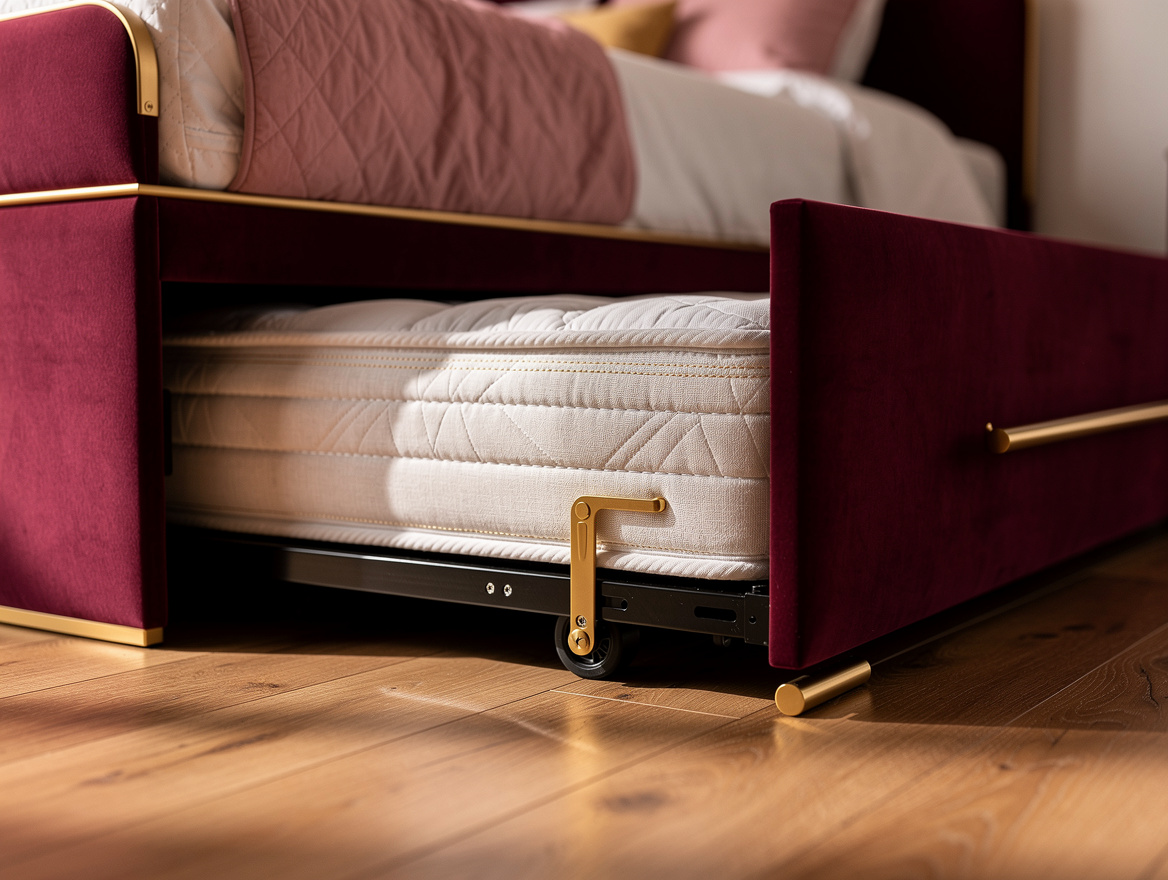
Think of the open trundle as a temporary floor plan, not an accessory hidden beneath the bed. A low rolling trundle needs a clear central zone wide enough for guests to enter and leave without shifting furniture.
Keep luggage storage beyond the foot of the bed rather than opposite its middle. A narrow basket can work, but a deep chest or permanent desk in the travel path will make overnight setup frustrating.
The distinction matters when you shop. A separate lower twin bed gives guests two sleeping surfaces at different heights, while an extending daybed creates one wider surface and requires a different room arrangement.
Before buying, mark the closed and open positions with removable tape. The test takes a few minutes and reveals problems caused by door swings, baseboards, closet access, or a radiator that a product photo will never show.
Fit the Desk Beside the Window
An office guest room works best when the desk occupies the lightest wall and the bed stays on a side wall. Plan for a desk around 40 to 48 inches wide and 18 to 20 inches deep, then choose a chair that slides fully underneath.
A compact writing desk should sit perpendicular to the bed when possible, leaving the trundle runway free. This arrangement gives the room a clear work zone without making the sleeping area feel like an office squeezed around furniture.
Use a movable side table instead of a coffee table. A Wayfair metal daybed can support this layout when its pull-out side remains clear and the desk chair does not need to cross the bed’s opening path.
Keep filing cabinets, bookcases, and rolling carts outside that route. The strongest small-room office has fewer pieces, better spacing, and one surface that can serve the guest room after work is finished.
Choose Separate Beds or One Wide Surface
Decide how guests will sleep before deciding how the room should look. A rolling trundle suits visitors who need separate beds, while an extending frame makes more sense when the room occasionally functions as a larger sleeping area.
IKEA HEMNES combines an extending platform with three drawers for bedding and towels. Its design creates one wider sleeping surface, and IKEA states that it is not intended to become two separate single beds.
That limitation is useful information, not a flaw. Choose HEMNES when the priority is a flexible guest bed with built-in storage, then keep the opposite wall mostly open so the room does not become crowded when the platform extends.
Mattresses are generally extra, so include them in the budget before choosing a frame. A solid-pine bed frame can bring warmth to the room, but its material does not solve a poor opening path or an undersized mattress plan.
Trade a Dresser for Guest Storage
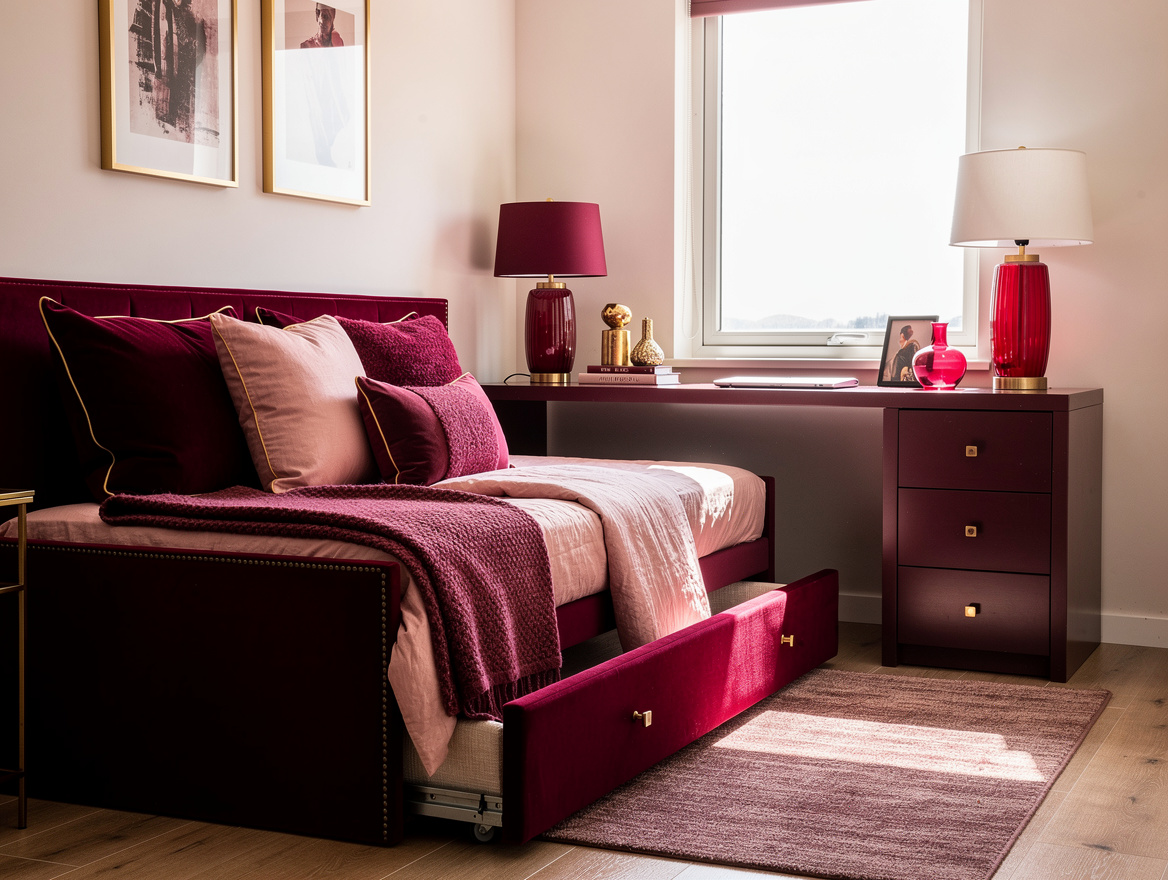
In a small spare room, the bed can carry more storage responsibility. Use drawers for folded sheets, towels, and a spare blanket so a separate dresser does not compete with the trundle.
Current US retail examples put basic bed-and-trundle frames at about $210 to $300, while upholstered daybeds generally fall around $290 to $570. Those prices are before tax, delivery, assembly, and mattresses, so storage built into the frame can matter more than a small difference in upholstery.
Choose a shallow shelf above the head of the bed for a lamp, phone, and book. A wall-mounted shelf keeps the floor clear and gives guests a landing spot without creating another piece to move.
Skip bulky storage opposite the trundle unless the room is larger than roughly 9 by 10 feet. The best spare-room storage is quiet when the bed is closed and invisible to the bed’s movement when it is open.
Test Every Dimension Before Ordering
Furniture dimensions describe the closed frame, but guests use the open arrangement. Confirm the model’s full trundle extension, mattress thickness limits, and clearance around the foot before placing an order.
For example, the lower mattress for IKEA VIHALS must be no thicker than 4 3/4 inches, or about 12 centimeters. That restriction affects comfort, so it deserves attention before you choose bedding or promise the room to adult visitors.
Mark the bed, trundle, desk, and door swing on the floor at full scale. Then walk the route with a laundry basket or suitcase to see whether the room still works during a real arrival.
Leave assembly space in the plan as well. A frame that fits beautifully on paper can become a poor purchase if it blocks the closet during setup or leaves no place to store the mattresses when the bed is closed.
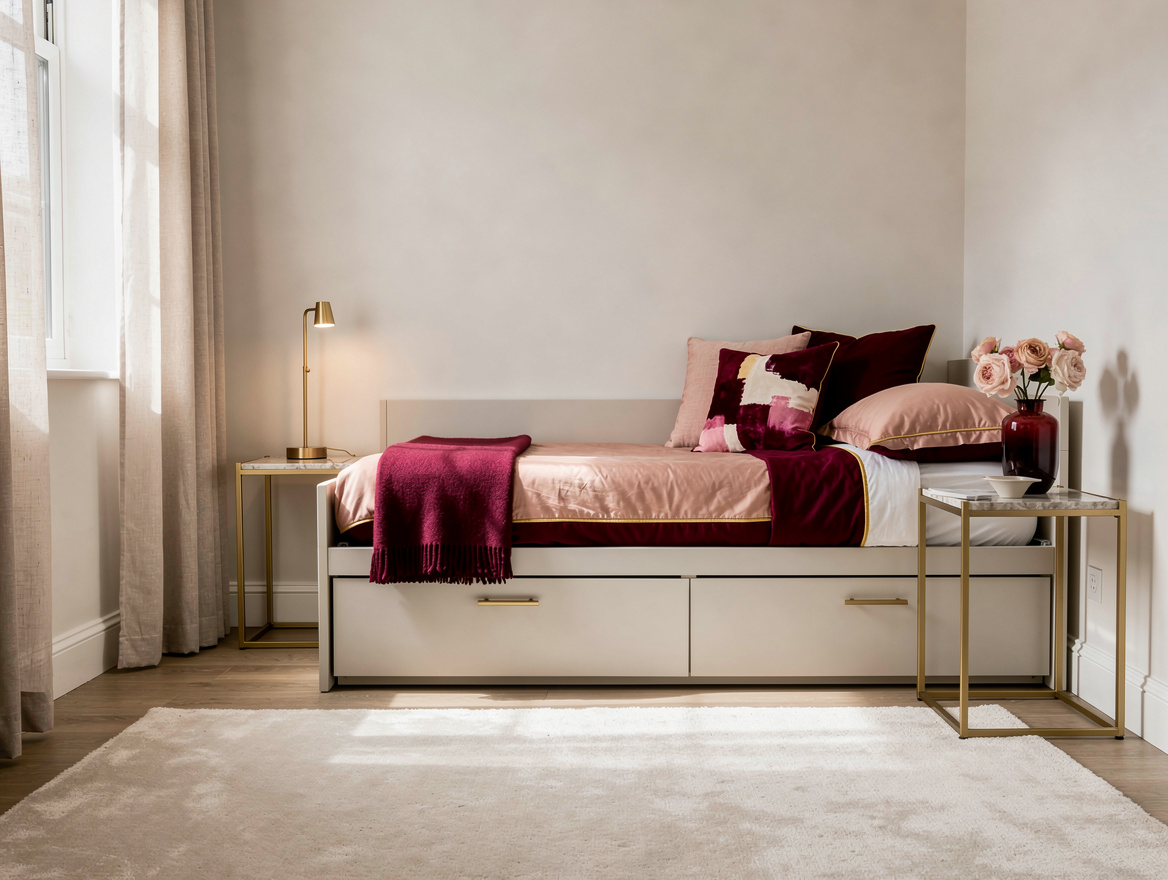
Begin with painter’s tape: mark the closed frame, the fully open trundle, and every door swing before comparing finishes. That simple test will tell you whether the room needs a separate-bed trundle or an extending daybed with storage.
Mia Carter writes about small-space living and budget home makeovers. She has restyled three rentals and tests most ideas in her own 45 sqm flat.