
A 15-minute calm down bedtime routine works best when it follows the same quiet order each night: dim the light, lower stimulation, offer one choice, and finish with a predictable cue. The routine can support a calmer transition for overstimulated kids and busy moms without adding complicated supplies or extra tasks.
- Dim Lights for a Peaceful Sleep Transition
- Start the 15-Minute Night Routine Together
- Use Toddler Sleep Routine Cues Consistently
- Practice Four Calm Breaths Before Bedtime
- Lower Voices During the Calm Down Routine
- Offer One Simple Choice Before Sleep
- Read a Short Peaceful Sleep Story
- Stretch Gently During the Night Routine
- Keep Screens Away Before Bedtime
- Repeat One Soothing Phrase Together
- Settle Overstimulated Kids With Quiet Hugs
- End the Calm Down Routine Predictably
The essentials for a calmer bedroom
The five pieces we recommend for a calmer bedroom.

Premium Grounding Sheet
Premium Grounding · woven 316L stainless-steel fibers, goes under your fitted sheet
See the woven 316L grounding sheet →
Save 10% with code mattressnut
Through Nov 30: buy one sheet, get one free (per the brand)
 THE MATTRESS
Saatva Classic
Saatva
- THE TOPPER
Graphite Topper
Saatva
- THE PILLOW
The Saatva Pillow
Saatva
- THE COMFORTER
Down Alternative Comforter
Saatva




1Dim Lights for a Peaceful Sleep Transition
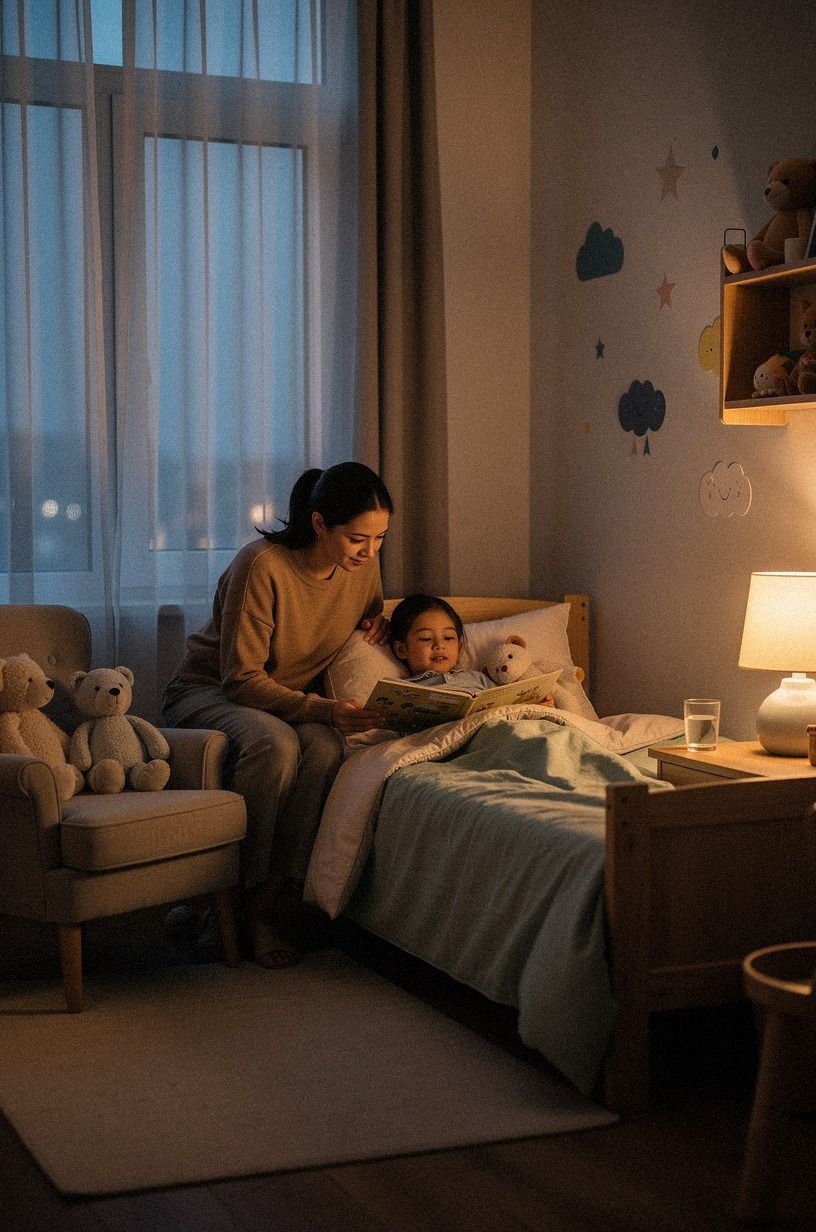
Dim the main light and keep the final 15 minutes before bedtime visibly softer. Use the lowest comfortable setting, close bright screens, and avoid switching between several light sources. Your child should notice a clear change from active evening to bedtime without needing a long explanation.
Say, “The lights are going down, and bedtime is starting.” Keep the sentence short. Fifteen minutes gives toddlers enough warning while leaving little space for a new game or negotiation. If a child becomes nervous in low light, leave a gentle night-light on and keep its position unchanged.
The goal isn’t darkness. It’s a steady reduction in visual activity.
Bright overhead lighting may keep an overstimulated child focused on movement, toys, or unfinished tasks. A softer setting can signal that the night routine has begun.
This step works best when the light change happens before pajamas, books, or hugs. It may not help much if the rest of the evening stays loud. Keep voices, music, and household activity quieter at the same time.
2Start the 15-Minute Night Routine Together
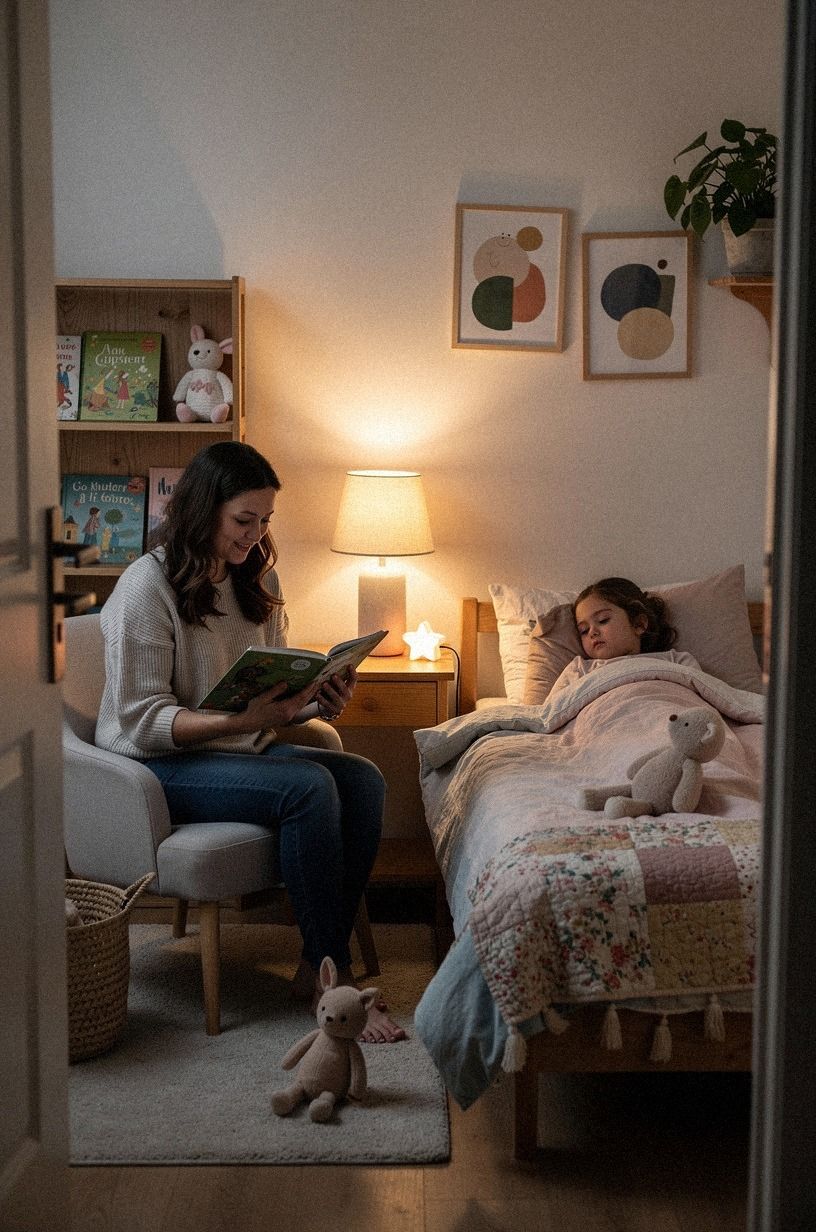
Start a timer for 15 minutes, then move through the same four steps with your child: bathroom, pajamas, one calm activity, and bed. Keep the sequence visible with simple spoken cues or four small drawings on paper. Your child won’t need to ask what happens next.
Begin with, “First pajamas, then a story.” A fixed sequence gives busy moms fewer decisions during a tiring part of the day. It also keeps the routine short enough to finish before patience runs thin. When the timer ends, the routine ends, even if every small request hasn’t been completed.
A timer can be quiet and ordinary. Choose a soft sound instead of an alert that feels like an alarm. If your child resists the timer, let the child press the start button while you name the first step.
This routine isn’t a race. Move steadily, but don’t rush hands, clothing, or bathroom needs. Some nights may require extra time for illness, travel, or a difficult day.
The useful part is the familiar order, not perfect timing.
3Use Toddler Sleep Routine Cues Consistently
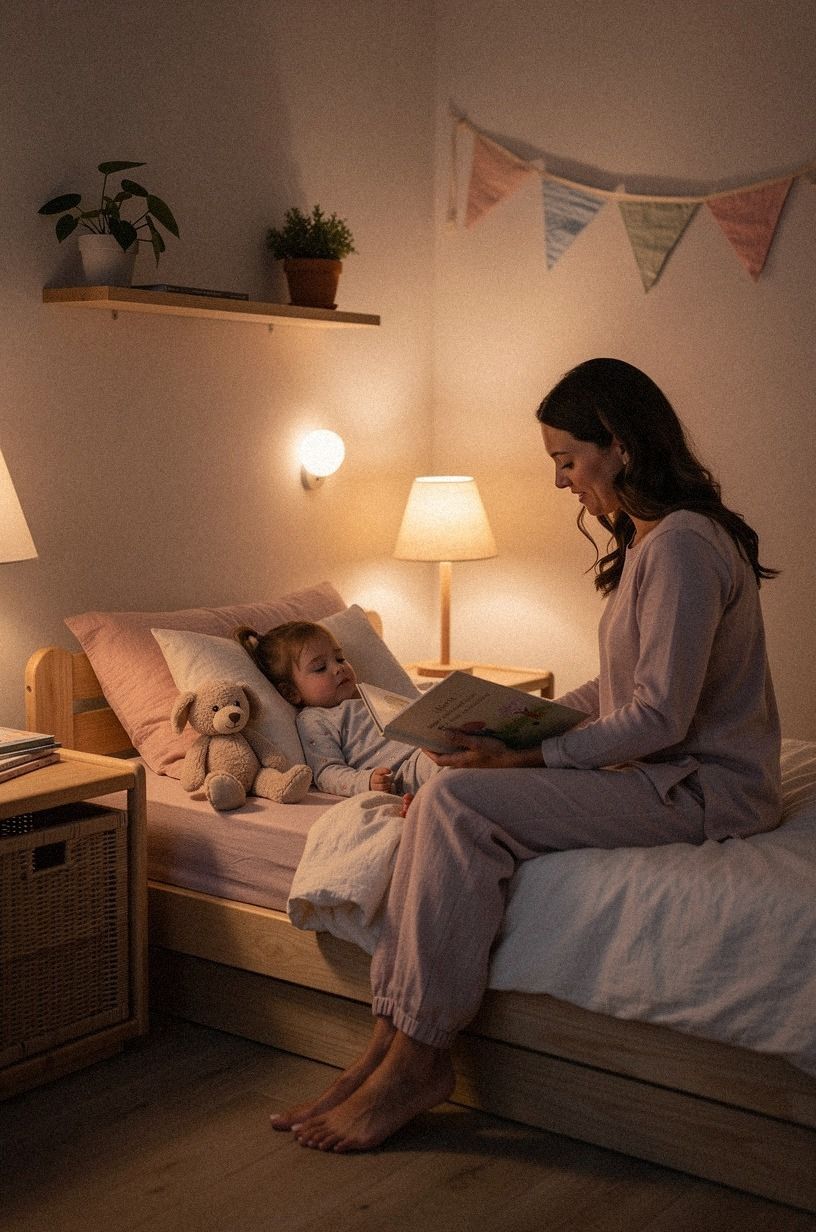
Choose three bedtime cues and repeat them in the same order every night: pajamas, a short book, and the same goodnight phrase. Keep each cue brief and use the exact wording whenever possible. Your toddler may begin responding to the sequence before every instruction is finished.
For example, say, “Pajamas, book, then bed.” Follow with the same physical pattern: help with clothing, sit for one story, then walk to the sleep space. Consistency matters more than variety during a calm evening routine.
Avoid adding new rewards, extra games, or fresh negotiations after the final cue. If your child asks for another activity, repeat the phrase kindly and point to the next step. You don’t need a long explanation at bedtime.
These cues may be useful for toddlers who become unsettled during transitions. They won’t remove every protest, especially after travel, sickness, or a missed nap.
Keep the routine familiar without expecting instant cooperation. A calm cue can be repeated several nights before it feels natural.
Why We Recommend This Product
If the ideas in this article speak to you, here is why this one product belongs next to them.
- 1
It goes where your routine already is.The sheet sits beneath your existing fitted sheet, so nothing else about your bed has to change.
- 2
Set up once.The connection cord and plug are included, and the seller describes setup as a matter of minutes.
- 3
Built to keep going.The seller lists woven 316L stainless-steel fibers and says there is no silver to tarnish.
- 4
Your own bedding stays on top.You keep the sheets, pillowcases and blankets you already like.
What you get: a woven 316L stainless-steel sheet that goes under your fitted sheet, and the connection cord and plug.
Save 10% with code mattressnut
Through Nov 30: buy one sheet, get one free (per the brand)
4Practice Four Calm Breaths Before Bedtime
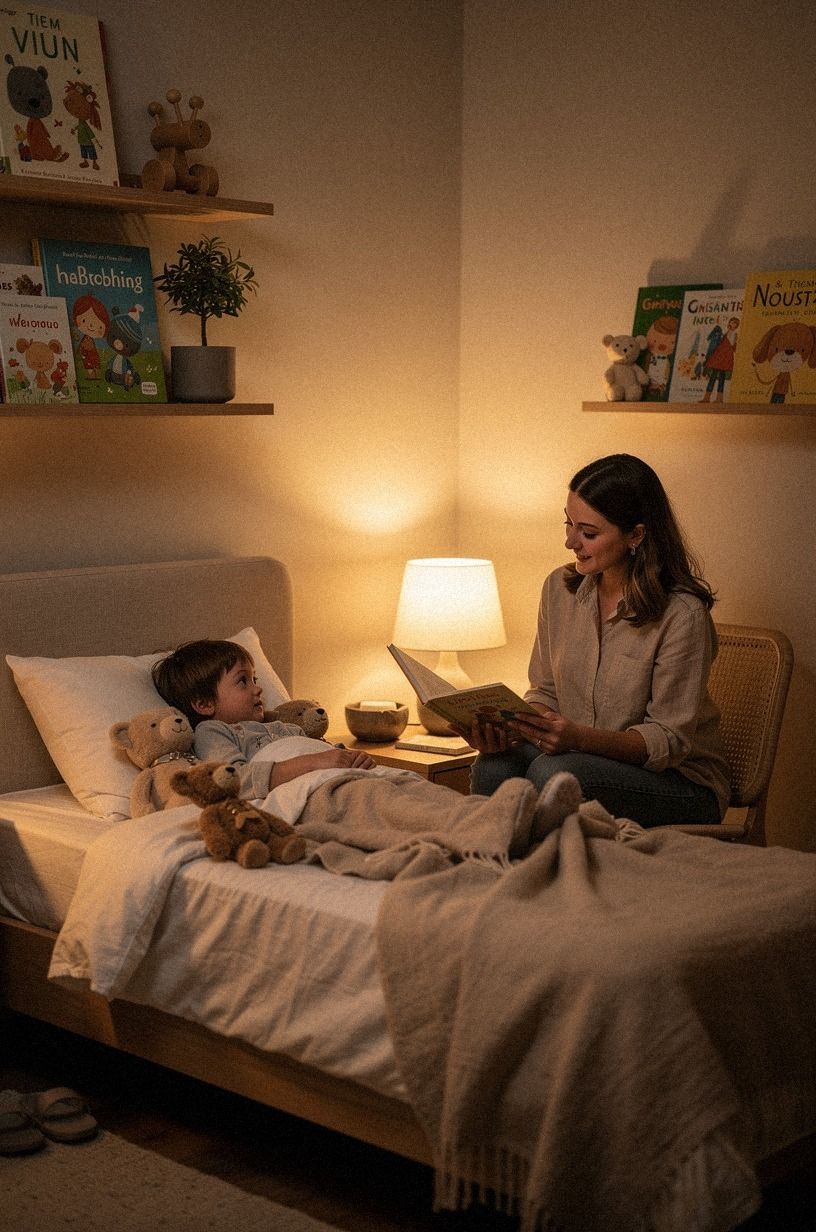
Place one hand on your own chest and invite your child to take four slow breaths with you. Breathe in gently, pause briefly, and breathe out without forcing a deep breath. Count softly from one to four, then stop.
Your child can copy the rhythm or simply watch.
Use a comfortable sitting or lying position. Four breaths are enough for a short bedtime routine because a longer exercise may feel like another demand. Try a quiet phrase such as, “Smell the flower, cool the soup,” if counting feels too formal.
Keep the focus on comfort rather than perfect technique. A toddler may laugh, blow air, or turn the exercise into a game.
That’s fine. The practice can still create a pause between active play and the next bedtime step.
Breathing exercises won’t suit every child. Some children become more alert when attention turns toward breathing, and others dislike being coached. If that happens, stop after one breath and return to a story, a quiet cuddle, or the usual goodnight cue.
5Lower Voices During the Calm Down Routine
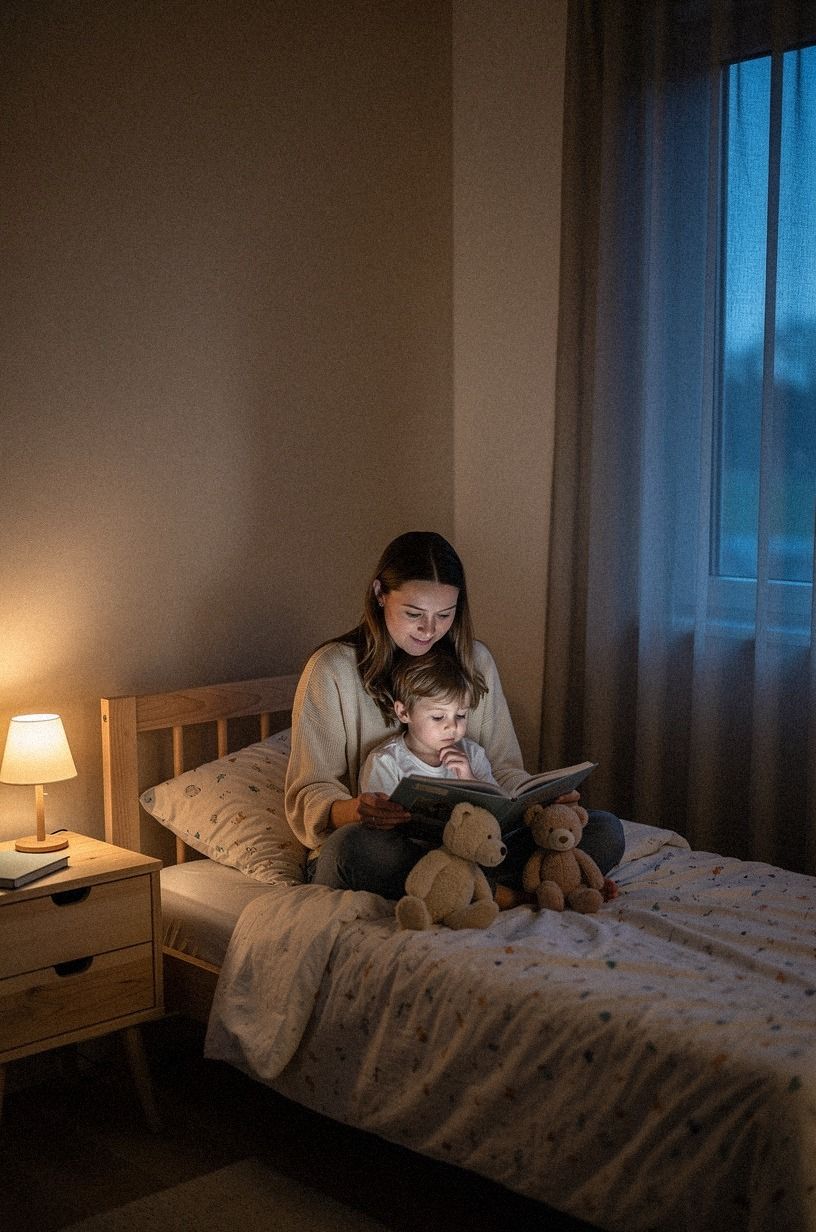
Lower the speaking volume as soon as the bedtime routine starts, and use fewer words with longer pauses. Speak close enough for your child to hear without calling across the room. Your voice should sound steady, not secretive or overly dramatic.
Choose one calm instruction at a time. Say, “Shoes off,” then wait.
A slower voice can make the routine feel less urgent, especially after a noisy afternoon or busy family evening. Keep facial expressions relaxed, and avoid turning every request into a question.
A whisper isn’t always helpful. Some children strain to hear it and become more alert.
A soft, ordinary voice usually works better than a theatrical whisper. If your child is already upset, speak clearly and name the next small action.
This approach has a limit: it can’t compensate for loud television, active siblings, or repeated interruptions nearby. Lower the household volume where possible, but don’t expect total silence. The purpose is a gentler rhythm, not a silent home.

6Offer One Simple Choice Before Sleep
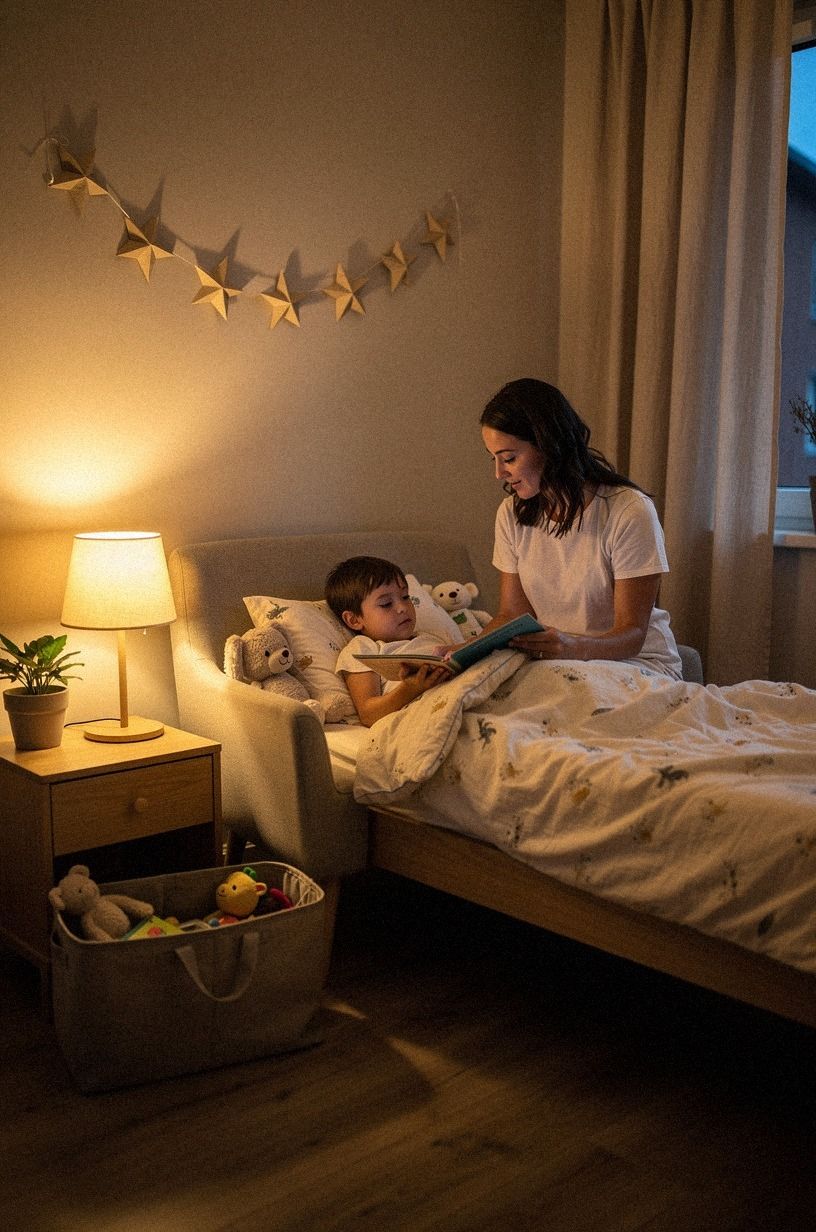
Offer one bedtime choice with two acceptable options, then let your child decide within 10 seconds. Ask, “Blue pajamas or striped pajamas?” or “One song or one short story?” Your child gets control without opening the door to an endless list of requests.
Keep both options equally easy for you. Two choices are enough for a toddler or tired child. After the answer, repeat it once and move on: “The short story it is.” Avoid offering a second choice immediately afterward.
This step can help when overstimulation appears as arguing, stalling, or grabbing random objects. The choice should relate to the routine, not whether bedtime happens. Don’t ask, “Do you want to go to bed?” because the answer may create a larger conflict.
Some children find choices tiring. If your child can’t decide, calmly choose for the child and continue.
The purpose is a small moment of control, not a new bedtime responsibility. On difficult nights, skip the choice and rely on familiar cues.
7Read a Short Peaceful Sleep Story
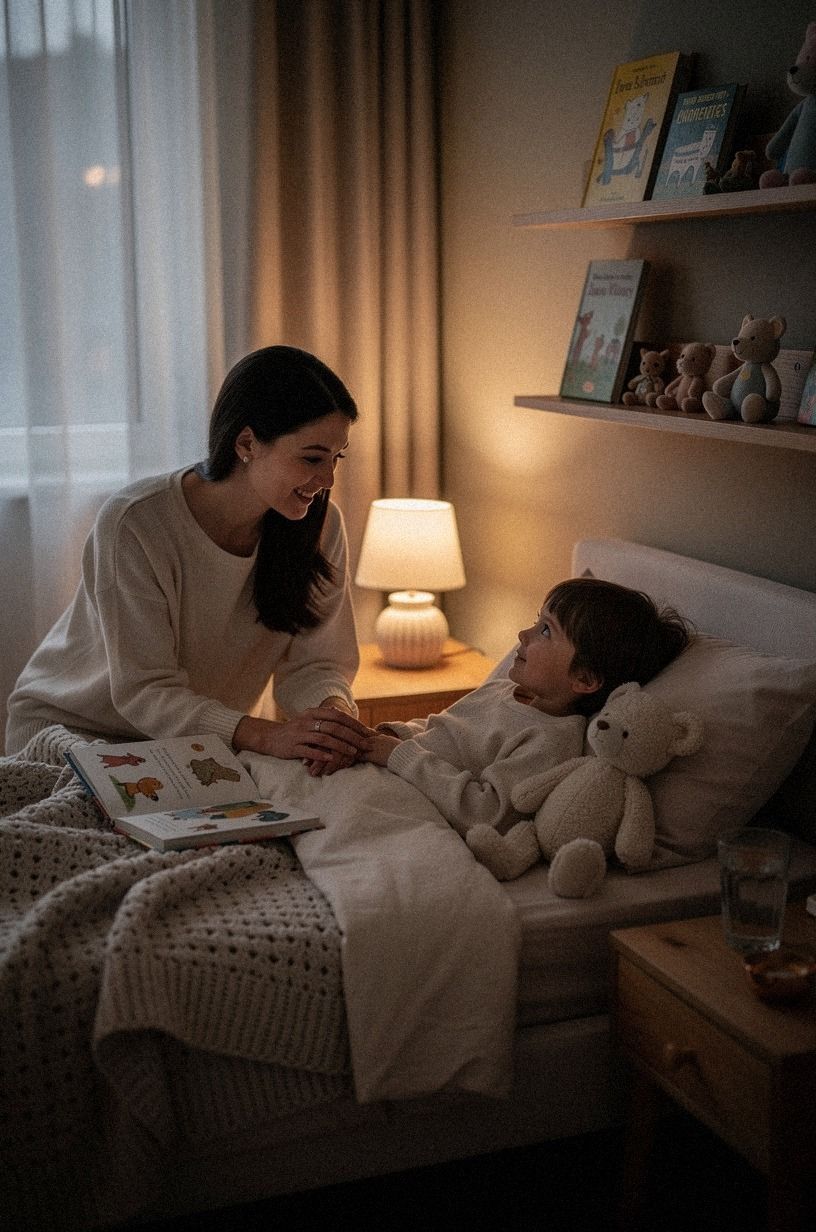
Read one short story with a calm plot, few characters, and a clear ending. Choose a book that takes about five minutes and avoid stories with chase scenes, loud surprises, or a cliffhanger. Keep the book in your hands while your child listens from a comfortable position.
Use a steady pace and pause briefly at the end of each page. One familiar story may work better than a new book every night because the child already knows the sequence. If the story includes questions, answer them briefly rather than starting a long discussion.
A peaceful sleep story doesn’t need a sleep theme. A simple animal story, repetitive rhyme, or quiet family scene can work well. Keep the final sentence consistent when possible, such as, “The story is finished, and bedtime continues.”
Reading may not settle a child who is hungry, uncomfortable, or worried. Check those needs before opening the book. If your child becomes more excited during reading, choose a shorter story or replace it with a quiet spoken rhyme.
8Stretch Gently During the Night Routine
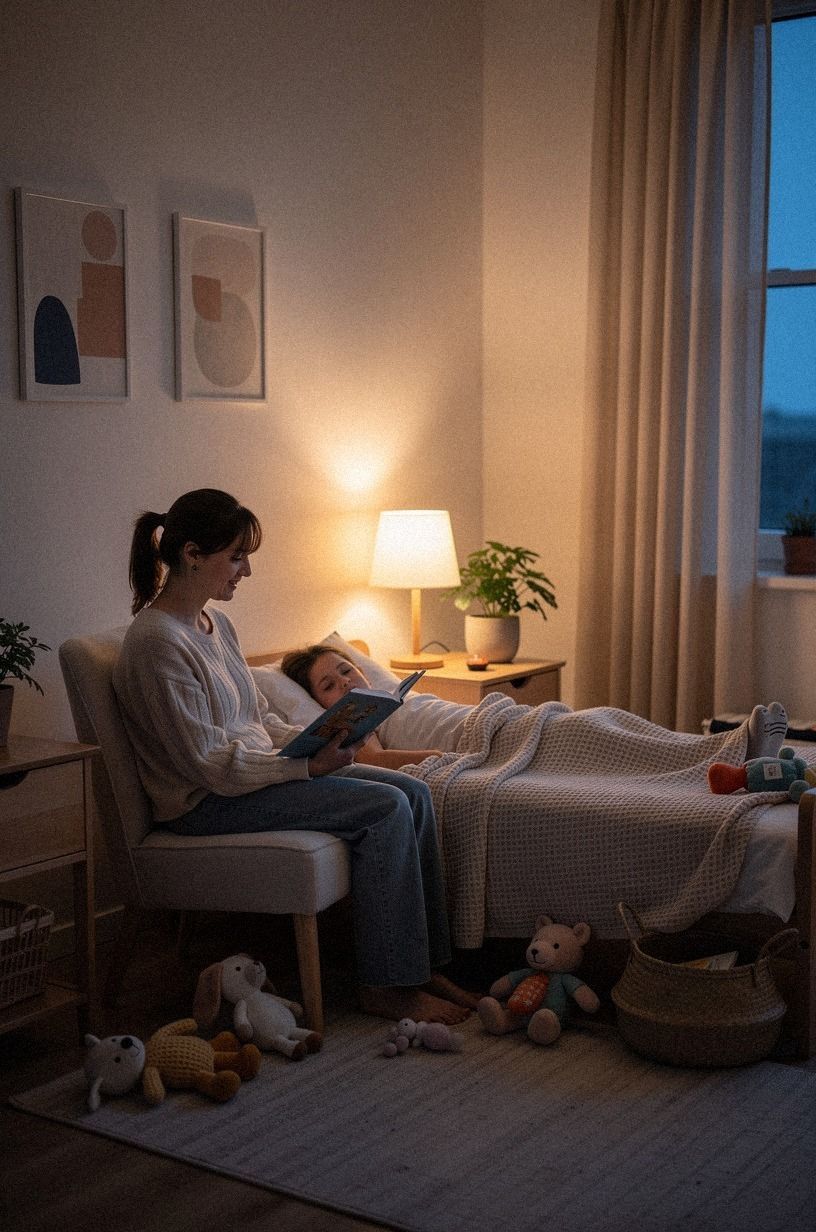
Guide your child through three gentle movements before the final story or goodnight phrase: reach arms overhead, roll shoulders slowly, and curl into a comfortable seated position. Keep each movement to about 10 seconds. Your child can copy, watch, or stop at any point.
Use simple language: “Reach up, let arms fall, now rest.” Gentle movement can give a busy body a final outlet without turning bedtime into exercise. Keep feet on the floor or use a familiar safe position rather than introducing difficult poses.
Avoid bouncing, racing, jumping, or competitive counting. Those activities can bring energy back into the routine. The movements should feel slow enough that your child can notice the change from active play to rest.
Stretching isn’t suitable for every child every night. A child with pain, an injury, unusual stiffness, or a medical concern should skip the activity and follow professional guidance.
For most families, one minute of easy movement is plenty. Stop while the routine still feels calm.
9Keep Screens Away Before Bedtime
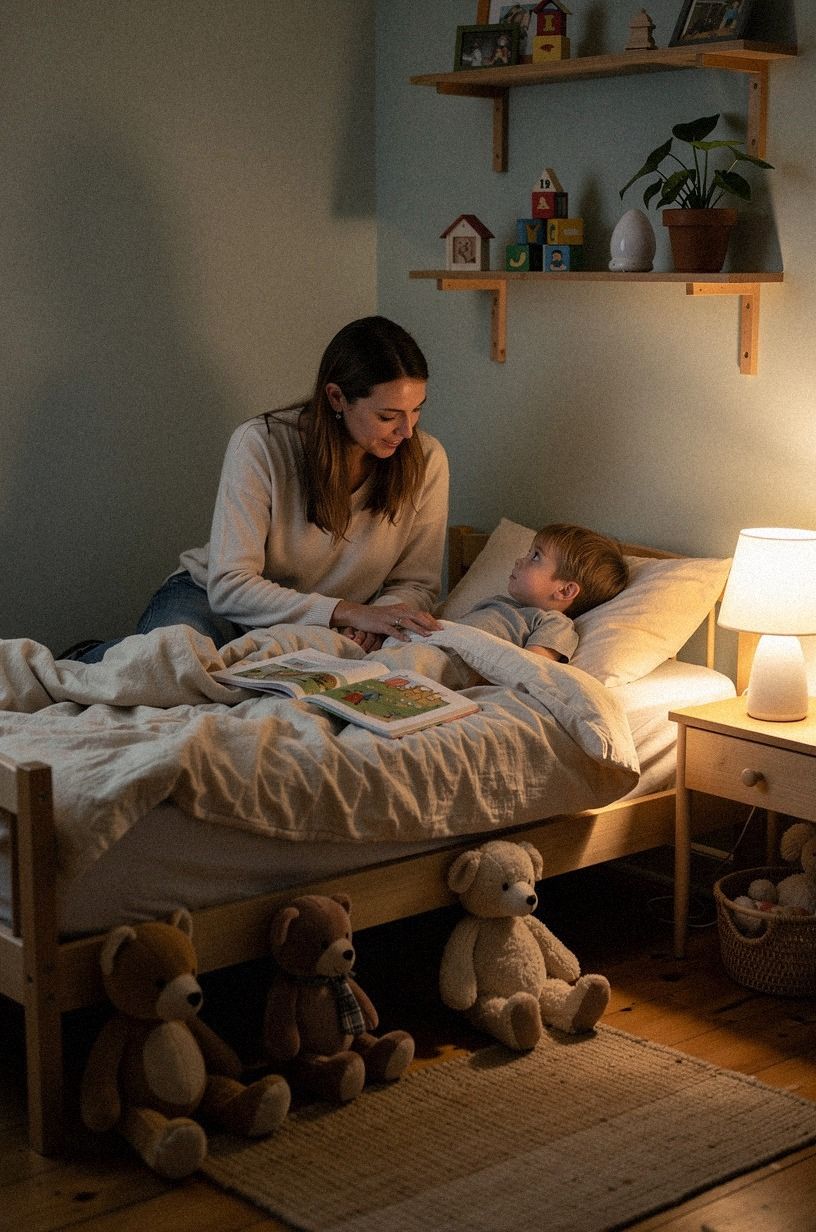
Turn off tablets, phones, television, and handheld games before the 15-minute routine begins. Put the devices out of reach and out of sight, then replace them with a book, breathing, or a quiet conversation. Your child may protest at first, so announce the cutoff before switching off.
Use a clear statement: “Screens are finished for tonight.” A visible screen boundary prevents repeated bargaining. Keep the phone away during the routine when possible, because children notice when adults continue checking messages.
If a screen is needed for a medical device or essential communication, lower brightness and remove entertainment content. The key change is ending active viewing and interactive play before bedtime. Don’t promise one more video unless that promise is genuinely the final one.
This step can be difficult in a busy household, especially when older children use devices nearby. Set a shared family cutoff where practical. Some kids may need a gradual change from a later screen ending, so move the cutoff earlier by a few minutes across several nights.
Premium Grounding Sheets: what you get
Specifications as stated by the manufacturer.
| Material | Woven 316L stainless-steel fibers |
|---|---|
| Fit | Beneath your existing fitted sheet |
| In the box | Connection cord and plug |
Save 10% with code mattressnut
Through Nov 30: buy one sheet, get one free (per the brand)
10Repeat One Soothing Phrase Together
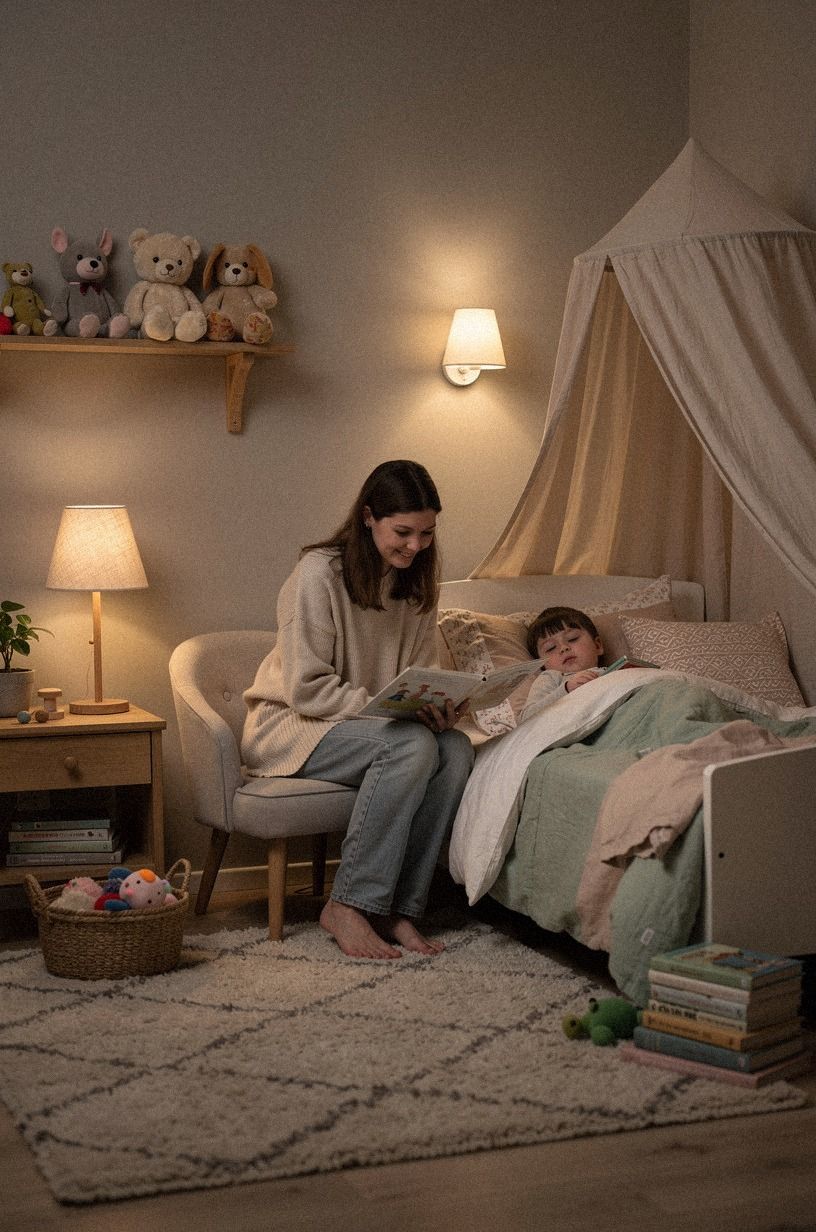
Choose one short phrase and repeat it at the same point every night. Try, “Your body can rest now,” or, “The day is finished, and bedtime is here.” Say it once, invite your child to repeat it, then use it again during the final goodnight.
Keep the phrase neutral and reassuring. A repeated sentence gives your child a familiar verbal marker without requiring a long explanation. Avoid promises about how quickly sleep will happen or statements that create pressure.
If your child changes the words into a joke, allow one light repetition and return to the original phrase. The cue should stay predictable rather than becoming a conversation. Busy moms can also use it when the routine has to be shortened.
A phrase won’t resolve every worry. If your child mentions fear, pain, or a serious concern, pause the routine and respond directly. For ordinary bedtime resistance, gentle repetition is usually more useful than adding new arguments or detailed explanations.
11Settle Overstimulated Kids With Quiet Hugs
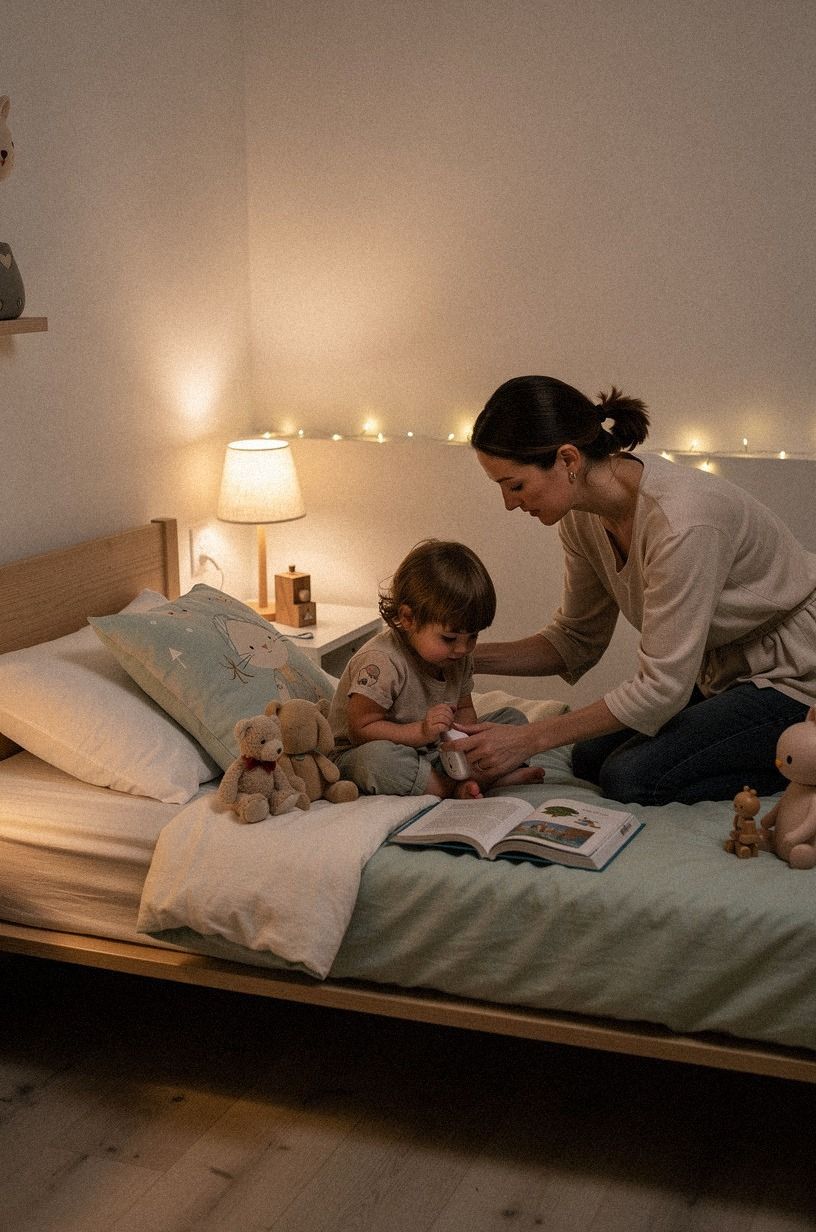
Offer a quiet hug for 20 to 30 seconds, then release it and move to the final bedtime cue. Ask first, “Hug or hand hold?” Respect the answer if your child prefers space. Keep the contact still, gentle, and free from playful squeezing.
A hug can provide a clear pause after the story, breathing, or last bathroom trip. Thirty seconds of still contact is enough for a bedtime cue. Keep your own breathing steady, and avoid questions that invite a new conversation once the hug begins.
Some children settle better with a hand on the back, a hand hold, or a nearby adult without touch. Let your child choose the comfortable option. Never force physical contact, even when the routine is running late.
Quiet hugs may not work after conflict, when a child is physically uncomfortable, or when touch feels overwhelming. In those moments, offer space and repeat the familiar phrase instead. The aim is connection without turning the final step into another stimulating activity.
12End the Calm Down Routine Predictably
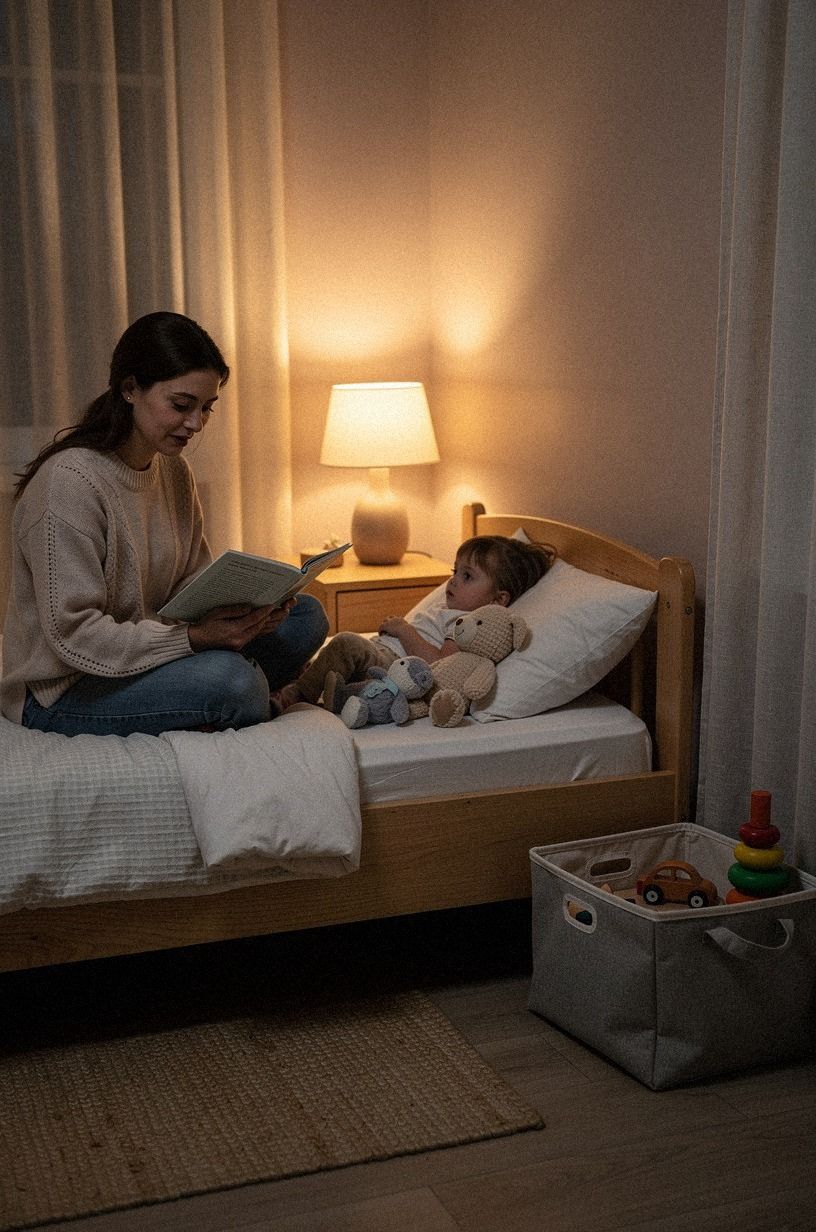
End the routine with the same final sequence every night: one goodnight phrase, one brief hug or hand hold, and leaving the sleep space. Keep the ending under one minute. Your child should know that the routine is complete without needing to ask what comes next.
Use a phrase such as, “Goodnight. The routine is finished.” A predictable ending helps busy moms avoid adding extra stories, snacks, or negotiations after the agreed steps. If a genuine need appears, respond to it calmly, then return to the same closing cue.
Keep the exit boring and brief. Repeated doorway conversations can restart the entire routine. If your child calls out, answer with the same short phrase from nearby when possible.
This ending won’t prevent every wake-up or request. Children may still need help with illness, fear, thirst, or a bathroom trip. The benefit comes from knowing when the calm down routine ends, not from expecting uninterrupted sleep every night.
How the 15-Minute Routine Fits Together
Start with dim lights, then move through the same short order: routine cues, slower voices, four breaths, one choice, a story, gentle movement, no screens, one phrase, quiet contact, and a predictable ending. You don’t need every step on difficult nights. Choose the first three and keep the closing consistent.
Where to Start First
Start with dimming the lights, because that single change marks the beginning of the 15-minute routine without adding another task. Repeat it nightly, then build in one additional cue when the timing feels manageable.
Affiliate link: this article contains affiliate links. The site may earn a commission if you purchase through them.