The best guest bathroom upgrades for a Mediterranean getaway use warm paint, tactile stone, aged metal, and soft linen without demanding a full renovation. A few focused changes can shift the room from basic to inviting, especially when texture replaces clutter. You’ll get the strongest result by starting with the surface guests notice first.
A useful palette begins with warm paint, then adds one natural material and one aged finish. Don’t crowd the room with themed accessories. Let the architecture and everyday hospitality carry the mood.
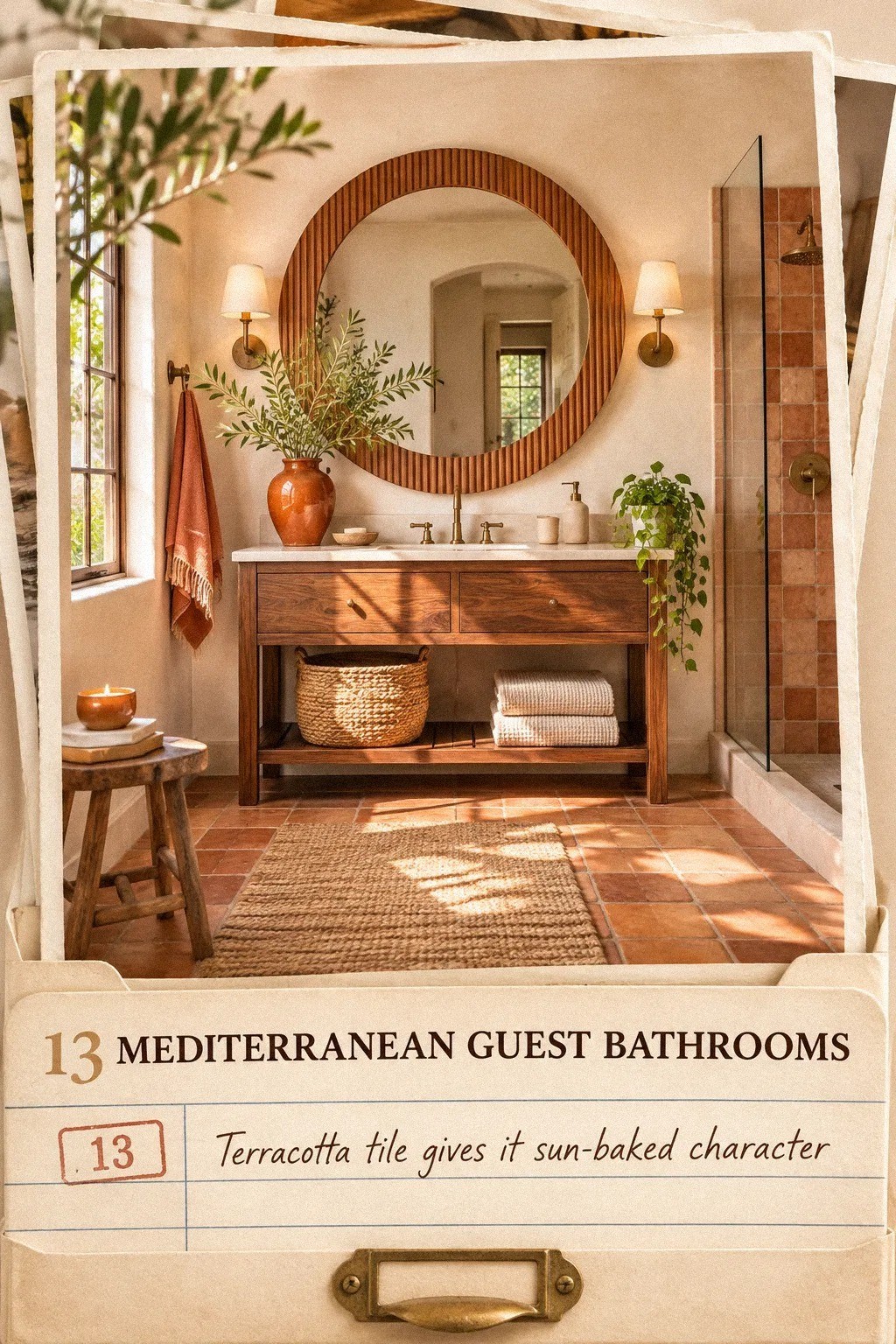
- Frame the vanity mirror with fluted timber (The Timber Halo Rule)
- Float a stone basin on a slim console (The Console Lightness Effect)
- Tile the shower niche in contrasting marble (The Book-Matched Niche)
- Paint the ceiling a warm plaster tone (The Fifth-Wall Wash)
- Hang a petite pendant beside the mirror (The Three-Height Light Stack)
- Pair unlacquered brass with creamy zellige tiles (Brass Over Chrome)
- Build a recessed shelf behind the toilet (The Plaster Pocket Principle)
- Lay small-format stone tiles in a checkerboard (The Quiet Checkerboard)
- Wrap the lower walls in beadboard paneling (The Half-Wall Horizon)
- Style one sculptural branch in a wall vase (The Single-Branch Pause)
- Choose a wall-mounted tap above the basin (Why the Tap Works)
- Echo the guesthouse feel with linen café curtains (The Soft Window Rule)
- Install a narrow ledge for folded hand towels (The Three-Fold Welcome)
1Frame the vanity mirror with fluted timber (The Timber Halo Rule)
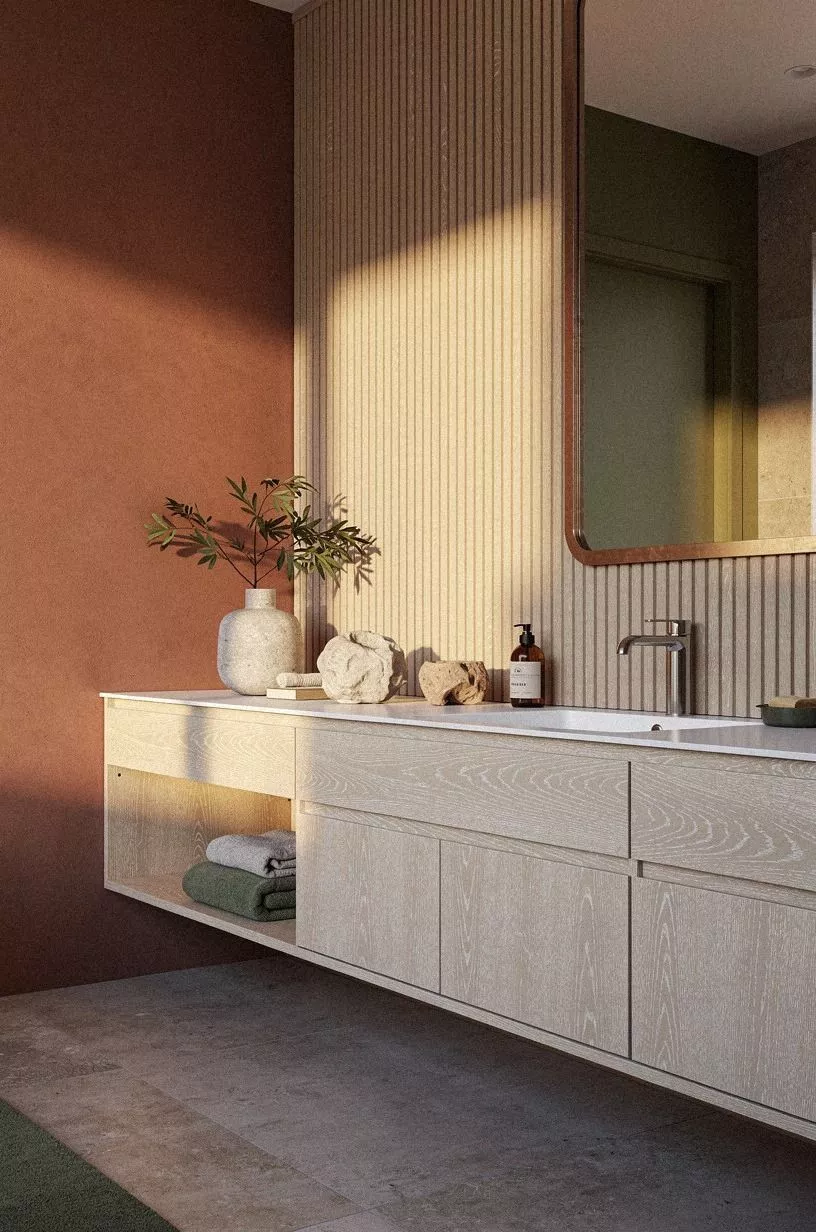
Fluted timber gives a flat vanity wall rhythm and shadow, especially when the bathroom already carries terracotta, stone, and olive tones. A frame in cerused white oak works beautifully because the pale grain keeps the room airy while the grooves add a crafted, old-world feeling.
You’ll want the frame to sit close to the mirror edge so your reflection still feels generous. Don’t use a glossy orange stain, because it’ll fight the earthy palette.
Choose a mirror with a simple rounded rectangle or soft arch. Sharp geometric edges can feel too modern beside textured plaster and stone.
Benjamin Moore Chestertown Buff HC-9 on the surrounding wall will keep the timber warm without making the space feel yellow. If your vanity wall is narrow, a 24-inch to 30-inch mirror can leave enough breathing room for sconces.
The frame should echo one existing finish rather than introduce a fourth wood tone. Match it loosely with a shelf, stool, or cabinet pull. You’ll create more calm when the grain appears in two places, not across every surface.
A slim profile also keeps your bathroom from feeling visually crowded.
For more direction, browse these small Mediterranean bathroom ideas with old-world charm. You’ll see why a restrained frame often feels more expensive than an oversized decorative mirror. The grain should stay visible, the profile should remain slim, and the finish shouldn’t look factory-perfect!
2Float a stone basin on a slim console (The Console Lightness Effect)
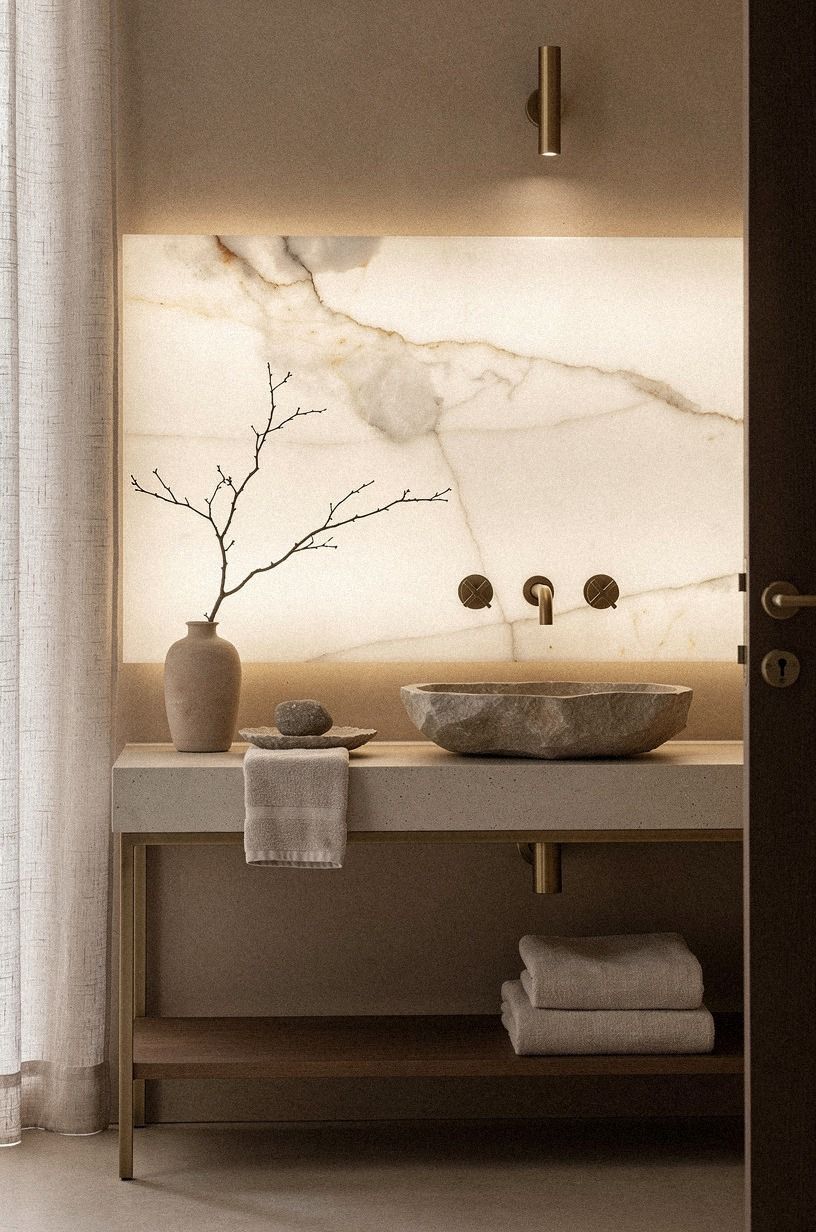
A floating basin makes a guest bathroom feel less crowded because the floor remains visible beneath the vanity. For a clay, linen, and aged brass palette, a backlit translucent onyx basin creates a gentle glow along the wall. It’s dramatic without becoming theatrical, and you won’t need many accessories around it.
Keep the console narrow enough for comfortable circulation.
A vanity height between 32 and 36 inches works for many adults, so you’ll want the basin and console measured together rather than separately. Slim oak or walnut legs can soften the hard surface, while a linen-covered stool adds a relaxed guesthouse note. Don’t pair translucent stone with bright chrome, because the cool reflection will flatten the warm palette.
A floating design also makes cleaning easier. You can see the full floor beneath the basin, which helps a compact bathroom feel more open. If plumbing must remain visible, paint the supply lines close to the wall color or conceal them inside a shallow service panel.
The best guest bathroom sink ideas usually leave one useful surface clear. A small tray, a folded hand towel, and one ceramic cup are enough.
You can compare the mood with these antique stone sink details for Mediterranean bathrooms. The basin should feel like a quiet architectural feature, not another object competing for attention.
3Tile the shower niche in contrasting marble (The Book-Matched Niche)
A shower niche can carry the strongest visual moment in a bathroom when its interior uses a contrasting finish. In a plum, grey, and rose gold palette, book-matched walnut brings warmth and symmetry to the niche while keeping the surrounding surfaces elegant. The grain gives the wall a tailored quality that works especially well beside muted stone.
Use the walnut as a sealed backing or as a carefully protected accent outside direct spray. A slim rose-gold trim can connect the niche to the fittings without making the whole shower feel metallic. Avoid adding several competing patterns inside the same recess, because the book-matched grain already provides enough movement.
Keep the niche height practical for bottles and bathing essentials. A narrow ledge below the main shelf can hold soap, while a concealed drain keeps the base visually quiet. The strongest result comes from repeating one walnut note elsewhere, perhaps through a small stool or vanity detail.
4Paint the ceiling a warm plaster tone (The Fifth-Wall Wash)
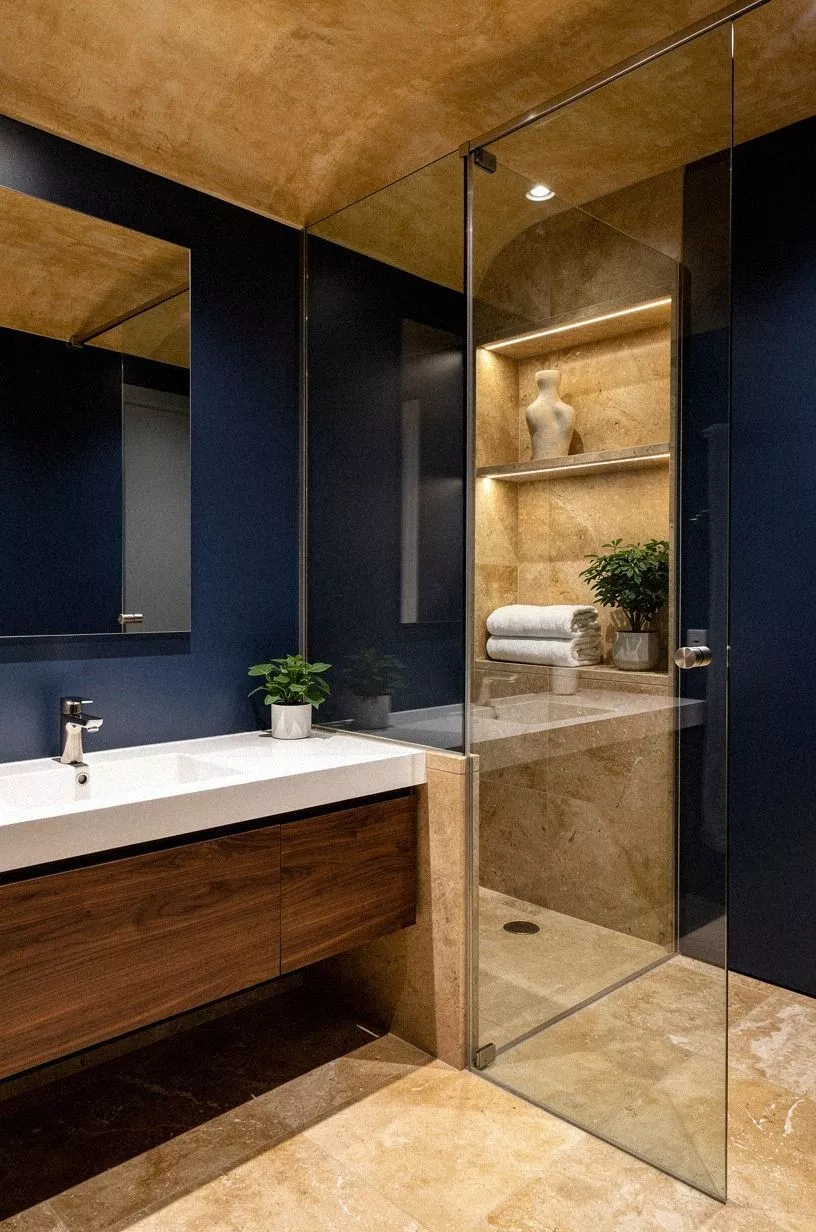
A warm ceiling can make a white bathroom feel more grounded, especially beside navy, walnut, and travertine. Sherwin-Williams Sea Salt SW 6204 offers a soft blue-green option when your room needs calm without becoming pale and chilly. For a deeper plaster effect, a muted beige with a chalky finish can connect the ceiling to the floor.
You’ll want a washable matte formula suited to bathroom humidity. The finish should absorb light rather than bounce it back like enamel.
Don’t carry a dark ceiling into a room with a very low height, because it’ll make the proportions feel compressed. A lighter warm tone can still create the same enveloping effect without closing in the space.
A ceiling color works best when it repeats one small note below eye level. Try a blue-green hand towel, a green ceramic vessel, or a tiny botanical accent. Your room will feel more edited when the color appears twice instead of competing across every accessory.
And yes, the ceiling counts as part of the palette! Pair it with warm travertine flooring, walnut shelving, and ivory towels so the room feels serene rather than themed.
If you’re comparing blue-led palettes, these sea-blue Mediterranean bathroom ideas. show how muted color can stay sophisticated. The ceiling should read as a soft continuation of the walls, not a separate painted panel.
5Hang a petite pendant beside the mirror (The Three-Height Light Stack)
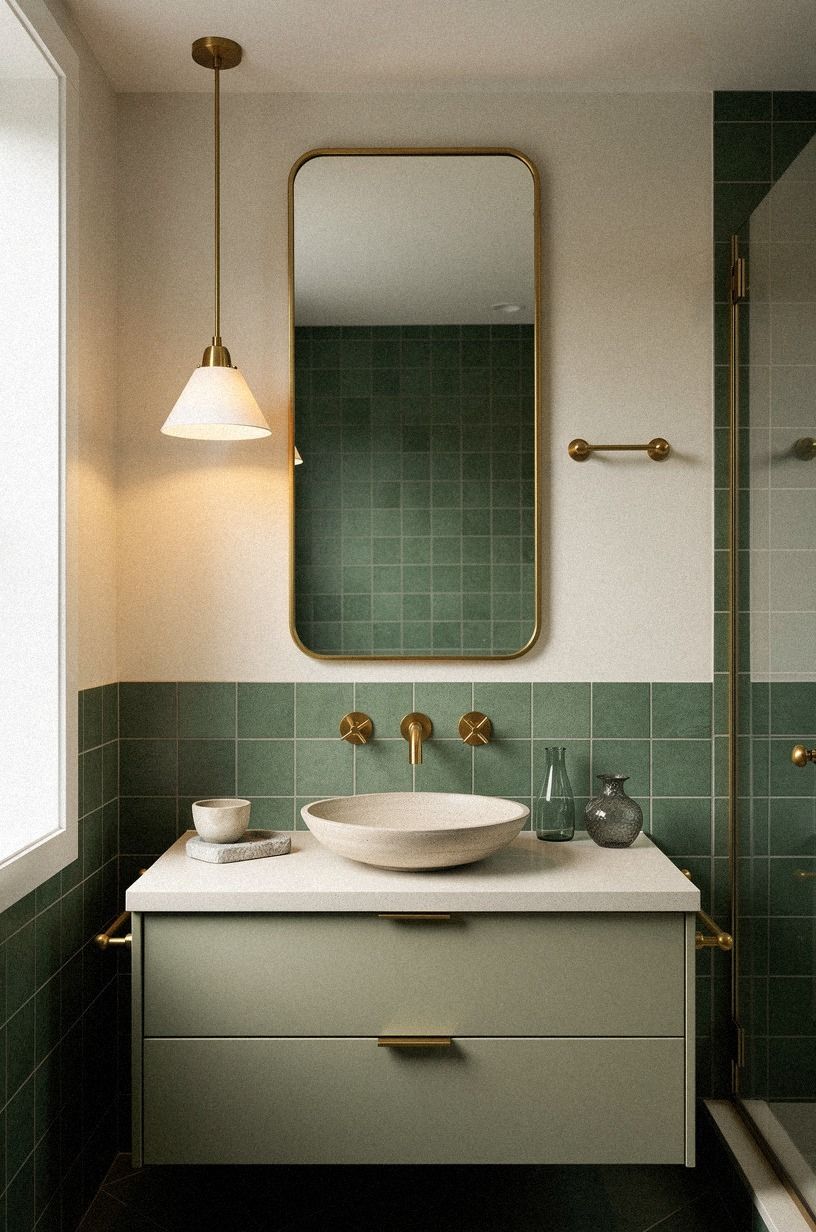
A petite pendant beside the mirror gives an emerald, gold, and cream palette a refined focal point while adding a little glow at eye level. Unlacquered brass developing soft patina is the right kind of metal because its surface changes gently instead of staying overly shiny. You’ll want a frosted or opal globe so the light feels flattering rather than sharp.
Use three visual heights when the layout allows: ceiling lighting, the mirror light, and a low candle or ceramic lamp outside splash zones. That stack creates a more welcoming room than one ceiling fixture can manage. Don’t hang the pendant where a tall guest could brush against it, and check local electrical requirements before changing a fixed fitting.
A compact fixture can still feel luxurious when its shape is simple. A ribbed glass globe, a linen shade, or a small aged-brass cone will suit the palette.
If you’re working with a narrow vanity, one pendant may look better than two crowded sconces. The glow should land on the basin, the mirror, and the nearby wall, where the brass can catch it.
You’ll get the best result when the bulb temperature stays warm but readable. Around 2700K usually gives plaster, brass, and stone a softer appearance. Your bathroom still needs enough illumination for grooming, so decorative glow should support functional lighting rather than replace it!
6Pair unlacquered brass with creamy zellige tiles (Brass Over Chrome)
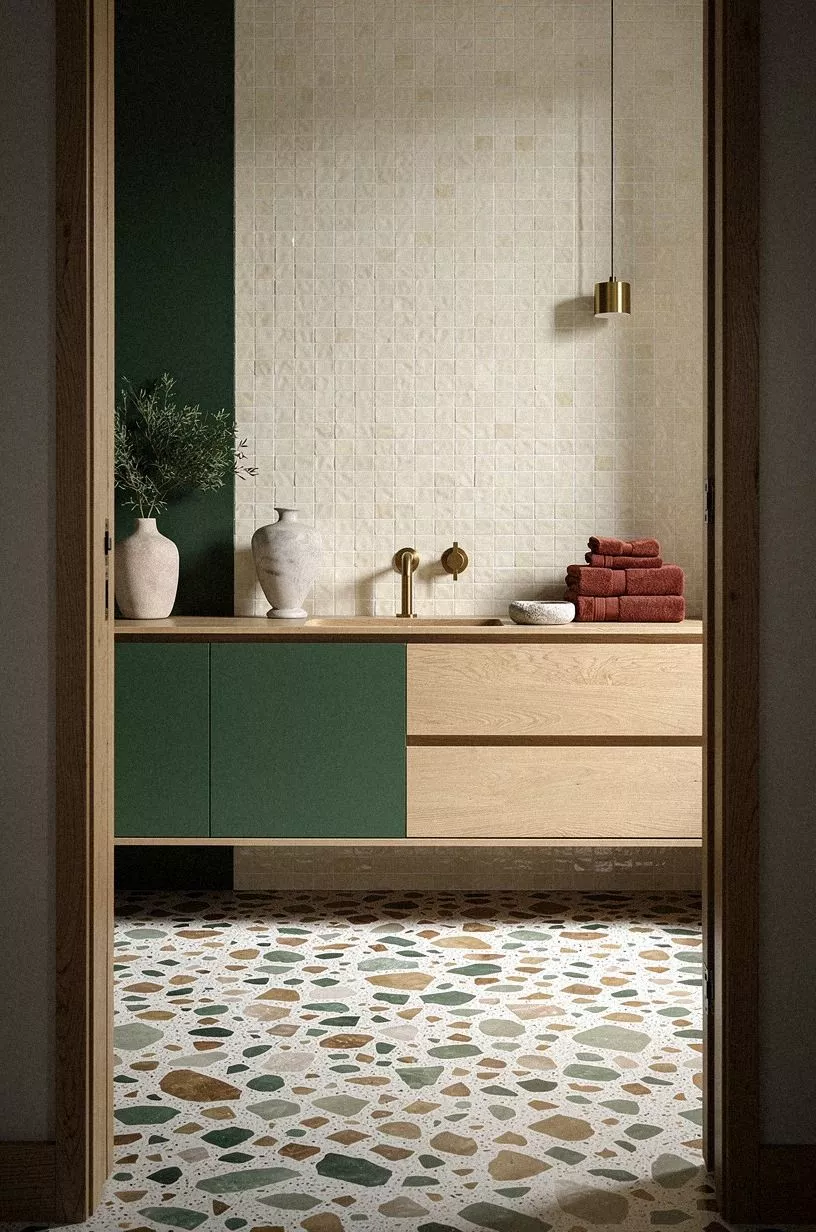
Creamy zellige tiles bring uneven edges and soft reflections to a bathroom with forest green, rust, and natural oak. Oversized-chip terrazzo adds a stronger mineral note through a vanity top, shelf, or floor accent, giving the handmade tile a more substantial partner.
Choose unlacquered brass for the tap, mirror trim, or cabinet pulls so the metal can develop character over time. The rust tone can appear in a small ceramic vessel or woven stool rather than across every surface. Keep the oak grain simple, since the tile variation and terrazzo chips already provide plenty of texture.
A warm ivory grout will keep the zellige surface relaxed, while a darker grout can sharpen every irregular edge. Use the terrazzo selectively around high-use areas where its durability matters. The result should feel collected, tactile, and easy to live with.
7Build a recessed shelf behind the toilet (The Plaster Pocket Principle)
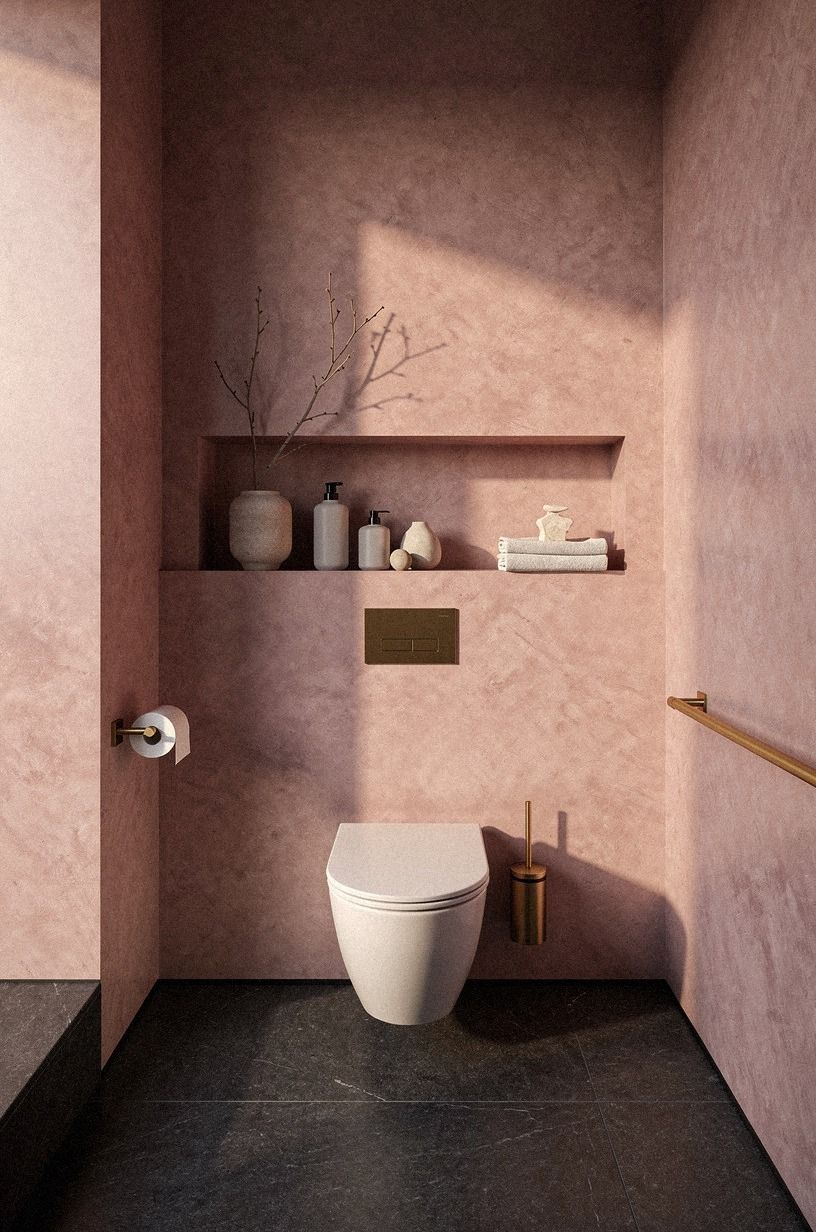
A recessed shelf behind the toilet turns an awkward wall into useful storage without adding a bulky cabinet. In a dusty rose, charcoal, and brass palette, hand-applied Venetian plaster gives the niche a soft, cloudy surface. You’ll want the shelf to hold spare paper, a small vessel, and one folded towel, not a collection of bathroom products.
The wall cavity must be checked before cutting, especially around plumbing and electrical lines. A shallow shelf can still work well when its trim is crisp and its lighting is warm.
Don’t place untreated timber inside a humid niche, because it may swell or darken. Use sealed oak, painted moisture-resistant board, or a stone shelf with a softened edge.
For a quieter result, paint the niche interior one shade deeper than the main wall. Farrow & Ball Hague Blue No.30 can make brass and pale ceramics stand out, while a dusty rose keeps the room gentler. A narrow LED strip may add useful visibility, but concealed wiring and damp-rated components matter more than decorative effect.
The shelf should support hospitality. Place fresh paper where guests can find it, leave enough clearance for cleaning, and avoid filling every inch. You’ll create a more polished impression when the practical items look deliberately arranged.
8Lay small-format stone tiles in a checkerboard (The Quiet Checkerboard)
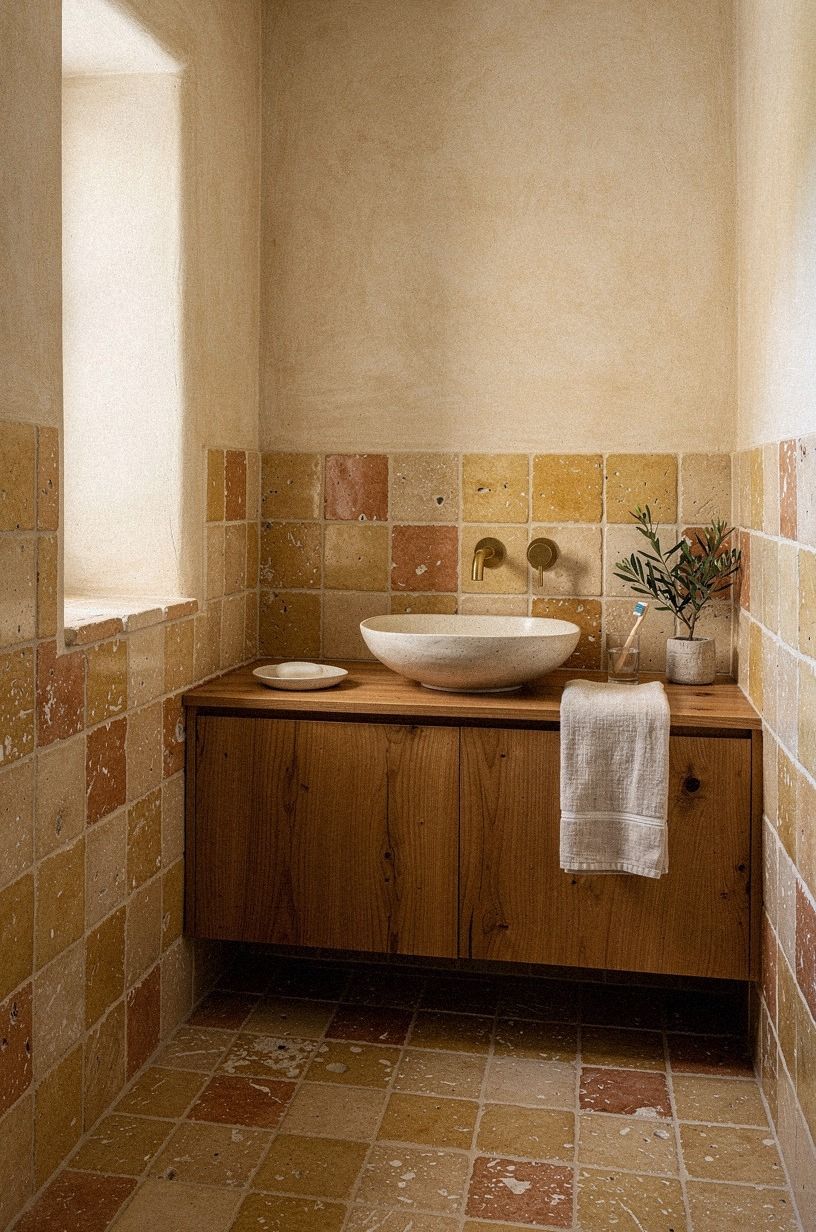
A checkerboard floor can feel relaxed when the tiles are small, matte, and slightly irregular. The warm white, camel, and black palette works well with shagreen accents on a vanity drawer, stool, or small tray, adding tactile contrast without making the floor look overly formal. You’ll want a slip-resistant finish in wet areas, and you shouldn’t use a high-gloss surface near the basin.
Small-format tiles are useful in compact bathrooms because more grout lines can provide visual scale and traction. A classic square pattern works well, but a softer checkerboard can use two related neutrals instead of stark white and black. Don’t choose a busy border if the floor already has strong contrast, because the room may feel chopped into sections.
Shagreen works best in a limited dose, perhaps as a drawer front or a small accessory. Keep the rest of the room calm so the checkerboard remains welcoming rather than busy. If you’re planning a smaller footprint, stone ensuite ideas for compact rooms can show how pattern stays gentle.
Before ordering, request physical samples and view them in both daylight and artificial light. Your grout choice will change the apparent scale of the pattern. A warm grey can soften the contrast, while a bright white grout makes every square more graphic.
9Wrap the lower walls in beadboard paneling (The Half-Wall Horizon)
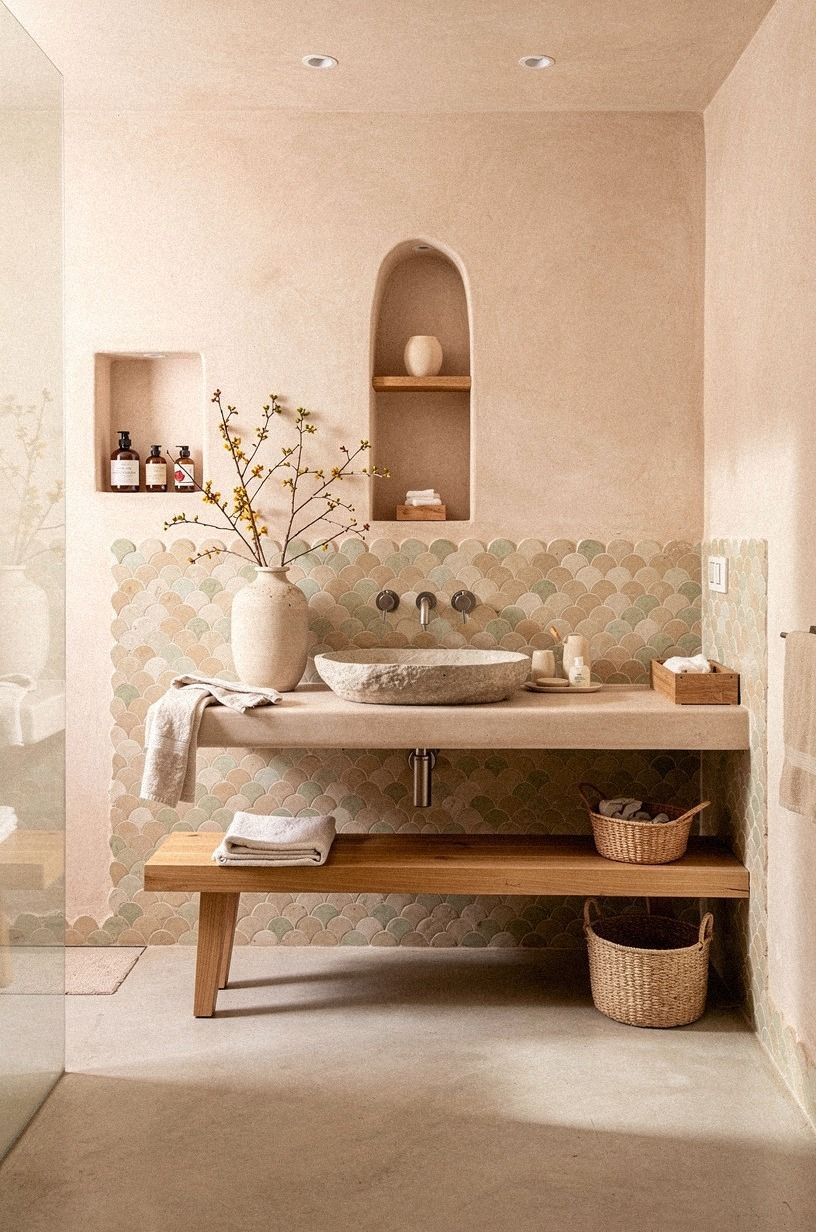
Beadboard paneling gives a midnight blue, copper, and ivory palette a crisp architectural base. Washed Belgian linen adds a lived-in texture through a café curtain, Roman shade, or upholstered stool, softening the paneling without weakening its clean horizontal rhythm.
Keep the beadboard below the main splash zone and finish it with moisture-resistant paint. A copper-toned mirror or aged fitting can warm the midnight blue, while ivory towels stop the lower walls from feeling too heavy. Avoid pairing the paneling with several ornate trims, because the wall detail already creates structure.
A narrow shelf above the paneling can hold folded towels or a small ceramic vessel. Repeat the linen texture once, then leave the remaining surfaces quiet. The combination feels welcoming when the color is deep but the touch points remain soft.
10Style one sculptural branch in a wall vase (The Single-Branch Pause)
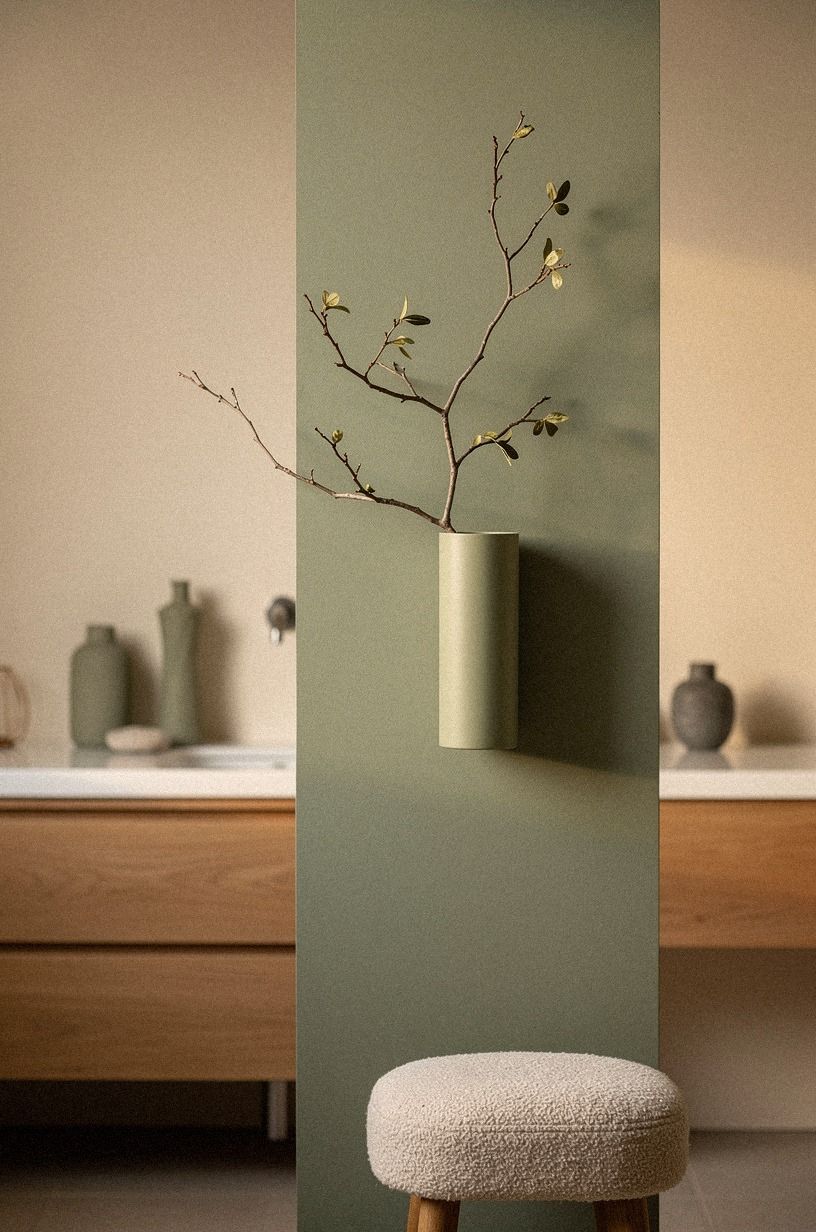
One sculptural branch can give a sage green, warm cream, and natural wood bathroom a quiet organic focal point. A wall vase keeps the arrangement off the basin and leaves the counter useful for guests.
Organic bouclé on a small stool or bench adds softness beside the branch’s angular silhouette. You’ll want one strong stem, not a crowded bouquet.
Olive, eucalyptus, quince, or twisted willow can suit the Mediterranean reference. Dried material works well because it doesn’t depend on daily watering, though dust will show against darker leaves.
Don’t place a fragile branch directly beside the doorway, where coats and bags could catch it. A small ceramic wall pocket at shoulder height keeps the arrangement visible without becoming a collision point.
The best styling is restrained. One branch, one vessel, and one folded towel are enough to make the room feel calming.
West Elm sells useful sculptural shapes, but a handmade market find may carry more character. If you’re considering a more layered room, compare these Mediterranean coastal bathroom ideas with natural texture.
The branch should create a pause for the eye, not another maintenance task.
Choose a vase with a stable wall mount and a wide enough opening for the stem. The arrangement should remain stable when the door moves or the room gets humid. If the bathroom has limited natural light, preserved branches may be more practical than living greenery.
11Choose a wall-mounted tap above the basin (Why the Tap Works)
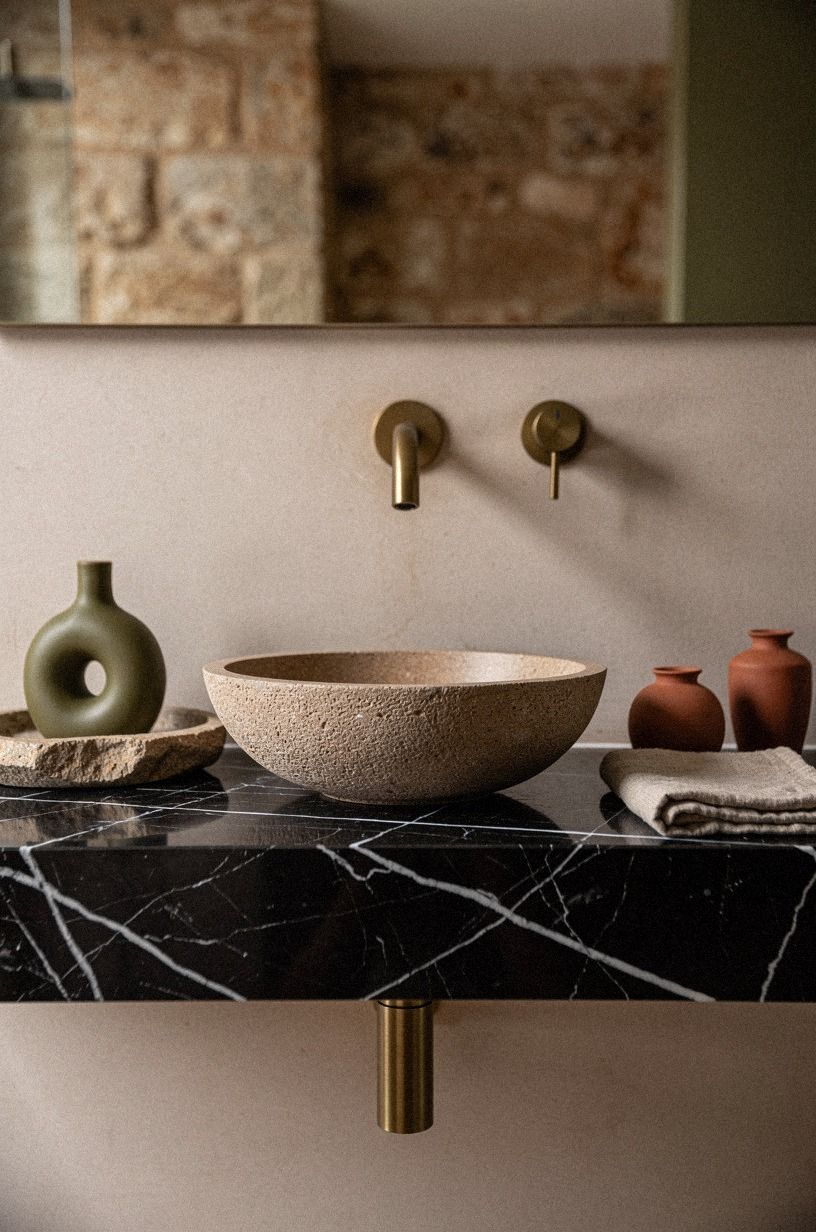
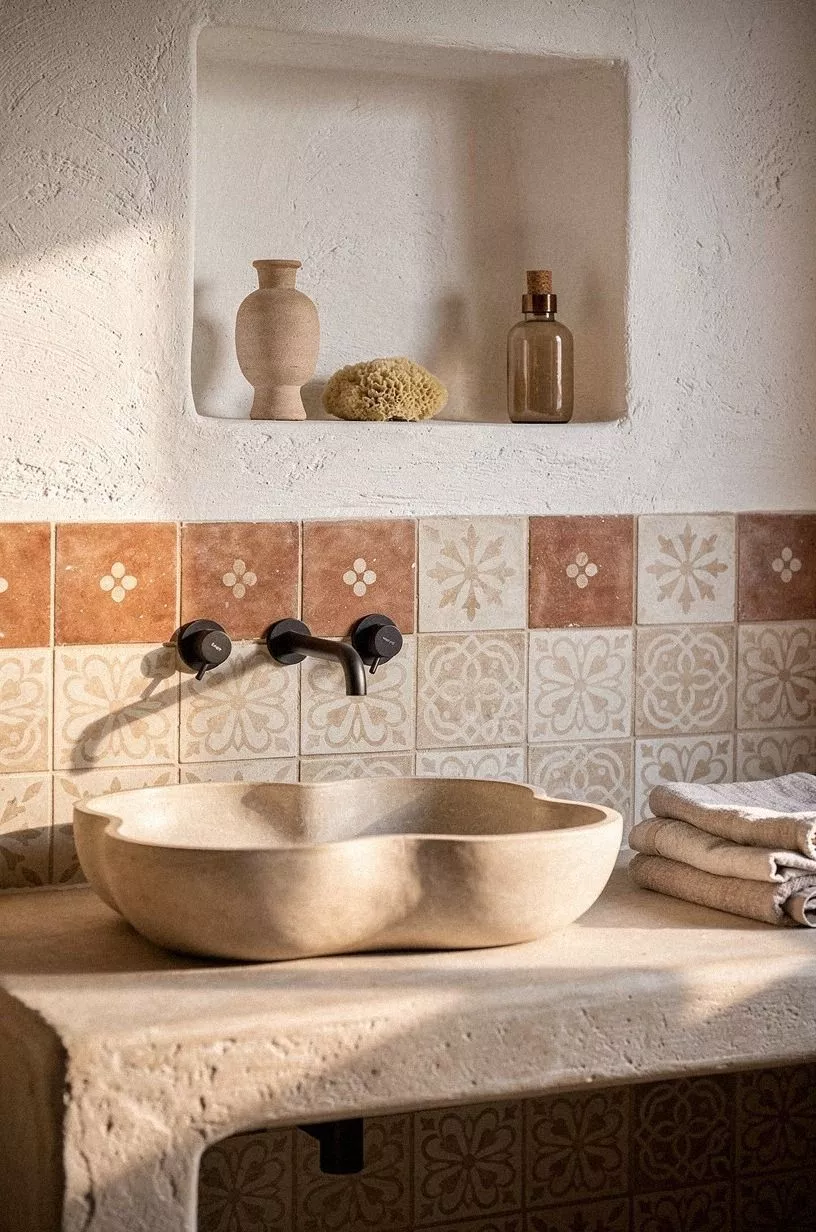
A wall-mounted tap clears the basin deck and gives a terracotta, stone, and olive palette a cleaner architectural line. A small backsplash or basin shelf in Nero Marquina black marble with white veins adds contrast while keeping the warm palette grounded.
Set the spout height carefully so water lands near the basin drain without splashing. The black marble works best as a restrained accent, perhaps paired with olive paint or a terracotta vessel. Avoid adding several dark surfaces, because the white veining already gives the wall a strong graphic note.
Choose a simple metal finish that can stand beside the marble without competing with it. Aged brass will soften the contrast, while a slim mirror and pale towels keep the room open. The tap should feel integrated into the wall rather than treated as a separate decoration.
12Echo the guesthouse feel with linen café curtains (The Soft Window Rule)
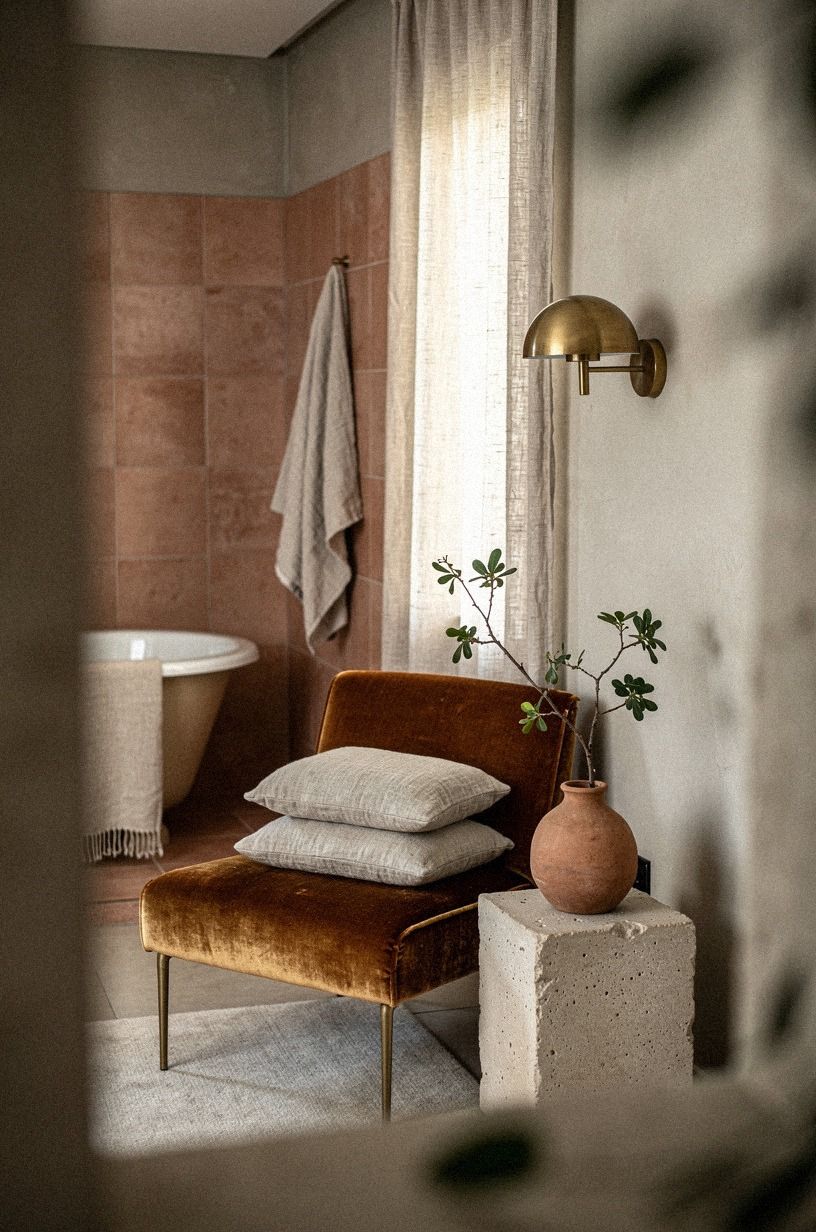
Linen café curtains make a clay, linen, and aged brass bathroom feel private without blocking every trace of daylight. Deep-pile mohair velvet can appear on a small stool or bench, but the window treatment should stay lighter and more breathable. You’ll want the curtain to cover the lower glass while leaving the upper portion open for morning light.
Choose Belgian flax linen in a warm oat or natural shade rather than stark white. A tension rod can work in a rental, while a slim aged-brass rod gives a permanent room more polish.
Don’t let the fabric pool near a damp floor, because bathroom textiles need space to dry. A simple hem and relaxed fold will feel more Mediterranean than a stiff tailored panel.
The curtain should soften the view without becoming a feature wall. Farrow & Ball Joa’s White can bridge the linen and clay tones if the surrounding paint needs warmth.
Neutral ensuite ideas can help when you’re balancing privacy with daylight. Keep the pattern absent or extremely subtle, and the room will feel peaceful rather than decorated for a theme.
Washable linen blends may be practical for a frequently used guest bathroom. Your curtain should be easy to remove, dry, and rehang. If the window sits near a shower, choose a fabric rated for humidity and keep the hem well away from standing water.
13Install a narrow ledge for folded hand towels (The Three-Fold Welcome)
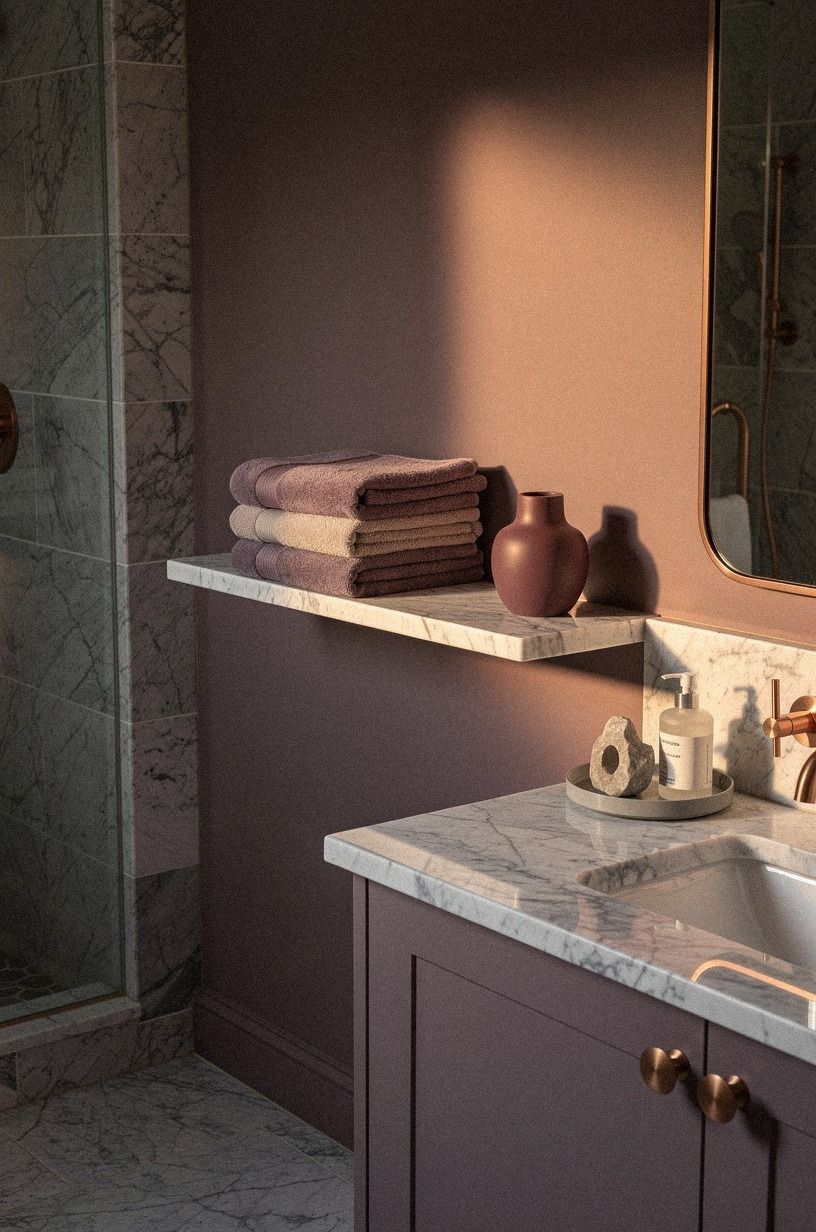
A narrow ledge brings function to a plum, grey, and rose gold palette while keeping hand towels visible and easy to reach. Carrara marble with subtle grey veining gives the ledge a quiet finish that connects the cool grey tones to the warmer metal.
Install the ledge above the basin or beside the vanity at a comfortable reaching height. Fold towels into thirds so the edge looks deliberate without taking up the entire surface. A slim rose-gold hook below the ledge can hold a hand towel in use, while the marble remains available for clean linens.
Keep the ledge shallow enough to protect circulation and deep enough for folded towels to stay balanced. One ceramic cup or a small vase may be enough decoration. The practical feature should remain easy to clean and easy for guests to understand.
The Mediterranean Bathroom Decision Rule
The strongest Mediterranean bathroom doesn’t copy one coastal postcard. It combines three qualities: a sun-warmed color, a material with visible variation, and one practical detail that makes guests feel considered.
That combination is more convincing than adding shells, blue stripes, or several decorative vessels. A room can be earthy without becoming themed, and it can feel refined without losing the uneven surfaces that make the style welcoming.
Start with the element that would be most expensive to change later. That could be floor tile, a shower niche, or the vanity position. Once that decision is fixed, let smaller choices follow its temperature.
A creamy zellige wall can support aged brass and oak, while cool grey marble may need warmer lighting and terracotta accents. You’ll avoid random purchases when every finish answers an existing surface.
The practical test is simple: can a guest find the towel, soap, toilet paper, and mirror without asking? If not, decoration has taken priority over hospitality.
A narrow ledge, recessed shelf, or wall-mounted fitting may matter more than another framed print. And when your budget feels tight, paint and textiles can still shift the room quickly.
Think in layers:
– Foundation: floor, wall paint, tile, and vanity shape. – Texture: plaster, zellige, timber, linen, or honed stone. – Patina: aged brass, handmade ceramics, and uneven surfaces. – Hospitality: towels, lighting, storage, and clear circulation.
You don’t need every layer in equal measure. If the floor already has movement, keep the walls quiet.
If the walls carry strong tile variation, choose simple hardware. Your bathroom will feel more cohesive when each decision leaves room for the next one.
The most worthwhile change is the one that alters both visual rhythm and daily use. A framed mirror can do both.
So can a floating basin, a useful shelf, or a warm ceiling color. Choose one anchor, then let the rest of the room respond!
What People Always Want to Know
What is the best guest bathroom idea for a small bathroom?
A floating basin and a framed mirror usually create the strongest change in a compact room. Birch-effect storage can add light organization nearby, while a slim mirror frame keeps the wall visually open. You’ll gain storage and warmth without sacrificing floor area or making the room feel crowded.
Where can you buy guest bathroom pieces on a budget?
Large home retailers, local resale shops, and neighborhood marketplaces all carry useful mirrors, towels, rods, and small ceramic accessories. Budget-friendly linen can also come from a second-hand shop or a fabric outlet. You don’t need a matching collection, and older vessels often bring more character than a coordinated set.
How much does a guest bathroom makeover cost?
A small refresh may stay within the budget tier when paint, a mirror, a faucet, and textiles are the main changes. Typical US ranges are shown below.
Your final total will depend on labor, regional pricing, plumbing access, and material choice. A paint-and-textile refresh has a very different cost profile from moving a drain or rebuilding a shower wall. Request itemized estimates when several trades are involved.
Can you create a Mediterranean guest bathroom on a budget?
Yes, and the first changes can be inexpensive! Warm textiles from another room, a cleaned ceramic vessel, a new paint sample, and a rearranged towel ledge can shift the mood. You’ll get more impact from one strong surface and better lighting than from ten small decorations.
Start with the mirror, paint, and towels if the room needs a visible change quickly. Aged-look hardware can follow later. Your choices will feel more intentional when the main color and material direction are already established.
Is this style worth it in a small space?
Yes, because a small room limits the number of finishes and makes each decision more visible. Aged brass hardware and one textured wall can carry the style without clutter. You’ll want a clear floor path, a compact basin, and light upper walls so the room stays comfortable.
Use repetition carefully. Your eye can handle a repeated warm tone or metal finish, but too many competing patterns may make the room feel smaller. One distinctive surface usually has more impact than several minor accents.
Is a Mediterranean guest bathroom a good idea for a rental?
Yes, especially when the updates avoid permanent construction. Removable hooks, a tension curtain rod, peel-and-stick accent tile, and a freestanding mirror can add warmth without damaging the walls. You shouldn’t use adhesive near wet shower surfaces unless the product is specifically rated for humidity and water exposure.
Textiles, portable lighting, ceramic vessels, and removable hardware can shift the atmosphere without changing plumbing. Check the lease before painting, drilling, or replacing a fitting. Your safest rental plan begins with reversible details and ends with the landlord’s approval for anything fixed.
Where to Start First
If one upgrade deserves the first slot, start with fluted timber around the vanity mirror. The grooves add shadow, warmth, and character without changing plumbing or floor layout. Save the timber mirror idea for later, then compare it with these Mediterranean guest bathroom details before choosing the finish.
A mirror frame gives your bathroom an immediate focal point, while the surrounding paint and hardware can evolve gradually. Start with the surface guests see first, then build the palette around its grain, warmth, and scale. For a related sink direction, explore these antique stone basin details and keep the rest of the room quiet.