
Freestanding soaking tub ideas work best when the layout gives the basin breathing room and a clear focal point. A 60×30-inch tub can feel generous when its backdrop, lighting, and floor finish are chosen with care. You don’t need a full renovation either. Small changes can make your bathroom feel warm, serene, and intentional.
- ✓ Frame the tub with a full-height arched niche
- ✓ Pair brushed brass fixtures with a sculptural white tub
- ✓ Where Should a Statement Pendant Go?
- Frame the tub with a full-height arched niche
- Pair brushed brass fixtures with a sculptural white tub
- Where Should a Statement Pendant Go?
- Surround the basin with trailing tropical greenery
- Float the tub over oversized limestone floor tiles
- Set the soaking tub beside a picture window
- Build a curved half-wall behind the freestanding tub
- The Round-Ceiling Echo
- Contrast matte black walls with a porcelain basin
- Anchor the tub on a raised teak platform
- Copper Filler, Not Hidden Plumbing
- Tuck rolled towels into a nearby built-in bench
- Paint the ceiling to match the tub surround
- Layer a woven runner beneath the soaking tub
- Skylight Over the Bathing Zone
- Pair fluted wall paneling with a smooth tub
- Use a glass screen to frame garden views
- Twin Sconces at the Tub
- Add a stone pedestal for sculptural bath essentials
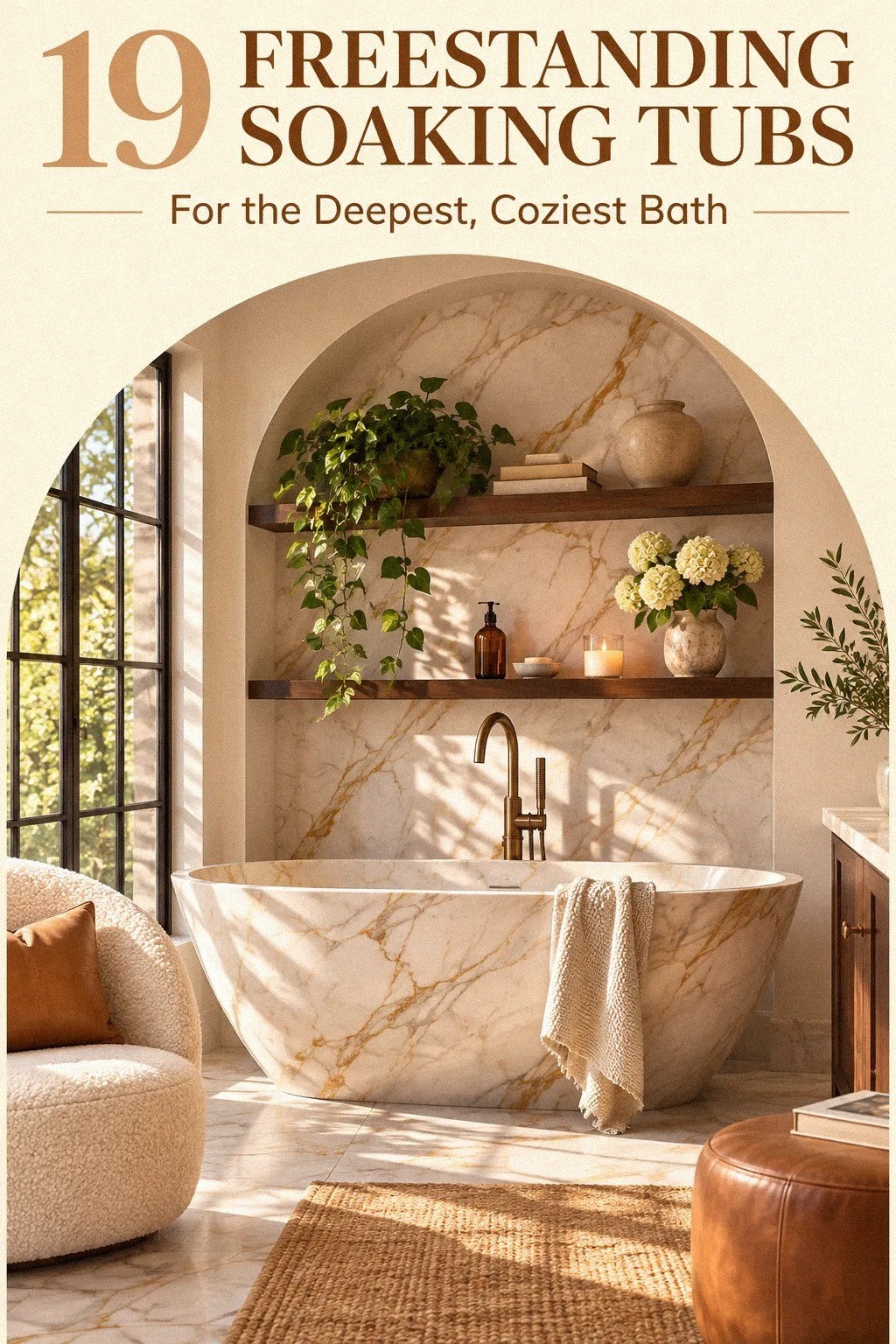
1Frame the tub with a full-height arched niche
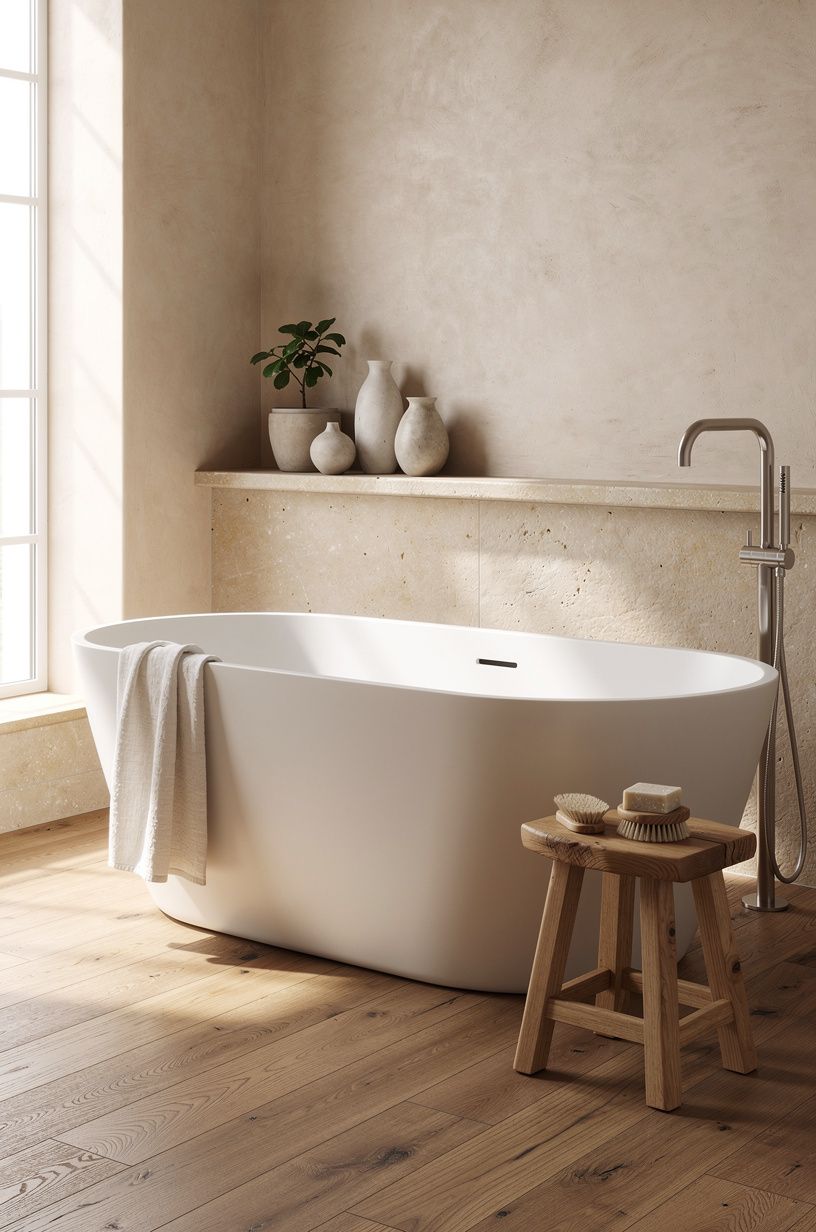
A full-height arched niche gives your tub an architectural backdrop instead of leaving the basin floating against a blank wall. Use terracotta plaster, honed limestone, olive paint, and cerused white oak to create an earthy palette. If you’re working with a narrow bathroom, keep the arch shallow so your walking path stays open.
The Arched Niche Rule is simple: repeat one curve, then let the rest of the room stay quiet. Your tub should sit centered below the opening, with towels or a low stool nearby. Don’t fill the niche with shelves, since clutter will compete with the rounded silhouette.
Choose Farrow & Ball Joa’s White on nearby walls if the terracotta feels heavy. You’ll keep the room bright without losing its rustic character. A small limestone ledge, a clay vessel, and a folded Turkish cotton towel are enough for your bathing zone.
2Pair brushed brass fixtures with a sculptural white tub
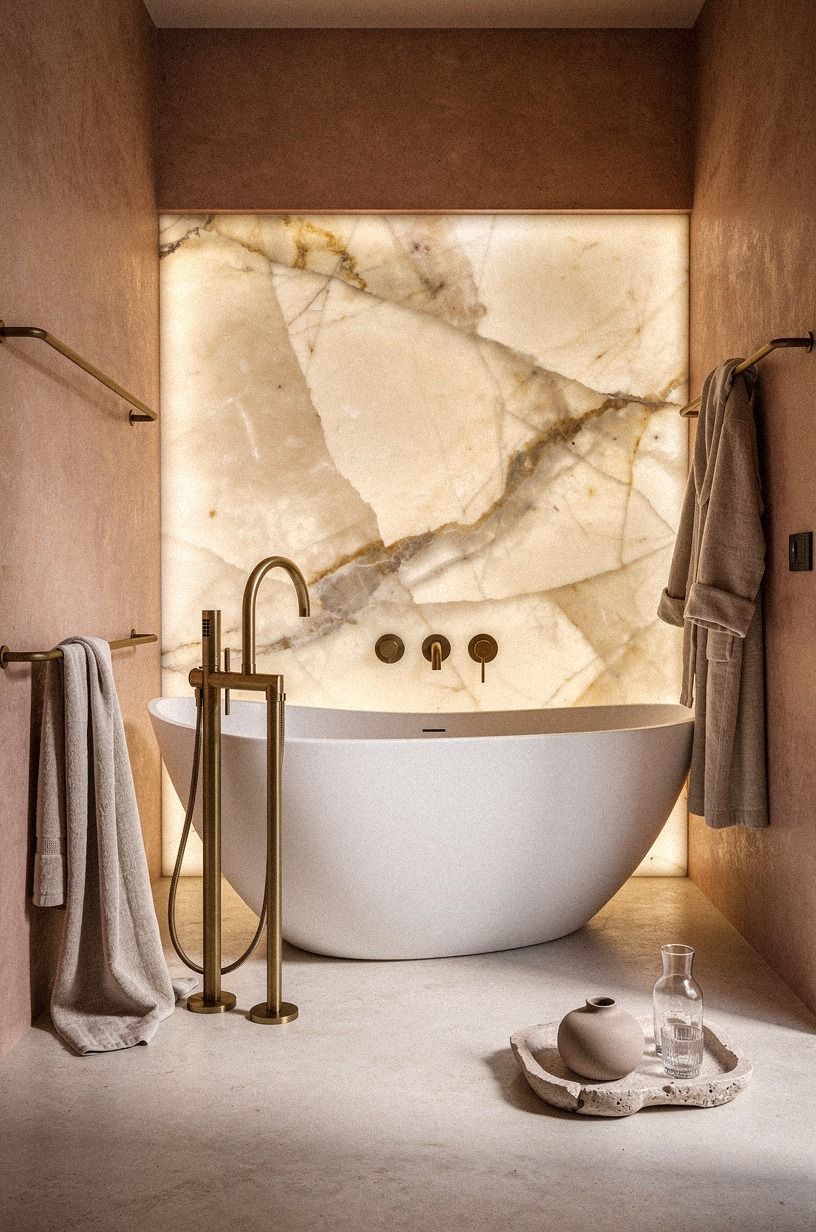
A sculptural white tub looks refined beside brushed brass fixtures, backlit translucent onyx, and a palette of clay and linen. Your faucet, drain, and towel bar should share the same warm metal finish. Mixing polished chrome into this arrangement would make the room feel colder, so skip it.
The Brass Halo approach works because the metal catches soft light around the basin. Choose a deep soaking shape with a raised rim, then leave enough room for your elbows and towel storage. You don’t need ornate hardware when the tub already has a strong silhouette.
For a smaller bathroom, use a wall-mounted filler and a compact birch-effect cabinet. You’ll gain floor space without losing the elegant feeling. Keep your textiles simple: washed linen, 600gsm Turkish cotton, and one clay-toned bath mat.
See these true retreat tub layouts for more ways to arrange the tub without making the room feel crowded.
3Where Should a Statement Pendant Go?
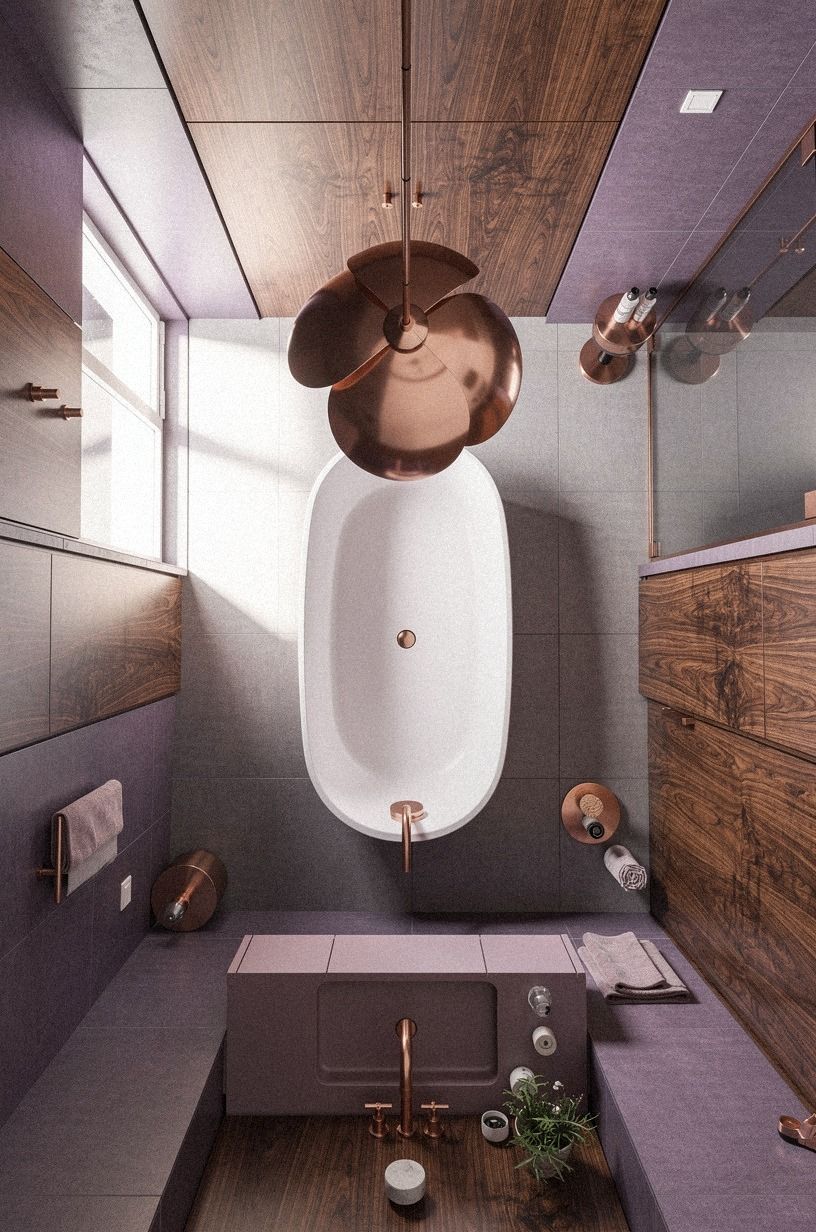
A statement pendant makes the tub feel deliberately placed, especially against book-matched walnut, plum paint, grey walls, and rose gold hardware.
4Surround the basin with trailing tropical greenery
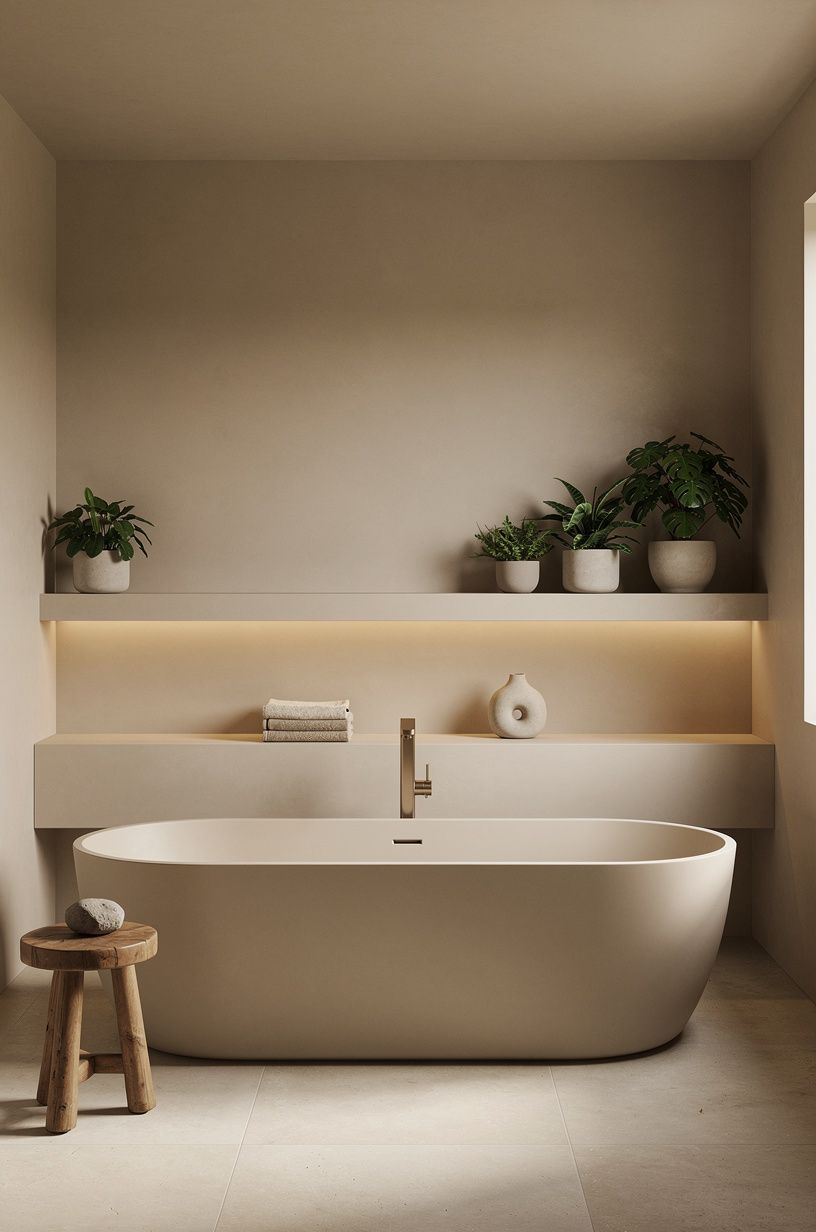
Trailing tropical greenery brings movement to a navy, white, and walnut bathroom. Place one tall plant near the tub and let a second vine fall from a shelf or ceiling hook. Your greenery should frame the basin without blocking the faucet or making the floor feel damp.
The Green Cascade method works best with broad leaves, warm travertine, and dark wood. Choose plants that tolerate bathroom humidity, then keep them in simple ceramic or woven planters.
Don’t crowd every corner. A few long leaves create more visual calm than a collection of tiny pots.
Use Farrow & Ball Hague Blue No.30 on one wall if your room receives strong daylight. You’ll get a moody background that makes white porcelain stand out. For a rental, a tension rod, removable hooks, and a freestanding plant stand can create the same layered effect without drilling.
Explore these black freestanding tub upgrades if you prefer stronger contrast around your greenery.
5Float the tub over oversized limestone floor tiles
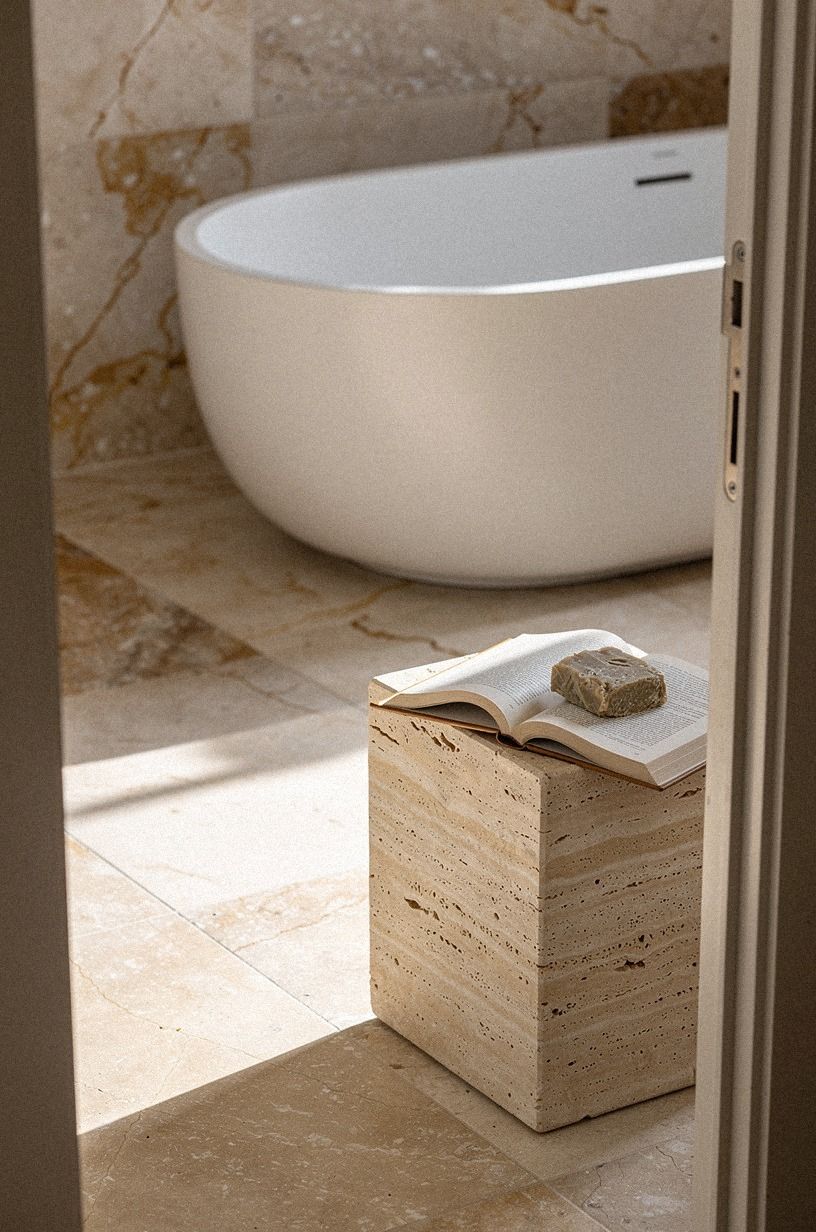
Oversized cream limestone floor tiles make a freestanding tub feel grounded while keeping the floor visually quiet. Pair them with emerald accents, gold details, and unlacquered brass that can develop a natural patina.
6Set the soaking tub beside a picture window
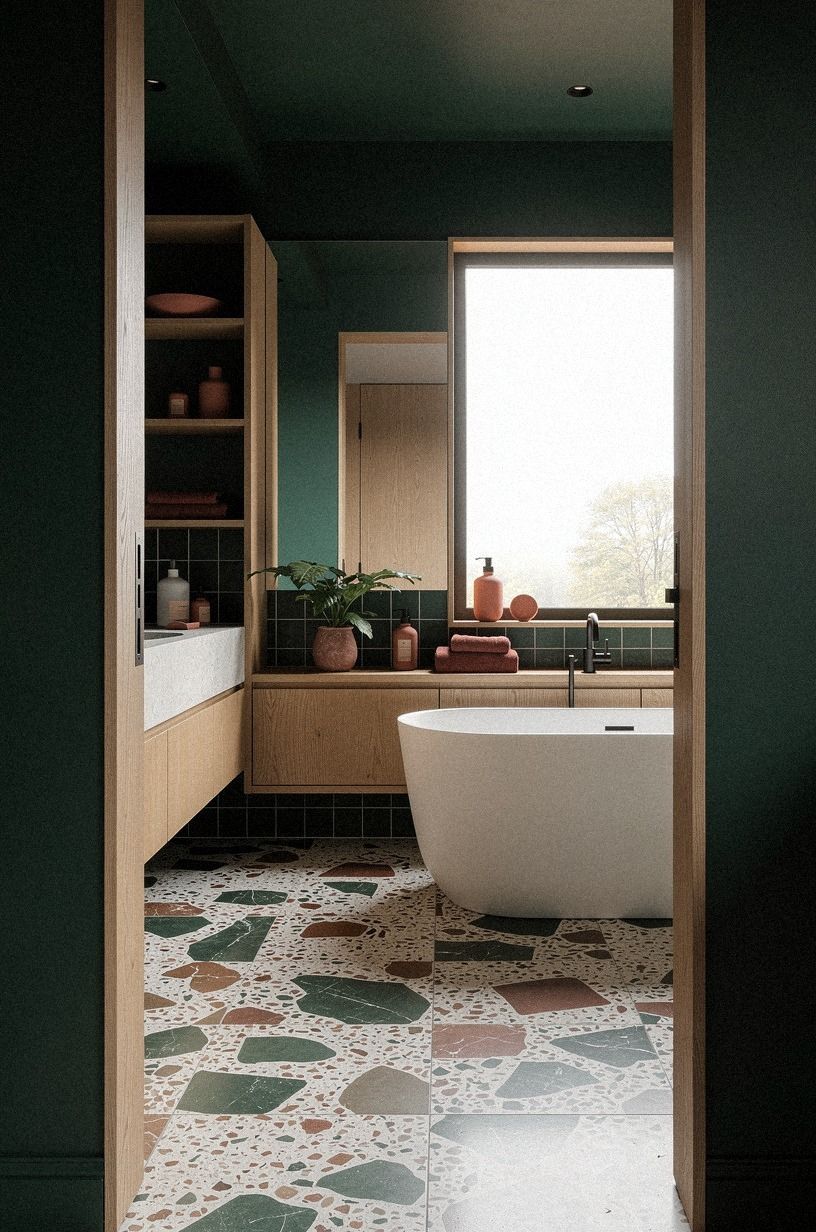
A picture window gives your soaking tub a natural focal point, especially with forest green paint, rust textiles, natural oak, and oversized-chip terrazzo. Set the basin beside the window rather than directly in front of it if privacy matters. Your sightline should feel open, but the tub shouldn’t become a display from outside.
The Window Pause layout needs restrained accessories. Choose a woven shade, a low oak stool, and one rust-colored towel. Don’t use thick curtains that hide the daylight, since the window is doing most of the visual work.
Sherwin-Williams Evergreen Fog SW 9130 can connect the wall color to garden views. You’ll get a softer transition between the room and the outdoors. If a new window isn’t possible, a large mirror opposite the existing one can multiply natural light without changing the plumbing.
Check faucet placement before fixing the tub beside the glass. You’ll want the filler positioned for easy reach without interrupting the window trim.
7Build a curved half-wall behind the freestanding tub
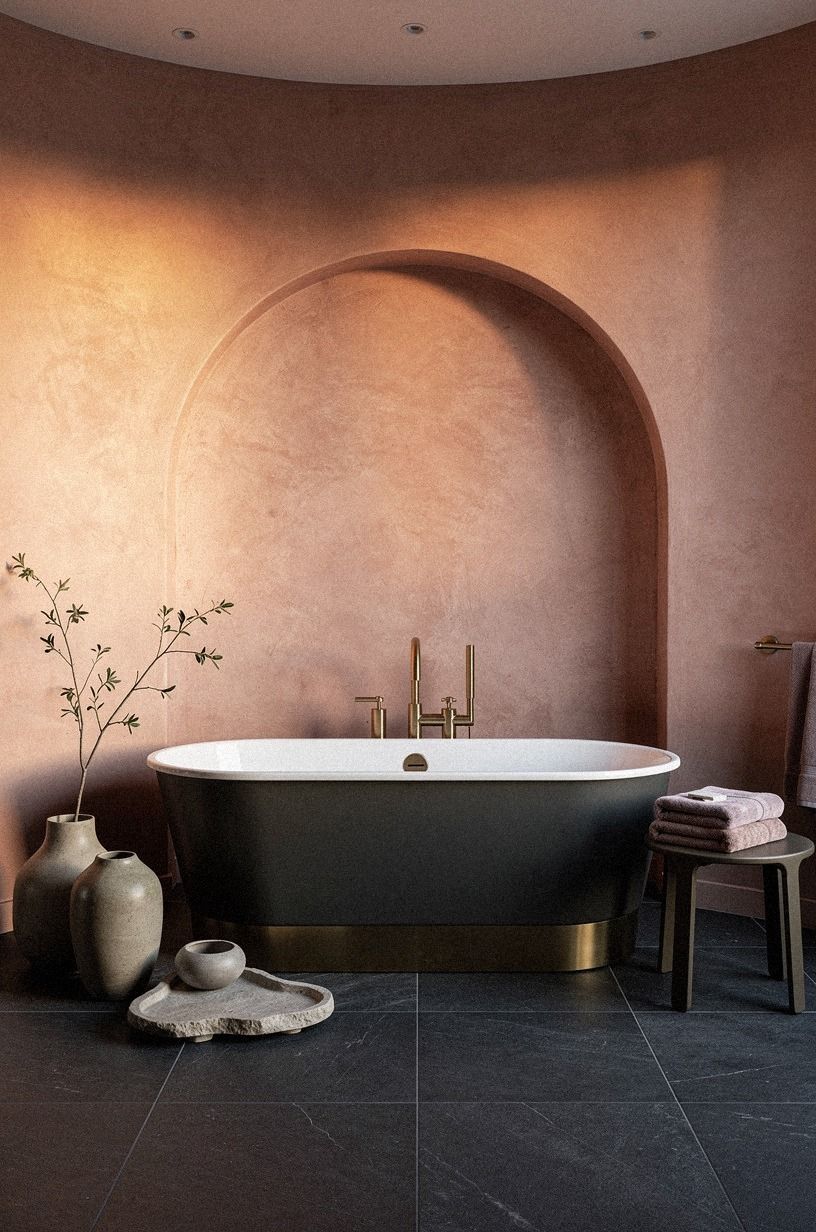
A curved half-wall creates privacy while keeping the bathroom visually connected. Use dusty rose plaster, charcoal trim, brass hardware, and Venetian plaster to create a layered backdrop. Your tub can sit just beyond the curve, with the wall hiding plumbing and creating a quiet edge.
The Half-Wall Arc is more useful than a straight divider because it softens the transition around the basin. Keep the top low enough for daylight to pass over it. Don’t turn the wall into a storage shelf unless the surface is wide and sealed properly.
A West Elm Anton solid wood bench can sit on the open side for towels. You’ll want one clear landing area, not several baskets scattered around the floor. Pair the wall with a creamy bath textile and charcoal stone accessories for a look that feels intimate rather than dramatic.
8The Round-Ceiling Echo
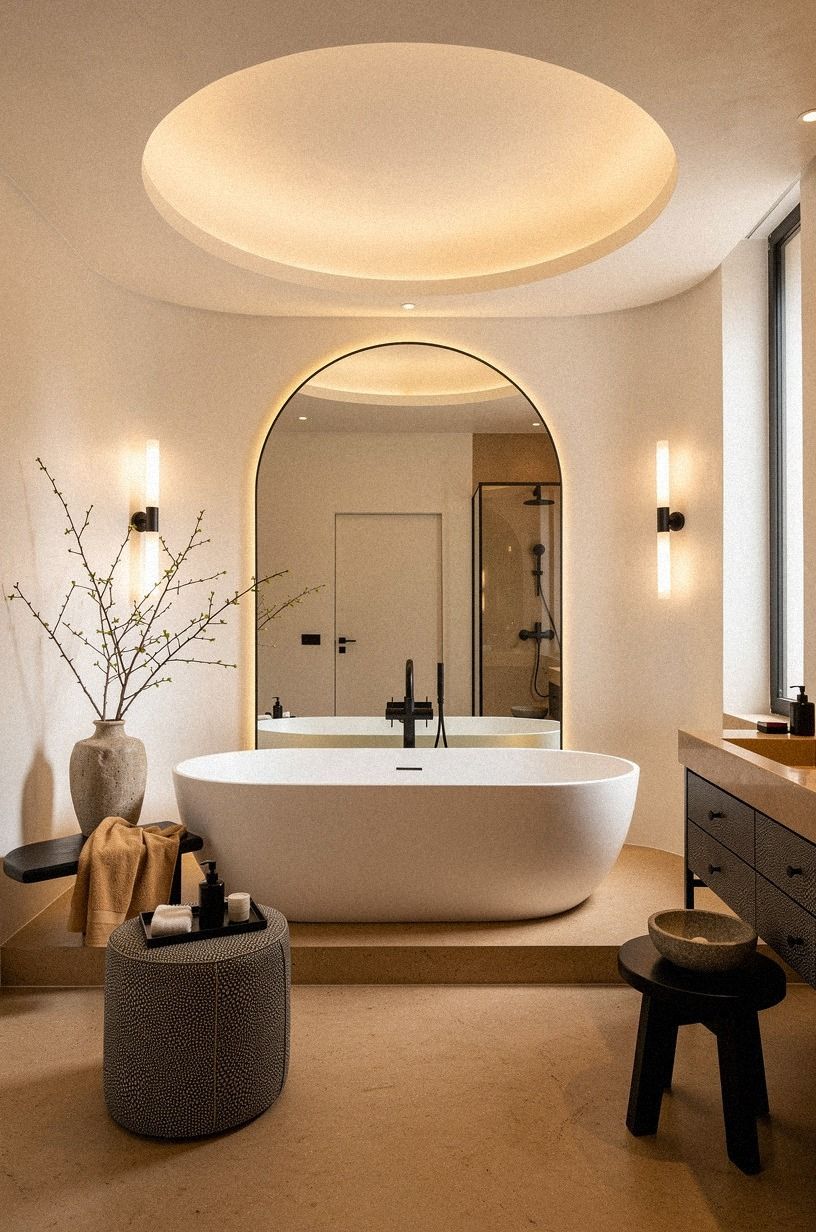
A round ceiling detail echoes the tub and gives a warm white bathroom with shagreen accents a more tailored feeling.
9Contrast matte black walls with a porcelain basin
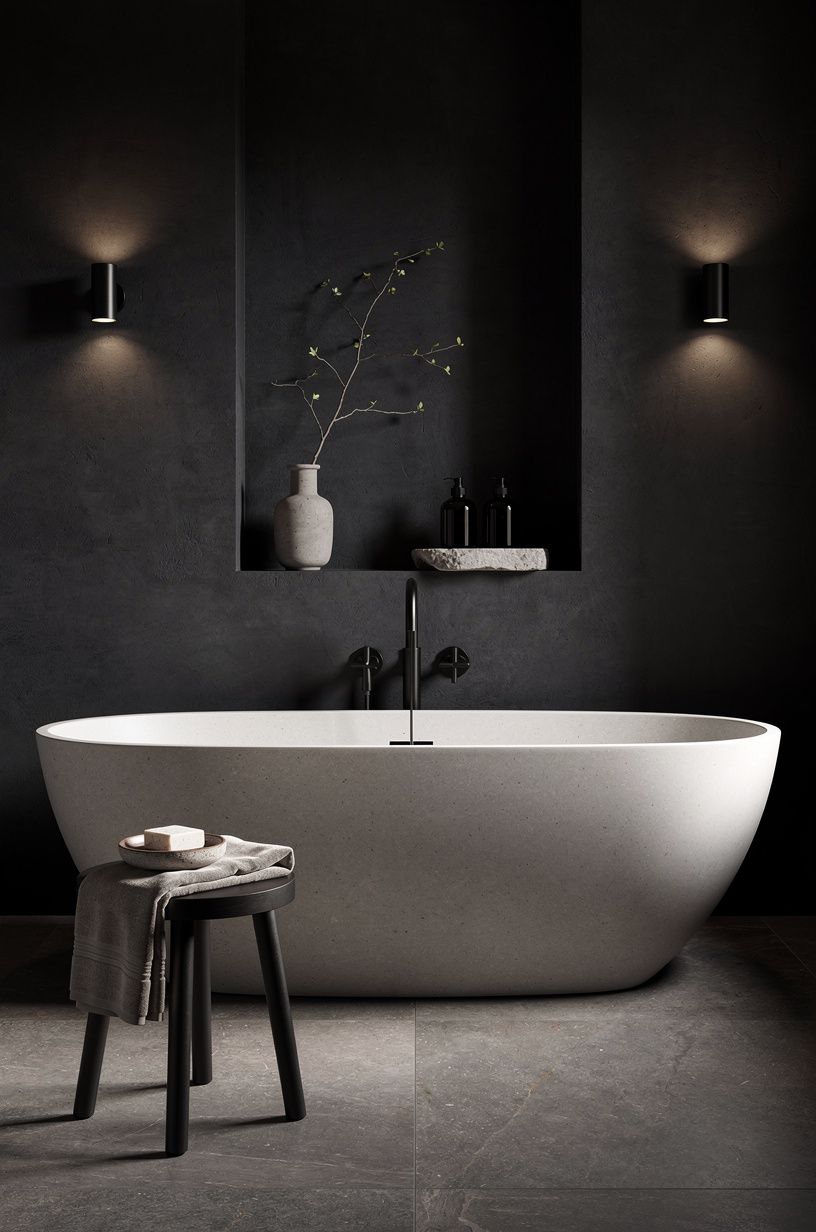
Matte black walls give a porcelain basin a strong silhouette, especially with midnight blue, copper, ivory, and washed Belgian linen. Paint the wall behind the tub, then keep the remaining surfaces lighter so your bathroom doesn’t feel enclosed. Your tub should read as the brightest object in the room.
The Dark Shell Contrast needs texture to stay inviting. Use washed Belgian linen, warm ivory towels, and copper-toned accessories rather than glossy black surfaces everywhere. Don’t pair matte black walls with a black tub unless the room has abundant daylight.
A compact Article Sven tan leather stool adds warmth beside the basin. You’ll want a mirror with a thin copper frame and a low-glare light source. The result feels moody and sophisticated, but it won’t become theatrical if the textiles stay soft.
10Anchor the tub on a raised teak platform
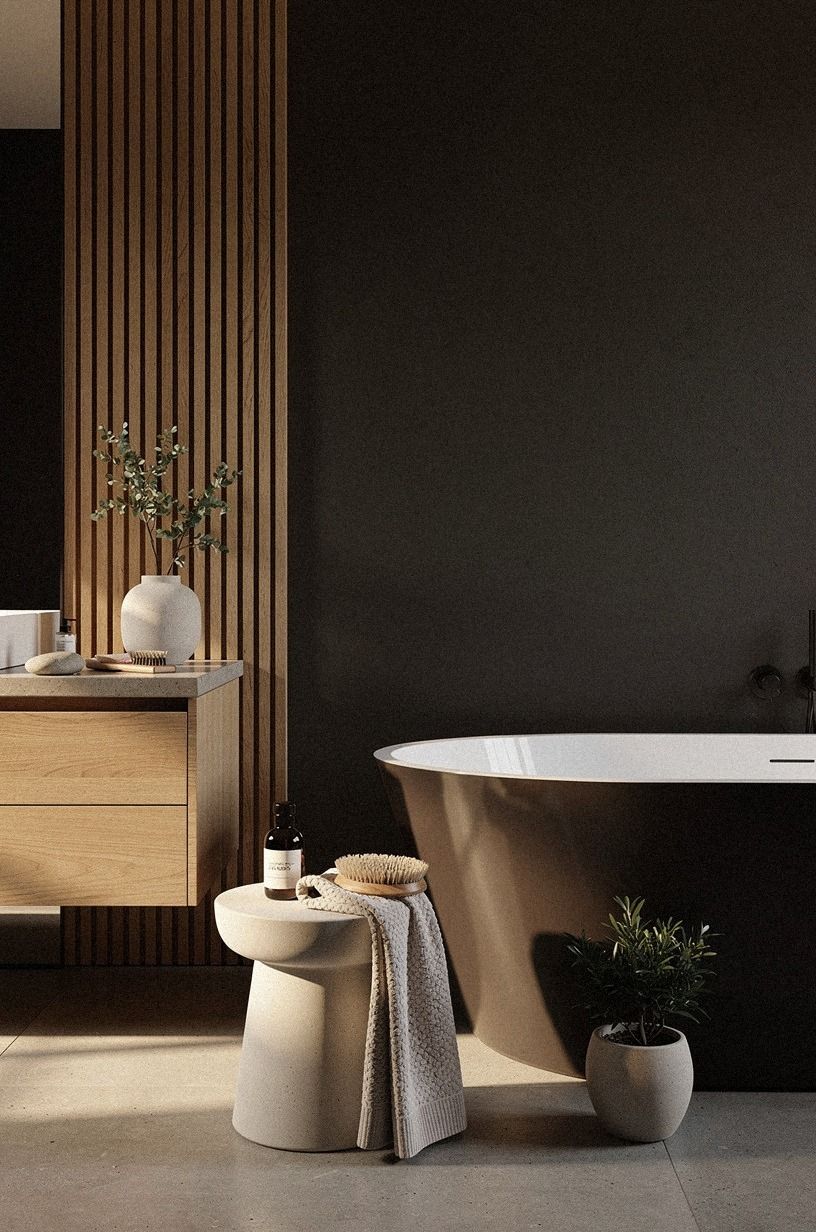
A raised teak platform separates the bathing zone from the rest of the bathroom and works well with sage green, warm cream, natural wood, and organic bouclé. Keep the platform shallow enough for safe entry. Your tub should feel elevated, not perched like furniture on a stage.
The Teak Island Frame gives the basin a clear boundary. Use slatted or sealed teak with visible grain, then repeat the wood in a stool or vanity detail.
You don’t need a full deck around the tub. A narrow platform can create the same sense of purpose while using less material.
A Target Threshold wood vanity can echo the platform without matching it exactly. You’ll want a cream wall, sage towels, and a softly rounded mirror. Avoid a glossy floor near the teak because the contrast can feel slippery and visually harsh.
11Copper Filler, Not Hidden Plumbing
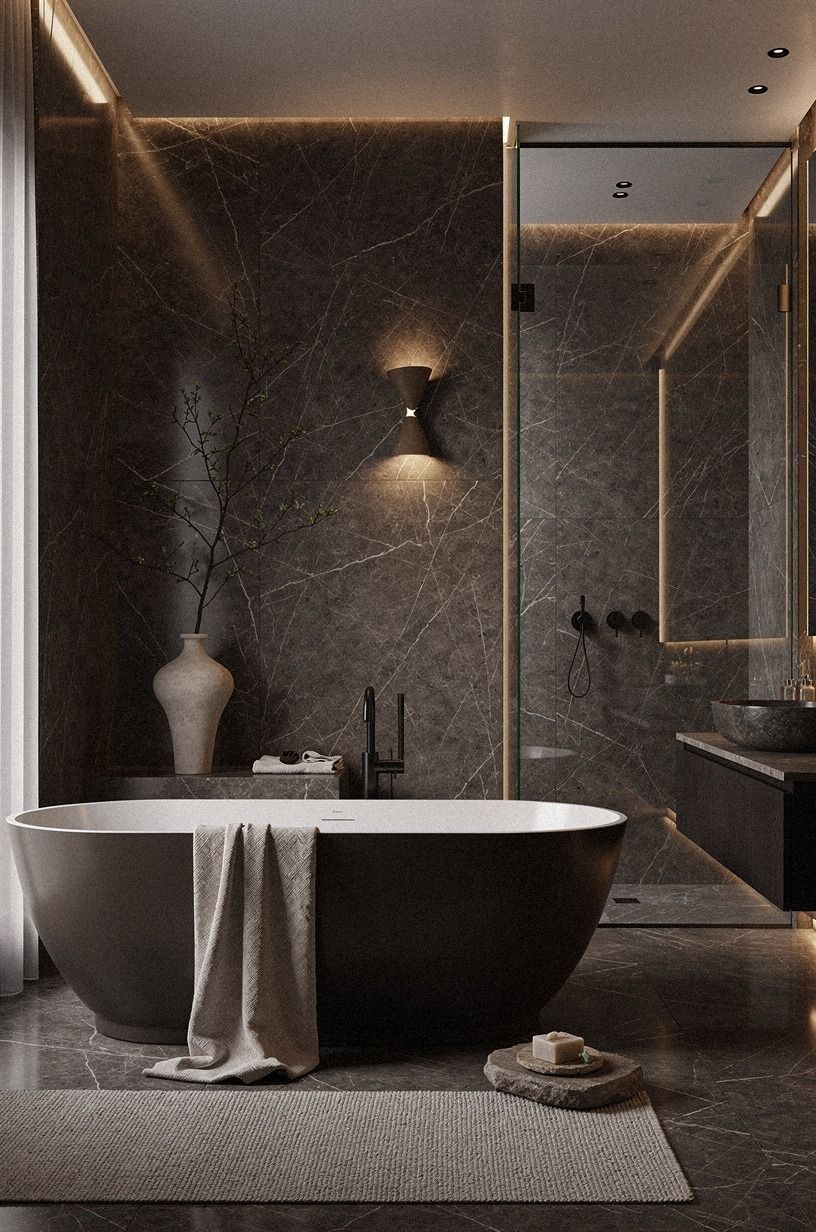
An exposed copper filler can stand against Nero Marquina black marble with white veins, terracotta, stone, and olive accents. The dark marble gives the plumbing a grounded backdrop while preserving the room’s earthy character.
12Tuck rolled towels into a nearby built-in bench
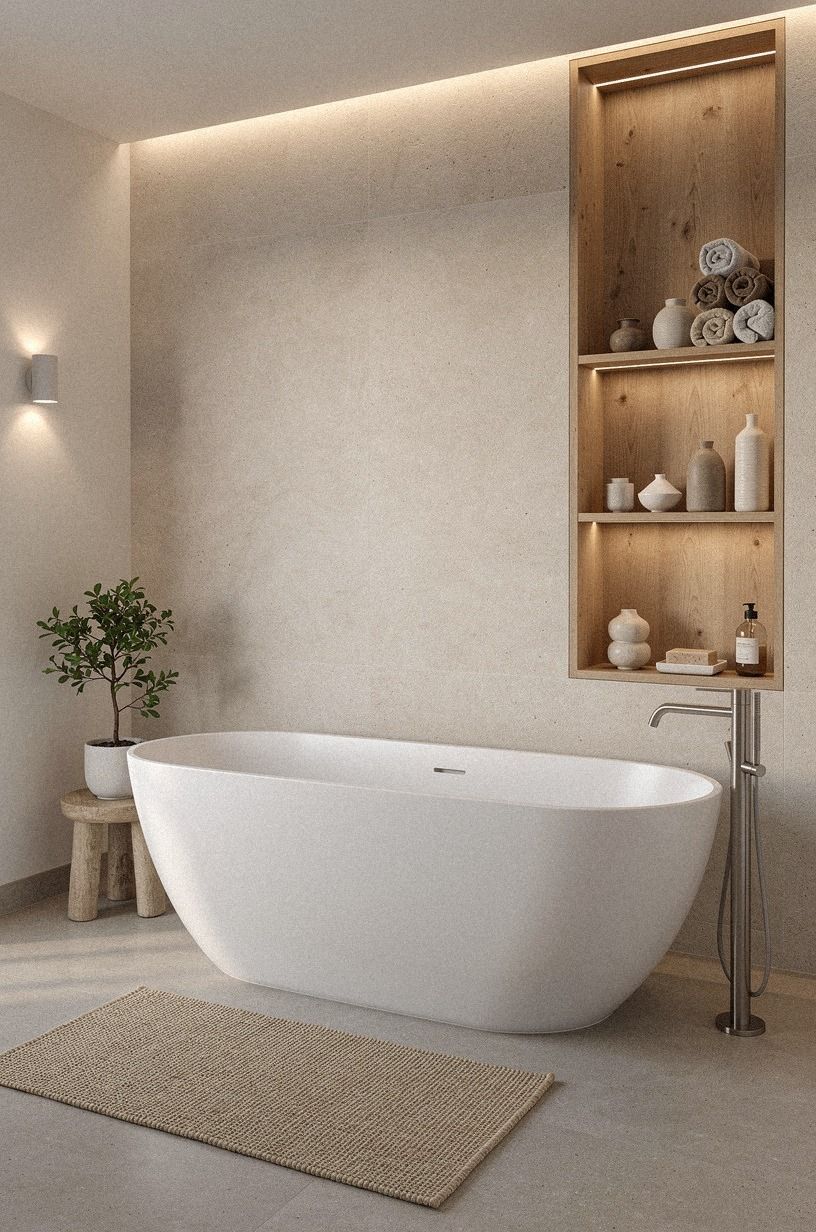
A nearby built-in bench gives your bathroom useful storage while keeping the soaking zone calm. Use clay plaster, linen, aged brass, and deep-pile mohair velvet to create warmth. Your rolled towels should sit below the seat, not across the tub rim.
The Bench Pocket method works because storage becomes part of the architecture. Leave a clear seat for dressing or placing a book, then add shallow cubbies beneath it. You don’t need deep shelves for towels.
A compact opening can hold several neatly rolled pieces.
Choose sage mohair velvet only for a small cushion, since heavy fabric needs careful moisture control. You’ll want Belgian flax linen for daily towels and aged brass pulls for warmth. Avoid open baskets directly beside the tub if splashes regularly reach the floor.
See these wainscoting wall treatments for another way to give the bathing wall practical texture.
13Paint the ceiling to match the tub surround
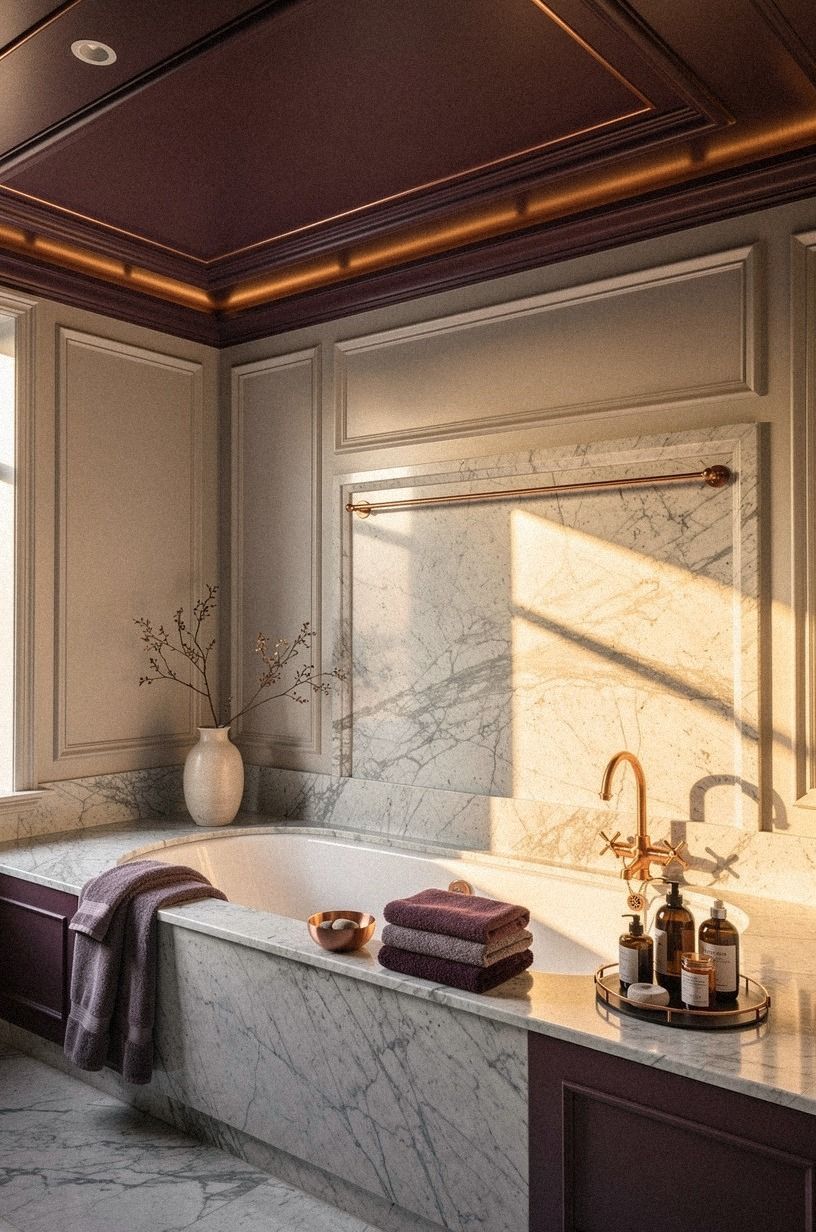
Matching the ceiling to the tub surround creates a wrapped feeling, especially with plum, grey, rose gold, and Carrara marble with subtle grey veining. Paint only the ceiling and the wall behind the tub if a full-color bathroom feels too intense. Your eye will read the two surfaces as one connected zone.
The Color Envelope method suits rooms with tall ceilings. Use a soft plum overhead, grey on adjacent walls, and rose gold in the hardware. Don’t choose a stark white ceiling here, because the sharp break would weaken the enveloping effect.
For broader renovation planning, these are typical US bathroom project ranges:
A Wayfair Hazelton vanity can keep the room practical without competing with the marble. You’ll want your tub surround to remain the visual anchor.
14Layer a woven runner beneath the soaking tub
A woven runner softens the hard surfaces around a tub and works with navy, white, walnut, and reclaimed weathered teak. Choose a flat weave with a non-slip pad, then leave enough floor visible around the edges. Your bathroom will feel warmer without looking crowded.
The Runner Frame is strongest when the textile runs along the tub’s long side. Use a narrow shape rather than a thick bath mat, especially if your basin already has a broad footprint. Don’t place loose fringe near the filler or drain, where it can catch moisture.
A Turkish cotton runner adds softness without heavy pile. You’ll want walnut accessories, white towels, and one navy vessel. If you’re styling a rental, the runner gives an immediate visual change while removable art and a tension shelf handle the rest.
15Skylight Over the Bathing Zone
A skylight directly over the bathing zone brings natural light onto Calacatta marble with gold veining, emerald accents, and warm cream surfaces.
16Pair fluted wall paneling with a smooth tub
Fluted wall paneling adds vertical rhythm behind a smooth tub and suits forest green, rust, natural oak, and cerused white oak. Keep the grooves narrow and evenly spaced so the wall feels tailored rather than busy. Your tub should have a simple rounded profile to balance the linear surface.
The Fluted Vertical Lift makes a low ceiling feel taller because the eye travels upward. Use the paneling on one wall, then continue a quiet paint color across the others. Don’t install untreated wood near the tub.
Moisture-resistant veneer or sealed solid oak will hold up better.
A CB2 Helix oak cabinet can repeat the vertical detail without copying the wall exactly. You’ll want rust-colored towels, forest green paint, and a soft cream floor. The smooth basin should remain the quiet counterpoint.
17Use a glass screen to frame garden views
A glass screen can separate the tub from a shower while preserving the garden view. In a palette of dusty rose, charcoal, brass, and backlit translucent onyx, the screen adds structure without blocking light. Your bathroom will feel more spacious because the sightline remains continuous.
The Garden Window Frame works best with clear glass and minimal hardware. Use a slim brass profile, then position the tub where foliage becomes part of the view.
Don’t choose heavily frosted glass if the goal is openness. A lightly textured panel can provide privacy while still allowing daylight through.
Pair the screen with Farrow & Ball Bone and charcoal stone flooring. You’ll want one brass mirror and a low planter, not a full collection of accessories. A restrained layout lets the garden supply the movement.
18Twin Sconces at the Tub
Matching sconces bring order to a bathroom with warm white walls, camel textiles, black accents, and book-matched walnut. Place one fixture on each side of the tub or mirror the basin with a pair on the wall behind it. Your eye should see a balanced frame before noticing individual accessories.
The Twin Sconce Anchor works best when the lights sit at a comfortable face level and use diffused shades. Choose black hardware with warm bulbs so the room stays welcoming. Don’t rely on a single ceiling fixture, since overhead light flattens walnut and creates harsh shadows.
A West Elm Mid-Century vanity can carry the same walnut tone without matching every line. You’ll want camel linen, black soapstone details, and a white basin. The symmetry feels sophisticated, but it won’t become formal if the textiles remain relaxed.
19Add a stone pedestal for sculptural bath essentials
A stone pedestal gives bath essentials a dedicated landing place beside the tub. Use warm travertine, midnight blue, copper, and ivory to create a grounded palette. Your pedestal should be tall enough to reach comfortably but low enough to preserve the view across the room.
The Pedestal Pause creates a single sculptural moment. Set one ceramic bowl, a folded towel, and a small bottle on top.
Don’t fill every inch with products, because the pedestal works through restraint. Honed travertine with natural pitting will add tactile interest without needing extra decoration.
A Target Studio McGee stone stool can provide a lower companion surface. You’ll want midnight blue paint, ivory textiles, and copper plumbing. If the bathroom is small, choose a narrow pedestal and leave the main floor clear for easy movement.
Why the Bathing Zone Still Deserves a Point of View
A freestanding tub earns attention when the whole room supports its shape. The basin doesn’t need to be oversized, expensive, or surrounded by a dozen decorative objects.
It needs a clear relationship with the wall, the floor, and the light. That relationship is what makes a bathroom feel settled instead of assembled.
The strongest layouts use one dominant material and two supporting finishes. Cerused oak can lead with terracotta and aged brass behind it. Carrara marble can lead with plum paint and rose gold.
Warm travertine can lead with midnight blue and copper. When every material competes, the room loses the calm quality that makes a long bath feel inviting.
Scale matters more than decoration. A standard tub may measure 60×30 inches, while a comfortable shower needs at least 36×36 inches.
Vanity height commonly lands between 32 and 36 inches, and a toilet needs 21 inches of clearance in front. Those numbers don’t dictate the design, but they protect your movement through the room.
The best starting point is usually the wall behind the tub. Give that surface a curve, a window, paneling, tile, or a strong paint color.
Then repeat one detail elsewhere, perhaps in the stool, faucet, or towel. You don’t need every finish to match.
You need each choice to answer the same spatial question: where should your eye rest when you enter?
What People Always Want to Know
What is the best freestanding soaking tub layout for a small bathroom?
A tub beside a picture window or against a shallow arched niche usually works best. Both layouts create a clear focal point without adding bulky furniture. Choose a compact birch-effect storage piece nearby, and keep the floor open for better circulation.
Where can you buy freestanding soaking tub pieces on a budget?
IKEA, Wayfair, and Target offer accessible vanities, stools, mirrors, and textiles. Facebook Marketplace and thrift stores can provide solid wood benches or brass accessories for less. Check measurements carefully, since usable scale matters more than a low sticker price.
How much does a freestanding soaking tub makeover cost?
A small styling refresh may fit inside the $200-$1,200 budget tier when paint, a mirror, a faucet, and textiles are involved. Existing furniture, removable hooks, and rearranged accessories can cost nothing. Larger plumbing or tile work belongs to higher renovation ranges.
Can you create a freestanding soaking tub layout on a budget?
Yes, and paint is the strongest low-cost starting point. Add a woven runner, move a small stool beside the tub, and replace harsh bulbs with warmer dimmable lighting. A thrifted wood bench and folded Turkish cotton towels can create visible softness without structural work.
Is a freestanding soaking tub worth it in a small space?
Yes, when the tub replaces visual clutter rather than adding to it. A clear wall, a narrow stool, and a wall-mounted faucet can make the basin feel intentional. Keep at least 21 inches of toilet clearance and protect your main walking path.
Is a freestanding soaking tub a good idea for a rental?
Yes, especially with removable upgrades. Use peel-and-stick wall panels, a tension rod for greenery, a freestanding bench, and renter-friendly artwork. A washable runner and new towels can create a warmer bathing zone without changing plumbing or permanently altering the walls.
Where to Start First
Start with the full-height arched niche. It gives the tub architectural weight, creates a tall backdrop for towels, and works with terracotta or olive without crowding the floor. Pin the niche layout for later, then explore these true retreat tub layouts and black freestanding tub upgrades.