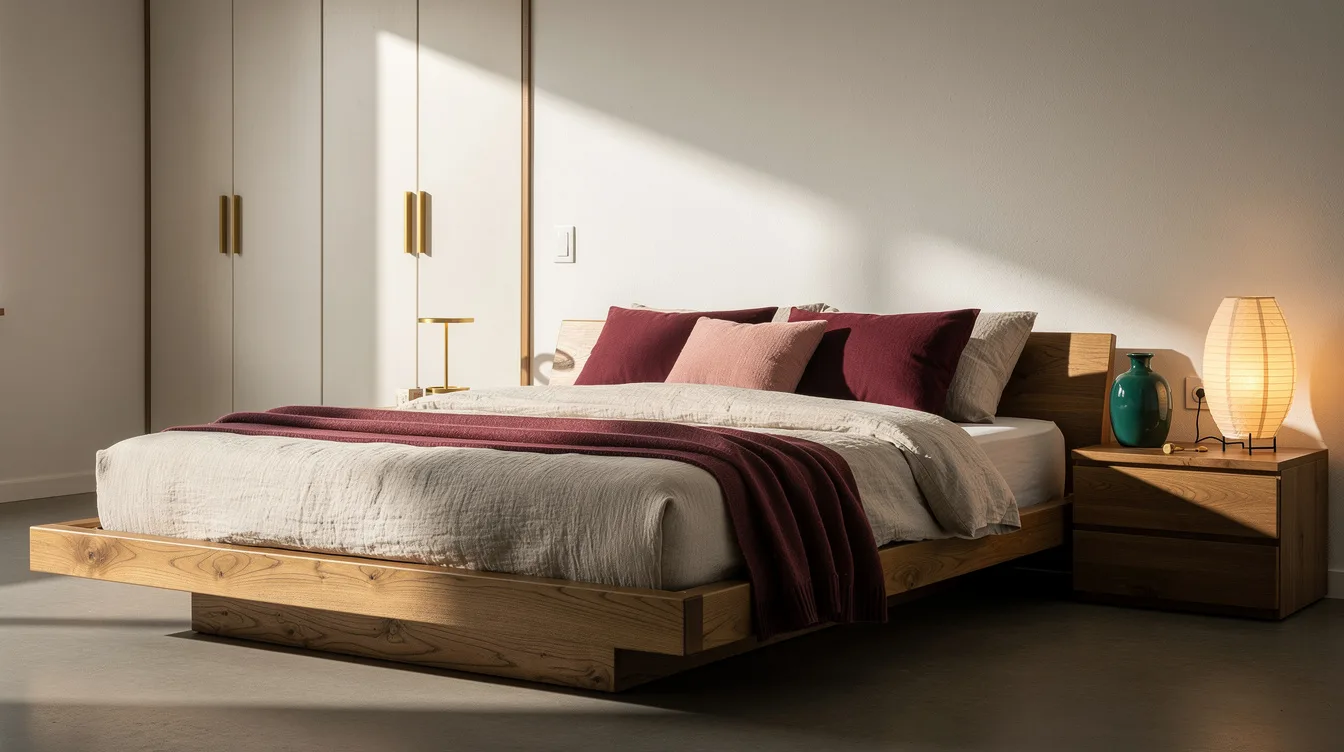
A 160 × 200 cm mattress can anchor a peaceful bedroom, but the wrong frame quickly turns the floor plan into a squeeze.
The convincing version uses a low wooden bed, quiet storage, and natural textures such as linen, cotton, paper, and visible grain.
That restraint creates a Japandi mood without turning the room into a themed set.
Measure the Low Bed Around the Mattress
A 160 × 200 cm mattress can leave a room feeling open or oddly crowded, depending on the frame around it. Start with the outside footprint, because a low platform measuring about 188 cm wide by 228 cm long takes more floor than its mattress suggests.
A raw-pine frame in that larger size is listed around €293 to €379, with a sensible shopping allowance of roughly €330 to €450 before delivery. That wide platform is my favorite choice when the room has clear circulation on both sides.
For a tighter layout, a compact wooden frame around 160 × 200 × 15 cm keeps the bed visually quiet. IKEA is a practical place to compare restrained wood finishes, but the frame should stay simple and low rather than imitate a traditional floor mattress.
A finished sleeping surface around 35 to 45 cm above the floor usually gives the look without making sitting down or standing up awkward. Treat that range as a design target, then choose the mattress for comfort.
Hide Storage Below a Calm Sightline
Japanese-inspired bedrooms depend on visual quiet, so storage should disappear into the architecture. A low wooden dresser with flat fronts works better than open cubbies filled with small objects.
Keep the tallest storage on one wall and leave the area around the bed open. IKEA can help with plain modular pieces, but I would choose doors or drawers over baskets because exposed contents quickly become the room’s main pattern.
Use one oak ledge as a bedside surface instead of a crowded nightstand. A ledge around 30 to 40 cm wide can hold a book and a lamp while preserving the floor space that makes a low bed feel intentional.
Keep extra bedding inside a cotton canvas bin or a closed cabinet. The strongest version of this room has storage capacity you can use without announcing where everything lives.
Layer Linen, Cotton, and Paper
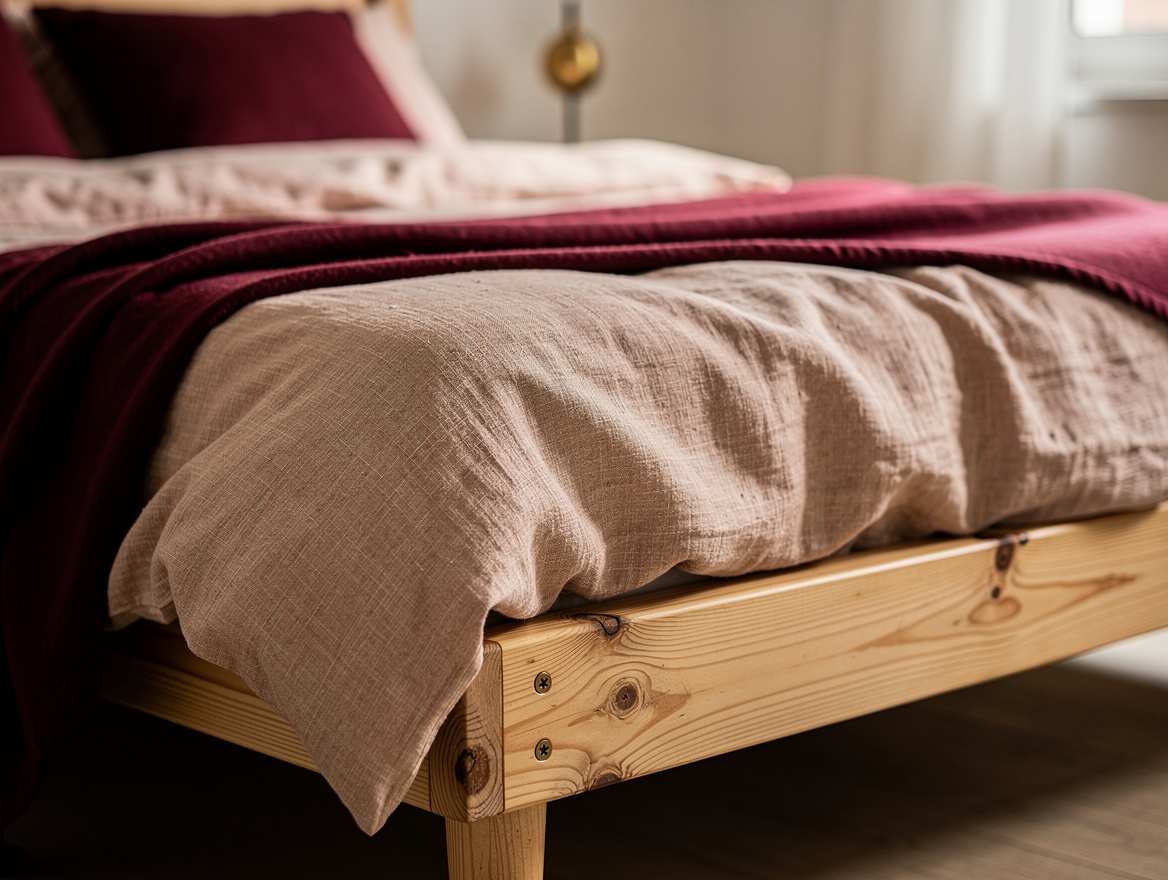
Natural texture should come from large surfaces first. Linen bedding in oatmeal, soft white, or warm gray gives the bed a relaxed finish without relying on bold pattern.
Add a plain cotton duvet beneath the linen layer when you want a less expensive or easier-care option. One folded cover at the foot is enough; piles of throws make a low bed look heavy.
Paper brings a different kind of softness through light. A washi-paper shade around 25 cm across and 43 cm high has a listed reference around €349, so it can be the room’s one considered purchase.
Wood grain, linen slubs, cotton weave, and paper fibers create enough variation on their own. I would skip decorative stones, fans, signs, and other themed objects that make the bedroom feel staged.
Keep Lighting Low and Warm
Place the main glow close to the bed rather than high overhead. A paper shade softens the light and echoes the room’s natural materials without adding another strong color.
Use a warm-white bulb from Target or another approved retailer, then add a separate reading light only where you actually read. The room should feel dimmer and calmer at night, not brightly illuminated from every corner.
A small wooden lamp base works well on a ledge or low table. Choose a shade with a rounded profile and concealed hardware, because visible metal and sharp angles can pull the eye away from the bed.
Leave decorative candles and extra lamps off the shopping list until the basic lighting works. One gentle source plus one useful reading light is usually the more convincing arrangement.
Let Visible Wood Carry the Pattern
Wood grain gives the bedroom its strongest visual rhythm, so the finish deserves restraint. A raw-pine bed feels lighter than dark stained wood and pairs naturally with warm white walls.
If the pine looks too pale, add one oak shelf or bench rather than mixing several wood tones. Home Depot is useful for comparing unfinished boards and simple brackets, but keep the profile thin and the finish matte.
Use color sparingly around the grain. A clay-colored cushion or muted green cover can add depth, while glossy black furniture or high-contrast prints would make the room feel more graphic than grounded.
My firm rule is to repeat one wood tone at least twice and stop there. The bed and one small surface are enough to establish the palette.
Protect Open Floor Around the Bed
The empty floor is part of the composition, especially when the bed sits close to the ground. Leave a clear path along the side you use most, and avoid placing a bulky bench where it interrupts that movement.
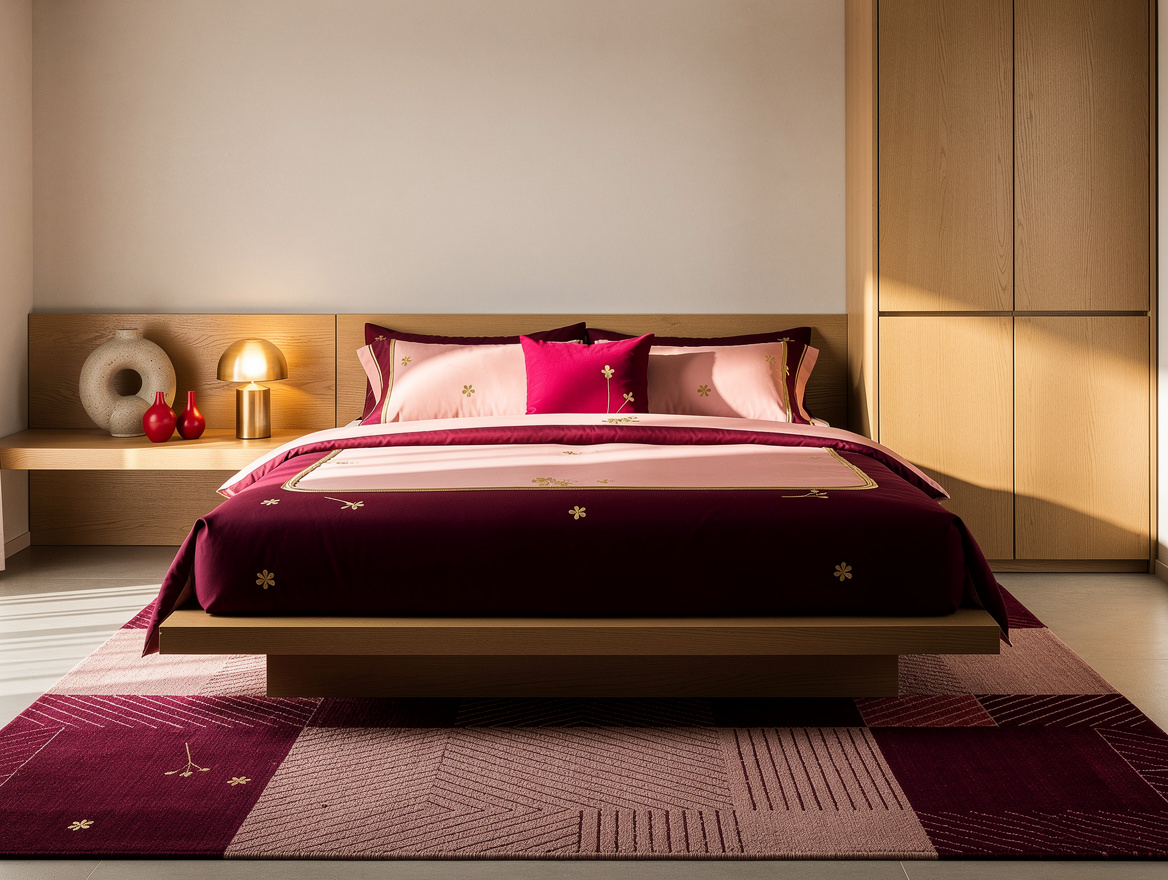
A flat-woven wool rug can add warmth beneath the lower two-thirds of the bed, but it should not swallow the frame. Choose a size that leaves visible floor at the edges so the platform still reads as a separate object.
For a small room, a narrow runner from Wayfair can sit beside the bed without competing with the platform. I prefer one defined textile to several small mats because it creates a cleaner visual field.
Finish with hidden cable clips from Ace Hardware and keep chargers close to the wall. The final test is simple: you should be able to see the bed, the floor, and the wood grain in one quiet glance.
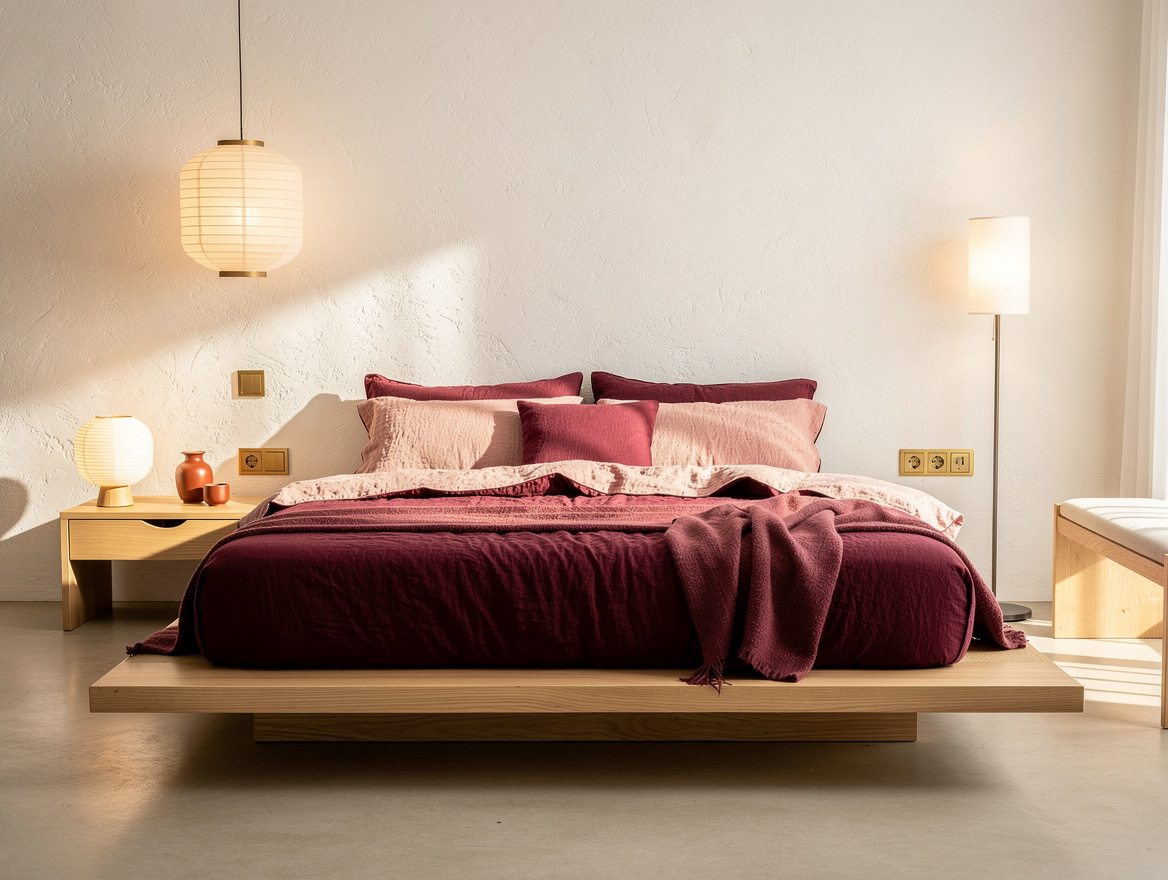
Start by taping the bed’s full outside footprint on the floor, then remove anything that blocks the walking path. Once the circulation feels easy, add linen and one warm paper light, and let the room earn its calm through restraint.
Mia Carter writes about small-space living and budget home makeovers. She has restyled three rentals and tests most ideas in her own 45 sqm flat.