Rooftop lounge furniture survives wind, sun, and rain when you choose weight, drainage, and outdoor-rated materials before you chase the look. A lightweight wicker chair can skid across a roof deck in one ugly gust. Pretty isn’t the test. Staying put is.
- Anchor roof top seating with low, heavy frames
- Choose a 35 to 40-inch deep sofa, not a dainty loveseat
- Use The Two-Wood Rule for tables that age well
- Skip loose cushions and buy solution-dyed fabric
- Build The Windbreak Triangle with planters and seating
- Put outdoor dining seating near the door
- Let a 16 to 18-inch coffee table do the hard work
- Frame contemporary rooftop seating with a real outdoor rug
- Float modular seating instead of lining every edge
- Can your balcony sitting area design survive a gust?
- Add a storage bench that earns its footprint
- Use The Three-Height Light Stack after sunset
- Paint one sheltered wall in Hague Blue, then let it recede
- Choose aluminum over wicker for the exposed corners
- Make the umbrella base part of the furniture plan
- Mix dining pieces with lounge pieces, but keep the scale honest
- Cover the pieces you love, not every single thing
1Anchor roof top seating with low, heavy frames
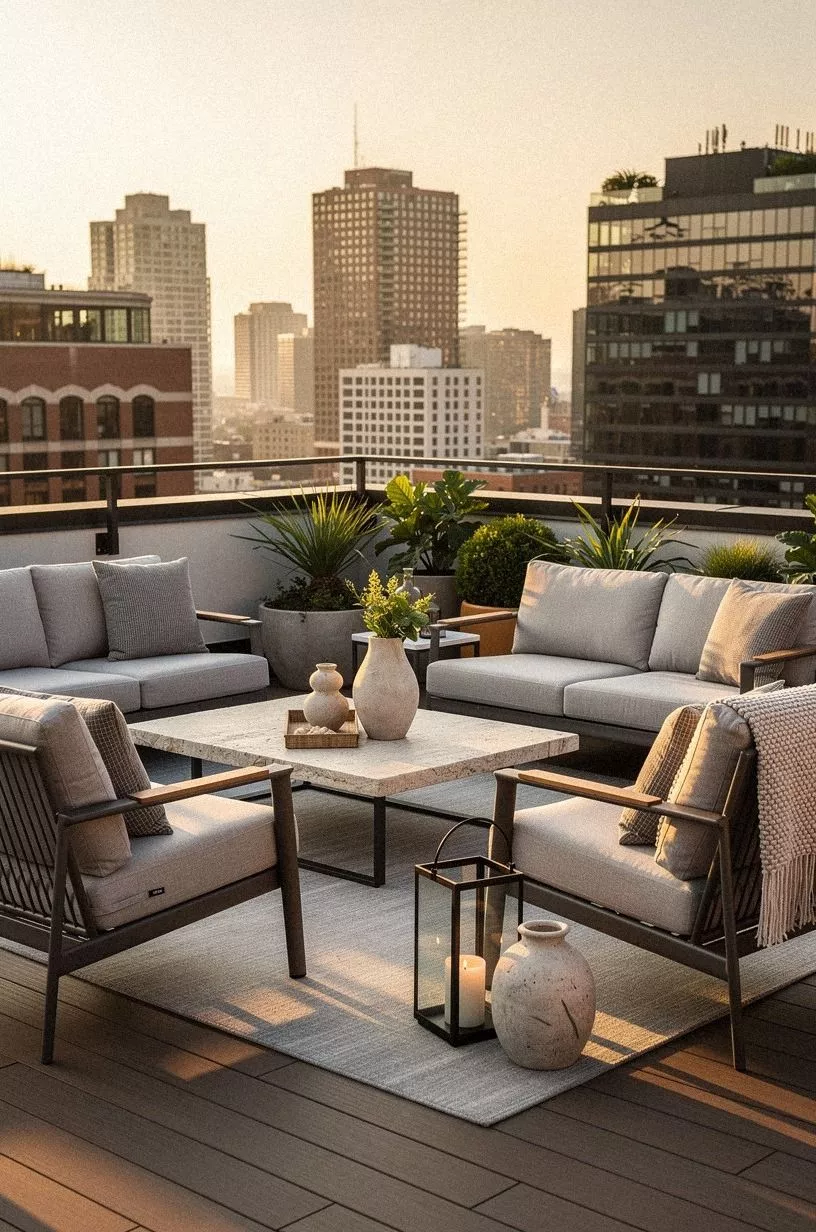
Choose powder-coated aluminum seating with a low center of gravity, wide feet, and cushions that tie or clip to the frame. You’ll want pieces that feel slightly too substantial when you move them, because wind doesn’t care that your chair looked delicate in the listing photos.
Tall, narrow café chairs are a poor choice for exposed roofs. They’re fine on a sheltered patio, but your rooftop needs furniture that can handle a sudden crosswind without becoming a neighborhood story. For more cold-weather layering, borrow ideas from this Nordic balcony formula.
2Choose a 35 to 40-inch deep sofa, not a dainty loveseat

A sofa with a 35 to 40-inch seat depth gives you room to sink in without filling the whole deck.
3Use The Two-Wood Rule for tables that age well
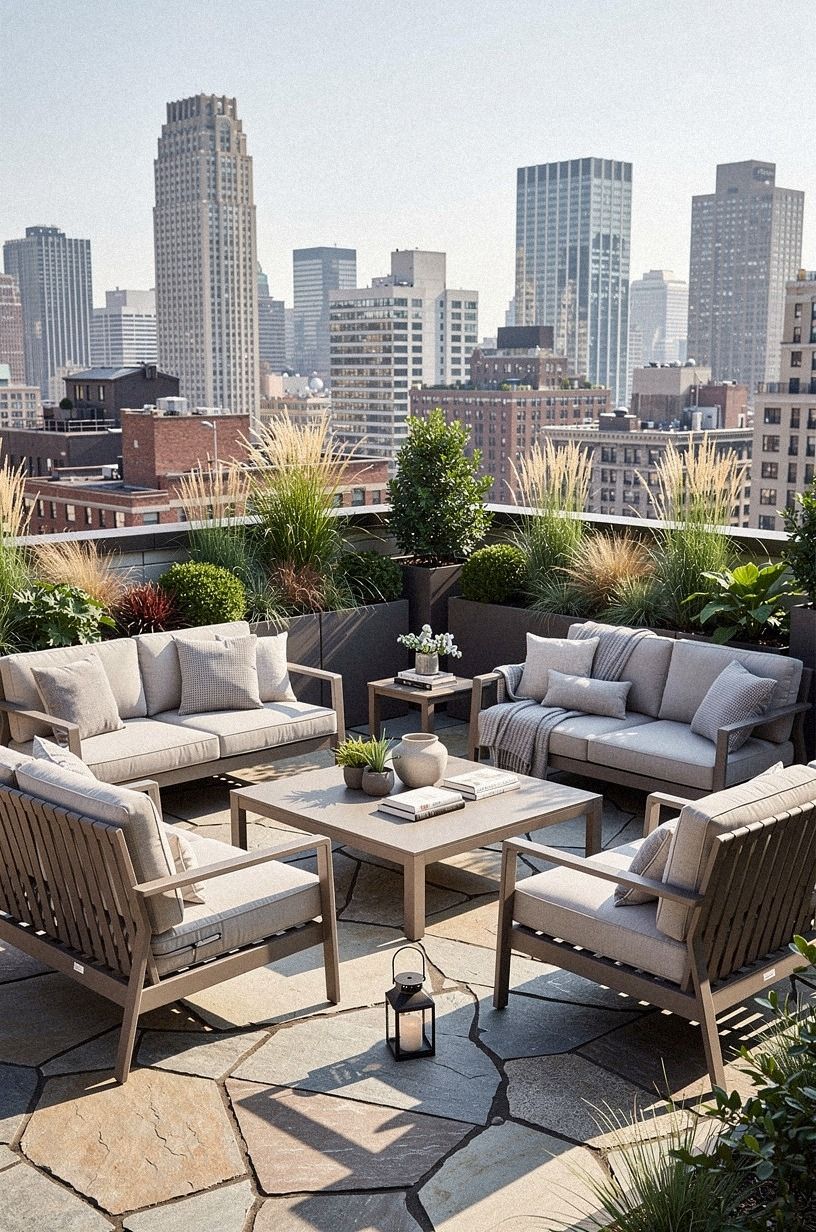
Pair one wood tone with one metal tone, then stop. Teak slats beside aged bronze or matte black look grounded after a summer outside, while three competing wood finishes can make your roof feel like a clearance aisle.
You don’t need matching furniture. You need a clear limit.
A teak coffee table, black aluminum lounge chairs, and one weathered cedar planter is enough. And yes, your eye will notice the difference, even if nobody can explain why.
4Skip loose cushions and buy solution-dyed fabric

Loose decorative cushions belong at the top of the cut list for a windy rooftop plan.
5Build The Windbreak Triangle with planters and seating
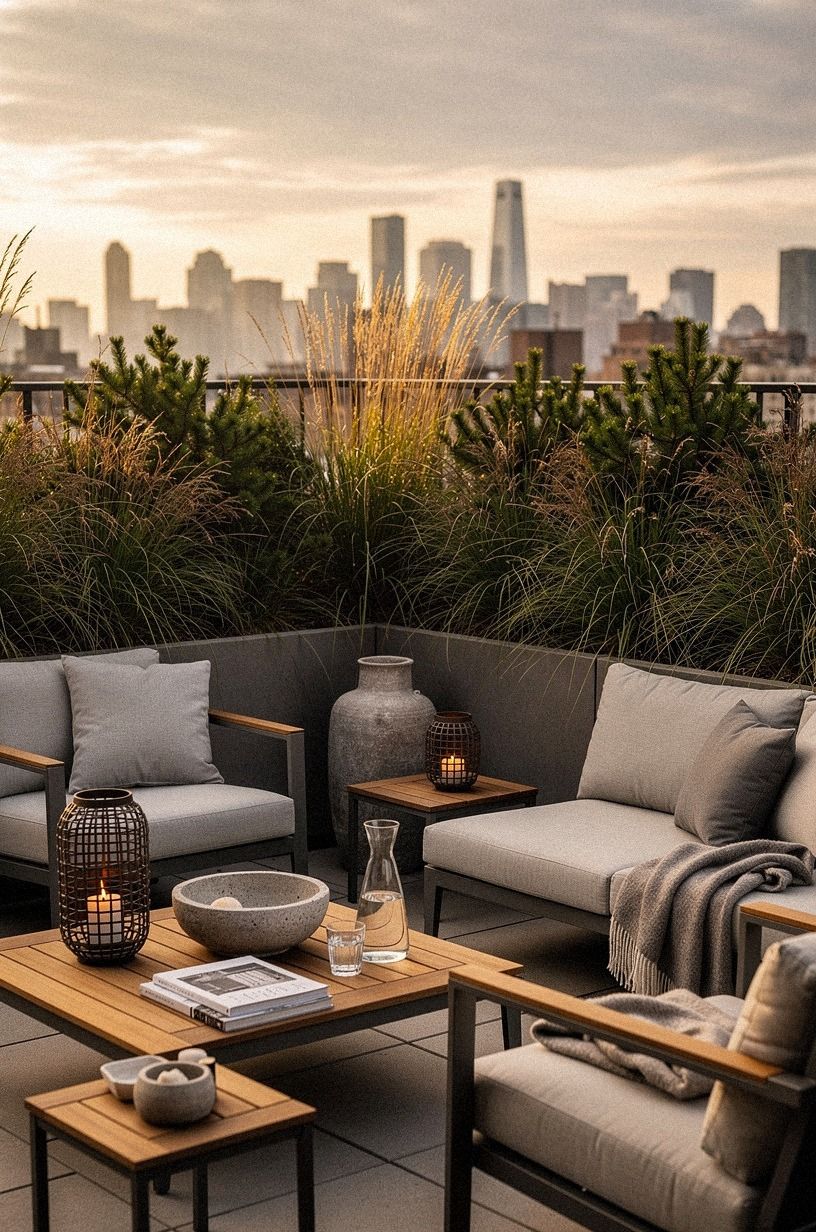
Place two large planters at the outer corners of your seating area, then set the sofa or loveseat along the protected third side. Fiberglass planters filled with gravel at the base do double duty: they hold their ground and make your lounge feel intentional.
You’ll get a calmer pocket without boxing yourself in. But don’t use empty resin pots. They’re light, they tip, and they make even expensive furniture look temporary when the weather turns.
6Put outdoor dining seating near the door
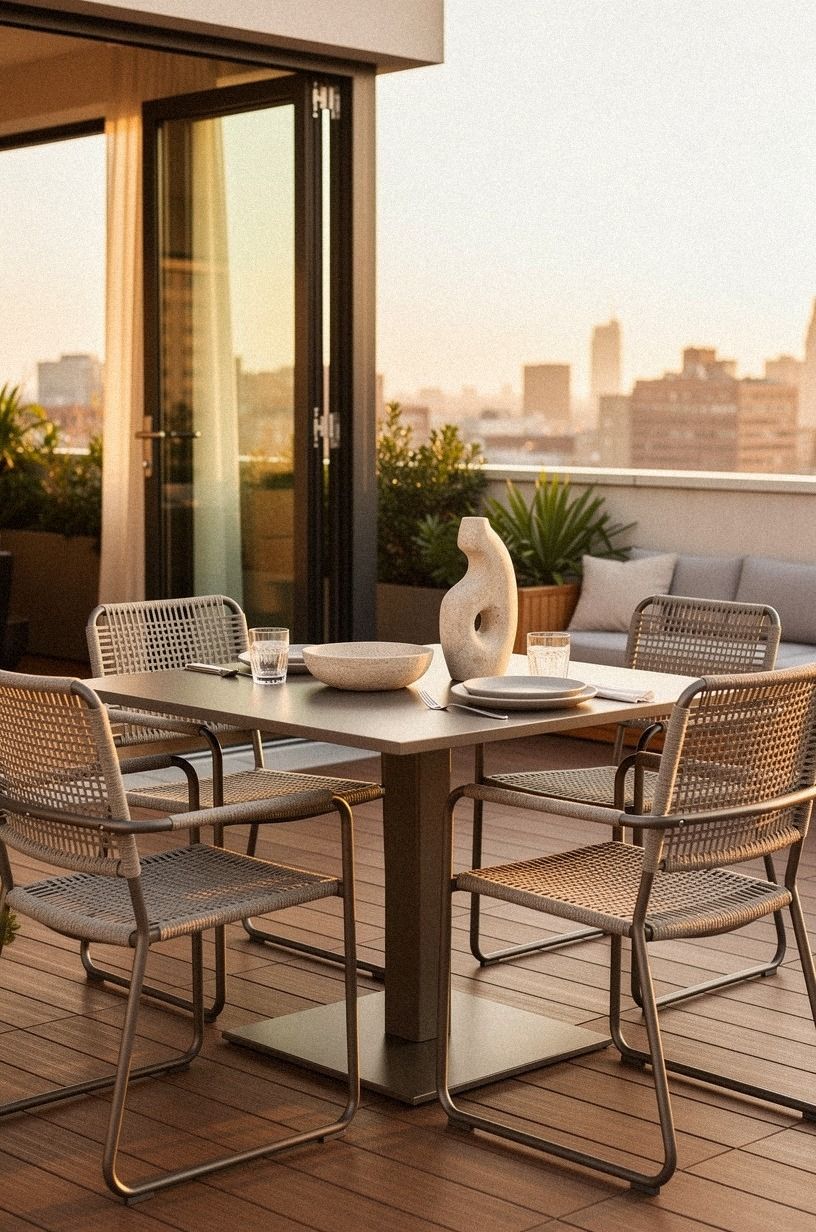
Keep dining chairs closest to the access door, where you can grab them fast if rain starts.

7Let a 16 to 18-inch coffee table do the hard work
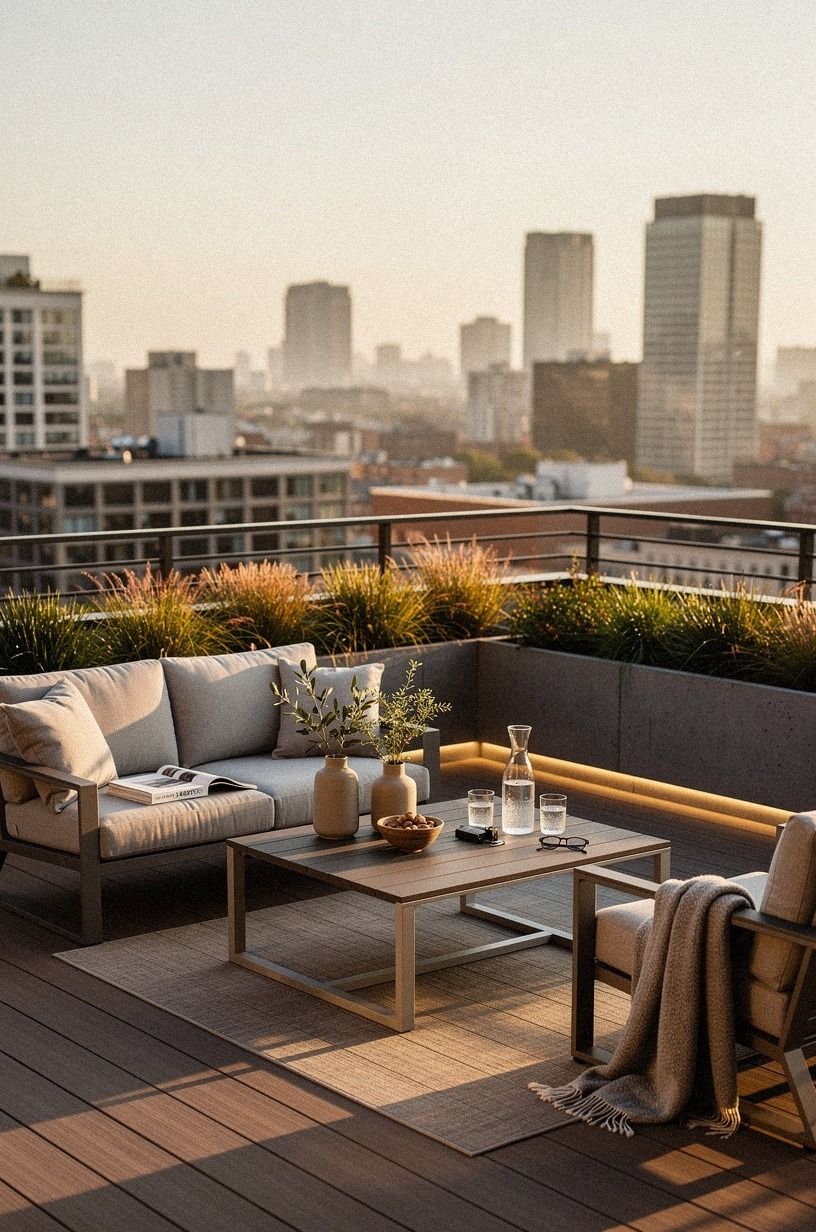
Your coffee table should sit around 16 to 18 inches high and measure roughly two-thirds the length of your sofa. That gives you somewhere to set a glass without making the table feel like a barrier between people.
Choose cerused white oak-look composite or teak with slatted drainage. Smooth glass tops are a poor choice on an exposed roof: every rain shower leaves a chalky-looking mess, and every gust announces itself with rattling glass.
8Frame contemporary rooftop seating with a real outdoor rug

An outdoor rug keeps your furniture from floating around visually, but it also needs to drain. Pick a polypropylene flatweave rug large enough that the front legs of every major seat land on it, usually 8×10 or 9×12 for a full lounge group.
You’ll want a pattern with some grit in it, not solid cream. Solid pale rugs photograph nicely for one afternoon, then collect city dust and pollen like it’s their job. For darker contrast, see these black furniture living room ideas.
9Float modular seating instead of lining every edge
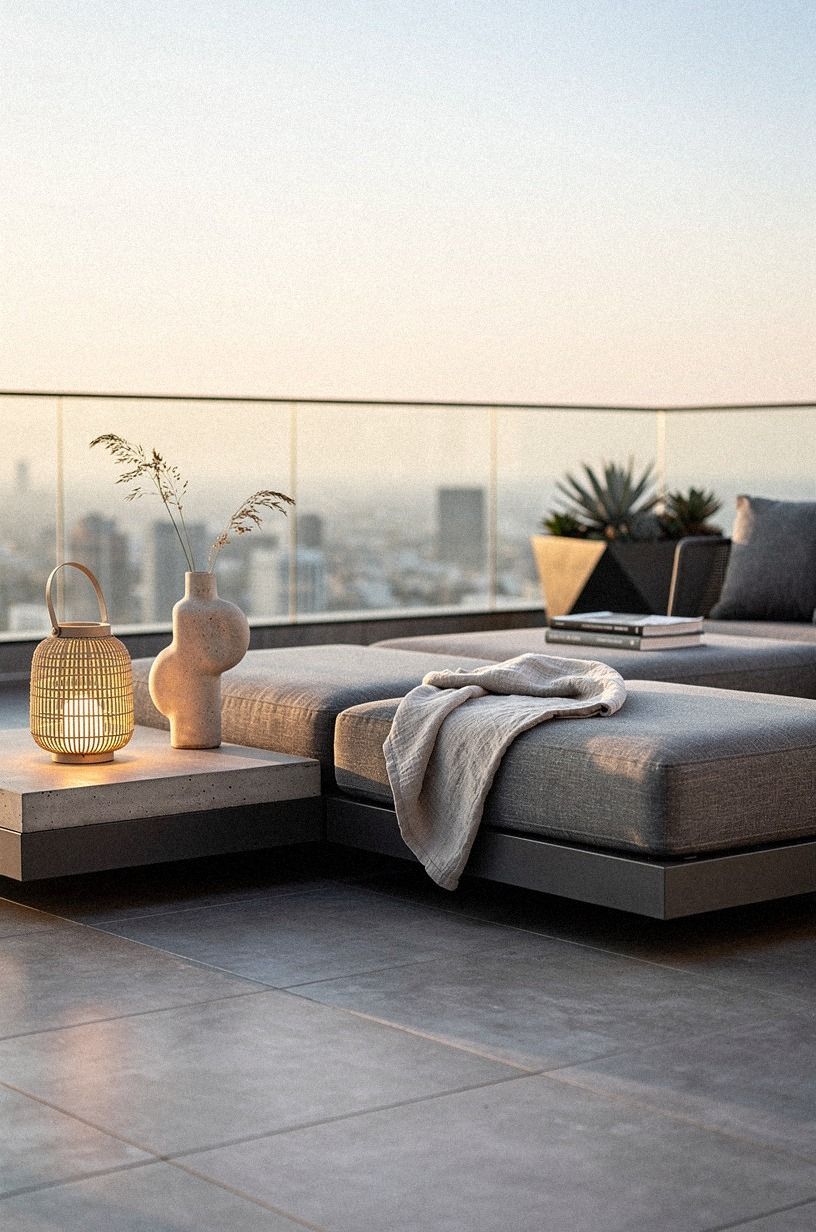
Don’t push every chair against the railing. Float a modular sofa inward by a few inches, face it toward the view, and leave a breathing strip around the perimeter. IKEA JÄTTEBO-style modular seating is useful because you can reshape it when your guest count changes.
Railing mistakes are easy to make. Everyone faced outward, nobody talked, and the whole setup felt more like an airport gate than a lounge. Pull the furniture together.
Your rooftop becomes a room, not a viewing platform.
10Can your balcony sitting area design survive a gust?
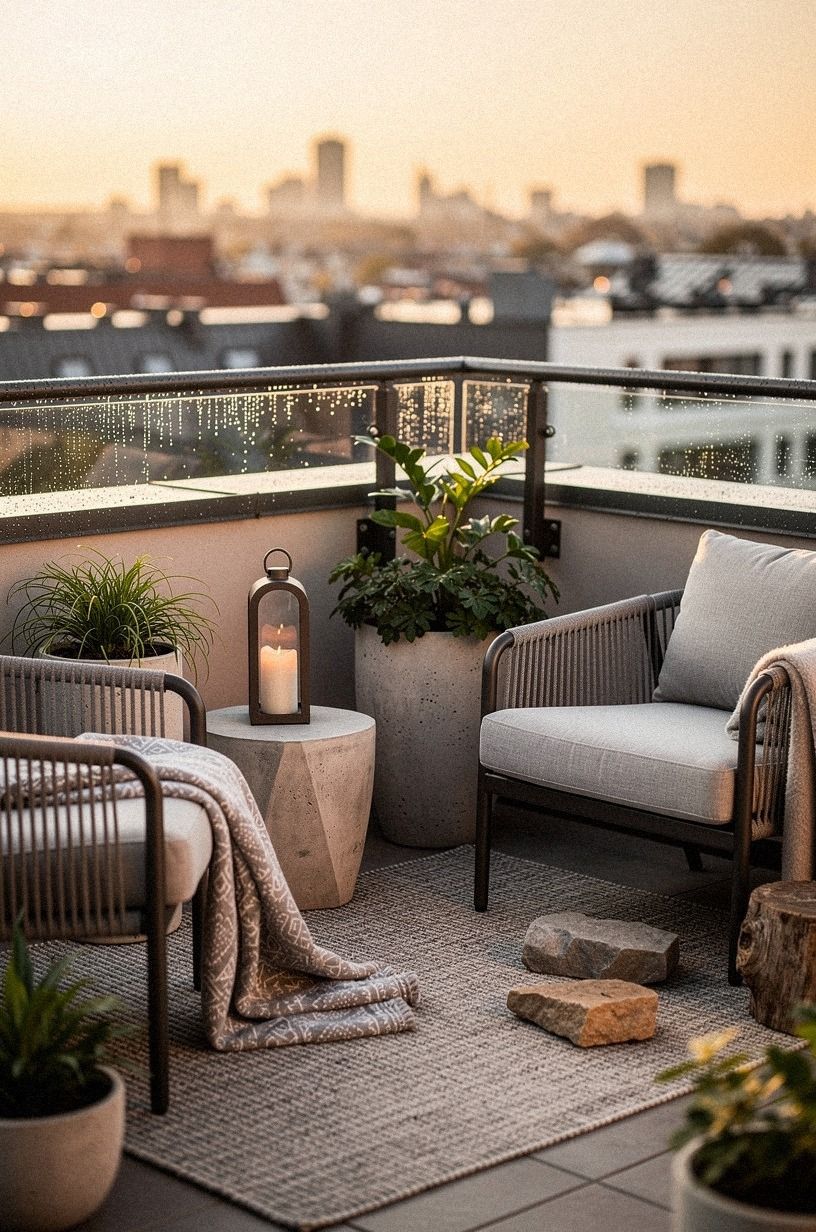
Ask that before you buy anything. If you can lift a chair with one hand, you should be able to clip it, stack it, or bring it inside when weather alerts hit.
Choose marine-grade stainless steel hardware for exposed connections and weighted bases for umbrellas. You’ll save yourself the frantic late-night scramble when a storm rolls in. And it will, usually on the one evening you forgot to check the forecast.
11Add a storage bench that earns its footprint
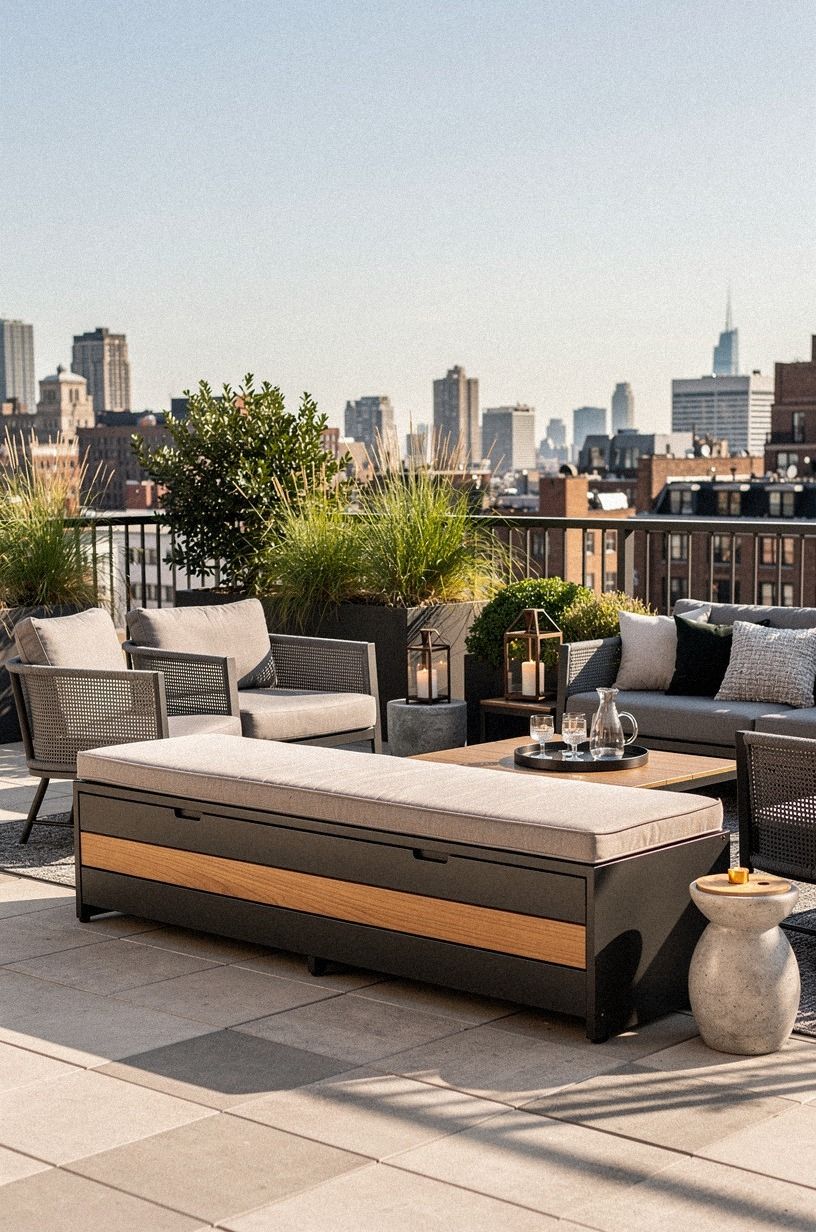
A weatherproof storage bench gives you a place for covers, extra cushions, and the small things that otherwise blow around. Keter resin deck boxes aren’t romantic, but they’re useful, and usefulness is what lets the prettier pieces stay pretty.
Put it against the most sheltered wall and top it with two secured seat pads. Your guests see a bench; you get dry storage. That’s the kind of boring purchase you’ll appreciate every single week!
12Use The Three-Height Light Stack after sunset
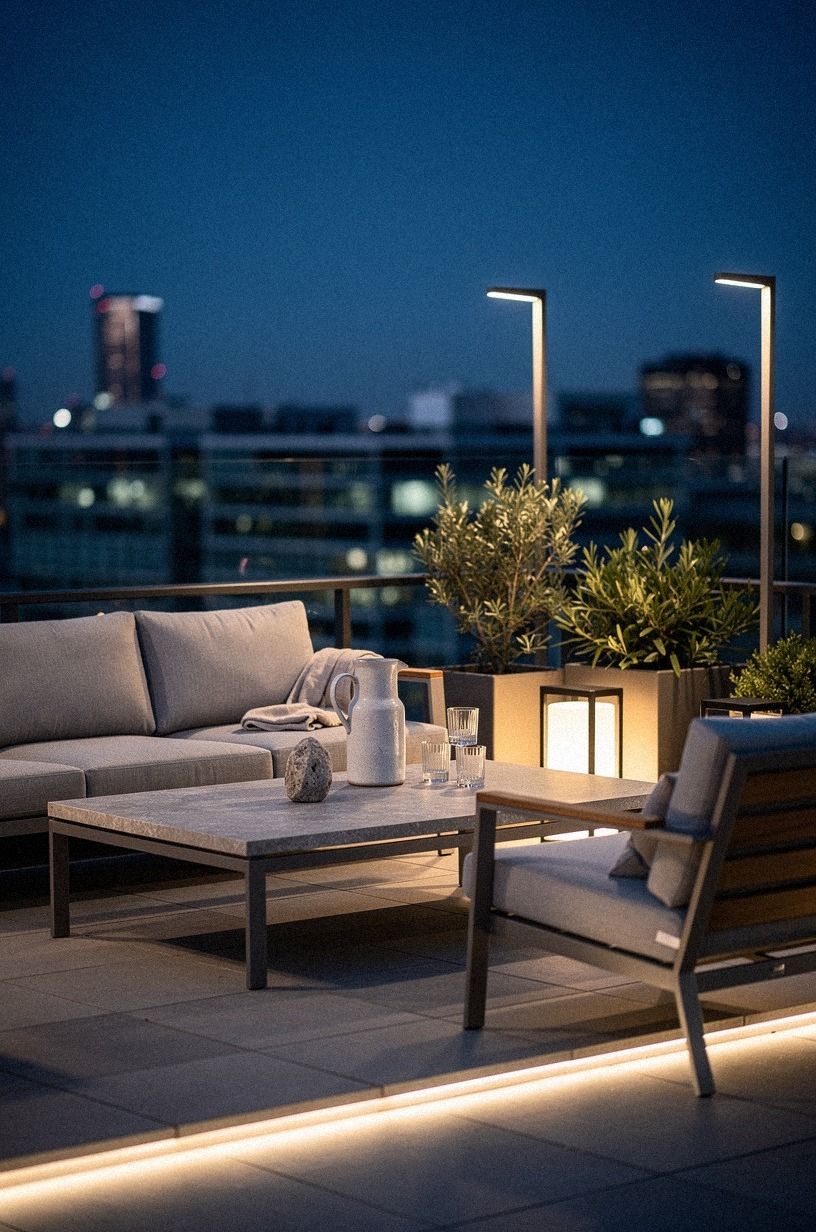
Layer light at three heights: floor-level lanterns, table lamps, and one overhead string or wall source.
13Paint one sheltered wall in Hague Blue, then let it recede

If your rooftop has a protected wall, Farrow & Ball Hague Blue No. 30 gives the seating a deep, night-sky backdrop without competing with the skyline. You’ll get more depth than white paint provides, particularly once the sun drops.
For a softer daytime look, Sherwin-Williams Evergreen Fog SW 9130 works on a privacy screen or planter surround. Bright turquoise can overwhelm a rooftop palette.
It fights the sky, and the sky always wins. For scale help, this guide explains why oversized furniture makes a room feel cold.
14Choose aluminum over wicker for the exposed corners
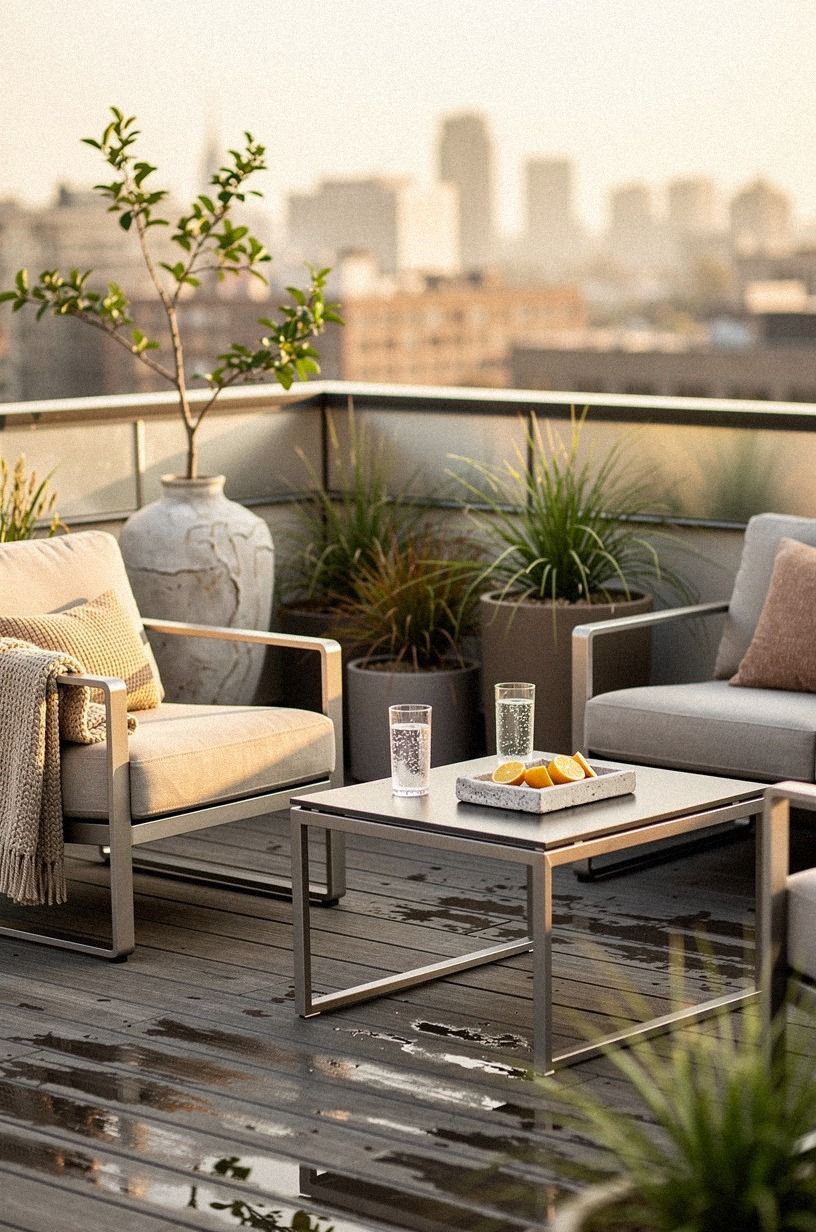
Wicker has its place, but the exposed corners of a roof aren’t it.
15Make the umbrella base part of the furniture plan
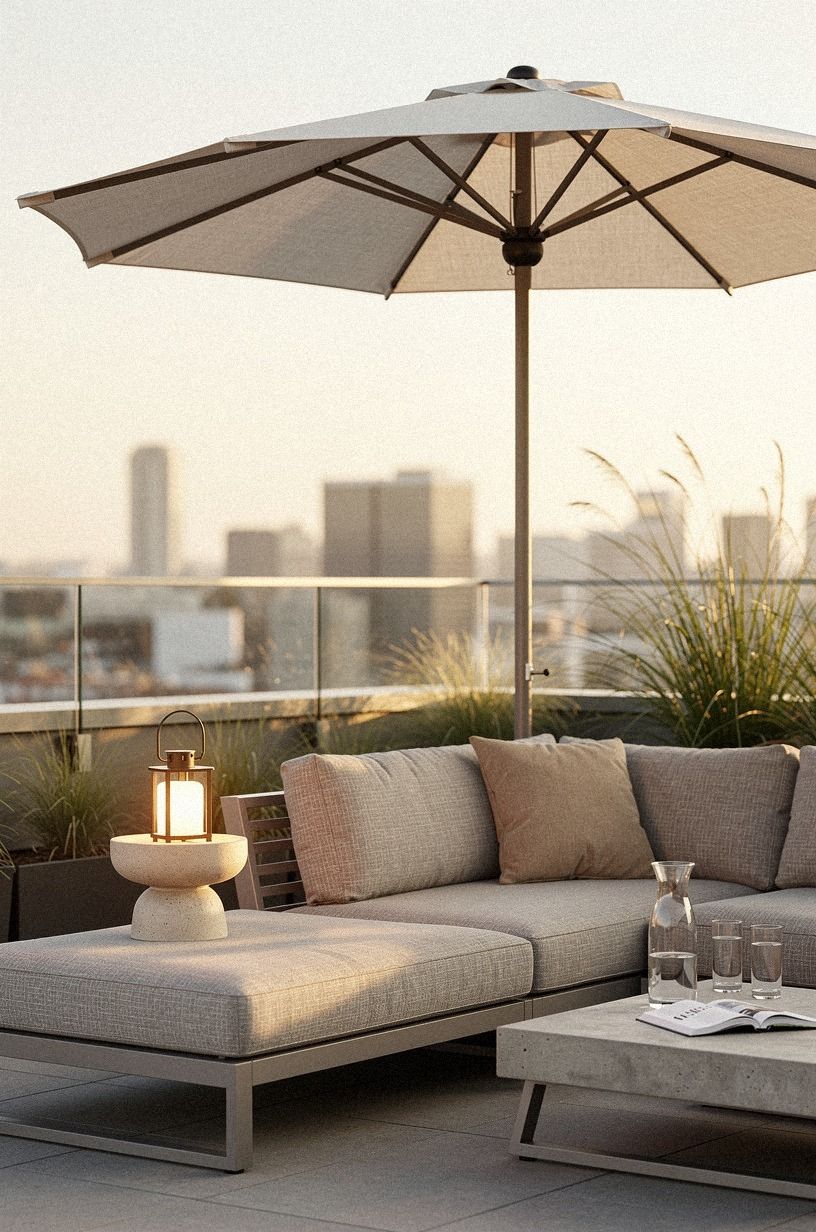
An umbrella is not a casual accessory up there. Use a heavy base designed for wind exposure, and place it beside the seating group rather than in the center of a crowded table. Cantilever umbrellas give you shade without a pole cutting through everyone’s sightline.
You’ll need to close it whenever you leave, even on a calm day. That sounds fussy. It’s less fussy than replacing a broken umbrella, a cracked side table, and your neighbor’s window.
16Mix dining pieces with lounge pieces, but keep the scale honest
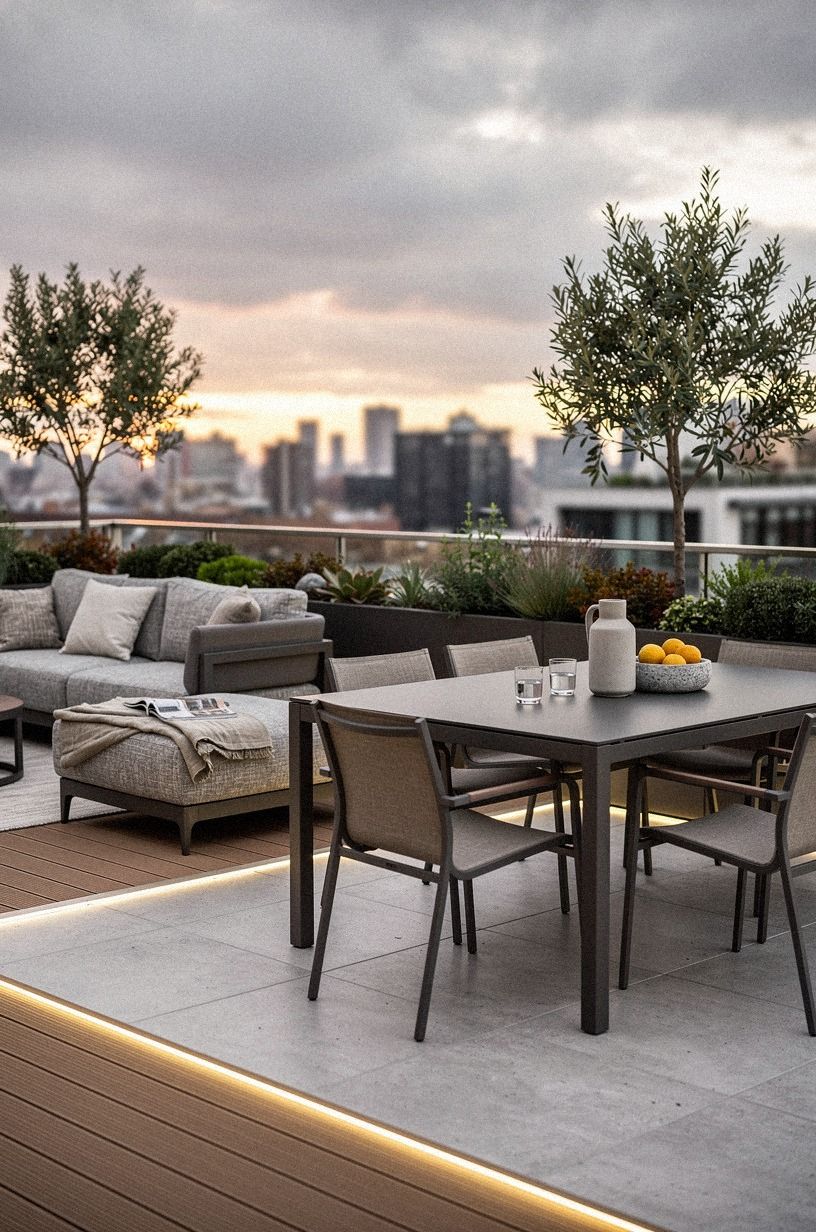
A rooftop can hold both a dinner table and a lounge area if the furniture heights tell the truth.
17Cover the pieces you love, not every single thing
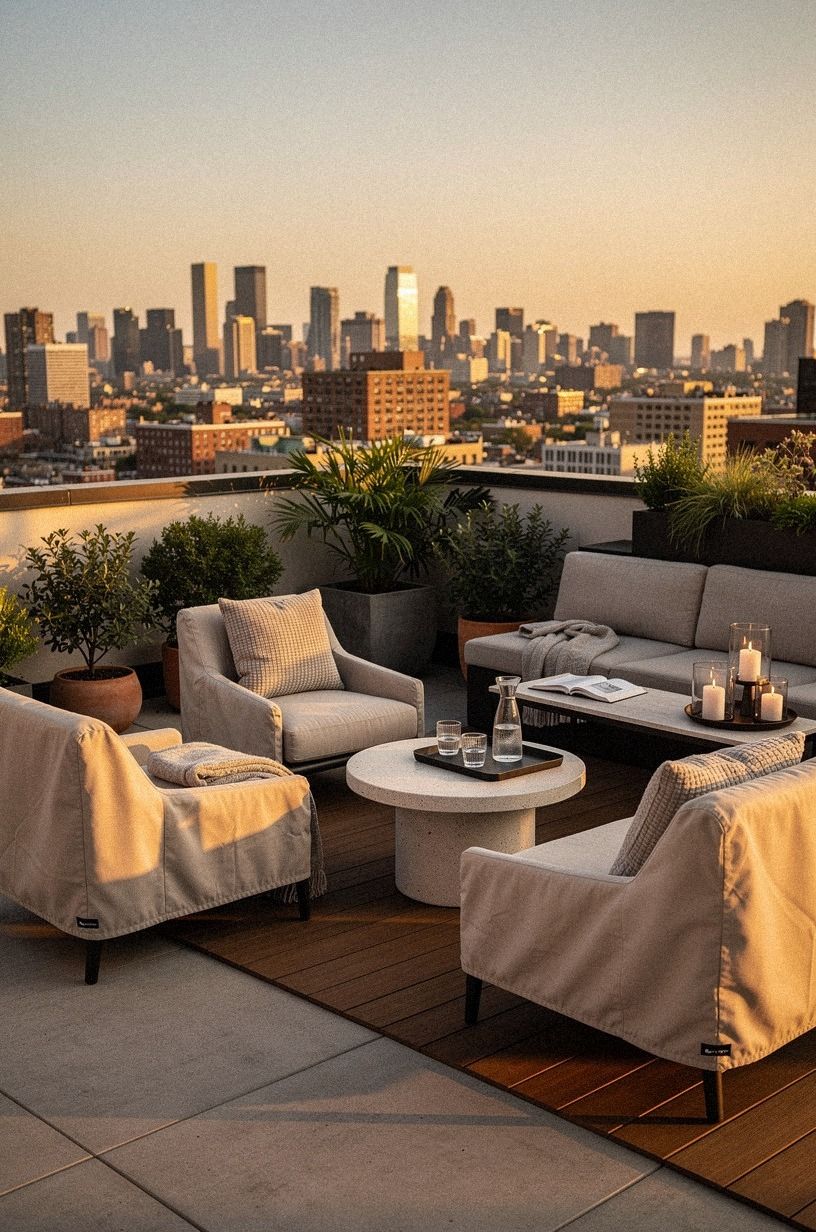
Buy fitted covers for your sofa, storage bench, and any wood-topped table you can’t easily move. Breathable polyester furniture covers protect against grime while allowing moisture to escape, which matters far more than a plastic tarp that traps condensation.
You don’t need to wrap every chair after each use. That turns a rooftop into a chore. Cover the expensive anchors, stack the small pieces, and let the durable aluminum live its life.
What a Rooftop Lounge Usually Costs
A rooftop lounge can begin with a few durable pieces, but the total changes quickly once you add a quality sofa, rug, and lighting. Use these typical US ranges as planning markers, then spend first on furniture that won’t need replacing after one rough season.
For a roof deck, put the money into the frame, fabric, and storage before decorative extras. A performance-fabric sofa typically runs $1,200 to $4,000, while a wool 9×12 rug can run $600 to $2,500.
You can add style later. Replacing sun-cracked furniture is just paying twice.
A Rule for Furniture That Lives Above the Weather
The right rooftop balance can fall between polished and slightly rough around the edges. The answer is both, but only after the practical choices are solved.
A rooftop gets hit from every direction: hard sun at noon, sideways rain, wind that changes its mind every thirty seconds, and the odd bit of city grit that lands on everything. You can’t decorate your way around that.
The most dependable furniture is not always the prettiest on day one. It’s the low aluminum chair with thick, washable cushions. It’s the teak table that gets a little silver at the edges.
It’s the storage bench that keeps your soft goods from smelling like wet pavement. Those pieces give you permission to relax, because you’re not watching the clouds like a nervous parent at a playground.
People can overcorrect and make roofs feel overly commercial. All gray metal, all hard surfaces, no softness.
That’s a mistake. Your rooftop should still invite you to linger with a drink, a book, or a friend who stays too late.
Bring in texture through Belgian flax-look outdoor cushions, a flatweave rug, and a planter with leaves that move in the wind. The movement is part of the point.
But be honest about maintenance. If you hate bringing in cushions, don’t buy twelve loose ones. If you won’t close an umbrella, don’t buy a cantilever umbrella.
Your best design is the one you’ll keep using after the novelty wears off. That’s not glamorous.
It’s what makes a rooftop lounge feel good year after year.
What People Always Want to Know
What is the best rooftop lounge furniture for a small living room?
A compact IKEA modular sofa or two low aluminum club chairs work best because they keep your sightlines open. You’ll want one shared table, not several tiny ones. A smaller space feels generous when your furniture has a job and your walkway stays clear.
Where to Buy Rooftop Lounge Furniture Pieces on a Budget?
Look at Target Threshold, IKEA, and Wayfair for outdoor-rated basics, then check Facebook Marketplace for teak or aluminum pieces. You can save a lot by buying used frames and replacing only the cushions. Avoid secondhand wicker with brittle strands.
How much does a rooftop lounge furniture makeover cost?
A simple rooftop refresh can cost about $300 to $1,200, depending on your rug, seating, and lighting. Your free moves: rearranging furniture, cleaning frames, and grouping planters. A better sofa is where costs rise, but it’s also where comfort lives.
How to Create a Rooftop Lounge on a Budget?
Yes, and you should start with the structure rather than decorative clutter. Weighted planters, a washable rug, and two stackable chairs can create a real zone for less than a full outdoor set. You’ll get more from fewer durable pieces.
Is rooftop lounge furniture worth it in a small space?
Yes, especially when your roof is your only outdoor room. A compact setup makes your home feel larger because you’re gaining a usable destination, not just square footage. Keep your sofa low and your table narrow so you don’t lose the view.
Is rooftop lounge furniture a good idea for a rental?
Yes, if you choose removable pieces and avoid drilling into the roof surface. Use freestanding privacy screens, weighted planters, and clip-on lighting. You can also borrow renter-friendly thinking from these small-space studio ideas.
Where to Start First
For a single starting point, choose a low, powder-coated aluminum sofa. Wind can’t bully a heavy frame, and every cheaper layer depends on it staying put. Pin that sofa plan for later and compare it with this West Elm versus Crate & Barrel furniture guide.