Coffee table styling ideas for hosting guests in a small living room work best when every object earns space. A 16-to-18-inch table, one clear landing zone, and layered texture can make hosting feel easy without crowding the room. The right setup looks gathered, warm, and ready for conversation.
A small table doesn’t need a dramatic arrangement. It needs a useful one. Start with the table’s shape, the sofa’s depth, and the path guests use when they sit down.
You’ll create a more welcoming room when every decorative choice supports movement, comfort, and conversation.
- Anchor the tray with one sculptural centerpiece (The One-Center Rule)
- Layer art books beneath a low ceramic bowl (Why Does Height Matter?)
- Style a split-level vignette with candleholders (The Split-Level Light Stack)
- Leave one corner clear for easy hosting (Clear Space Over More Objects)
- Contrast smoked glass with warm wood accents (Smoked Glass Over Shiny Chrome)
- Frame the tabletop with trailing greenery (The Green Frame)
- Group three objects by height and texture (The Three-Height Rule)
- Use a round tray to soften sharp edges (Round Edges Over Hard Lines)
- Display seasonal stems in a petite pitcher (Seasonal Stems in a Petite Pitcher)
- Build a conversation-ready table around coasters (The Conversation Coaster Plan)
- Echo the sofa color through tabletop ceramics (Echo Color Without Matching)
- Create breathing room around a single lantern (The Breathing-Room Lantern)
1Anchor the tray with one sculptural centerpiece (The One-Center Rule)
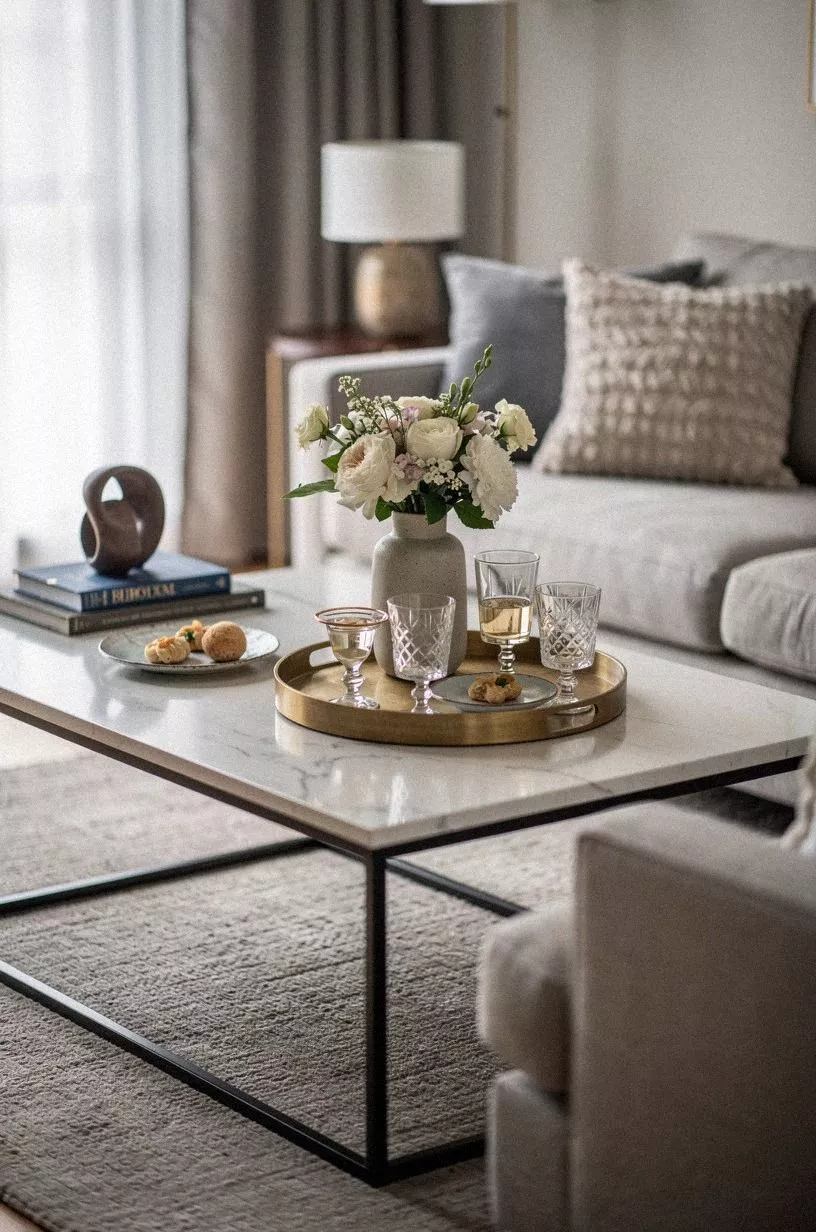
A shallow tray gives your coffee table a visual boundary, while one sculptural centerpiece keeps the arrangement from becoming a pile of small objects. Choose a cerused white oak tray with visible grain, then add a rounded stone vessel in a terracotta, olive, or muted clay tone. The eye should land on one strong shape before noticing smaller details.
A low bowl, folded 600gsm Turkish cotton napkin, and one smooth candle are enough around the centerpiece. You’ll want breathing room between each object, especially when guests need space for glasses.
Tiny ornaments don’t add much value because they’ll read as clutter from across the room. For proportion ideas, save the small living room coffee table rule.
IKEA KALLAX birch-effect storage nearby can hold extra linens, while the tray keeps the tabletop polished. If you’re styling for autumn, a rust-colored taper adds warmth without taking over the palette. It’s a simple setup, but it feels intentional the moment guests arrive.
A shallow tray from Target, often priced around $20 to $35, offers an easy starting point. The finish matters more than the label. Look for a weighty base, smooth edges, and enough width to hold a bowl without swallowing the table.
Typical cost by tier (US averages):
2Layer art books beneath a low ceramic bowl (Why Does Height Matter?)
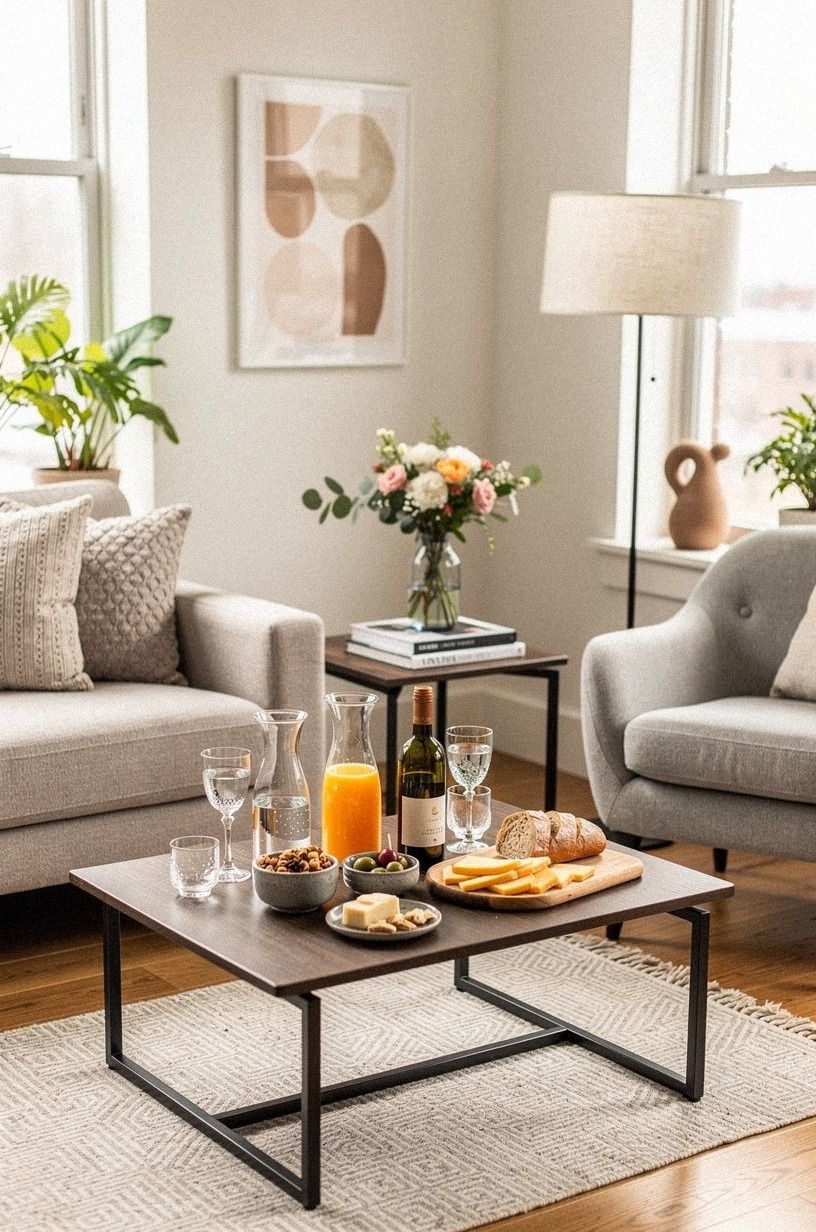
Stacking two or three art books creates a stable platform for a low ceramic bowl, especially when the table itself sits close to a sofa. Use clay, linen, and aged brass tones to keep the stack warm without making it visually heavy.
A small shagreen accent on a box or coaster holder adds tactile contrast beneath the bowl. Keep the arrangement low enough for easy conversation, and leave one side open for drinks or small plates.
3Style a split-level vignette with candleholders (The Split-Level Light Stack)
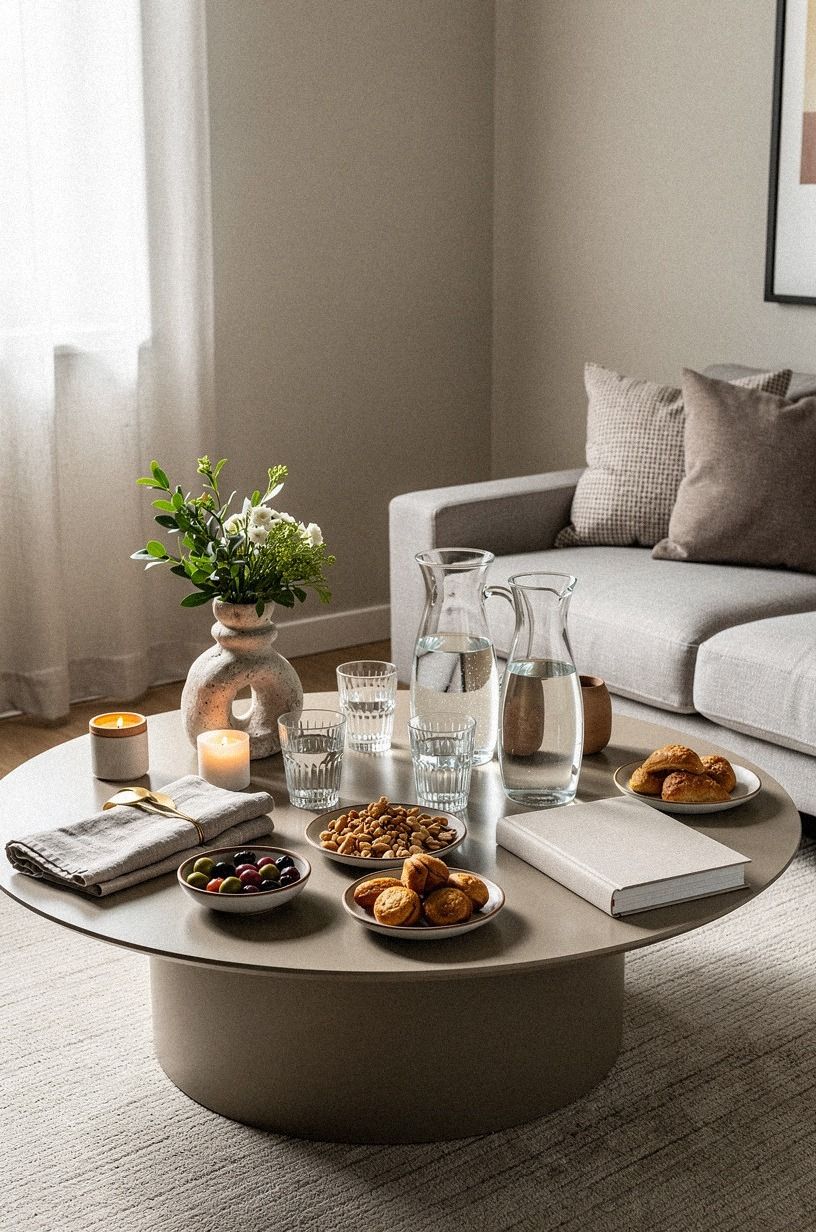
A split-level vignette gives your coffee table movement without requiring more objects. Place one short ceramic bowl beside a pair of candleholders at different heights, using plum, grey, and rose gold accents against book-matched walnut. The varied levels create a gentle rhythm that feels refined in evening light.
Choose candleholders with broad, stable bases so you’re not worrying about tipping glassware near an open flame. Rose gold works better here than a bright yellow gold because it supports the plum and grey palette without adding too much glare. A 3/4-inch solid white oak coaster can soften the darker walnut while keeping the materials connected.
A pair from CB2, often priced around $35 to $90, can supply the height difference without adding visual heaviness. Don’t use two identical candles at the same height. The room will feel more considered when one holder sits lower and the second rises gently behind it.
If you’re hosting dinner, leave the center of the tabletop open for drinks and small plates. You’ll find that guests move objects less when the arrangement sits toward one side. And if the table feels too dark, a single ivory candle can lift the whole vignette without breaking the moody palette.
For more evening atmosphere, simple fireplace details can help guests linger longer.
4Leave one corner clear for easy hosting (Clear Space Over More Objects)
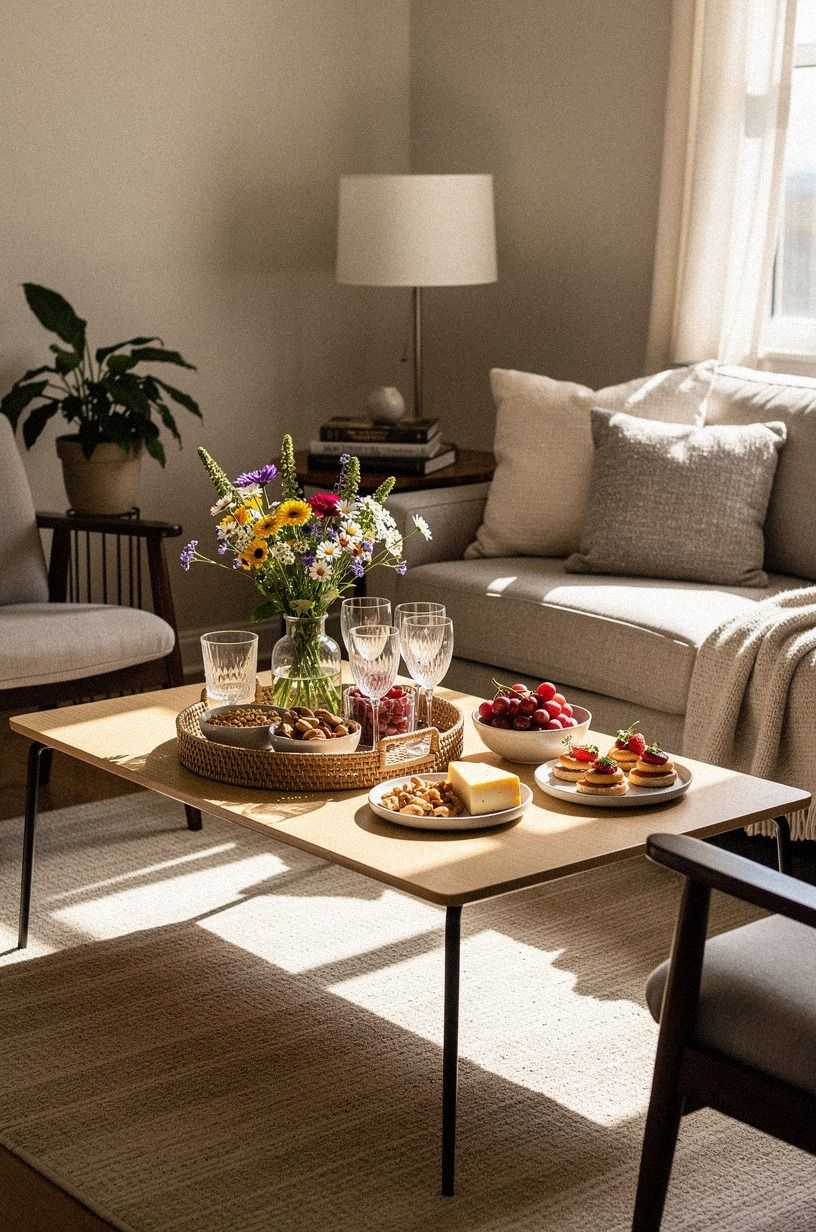
A clear corner is one of the most useful small living room hosting choices because guests need somewhere to place a phone, glass, or small plate. Keep this zone entirely open, then gather decorative pieces toward the opposite side.
A palette of navy, white, and walnut feels composed without looking formal. Nearby organic bouclé upholstery can soften the harder table surfaces and make the seating area feel more inviting.
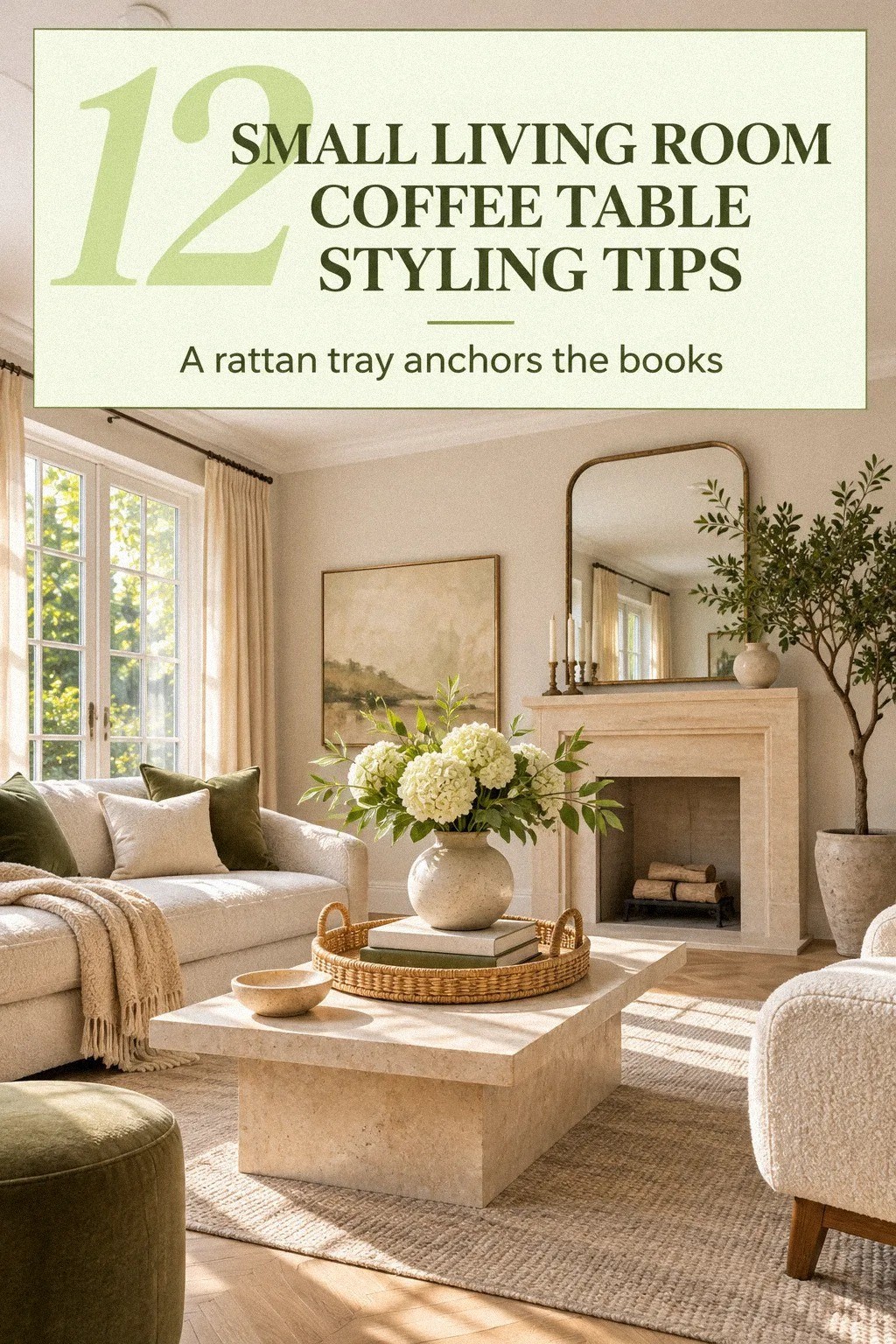
5Contrast smoked glass with warm wood accents (Smoked Glass Over Shiny Chrome)
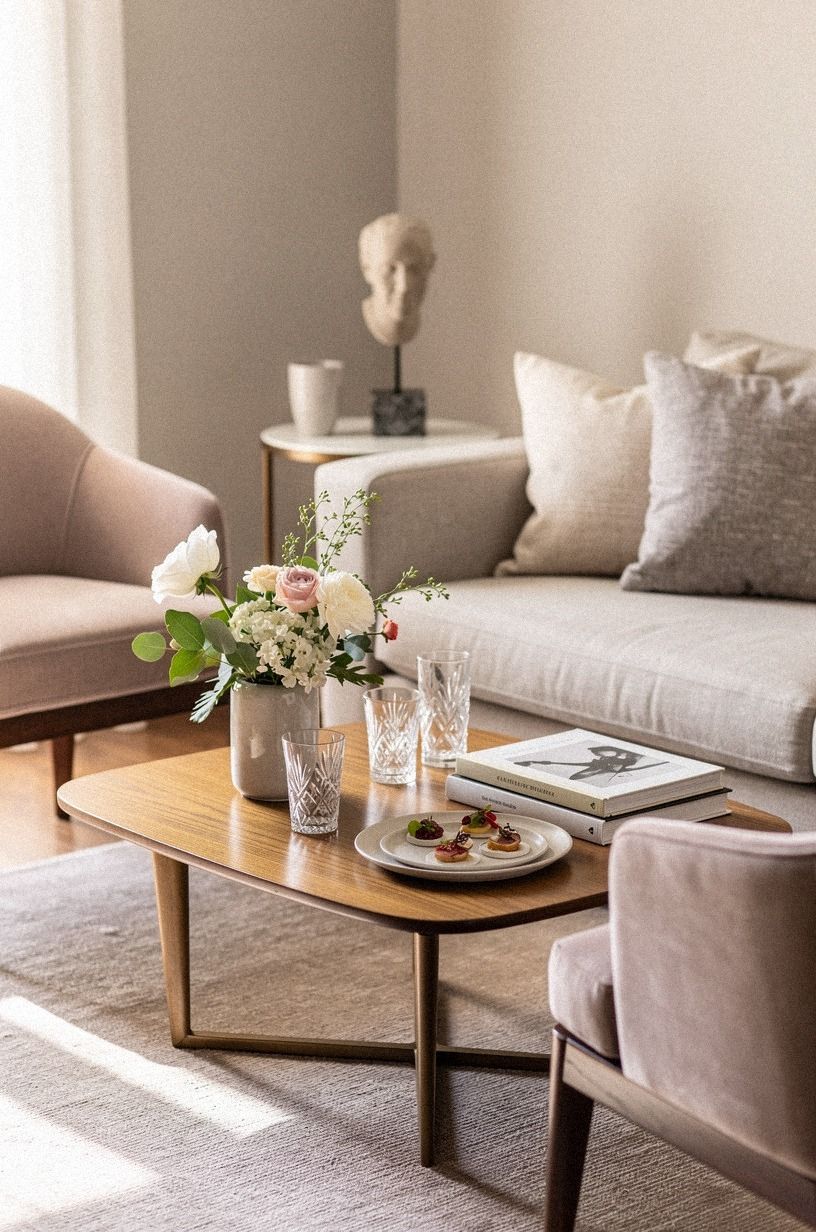
Smoked glass brings a little drama to a small room, but it needs warmer materials nearby. Pair the dark surface with a honey-toned wood bowl, an emerald ceramic vessel, and one unlacquered brass accent. The palette feels rich without becoming heavy, especially when cream upholstery reflects available daylight.
Choose unlacquered brass for a small catchall or a shallow tray beneath a candle. The finish develops a gentle patina over time, while the smoked glass keeps the overall arrangement calm. Shiny chrome would make this setting feel colder, so skip it when the goal is inviting conversation.
You can echo the palette through West Elm seating or a small side table with a warm oak finish. If your room has white trim, the contrast may feel sharper than expected. These small living room white-trim alternatives explain how deeper surrounding tones can help the tabletop feel grounded.
And don’t crowd the glass surface with pale decorations. One cream object is enough. The rest should bring wood, green, or aged metal so the table feels layered rather than washed out.
A smoked-glass tray from Pottery Barn, often around $80 to $150, works well when the rest of the room has natural fibers. The price reflects the finish, but a secondhand version can deliver the same mood for less.
6Frame the tabletop with trailing greenery (The Green Frame)
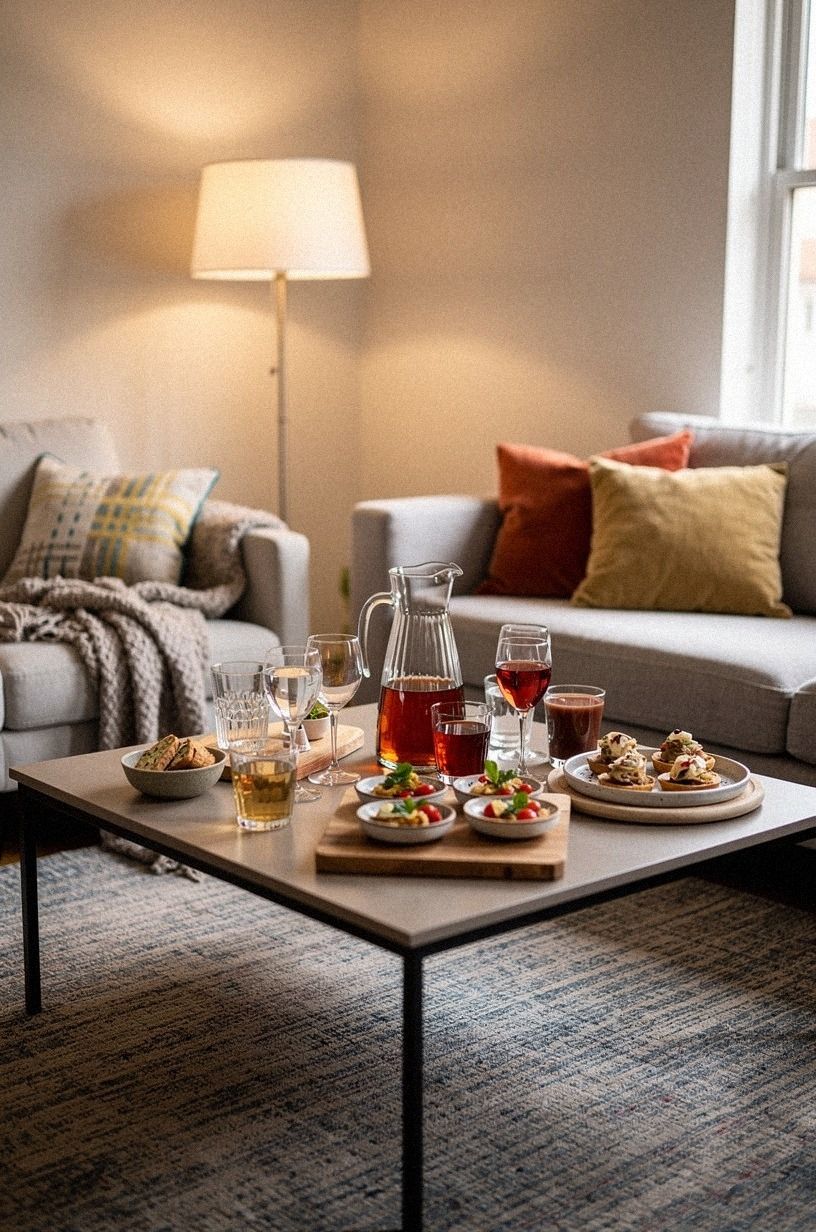
Trailing greenery can make a rectangular coffee table feel softer, particularly when the sofa and table have strong horizontal lines. Place one compact plant in a low vessel, then allow a few stems to fall toward the edge. Forest green, rust, and natural oak create an earthy palette that suits a lived-in room.
Use deep-pile mohair velvet on nearby pillows or an ottoman to repeat the softness without copying the plant color. A natural oak vessel adds grain, while a shallow terracotta pot gives the arrangement weight. You’ll want the greenery to stay low enough that guests can still see one another across the table.
For an autumn gathering, dried rust stems offer texture without daily watering. Fresh greenery can work too, but it shouldn’t shed leaves into serving dishes. If you’re styling beside a television, keep the tallest branch below the screen’s lower edge so the room remains visually calm.
The result is organic, welcoming, and practical.
A small living room won’t benefit from a jungle of pots. One trailing plant creates the frame; extra plants usually steal the table’s usable surface.
A Terrain potted plant around $35 to $75 can supply the look, though a local nursery may offer better value. Choose a plant with flexible stems and a compact root ball. The shape matters more than botanical rarity.
7Group three objects by height and texture (The Three-Height Rule)
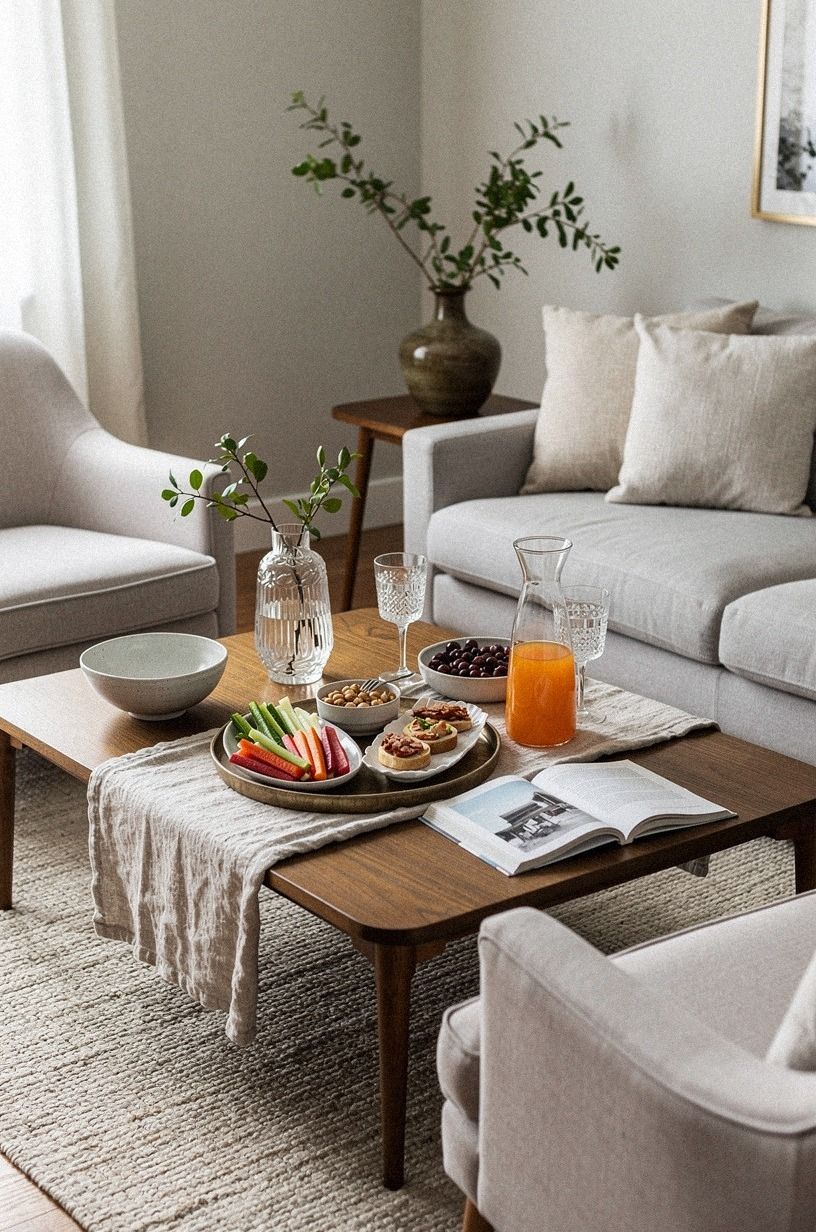
Three objects can feel complete when they vary in height, finish, and visual weight. Start with a low dusty-rose bowl, add a medium charcoal vessel, then finish with a narrow brass candlestick. The combination works because each object occupies a different visual register.
Use hand-applied Venetian plaster on a nearby wall or vessel to introduce a soft, irregular surface. The charcoal piece can be matte, while the brass adds a small flash of light. Your arrangement should include one object that feels heavy, one that feels delicate, and one that sits between those extremes.
A 9-by-12 rug can help anchor the seating area when the room allows it, with the front legs of the seating placed on the rug. You’ll notice that the coffee table feels more connected when the surrounding furniture shares a common base. This IKEA side table for awkward 18-inch gaps can help balance a compact layout nearby.
Don’t force symmetry. A perfect triangle may look stiff, while a slightly offset grouping feels more relaxed. And if one object disappears from the sofa angle, move it forward rather than adding another piece.
A Schoolhouse brass candlestick near $28 to $45 can bring the narrow vertical element. Pair it with a thrifted bowl and a secondhand vessel. The mix will feel more personal than a full matching set.
8Use a round tray to soften sharp edges (Round Edges Over Hard Lines)
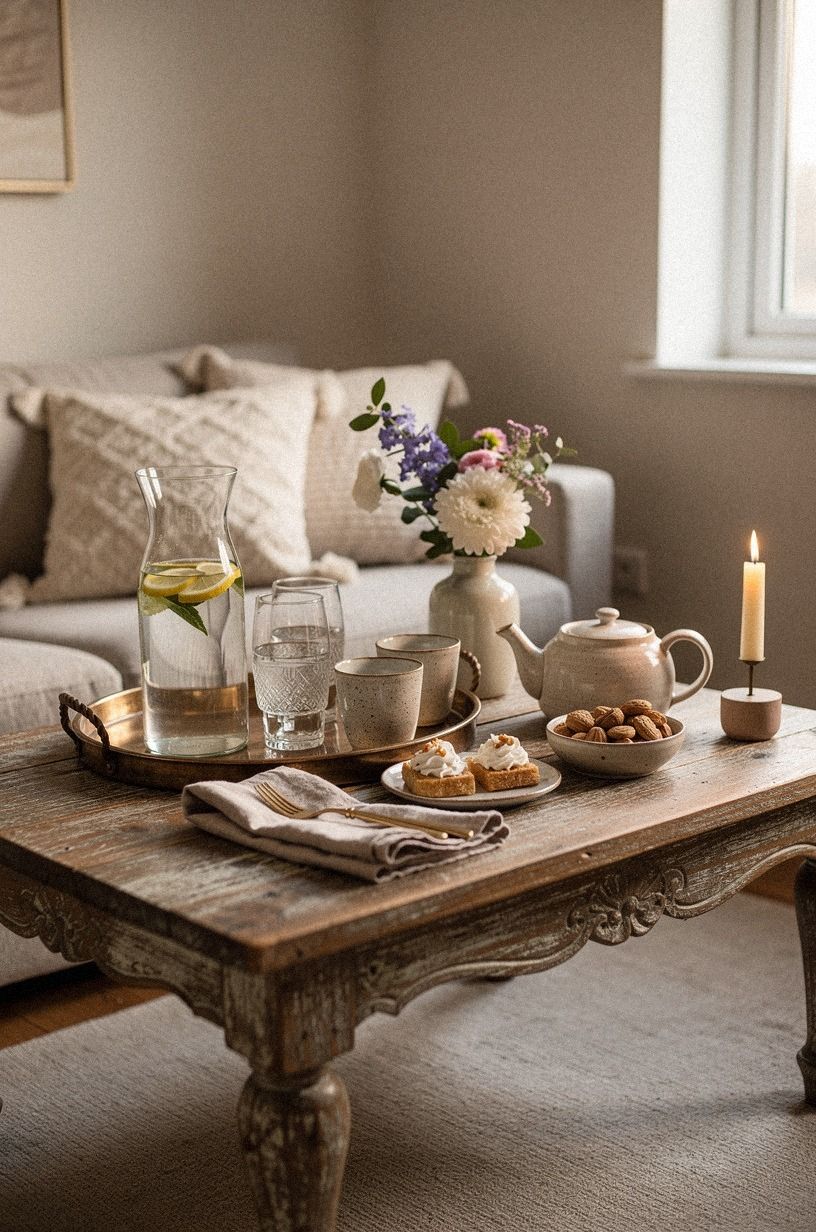
A round tray breaks up the straight lines of a small coffee table, sofa, and rug. Choose warm white, camel, or black accents to keep the arrangement flexible across seasons.
Reclaimed weathered teak adds grain and a relaxed finish, making the tray feel useful rather than overly formal. Keep the center lightly edited so guests still have room for glasses.
9Display seasonal stems in a petite pitcher (Seasonal Stems in a Petite Pitcher)
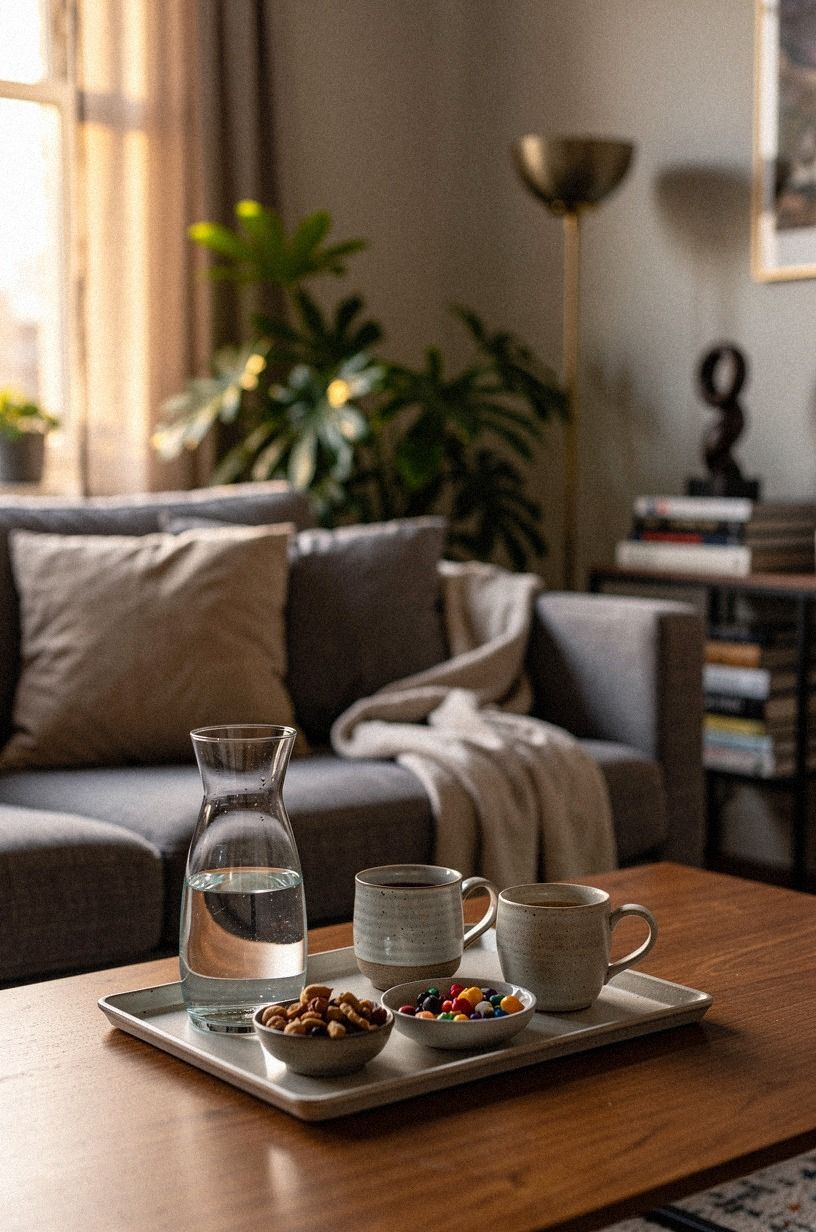
A petite pitcher gives seasonal stems a relaxed shape without taking over a small living room. Use midnight blue, copper, and ivory around a washed Belgian linen palette. A few curved stems in a narrow vessel feel more natural than a dense bouquet that blocks the view across the table.
Choose Farrow & Ball Hague Blue No.30 for a nearby cabinet or painted accent, then repeat the shade in one ceramic detail. Copper brings warmth, while ivory keeps the display from becoming too dark. You’ll want the pitcher to stay below eye level when seated, especially when guests are facing one another.
Dry branches can last through an entire season, while fresh stems offer scent and movement. Keep water away from art books and unfinished wood by using a glazed interior. A small tray beneath the pitcher adds protection without making the display bulky.
If you’re decorating for winter, a few evergreen stems can work with linen and copper. For a holiday variation, see these Christmas coffee table decorating ideas. It’s a gentle seasonal cue, not a full themed display.
A H&M Home stoneware pitcher around $25 to $50 offers a useful narrow profile. Look for a handle that doesn’t extend too far over the table edge. That small detail makes serving and rearranging easier.
10Build a conversation-ready table around coasters (The Conversation Coaster Plan)
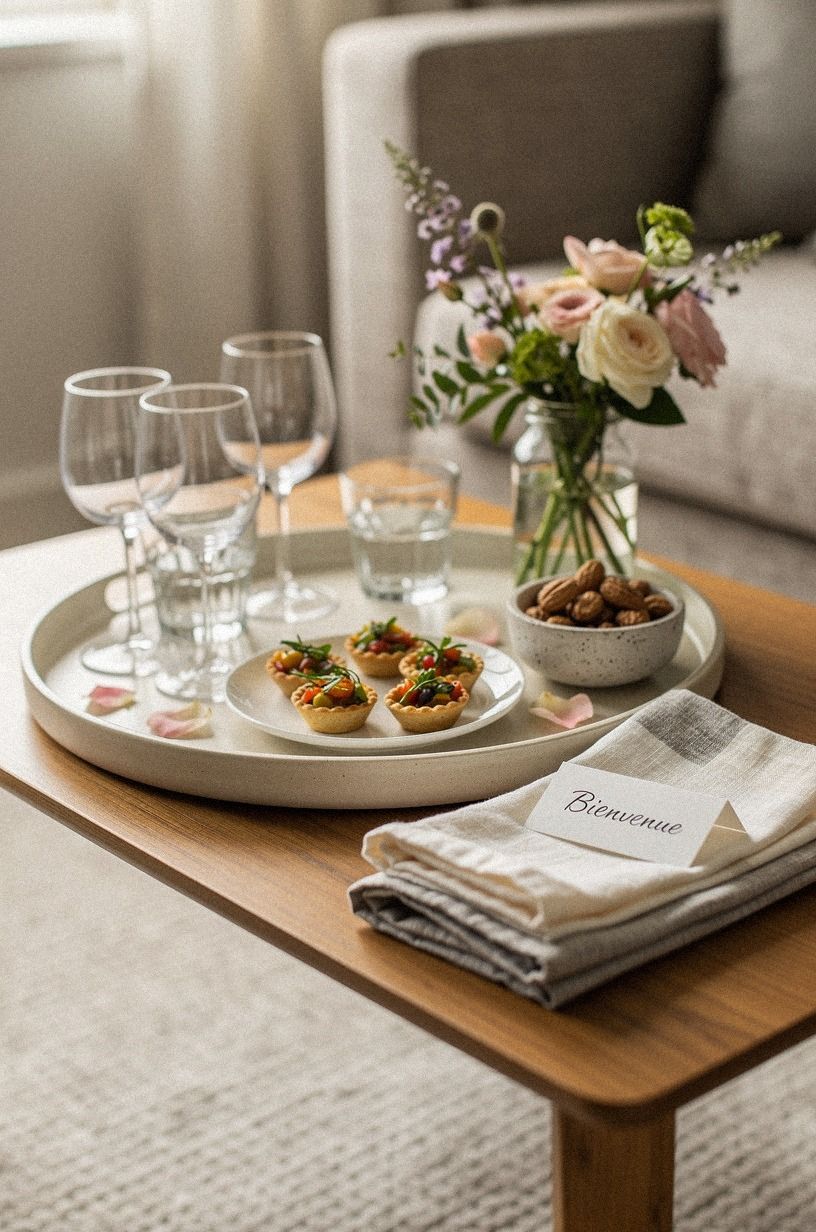
Coasters can become part of the arrangement when their material relates to the room. Sage green, warm cream, and natural wood create a gentle palette that feels ready for casual hosting.
Choose cerused white oak coasters or a small holder with visible grain. Set them near the open seating side of the table so guests can reach them without moving decorative objects.
11Echo the sofa color through tabletop ceramics (Echo Color Without Matching)
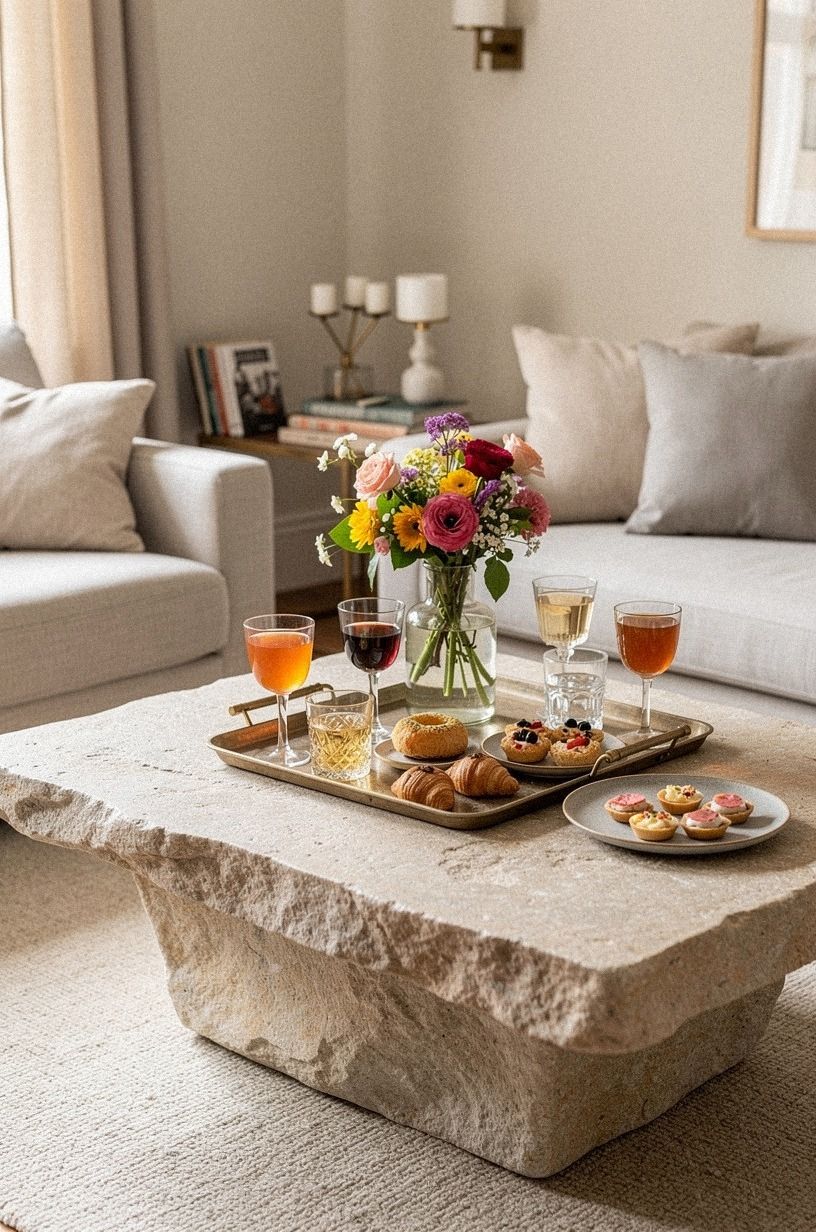
Repeating the sofa color through ceramics creates connection without turning the room into a matching set. For a terracotta, stone, and olive palette, use one terracotta bowl, one olive-green cup, and a pale stone object with a softly irregular edge. The arrangement works best when the shades are related but not identical.
Shagreen accents can add texture through a small box or coaster holder, while a smooth ceramic bowl keeps the composition from feeling too busy. You’ll want the largest object closest to the sofa and the smallest object nearest the open edge, creating a gradual visual slope.
A sofa depth of 35 to 40 inches can make a compact room feel substantial, but the coffee table should still leave a comfortable path around the seating. If the table occupies roughly two-thirds of the sofa length, the proportions usually feel balanced. These small living room ideas for colder-feeling layouts can help with the surrounding furniture plan.
Don’t match the sofa fabric exactly. A ceramic version of the same color feels more collected, while an identical textile shade can look staged. And if the palette already has strong terracotta, let olive carry the quieter accent.
A Heath Ceramics bowl around $45 to $85 adds handmade variation without excessive ornament. The irregular glaze makes a single piece feel special. One strong ceramic usually carries more atmosphere than several inexpensive duplicates.
12Create breathing room around a single lantern (The Breathing-Room Lantern)
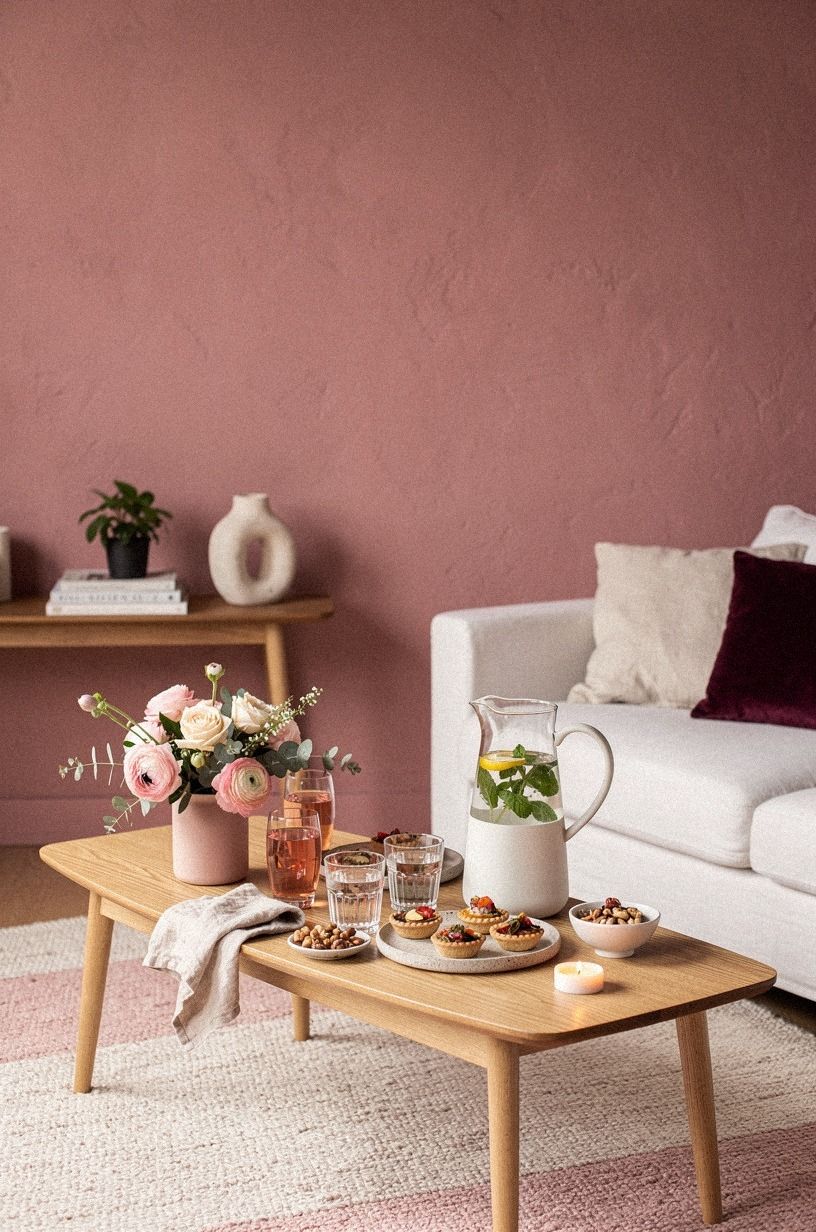
A single lantern can give a small coffee table a focal point without filling the surface. Choose clay, linen, and aged brass tones for a warm arrangement that feels relaxed around guests.
A lantern with book-matched walnut nearby can connect the tabletop to surrounding furniture. Keep the light source slightly off-center and leave a clear landing zone for drinks.
The Small-Room Hosting Rule Worth Keeping
Small-room styling works when the table supports conversation instead of competing with it. A coffee table can carry a tray, books, greenery, ceramics, and candlelight, but every object should leave a clear path for a glass or plate. That practical test matters more than a perfectly symmetrical arrangement.
The strongest arrangements also repeat the room’s existing materials. Cerused oak can connect with a wood frame, aged brass can echo a lamp, and olive ceramic can pull color from a pillow.
You don’t need every surface to match. A room feels more settled when related textures appear at different scales.
Paint can help establish the background. Farrow & Ball Studio Green offers a deep, grounded mood, while Benjamin Moore Chestertown Brown HC-68 brings a warmer earth tone. Sample pots often cost around $8 to $12, and a full gallon can range from $45 to $80.
The right shade depends on daylight, trim, and surrounding upholstery.
If the room feels flat, consider Sherwin-Williams Evergreen Fog for a softer green direction. If it feels too dark, use ivory linen, pale oak, or brushed nickel to create lift.
These choices don’t require a full redesign. A painted cabinet, small wall, or nearby alcove can shift the atmosphere.
Scale deserves attention too. A coffee table around 16 to 18 inches tall usually sits comfortably with a sofa, while a rug sized 8 by 10 or 9 by 12 can give the seating group a clear boundary when the room allows it. If the rug is too small, the table may look stranded.
If the tabletop is too full, guests will move objects before sitting down.
The best hosting setup usually has one hero object, one tactile layer, and one useful zone. That formula leaves space for real life, which is where a warm room gets its character. A polished table can still feel relaxed when the arrangement gives people permission to use it.
For another proportion check, revisit the coffee table rule for small living room proportions. A second look often reveals that removing one object creates more impact than adding another.
Seasonal styling can remain subtle. The Christmas coffee table decorating ideas collection works best when one seasonal color or natural material joins the existing room rather than replacing it.
A Few Things Worth Answering
What is the best coffee table styling setup for a small living room?
The best setup combines one low tray, one sculptural centerpiece, and a clear area for drinks. A round tray with a low bowl works particularly well because it softens sharp edges and keeps objects contained. IKEA and Article offer useful compact proportions for small seating areas.
Where can you buy coffee table styling pieces on a budget?
IKEA, Wayfair, and Target carry accessible trays, bowls, candleholders, and baskets. Secondhand shopping can uncover solid wood trays and aged brass pieces through Facebook Marketplace or local thrift stores. Look for durable finishes and useful shapes rather than matching collections.
How much does a coffee table styling makeover cost?
A coffee table refresh can cost about $100 to $300 when the table already exists and a few objects need replacing. Free materials include books, bowls, folded linens, and greenery from an existing arrangement. A larger room furnishing project can reach the budget ranges shown above.
Can you create coffee table styling ideas on a budget?
Yes, and the easiest route starts with three free changes: clear half the surface, group similar objects, and move one existing bowl onto a tray. Low-cost texture can come from linen, thrifted wood, or a single candleholder instead of a full matching set.
Is coffee table styling worth it in a small space?
Yes, because a small table benefits from editing more than a large one does. Clear visual zones help guests find space for drinks without shifting the whole arrangement. Keep one-third of the tabletop open, then place the strongest object slightly off-center.
Is coffee table styling a good idea for a rental?
Yes. Use removable trays, freestanding lanterns, peel-and-stick accents, and tension-mounted storage rather than permanent changes.
No-damage styling can still feel layered when materials repeat through ceramics, textiles, and wood. Keep candles in stable vessels and protect rental surfaces with coasters.
Which coffee table shape works best for hosting guests?
A round or softly oval table can make circulation easier because there are fewer sharp corners in a tight seating area. Rounded edges also create a gentler contrast with rectangular sofas, rugs, and media consoles. Choose a size that leaves a comfortable walking path around the seating.
How many decorative objects should stay on a small coffee table?
Three to five objects usually provide enough visual interest without crowding the usable surface. One-third open space is a helpful starting point, especially when guests will carry drinks or plates. If the table looks busy from the sofa, remove the smallest item first.
Where to Start First
Start with the round tray. It gives every small object a boundary, leaves useful space for guests, and softens the hard lines that make compact rooms feel busy. Pin the coffee table rule for lodge rooms for the next hosting reset.
Then remove one object before guests arrive. The table will feel calmer, more generous, and easier to use.