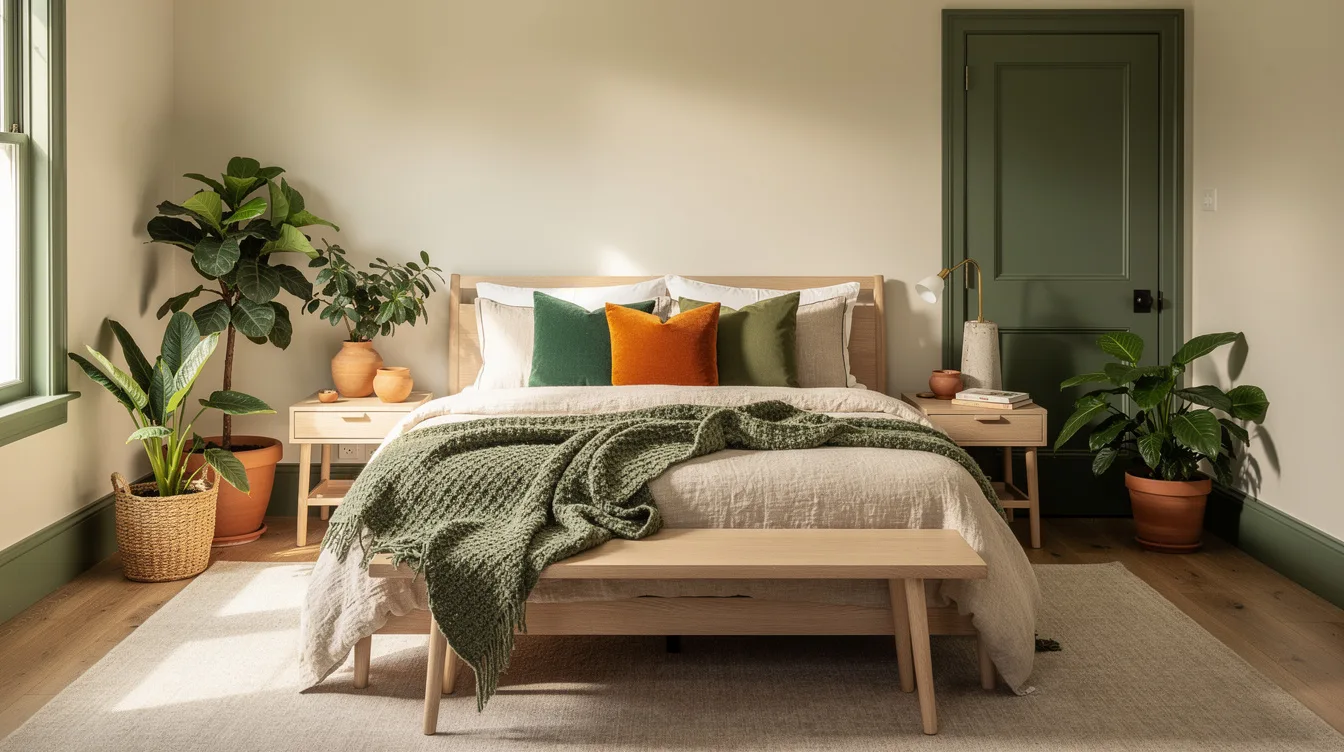
The trim is only 3 1/4 inches high, but it can determine the entire mood of a bedroom. Green on baseboards, door casings, and window trim gives pale walls an architectural frame, especially when the color is a muted sage or gray-green.
The safest starting point is green against warm ivory, with the ceiling kept pale. Pink walls and green woodwork create a gentler, more expressive pairing when both colors stay dusty rather than bright.
The key is proportion: decide how much woodwork the room can carry before you reach for the paintbrush.
Sample Sage Against Warm Ivory
Start with a muted green on the architectural edges and a pale wall color that keeps the bedroom restful. Sage green or a soft gray-green works especially well beside warm ivory because the contrast feels intentional without making the room feel fully green.
Buy a sample pot from Home Depot and place it beside the actual flooring, curtains, and bedding. A typical sample costs about $6 to $10, and that small expense can prevent an expensive repaint.
Check the color in daylight and beside a bedside lamp. Green can shift toward gray, yellow, or blue depending on the light, so a color that looks calm at noon may feel much stronger at night.
Repeat Green Across Every Edge
Use the same green on the baseboards, door casings, and window trim so the room has a clear architectural line. Green woodwork looks more deliberate when it continues around the room instead of appearing as one isolated painted detail.
For a softer result, leave the ceiling pale and keep the walls in warm ivory. My firm preference is to paint the bedroom door green when the trim is substantial, since the door gives the color enough visual weight.
Keep the finish consistent across the trim, using satin on the door casing and baseboards for practical durability. A typical gallon of interior trim paint may cost around $35 to $60 at Lowe’s, depending on the formula.
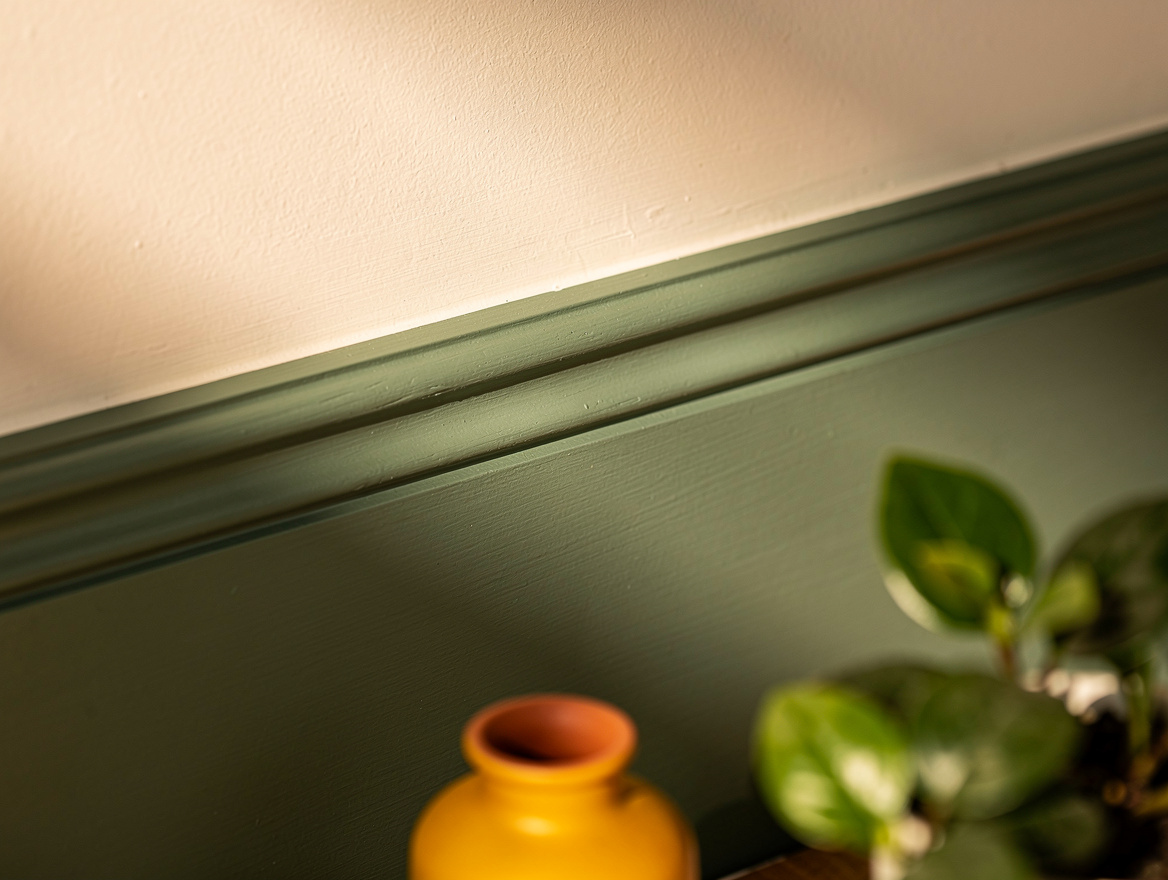
Match Trim Width to the Room
Choose the trim profile before choosing the exact paint color. A modest baseboard around 3 1/4 inches high is a practical starting point for a small bedroom, while a more substantial 5 1/4-inch baseboard makes the green read as a stronger design feature.
For door and window casings, begin around 2 1/4 to 3 1/2 inches wide. Use the narrower end with simple modern architecture and the wider end when the room already has deeper moldings or traditional details.
At Wayfair, compare the proportions of a flat-profile casing with a more shaped baseboard before ordering. My opinion is simple: green trim looks polished when its width matches the room, and fussy trim in a small bedroom quickly feels crowded.
Carry the Color Onto the Door
Painting the bedroom door green is the easiest way to make pale walls feel connected to the trim. A muted olive-green door can give a plain room a country-house character, while a cool gray-green door feels cleaner with pale oak and white bedding.
Use a small brush for the edges and a short-nap roller for the broad panels. A typical door may need two coats, so plan around $20 to $40 for a quality roller, angled brush, and painter’s tape from Ace Hardware.
Skip the door color when the room already has a strong patterned floor or busy curtains. In that situation, green on the casing and baseboards gives you enough structure without asking the doorway to become the focal point.
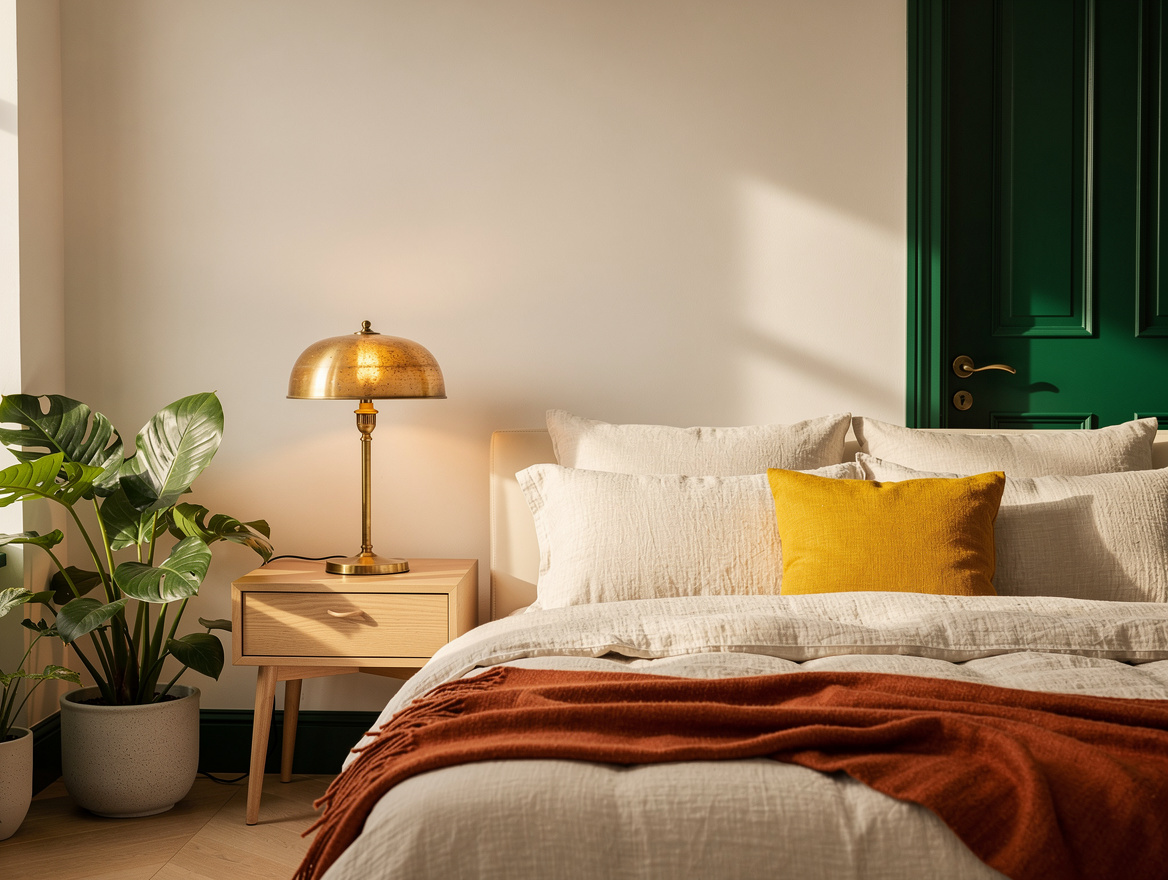
Balance Green With Quiet Materials
Let the trim carry the color while the furnishings repeat its mood rather than its exact shade. Oatmeal linen, pale oak, cream bedding, and one aged-brass lamp create a bedroom that feels layered without turning every surface green.
Pink walls with green woodwork are another established pairing, especially when the pink is dusty and the green is muted. If you choose pale pink walls, keep the accessories cream or dark wood instead of adding more pink around the bed.
For a contemporary scheme, pair the trim with a simple white duvet and one green textile. Walmart and Target both make it easy to test that restrained combination without committing to a complete bedding replacement.
Set a Practical Materials Budget
For an existing bedroom with sound trim, a realistic planning allowance is about $100 to $180 for paint, sample pots, brushes, tape, and basic prep supplies. That range is a budget estimate rather than a verified product quote, and delivery or damaged surfaces can raise it.
If the room needs new casing or baseboard, allow roughly $250 to $500 for materials before installation. Primed wood trim from The Home Depot or Lowe’s can make the project look intentional, but replacing sound molding solely for color is rarely worth the disruption.
Spend first on samples and surface preparation. A smooth, clean painted baseboard will make an affordable color scheme look considered, while premium paint cannot hide cracked caulk or uneven edges.
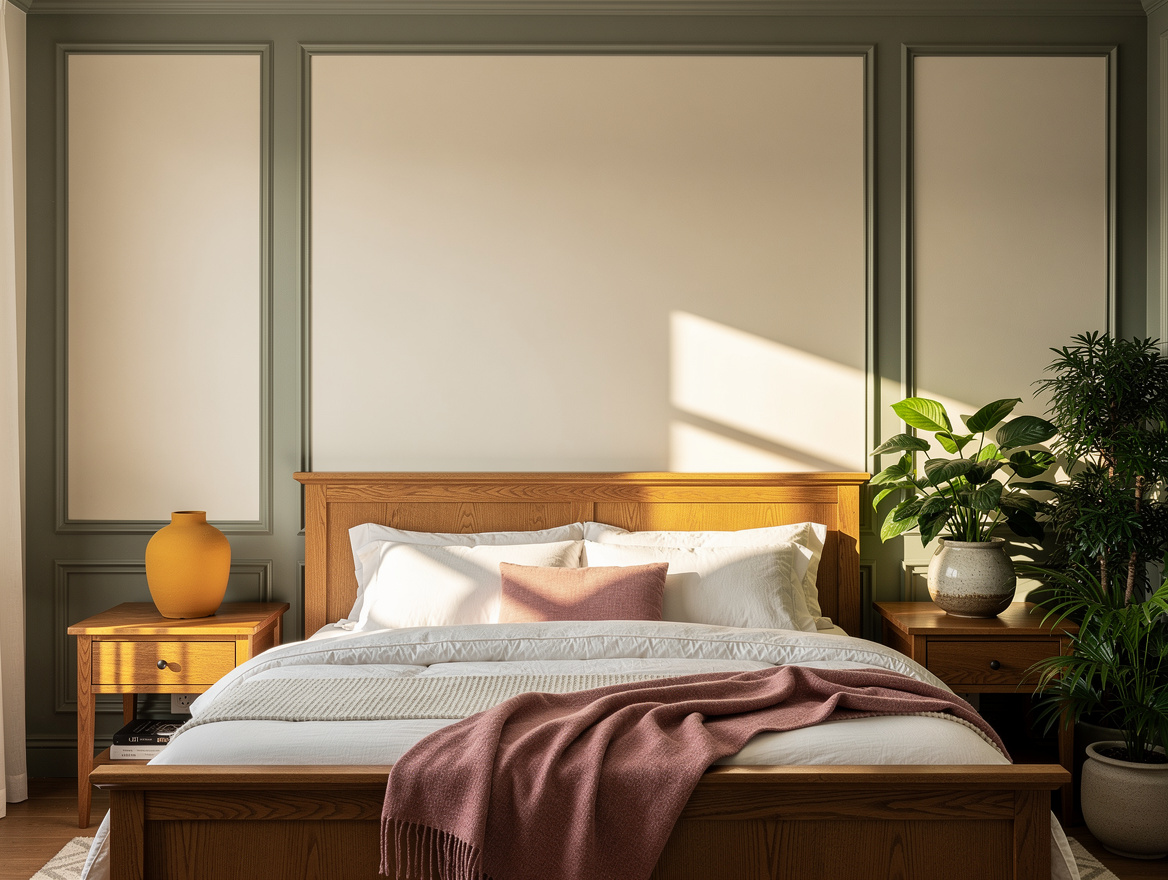
Begin with one sample beside the window trim and the bedside lamp, then test the same green on the door before committing to the whole room. Once the light and proportions feel right, let the trim provide the color and keep the rest of the bedroom quiet.
Mia Carter writes about small-space living and budget home makeovers. She has restyled three rentals and tests most ideas in her own 45 sqm flat.