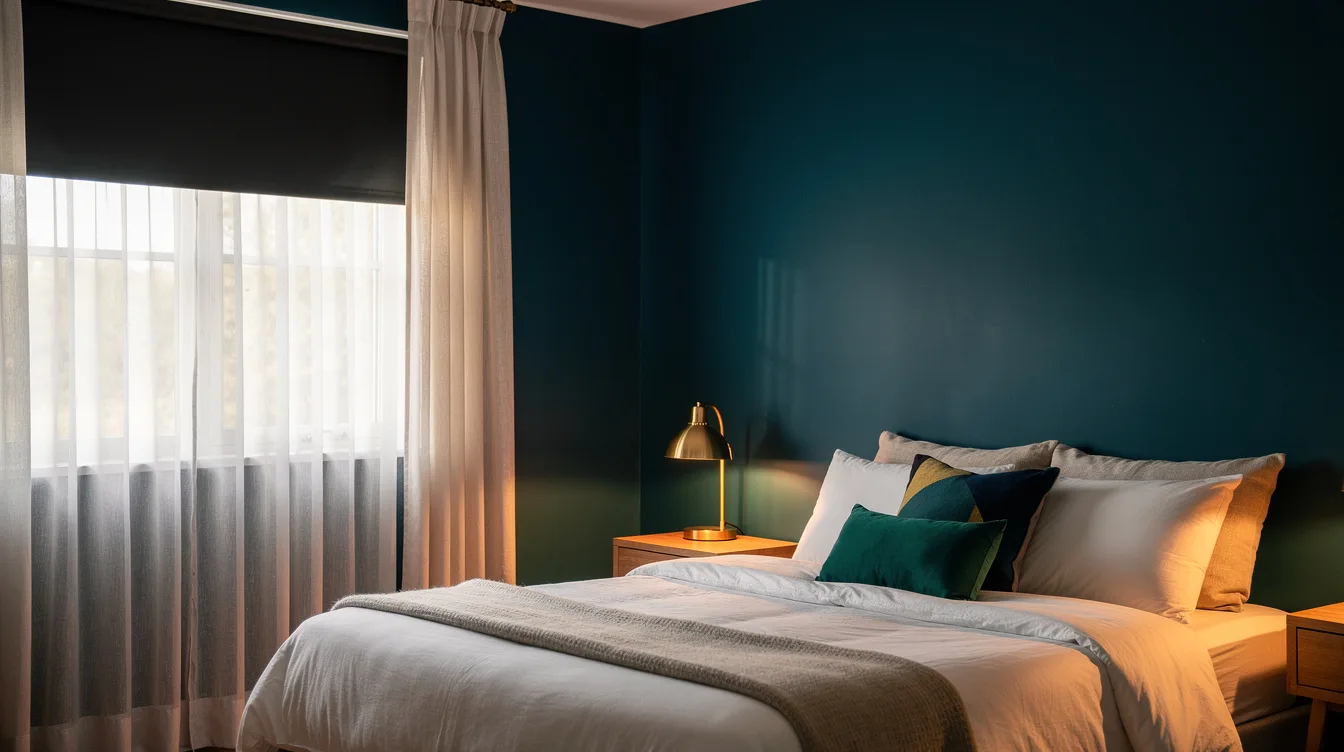
A bedroom window about 34 inches wide can look calm in the morning and still leak a harsh strip of sun at bedtime. The fix is rarely a darker fabric alone.
Choose the arrangement before shopping: one layer for soft daytime light and another for true nighttime darkness. If bedside light means a reading lamp, keep it independent from the window treatment.
Layer Daylight Before You Block It
The smartest bedroom setup uses two independently adjustable layers. A light-filtering cellular shade can soften daylight during the day, while a separate blackout layer closes when sleep matters.
This is the arrangement I would choose first for a polished bedroom. IKEA recommends pairing blackout window treatments with sheer or light-filtering coverings because one fully closed blackout shade cannot also let soft daylight through the same glass.
Pair a Blackout Roller With Sheers
A blackout roller shade plus sheer curtains gives you the most flexible morning setup. Raise the roller after waking, then leave the sheers closed to keep the bedroom private while daylight stays gentle around the bed.
The roller needs strong edge coverage for nighttime darkness, so measure the window carefully and consider an outside mount when the frame allows it. This is the best-looking choice when you want practical sleep control without making the window feel heavy.
A budget starting point is the IKEA FÖNSTERBLAD, listed at $19.99 for a 23-by-61-inch size. Treat that price as a size-specific benchmark, since dimensions and availability can change.
Use Cellular Shades for Diffuse Light
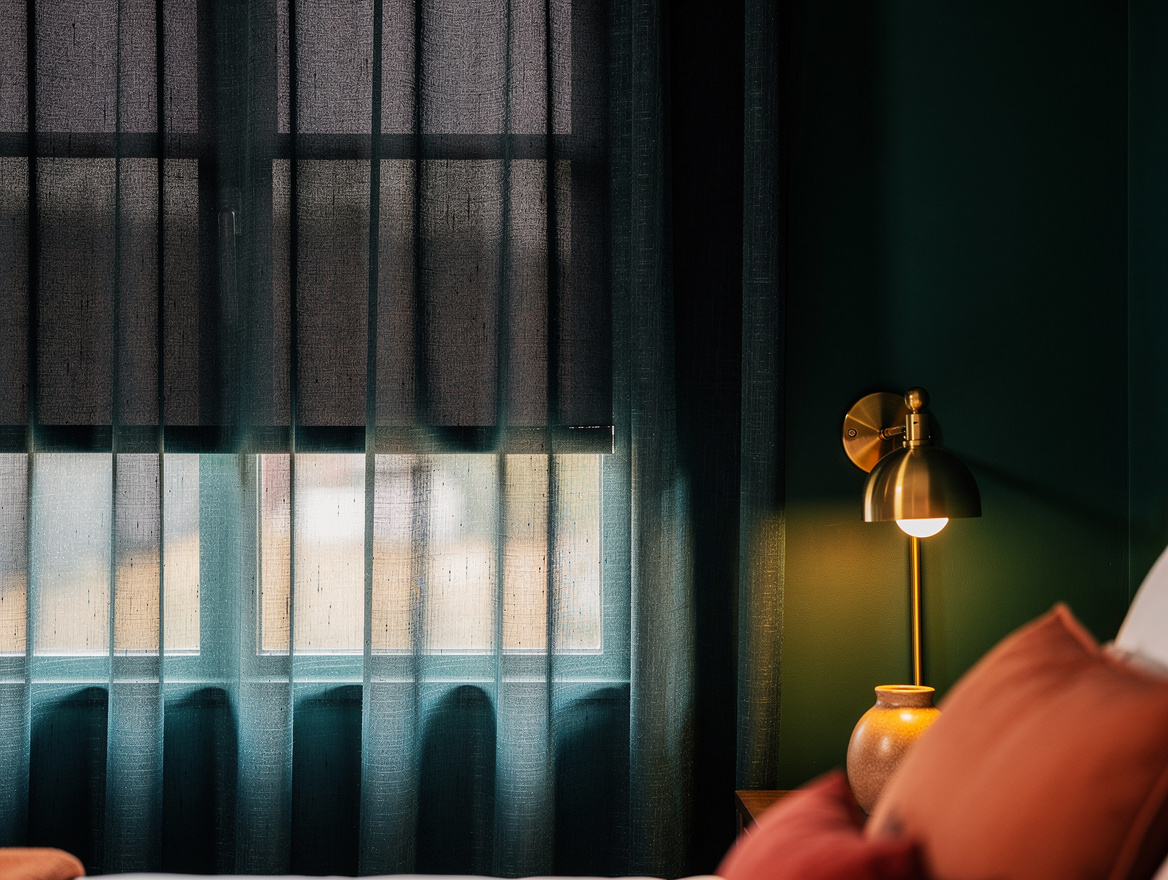
If you want privacy during the day, choose a light-filtering cellular shade and add blackout curtains for nighttime. The honeycomb construction spreads daylight across the room instead of creating a sharp rectangle of sun beside the bed.
The IKEA HOPPVALS is a practical daytime layer, made from 100% recycled polyester and listed at $39.99 for a 34-by-64-inch size. It filters light, but it is not a blackout substitute, so the curtain layer still carries the nighttime job.
Leave enough wall space for the curtain track and panels to open beyond the glass. Otherwise, the fabric can crowd the window and make the room feel narrower.
Choose Blackout Fabric for Sleep
A blackout cellular shade is a simple solution when you want one treatment that opens for daylight and closes for sleep. IKEA TRIPPEVALS uses 100% recycled-polyester fabric with an aluminum top rail, and a 34-inch-wide by 76¾-inch-high example is listed at $69.99.
That setup is relatively affordable, but it has one firm limitation: when the shade is lowered, the room is dark, not softly lit. Light can also leak around the edges, especially with an inside mount and a shallow frame.
For a custom option, SelectBlinds lists a cordless blackout cellular model in widths from 13 to 84 inches and heights from 12 to 84 inches. Its price requires a configuration quote, so confirm the exact size before comparing it with ready-made shades.
Seal the Edges Against Streetlight
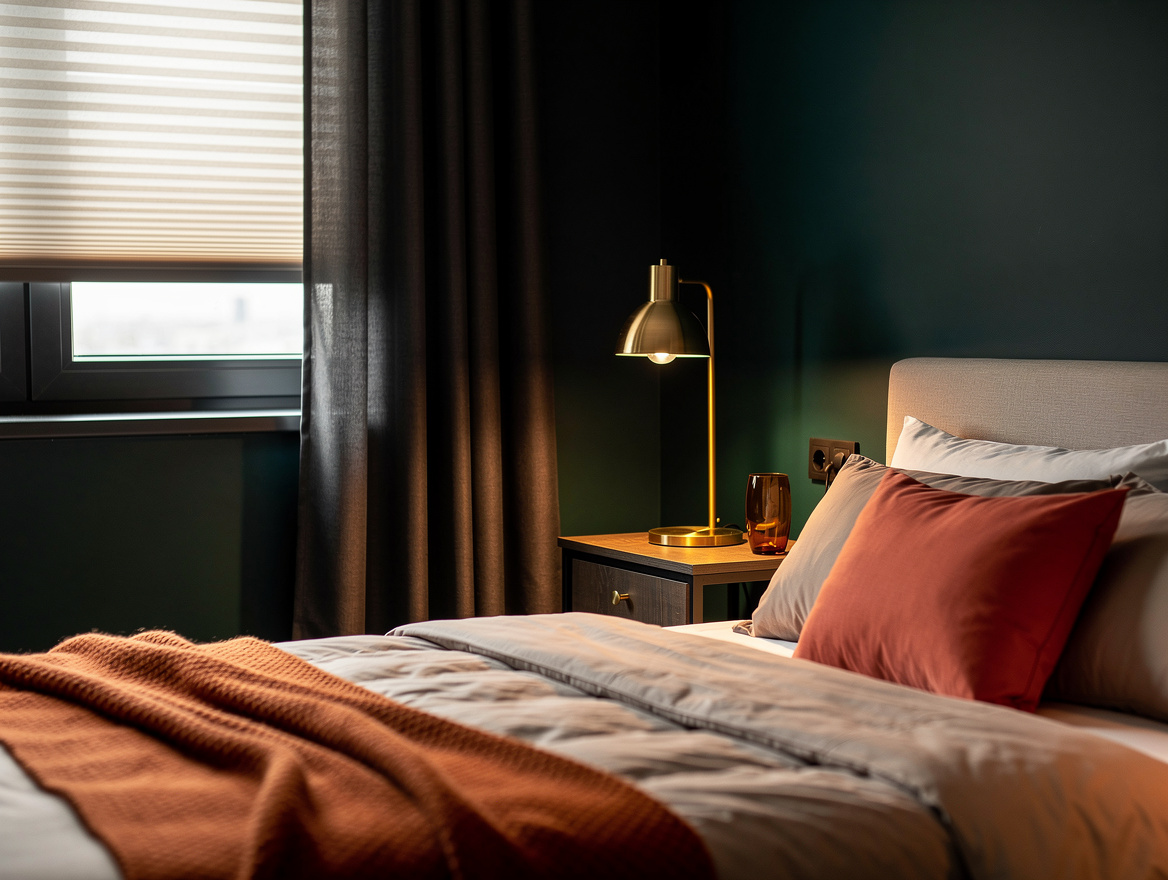
Strong early sun and streetlights call for a blackout roller with a cassette and side channels. The fabric blocks transmitted light, while the frame addresses the bright gaps that often appear along the sides and bottom.
This is the right move for day sleepers or bedrooms facing a bright road. The tradeoff is visible hardware and a slightly smaller open window area, but reliable darkness is worth it when sleep is the priority.
Do not assume a dark-colored shade will solve the problem. Construction and perimeter coverage matter more than the shade’s surface color.
Keep the Reading Lamp Independent
Sometimes bedside light means a reading lamp, not daylight. In that case, keep the blackout shade closed at the window and control the lamp separately with its own switch, cord, or smart plug.
A dark window does not make the bedside area unusable. Place the lamp where its light falls on the book instead of directly into your eyes, then keep the shade arrangement focused on privacy and sleep.
This small distinction prevents an unnecessary compromise. You can have a genuinely dark window and a comfortable reading corner at the same time.
Measure the Bedside Clearance First
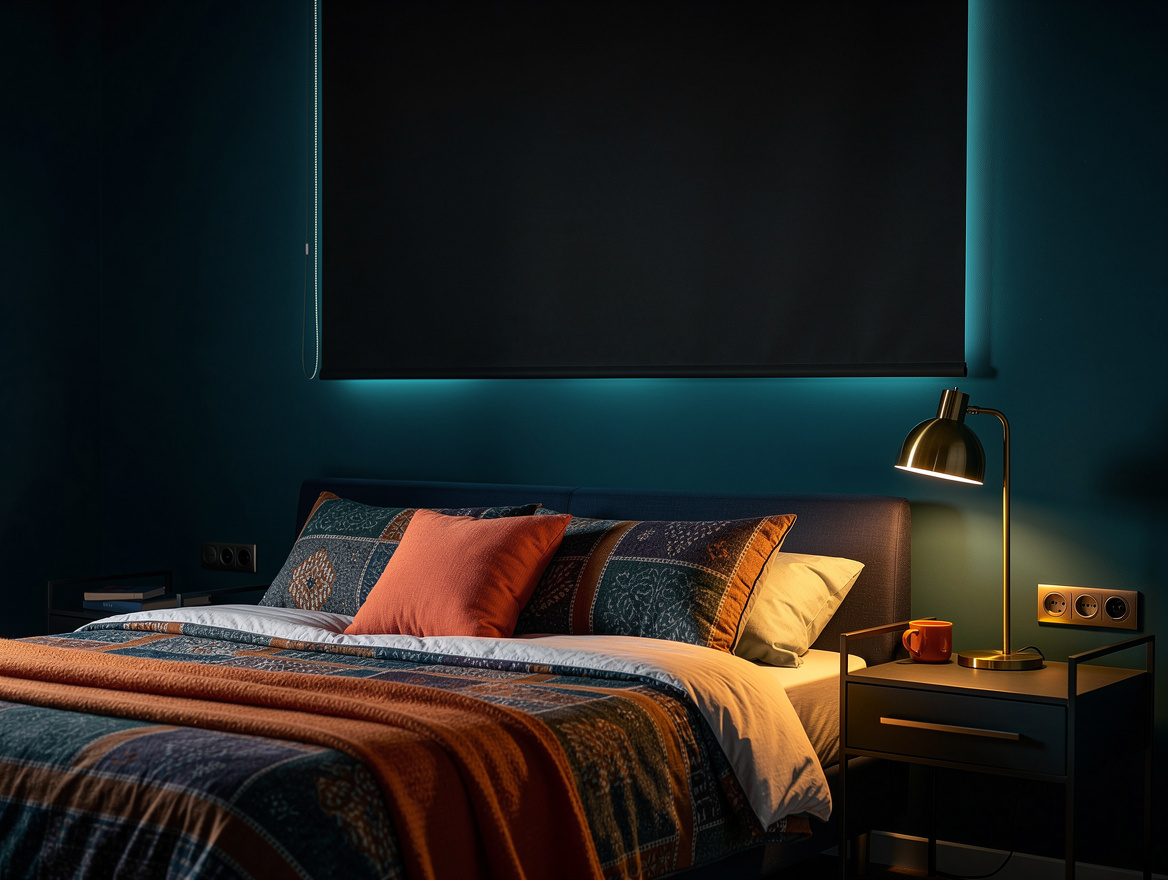
Before ordering a roller shade or curtain, measure the window width, height, frame depth, and the space around the headboard. A treatment that collides with a lamp, artwork, or nightstand will feel awkward every morning.
For an inside mount, verify that the frame can accept the required hardware and that the glass will be covered as closely as possible. For an outside mount, allow extra width beyond the window so the fabric or curtain can reduce side leaks.
Start with the sleep problem, then choose the arrangement. A light-filtering layer for daytime, a separate blackout layer for night, and an independent bedside lamp will cover the most useful combinations without forcing one shade to do everything.
Begin by deciding whether your priority is filtered daylight, total darkness, or both. Then measure the window and reserve the blackout layer for sleep, where it can do its job without taking the morning light with it.
Mia Carter writes about small-space living and budget home makeovers. She has restyled three rentals and tests most ideas in her own 45 sqm flat.