
Persistent fatigue, facial puffiness, waist changes, sleep disruption, cravings, and tension can overlap with high cortisol signs in women. One symptom can’t confirm anything. A calm tracking method helps you notice patterns, prepare better questions, and seek clinical guidance when symptoms continue.
The Short Version
Cortisol is a hormone involved in stress responses, energy regulation, blood pressure, and daily rhythms. Symptoms linked with cortisol can also appear with thyroid changes, medication effects, poor sleep, allergies, hormonal shifts, pain, or emotional strain.
A record should support a healthcare conversation, not replace one. You’re looking for repeated patterns across several weeks. You’re not trying to prove a theory from one difficult day.
Editor’s note: Choose one observation first. Keep the format simple. A notebook, phone, calendar, and ordinary household lighting can provide enough structure.
- Track Persistent Fatigue With a Morning Baseline
- When Does Facial Puffiness Matter?
- Compare Waist Fit With One Pair of Jeans
- Nightstand Notes: Is Sleep Disruption Repeating?
- Track Skin Changes Across Monthly Observations
- Food and Feelings: What Do Cravings Follow?
- Map Irritability With Color-Coded Mood Cards
- Headache Clusters: Which Patterns Repeat?
- The Hair-Part Record: What Changes Over Time?
- What Does Muscle Tension Add?
- Quiet Evening Restlessness: What Happens Without Stimulation?
1Track Persistent Fatigue With a Morning Baseline

Persistent morning fatigue deserves more detail than “tired.” Record energy shortly after waking, using the same time window and a similar setting. Notice alertness, heaviness, concentration, motivation, and the ease of starting ordinary tasks.
Use a scale from refreshed to drained. Add one sentence about the night before.
You’re collecting context, not grading performance. When morning energy doesn’t shift after adequate rest, a timeline can make a clinical conversation clearer.
Keep the setup neutral. A terracotta mug, stone tray, olive linen, and cerused white oak surface can create a consistent reference point.
The setting should remain easy to repeat. It isn’t meant to become a beauty check.
A single difficult morning can’t confirm high cortisol. Illness, late work, alcohol, pain, noise, and interrupted sleep can all affect energy. When the same pattern continues, share the record with a qualified professional.
2When Does Facial Puffiness Matter?

Facial puffiness can appear for many reasons, including salt intake, allergies, hormonal shifts, medication effects, fluid changes, and poor sleep. Weekly observations can help show whether swelling comes and goes or remains consistent.
Use similar lighting and keep observations consistent. A clay-colored wall, linen shirt, and backlit translucent onyx surface can provide familiar reference points. Keep the setting simple so attention remains on the face.
Daily checks aren’t necessary. Once weekly is easier to maintain, and you’ll be less likely to overread ordinary variation.
Keep the expression neutral. Avoid comparing natural changes with filtered images.
Sudden swelling, breathing difficulty, swelling of the lips or tongue, or a rapidly worsening reaction requires prompt medical attention. Cosmetic references, such as rose-mauve lipstick notes, may help separate styling changes from health observations.
3Compare Waist Fit With One Pair of Jeans

Waist changes can be subtle. Clothing fit may shift before a measuring tape enters the conversation. Choose one pair of jeans and note how the waistband feels at the same point each week.
Use a simple scale: loose, comfortable, snug, or unusually tight. Add context for digestion, cycle timing, clothing wash, movement, and recent travel. Your goal isn’t punishment or constant checking.
A plum sweater, gray notebook, rose-gold pen, and book-matched walnut surface can keep the record visually consistent. These details are optional. The useful part is repeating the same check.
One tight day doesn’t establish a trend. When fit feels different for several weeks, bring the timeline to a healthcare professional. You don’t need to change food intake because of one observation or one uncomfortable morning.
For clothing context, comfortable denim comparisons may help identify a pair that gives consistent feedback without digging into the waist.
4Nightstand Notes: Is Sleep Disruption Repeating?
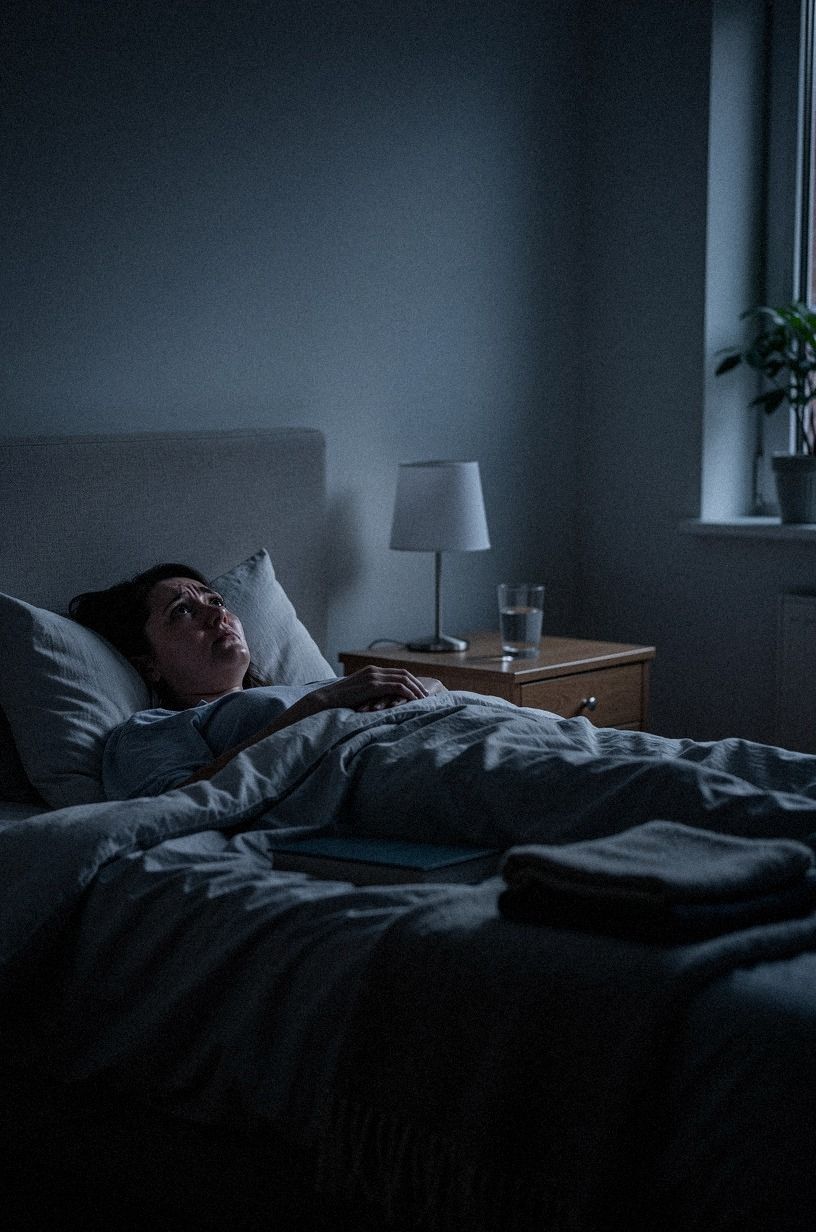
Restless nights, early waking, or a mind that won’t settle can overlap with cortisol-related concerns. Sleep disruption also has many other possible causes. A short nightstand log can show whether the issue is occasional or recurring.
Record the date, approximate bedtime, waking periods, morning energy, and anything unusual. Add caffeine timing, stress, illness, alcohol, pain, temperature, or household noise when relevant.
Two or three lines are enough. Journaling doesn’t need to become another demand. A navy cover, white ceramic cup, walnut tray, and warm travertine coaster can create a calm, repeatable setting.
When sleep disruption continues, the notes can make questions more specific. The record isn’t a diagnosis. It simply gives a clinician better information than memory alone.
5Track Skin Changes Across Monthly Observations

Breakouts, increased oiliness, dryness, or slower recovery can be frustrating. None of these signs confirms high cortisol. Monthly observations may show whether changes follow a cycle, a product switch, travel, stress, or another trigger.
Record changes in similar daylight. Avoid adding several new products at once. You’ll learn more from a stable routine than from a dramatic change in products.
Use an emerald notebook, cream towel, gold clip, and unlacquered brass dish developing a natural patina for consistent reference points. The arrangement should stay practical. It doesn’t need to look polished.
Painful, widespread, rapidly changing, or infected-looking skin deserves professional advice. Cosmetic inspiration, including vibrant hair color ideas, can support personal style without replacing medical attention.

6Food and Feelings: What Do Cravings Follow?

Strong cravings can occur with stress, inadequate meals, changing routines, medication, poor sleep, or long gaps between meals. Record the craving beside a normal meal note rather than labeling food as good or bad.
Add the time, mood, recent meal, sleep quality, and workload when possible. You don’t need to record every bite. A few useful details can reveal more than an exhaustive log.
A forest-green folder, rust napkin, natural oak board, and oversized-chip terrazzo tray can create a grounded visual setup. The props have no diagnostic value. They simply make the routine easier to repeat.
You’ll often learn more from context than restriction. When eating patterns feel difficult to control or cause distress, a qualified professional can help. Your records should remain private, neutral, and free from shame.
7Map Irritability With Color-Coded Mood Cards

Irritability is often dismissed as a personality flaw. Stress, sleep loss, pain, hormonal changes, medication, and mental health can all influence emotional reactivity.
Use three or four simple labels, such as calm, tense, reactive, and overwhelmed. Add a short note about the situation. You’re tracking conditions around the reaction, not assigning blame.
A dusty-rose card on a charcoal surface of hand-applied Venetian plaster, with a small brass clip, can make the system easy to spot. Keep the colors consistent from week to week. Too many categories aren’t useful when the routine becomes hard to maintain.
Notice whether irritability follows short sleep, skipped meals, intense work, conflict, pain, or cycle changes. When reactions feel extreme, persistent, or unsafe, seek professional support promptly.
A mood card can’t identify cortisol levels. It may help show what deserves a closer conversation.
8Headache Clusters: Which Patterns Repeat?

Headaches can overlap with stress-related patterns, but they also have numerous possible causes.
9The Hair-Part Record: What Changes Over Time?

Hair shedding or a widening part can feel alarming, but stress is only one possible factor. Genetics, thyroid conditions, nutritional deficiencies, medication, hormonal changes, scalp conditions, and recent illness may also matter.
Choose one parting method and repeat it monthly. Use similar lighting and avoid pulling hair tightly. Note shedding in the shower, brush changes, scalp irritation, recent illness, diet changes, and new products.
A midnight-blue notebook resting on washed Belgian linen with a lived-in texture, alongside copper and ivory accents, can keep the record straightforward. Monthly timing isn’t perfect for every concern. Sudden or dramatic changes deserve earlier attention.
Hair appearance can also be affected by styling, color, heat, and hair length. A second set of vibrant hair color ideas may offer style inspiration, while a dermatologist or healthcare professional addresses persistent shedding.
10What Does Muscle Tension Add?

Jaw clenching, raised shoulders, neck tightness, and upper-back tension can follow stress, posture, repetitive work, or an unsuitable sleep setup.
11Quiet Evening Restlessness: What Happens Without Stimulation?

Restlessness can look like constant scrolling, repeated task switching, foot movement, or an inability to sit through a quiet routine. Observe what happens when external stimulation becomes lower.
Record caffeine, work demands, pain, household conflict, screen exposure, and bedtime. One restless evening isn’t meaningful by itself. Repetition matters more than intensity.
A terracotta bowl, stone coaster, olive throw, and Nero Marquina black marble accent can create a calm visual setting. The goal isn’t forced relaxation. The goal is noticing what changes when the room becomes quieter.
When restlessness repeats alongside sleep disruption, fatigue, headaches, or mood changes, share the full pattern with a healthcare professional. If quiet feels unusually difficult, that observation deserves a place in the record.
Make the Record Easy to Read
The most useful record is the one you can continue. Choose one format and use the same labels each time. A short note may be more valuable than a detailed system that becomes exhausting.
Try a weekly review rather than constant checking. Look for repeated timing, combinations, and changes after a new medication or routine. You’ll have clearer information when the record includes context.
A small table can keep the process practical:
A symptom can shift because of ordinary life. Travel, illness, deadlines, temperature, exercise, cycle timing, and medication changes can all affect how a day feels.
Compare similar weeks when possible. Ask whether fatigue appears after short sleep, whether puffiness follows certain meals, or whether headaches cluster around demanding periods. You’re searching for useful questions, not a final answer.
The strongest pattern usually has three features: repetition, a clear time frame, and enough context to show what else was happening. A single dramatic observation may deserve attention, but it doesn’t explain the whole picture.
Know When a Symptom Needs Prompt Care
Certain symptoms should not wait for a long tracking period. Seek urgent medical help for breathing difficulty, sudden facial or tongue swelling, confusion, fainting, new weakness, vision loss, speech difficulty, or a sudden severe headache.
Persistent symptoms also deserve an appointment. A healthcare professional may review medications, medical history, sleep, menstrual patterns, blood pressure, physical findings, and appropriate testing.
Home tracking isn’t a substitute for evaluation. It can help you describe timing and severity more accurately. Bring the record, including changes that seem unrelated.
Keep the Room Calm and Practical
A tracking corner should reduce friction. Keep the notebook, calendar, or phone where the routine already happens. A neutral surface can help, but expensive decor isn’t required.
Warm lighting may feel pleasant in the evening. A task lamp can make notes easier to read. A small tray can hold supplies without turning the room into a monitoring station.
Named colors can make a corner feel intentional. Benjamin Moore October Mist offers a muted green reference, while Farrow & Ball Pigeon creates a soft blue-gray option. Choose one background and keep it consistent.
What the Pattern Can Tell You
A clear record can show whether symptoms appear alone or together. Fatigue may follow broken sleep.
Cravings may follow long meal gaps. Tension may increase after repetitive work. These observations can shape better questions.
The record can’t confirm cortisol levels. It may show when professional advice is worth seeking and which details deserve attention first.
Avoid turning every change into evidence of one hormone issue. Symptoms overlap across many conditions. A balanced record includes ordinary days, not only difficult ones.
Design the Tracking Corner Around Repeatability
Optional room refresh costs vary widely in the United States. These figures describe decor, not laboratory testing, medical visits, or treatment.
A no-cost setup can work well. Use a phone, notebook, calendar, and the lighting already available. When a small purchase helps, choose the item that removes the most friction.
Three light sources can create a comfortable corner: overhead, task, and ambient. A small reference print can hang with its center about 57 to 60 inches from the floor. Those measurements are design details, not health requirements.
The Questions Worth Answering First
What is the best way to track signs of high cortisol?
A consistent weekly observation paired with a short symptom note is a practical starting point. Track fatigue, sleep disruption, puffiness, cravings, or tension, then add context.
Consistency creates clearer information than frequent checking. Your record can support a focused conversation with a healthcare professional.
Where can simple supplies be found on a budget?
A notebook, phone, calendar, and ordinary household lighting are enough. Target, Wayfair, thrift shops, and Facebook Marketplace may provide storage or a small lamp. Low-cost supplies work well because value comes from consistency, not expensive equipment.
How much does a tracking corner cost?
A tracking corner can cost nothing when a phone and notebook are already available. Optional decor may range from $200 to $800 for paint, textiles, art, and organization. Those figures describe room items only, not medical consultations, testing, or care.
Can a calm tracking routine work in a small space?
Yes. Choose one regular observation location, use a calendar already at home, and write two lines after each entry.
Simple routines are easier to continue than elaborate systems. A lamp or tray can be added later when needed.
Is tracking worthwhile in a small bedroom?
Yes. A small space can make consistency easier because the same light and surface stay available. Repeatability matters more than room size. Choose one corner and avoid turning the entire room into a health-monitoring zone.
Is a visual tracking routine suitable for a rental?
Yes. Renters can use removable hooks, a tension rod, a clip frame, or a small tray without permanent changes. No-damage options keep the process flexible. Painting, drilling, and built-ins aren’t necessary for a consistent observation corner.
Where to Start First
When one sign deserves attention first, start with persistent morning fatigue. It can affect the rest of the record, and a consistent morning note may reveal whether other changes cluster around poor recovery.
Choose one tracking method. Keep it for several weeks. Bring persistent or concerning patterns to a qualified healthcare professional, especially when symptoms become sudden, severe, or disruptive.