
Easy postpartum sleep tips work best when they remove decisions from your nighttime routine. A basket, dim light, ready snack, and clear handoff can create calmer stretches without promising perfect rest. The room doesn’t need a full makeover. It needs fewer obstacles between you and the next quiet pause.
Your setup can also feel warm and personal. Start with the practical details, then borrow ideas from small-bedroom organization, cozy bedroom design, or calming nursery ideas if you want a softer visual direction.
The essentials for a calmer bedroom
The five pieces we recommend for a calmer bedroom.

Premium Grounding Sheet
Premium Grounding · woven 316L stainless-steel fibers, goes under your fitted sheet
Save 10% with code mattressnut
Through Nov 30: buy one sheet, get one free (per the brand)
 THE MATTRESS
Saatva Classic
Saatva
- THE TOPPER
Graphite Topper
Saatva
- THE PILLOW
The Saatva Pillow
Saatva
- THE COMFORTER
Down Alternative Comforter
Saatva




Before You Rearrange Anything
Start with the path you take most often after dark. Your bed, feeding chair, changing surface, water bottle, and phone should sit within one calm zone, so you’re not crossing a cold floor while everyone else is asleep. A soft washable runner can make that route gentler, while a small basket keeps supplies visible without turning the room into a storage closet.
You’ll want to remove anything that creates noise or glare. Loose packaging, rattling drawers, and a bright overhead bulb can make your nighttime routine feel more demanding than it needs to be.
Keep your favorite essentials in one place, and don’t add decorative objects that require extra clearing. The most soothing setup is often the one you can reset with one hand.
Before buying anything, spend one evening noticing what slows you down. Is the charger too far away?
Are clean burp cloths hidden in another room? Does the chair leave your feet unsupported?
Those answers will guide you better than a perfect nursery checklist.
If your room feels crowded, read these small-space storage ideas before rearranging furniture. You may only need a slimmer table, a closed bin, or a better place for the things you already own.
- Anchor a Night Station for Faster Baby Sleep
- Build the Three-Source Light Stack for Restful Sleep
- Swap Bright Ceiling Light for a Low Glow
- Layer the Two-Texture Bedding Rule
- Hang Curtains at the Right Height for a Calmer Morning
- Create a Basket System for Nighttime Routine
- Choose a Chair That Supports the Whole Night
- How Can a Sleep Schedule Feel Less Demanding?
- Frame a Small Corner With Warm Wood
- Paint Soft Contrast Instead of Chasing Bright White
- Protect Quiet With a Soft-Surface Plan
1Anchor a Night Station for Faster Baby Sleep
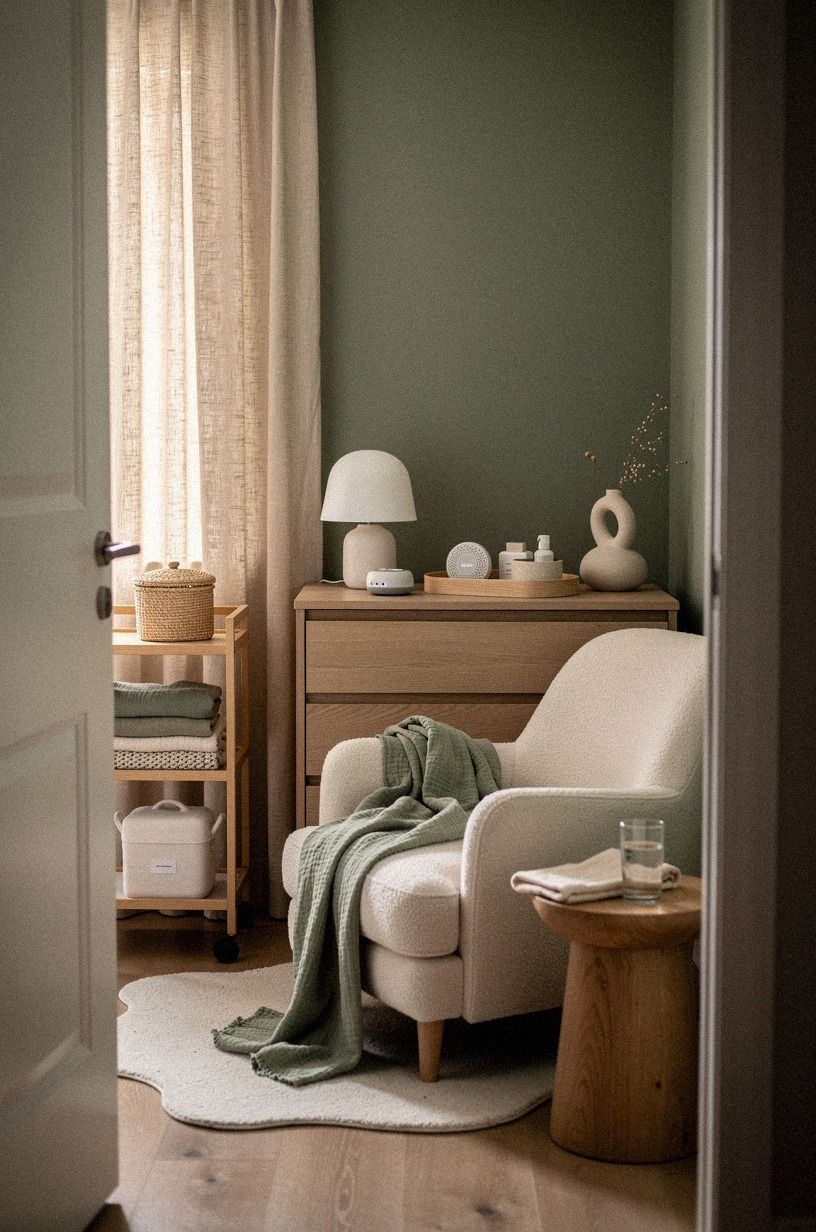
A night station gives your routine a fixed landing place. Use a narrow IKEA KALLAX birch-effect cube or a sturdy natural-wood side table beside an organic-bouclé feeding chair, then keep only the items you reach for regularly.
Your setup might include a water bottle, burp cloths, tissues, lip balm, a charger, and a small reading light. Nothing precious. Nothing that needs careful handling.
You’ll save energy when your hands know where to go, especially during a blurry 3 a.m. wake-up. A fabric bin with a washable cotton liner is more useful than an open tray because it hides visual clutter and catches small items.
Don’t fill the station with every possible product. Too many choices can make your nighttime routine feel like another task list.
For a softer look, add Belgian flax linen in a muted oat shade. It feels warm without looking overly styled, and you can wash it when life gets messy. If the chair sits near a window, a short curtain in Farrow & Ball Lichen No. 19 can soften the early light without turning the corner gloomy.
You might also place a small covered container for snacks, a spare phone cable, and a hand cream you actually enjoy using. These tiny comforts matter. Three useful objects beat a crowded shelf full of things you’ll have to move later.
A station can work in a bedroom, nursery, living room, or guest room. If you’re building a more permanent setup, pair it with bedside table styling and closed bedroom storage so the useful items stay close without taking over the room.
2Build the Three-Source Light Stack for Restful Sleep
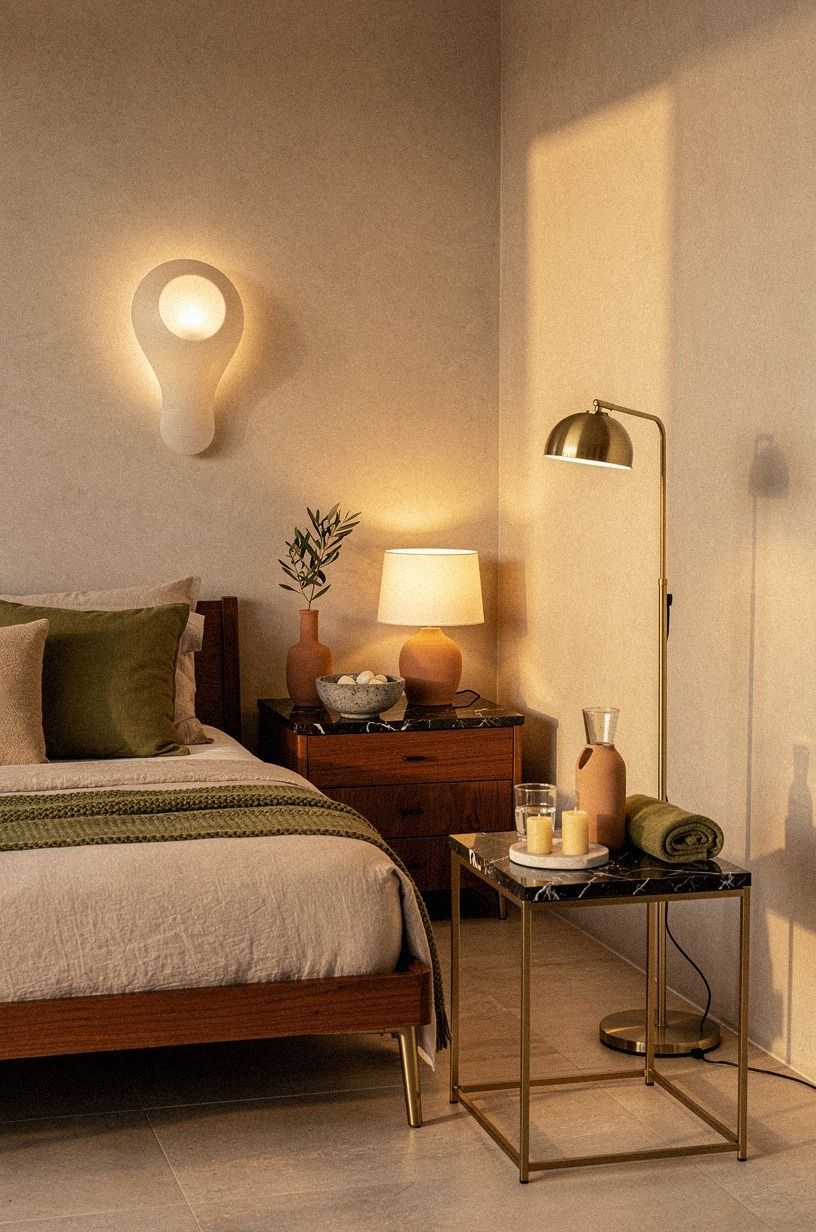
Three light sources give your room flexibility: overhead, task, and ambient. That arrangement lets you keep the ceiling light off during nighttime care while still seeing what you’re doing. Your task light can sit beside the chair, your ambient light can glow from a low shelf, and the overhead fixture can wait for daytime.
Choose a lamp with a fabric shade and a warm bulb rather than a bare globe. Nero Marquina black marble with white veining works well with stone walls, terracotta, and olive accents because its dark surface gives the light stack a grounded anchor. You’ll want the lamp switch close to your dominant hand, and you shouldn’t need to stand up to turn it off.
A small plug-in sconce can work in a rental, while a rechargeable lamp suits a room without a nearby outlet. Don’t use blue-white lighting if a softer amber glow does the job.
And if your room already has three sources, lower the brightness before buying another fixture. More light isn’t always more useful!
The goal isn’t darkness at any cost. You still need to move safely, check what you’re doing, and avoid tripping over the rug. A dimmable 2700K bulb, a shaded lamp, and a low night-light can give you a reassuring middle ground.
If you’re updating the rest of the room, these warm bedroom lighting ideas can help you create the same gentle rhythm without making the space feel themed.
3Swap Bright Ceiling Light for a Low Glow
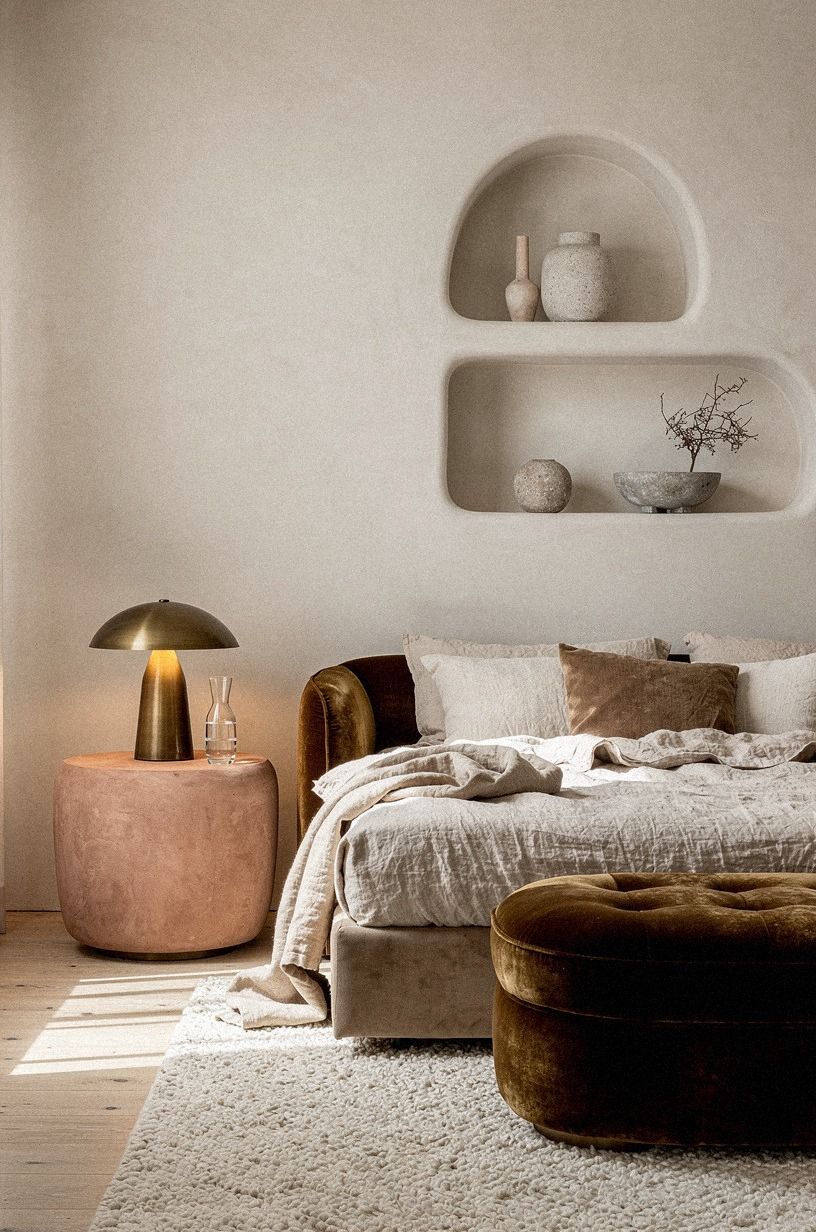
A bright ceiling fixture can make midnight feel like morning. That sudden glare is jarring, especially when you’re already tired and trying to settle a baby without fully waking yourself.
Move the main switch out of your first-step routine. Use a low lamp, wall sconce, or shaded floor light instead. A linen-shaded pendant can soften the room during the day, but you’ll still want a lower source for feeding and changing after dark.
You can place an aged-brass rechargeable lamp on a dresser or shelf where its glow won’t shine directly toward the bed. A small lamp beside a deep-pile mohair velvet chair also works well because the chair’s surface feels quiet even when the room is not perfectly tidy.
Your eyes will adjust more easily when the light comes from below eye level. One warm pool of light feels less disruptive than several bright fixtures competing across the room. You’ll still see what you need, but the room can remain restful.
If your existing fixture is harsh, try a softer bulb before replacing it. You don’t have to make a dramatic purchase. Sometimes the best improvement is simply moving the lamp you already own closer to the chair.
Why We Recommend This Product
If the ideas in this article speak to you, here is why this one product belongs next to them.
- 1
It goes where your routine already is.The sheet sits beneath your existing fitted sheet, so nothing else about your bed has to change.
- 2
Set up once.The connection cord and plug are included, and the seller describes setup as a matter of minutes.
- 3
Easy to try without a long commitment.The product page states a 120-night trial. Read the terms for your country.
- 4
The cord is the only new part.You make the bed as usual and plug the cord into a grounded outlet.
Why buyers look at grounding sheets at all: many people add one to their evening routine to feel calmer at night. A small 2004 study (Ghaly & Teplitz, Journal of Alternative and Complementary Medicine) reported better sleep and lower night-time cortisol in grounded sleepers, and early research reviewed by Oschman et al., Journal of Inflammation Research (2015) suggests grounding may influence inflammation markers, though larger studies are still needed.1,2
What you get: a woven 316L stainless-steel sheet that goes under your fitted sheet, the connection cord and plug, and a 120-night trial as stated on the product page.
Save 10% with code mattressnut
Through Nov 30: buy one sheet, get one free (per the brand)
4Layer the Two-Texture Bedding Rule
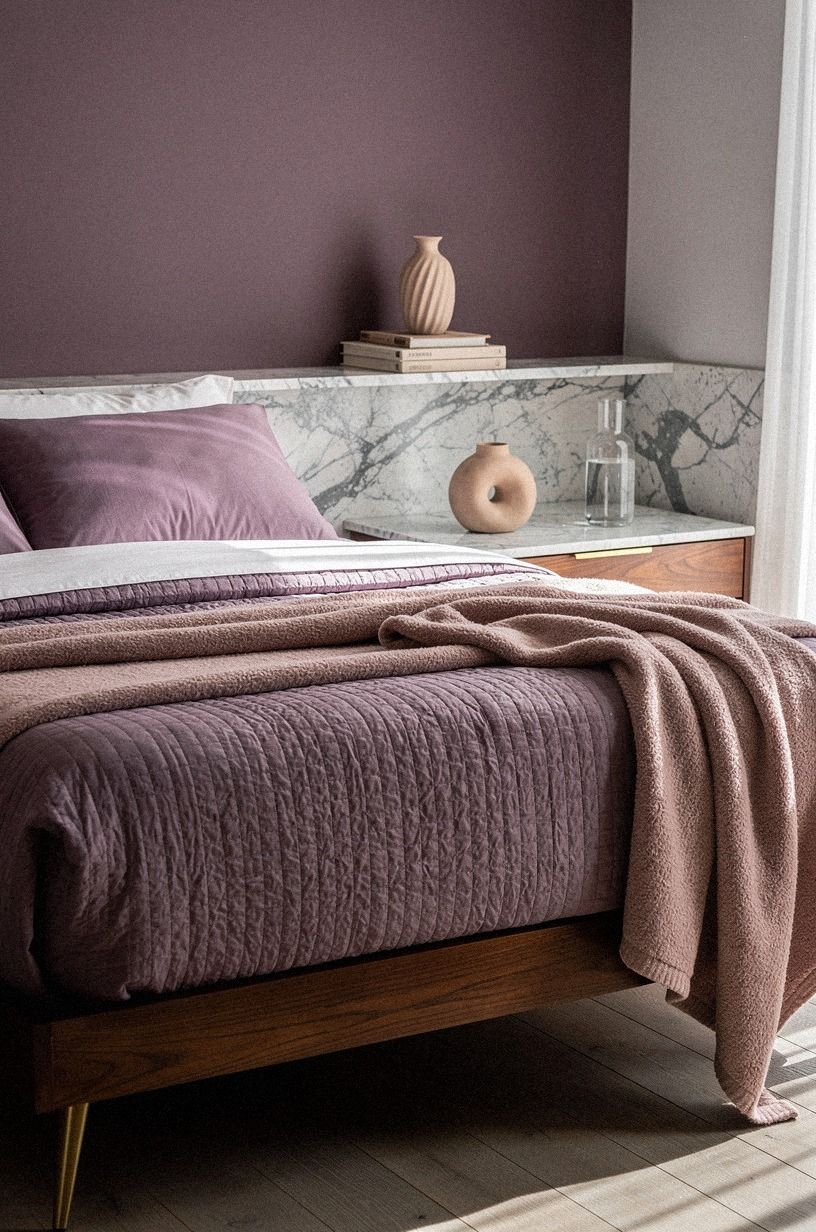
Use two main textures instead of piling on every blanket in the house. A smooth cotton sheet in soft gray paired with a plum 600gsm Turkish cotton throw gives your bed contrast without creating a tangled stack. Your hands can find the warmer layer quickly, and the bed still looks composed when the day has been chaotic.
Add a lightweight quilt rather than a heavy comforter if temperature changes are common in your room. You’ll have more control over your own comfort, and the quilt can fold at the foot of the bed without swallowing the whole surface. A Carrara marble bedside table with subtle gray veining and a rose-gold lamp can add a composed surface nearby, but keep any loose decorative objects away from an infant sleep area.
Don’t choose bedding only because it photographs well. Crisp white linen may look refined, but a washable cotton blend can be the wiser choice during postpartum recovery.
Your room should support easy laundry, quick changes, and fewer decisions. That’s more valuable than a perfect bedspread.
Try a calm combination such as washed cotton, brushed percale, and one textured throw. You don’t need five decorative pillows. A single linen lumbar cushion can make the bed feel finished without becoming another thing to remove at night.
For more practical ideas, combine this approach with layered bedding ideas or washable-bedroom-textiles. You’ll get visual softness and a more forgiving routine.

5Hang Curtains at the Right Height for a Calmer Morning
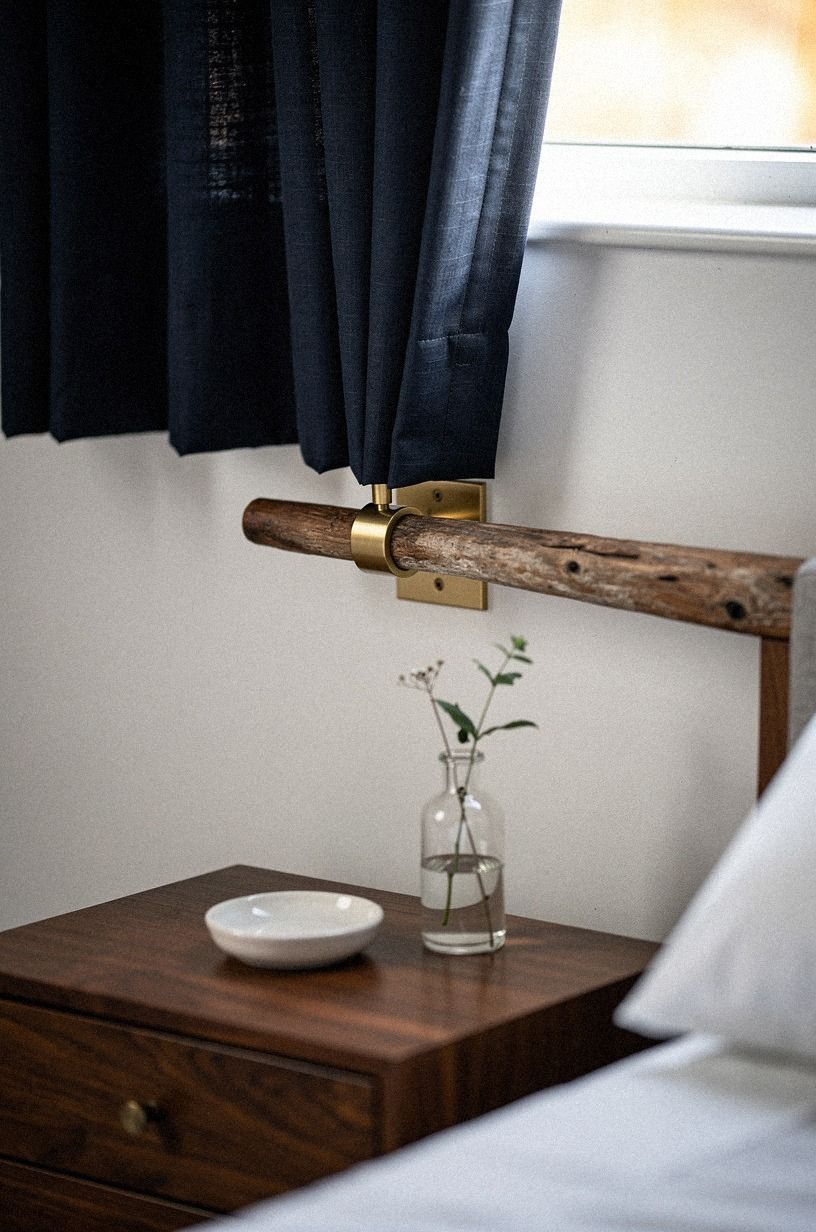
Curtains change how your room feels before the day begins.
6Create a Basket System for Nighttime Routine
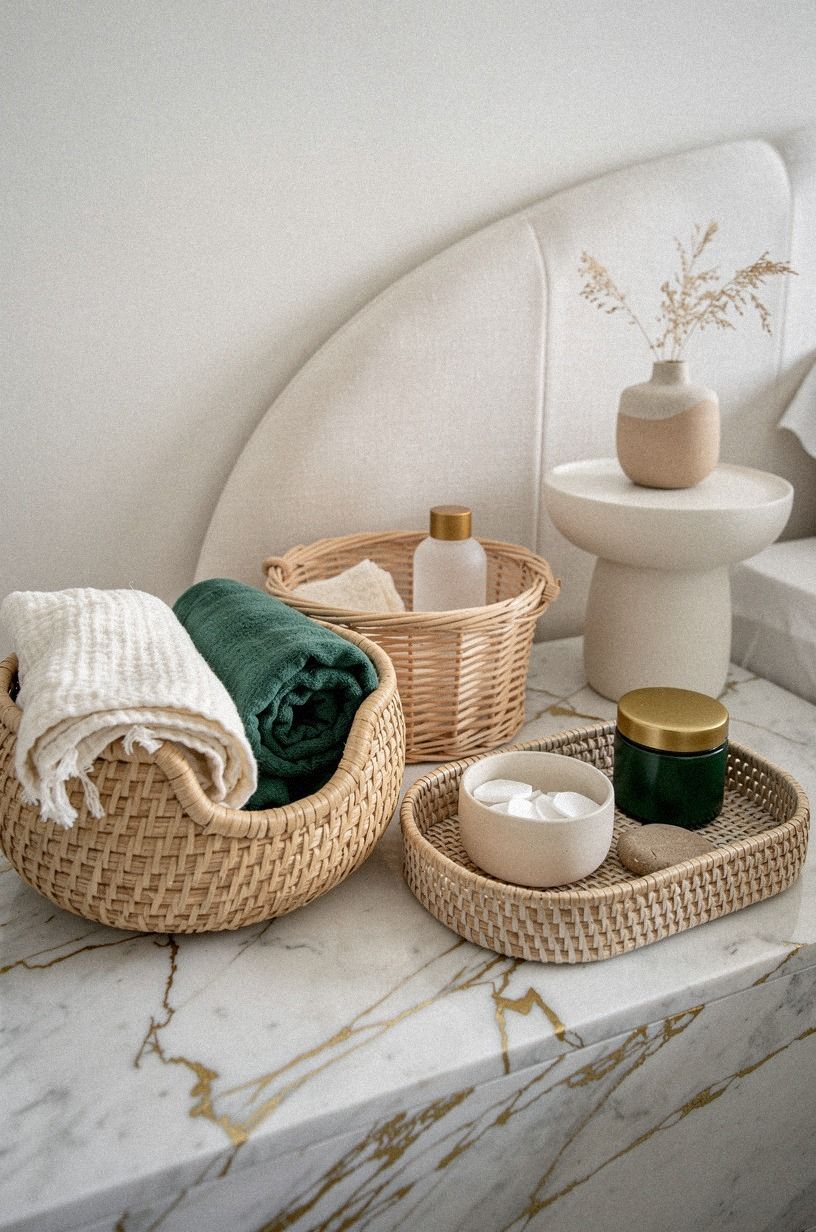
A basket system keeps the supplies for your nighttime routine together, but it works only when each basket has one job. Use one for feeding items, one for clean textiles, and one for personal care. You’ll know exactly where to reach, and you won’t have to empty a giant catch-all bin to find a single cloth.
A cream basket can hold folded muslin cloths, while a lidded bin keeps chargers, tissues, and small personal items contained. A Calacatta marble surface with gold veining can anchor the station without adding visual clutter.
Choose washable or wipeable materials whenever possible. Your future self will appreciate a basket that can handle spills without becoming a permanent stain.
Keep the feeding basket near the chair, the textile basket near the changing area, and your personal-care items near the bed. Don’t create a complicated system that only works when you have energy. You’re designing for the exhausted version of yourself.
It also helps to add a small lidded wastebasket within reach. It sounds unglamorous, but it reduces trips across the room and keeps used tissues or packaging from gathering on every surface. Practical details can feel surprisingly luxurious when you’re sleep deprived.
For a more polished result, borrow from these beautiful basket storage ideas and organized nursery corners. The best version will be easy to maintain, not merely attractive on the first day.
7Choose a Chair That Supports the Whole Night
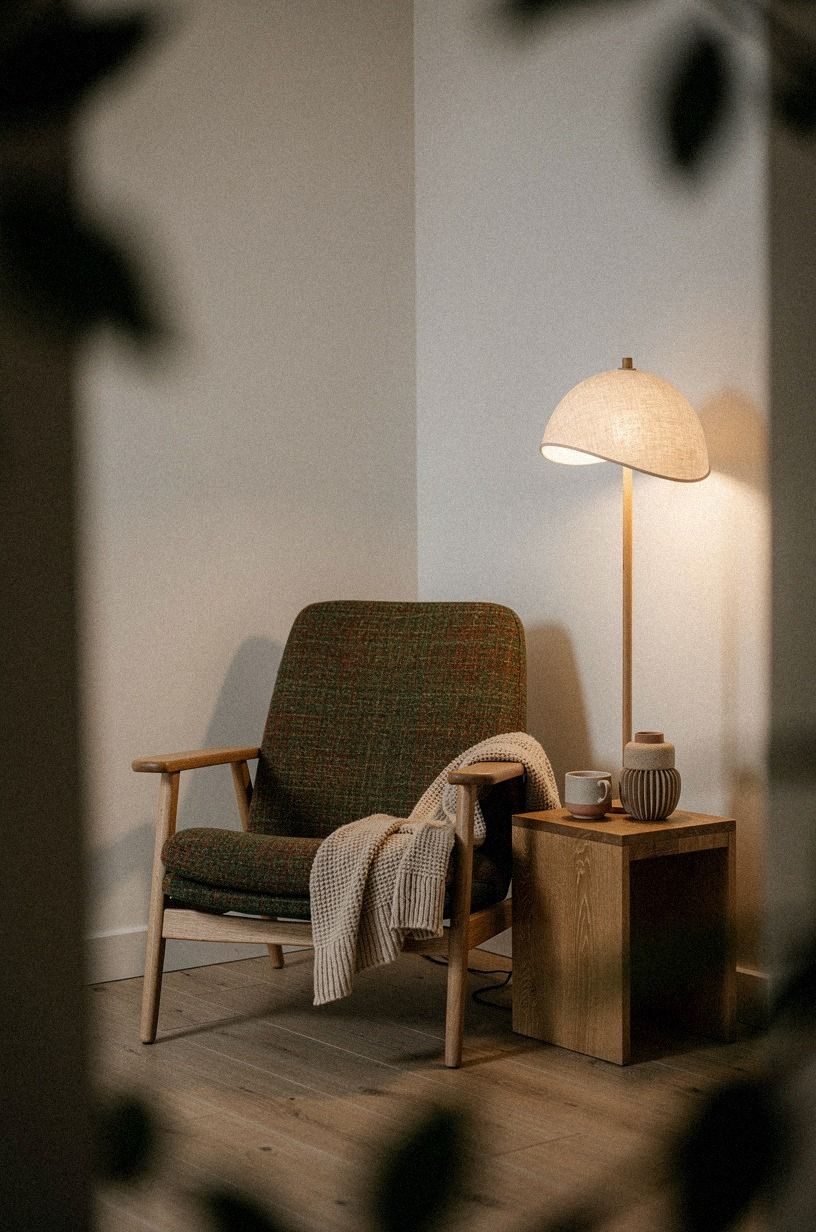
A feeding or recovery chair should support your shoulders, feet, and elbows, not simply match the room.
8How Can a Sleep Schedule Feel Less Demanding?
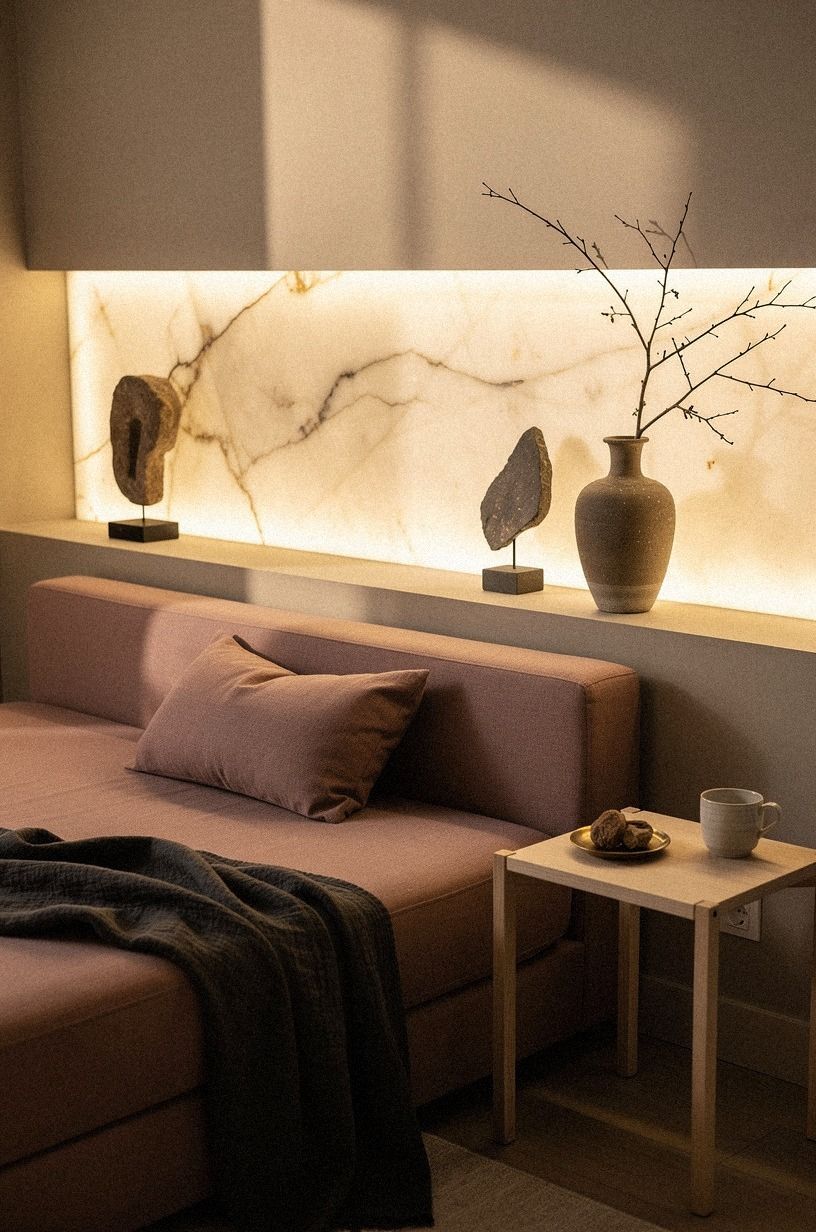
A flexible sleep schedule begins with visible cues, not a rigid clock. Your household may have different needs each night, so the room should help you shift between feeding, resting, and short bursts of sleep without requiring a full reset.
Create a simple evening sequence. Lower the lights, fill your water bottle, place the next clean textile within reach, and move your phone to its charging spot.
You’ll recognize the pattern even when the exact bedtime changes. That predictability can feel grounding.
If you have a partner, agree on a clear handoff rather than relying on hints. A small notepad, shared phone note, or quiet verbal cue can clarify who is responsible for the next wake-up.
We’ve all misunderstood a tired conversation. A simple system is kinder.
You might also keep a soft eye mask, noise-reducing earplugs, and a clean top in the night station. These are modest comforts, but they can make a short rest window feel more restorative. You don’t need a perfect schedule to protect small pockets of recovery.
Use a realistic rule: if a change adds work every night, simplify it. If it removes a repeated decision, keep it. You’ll learn what helps by noticing your own body, not by copying someone else’s routine.
9Frame a Small Corner With Warm Wood
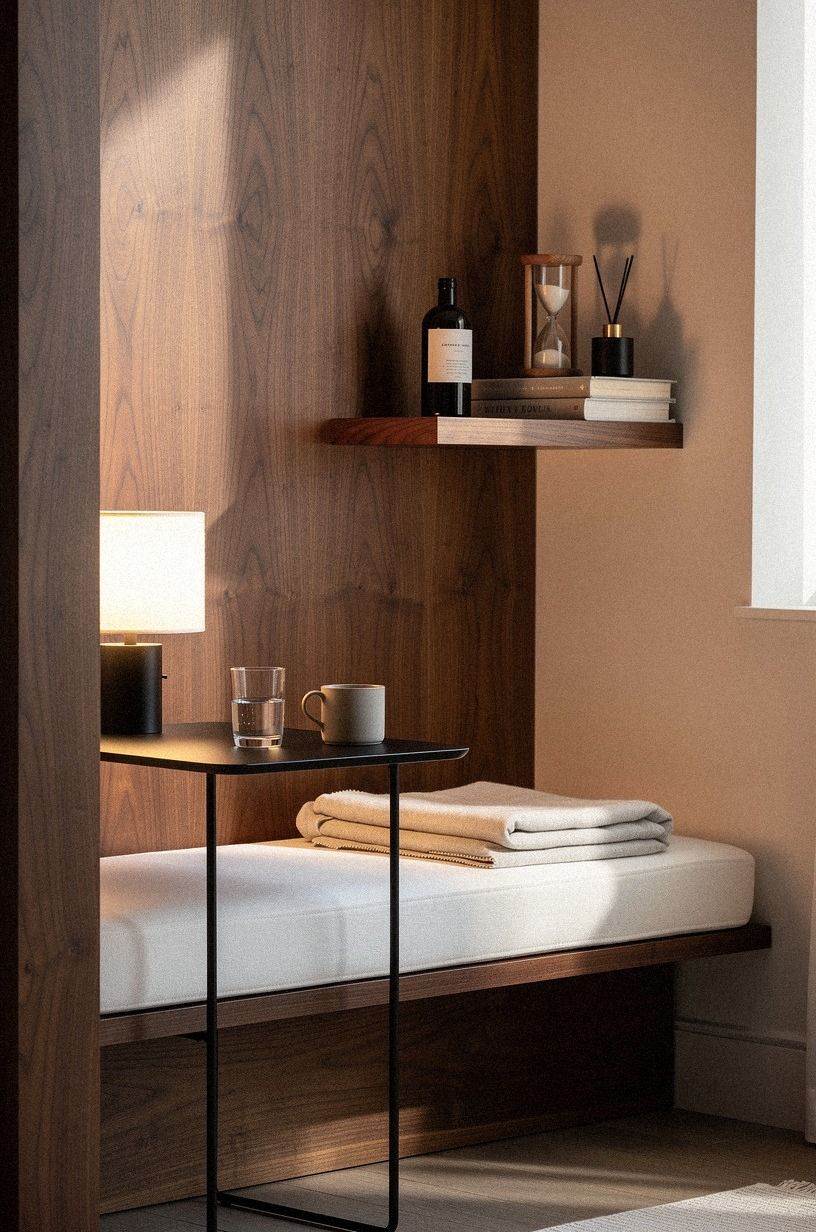
Book-matched walnut can make a temporary sleep corner feel intentional.
Premium Grounding Sheets: what you get
Specifications as stated by the manufacturer.
| Material | Woven 316L stainless-steel fibers |
|---|---|
| Fit | Beneath your existing fitted sheet |
| In the box | Connection cord and plug |
| Trial | 120 nights, as stated on the product page |
Save 10% with code mattressnut
Through Nov 30: buy one sheet, get one free (per the brand)
10Paint Soft Contrast Instead of Chasing Bright White
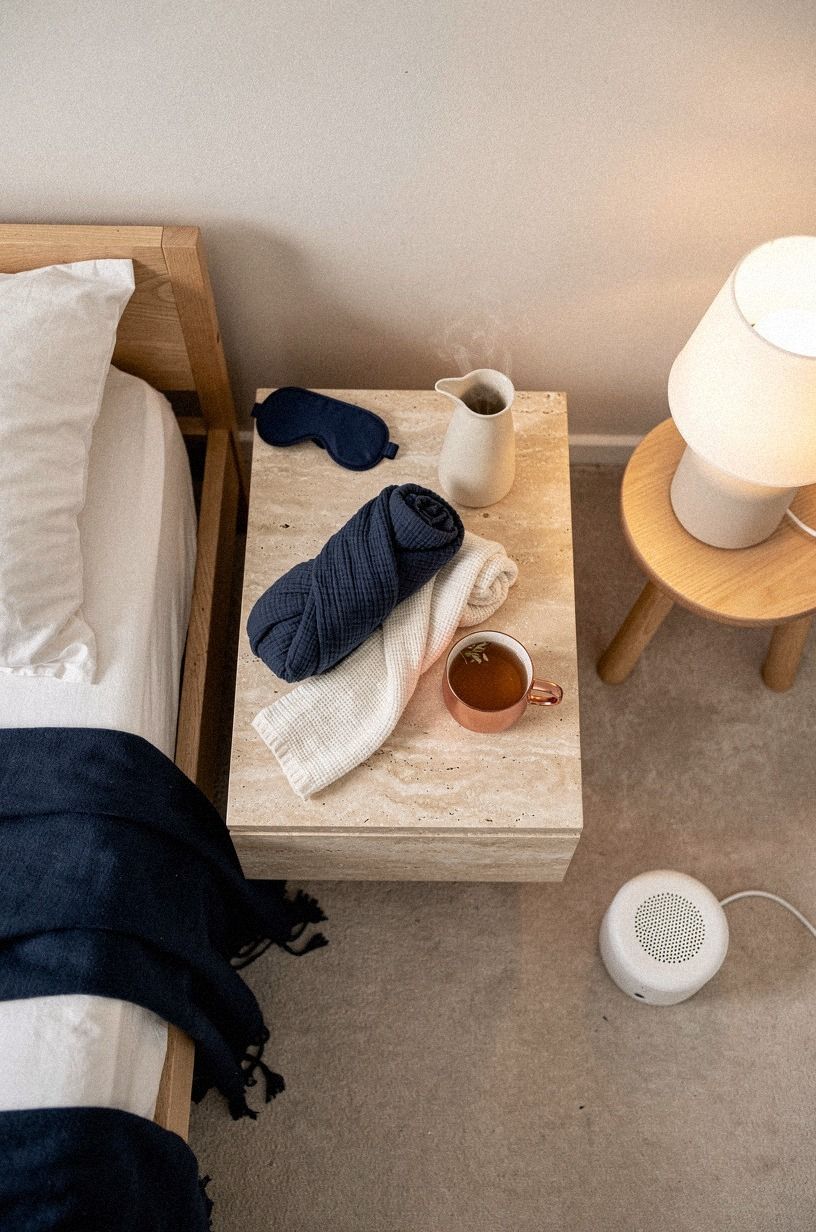
A soft contrast wall can make a small sleep area feel warmer without making it dark. Bright white reflects every lamp, wrinkle, and bit of clutter. A muted color gives the room a more forgiving background.
Try Farrow & Ball Hague Blue, Sherwin-Williams Copper Mountain, or Benjamin Moore Ivory White as starting points. Test the color in morning, afternoon, and lamplight before painting the entire wall. You’ll want to see how it behaves when the room is quiet and when the sun is strong.
A midnight blue, soft copper, or warm ivory can work beautifully with warm travertine and ivory bedding. If you prefer white, choose a warm white rather than a blue-based shade. The difference can be subtle, but your room will feel gentler.
You don’t need to paint every wall. A single accent wall behind the chair or bed can create definition with less work. Peel-and-stick wallpaper can do something similar in a rental, especially when you choose a restrained botanical or textured pattern.
For more direction, browse calm bedroom paint colors and green bedroom color schemes. Keep the palette narrow so the room feels collected rather than busy.
11Protect Quiet With a Soft-Surface Plan
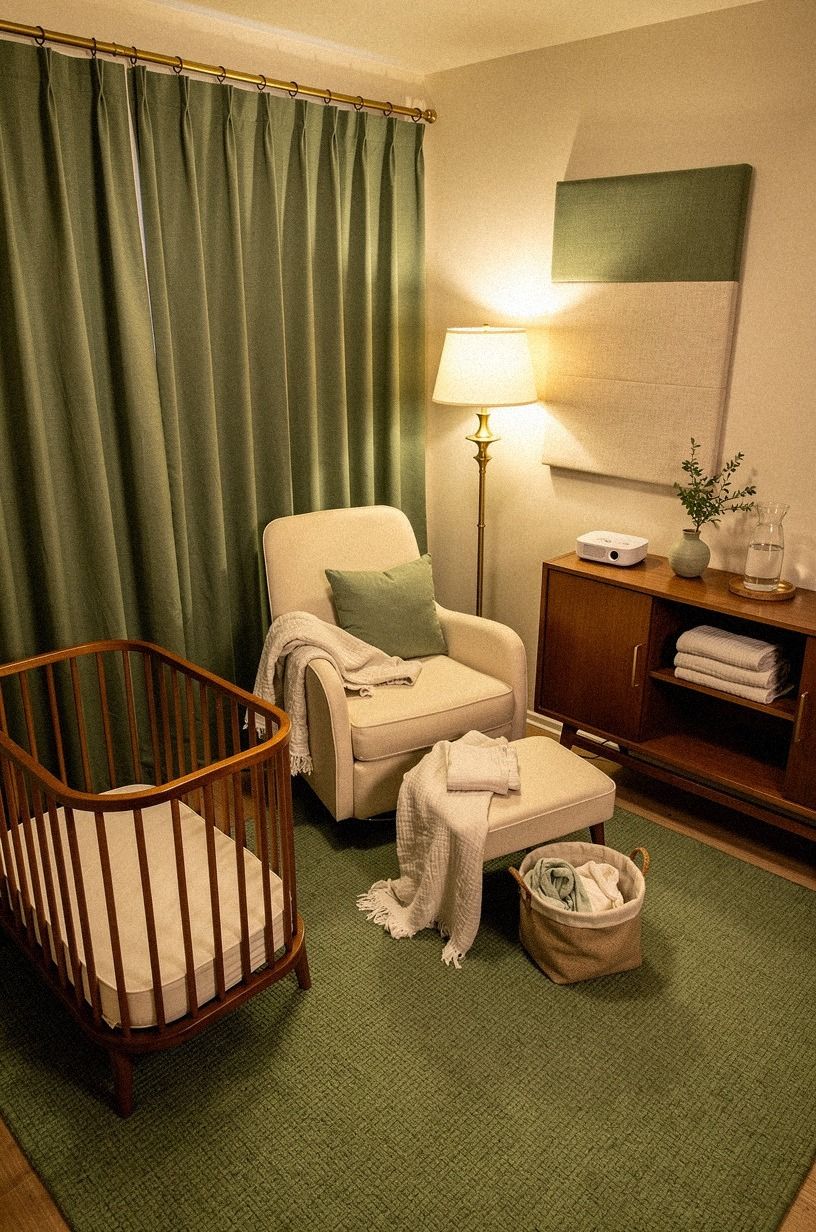
Soft surfaces can reduce the sharp sounds created by footsteps, drawers, and dropped items. Place a rug large enough for the furniture to overlap it, then add a washable runner along the most-used path. Your room will feel more grounded, and the floor won’t sound so bare during nighttime movement.
A sage-green wool rug offers texture and durability, while a warm-cream cotton flatweave may be easier to clean. If you’re renting, use a rug pad that grips without adhesive. You’ll want the edges flat and the walking path clear, especially when carrying a baby or moving in low light.
Don’t cover every hard surface. Too much fabric can make cleaning harder and can trap dust. Keep one clear zone for changing linens and one open route from bed to door.
For a calming personal-care corner, simple organization can pair well with winter hair care routines and gentle self-care ideas.
A felt drawer liner, fabric doorstop, or soft-close cabinet insert can also reduce small nighttime sounds. These details aren’t glamorous, but they’re wonderfully effective. You’ll notice them most when the rest of the house is silent.
If you have hardwood floors, place the rug under the front legs of the chair and the nearest table. That creates a stable, comfortable zone without requiring a full-room rug. A low-pile design is usually easier to vacuum and less likely to catch on your feet.
What These Changes Cost
A postpartum sleep corner can stay modest, especially when the main changes involve lighting, textiles, and organization. Use what you already own before buying new furniture. A secondhand chair, a washable basket, or a lamp moved from another room can do more than a large decorative purchase.
A wool rug may cost $400-$1,500, linen drapes as a pair may cost $120-$400, a statement light fixture may cost $150-$800, and DIY room paint may cost $200-$600. Your most useful first purchase is usually the item that removes a daily obstacle, not the item that photographs best.
If your budget is tight, start with a warm bulb, a washable basket, and a supportive footstool. Those three changes can improve the room immediately. You can add paint, curtains, or a new chair later, when you know what your routine actually needs.
The Room Should Carry Some of the Work
Postpartum recovery changes how every room is experienced. A chair isn’t only a chair when it supports repeated feeding, settling, reading, or quiet pauses.
A lamp isn’t only decoration when the right glow lets you move through the room without waking everyone nearby. Design becomes practical when it reduces small demands.
The strongest setup usually has a clear path, a reachable station, and a softer visual rhythm. Your eyes can find the lamp.
Your hands can find the cloth. Your feet can find the rug.
Those details won’t create perfect nights, and they shouldn’t be sold as a medical solution. They may make difficult moments feel more manageable.
The biggest mistake is copying a complete room from a photograph. A styled nursery may use delicate furniture, open shelving, and pale textiles, but your routine may need closed baskets, wipeable covers, and a chair with firm arms.
Choose the parts that serve your body and your household. A warm room is useful because it adapts to real life.
You’ll probably change the arrangement more than once. That’s normal.
The chair may move closer to the outlet, the basket may migrate beside the bed, and the beautiful open shelf may eventually need a closed door. Let the room become more honest as you learn what helps.
A Few Things Worth Answering
What is the best postpartum sleep setup for a small room?
The best setup is a compact chair, a low-glare lamp, and one reachable basket. Clear paths matter more than extra furniture. Choose an IKEA side table or Article chair, keep the rug under the main seating area, and leave enough open floor for safe movement during nighttime care.
Where can you buy postpartum room pieces on a budget?
IKEA, Wayfair, Target, thrift stores, and Facebook Marketplace offer useful options. Secondhand furniture can lower the cost of a chair, lamp, or side table. Check upholstery, stability, and cleaning needs before buying, then use washable cotton covers for a softer reset.
How much does a postpartum sleep corner makeover cost?
A small makeover can cost about $200 to $800 when it uses paint, textiles, art, and organization. Free changes include moving a lamp, clearing a walking path, and grouping supplies. A mid-range room may cost $1,500 to $5,000 when it adds furniture, lighting, and a rug.
Can a postpartum sleep corner work on a budget?
Yes, and the first steps can be free. Move an existing lamp beside the chair, create a supply basket from a container already at home, and use a folded blanket as a footrest. Low-cost texture can come from cotton pillow covers, thrifted art, and washable runners.
Is a dedicated sleep corner worth it in a small space?
Yes, because a small space can reduce the number of decisions in your nighttime routine. A defined zone gives every item a home. Use a narrow chair, a wall-mounted shelf, and a rug that overlaps the furniture without blocking the walking path.
Is this approach suitable for a rental?
Yes. Use a tension rod, removable hooks, peel-and-stick wallpaper, and a rechargeable lamp.
Damage-free changes can define the corner without permanent wiring or paint. Keep cords secured, avoid heavy objects over seating, and choose furniture that can move with you later.
Where to Start First
If one change deserves priority, start with the night station. A reachable lamp, water bottle, cloth, and charger remove repeated decisions when your energy is low.
Keep it simple, washable, and close to the chair. Then save relationship boundaries and calmer household conversations for later planning.
After that, adjust the light. Then test the chair, rug, and basket placement over several nights.
You’ll quickly learn which changes genuinely help and which only looked appealing in theory. The best postpartum room is not the most elaborate one. It’s the one that makes your next tired moment a little easier.
Sources
- Ghaly M, Teplitz D. The biologic effects of grounding the human body during sleep as measured by cortisol levels and subjective reporting of sleep, pain, and stress. Journal of Alternative and Complementary Medicine. 2004;10(5):767-776. Small study of 12 adults.
- Oschman JL, Chevalier G, Brown R. The effects of grounding (earthing) on inflammation, the immune response, wound healing, and prevention and treatment of chronic inflammatory and autoimmune diseases. Journal of Inflammation Research. 2015;8:83-96. Narrative review; larger controlled studies are still needed.
Affiliate link: this article contains affiliate links. The site may earn a commission if you purchase through them.