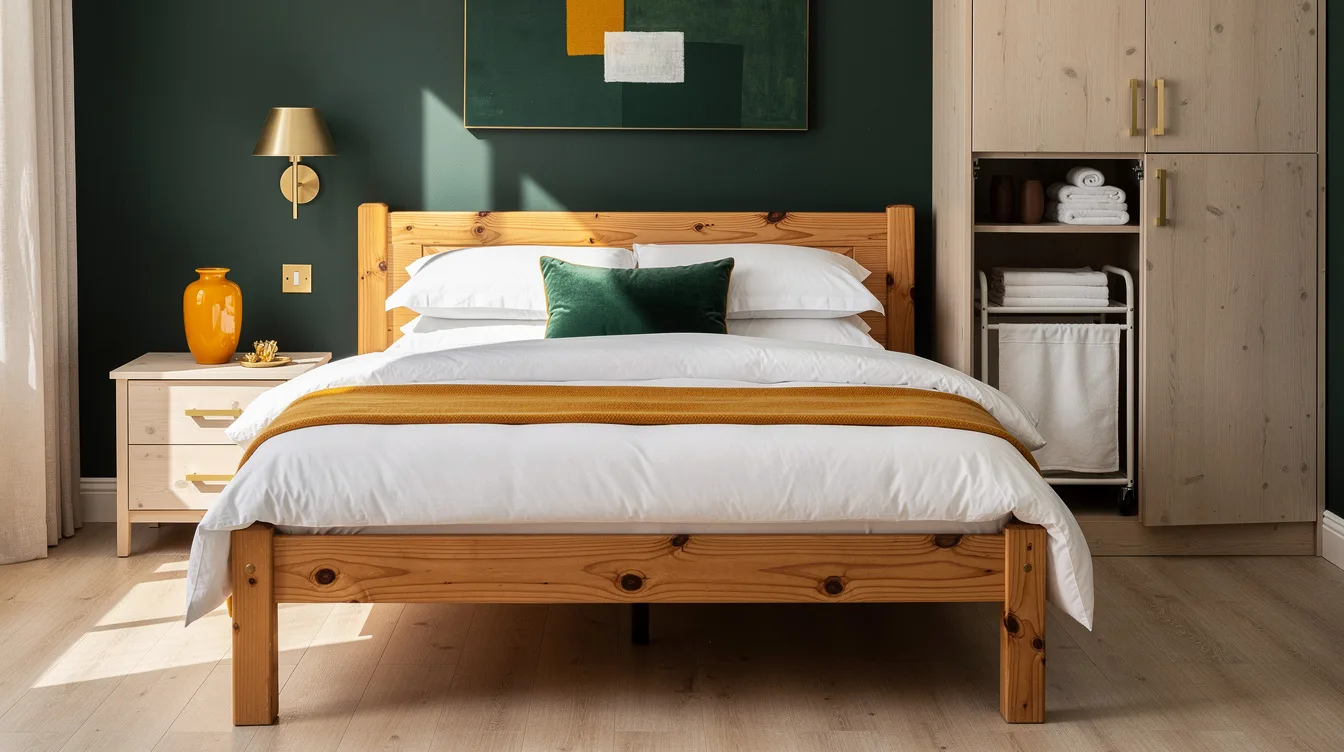
I wanted a guest room that could handle fresh linens without advertising where they were stored. The starting point was a 63-inch-wide IKEA TARVA queen bed and a small rolling cart that could disappear inside the closet.
The affordable pairing is straightforward: the bed lists at $199 and the cart at $29.99, or about $228.99 for the two main pieces before the mattress. The real design challenge was giving the cart enough clearance while keeping the room calm.
My solution was to treat the linen cart like hidden infrastructure. It stays useful, reachable, and completely out of sight when guests are sleeping.
Park the Cart Where Guests Won’t See It
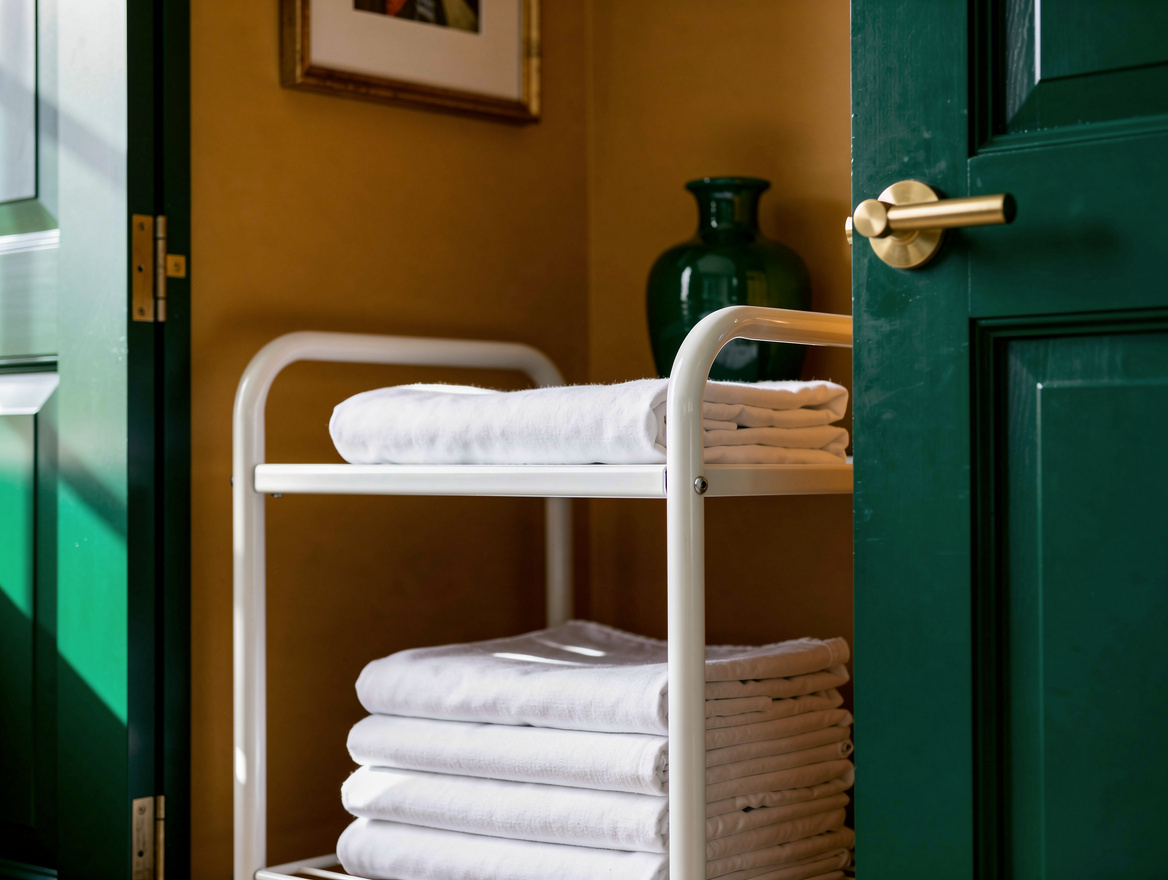
I placed the IKEA NISSAFORS steel cart inside one end of the closet, where the door hides it completely. The standard cart costs a listed $29.99 and has a footprint of about 19⅞ by 11¾ inches.
That location keeps clean sheets close without making the bedroom look like a supply room. I would skip a bulky housekeeping trolley because its visual weight fights the calm feeling a guest room needs.
Sheets and pillowcases belong on the cart, while bulky duvets can stay on a higher closet shelf. A removable basket makes the arrangement look finished when the cart is pulled out.
Measure the Doorway Before Buying the Bed
Before ordering anything, I measured the closet opening, hinges, tracks, and threshold. For the standard cart, my proposed parking bay is approximately 22 inches wide, 15 inches deep, and 35 inches high.
Those are planning clearances, not installation requirements, so the actual opening still needs to be checked on site. The cart must roll straight through the doorway without catching on trim or a raised floor edge.
The slimmer IKEA NISSAFORS slim cart costs a listed $24.99 and reduces the depth to about 7½ inches. I would use it only when the closet is genuinely tight, since its lighter-duty construction holds less.
Pair the Cart With a Quiet Bed Frame
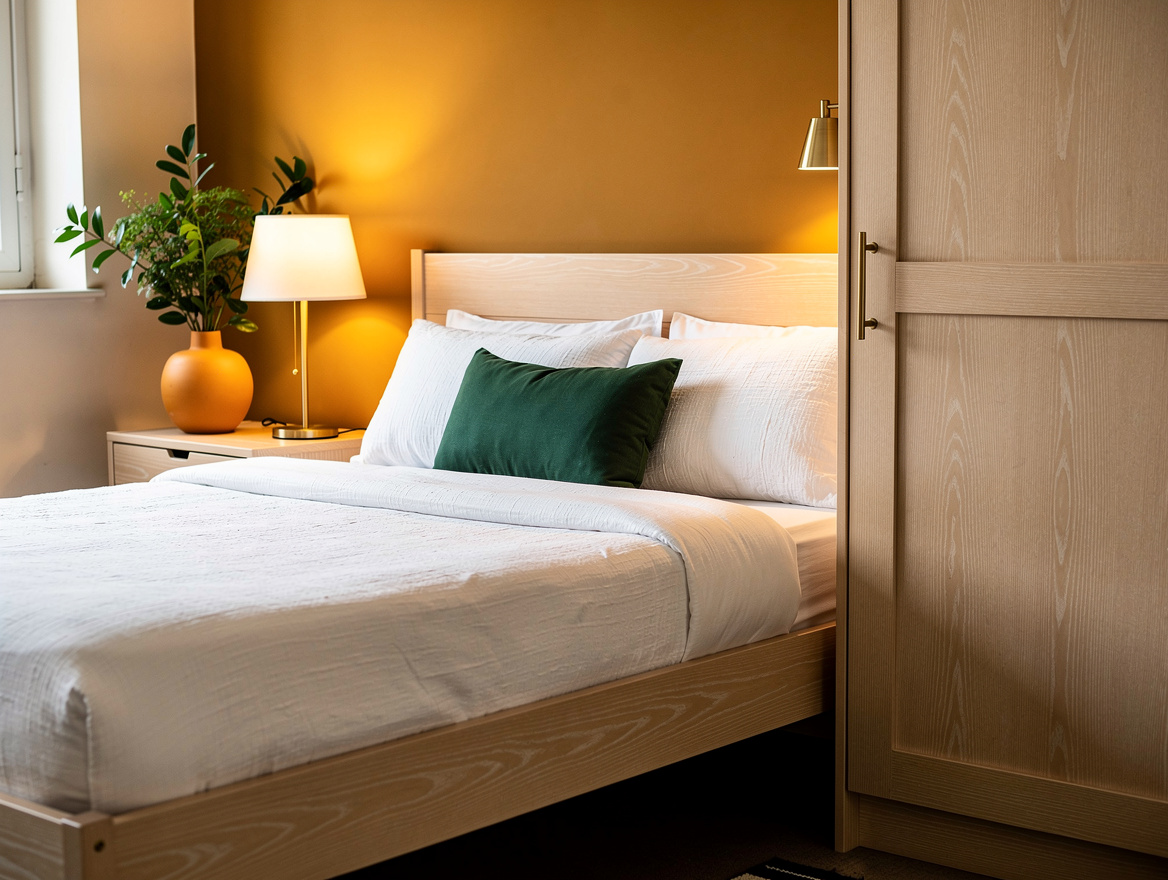
For the main furniture, I chose the IKEA TARVA queen bed in pine with LURÖY slats. Its listed frame dimensions are 63 inches wide by 82¼ inches long, with a headboard about 36¼ inches high.
The listed price is $199, which makes the bed and standard cart about $228.99 before the mattress or any concealment work. That is an unusually practical starting point for a room that still needs lamps, bedding, and window treatments.
The pale wood keeps the utility storage from becoming the visual story. I would leave the frame close to its natural finish and let one muted accent color carry the personality.
Build the Cabinet Around the Wheels
When the closet cannot spare the room, I would build a low enclosure with a clear floor-level opening. ¾-inch paint-grade plywood works well for the cabinet panels because it can take a smooth painted finish and handle regular cleaning.
The door should open clear of the cart, with no bottom panel or plinth blocking the wheels. A painted MDF slab can match the room’s trim, though the final exterior size will depend on panel thickness, hinges, and support.
For planning, a DIY enclosure and cart may run roughly $250 to $600, excluding tools and labor. A locally fabricated and installed version may require an initial allowance of about $800 to $1,800, followed by an actual quote.
Load Linens by How Often You Use Them
I put the most frequently changed cotton sheets on the top tier, folded into one compact stack. Pillowcases can sit beside them, while spare towels or lighter blankets take the lower shelves.
The standard cart has a listed maximum load of 46 pounds, with 15 pounds per tier. I would keep the weight moderate anyway, because an overfilled cart rolls poorly and makes the closet feel harder to use.
Use soft fabric bins for small items that tend to unravel into clutter. Bulky bedding should stay on a separate shelf rather than forcing the cart to carry everything.
Keep the Guest Room Visually Restrained
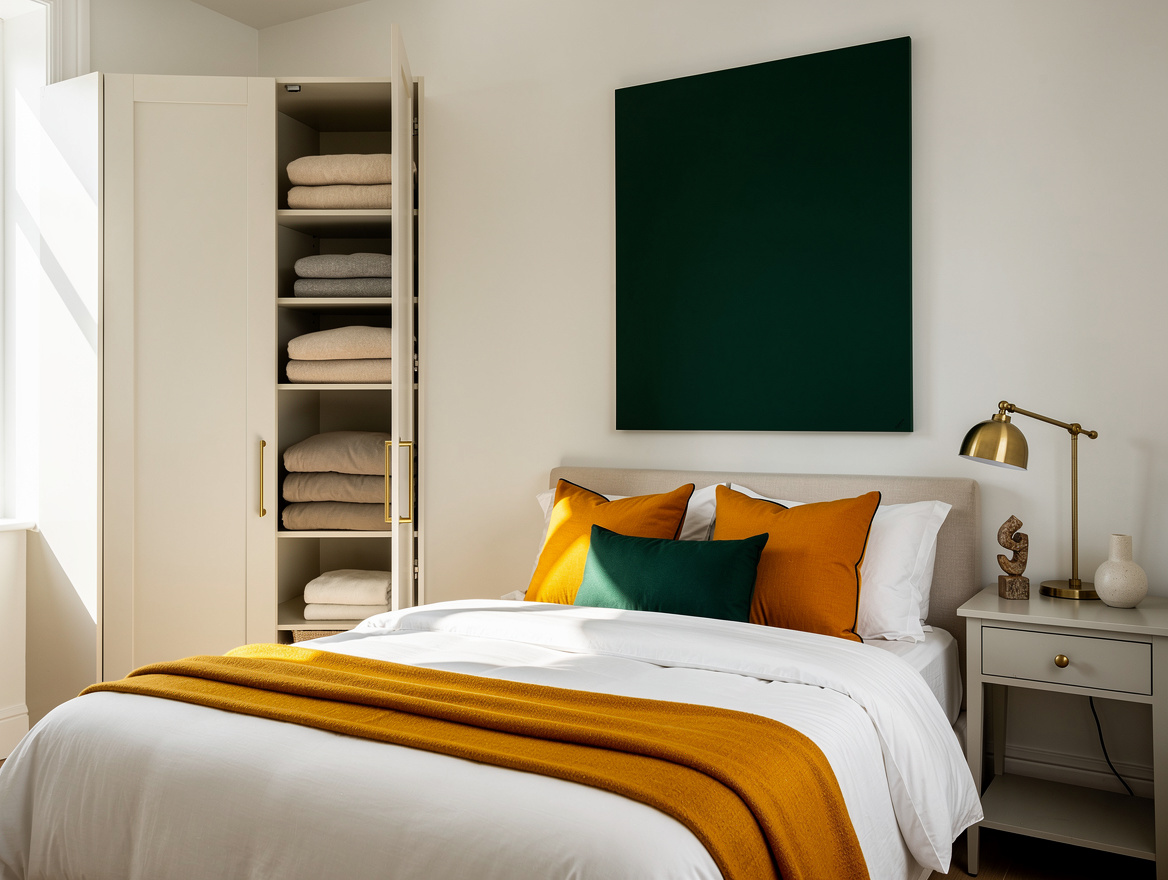
The simplest palette is white walls, white bedding, pale wood, and one subdued color on a pillow or throw. That combination lets the hidden storage do its job quietly instead of turning the room into a utility zone.
I would choose a single bedside lamp, leave a clear path around the queen bed, and avoid filling the dresser with decorative objects. Guests need an open surface for a phone, book, or overnight bag.
A muted blue or soft olive accent can add warmth without competing with the closet door. The room should feel ready before anyone arrives, with the practical work happening behind closed doors.
Start by measuring the closet opening from floor to hinge, then mark a clear parking bay before ordering the bed or cart. That small check determines whether you need a standard cart, a slim version, or a cabinet built around the wheels.
Mia Carter writes about small-space living and budget home makeovers. She has restyled three rentals and tests most ideas in her own 45 sqm flat.