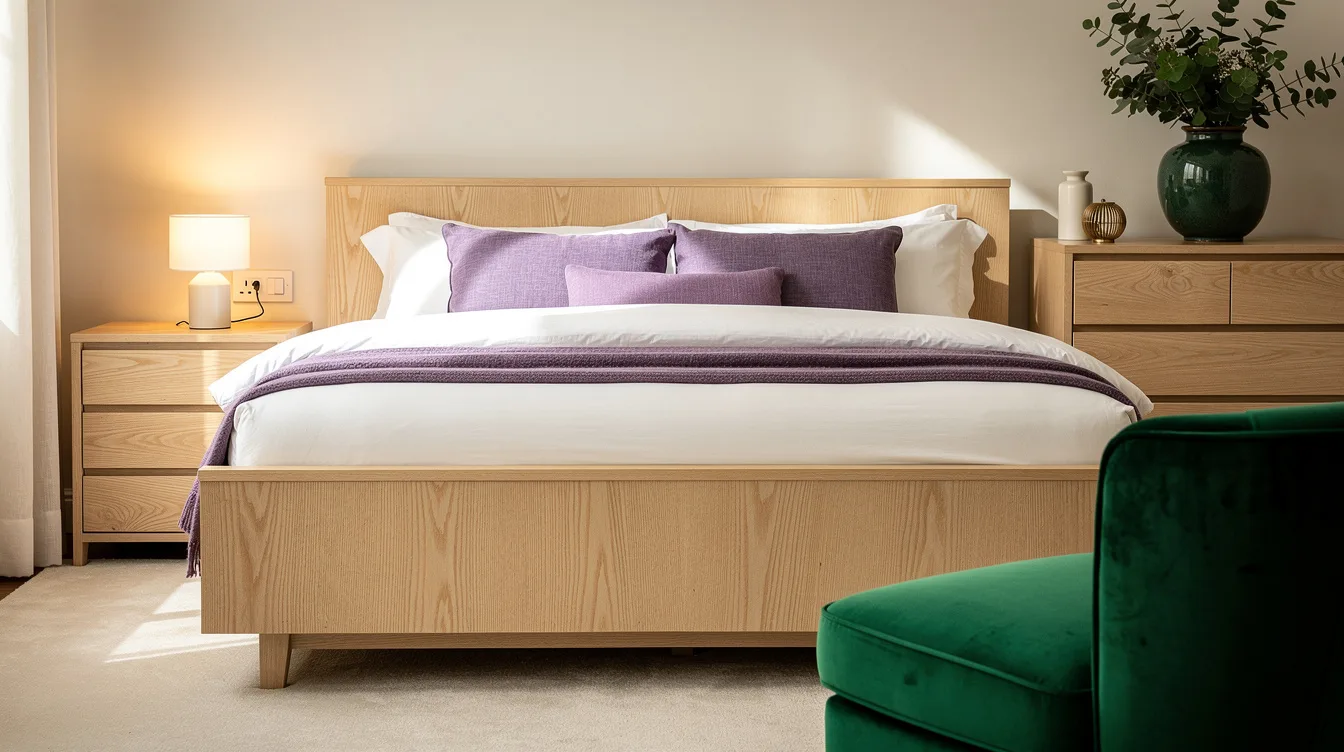
Two 50 × 50 cm lavender cushions can change the mood of a bedroom faster than a full furniture makeover. The challenge is keeping the color deliberate so natural wood still feels like the room’s foundation.
Purple becomes heavy when it spreads across every textile, while bare wood can feel unfinished beside cool bedding. The most reliable starting point is pale oak, dusty lavender, and warm white.
For walnut, shift toward plum and ivory with one small brass accent. The goal is a bedroom that feels layered and personal, not color-matched from floor to ceiling.
Start With a Warm Neutral Base
Use warm-white bedding as the visual field behind your wood furniture, then add purple in only two or three deliberate places. This keeps the bed calm while giving the eye a clear color story.
A pale neutral duvet, simple sheets, and bare wood create room for stronger accents without making the bedroom feel busy. I would skip a purple wall until the smaller pieces prove the color works.
Keep the largest surfaces quiet, including the walls, rug, and curtains. That restraint makes each accent feel chosen instead of scattered.
Place Purple in Deliberate Zones
Build the bed around dusty lavender by using two cushions, each 50 × 50 cm, plus a muted-purple throw across the lower third. The arrangement feels finished while leaving the dresser and nightstands visible.
Repeat the color in one artwork print or a single curtain panel rather than adding purple furniture. A repeated shade works best when it appears at different heights around the room.
IKEA’s BLÅSKATA purple patterned cushion cover is listed at €7.99 in a 50 × 50 cm size, with recycled polyester and a raised checkerboard texture. The insert is separate, so pair it with plain bedding instead of another geometric pattern.
Match Plum to Richer Wood
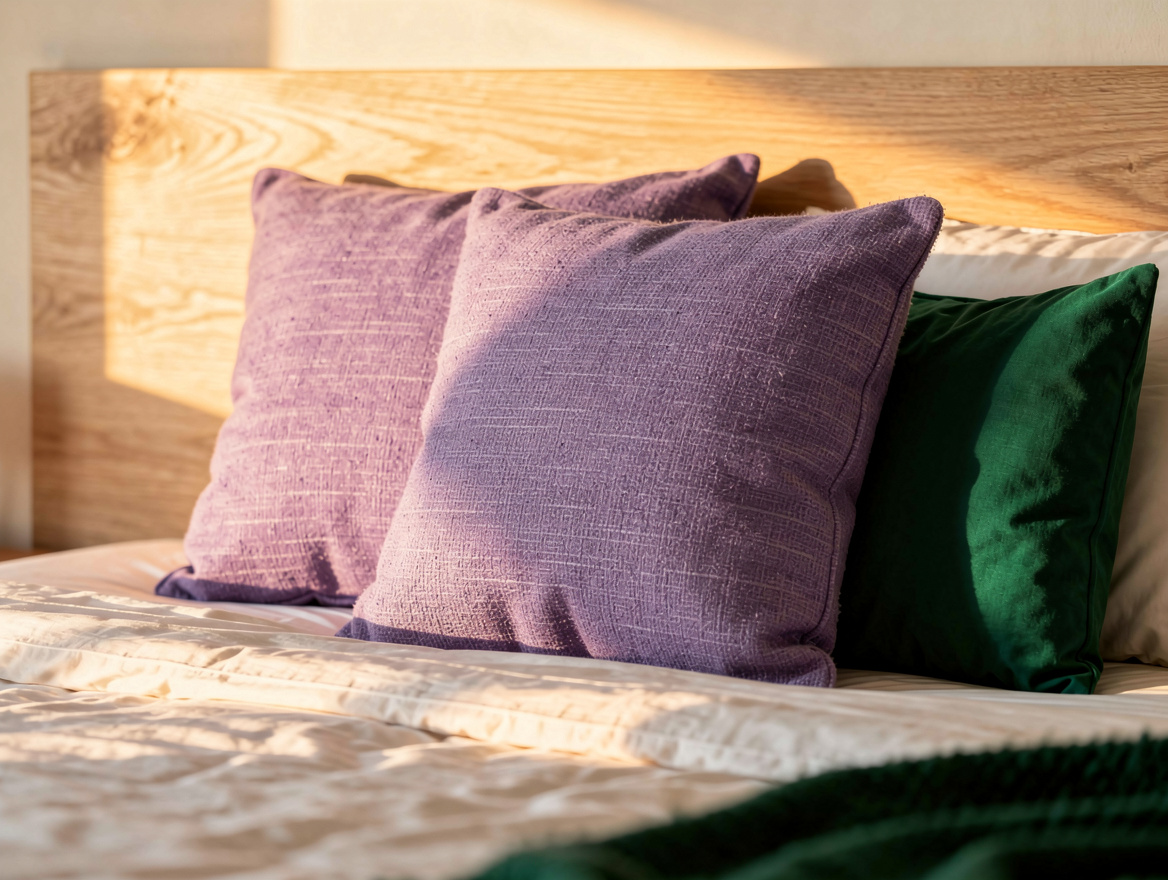
Walnut can handle a deeper purple, but the room still needs light around it. Start with an ivory duvet cover and let the darker wood remain the main anchor.
Add two plum cushions and a throw across the foot of the bed, using a smaller neutral cushion between them. The contrast feels warm and grown-up without turning every surface dark.
Use one brass accent, such as a lamp base or small tray, beside the bed. Several metallic finishes would compete with the wood grain, while one warm glint gives the palette a clear stopping point.
Soften Honey-Toned Wood
Honey-colored oak has yellow or orange undertones, so bright violet can look harsh beside it. I would test a muted, slightly brownish purple before committing to a stronger shade.
Mauve cushions work well with oatmeal or cream bedding because they soften the contrast without erasing the furniture’s warmth. Compare fabric samples in daylight and under the bedroom lamp before buying a full duvet.
Add a small amount of olive green through artwork or a ceramic accessory if the room feels too sweet. That grounded note gives the purple somewhere to settle.
Layer Texture Before Pattern
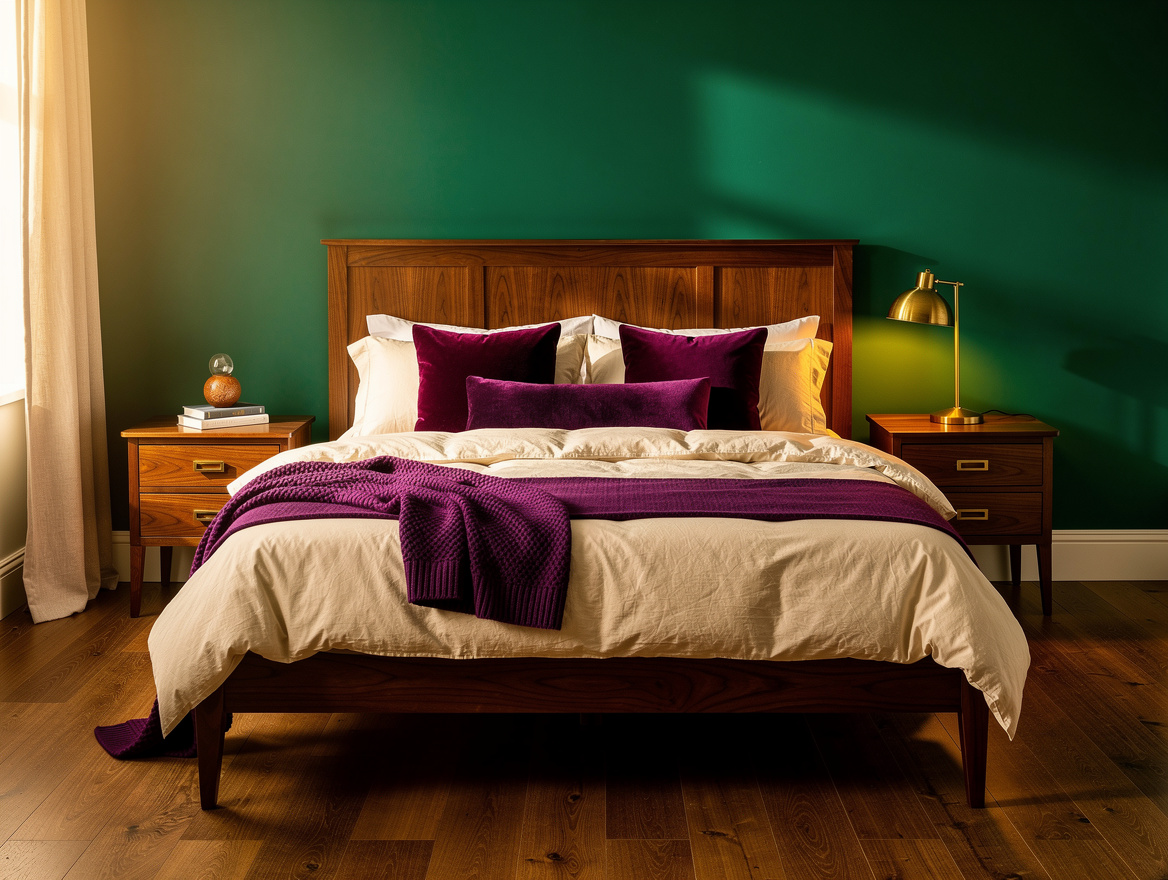
Washed linen or cotton bedding gives natural wood a relaxed backdrop, especially when the furniture has a strong grain or visible knots. Texture keeps the room interesting before you introduce a print.
Use one cotton textile with a smooth finish and one cushion with a raised surface. The contrast makes a restrained color scheme feel intentional without filling the bed with competing motifs.
A small velvet or soft-pile detail is enough for depth, particularly in a walnut room. I would avoid matching purple on the duvet, curtains, cushions, and lampshade because repetition can flatten the whole scheme.
Size Accents for the Bed
A purple throw measuring roughly 130 × 180 cm can cover the lower portion of a standard bed without hiding the bedding or wood frame. Fold it once and place it across the foot for a cleaner line.
Two 50 × 50 cm cushions create a useful color block behind smaller pillows, while keeping the arrangement easy to remove when you want a quieter room. Use plain covers if the throw already has a pattern.
Add a neutral lumbar cushion of about 30 × 50 cm to break up the square shapes. Cream, oatmeal, or warm gray will connect the bed to the walls and keep purple from becoming the only visual note.
Check the Color at Night
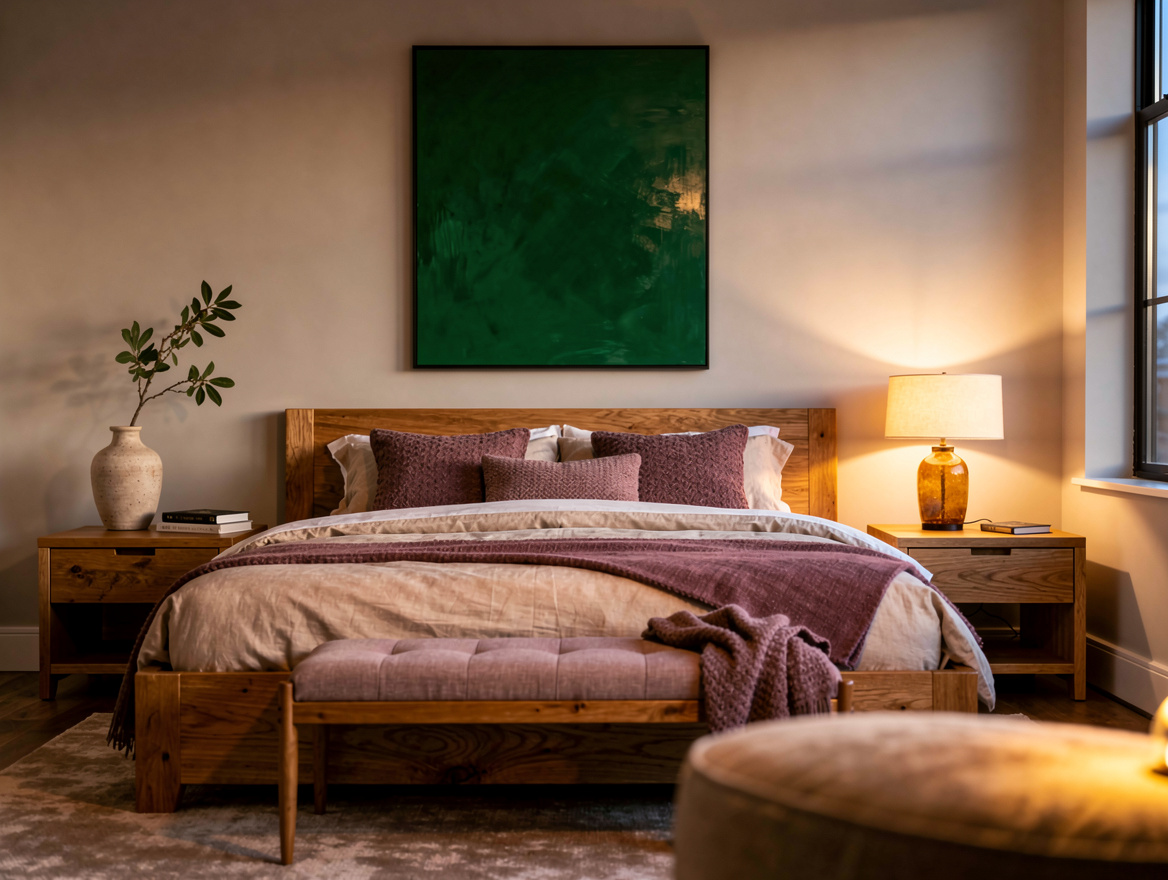
View the purple accents in morning light, late afternoon light, and under your existing bulbs. Lavender can look gray in one room and pink in another, while plum may become almost brown after sunset.
Keep the bedroom lamp warm and simple if the wood already has a rich finish. A cream ceramic or brass-finish base will support the palette without adding another strong color.
Finish with one piece of purple artwork that includes ivory, brown, or muted green. That small connection helps the room feel resolved while preserving the natural wood as the star.
Begin with the bedding, then add two cushions and one lower-bed textile before buying anything else. Give the wood room to show, and the purple will read as a confident accent rather than a decorating theme.
Mia Carter writes about small-space living and budget home makeovers. She has restyled three rentals and tests most ideas in her own 45 sqm flat.