
The bedroom art-lighting trick is simple: give the artwork its own glow instead of asking one ceiling fixture to do every job. A dimmable 2700K picture light, mounted a few inches above a substantial frame, can make the wall feel composed even when the rest of the room stays quiet.
Picture lights typically cost about $30 to $80 at the accessible end, while more decorative cordless choices can reach roughly $200 to $325. The difference is visible, but the placement and softness of the beam matter more than the price tag.
Light the Artwork, Not the Ceiling
A bedroom feels more expensive when the artwork has its own light source. A slim picture light above one substantial framed piece creates a focal point while the ceiling fixture fades into the background.
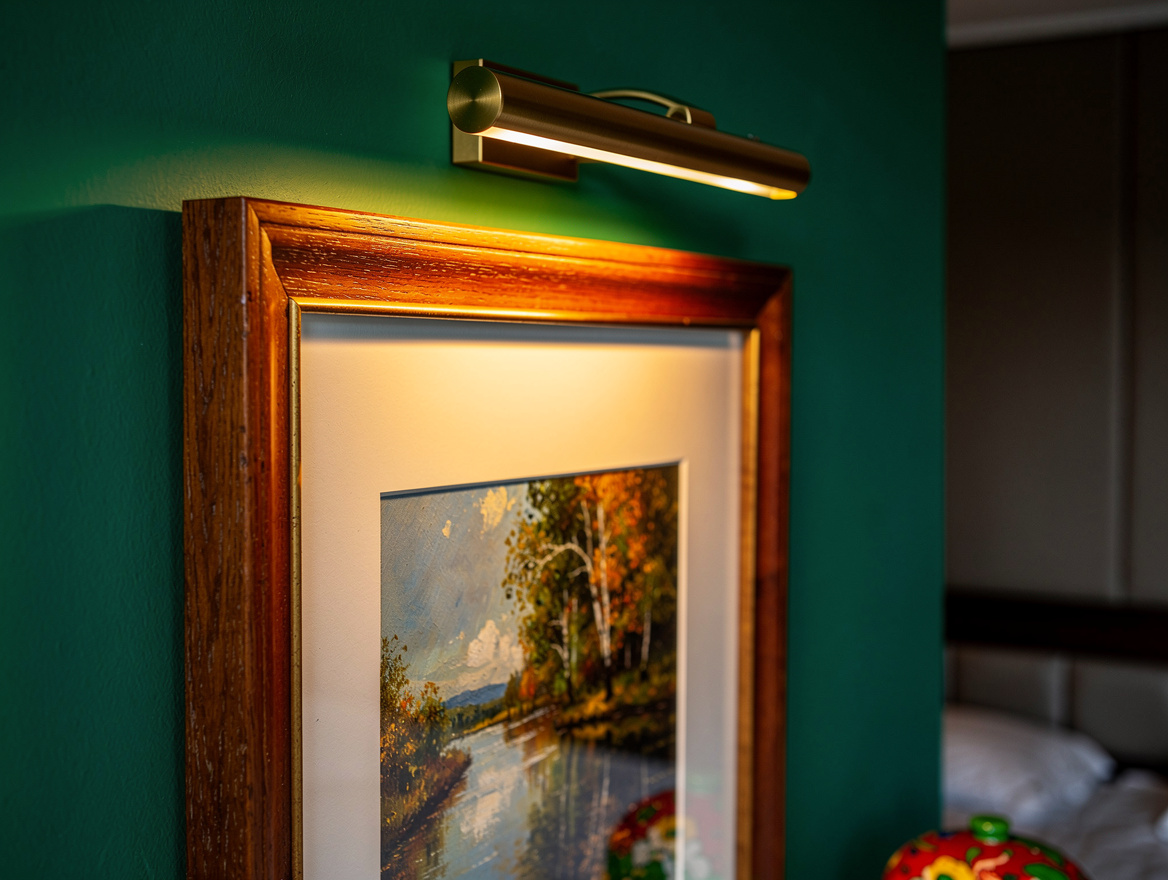
Use brass or satin-gold finishes when the room already has warm hardware, but keep the fixture visually narrow. My preference is clear: one carefully lit piece beats a wall crowded with small frames and uneven illumination.
Place the artwork where you see it from the bed, ideally above a dresser or on the opposite wall. The glow should invite your eye across the room without shining directly into it.
Scale the Light to the Frame
The light should support the frame, not overpower it. For a landscape-format piece around 36 inches wide, a picture light around 16 inches long creates a balanced starting proportion.
A practical rule is to choose a fixture roughly one-third to one-half the width of the frame, then adjust for the artwork’s visual weight. A dark photograph may need more presence than a pale watercolor, even when both share the same dimensions.
An IKEA RÖDALM frame has a nominal 24-by-36-inch picture size and costs about $34.99. Pairing it with a budget picture light in the $30-to-$40 range creates an art-and-fixture allowance of roughly $70 to $75 before the print, batteries, fixings, and delivery.
Set the Mounting Height Before Drilling
Start the picture light around 4 to 6 inches above the frame, then test the spread on the wall before making permanent holes. That small adjustment can determine whether the artwork reads softly or catches a harsh reflection in the glass.
Use wood or painted trim as a visual reference when judging the gap. The light should feel attached to the composition, with enough breathing room to avoid looking like a shelf installed too close to the ceiling.
For a rental, hold the fixture in place with temporary mounting support while you check the viewing angle from the pillows and the doorway. A picture light that looks perfect straight on can feel too low or too bright from the side.
Choose Warm, Dimmable Illumination
Begin with dimmable 2700K light for a bedroom. It gives the artwork a warm wash and keeps the room restful, while a brighter setting can help you inspect the frame or clean the glass.
Choose LED when you want a cooler-running fixture with simple everyday control. The key is restraint: the beam should wash across the art and nearby wall, never create a bright spotlight that bounces back from the glazing.
Let the bedside lamps remain softer than the artwork light. A warm linen shade on each nightstand can provide the background glow that makes the illuminated frame feel intentional instead of isolated.
Create a Flexible Dresser Display
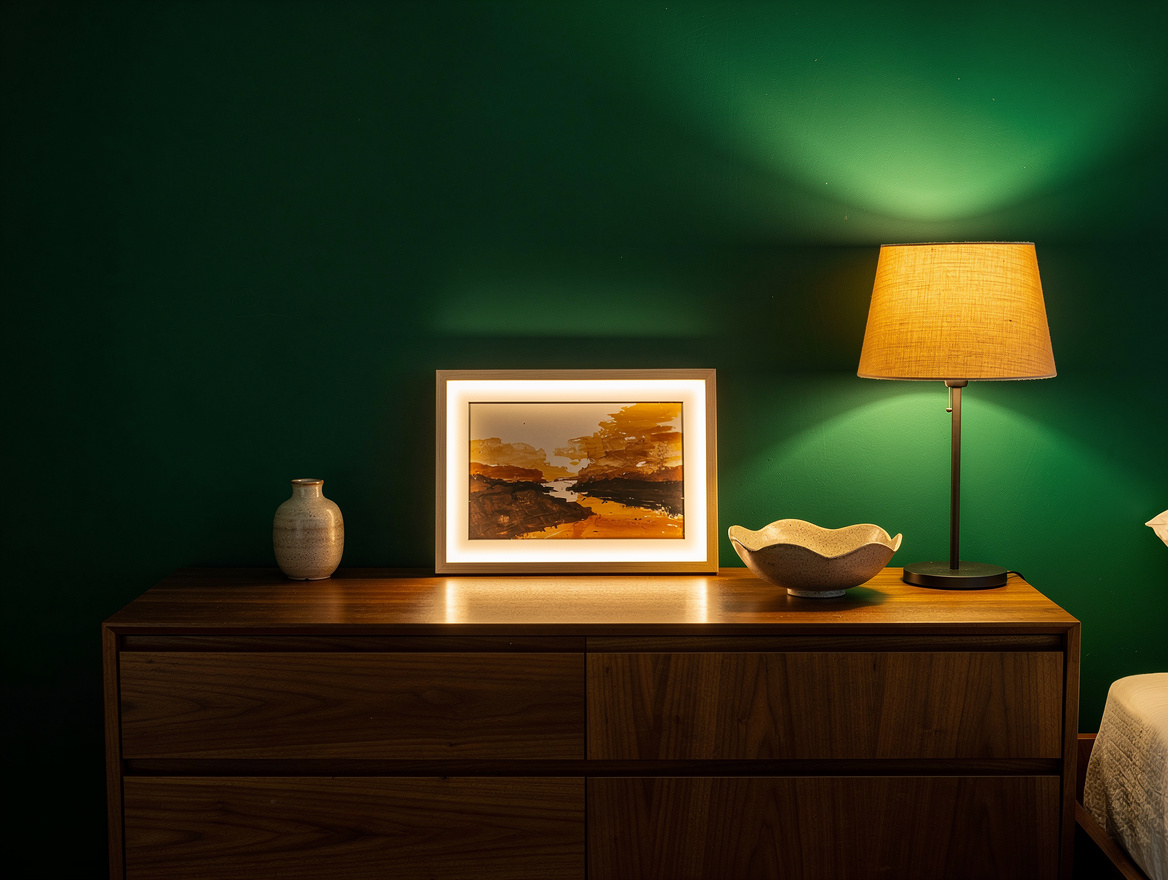
A dresser gives picture lighting room to work because the artwork can sit above furniture rather than directly over pillows. It also lets you change the display without rebuilding the entire wall.
The IKEA MÅLERÅS picture ledge costs about $19.99 or $24.99, depending on length, and uses bamboo. It works well for a smaller arrangement where you can lean art, add a thin object, and keep the composition easy to refresh.
Keep the ledge edited. One framed print, one small ceramic object, and a little open wall will look calmer than a tightly packed row competing with the light.
Spend on the Finish and the Control
For 2026 shopping, a typical starting budget is about $30 to $80 for an inexpensive picture light. More decorative cordless or designer-style options usually run roughly $200 to $325 for the fixture alone, before installation.
Choose Amazon or Home Depot when you are testing the idea and want a lower-cost adjustable fixture. Move toward a more decorative fitting when the bedroom already has a settled hardware story and the light will remain part of the room for years.
Read the construction details instead of trusting the color label. Antique brass, satin gold, and burnished brass can describe the appearance rather than solid metal, so confirm the stated material before paying a premium.
A cordless option can protect the clean look above a dresser, while a hardwired fitting may suit a permanent renovation. Either way, confirm installation and electrical requirements before ordering.
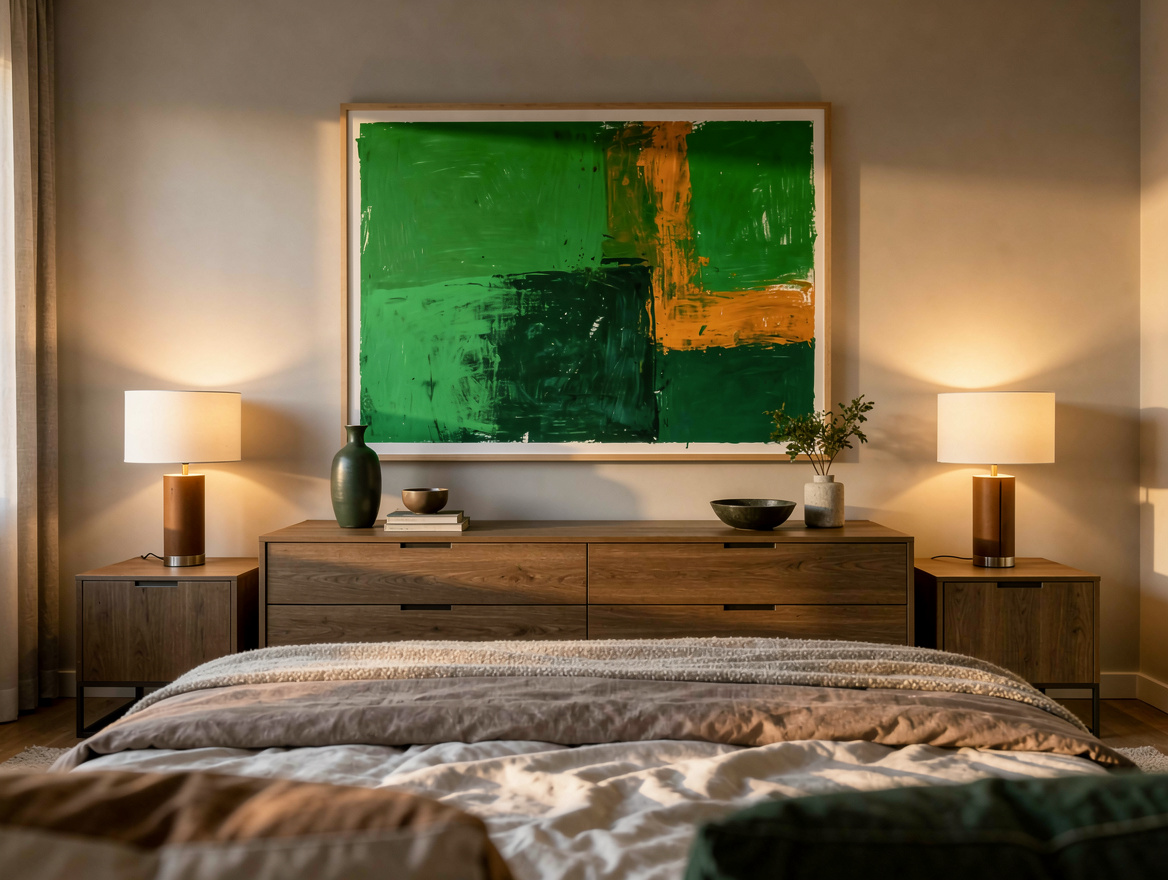
Start with the wall you see from the bed, test a warm dimmable beam, and adjust the height before drilling. Once the artwork glows without glare, let the bedside lamps stay gentle and leave the ceiling fixture out of the spotlight.
Mia Carter writes about small-space living and budget home makeovers. She has restyled three rentals and tests most ideas in her own 45 sqm flat.