Saatva Zenhaven Latex is the better fit for shoppers who want a reversible natural latex mattress with two distinct firmness choices. If your priority is Restonic’s stated cashmere and AlumiLast Talalay Latex materials instead, Zenhaven is not the match: choose Restonic Biltmore Luxury Level 3.
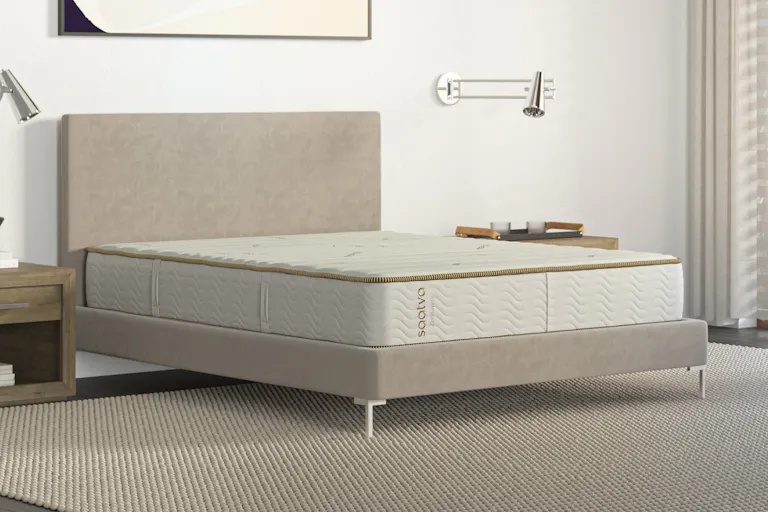
A strong alternative
Saatva Zenhaven Latex
- Two-sided design with Luxury Plush and Gentle Firm options
- Natural latex with five ergonomic zones
- 365-night home trial
- A fit for shoppers who want one mattress with two different firmness choices
Who should buy Saatva Zenhaven Latex or Restonic Biltmore Luxury Level 3?
Saatva Zenhaven Latex suits shoppers drawn to natural latex, a flippable design, and two firmness options. Restonic Biltmore Luxury Level 3 suits shoppers more interested in the materials Restonic highlights, including cashmere, individually wrapped MicroCoils, and AlumiLast Talalay Latex. The choice comes down to which of those distinct product approaches better matches your priorities.
Choose Saatva Zenhaven Latex if you want the flexibility to turn one mattress over and choose between Luxury Plush and Gentle Firm, or if natural latex is central to your search. Saatva describes the two sides for different sleep positions: the plush side is intended for side, back, and combination sleepers, while the firm side is intended for stomach and back sleepers. That makes the reversible construction a specific reason to consider Zenhaven, rather than simply a general preference for a softer or firmer bed. Restonic Biltmore Luxury Level 3 is the more relevant choice if the named materials in its description carry greater weight for you. Restonic highlights cashmere, more than 2,300 individually wrapped MicroCoils, and foam infused with aluminum fiber. Its product description also features AlumiLast Talalay Latex. These are different construction priorities, not two versions of the same design. Shoppers who want to compare more latex-focused models can also explore our best latex mattress picks, where material and design preferences can lead to options beyond this matchup.
What are the main Zenhaven and Biltmore specifications?
The clearest construction contrast is Saatva’s two sided latex design against Restonic’s listed MicroCoils, foam, cashmere, and AlumiLast Talalay Latex. The table also separates stated purchase terms from product details, so shoppers can see which comparison points are specific to the mattress and which concern the buying process.
| Comparison point | Saatva Zenhaven Latex | Restonic Biltmore Luxury Level 3 |
|---|---|---|
| Feel | Luxury Plush and Gentle Firm sides; see Saatva’s stated scale and feel below | Firmness rating not stated here |
| Construction | Flippable, five-zone natural latex mattress | More than 2,300 individually wrapped MicroCoils with cashmere, foam, and AlumiLast Talalay Latex |
| Price | No regular price tied to a named size here | Price is not published here |
| Trial | 365-night home trial | – |
| Warranty | Lifetime mattress warranty | – |
| Shipping and setup | Free white-glove delivery and setup; free old mattress removal when selected at checkout | – |
See Zenhaven Latex in your size
How do Zenhaven and Biltmore feel and support sleepers?
Saatva Zenhaven Latex offers two distinct feels, while Restonic Biltmore Luxury Level 3 has no firmness rating in the product information here. Luxury Plush is rated 4 to 5 and feels soft, buoyant, and body-contouring; Gentle Firm is rated 7 to 8, feels firm, and offers more push back support and responsiveness.
Saatva says Gentle Firm is 18% firmer than Luxury Plush, with more push back support and responsiveness. The brand describes Luxury Plush as best suited to side sleepers, while also listing it for back and combination sleepers. Gentle Firm is described as a true firm feel, intended for stomach sleepers and people who prefer firmer support; Saatva also lists it for back sleepers.
That range gives Zenhaven a clear advantage for a shopper who wants to change the feel by flipping the mattress rather than selecting a single comfort option. It does not make Zenhaven the universal choice: a shopper whose decision centers on the Biltmore’s named materials may value those features more than a reversible firmness design. Restonic’s available description does not give a firmness number or an equivalent side-by-side feel scale, so this comparison cannot place its firmness on Saatva’s scale.
For more detail about the same two-sided construction and the intended feel of each side, read our Saatva Zenhaven Latex review. It is also a useful next step if your decision is mainly about whether the stated Luxury Plush or Gentle Firm feel better fits your preferred sleep position.
Which materials distinguish these two mattresses?
Saatva Zenhaven Latex centers on natural latex, with organic cotton in its cover and New Zealand wool in its materials list. Restonic Biltmore Luxury Level 3 combines cashmere, individually wrapped MicroCoils, foam, and AlumiLast Talalay Latex. The different material lists make this a meaningful choice for shoppers who have a particular construction in mind.
Saatva describes Zenhaven as an all-foam mattress using natural latex rather than petroleum-based foams. Its listing identifies latex foam certified to the Global Organic Latex Standard and a cover blend that includes organic cotton. Saatva also says the mattress includes premium New Zealand wool certified organic. Those details give shoppers looking for latex and organic-material claims a concrete reason to investigate Zenhaven’s construction more closely.
The Biltmore features more than 2,300 individually wrapped MicroCoils, cashmere, foam, and AlumiLast Talalay Latex. Its product page highlights cashmere, more than 2,300 individually wrapped MicroCoils, foam, and AlumiLast Talalay Latex. Restonic says the proprietary technology infuses aluminum fiber into the foam’s cell structure. That is a product-specific distinction from Zenhaven’s natural latex and wool materials, not evidence that one material set is objectively better for every sleeper.
If the coil-based construction is the stronger draw, our hybrid mattress picks connect to that specific interest.
Which mattress is better for hot sleepers?
Both brands describe temperature-related features, but their claims focus on different materials. Saatva points to Zenhaven’s vented latex channels, breathable cover, and wool; Restonic says Biltmore’s cashmere and AlumiLast Talalay Latex move heat away. Those are manufacturer descriptions, not a comparable cooling test or proof that one mattress sleeps cooler.
Saatva says Zenhaven’s five-zone latex layer has vented airflow channels and describes natural latex as breathable. The brand also describes the organic cotton cover as breathable and says organic New Zealand wool helps regulate body temperature. These details explain why Saatva presents the materials as part of its breathability story, while the mattress’s two-sided design remains a separate comfort feature.
Restonic says cashmere creates an instant cooling effect and moves heat away from the body. The brand also says its AlumiLast Talalay Latex moves heat away for a cooler sleep surface. Its description separately mentions individually wrapped coils and foam edge support, but those details do not establish a cooling result. A shopper comparing the two should distinguish the materials and claims each company highlights rather than treating the wording as a head-to-head performance result.
If natural latex is your starting point for a temperature-conscious mattress search, Zenhaven’s listed materials are relevant; if cashmere and Restonic’s aluminum-fiber foam technology are the specific draw, Biltmore is the closer match. The product descriptions do not supply equivalent measured cooling data that would justify calling either model the winner.
Which offers better value without a size-matched price?
A price-led winner is not supported by this comparison, so neither mattress can be declared the better value on dollars. Zenhaven’s 5-zone construction is a tangible feature, but it does not establish relative value; the products need to be weighed by their stated materials, reversible design, and purchase terms instead.
Zenhaven’s value proposition is clearest for someone who expects to use both sides or wants to choose between two firmness feels within one mattress. If only one side matches your needs, the reversible feature may matter less to your decision. The more useful comparison is then the material and comfort profile, not simply the presence of a second side.
Biltmore’s listed materials include individually wrapped MicroCoils and AlumiLast Talalay Latex. Restonic’s page does not provide a size-specific price here, so there is no sound price comparison to make against Zenhaven. Check the current price before making a purchase decision.
Can you compare the price and purchase policies?
The table shows why an exact price comparison is not available here: Zenhaven’s displayed listing does not connect a regular amount to a named size, while Biltmore’s price is not published here. The products can still be compared on known features, but no value conclusion should be drawn from price. Zenhaven’s 5-zone latex construction is one such feature, not a price measure.
Saatva lists a 365 night home trial, free white glove delivery and setup with old mattress removal, and a lifetime mattress warranty; Restonic’s product page describes Biltmore’s design and materials. That difference can matter to someone choosing an online purchase: Zenhaven’s stated terms make the service side of the decision clearer within this comparison.
Zenhaven offers Luxury Plush and Gentle Firm sides, and Saatva lists a 365 night home trial, free white glove delivery and setup, and a lifetime mattress warranty; Biltmore’s listed materials include cashmere, individually wrapped MicroCoils, foam, and AlumiLast Talalay Latex. Zenhaven has a described home-purchase framework; Biltmore’s product description is primarily a materials and design presentation. Neither point establishes which mattress will feel better to a particular buyer, and neither turns the unspecified price information into a comparable dollar value.
Who should not buy Saatva Zenhaven Latex or Restonic Biltmore?
Skip Saatva Zenhaven Latex if you specifically want the cashmere and AlumiLast Talalay Latex materials Restonic features, or if a single fixed-feel product is more appealing than a mattress designed to be flipped. Skip Restonic Biltmore Luxury Level 3 if your purchase decision depends on a documented firmness scale or on its purchase policies appearing on the product page.
Zenhaven may not fit if you are looking for Restonic’s individually wrapped MicroCoil system. Its listing describes a latex mattress, not the individually wrapped MicroCoil system that Restonic highlights. Likewise, choose carefully if you are a stomach sleeper who prefers a softer feel: Saatva identifies the Gentle Firm side, rather than Luxury Plush, as the side intended for stomach sleepers.
Biltmore may be a poor match if your main requirement is a natural latex mattress with two available firmness sides. Restonic’s description emphasizes its own combination of cashmere, coils, foam, and AlumiLast Talalay Latex instead.
Zenhaven is a flippable latex mattress, while Saatva Classic has a dual-coil design and three comfort levels.
Is Saatva Classic a useful alternative to these two?
Saatva Classic is a relevant Saatva alternative if you prefer an innerspring mattress with a Euro pillow top rather than Zenhaven’s latex construction or Biltmore’s listed materials. Saatva lists a 3-inch Euro pillow top and a dual-coil design, including more than 1,000 recycled carbon steel coils in full size and larger.
Classic differs from Zenhaven in its combination of cushioning on top and coil-based support below. Saatva offers it in Plush Soft, Luxury Firm, and Firm, so it is a separate choice for shoppers who want a coil mattress with several comfort levels. The brand describes Luxury Firm as medium firmness and suitable for all sleep positions, while its Firm option is intended for stomach and back sleepers.
This alternative is most useful when the real decision is latex versus an innerspring design, rather than one brand’s individual technology against another’s. It does not replace the Zenhaven fit for shoppers who want a flippable natural latex mattress, and it does not provide the same Biltmore material combination. Compare the Saatva Classic review for its listed construction and comfort choices.
Which mattress should you choose?
Choose Saatva Zenhaven Latex if the two-sided latex design and its separate firmness choices solve your main shopping need. Choose Restonic Biltmore Luxury Level 3 if its cashmere, MicroCoils, and AlumiLast Talalay Latex are the more compelling features. Zenhaven is the clearer pick for reversible comfort, while Biltmore has the more specific material-led appeal.
World Sleep Almanac score: 8.3/10 for Saatva Zenhaven Latex. The rating reflects its stated construction, firmness choices, sleep-position guidance, and purchase terms, rather than a hands-on test.
- Two-sided firmness choice: 9/10. Luxury Plush and Gentle Firm provide two distinct feels in one mattress.
- Sleep-position guidance: 8/10. Saatva names positions for each side, with different intended uses for Luxury Plush and Gentle Firm.
- Purchase-term clarity: 8/10. Saatva lists its mattress trial, warranty, and delivery terms.
The score reflects the stated construction, firmness choices, sleep-position guidance, and purchase terms. It does not claim that Zenhaven outperforms Biltmore on cooling, durability, or any other untested measure.
Final verdict: Saatva Zenhaven Latex is the better choice for shoppers who want natural latex and a reversible firmness decision. Restonic Biltmore Luxury Level 3 is the more fitting alternative for shoppers drawn to its stated cashmere, MicroCoils, and AlumiLast Talalay Latex materials.
What should shoppers know about Zenhaven setup?
Saatva lists several compatible frame and base arrangements for Zenhaven, with specific exceptions for certain split and Upper-Flex sizes. Its 5-zone, dual-sided design is only part of the decision: the bed setup also matters. These answers cover the platform and adjustable-base details that are not part of the feel comparison.
Can Zenhaven sit on a platform bed?
Yes. Saatva says Zenhaven can be placed on a platform bed with a solid surface, or on plywood, masonite board, or a bunkie board placed over the slats to protect the dual-sided mattress.
Which adjustable base fits Zenhaven Split King?
Saatva says Zenhaven Split King pairs exclusively with its Split King adjustable bases. That compatibility detail is specific to the Split King configuration.
Which adjustable base fits Zenhaven Upper-Flex King?
Saatva says Zenhaven Upper-Flex King pairs exclusively with the Saatva Adjustable Base Plus Upper-Flex King. The product page lists that configuration as its own base pairing.
Reviewed by the World Sleep Almanac editorial team. Updated October 2026.
Keep comparing
- Restonic Mattress Review 2026: Great Choice Range, Terms Vary
- SweetNight CoolNest vs Restonic Biltmore Level 3: SweetNight Wins
- Saatva Zenhaven Review: Choose It for Two Latex Feels
- Saatva Zenhaven Latex vs Lucid Blue Cooling Hybrid Mattress: Who Wins?
- Best Cooling Mattress 2026: Saatva Latex Hybrid First, Sweetnight Second
- Best Memory Foam Mattress 2026: Saatva Loom and Leaf Leads, Puffy Follows
- Lull Luxe Hybrid vs Serta NXG: Lull for Foam, Serta for Firm
- Birch Elite Natural vs Serta iSeries NXG: Birch Wins