
These 12 charcuterie board ideas for one person on a quiet night turned a $200 setup into a warm evening I didn’t have to share or clean up for days. I used what I owned, bought carefully, and built the board around one quiet rule: everything had to earn its place. No leftovers.
- Build the One-Board Rule for charcuterie for one
- Warm Wood vs. White Marble
- The Cheddar Decision
- Use the Three-Height Light Stack
- What Should Touch the Board First?
- Farrow & Ball Pigeon Sets the Palette
- Fold the Meat into Generous, Imperfect Shapes
- Can the No-Leftover Ratio Feel Generous?
- Frame the Board with One Personal Object
- The Linen Landing Zone
- Swap the Big Glass for a Small Drink Ritual
- Can a Solo Snack Board Feel Like Dinner?
1Build the One-Board Rule for charcuterie for one
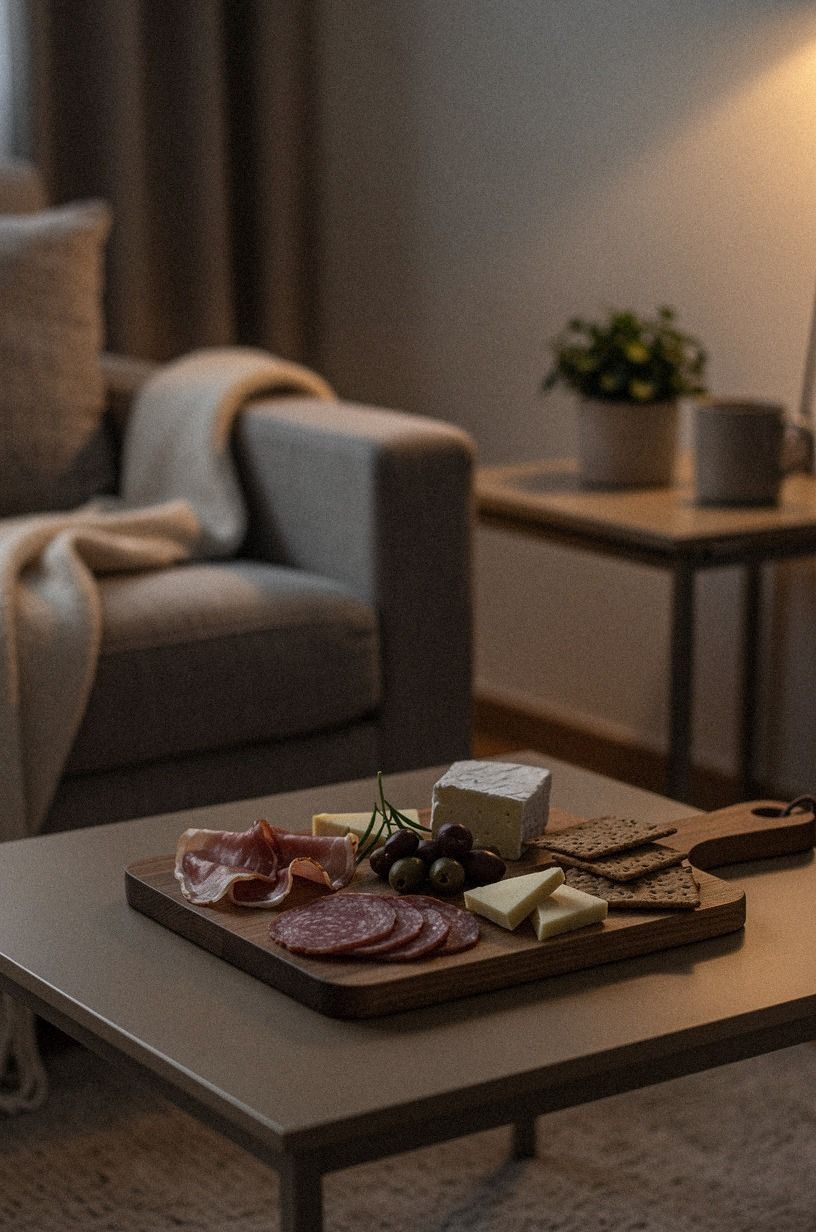
I began with one small board instead of arranging several plates around the table. The cerused white oak serving board was compact enough to keep the food close, and its pale grain made the portion feel warm and deliberate.
You don’t need a giant spread for one person. You need a surface that makes the portion feel considered.
My rule was simple: one cheese, one meat, one crisp thing, one soft thing, and one sweet finish. That’s enough variety without turning dinner into storage.
I skipped the oversized marble slab because it would’ve made the meal feel sparse. The value came from choosing the right scale, not buying more.
If you’re planning a shared version later, borrow ideas from these date night charcuterie board ideas for two people. I also liked the compact rhythm in this movie night snack board idea, although I kept my version quieter and more substantial.
2Warm Wood vs. White Marble
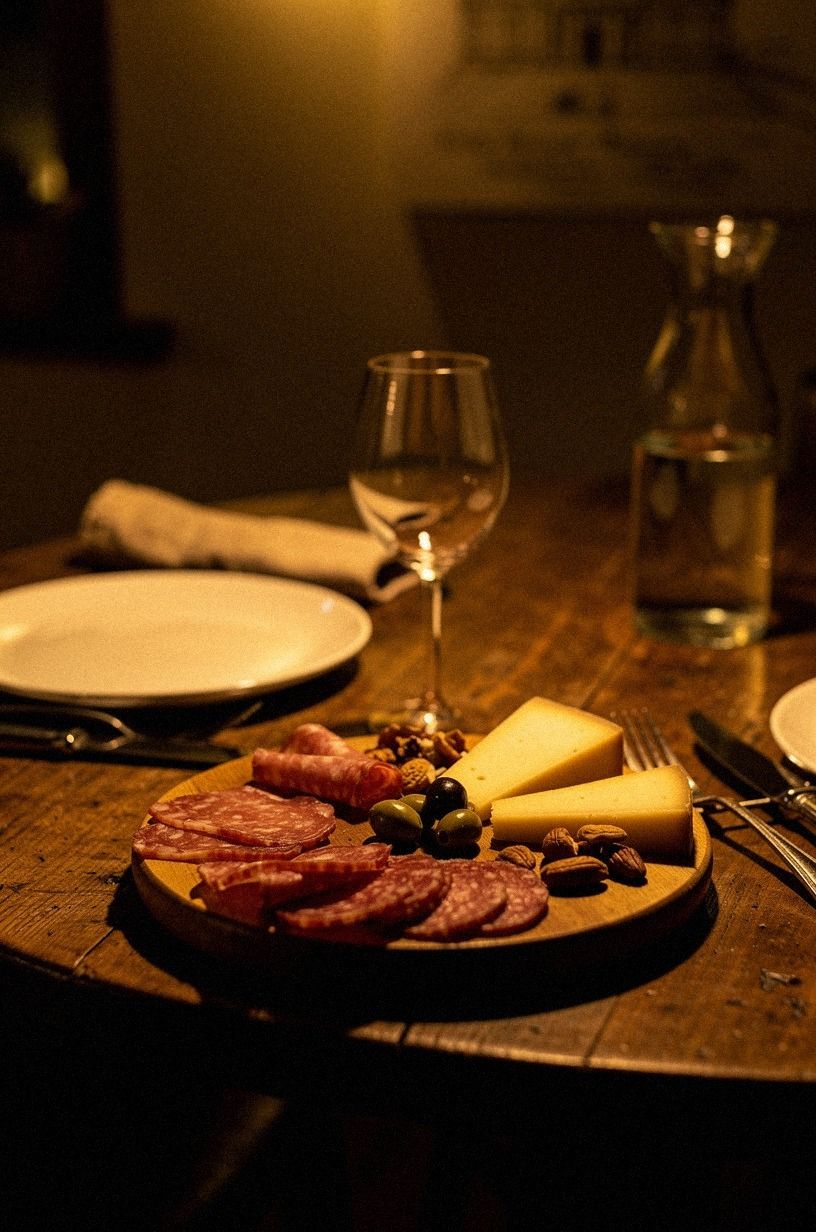
White marble looked polished in the shop, but I knew it would make my small serving look colder under the ceiling light. I chose backlit translucent onyx instead, with midnight blue, copper, and ivory notes that gave the setting more depth. You can feel the difference before you taste anything.
The stone carries light softly, and the room feels less formal.
I placed a folded square of Belgian flax linen under one corner so the stone wouldn’t slide. That small texture made the setting feel earthy and inviting, while the linen softened the sound of the knife on the table.
I wouldn’t choose glass for this idea. It reflects every hard edge in the room, and you want your eye to settle on the food.
The cost stayed sensible because one tactile serving piece did most of the visual work. If you’re comparing the value of a new board with what you already own, start with weight, storage, and surface area. This vegan charcuterie board guide uses a similar material-first approach, and these date night charcuterie board ideas are useful when you want to judge proportions before you buy.
3The Cheddar Decision
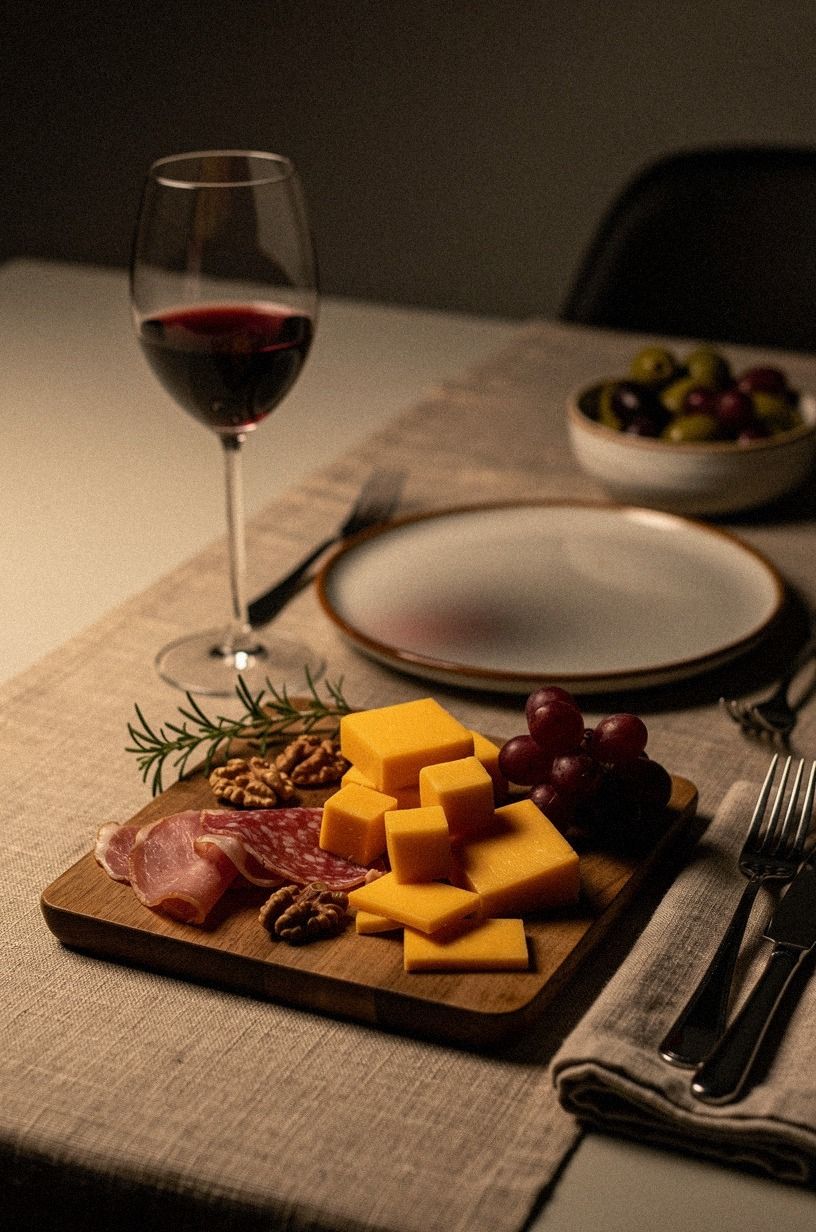
I chose a wedge of aged cheddar with sharp, salty edges and a crumbly center. One hero cheese gave the board a point of view, while three small cheese varieties would’ve made the portion look busy.
You don’t need more options when you’re eating alone. You need one thing you can notice.
I left room around the cheddar instead of crowding it with crackers. The book-matched walnut beneath it made the pale cheese feel grounded, while a small sage-green cotton velvet napkin added softness without touching the food. I tested a creamy brie first, but it disappeared against the pale setting and felt too polite for the darker wood.
If you’re choosing for yourself, pick the flavor you normally save for guests. Tonight, you’re the guest!
That single decision gave the board emotional value without increasing the budget. A memorable cheese is a better spend than five ordinary extras.
4Use the Three-Height Light Stack
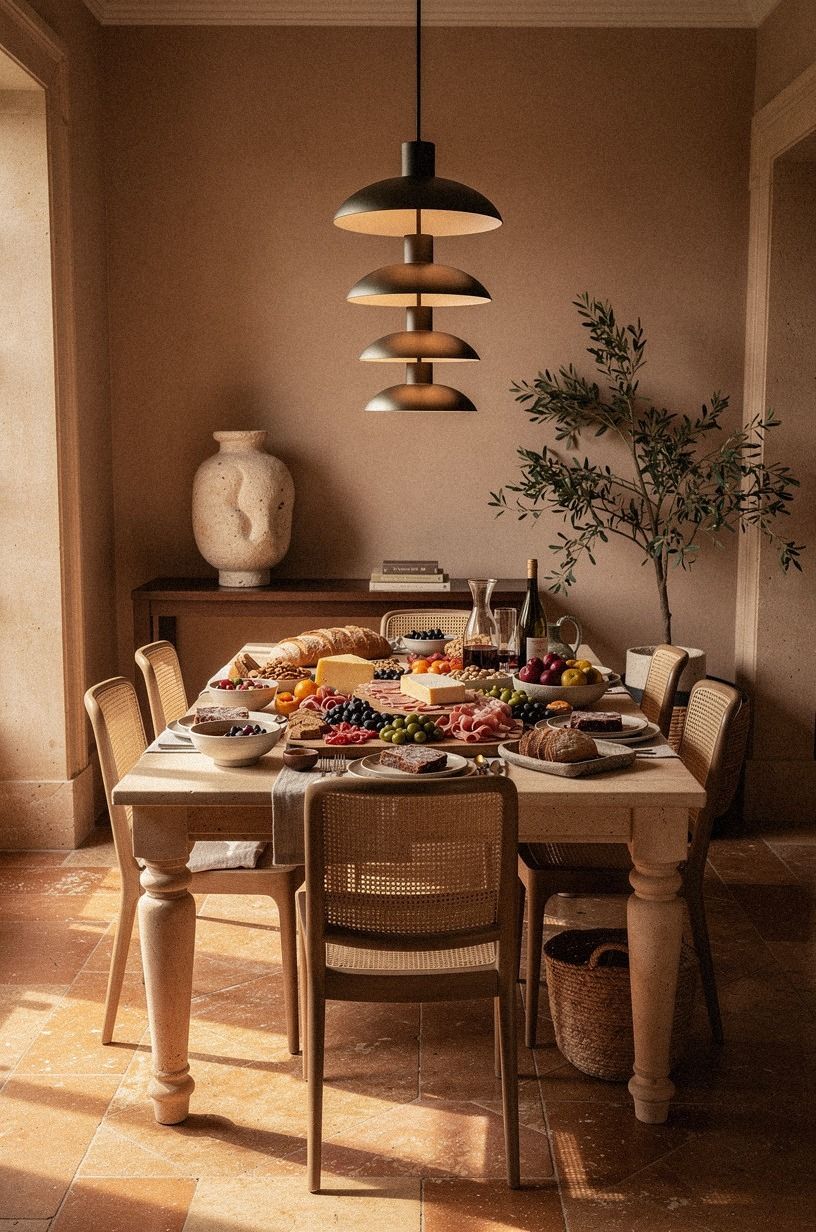
The board looked fine at noon and strangely flat after sunset. I fixed it with three light sources: the existing overhead fixture, a table lamp, and one short candle in a warm travertine holder. The standard three-source approach works because each light does a different job.
You get overhead clarity, task light near the board, and a low glow around the room.
I kept the lamp behind my right shoulder so it wouldn’t shine across the food or make a glare on the knife. The candle was low enough to keep the board visible. You don’t need a chandelier for a quiet meal.
You need layers that let your eyes move slowly.
The cost of the lighting change was almost nothing because I used what was already in the room. That’s where the best value often hides. If you’re building a snack corner for a film, this movie night snack board idea follows a similar mood, while a low lamp can make the same setup feel more intimate.
5What Should Touch the Board First?
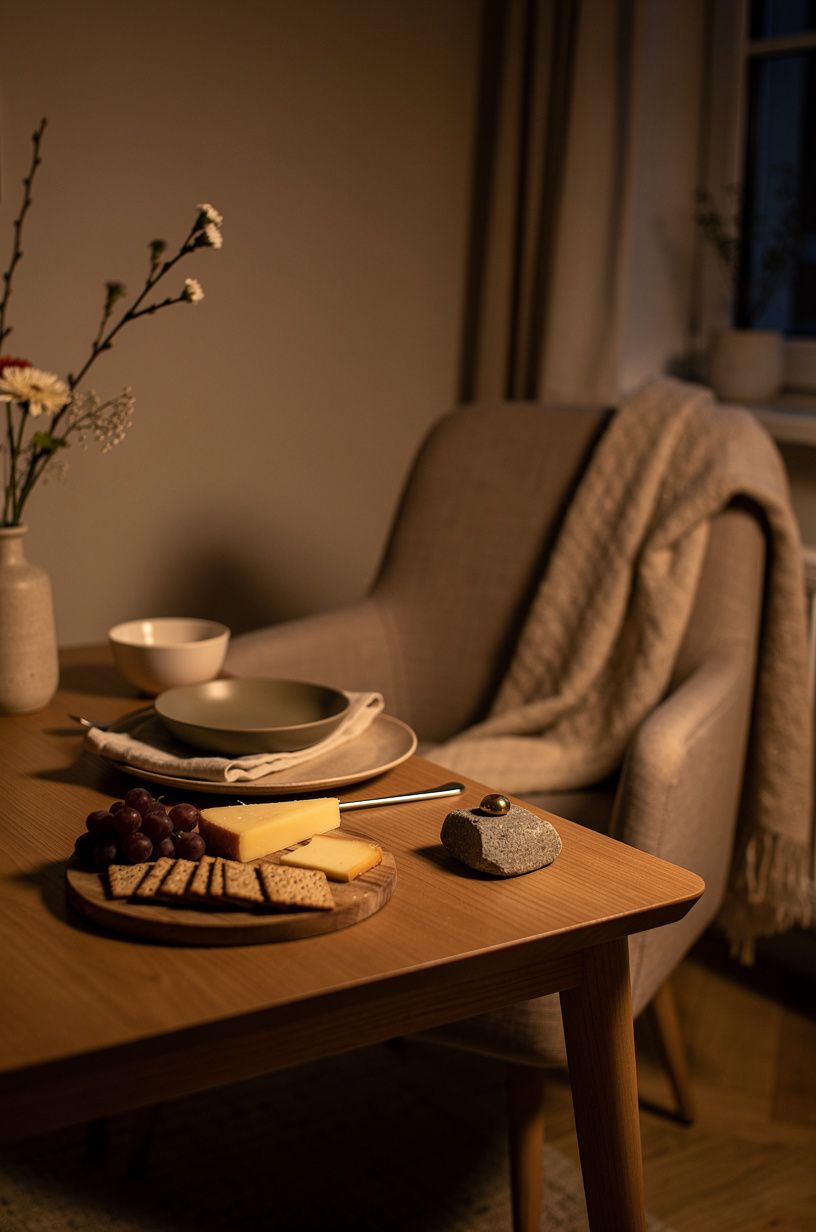
I arranged seeded crackers first, then added sliced pear and a few salted almonds.
6Farrow & Ball Pigeon Sets the Palette
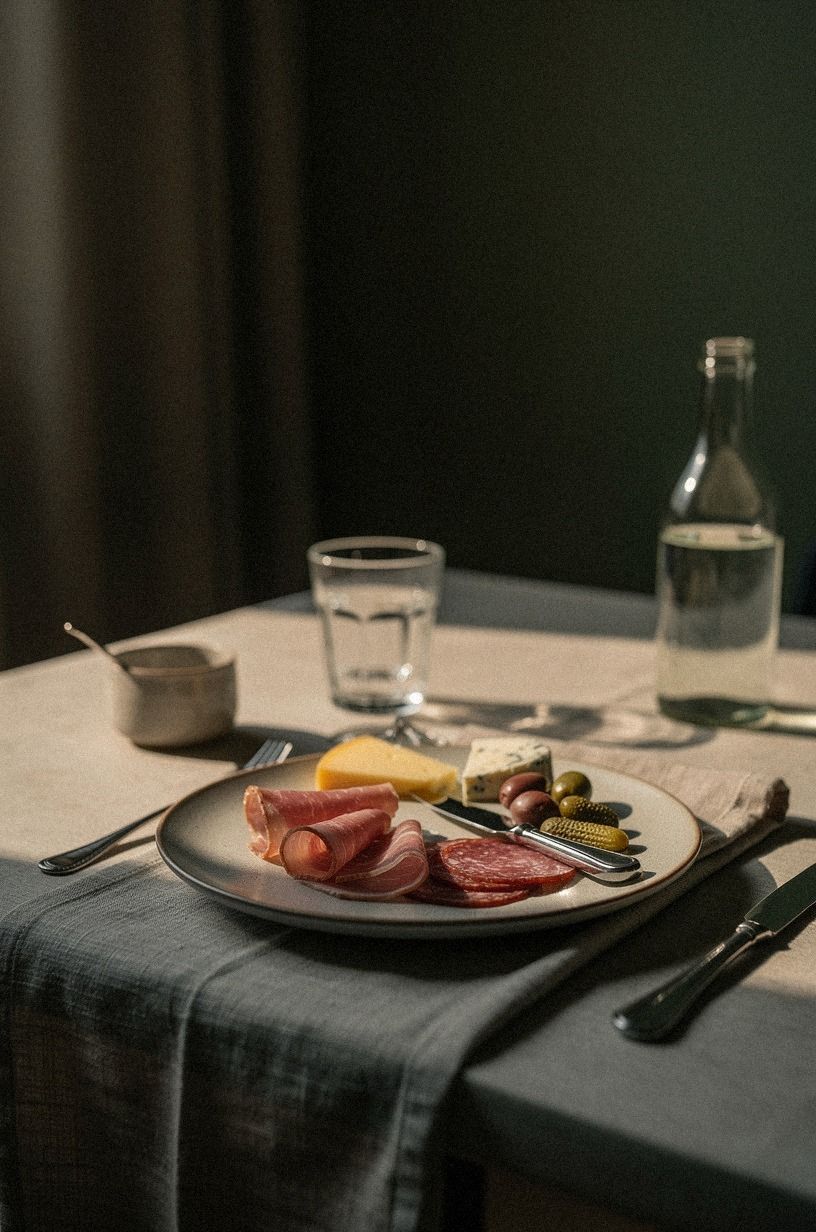
I wanted the board to connect with the room, so I used a palette of plum, gray, and rose gold. The gray note echoed Farrow & Ball Pigeon No.25, while the plum and rose-gold accents kept the setting from feeling flat. You don’t need matching food and paint, but one shared undertone keeps a small setting from feeling random.
I added dried apricots for warmth and let the plum carry most of the color. My opinion is firm here: skip the rainbow arrangement when you’re styling for one. It reads like a children’s party, not a peaceful dinner.
A small plum mohair velvet cushion on the chair repeated the richer note without becoming a theme. An oversized-chip terrazzo tray nearby added texture and kept the setting tactile. For a livelier palette, these date night charcuterie board ideas for two people show how color can create energy, but I preferred the softer value of fewer tones.
7Fold the Meat into Generous, Imperfect Shapes
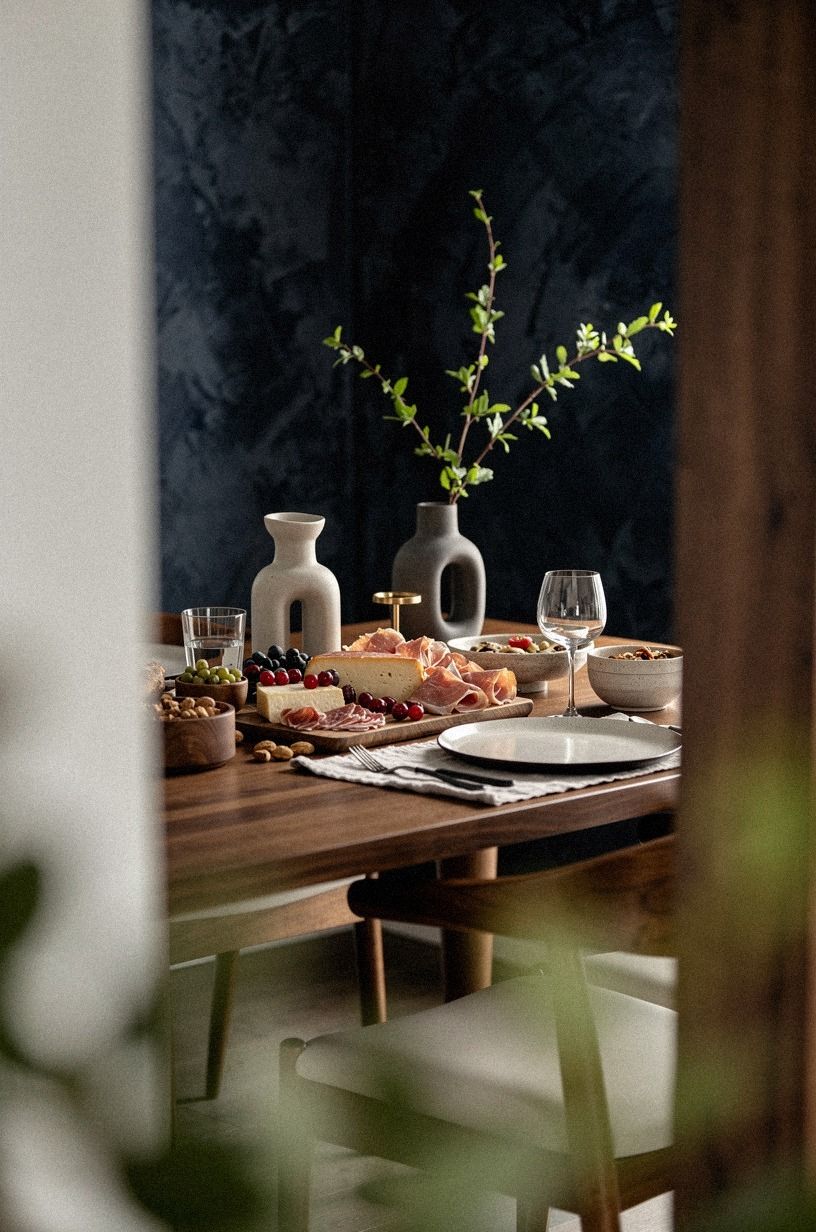
I used thin slices of prosciutto and folded each one into loose ribbons rather than making a perfect fan. The folds caught the warm light and gave the board movement.
You don’t need a decorative spiral. You need portions that look easy to pick up and eat.
I placed the meat beside the sharp cheddar, then added a small spoon of fig spread between them. That pairing made the first bite feel complete. I tried arranging everything in straight lines, but it looked like a catered display and made the quiet night feel staged.
The navy, white, and walnut palette fixed the mood because the hand-applied Venetian plaster kept the setting soft and tactile. It balanced the prosciutto’s folds without making the board feel formal. And yes, a little mess helped!
The board felt more intimate once every piece wasn’t behaving like a showroom object. That relaxed finish was worth more to me than a technically perfect arrangement.
8Can the No-Leftover Ratio Feel Generous?
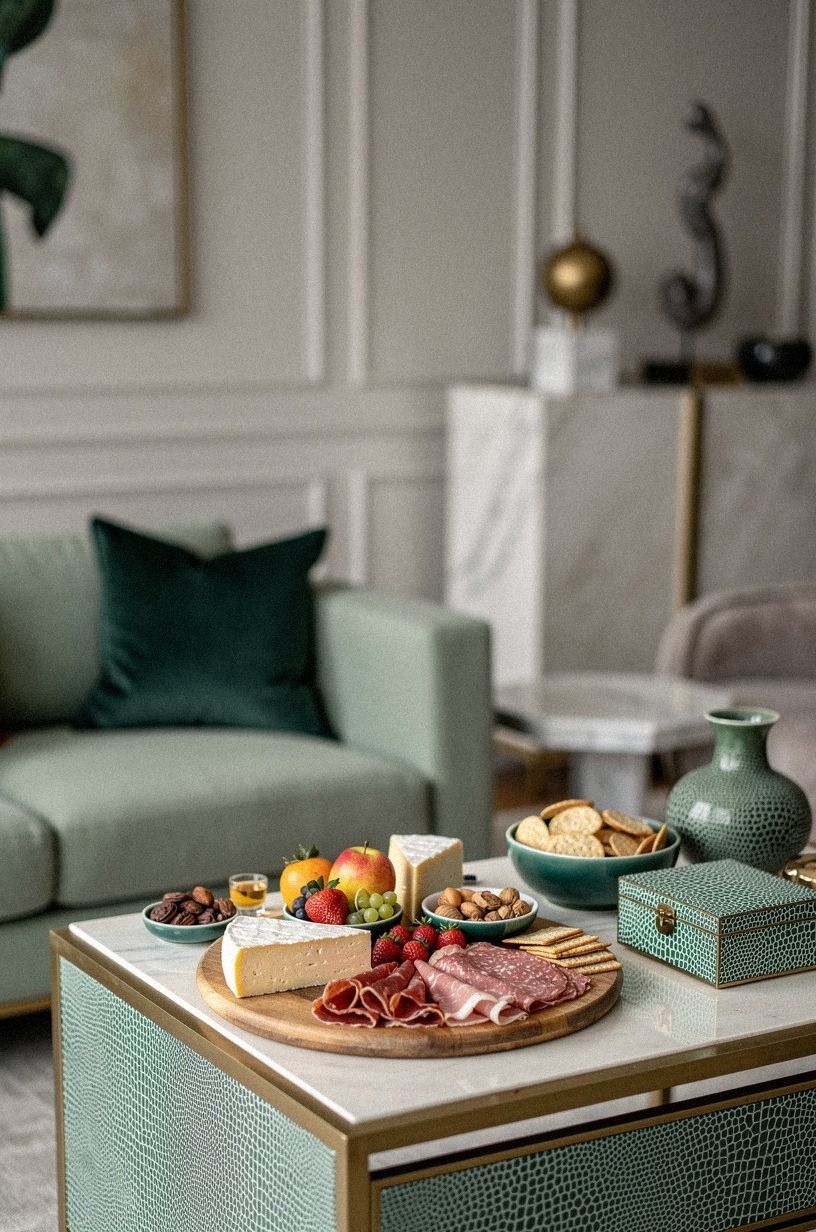
The most important decision was portion size. I cut only what I planned to eat and kept the rest of the fruit, crackers, and meat in the kitchen. The board looked full because I used small clusters, not because I piled on extra food.
You can make a single-serve charcuterie arrangement feel generous without creating tomorrow’s sad container.
I gave myself two small handfuls of crackers, a few slices of pear, and enough meat to pair with each piece of cheese. The exact amount will depend on your appetite, so I didn’t treat the board like a formula. I did treat the visual balance seriously.
A CB2 Primitivo stool with shagreen accents beside the table gave me a place to set the extra napkin, while emerald, gold, and cream kept the setting feeling rich without adding more food. If you want a plant-based version, these vegan board ideas without any meat are useful for building the same ratio. The affordable choice is usually the smaller one, especially when the goal is no waste.
9Frame the Board with One Personal Object
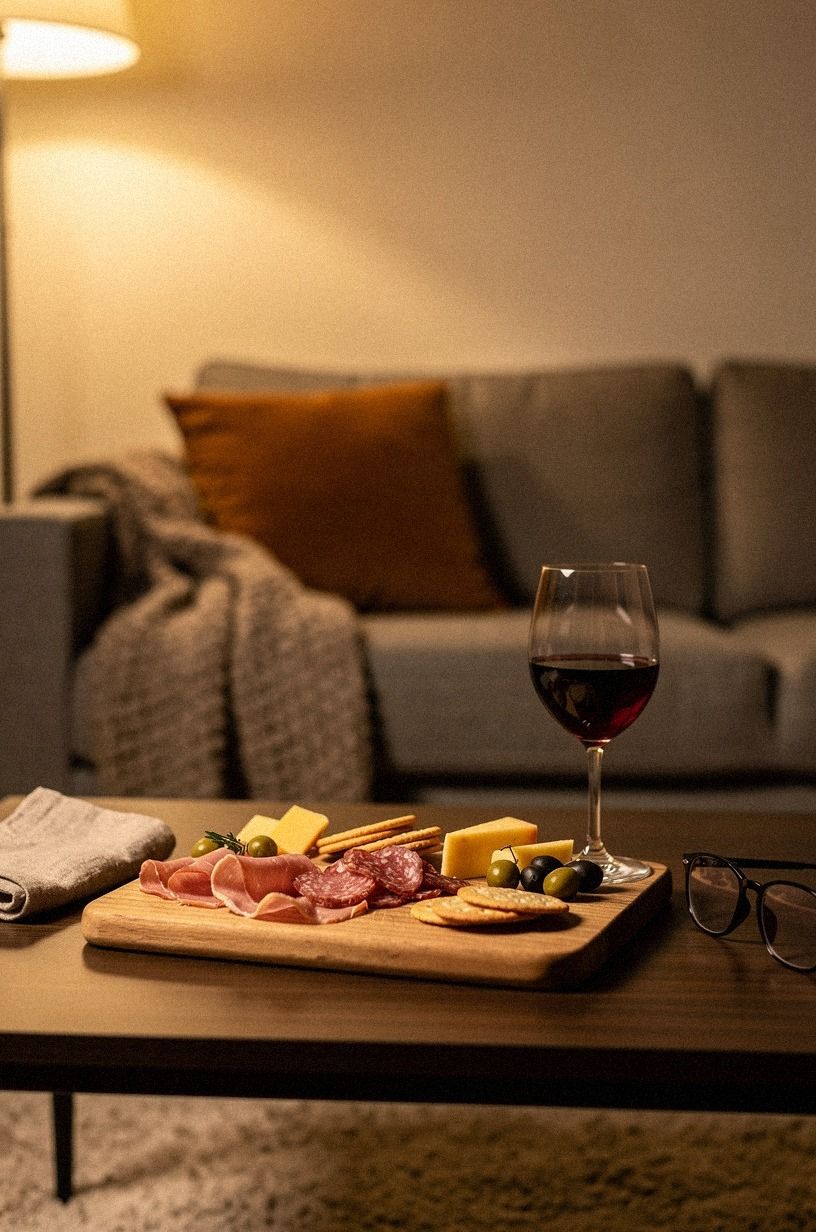
A quiet night can feel generic if every piece comes from a kitchen drawer. I placed a small framed postcard behind the board, not a large piece of art. It showed a muted landscape in rust and cream, and the image gave the setting a little history without competing with dinner.
I hung it with its center about 57 to 60 inches from the floor, the standard range that keeps art at a comfortable viewing height. You don’t need to decorate the whole wall for one meal. One object is enough when it means something.
I wouldn’t use a bright typographic print here. It would pull the room toward daytime energy.
The forest green, rust, and natural oak palette kept the setting grounded, while a strip of washed Belgian linen added softness beneath the personal object. That small detail cost less than a new centerpiece and delivered more emotional impact.
10The Linen Landing Zone
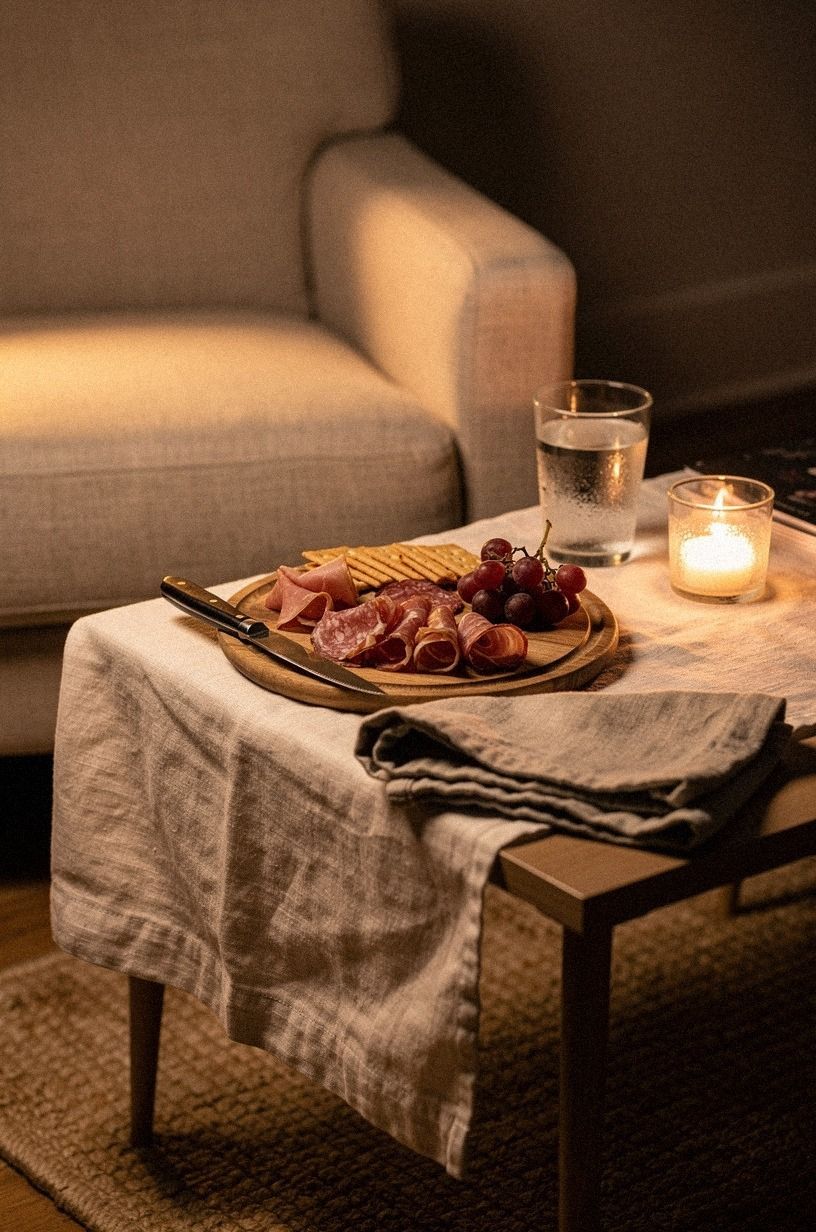
I made a landing zone beside the board for the napkin, knife, and glass. A square of dusty-rose organic bouclé marked the spot, and the texture gave my hand somewhere pleasant to rest between bites. You may think this is fussy, but the little zone kept the table from becoming a pile of objects.
The cloth extended just beyond the board, so it framed the food without turning into a full tablecloth. I skipped placemats because the wood table already had enough visual grain. If your surface is glossy, use one charcoal runner with a small brass detail instead and keep the board directly on top.
The goal isn’t decoration for its own sake. You’re making it easier for yourself to settle in, and that changes how long you stay.
For another quiet atmosphere, I liked the restrained textiles in this western bedroom with quiet textiles. The styling lesson carries over surprisingly well.
11Swap the Big Glass for a Small Drink Ritual
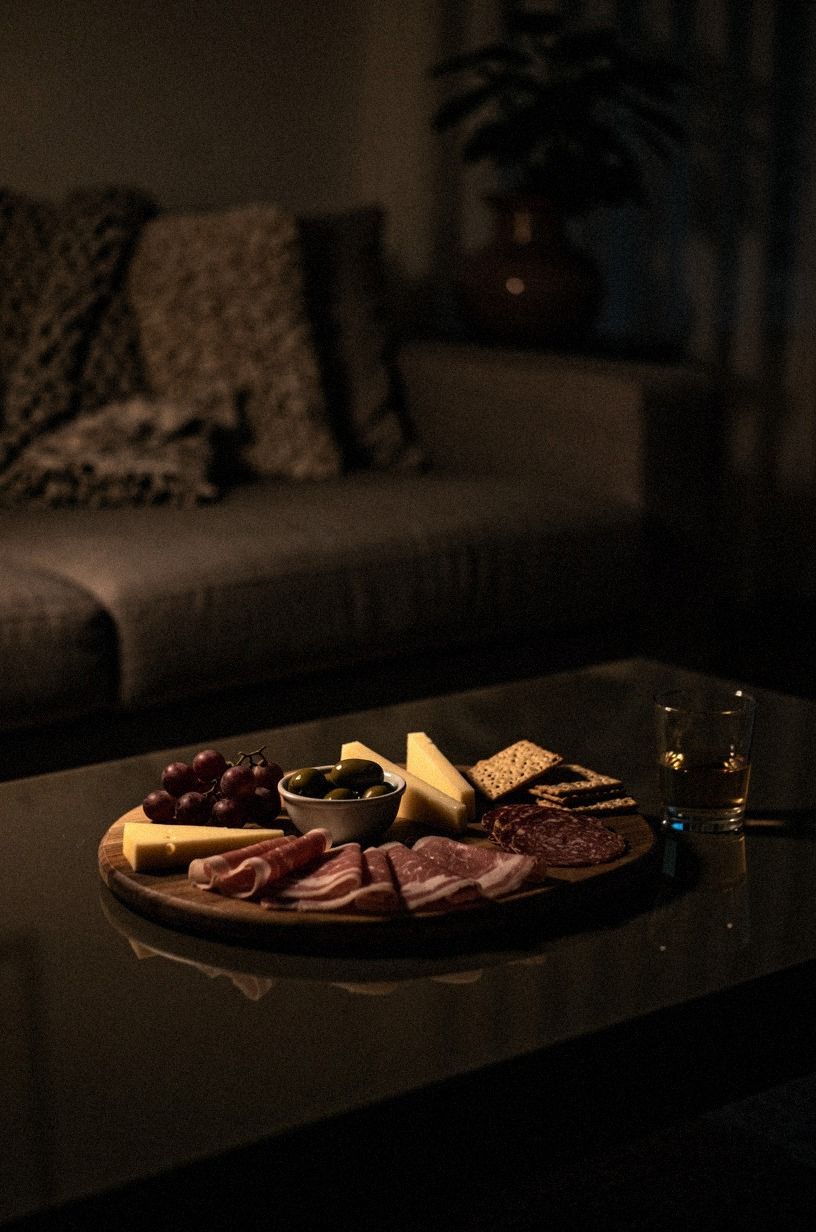
I almost poured sparkling water into a large wineglass because it was already clean. Then I chose a small smoked glass tumbler instead and set it on Nero Marquina black marble with white veins. The smaller shape made the drink feel intentional and kept the board from looking like a restaurant table waiting for more people.
I added one thin pear slice to the rim and stopped there. You don’t need a complicated drink to make dinner feel special. A small glass, cold water, and a clean coaster can carry the whole ritual.
I tested a tall glass first, but it looked too formal beside the low board. Warm white, camel, and black accents softened the setting, while the marble added just enough contrast. And when you’re alone, a repeatable ritual is worth more than an elaborate recipe you’ll never make again!
The best value here was restraint. I didn’t buy a matching set, a bar cart, or a decorative pitcher. I used one object that made the whole evening feel more considered.
12Can a Solo Snack Board Feel Like Dinner?
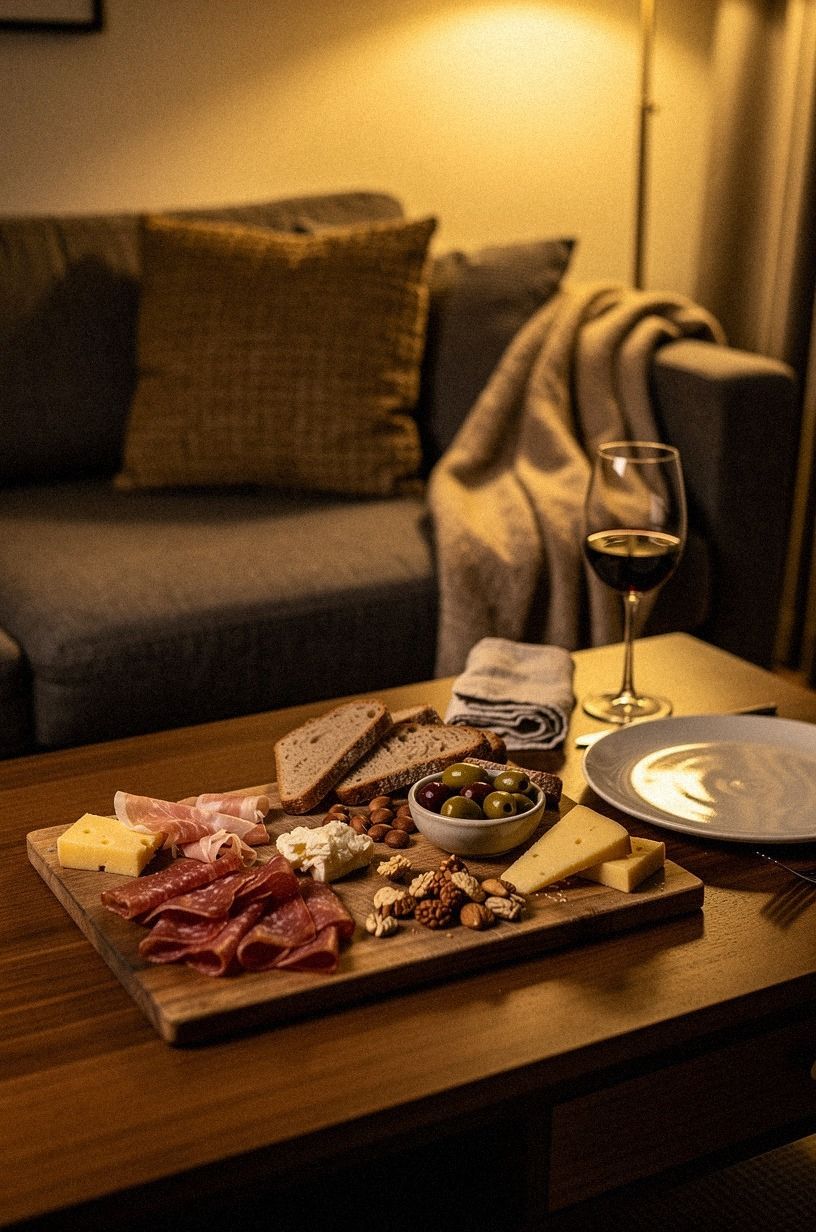
Yes, but only if you stop apologizing for the small scale.
How Much It Cost
I gave this makeover a $200 ceiling, including the board, linen, candle holder, drink glass, food, and the small art piece. The board itself didn’t need to be expensive because the room carried much of the atmosphere. I used an existing lamp, chair, and table, which saved the biggest part of the budget.
For context, these are typical US room-refresh ranges, not a claim that you need to spend them for one quiet meal.
The free changes mattered most: lowering the light, removing extra food, pulling out one chair, and choosing one personal object. If you’re renting, don’t repaint just for this evening. Use a removable linen panel, a tension rod, or a small frame resting on a shelf.
For a broader small-space reset, I also liked this Estonian town stay with a quiet, low-key atmosphere, especially for the way it treats restraint as part of the experience. The lesson is useful when you’re weighing cost against atmosphere: one thoughtful detail can carry a room.
The Case for Making Ordinary Evenings Feel Chosen
I used to think a charcuterie board was a hosting object. It belonged at birthdays, Friday gatherings, and the kind of dinner where someone arrives with flowers.
Making one for myself felt slightly ridiculous at first. Who was I performing for?
Then I noticed that the board changed the pace of the night before I took the first bite.
The point wasn’t luxury. It was attention.
I chose the gray-green Farrow & Ball Pigeon No.25 as a quiet note, softened the table with a tactile textile, and gave the food enough space to look fresh. None of those choices required a renovation. You can create an inviting corner with one useful object and one sensory decision, such as a low lamp instead of an overhead fixture.
I also learned that a small board exposes bad styling quickly. Too many colors look noisy. Too much food looks careless.
A huge serving piece makes a single portion seem lonely. That’s why I prefer the one-board rule over the abundant grazing-table approach for a quiet night. The smaller scale feels intimate, and you don’t have to manage leftovers while you’re trying to relax.
There was a practical lesson, too. I bought a large marble board once because it looked impressive in a shop. I barely used it.
It was heavy, hard to store, and too wide for a meal by myself. This time, I chose the board I could lift with one hand.
That decision was less glamorous and much smarter. You won’t regret making the setup easy to repeat.
If you’re wondering whether the ritual is worth it, ask a more useful question: what would make you stay at the table for another 20 minutes? Maybe it’s a candle.
Maybe it’s a better glass. Maybe it’s putting your phone somewhere you can’t reach it.
For me, the answer was a warm surface, small portions, and permission to make an ordinary night feel special!
What People Always Want to Know
What makes a small charcuterie board work for one person?
A small board works best with one strong cheese, one meat, one crisp element, one fruit, and one spread. An IKEA KALLAX birch-effect shelf or compact side table can hold the setting nearby. The result is calmer, easier to budget, and less wasteful.
You’ll enjoy it more when every item has a clear purpose.
Where can you buy the pieces on a budget?
Look at IKEA, Wayfair, Target, Facebook Marketplace, and local thrift shops for boards, glasses, and small trays. You can also use an Article Sven side table if you already own one.
The best savings usually come from buying one useful serving piece secondhand instead of replacing your whole kitchen setup. These date night charcuterie board ideas can help you compare scale before spending.
How much does this makeover cost?
A solo board makeover can stay around $100 to $300 when you use an existing table, lamp, and chair. Food and a serving board take the largest share.
The free improvements are light, spacing, and portion control, so you don’t need to buy every object shown in a styled room. In my view, that makes the ritual worth the cost.
Can you create this on a budget?
Yes, and you can start with three cheap changes: use a dinner plate as the base, fold a cloth napkin beneath it, and switch off the overhead light. A thrifted wood tray can replace a new board. You’ll get the warmest result by spending on one good cheese rather than five average extras.
This vegan charcuterie board guide also has useful ideas for stretching a small grocery budget.
Is a solo snack board worth it in a small space?
Yes, because a small room already supports the intimate scale. Use a board that leaves room for your hand, keep the light close, and choose one chair position.
A 9×12 rug isn’t required, but if you already have one, let the table overlap it so the seating zone feels grounded and comfortable. The value comes from making the room easier to enjoy.
Is this a good idea for a rental?
Yes. Use a removable frame, a tension rod with linen, a battery candle, and furniture you can move without tools.
No-damage styling keeps the evening warm without risking your deposit. You can also place art on a shelf instead of hanging it, then return the room to normal in minutes. The western bedroom with quiet textiles shows how soft materials can create atmosphere without major construction.
Could I make a board for a movie night?
Absolutely. Keep the same one-board rule, then swap the fig spread for something salty and add a second crisp texture.
This movie night snack board guide has useful combinations, while a matte black bowl can hold anything too loose for the main board. It’s an affordable upgrade when you want the evening to feel more deliberate.
Does this work for a morning person?
It can, although the mood will change with the light. Use a bright window, pale linen, and a Benjamin Moore White Dove OC-17 background for a calmer daytime setting.
If you’re more of a night owl, this morning person versus night owl guide may help you shape the ritual around your natural schedule. The setup is flexible enough to earn its place beyond one evening.
Where I’d Start First
If I had to pick one, I’d start with the small wooden board. Its warm grain makes a modest portion feel intentional, while a large surface only advertises what isn’t there.
Set it near a low lamp, pour your drink, and stay at the table. That’s the part you’ll remember.