Small Front Porch Railing Ideas for Style & Safety work best when the railing stays slim, leaves a 36-inch walkway, and uses one clear material. I once chose chunky posts for a tiny porch, and the entrance felt boxed in by sunset. You don’t need a full renovation. You need proportion, light, and a railing that works hard without shouting.
- Frame the Entry With Slim Vertical Slats
- Paint the Rails in a Quiet Exterior Color
- Use The Two-Wood Rule for Raised Porch Ideas
- Swap Bulky Posts for a Cable-Line Railing
- Layer The Three-Height Light Stack
- Build a Half-Height Railing Instead of a Full Screen
- Anchor the Door With The Shadow-Line Method
- Float a Continuous Top Rail Above Simple Posts
- Mix Metal and Wood for Front Porch Wood Ideas
- Paint the Railing and Door in Different Depths
- Choose the Rail That Leaves Your Walkway Clear
1Frame the Entry With Slim Vertical Slats
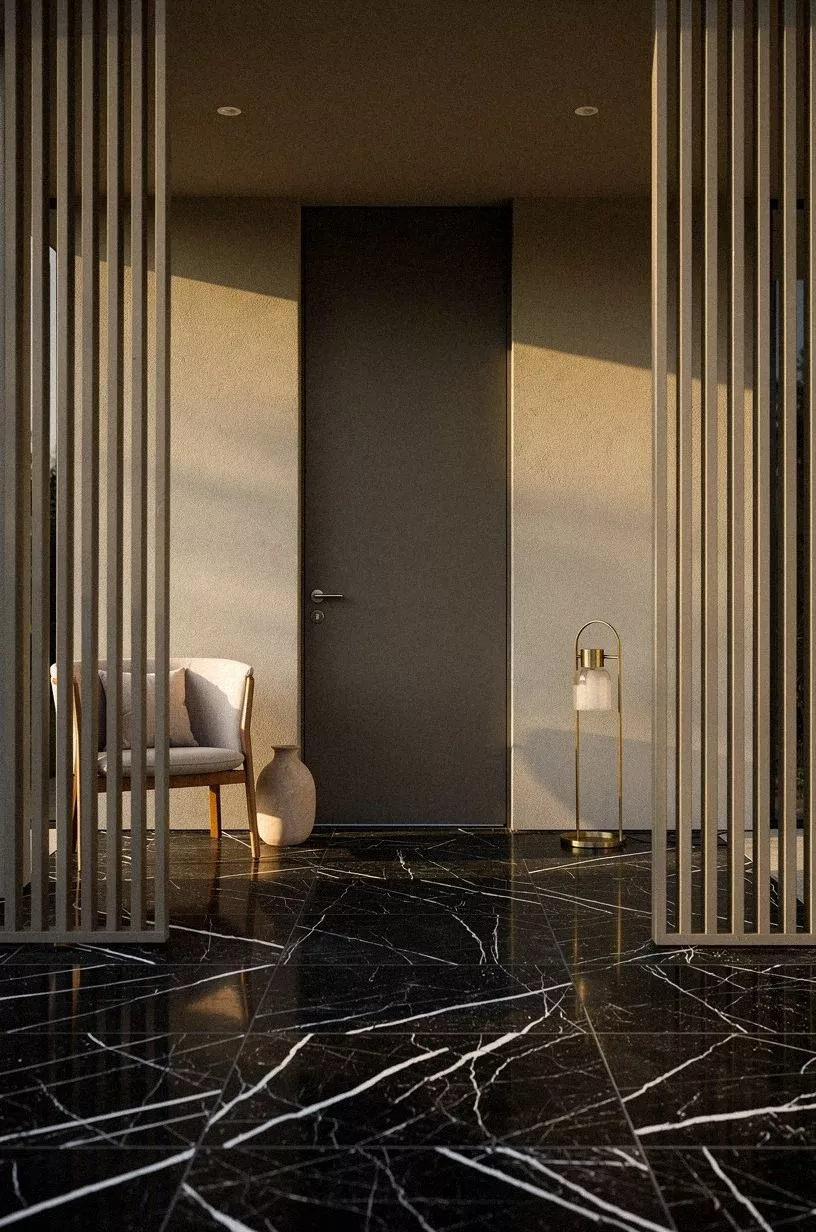
Vertical slats make a small porch feel taller while keeping the railing visually light. I’d choose clay-toned slats with an aged-brass detail, then use Nero Marquina black marble with white veins at the threshold. You’ll want the spacing to feel open from the sidewalk, but the structure still needs to read as safe and intentional.
I prefer narrow slats over wide boards because they create a graceful rhythm instead of a solid wall. The result feels airy, polished, and quietly architectural. If your porch is especially narrow, use fewer slats with slightly wider gaps rather than packing the entire edge with detail.
Keep your path open at 36 inches minimum, especially if your front door swings outward. A low bench can sit behind the railing, but it shouldn’t steal the landing area. My favorite pairing is clay-toned slats with aged brass, not a matching all-wood porch that starts to look heavy.
You can borrow the proportion from these small front porch bench ideas for style storage, then repeat the same wood tone in one planter. That small connection makes the entrance feel considered without making you buy a complete set.
2Paint the Rails in a Quiet Exterior Color
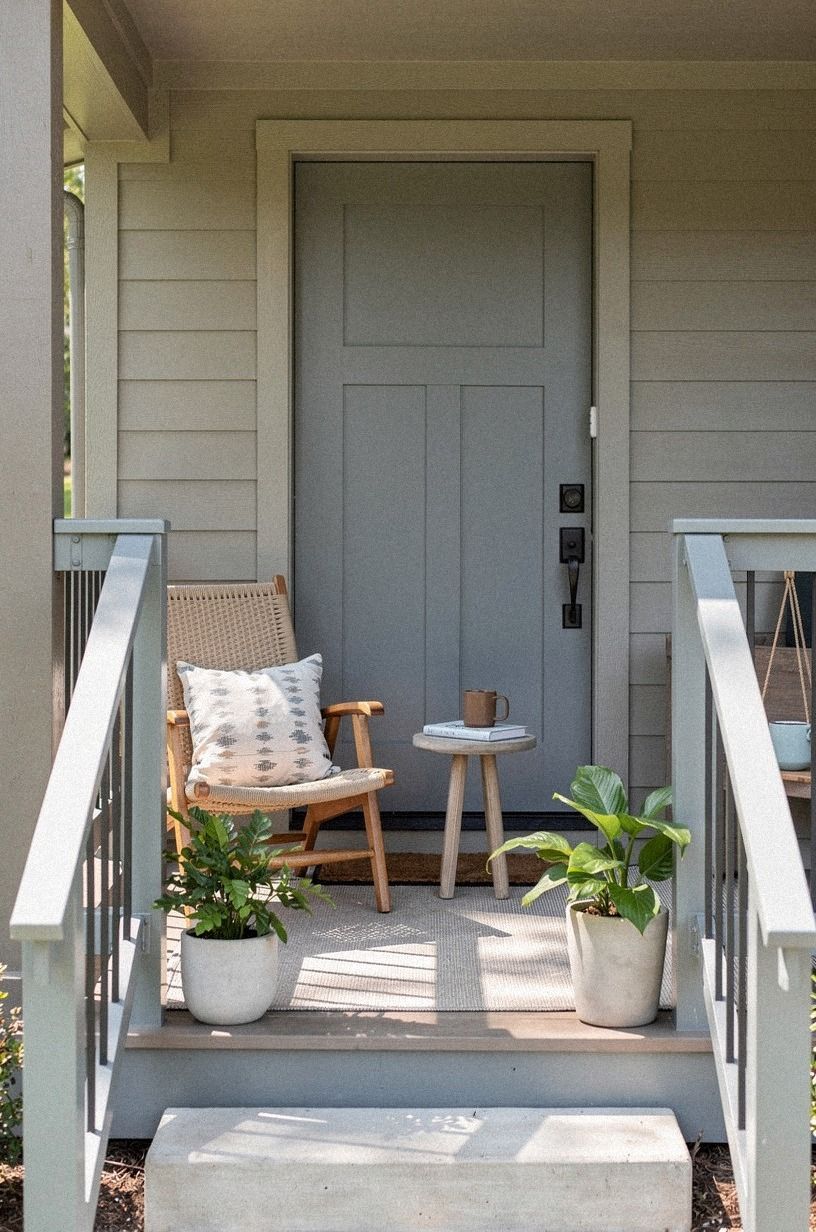
A painted railing disappears more gracefully than bare lumber when your porch is only a few feet deep. Benjamin Moore Aura Exterior in a muted plum or soft gray can soften a white facade, while Sherwin-Williams Emerald Exterior gives those quieter colors a durable finish.
You’ll want the color to relate to your door, not match every trim detail. A railing that repeats the exact trim color can flatten the entry. A slightly deeper or dustier version creates a more layered effect.
I’d skip bright white if your porch faces a busy sidewalk. It shows dust, pollen, and every little scuff, so you’ll be wiping it constantly. A muted plum or soft gray gives your front porch wood more depth.
For a covered porch, a deep-pile mohair velvet cushion can bring softness to a nearby bench without competing with the railing. A shaded porch can make gray appear blue, while plum paint may turn warmer in evening light. Farrow & Ball Exterior Eggshell can bring a gentle finish without making the railing look glossy.
A deep plum, warm mushroom, or smoky blue can make the whole entry feel richer without increasing the project cost. Paint is doing the work of several decorative upgrades here, so you won’t need much else.
3Use The Two-Wood Rule for Raised Porch Ideas
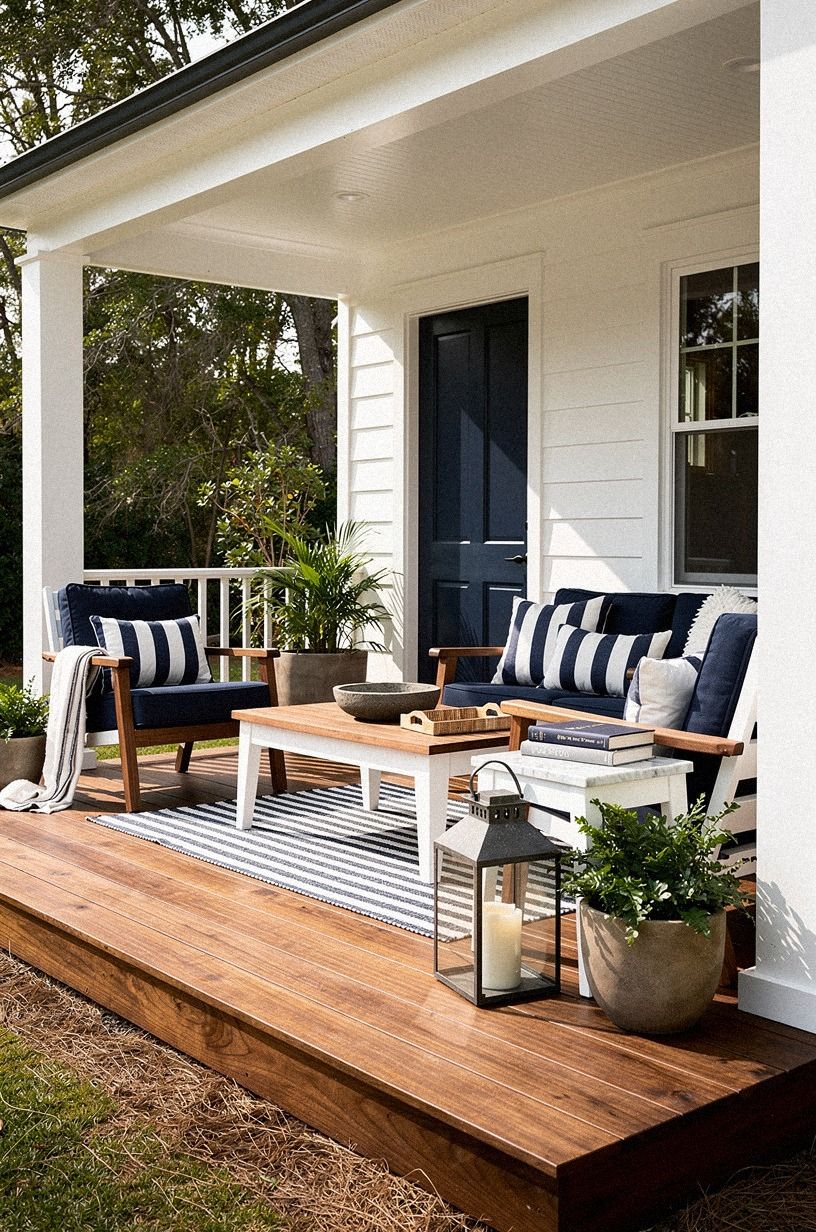
The Two-Wood Rule is simple: use walnut for the railing and a closely related lighter tone for the door or floor, then stop. A small Carrara marble with subtle gray veining threshold can bridge the two without adding another competing wood.
4Swap Bulky Posts for a Cable-Line Railing
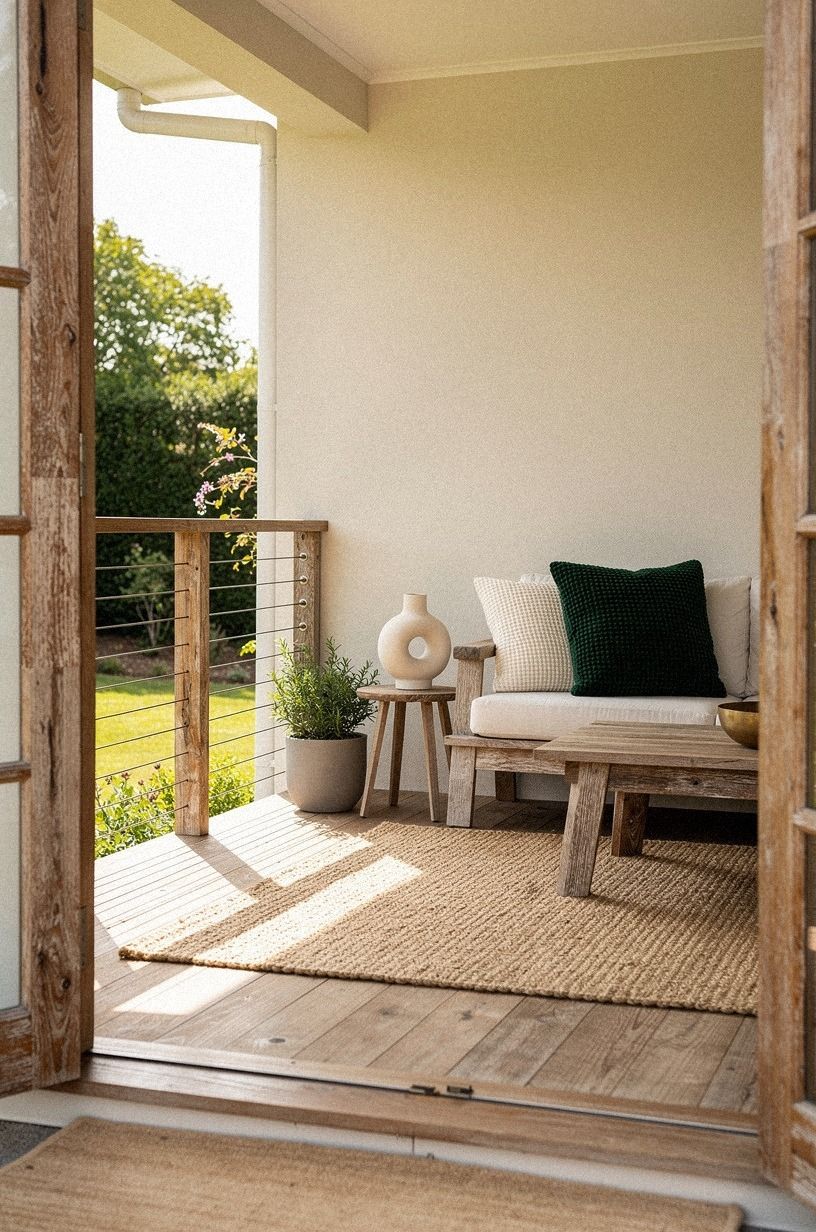
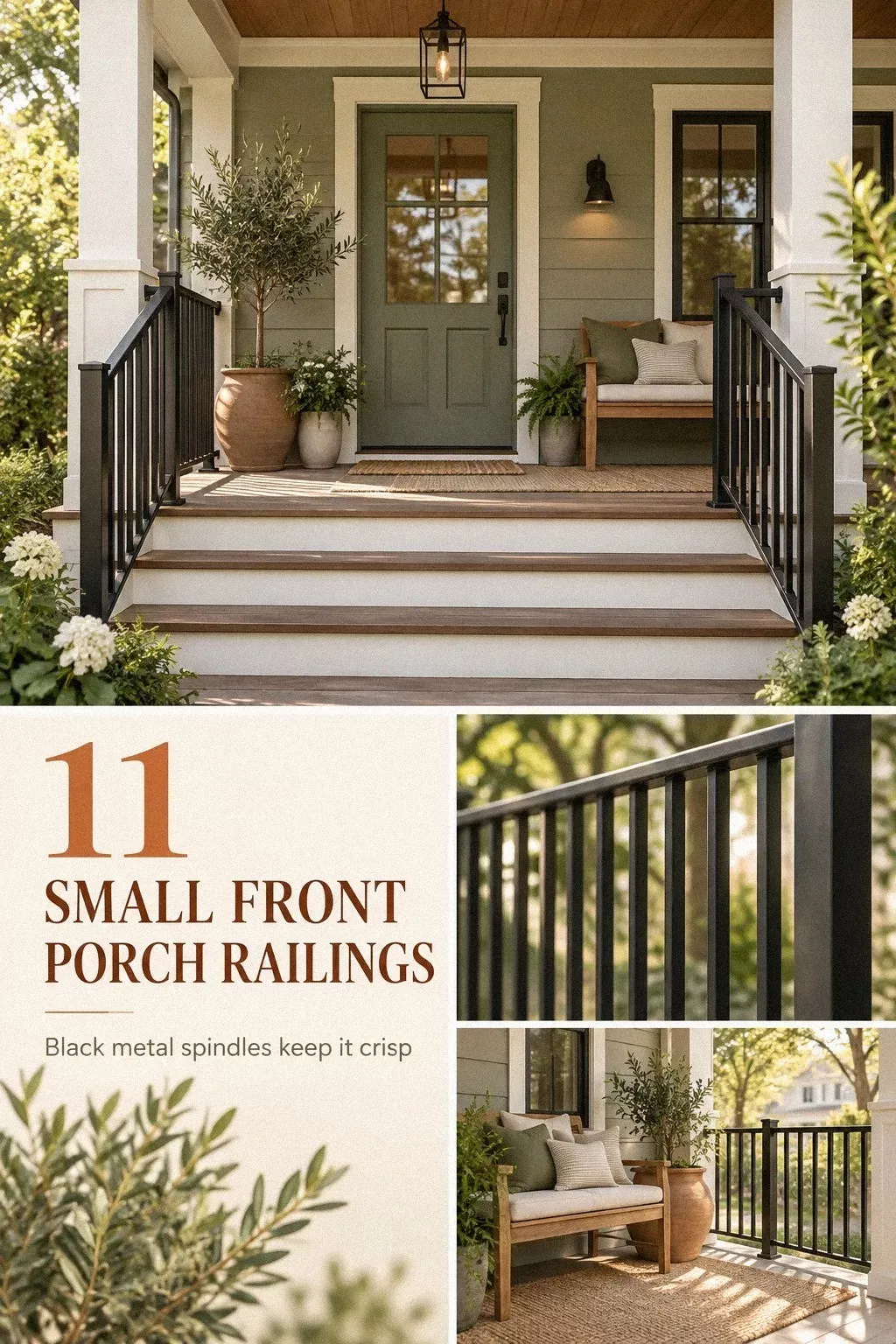
Cable railing works when you want safety without blocking the view from your front steps. Reclaimed weathered teak paired with slim gold-toned cable fittings and a cream top rail gives a small porch an airy, collected look.
You’ll still see the siding, planting, and front door behind it, which matters when the porch is barely deep enough for a doormat. Emerald planting and cream siding feel contemporary and confident, especially against simple architecture.
The detail that makes or breaks this option is the top rail. I’d avoid a thick square beam because it cancels out the lightness you wanted. Choose a rounded or softly eased profile so your hand feels comfortable in winter.
Cable isn’t automatically the affordable choice. Hardware, tensioning, posts, and local labor can raise the cost quickly. It can be worth the investment when preserving the view matters, but a slim vertical-slat system may deliver similar openness for less.
Keep your decor restrained here: one textured mat, one pot, and perhaps a small front porch seating arrangement. Don’t treat cable as maintenance-free. You’ll still need to inspect the hardware and wipe off pollen.
5Layer The Three-Height Light Stack
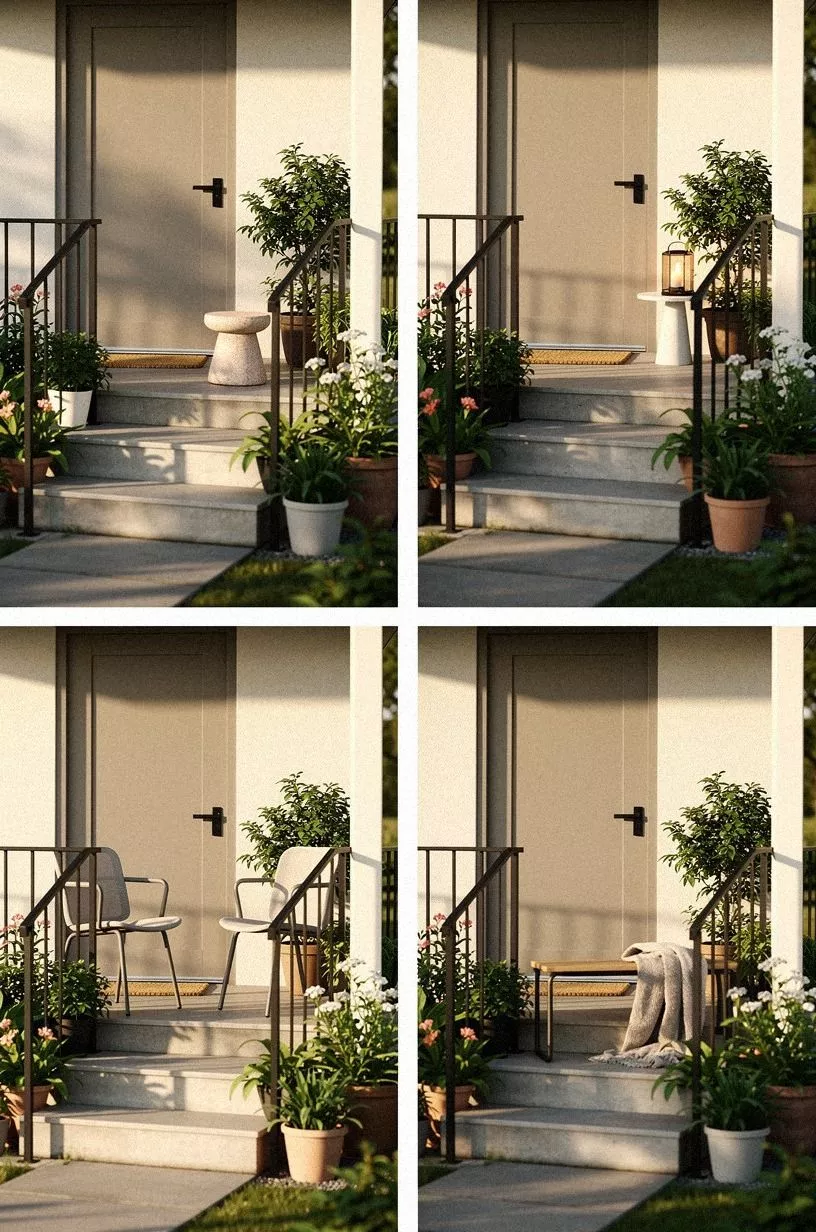
The Three-Height Light Stack gives a narrow porch a warm, welcoming glow without filling the floor. Start with a wall lantern at eye level, add a low planter, and finish with a railing detail that sits between them.
Warm LED string lights can run beneath the top rail if your porch has a roof, but keep the bulbs small and the cable hidden. A compact lantern with a rust finish and natural-oak detail can make the entry feel more inviting without requiring a major electrical project.
Your lighting should guide people toward the door, not turn the railing into a carnival. I’d choose amber light over blue-white bulbs every time because it makes forest-green rails look softer after dark. A small Calacatta marble ledge with subtle gold veining can add polish without taking up floor space.
A small porch needs contrast, so let one section stay shadowed. Too much brightness removes the intimate quality that makes a front entry feel special. You want the porch to glow, not glare.
You can see how that balance works beside a small front porch swing, where the light needs to frame the seat without shining directly into your eyes. If you’re adding lighting, hide the cable and keep the number of fixtures low.
6Build a Half-Height Railing Instead of a Full Screen
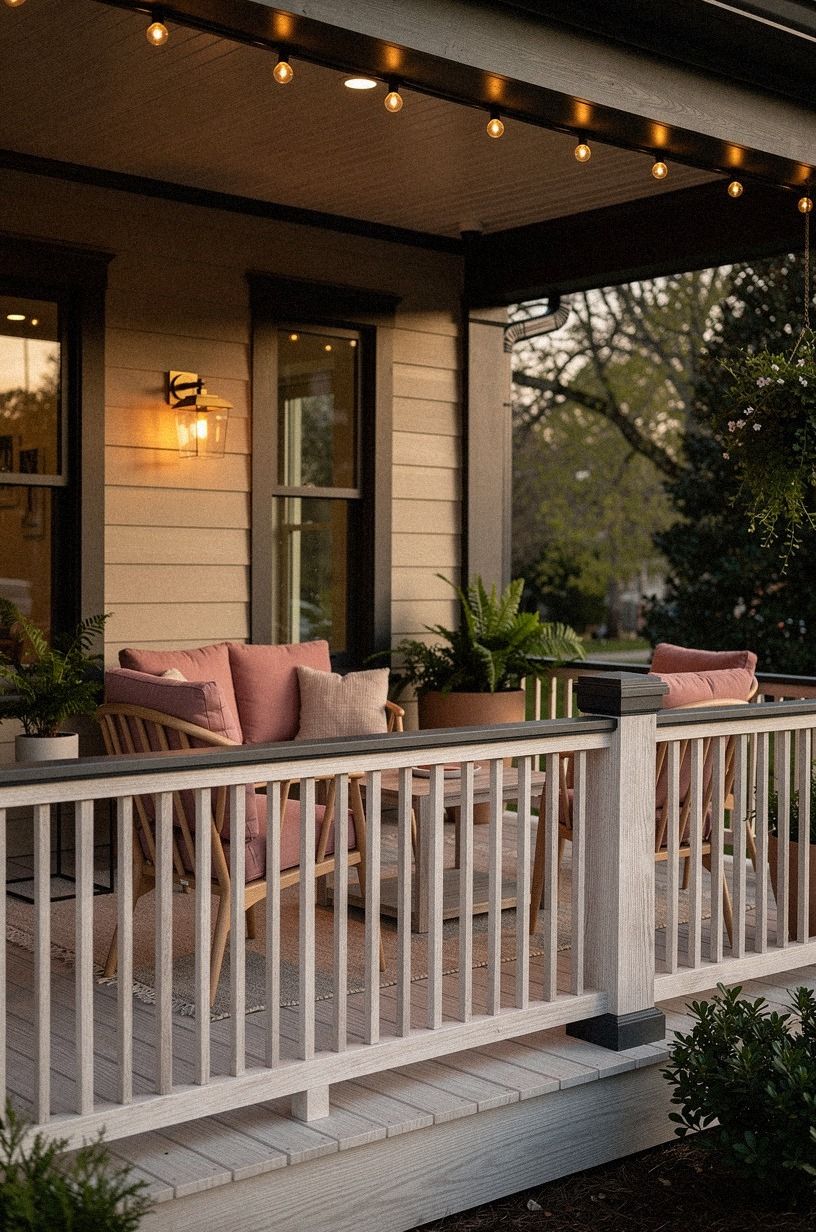
A half-height railing protects the edge while preserving the open feeling that makes a small porch inviting. Cerused white oak gives the rail warmth, while dusty-rose accents and a charcoal detail can bring contrast without making the entrance feel busy.
You’ll want the top line to sit low enough that you can see over it from the front door. The exact height depends on local code, the porch elevation, and how the railing is being used, so confirm the requirements before ordering materials.
This is where proportion matters more than decoration. I’d choose a simple horizontal cap and let your house siding do the textural work. A full privacy screen may sound comforting, but it can make your entry feel closed off and dim.
Use the half-height idea near the steps, then repeat the color in a pot or doormat. For a seasonal layer, these small front porch spring decor ideas show how little greenery can soften hard lines.
The best version feels protective but not defensive. That distinction matters when the porch is narrow.
7Anchor the Door With The Shadow-Line Method
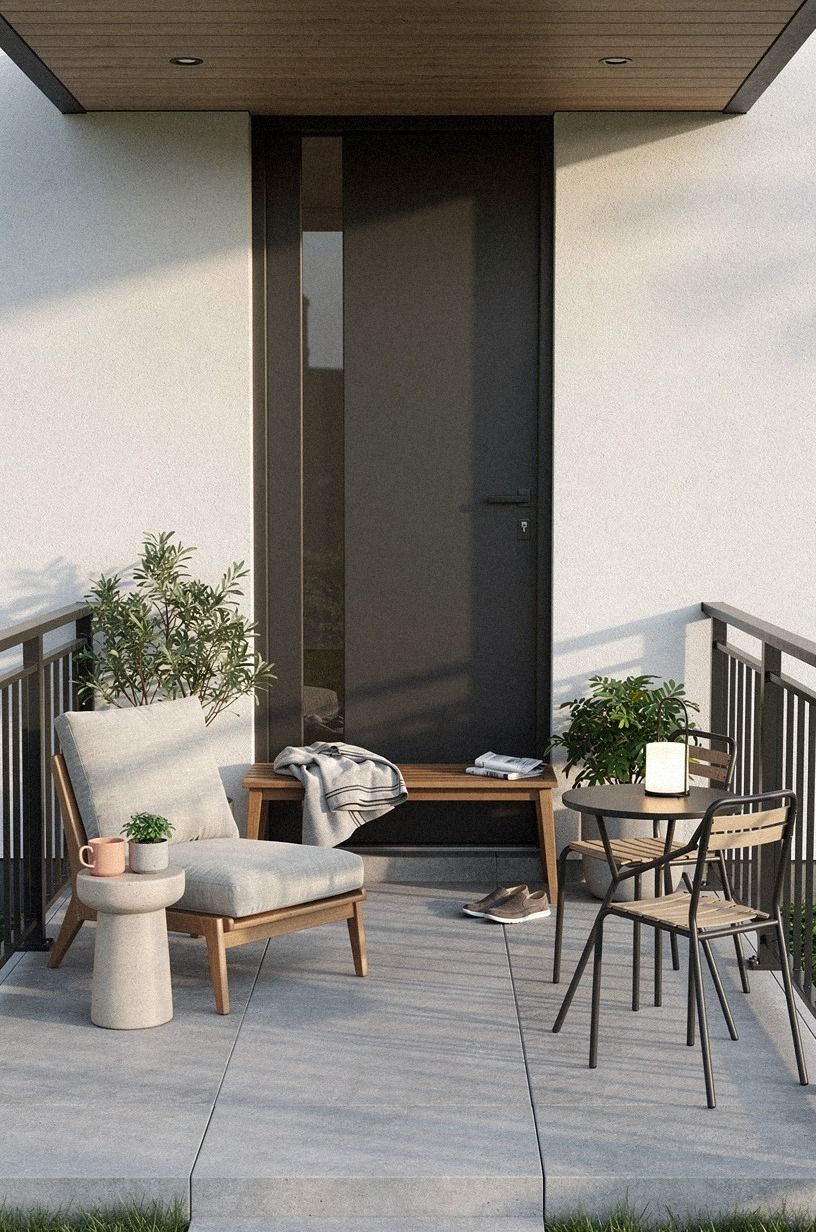
The Shadow-Line Method uses a warm-white railing with black accents to outline the porch edge while leaving the door and siding lighter. Backlit translucent onyx can add a quiet glow at the threshold without requiring extra ornament.
You’ll get a clean boundary around the porch, and your entry will look more architectural without adding clutter. This is useful when the facade feels flat but the porch has no room for extra furniture.
I’d avoid pairing this approach with a black door, black shutters, and black planters unless your facade has plenty of warm texture. Otherwise, everything collapses into one heavy shape.
Let the black accents be the dark note, then use a pale mat and one green plant to break it up. If you’re styling a welcome sign, keep it small and high enough that your handrail remains clear.
This small front porch sign welcome decor has the right spirit, but your railing should still be the main feature. You don’t need a dozen accessories to make the arrival feel warm.
8Float a Continuous Top Rail Above Simple Posts
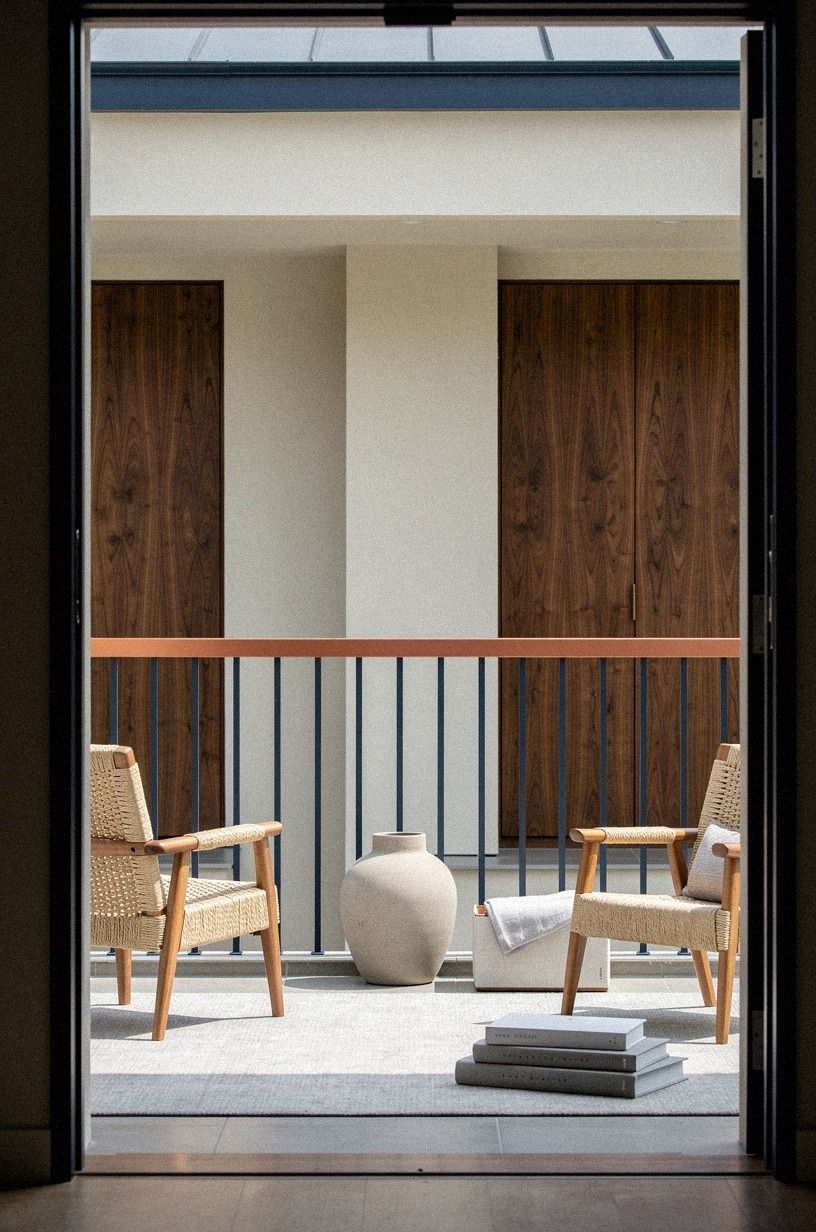
A continuous top rail creates a strong horizontal line, which can make a narrow porch feel wider. A book-matched walnut rail with copper hardware can sit beautifully against midnight-blue paint and ivory trim.
You’ll want the rail to feel like one calm gesture from the steps to the wall. The eye should travel smoothly rather than stopping at every post.
The mistake is stopping the rail at each post and creating a picket-fence rhythm. I made that choice once, and the porch looked busier than the room behind it. Your eye should move across the front without interruption.
Keep the lower posts plain, choose a matte finish, and let one planter interrupt the line. A small front porch planter idea can add organic softness without making the railing feel decorated to death.
A continuous top rail is also comfortable to use. That tactile benefit can make the upgrade feel worth the money every time you reach for the door.
9Mix Metal and Wood for Front Porch Wood Ideas
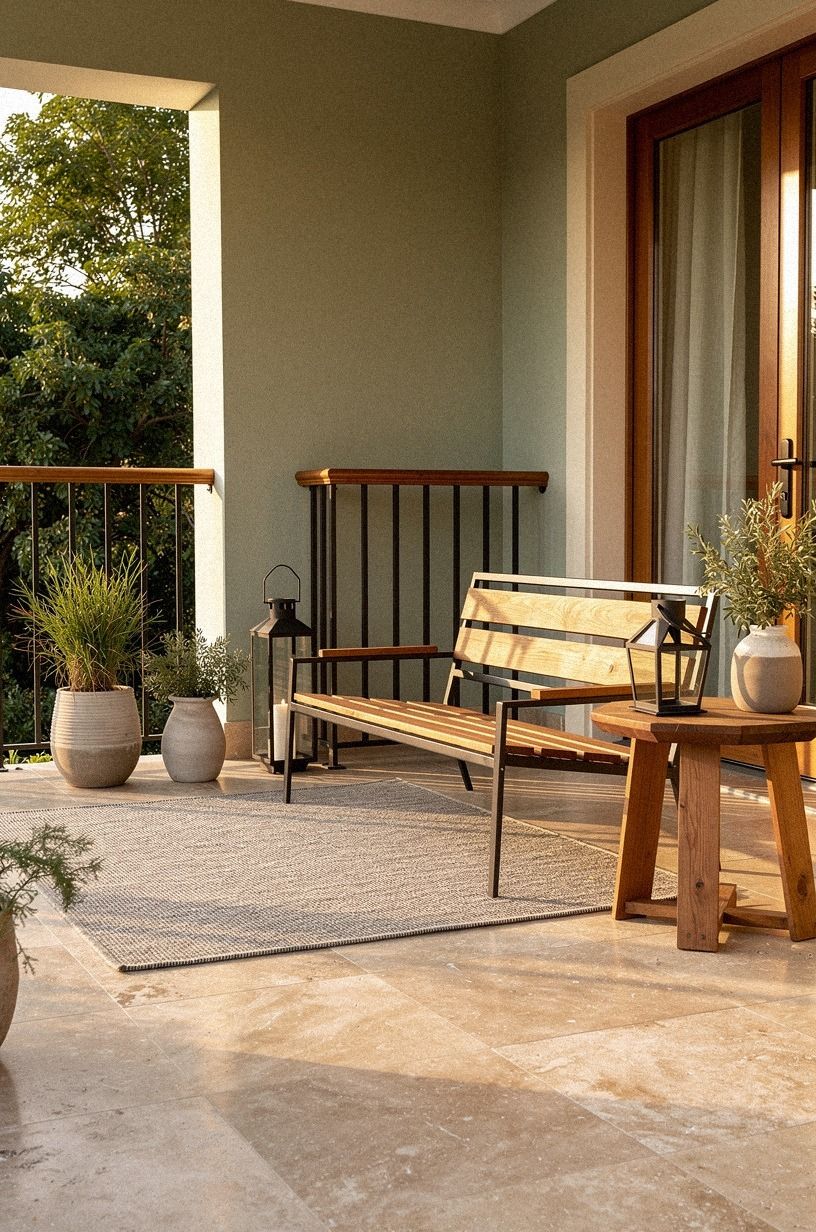
Sage-green metal posts with a natural wood handrail give you the warmth of timber and the sharper profile of steel. A cream surround and warm travertine landing can soften the contrast without making the entry feel overly rustic.
10Paint the Railing and Door in Different Depths
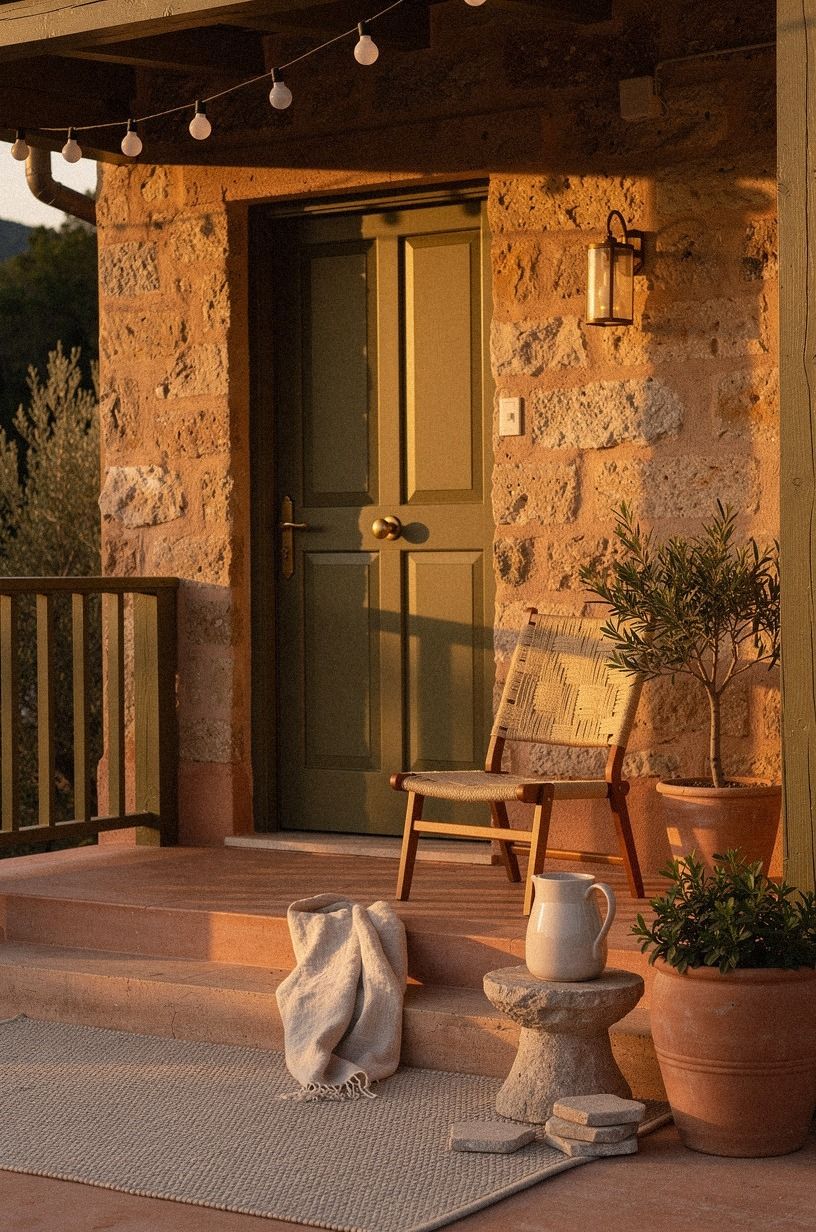
A tonal pairing makes a small porch feel layered without adding extra objects. Try terracotta on the railing with an olive door, or use a soft stone door against a deeper olive rail.
You’ll create depth because the surfaces relate, but they won’t merge into one flat block. The railing needs to outline the porch, while the door needs to pull you forward.
I’d skip identical railing and door colors when the entry is short on natural light. Your eye should know where to go. A subtle difference in depth can make the doorway feel more prominent without using a loud accent color.
Use a warm bulb, a simple mat, one terracotta pot, and unlacquered brass hardware developing a natural patina to keep the palette inviting. If your porch connects directly to a walkway, check that the clear route stays at least 36 inches.
A small front porch seating guide can help you place furniture without crowding the handrail. The smartest purchase is the one that preserves movement rather than filling every available corner.
11Choose the Rail That Leaves Your Walkway Clear
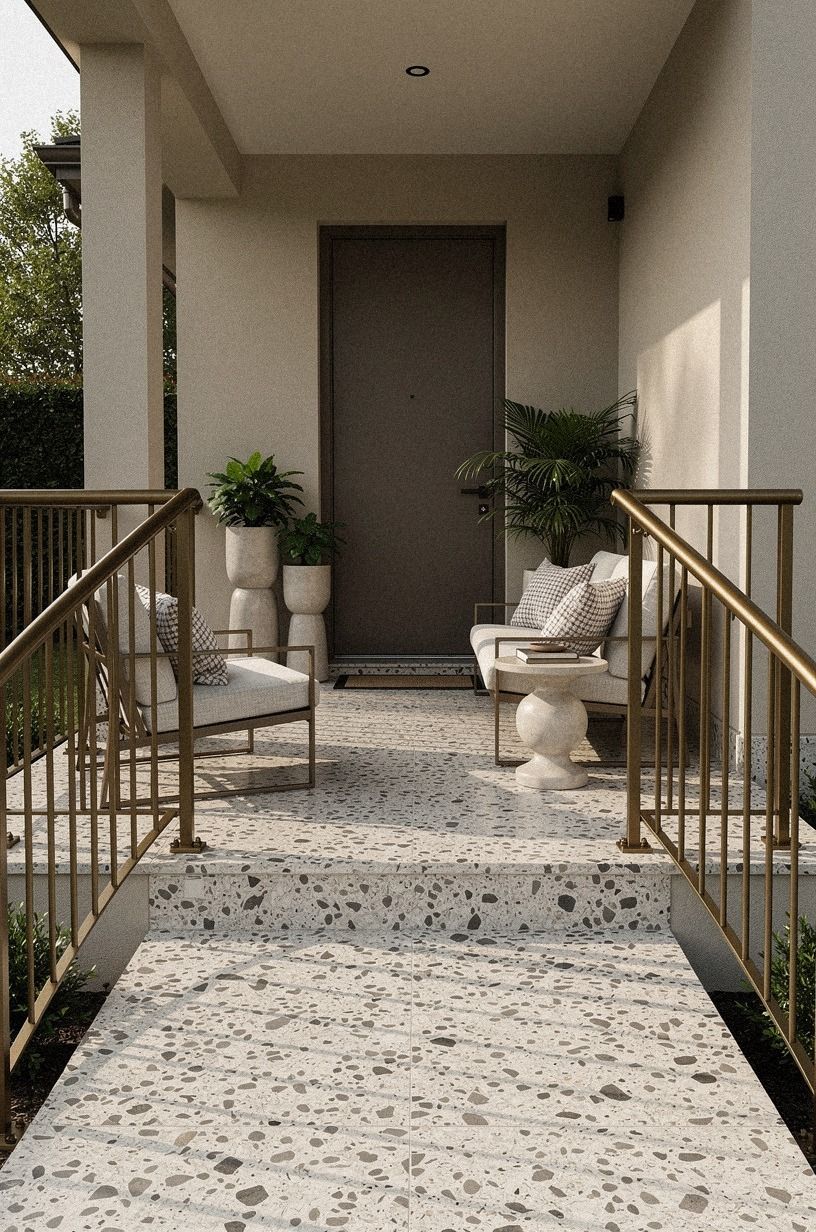
The best small railing is the one you can move around comfortably every day. A clay-and-linen palette with aged-brass hardware and an oversized-chip terrazzo landing can add character without narrowing the route.
Before You Choose: Measure the Landing First
Measure the porch width, the distance from the door to the first post, and the space needed for the door swing. Accurate measurements prevent the most expensive mistake: ordering a railing that technically fits but makes the entrance uncomfortable.
Mark the proposed post locations with painter’s tape. Walk through with a bag, a parcel, or a stroller if those are part of your routine. You’ll notice tight corners immediately.
Check the porch height and local requirements before comparing styles. The best-looking option may need changes to its baluster spacing, post placement, or handrail height. A quick consultation can protect your budget from a frustrating redo.
This is also the moment to decide whether you’re replacing the full structure or refreshing only the visible parts. Paint, a new top rail, or better hardware may be enough when the existing posts are sound.
If you’re unsure how much furniture the landing can handle, this small front porch furniture guide is a useful scale check.
What Changes the Cost Most?
The biggest cost variables are the material, the number of posts, the fastening system, and the condition of the porch beneath the railing. Pressure-treated lumber usually offers a lower starting price, while custom wood, cable hardware, and powder-coated metal can raise the total.
A simple refresh may cost a few hundred dollars when you’re painting and replacing limited hardware. A professionally installed railing can move into the low thousands, especially when stairs, demolition, permits, or structural repairs are involved.
Here’s a practical way to compare the project:
Treat these as planning figures, not a quote. Local labor and porch conditions can change the price substantially. The most affordable design is often the one that uses the existing post locations.
A restrained furniture plan can also keep costs under control. Compare this small front porch seating arrangement before adding a bench or chair.
The 36-Inch Rule Is the Quiet Deal Breaker
A railing can be visually slim and still make a porch feel crowded if furniture reduces the usable route. Thirty-six inches of clear walkway is a helpful baseline, but local accessibility and building rules may require more in specific situations.
Keep planters outside the main path. Avoid placing a bench where the door needs to open. If the porch is extremely narrow, choose wall-mounted lighting and a railing with minimal projection.
The floor should read as open when you approach the house. That makes the entry feel larger, calmer, and more confident without changing its footprint.
If you’re adding seasonal greenery, use one substantial container instead of several small ones. These small front porch planter ideas show how to add softness without narrowing the route.
Benjamin Moore, Farrow & Ball, or a Custom Mix?
Paint brands matter less than preparation, sheen, and color behavior. Benjamin Moore Black Forest Green can feel deep and earthy, while a custom-mixed warm gray may better suit a facade with stone or tan brick.
Exterior surfaces need cleaning, sanding, and the correct primer before the color goes on. A premium paint can’t rescue a dusty, peeling, or damp substrate. Spend on preparation first.
For a traditional porch, a low-sheen finish feels graceful and forgiving. For metal, use a coating designed for the surface rather than relying on ordinary wall paint. The right finish improves durability and protects the money you’ve already spent.
A small front porch spring decor plan can help you test how a new railing color works with greenery and seasonal accents.
When Cable Wins, and When It Doesn’t
Cable wins when the view behind the railing is a major part of the porch. Open sightlines can make a tiny entry feel generous, especially when the front yard or architecture deserves to remain visible.
Cable doesn’t always win when maintenance, installation complexity, or a softer traditional mood matters more. The wires need correct tension, and the fittings need inspection. A painted slat railing may be easier to repair and more forgiving over time.
Ask what you want the railing to do first. If it should disappear, cable may be worth the cost. If it should add texture or character, wood or metal balusters can create a stronger result.
A nearby swing can change the way the railing reads, so compare the proportions with these small front porch swing ideas. The rail should support the seating, not compete with it.
How to Keep a Small Railing From Looking Busy
Limit the porch to one dominant railing pattern, one lighting finish, and one repeated color. Visual restraint is what makes a small entry feel polished rather than underdecorated.
Skip rows of matching signs, tiny pots, and competing textiles. Choose one substantial planter, a durable mat, and a warm light source. That combination feels intentional and leaves the railing room to breathe.
If you’re unsure, remove one item before adding another. Small porches often improve through subtraction. A clean edge and a clear path can feel more luxurious than a crowded collection of accessories.
Keep the seating equally simple. This small front porch bench guide can help you find storage without overwhelming the railing.
Which Upgrade Is Worth the Money?
If the existing structure is safe, paint and a better handrail often offer the strongest return. A comfortable top rail changes how the porch feels every day, while a new color can refresh the entire facade for relatively little.
If the posts are rotten, loose, or poorly placed, spend on structure first. Decorative improvements won’t fix an unstable railing. A sound installation protects both safety and resale value.
For a small porch, I’d prioritize the handrail, finish quality, and walkway clearance before adding furniture. Those choices affect comfort every time you arrive home, which makes them more worth it than seasonal decoration.
If the entry needs a practical seat, review these small front porch seating ideas before choosing a piece that may block the door.
Why a Small Railing Deserves a Real Design Decision
I used to think porch railings were background architecture. You picked something safe, painted it white, and moved on to the front door. That approach works on a large veranda, but a small porch has no spare space for background decisions.
Every post, shadow, and handrail sits close to your eye. If the profile is too thick, your entry feels blocked before you’ve even opened the door. If the material is too fussy, the porch starts asking for accessories to explain it.
The best railing gives your porch a boundary without making it feel guarded. I like vertical slats when the facade needs height, cable when the view matters, and a half-height option when you want a softer edge.
A bulky railing can be safe and still be wrong for the room. You’ll notice the difference when afternoon light hits the floor and the shadows look intentional instead of crowded. That is where the design earns its keep.
I also think people overbuy accessories for small outdoor spaces. You don’t need a full furniture set, multiple signs, or a row of matching planters. One well-shaped rail, one substantial pot, and one light source can feel more welcoming than fifteen little objects.
If you’re unsure, stand across the street and study the entrance from a distance. Your porch will tell you whether the railing frames the entry or competes with it.
The most useful question is this: what do you want to see when you arrive home? If the answer is the door, keep the railing quiet. If the answer is a green, layered threshold, let the rail support that view.
I’d spend on the material you touch and the finish you see in evening light. You’ll live with those choices longer than you’ll remember the original price of a seasonal cushion. That’s the clearest test of whether a railing project is worth it.
The Questions Worth Answering First
What is the best Small Front Porch Railing Ideas for Style & Safety for a small front porch?
Slim vertical slats are my first pick because they offer clear sightlines and a taller visual rhythm. Cable railing works well too, especially with a wood handrail. You’ll want a finish that relates to your door, siding, or floor instead of competing with all three.
Where can I buy Small Front Porch Railing Ideas for Style & Safety pieces on a budget?
Look at IKEA, Wayfair, and Target for planters, lights, mats, and small outdoor accents. You can also find useful pieces through Facebook Marketplace or a local thrift shop. I’d buy the railing materials from a reputable local supplier, then let your accessories carry the personality.
How much does a Small Front Porch Railing Ideas for Style & Safety makeover cost?
A small porch refresh can fit within the $250-$900 budget tier when you’re painting, adding hardware, plants, and lighting. A railing replacement may require a separate local estimate. You can save by keeping your existing posts and changing only the finish or top rail.
Can I create a Small Front Porch Railing Ideas for Style & Safety on a budget?
Yes, and you can start with paint, a cleaner light fixture, and one large plant. Reuse your mat, move furniture away from the door swing, and choose a single finish for new hardware. You’ll get a calmer porch without buying a complete outdoor set.
Is a Small Front Porch Railing Ideas for Style & Safety worth it in a small space?
Yes, because a small porch makes every proportion visible. A slim railing can define the edge, improve confidence on the steps, and keep your entry from looking unfinished. Leave a 36-inch walkway, then place accessories outside that route so your porch stays easy to use.
Is a Small Front Porch Railing Ideas for Style & Safety a good idea for a rental?
Yes, if you choose removable pieces around the existing structure. Try a tension rod for a lightweight seasonal textile, removable hooks for plants or signs, and a peel-and-stick exterior accent where permitted. You’ll want to avoid drilling into the railing unless your landlord approves it.
Where I’d Start First
If I had to pick one, I’d start with the slim vertical-slat railing. It keeps the 36-inch path open while giving your porch a taller frame, and its shadows look warmer than bulky posts.
Then I’d choose a quiet exterior color, add one comfortable light source, and stop before the entrance feels decorated. Browse these small front porch bench ideas if you need storage, or compare proportions with these small front porch furniture ideas.
The right railing should make coming home feel easier. That’s the whole point.