
Easy Thanksgiving sangria recipes made in one pitcher work best with dry wine, tart fruit, and one bright aromatic note. I’ve learned that after serving a red pitcher nobody wanted seconds of. These eleven blends keep prep calm, flavors balanced, and your table warm. You’ll pour them again!
Editor’s Note: Start With One Strong Flavor
Pick one fruit direction before you shop. You’ll get a cleaner pitcher, a calmer grocery list, and a drink your guests can actually remember.
- Build the Orchard Glow with Holiday Sangria Thanksgiving
- Layer the Three-Fruit Rule for Easy Thanksgiving Sangria
- Stir the Pomegranate Hearth Pitcher
- Why Does White Sangria Thanksgiving Taste So Bright?
- Swap Red Wine for the Golden Hour Blend
- Can a Cranberry Rosemary Pitcher Stay Balanced?
- Anchor the Apple Cider Spice Bowl
- Pour the Two-Texture Rule Instead of a Sugary Punch
- Frame the Pear and Sage Centerpiece
- Chill the Citrus Lantern for Sangria Recipes Thanksgiving
- Mix the Fireside No-Cook Finish
1Build the Orchard Glow with Holiday Sangria Thanksgiving
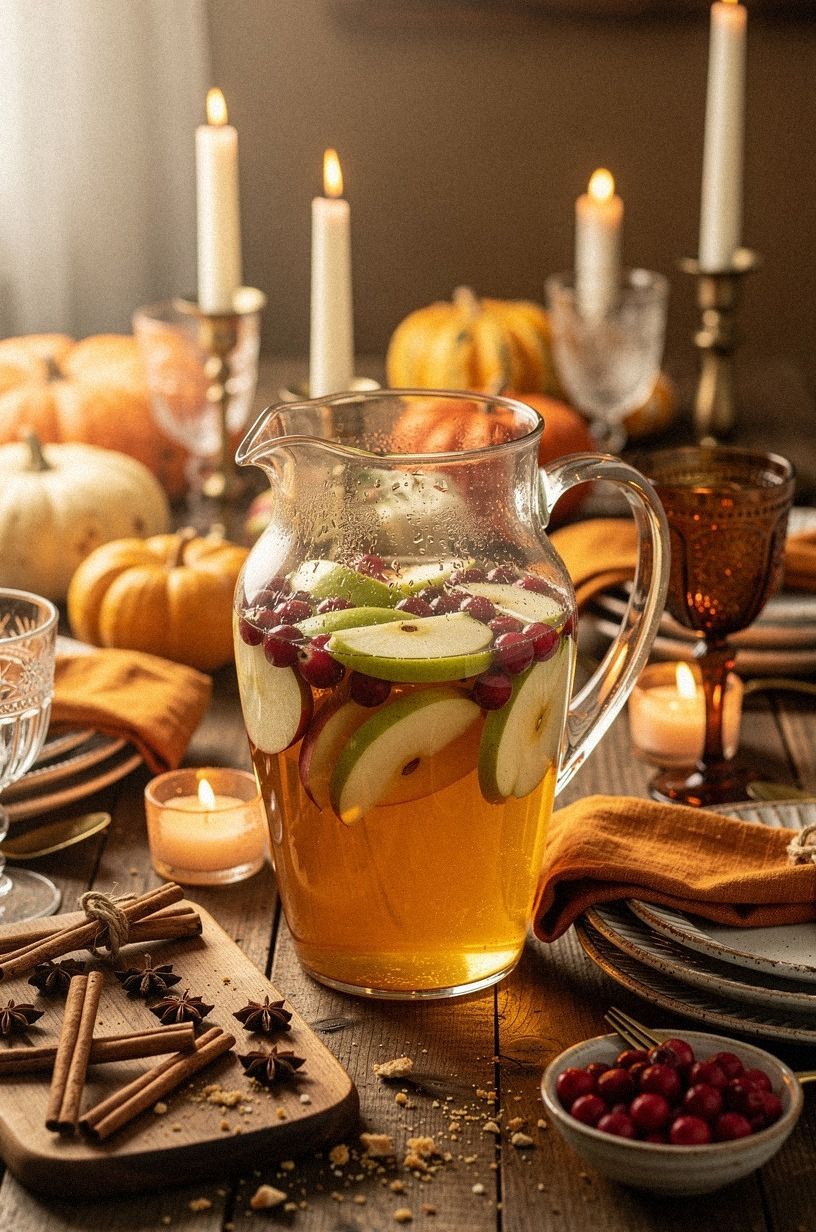
Apple, pear, and orange make a charming holiday sangria thanksgiving pitcher with enough earthy flavor for roasted vegetables and salty appetizers. Choose a dry red wine, thin apple slices, firm pear, and orange wheels, then let the fruit sit until the edges look glossy. Your pitcher should smell bright before anyone takes a sip.
I like Honeycrisp apples here because they stay crisp instead of turning soft and cloudy. You’ll want a little tartness, so don’t use only sweet fruit. A splash of unsweetened apple cider gives the drink a warm, rustic finish without making it taste like dessert.
For the serving table, use a low glass pitcher beside amber tumblers. A warm travertine tray grounds the terracotta and stone palette, while an olive wall behind the bar keeps the whole setup earthy and inviting. I’d skip an oversized centerpiece because it blocks the pour.
If you’re collecting ideas for a gathering board, start with this orchard-style table plan and this small-space serving setup. One confident choice usually makes the whole table feel more refined.
Don’t chill the fruit until it’s icy. Room-temperature apple releases more fragrance, and your wine won’t lose its flavor under a wall of cold.
The Orchard Balance
Use two parts dry red wine, one part apple cider, and a small splash of orange juice. You’ll have enough warmth without turning the pitcher syrupy.
2Layer the Three-Fruit Rule for Easy Thanksgiving Sangria
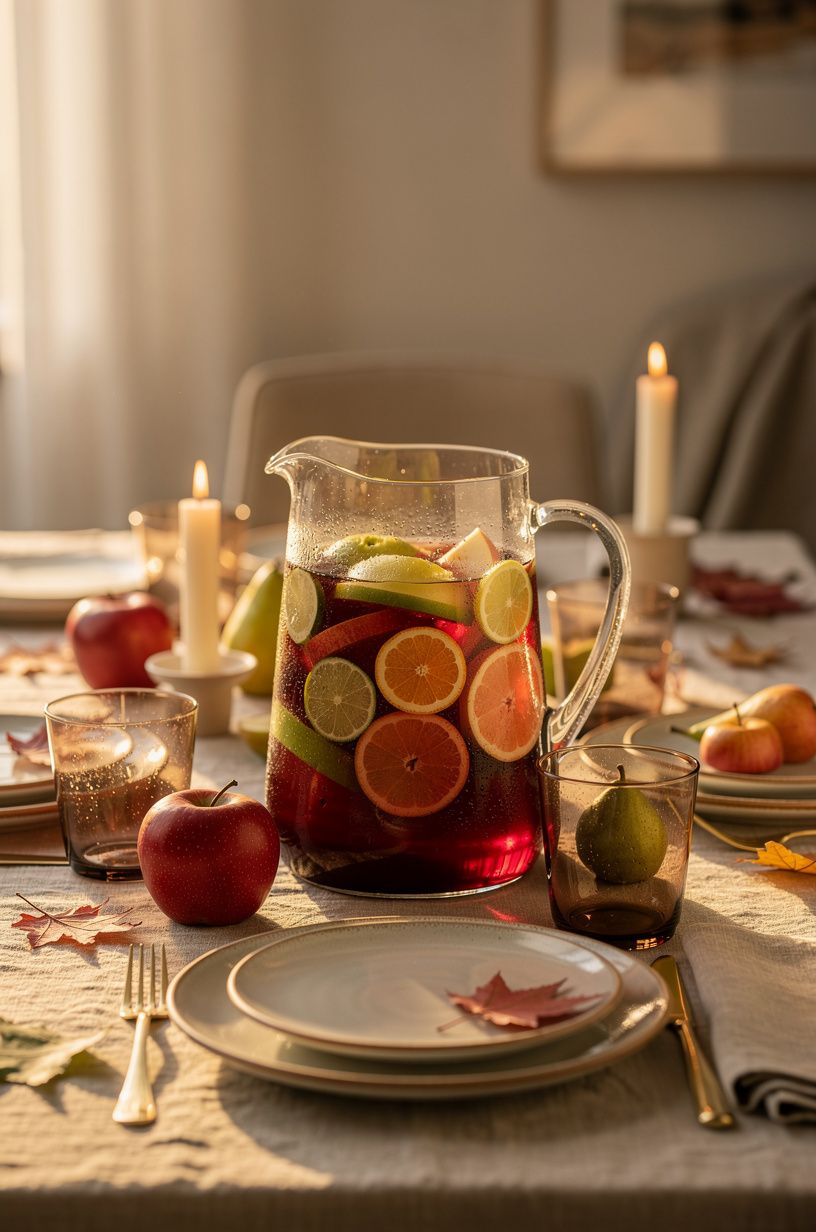
The Three-Fruit Rule keeps easy Thanksgiving sangria from tasting like fruit salad.
3Stir the Pomegranate Hearth Pitcher
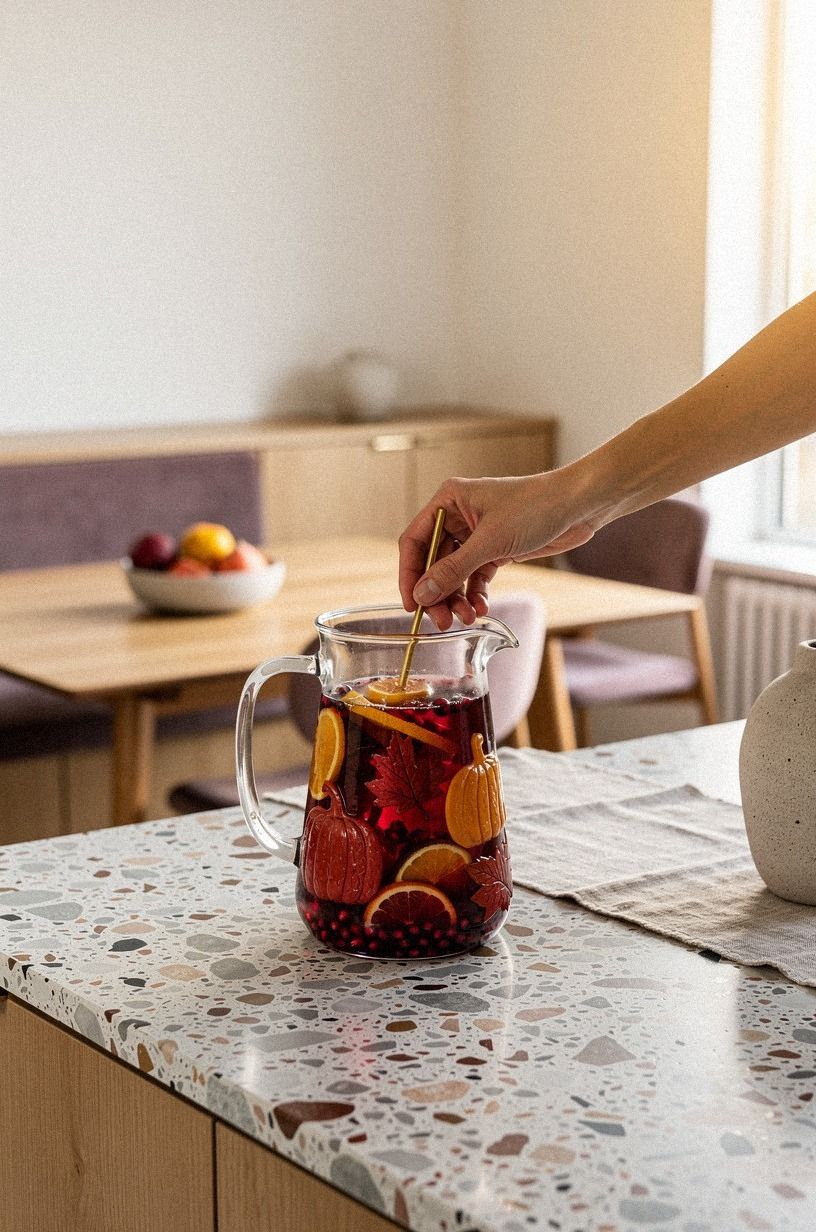
This pomegranate version is the boldest of the sangria recipes thanksgiving group. It works when your menu has earthy sides, roasted roots, and a table that can handle a little drama.
Start with a dry red blend, unsweetened pomegranate juice, orange peel, and a handful of pomegranate arils. I like adding one thin slice of ginger rather than several spices. You’ll get a clean heat that keeps the fruit from feeling flat.
The ratio matters. Use four parts wine to one part pomegranate juice, then taste before adding sweetener. Unsweetened pomegranate juice gives you control, while a sweetened bottle can make the final drink heavy before you realize what happened.
For the table, use a grey tray, cream napkins, and one low bowl of figs. A rose-gold accent and oversized-chip terrazzo bring out the wine’s deeper color without making the setting feel formal. If your dining room already has dark furniture, add pale ceramics to keep the mood from becoming too dense.
You can connect this bold pitcher to the apple cider version if you’re serving both a red and white option. I wouldn’t make two complicated drinks, though. One should be easy enough for you to refill while dinner is moving.
A Better Pomegranate Finish
Add sparkling water only after the fruit has rested. You’ll keep the bubbles lively, and your guests won’t mistake the drink for a sweet punch.
4Why Does White Sangria Thanksgiving Taste So Bright?
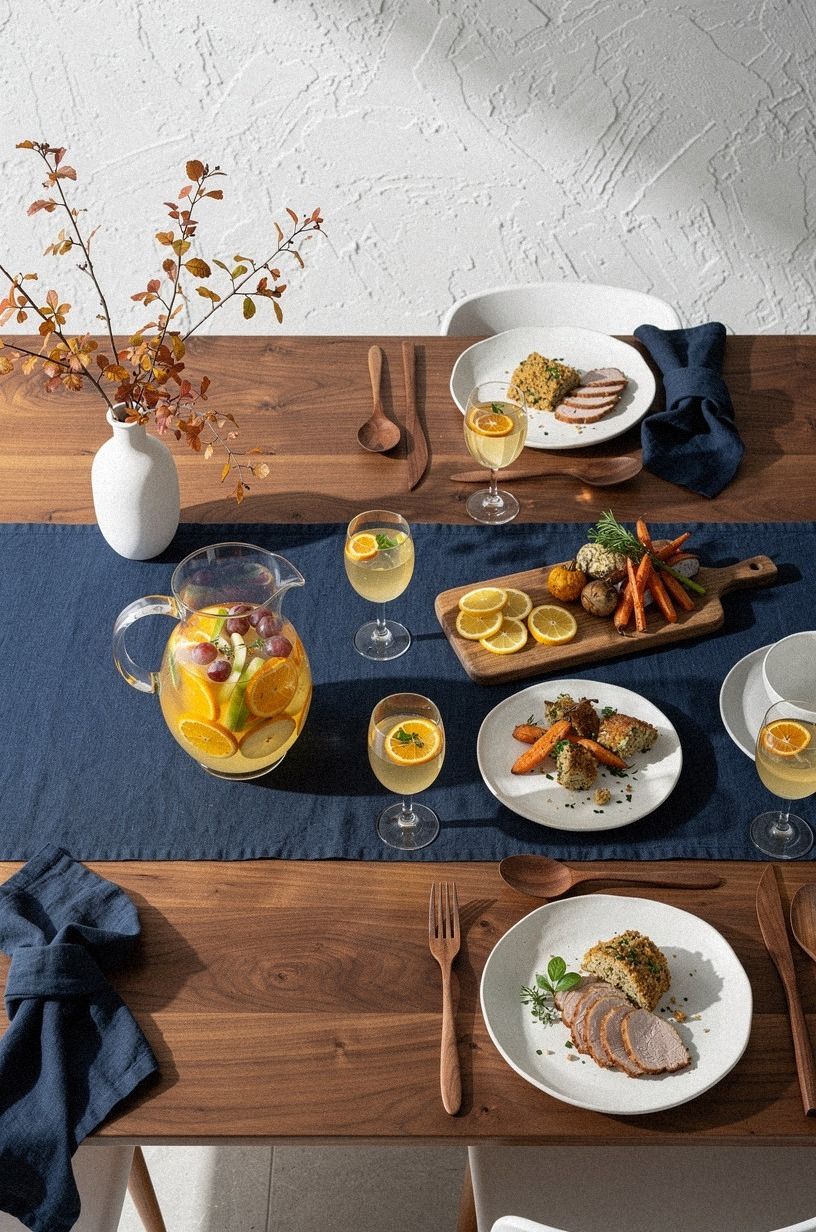
White sangria thanksgiving works when you give the wine something sharp to push against. Start with a dry Albariño, lemon, green apple, and pear. The result is bright and gentle, with enough acidity to cut through buttery mashed potatoes and rich gravy.
Who wants another heavy drink beside a heavy meal? Your guests will appreciate a pitcher that wakes up the plate instead of adding another layer of sweetness. Add a small amount of elderflower liqueur if you already have it, but the recipe still works without it.
I prefer Bosc pears because they hold their shape and bring a honeyed note without going limp. Don’t use soft ripe pears here. They’ll cloud the wine, and you’ll lose the clean, airy look that makes this version feel so inviting.
For your table, use clear glass, cream linen, and one branch of eucalyptus. A walnut tray against hand-applied Venetian plaster makes the setup feel relaxed rather than formal, especially if your plates are everyday white. The mood is peaceful, but the drink still has enough personality to feel special.
If you’re styling a lighter gathering, connect this recipe with the pear and sage centerpiece and the rental-friendly ideas. Your room won’t need much more.
The White Wine Rule
Let the citrus do the sharpening. You’ll need less liqueur, less honey, and fewer herbs when the wine already has enough acidity.
5Swap Red Wine for the Golden Hour Blend
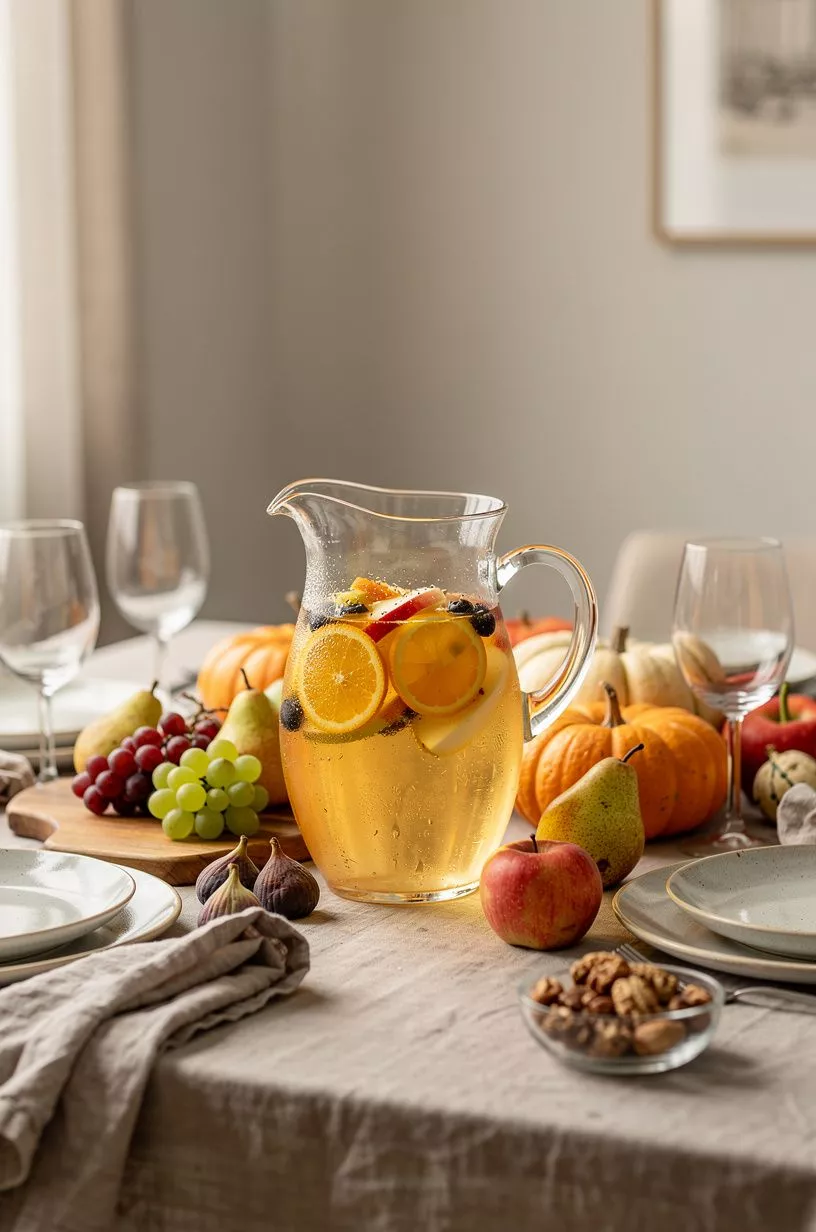
Swap red wine for a dry rosé when you want a soft, bright pitcher that looks good before dinner. This is my favorite option for a late-afternoon gathering because it feels festive without announcing itself too loudly.
Use dry rosé, sliced peach, ruby grapefruit, and a few raspberries. Dry Provençal rosé keeps the fruit fresh, while grapefruit adds the slight bitterness that stops the peach from becoming candy-like.
You’ll want to add the raspberries near serving. They soften quickly, and nobody wants cloudy pink sediment at the bottom of the pitcher. A few fresh basil leaves can work, but don’t add a whole handful unless you want an herb-forward drink.
The serving mood can stay simple. Emerald shagreen trays, pale stoneware, and gold-rimmed tumblers give the blush color somewhere to land. I’d use one small vase rather than a large centerpiece, so you can still see across the table.
This blend works well beside the bright white pitcher or the cranberry rosemary version. You can offer contrast without preparing an entire bar menu.
If Your Rosé Tastes Too Soft
Add grapefruit peel before adding sugar. You’ll get aroma first, then bitterness, which usually fixes a flat pitcher more gracefully than extra lemon juice.

6Can a Cranberry Rosemary Pitcher Stay Balanced?
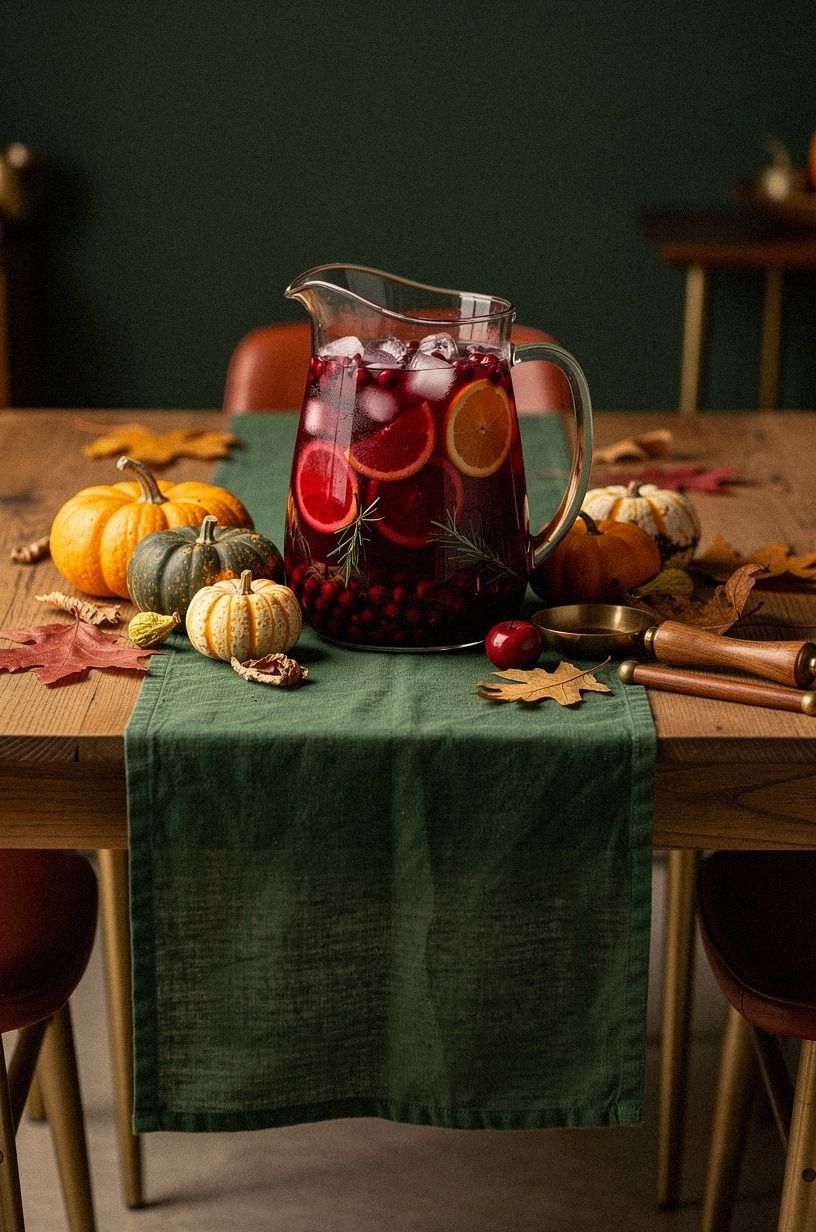
Yes, cranberry rosemary sangria can stay balanced if you treat cranberry as an accent, not the entire drink. Use a dry white wine, cranberry juice, orange peel, and one rosemary sprig. The taste is tart, soft, and gently aromatic rather than sharp.
Your biggest risk is adding too much sweetener. Unsweetened cranberry juice gives you room to adjust, while a heavily sweetened version can flatten the wine.
Taste before adding anything else. If it already tastes round, stop there.
I’d use fresh orange peel instead of orange slices for this recipe. The peel releases fragrant oils, and you’ll get a cleaner pitcher with less pulp. It’s a small choice, but your drink will look more refined after it sits.
For a table centerpiece, choose a low bowl of pears and keep the pitcher slightly off-center. Natural oak trays and a washed Belgian linen runner work beautifully with cranberry’s red color, especially beside warm white plates. You won’t need a separate bar cart if your storage already works hard.
If you’re short on room, follow the narrow-tray serving plan and the budget approach. Both keep the drink visible without taking over the kitchen.
Rosemary Needs Restraint
One sprig is usually enough for a pitcher. You’ll notice rosemary more clearly after fifteen minutes, so don’t add another branch too quickly.
7Anchor the Apple Cider Spice Bowl
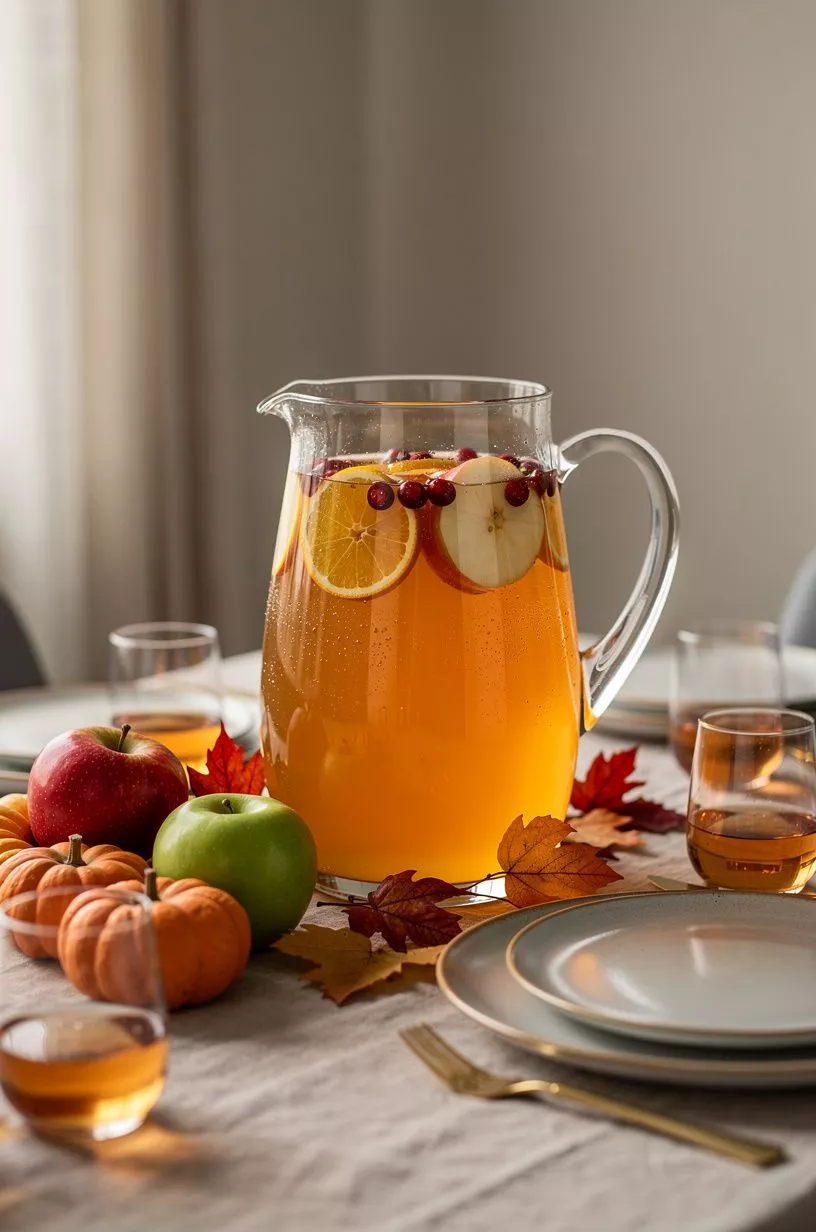
The Apple Cider Spice Bowl is a warmer, more rustic direction for holiday sangria thanksgiving.
8Pour the Two-Texture Rule Instead of a Sugary Punch
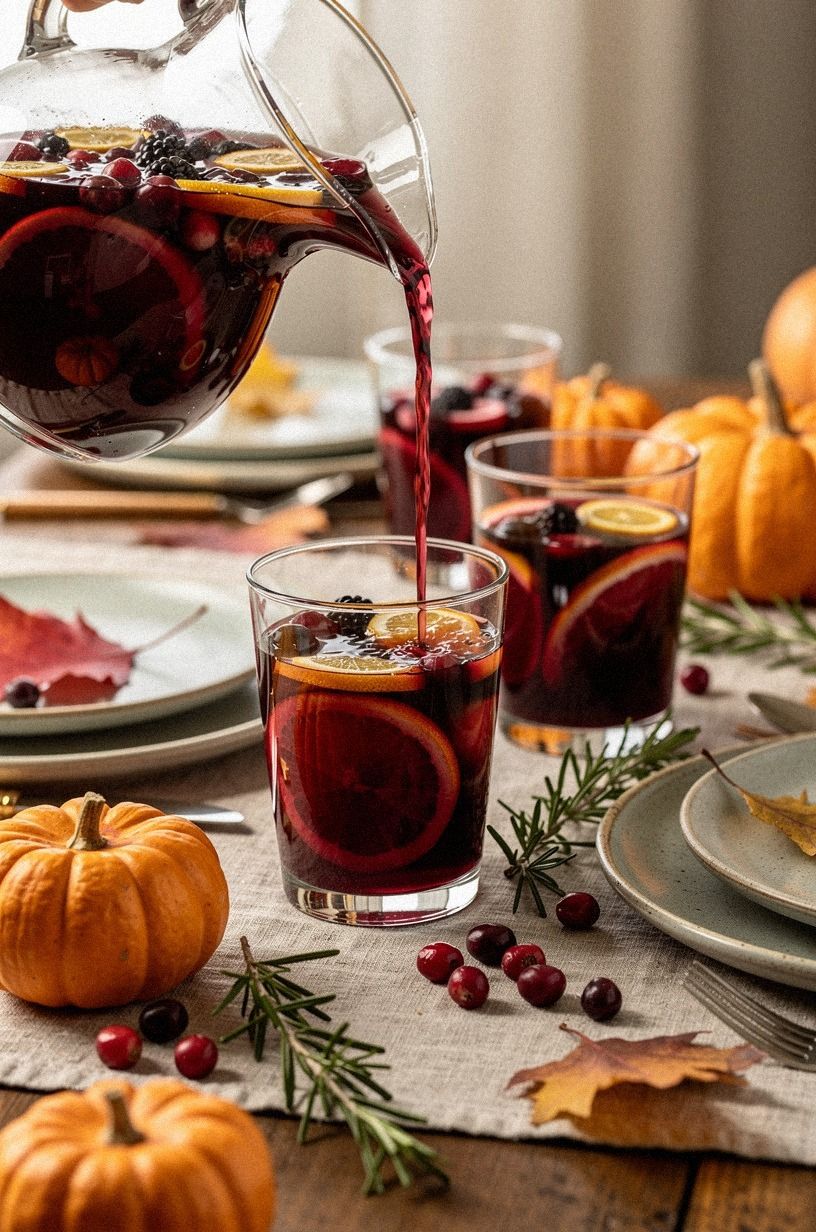
The Two-Texture Rule gives a sangria recipes thanksgiving pitcher more interest without adding extra sweetness. Use one crisp fruit, such as apple, and one soft fruit, such as ripe plum. Add dry red wine, orange, and a small amount of sparkling water just before serving.
The crisp fruit keeps each sip lively, while ripe black plums bring a velvety note. You’ll want to cut the plums into thick wedges so they don’t disappear into the wine. I’d skip bananas, melon, and anything too soft because the pitcher can turn murky.
A splash of sparkling water makes this feel bright and modern. Add it late, though, or the bubbles will vanish. Nero Marquina black marble with white veins behind the serving area gives the drink a graphic setting, but your table doesn’t need matching black accessories.
If you’re updating the room around your hosting setup, use this simple budget frame:
For more confidence in choosing one strong focal detail, connect this recipe with the golden-hour blend and the one-rule table edit. Your pitcher doesn’t need ten competing decorations.
Choose Your Texture
Apple and plum are enough. You’ll get contrast in every glass without making the fruit bowl compete with the meal.
9Frame the Pear and Sage Centerpiece
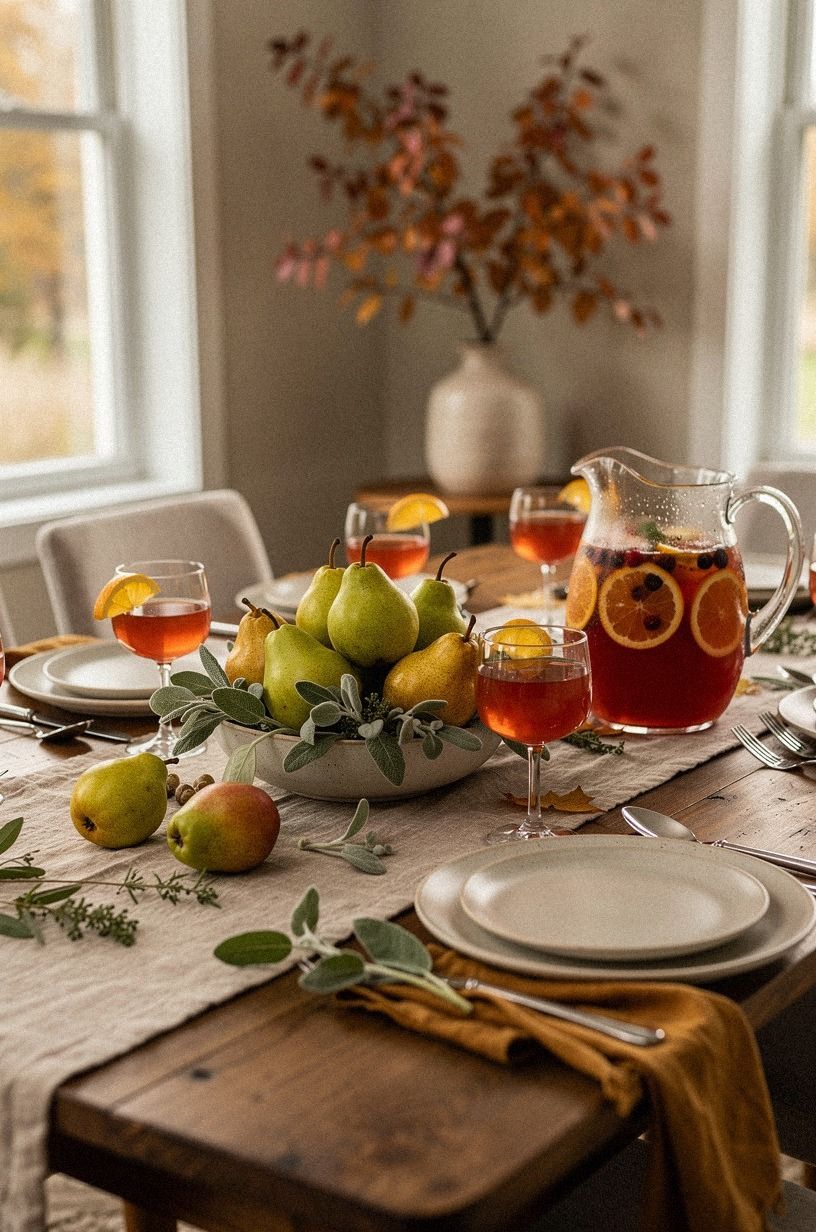
Pear and sage make a serene white sangria thanksgiving pitcher with a gentle herbal finish. It has the softest personality of the group, so I like serving it when the food is already rich and the room has plenty of conversation.
Use dry white wine, firm pear, lemon peel, and one small sage leaf per serving. Fresh sage can become medicinal if you overdo it, so start cautiously. You can always add another leaf after tasting, but you can’t easily remove the flavor once it’s steeped.
A little honey helps round the lemon, but don’t turn the pitcher sweet. Comice pears bring enough natural softness to carry the drink. If your pears are very ripe, use fewer slices and add them shortly before serving.
For the centerpiece, place three small pears in a shallow ivory ceramic bowl. Deep-pile mohair velvet in midnight blue makes the pale drink feel grounded, while a small copper accent adds warmth. You won’t need flowers, candles, and greenery all at once.
Use the white sangria method when you want more acidity, or choose the citrus lantern when you want more sparkle. Both variations keep this idea flexible.
Sage Without the Savory Weight
Bruise the leaves lightly with your fingers instead of chopping them. You’ll release aroma without sending green pieces through every glass.
10Chill the Citrus Lantern for Sangria Recipes Thanksgiving
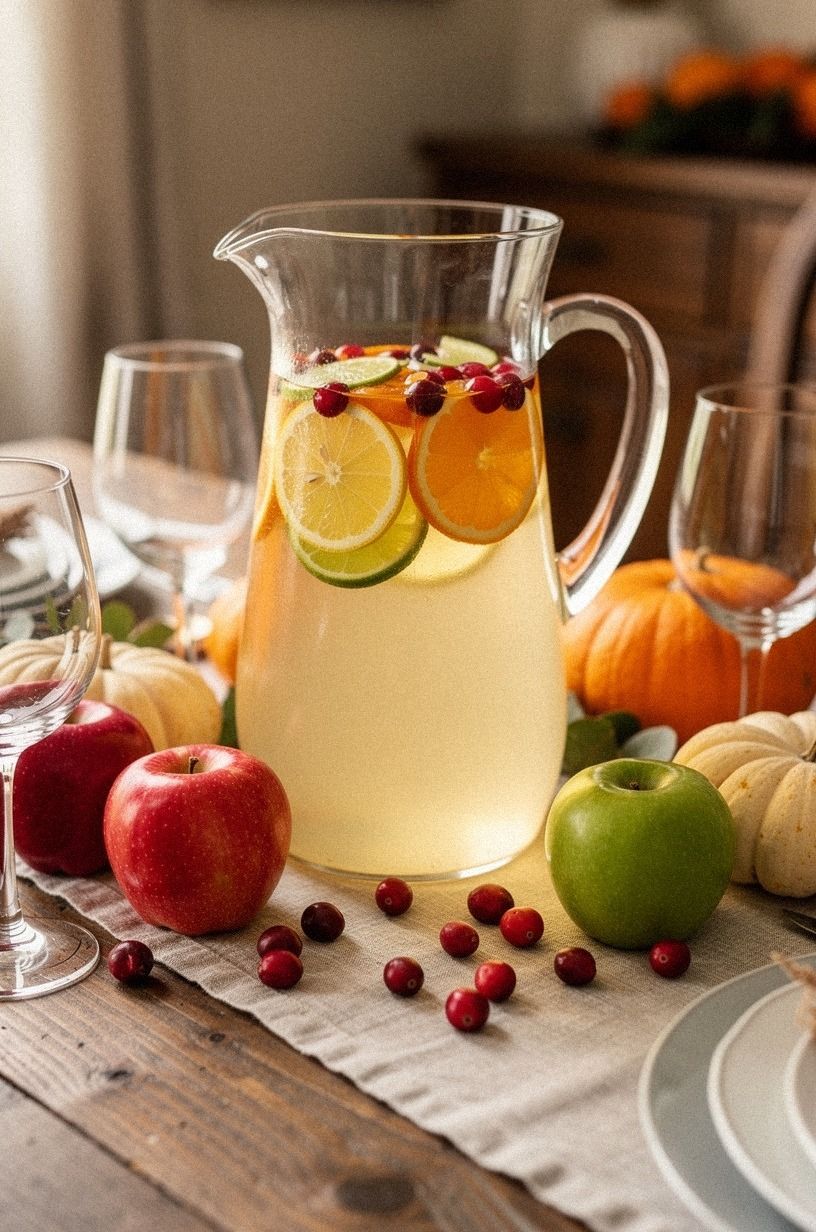
The Citrus Lantern is for people who want bright flavor without a sweet finish.
11Mix the Fireside No-Cook Finish
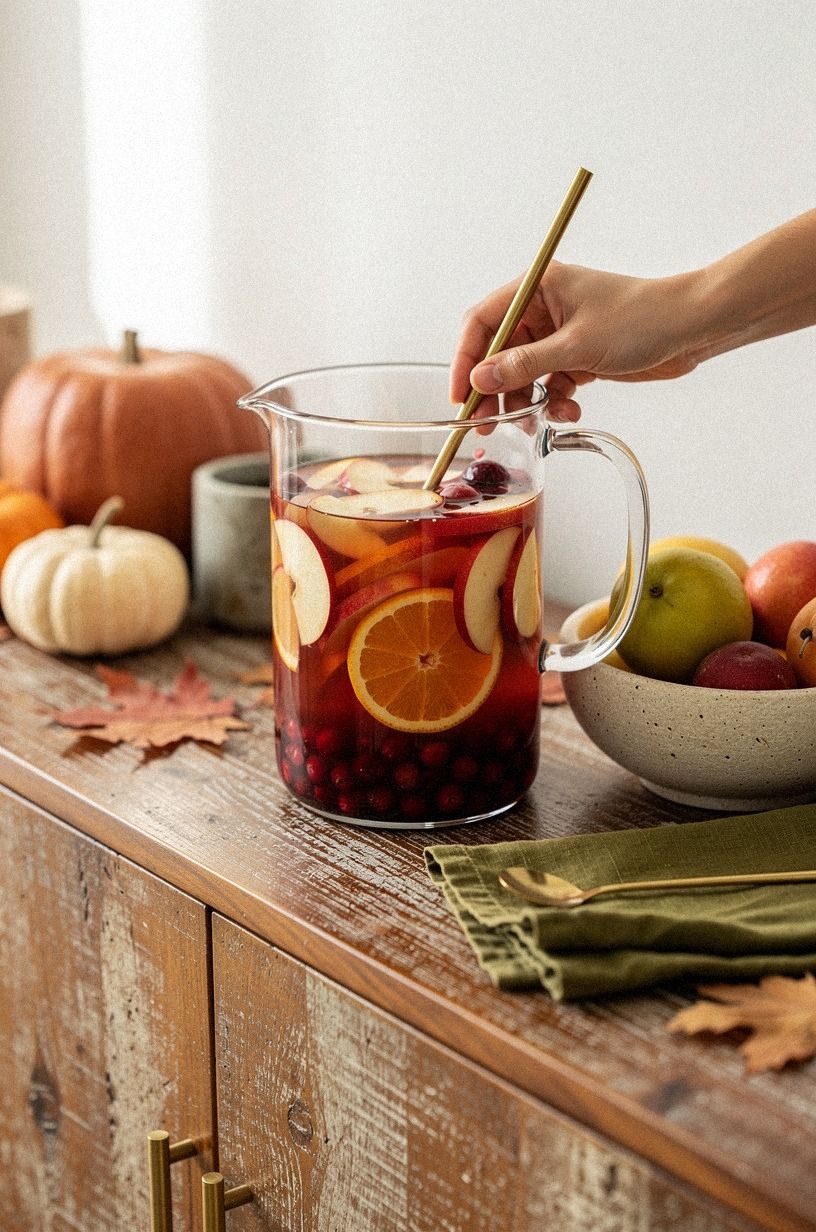
The Fireside No-Cook Finish uses dry red wine, orange, cranberry, and a small splash of ginger beer. It’s the quickest recipe here, which makes it useful when your oven, counters, and attention are already occupied.
Start with dry Cabernet Franc or another light-bodied red. Add orange wheels, a few cranberries, and ginger beer right before serving. You’ll get gentle spice and fizz without heating anything on the stove.
Keep the ginger beer modest. Too much will bury the wine and make the drink taste like soda. Fresh ginger beer is usually sharper than ginger ale, so taste after each small pour.
For the table, use amber glasses, a dark wood board, and one low lamp nearby. Reclaimed weathered teak echoes the fireside mood without turning the setting into a theme party. I like leaving the fruit visible because it makes refills feel effortless.
If you’re deciding between recipes, compare this finish with the pomegranate hearth pitcher and the apple cider bowl. The first is deeper, the second is warmer, and this one is faster.
The Last-Minute Fix
If the pitcher tastes too sweet, add a squeeze of lemon. If it tastes too sharp, add another splash of wine. You’ll correct the balance without rebuilding the recipe.
Make the Pitcher Ahead Without Losing Freshness
You can prepare the wine, firm fruit, and citrus peel several hours before dinner. Keep soft fruit, herbs, ice, and sparkling ingredients separate until guests are nearly seated.
Firm pears and apples can rest longer than berries or plums. Your safest method is to prepare the base in the morning, refrigerate it, and taste it again before serving.
Keep the Garnish Edible and Useful
Every garnish should contribute aroma, color, or flavor. If it does none of those things, it may be taking up space your guests need for plates and elbows.
I like orange peel, whole cranberries, and thin apple slices because they work twice. They season the drink and make the pitcher easy to identify. You’ll know which blend you’re pouring without adding a label.
Match the Pitcher to the Meal
Rich food needs acidity. Salty food benefits from fruit. Mild food can handle more aromatic detail.
For turkey, potatoes, and gravy, choose the white sangria or citrus lantern. For roasted squash and mushroom dishes, I prefer the pomegranate hearth.
Give Each Pitcher a Clear Table Mood
A single material can carry the styling. Warm oak suits cider, pale stoneware suits pear, and smoked glass suits cranberry.
You don’t need to buy a complete collection. Use what you already own, then add one textural detail that supports the drink. That approach keeps your table personal instead of showroom-like.
What to Do With Leftover Sangria
Leftover sangria is best strained before storing. Remove soft fruit, transfer the liquid to a sealed container, and refrigerate it overnight.
You’ll lose some freshness, especially if the drink contained bubbles, but the wine base can still work in a small glass the next day. Don’t keep it for several days. Fruit changes quickly once it has soaked.
The Pitcher Rule I’d Keep
I’ve made enough holiday drinks to know that the prettiest pitcher isn’t always the one people finish. The best version has a clear first impression, a little tension in the flavor, and enough freshness to survive a long afternoon beside a crowded table. That’s why I keep returning to dry wine, tart fruit, and one aromatic note.
Your guests don’t need twelve ingredients to feel looked after. They need a drink that’s easy to understand and pleasant to reach for again.
A ruby cranberry pitcher looks inviting, but if it tastes like syrup, the visual won’t save it. A pale pear blend may look subtle, yet its lemon edge can make the entire meal feel lighter.
I’ve also learned that timing matters more than decoration. Fruit can sit for a while, but bubbles should wait. Citrus peel gives fragrance quickly, while soft herbs can become muddy.
If you’re unsure, taste the pitcher before adding anything else. That small pause saves more drinks than another garnish ever will.
The table deserves the same restraint. Warm wood, soft linen, and low amber light create a comforting setting without competing with the glassware.
If your room feels too dark, add an ambient lamp rather than turning on every overhead fixture. Your guests should see the color of the drink and each other’s faces.
The best Thanksgiving sangria is generous but not fussy. It lets you cook, talk, refill plates, and enjoy your own gathering. You can make this work!
Start with the recipe that matches your meal, then let the rest of the table stay quiet.
The Questions I Get Asked Most
What is the best Thanksgiving sangria for a small gathering?
The pear and sage white sangria is my first pick because it’s bright, light, and easy to balance. A pomegranate red sangria also works if your table feels more dramatic. Small-batch flexibility matters, so you can prepare one pitcher without filling your refrigerator.
Where can I buy sangria ingredients on a budget?
IKEA, Wayfair, and Target are useful for serving pieces, while Facebook Marketplace and thrift shops often have glass pitchers. Secondhand variety can make your table feel more personal. You don’t need a matching set, and you’ll often find better shapes by mixing pieces.
How much does a Thanksgiving sangria makeover cost?
A pitcher itself can stay inexpensive if you use the wine, fruit, and glasses you already have. A broader hosting refresh may run from about $200 to $800 for paint, textiles, art, and organization. Using what you own first keeps the budget calm.
Can I create Thanksgiving sangria on a budget?
Yes, and you can start with dry wine, one citrus fruit, and apples or pears. Use a clean glass jar as a pitcher, borrow extra tumblers, and gather herbs from your kitchen. Low-cost texture comes from fruit peel, linen, and candlelight.
Is Thanksgiving sangria worth it in a small space?
Yes, because one pitcher takes less room than a full drink station and serves several people. Keep it on a narrow tray with the glasses beside it. Compact serving flow means your guests won’t gather around the refrigerator or block the kitchen.
Is Thanksgiving sangria a good idea for a rental?
Yes, especially if you keep the styling removable. Use a tension rod for a linen backdrop, peel-and-stick art, and a small freestanding cart instead of drilling into walls. No-damage flexibility lets you create a welcoming setup without risking your deposit.
Where I’d Start First
If I had to pick one, I’d start with the pomegranate hearth pitcher. Its tart fruit keeps rich food from feeling heavy, and the color still looks dramatic after the first pour.
Pin it for later and keep the garnish simple. Your table will feel ready before dinner is.