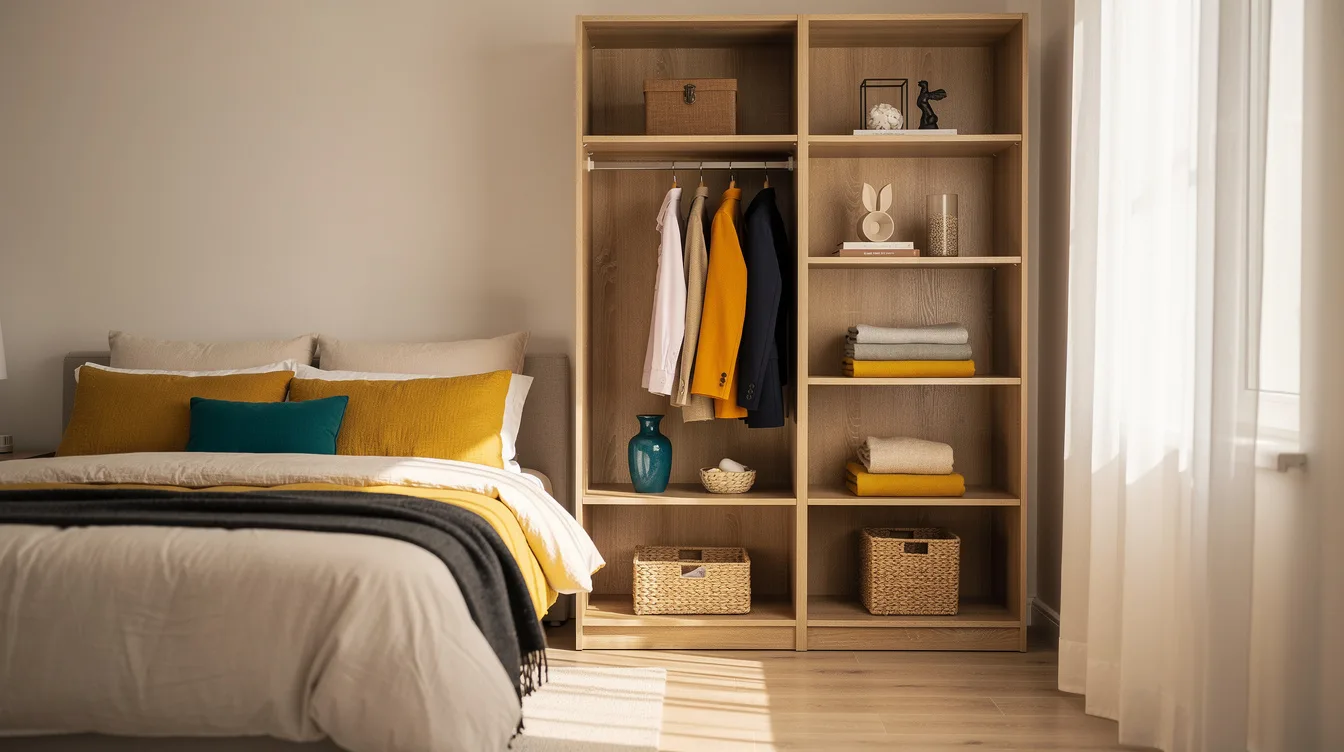
My favorite bedroom dividers do two jobs at once: they hide the messy part of getting dressed and give the bed a little breathing room. A typical bookcase about 30 inches wide can separate a sleeping zone from a closet corner, but only if it leaves a comfortable path around the bed.
The common mistake is treating the shelf like a screen. It is storage, architecture, and a safety issue in one piece, so its depth, back, and contents all deserve attention.
Measure the Bedside Clearance Before Buying
A bookcase can divide a bedroom beautifully, but the wrong width makes the sleeping area feel pinched. Start with the bed, walking path, dresser doors, and closet entry, then reserve about 30 inches of clear passage where people move most often.
A typical IKEA BILLY bookcase is about 31 inches wide, while a wider unit from Wayfair may take up roughly 60 inches or more. Those dimensions change the room’s circulation quickly, especially in a small apartment bedroom.
Use painter’s tape to mark the proposed footprint on the floor for a full day. If your toes keep catching the tape or the nightstand feels trapped, the divider is too deep, too close, or both.
Designers usually favor a narrower shelf near the bed and a wider storage wall near the closet zone. The goal is a useful boundary that leaves the room feeling breathable.
Anchor the Shelves Before Adding Clothes
A freestanding bookcase becomes a safety concern when loaded with clothing, shoes, and baskets. Secure the top to a wall stud or use the manufacturer’s anti-tip hardware before the first sweater goes on the shelf.
The included hardware may work well against drywall when installed correctly, but a heavy Home Depot stud-mounted bracket gives you more confidence when the divider sits beside a bed. Follow the bookcase instructions and keep the fasteners appropriate for your wall.
Leave a small gap between the unit and the ceiling so the bookcase does not look jammed into place. A typical 72-inch-tall shelf can create a strong visual wall without blocking every bit of daylight.
Check the unit again after loading it. Clothes shift, baskets fill, and repeated door movement can loosen a connection that seemed firm on installation day.
Create Privacy Without Building a Dark Wall
The best closet divider filters sightlines while allowing light to travel around it. Open shelves work better than a completely solid panel when the bed sits near a window.
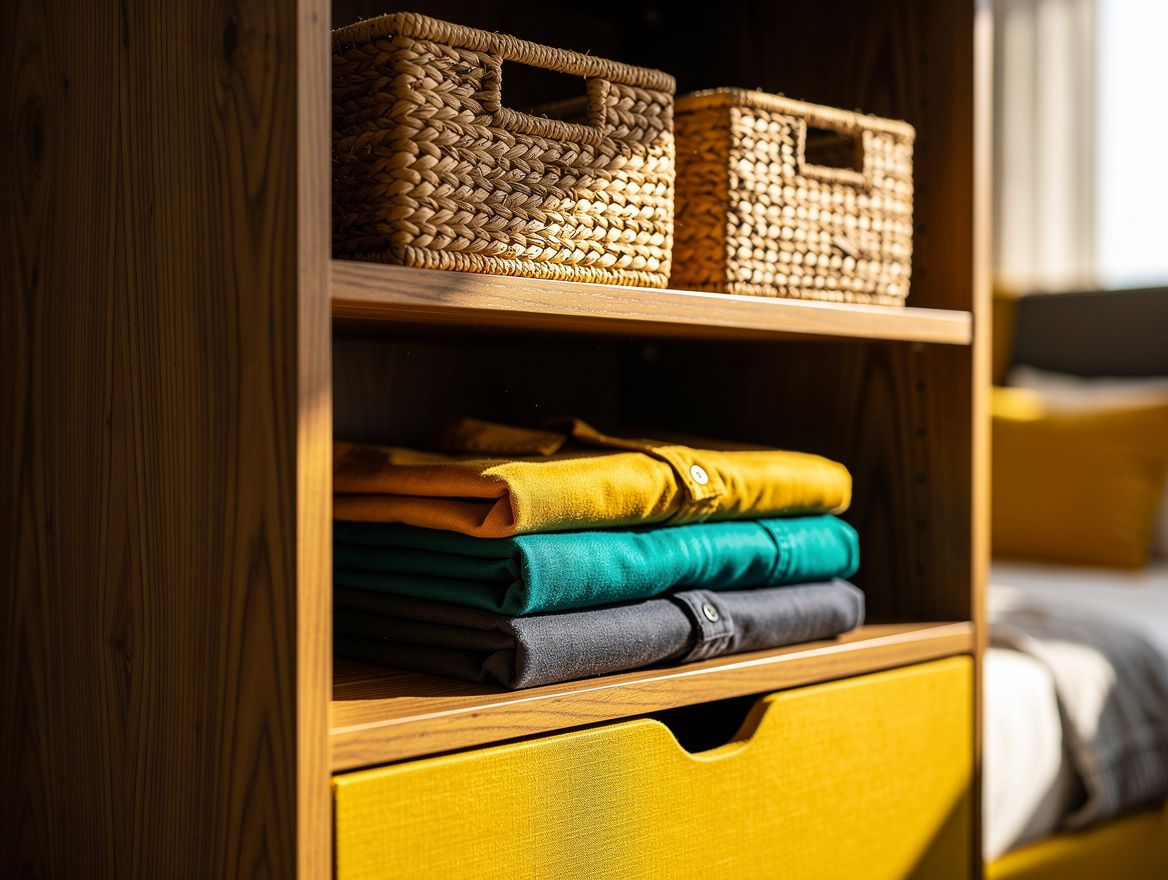
Keep the upper shelves partly open with a few Target woven baskets for folded items. A clear section at eye level helps the room feel connected, while lower baskets hide the visual clutter that makes a bedroom look unfinished.
For more privacy, add a fabric panel behind only part of the bookcase. A washable cotton curtain from Amazon can soften the back of the unit without turning the sleeping area into a cave.
Skip dark fabric across the entire divider unless the bedroom receives strong daylight from more than one direction. Privacy matters, but a gloomy bed zone rarely feels restful.
Treat the Back Like a Finished Surface
When a bookcase divides a room, the back becomes part of the bedroom rather than an invisible support surface. A raw fiberboard panel, exposed screws, or a tangle of cords will announce that the unit was placed there as an afterthought.
Paint the back panel a calm shade that relates to the bedding or walls. A quart of Lowe’s interior paint is typically enough for a modest back panel, and a soft warm white usually keeps the divider visually light.
If painting is not practical, attach thin beadboard or smooth hardboard to the back. Keep the finish simple, because a busy pattern behind open shelving competes with every object stored in front.
Hide lamps and chargers with slim cable clips along the side edge. The bedroom should read as one intentional space from every angle, including the view from the closet.
Assign Each Shelf a Real Job
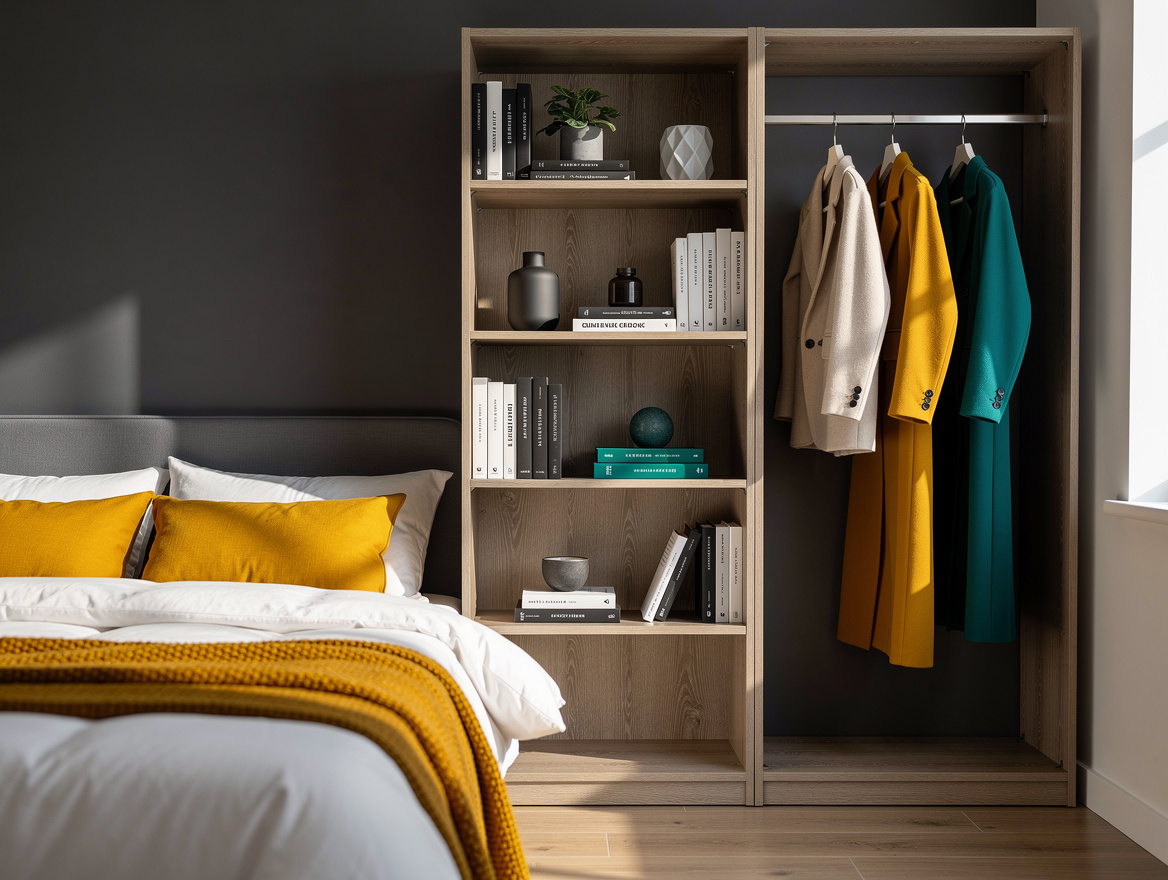
A divider becomes useful when every shelf has a clear purpose. Reserve lower compartments for shoes or laundry, middle shelves for folded clothes, and higher spaces for items used less often.
Use matching Walmart fabric bins for soft goods that do not stack neatly. Uniform containers calm the shelf line, while one or two open sections keep daily pieces easy to reach.
Do not fill every opening on the first day. Leave roughly 20 percent of the visible shelf area open so the divider can hold new purchases without becoming an overflowing closet.
Place heavier items low and keep fragile décor away from the bed side. A small ceramic vase or framed print can add personality, but the storage system should remain practical enough for a rushed morning.
Separate the Closet Zone With Color
Color can clarify the room’s zones without adding another piece of furniture. Keep the bedroom side quiet, then use a slightly deeper tone on the closet-facing wall or inside the dressing area.
A muted clay, olive, or smoky blue behind the shelves can make the bookcase feel intentional. Pair it with a natural Wayfair wood hanger set or matching baskets so the closet side has a consistent visual language.
Repeat one material on both sides of the divider. A wood tray on the bed side and wood storage boxes on the closet side create a subtle connection without making the room look decorated by a matching set.
Avoid changing colors at the exact center of the bookcase if the unit is open. Let the shelves bridge the two zones, then place the strongest color on the wall or textiles where it will be easier to adjust later.

Begin with painter’s tape, a clear walking path, and the anchor point on the wall. Once those decisions are right, choose the baskets and finish, then stop before the shelves become another place to hide clutter.
Mia Carter writes about small-space living and budget home makeovers. She has restyled three rentals and tests most ideas in her own 45 sqm flat.