
Your bedroom can feel warmer this winter with $200 to $800 in bedding, paint, shades, and art. I learned that after buying one oversized blanket that looked inviting but left the room cold and flat. The fix wasn’t more stuff. It was better layering, softer light, and a few deliberate material choices.
Don’t overthink: Which soft winter neutral will warm the walls?.
- Layer a winter bed with the Three-Texture Rule
- Which soft winter neutral will warm the walls?
- Float a rug beyond the bed
- The Three-Height Light Stack
- Swap matching nightstands for the Two-Wood Rule
- Could a fabric canopy make the room feel softer?
- Mix warm metals with intention
- The padded headboard
- Let curtains hold the evening light
- A quiet reading corner
- Spend on comfort, save on clutter
- The hygge color pair
- Create a hotel-style landing zone
1Layer a winter bed with the Three-Texture Rule
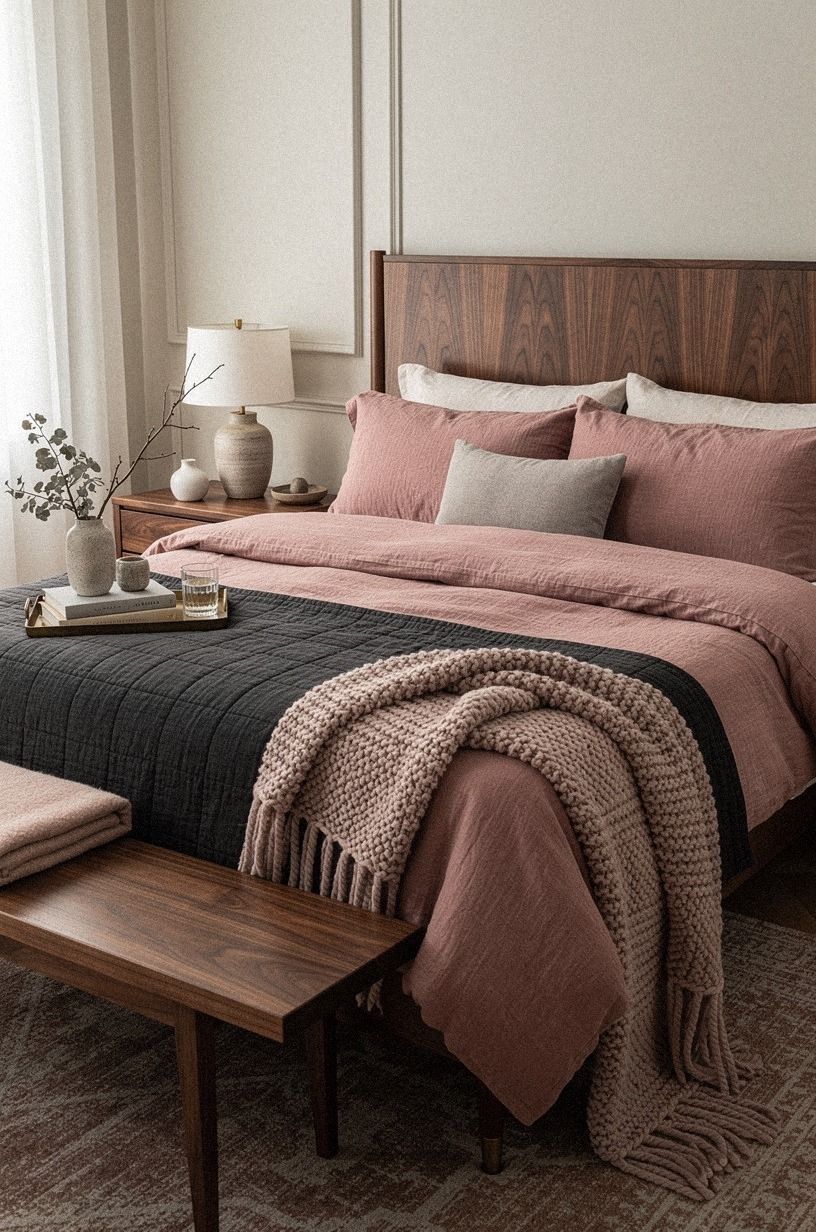
Start with washed-linen sheets, a cotton blanket, and one heavier coverlet so your bed feels soft without becoming a bulky stack. A queen bed measures 60×80 inches, so you don’t need an enormous duvet spilling onto the floor to make it look inviting. You need visible texture at different heights.
I’ve found that washed-linen bedding looks more relaxed than a matching satin set, especially beside a 12 oz cotton quilt or a nubby wool throw. Fold the throw across the lower third of your bed instead of draping it over one corner. That small decision keeps the room tidy and gives your eye somewhere to land.
If you’re styling a king bed, let the coverlet extend beyond the 76×80-inch mattress, but don’t drown the frame. Dusty rose, charcoal, and brass work better here than three shades of beige, especially beside book-matched walnut.
And if your room already has heavy curtains, skip the thick velvet blanket. You’ll want one breathable layer for sleeping and one tactile layer for daily comfort.
For a low-cost version, use what you’ve got. Rotate the best blanket from the living room, wash the duvet, and fold one merino wool throw at the foot.
Your bed will look more collected without another shopping trip. That is the whole trick!
If your bed still feels visually flat, start with this three-texture bedding approach and add floor softness afterward.
2Which soft winter neutral will warm the walls?
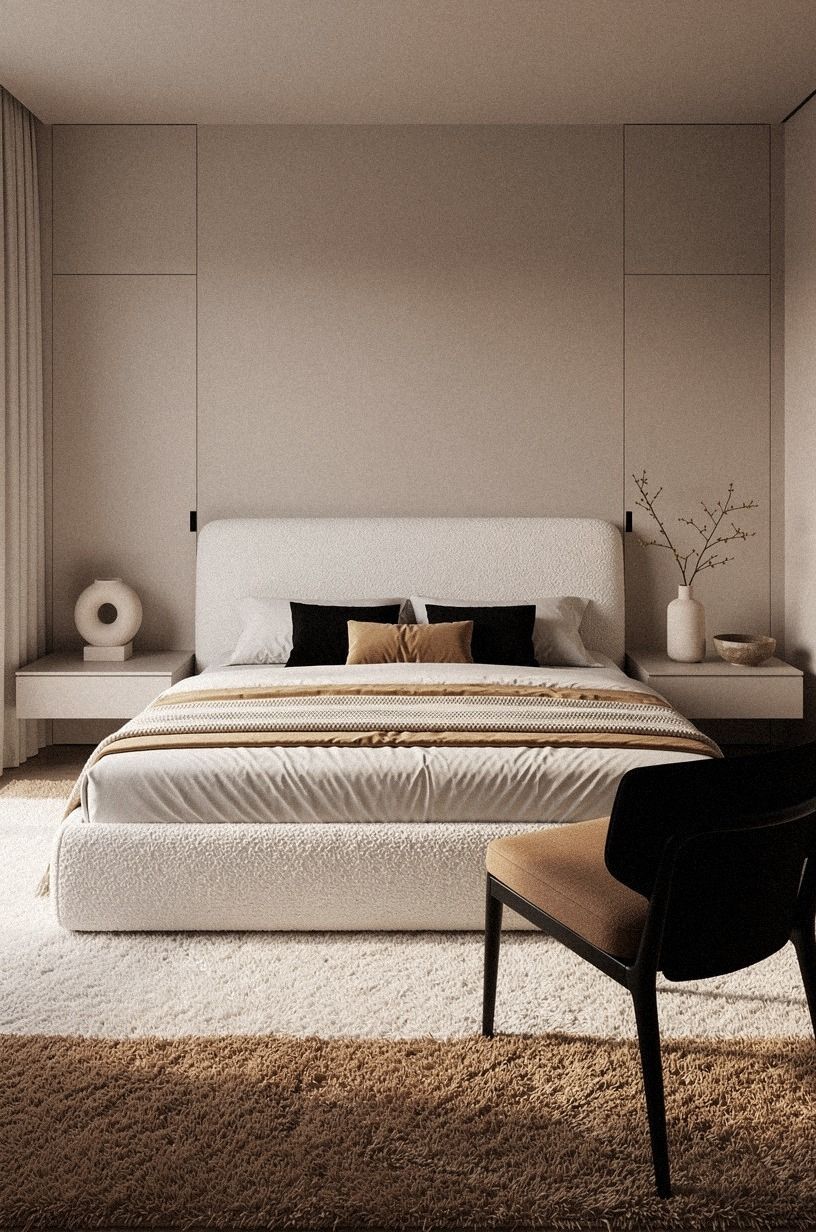
The right wall color does more for a winter bedroom than another basket of blankets.
3Float a rug beyond the bed
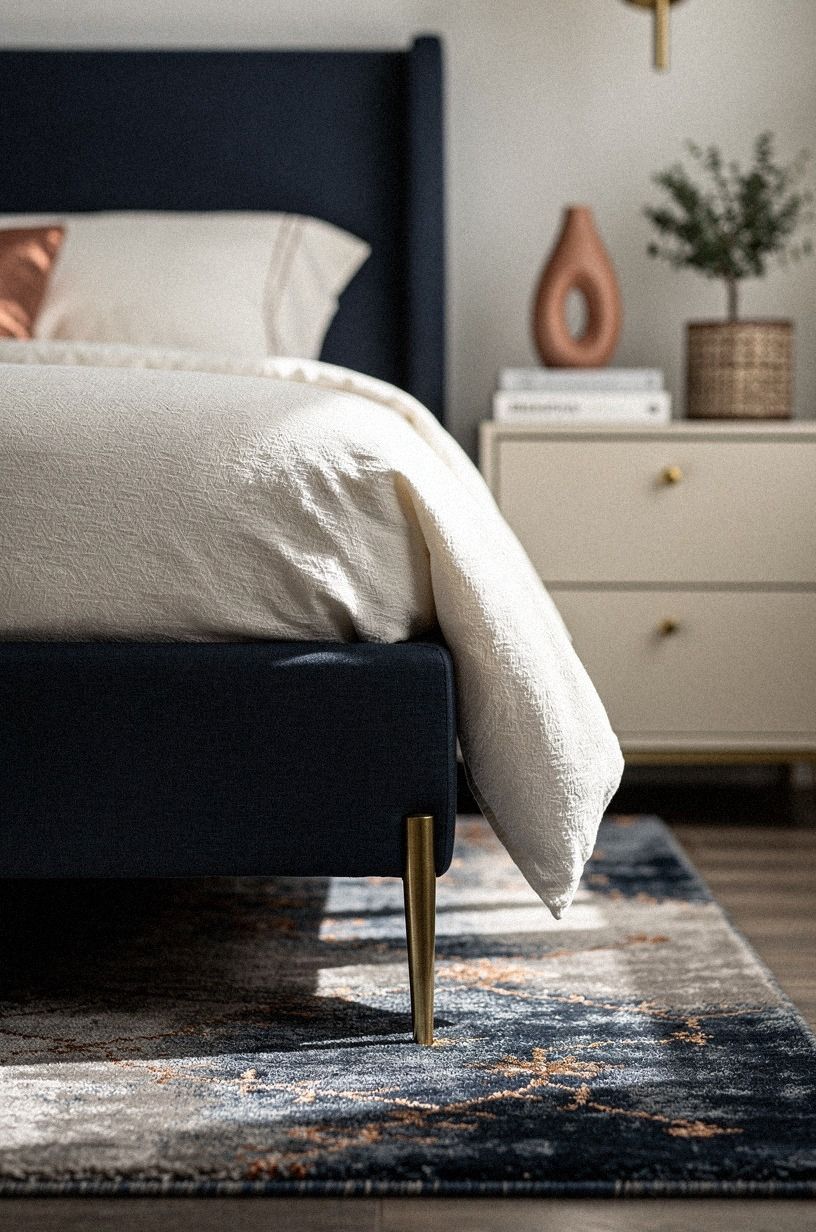
A rug should reach 18 to 24 inches past the bed so your feet land on something warm instead of a freezing floor. That measurement matters more than choosing the trendiest pattern. For a queen bed, an 8×10 rug gives you enough width to frame the nightstands while keeping the room balanced.
I prefer a low-pile wool rug with a faded geometric pattern because it feels soft underfoot but doesn’t swallow the bed frame. The fibers catch the light differently as you walk past, which makes the floor feel layered rather than flat. You’ll notice that texture before you notice the pattern.
If you’re working with a narrow bedroom, place two runners along the sides of the bed. A pair of cotton flatweave runners can cost less than one large rug and gives you the same warm landing zone. Just keep the edges aligned with the nightstands so the room doesn’t look accidental.
A thin jute underlay keeps the rug from shifting and adds a little insulation on cold floors. Don’t choose a tiny rug that stops six inches beyond the mattress. It makes the bed look stranded.
You want the rug to visually hold the whole sleeping area, even if the rug itself is simple. Your feet will notice the difference first!
4The Three-Height Light Stack
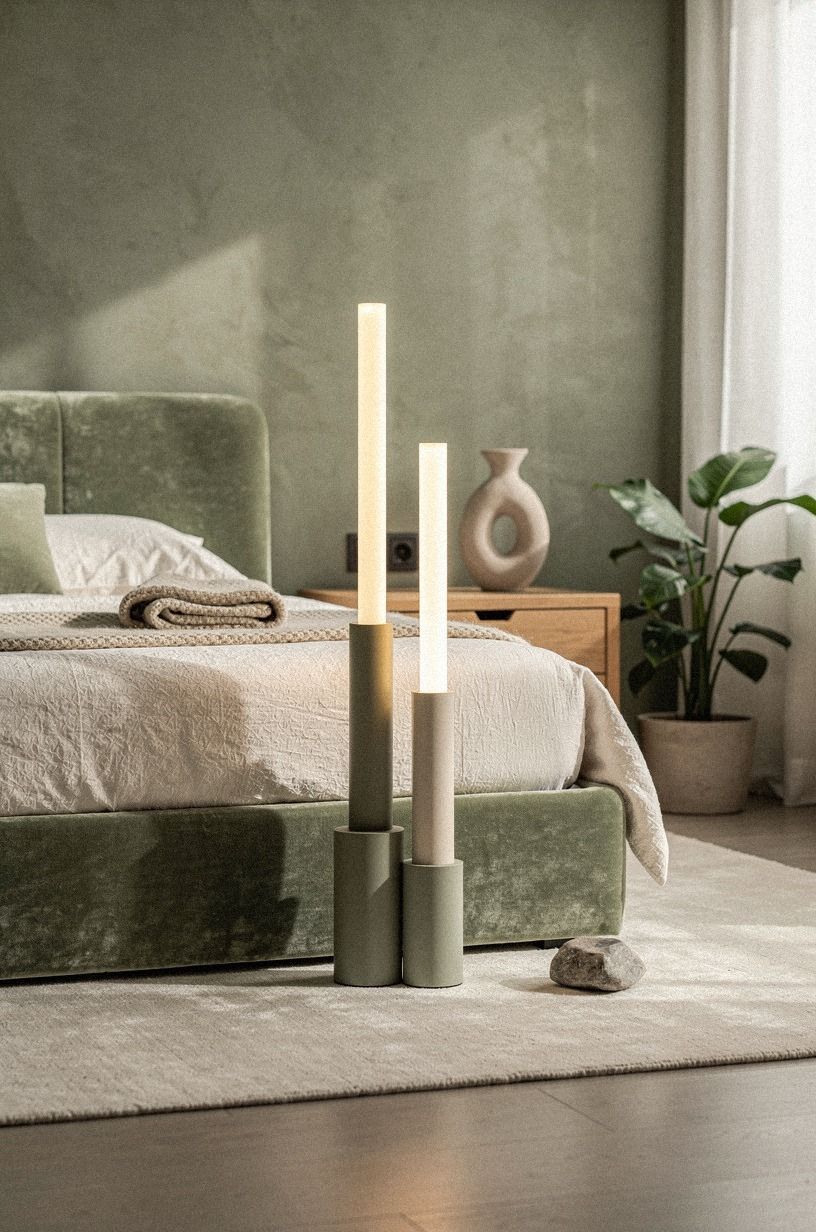
One ceiling fixture won’t make a bedroom feel restful.
5Swap matching nightstands for the Two-Wood Rule
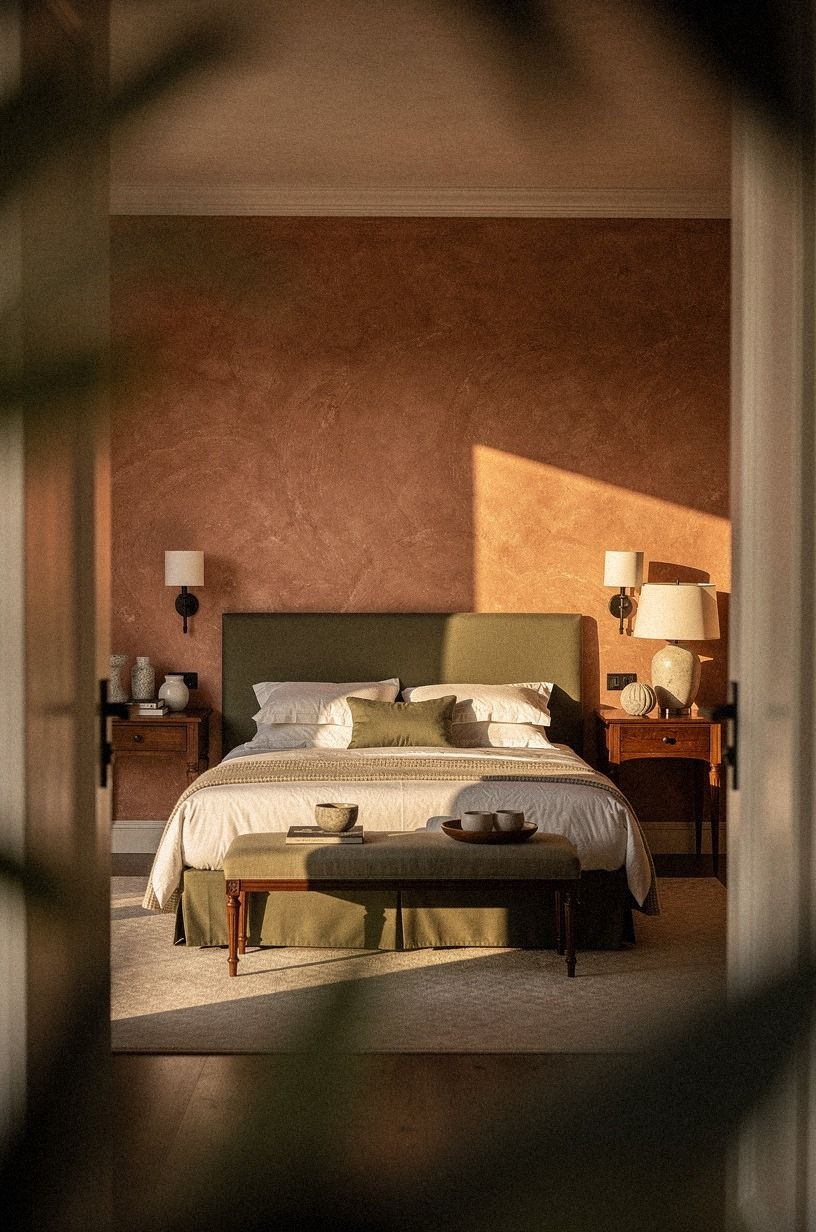
Matching nightstands can make a bedroom look staged, especially when every surface has the same finish. I like using two wood tones against hand-applied Venetian plaster, with terracotta, stone, and olive bringing the palette to life. The result feels collected instead of chaotic.
Keep the heights close to your mattress. The standard nightstand range is 24 to 28 inches tall, so your lamp, book, and water glass stay within easy reach. You don’t want to lean down in the dark or perch a lamp on a stack of novels.
I’ve made the mistake of choosing a beautiful nightstand with no drawer. It looked clean for two days, then became a landing place for chargers, lip balm, and receipts. Choose one with a drawer or basket, especially if you don’t have a closet nearby.
For a budget version, pair an IKEA HEMNES two-drawer table with a secondhand olive-painted stool or a small stone-toned cabinet. Your room will feel more personal, and you won’t see the same symmetrical setup in every bedroom.
A darker wood bench can repeat a richer tone at the foot of the bed without making the room feel overly coordinated. See the landing-zone idea before choosing its final size.
6Could a fabric canopy make the room feel softer?
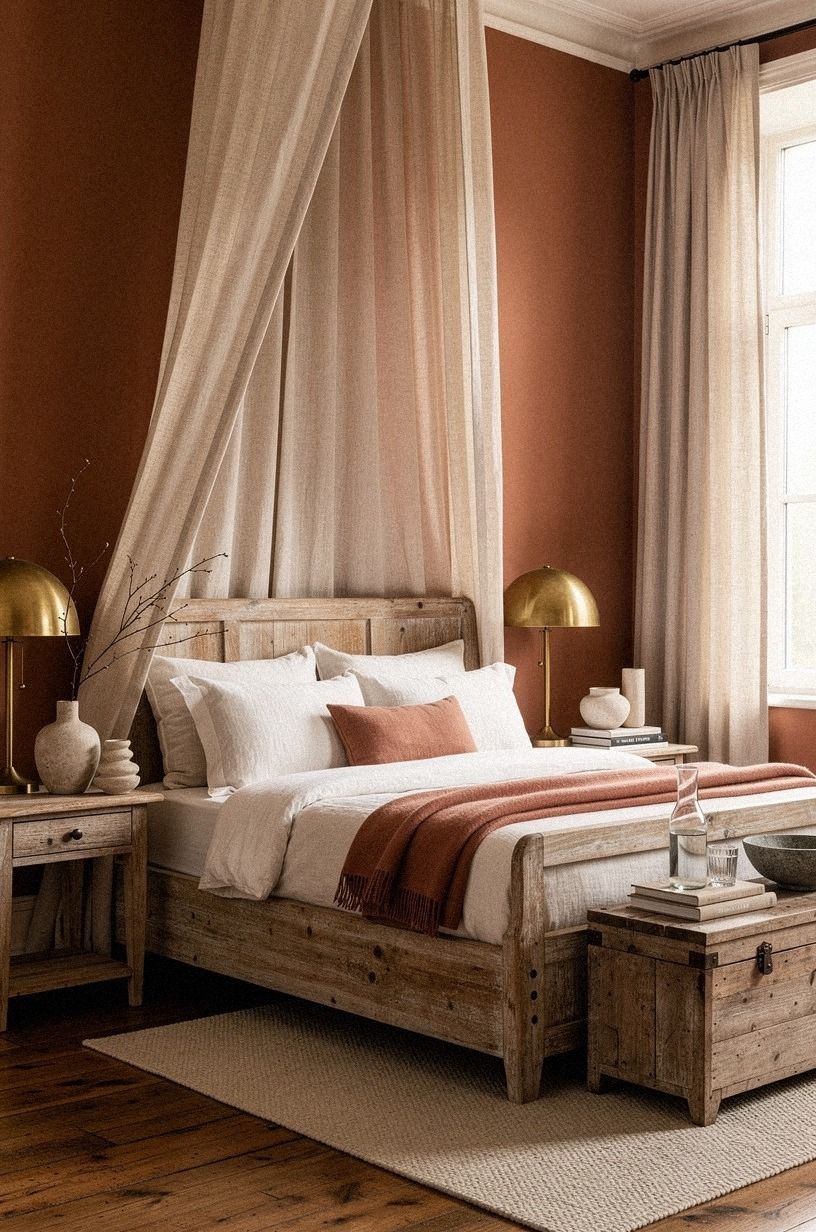
A canopy doesn’t need four posts or a dramatic ceiling installation.
7Mix warm metals with intention
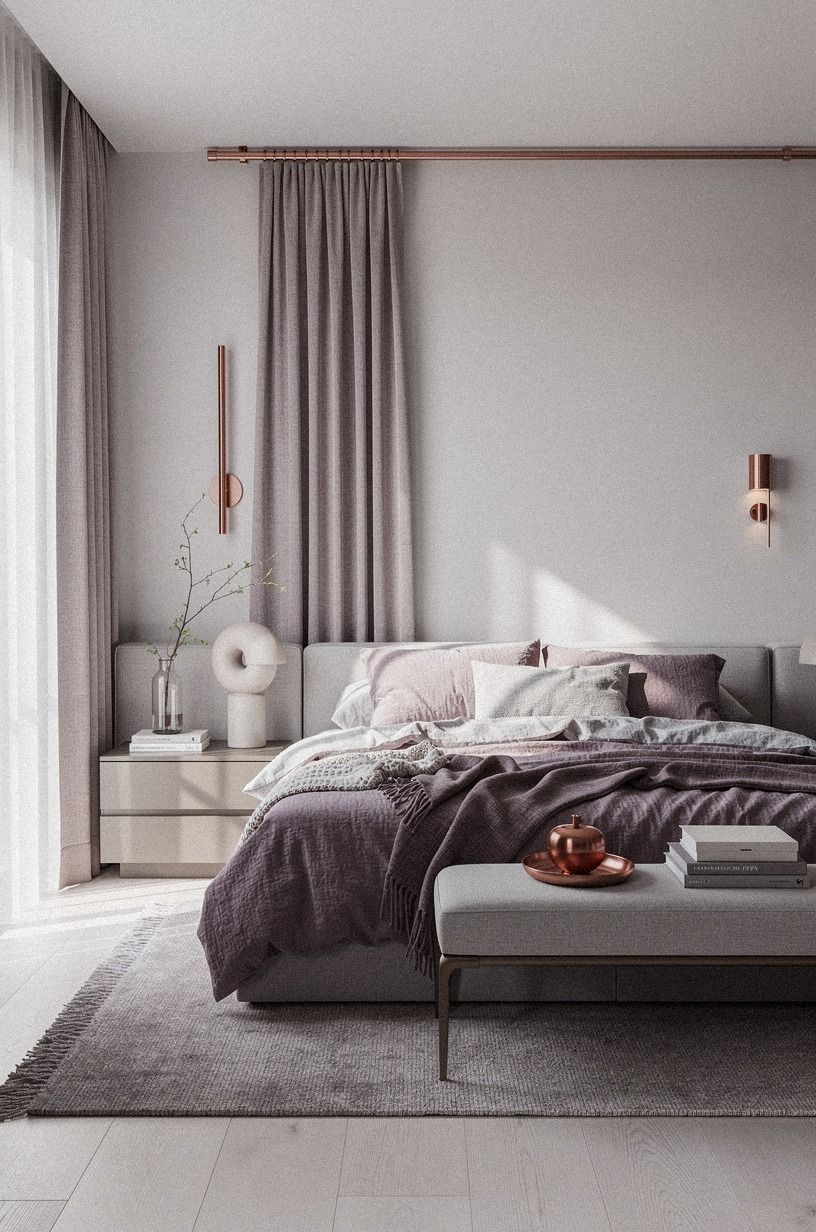
A bedroom can handle more than one metal if you repeat each finish with purpose. Pair rose gold on the lamp with washed Belgian linen at the window and a small charcoal detail in the artwork. The result feels warm and lived-in instead of like a showroom package.
I’d keep the metal palette to two or three finishes. Too many will make your eye work harder, especially in a small room.
If your bed frame is charcoal, rose gold becomes the warming note. If you already have warm hardware, add a muted rose-gold detail through a mirror or picture frame rather than buying more shiny pieces.
The best part of washed Belgian linen is how it softens with use. It brings a relaxed texture to the room without looking precious, so the palette of plum, gray, and rose gold feels comfortable rather than overly polished.
For a cheap update, switch the lamp finial or drawer pulls. Muted rose-gold pulls can make a plain dresser feel more deliberate for very little money. But avoid bright yellow metal beside orange wood.
That pairing can make the whole room feel louder than you intended.
A small charcoal steel detail can anchor the warmer finishes and keep the palette crisp. It also connects naturally with the three-height lighting plan.
8The padded headboard
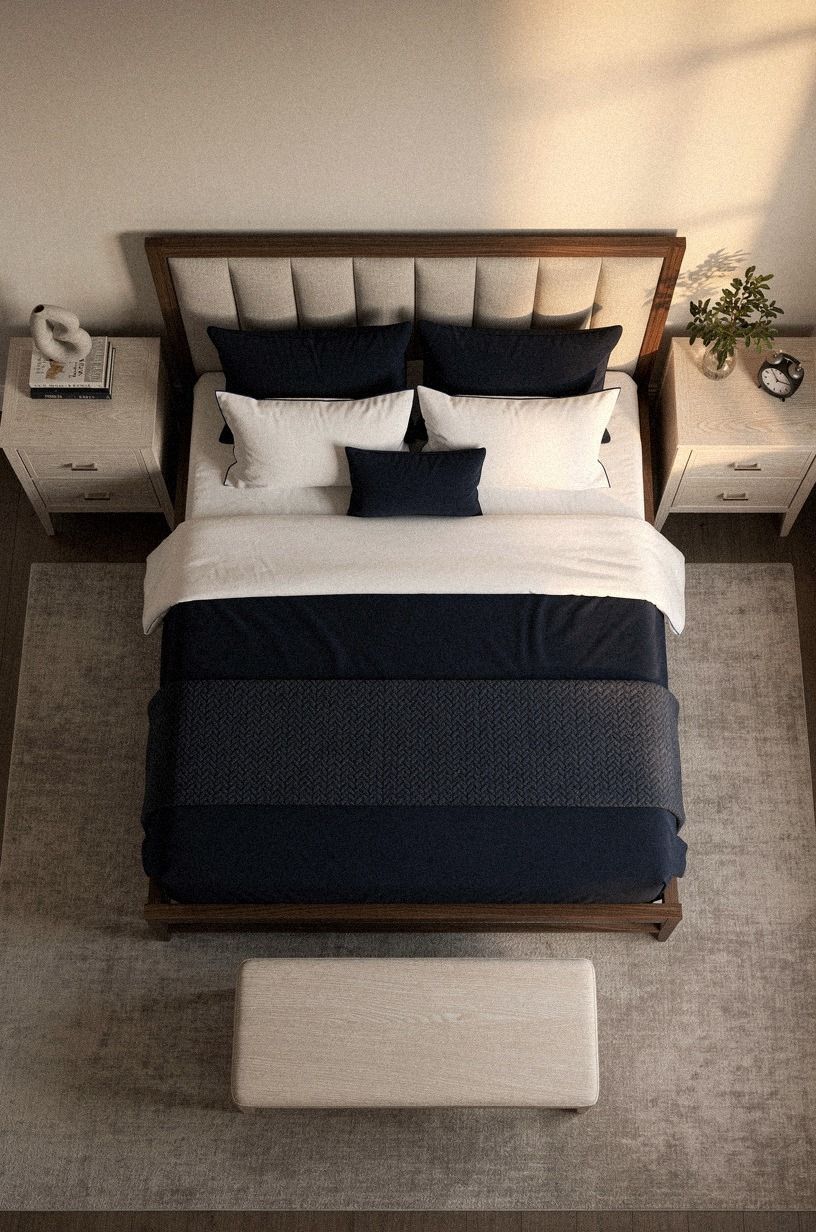
An upholstered headboard gives a winter bedroom softness without requiring piles of pillows. Choose a shape with clean edges and a navy linen fabric, then balance it with walnut and cerused white oak.
I prefer a tall rectangular headboard over a deeply tufted one. It makes the bed feel grounded and gives you a quiet backdrop for patterned pillows. A 48-inch headboard can be enough for a queen room, but measure your wall and nightstand height before ordering anything.
You don’t need to spend on a custom frame. An IKEA MALM bed can look far warmer with a freestanding navy upholstered headboard, a cerused white oak stool, and a pair of reading lights. The structure stays simple while the materials do the emotional work.
Don’t choose a pale fabric just because it looks beautiful. If you read, drink tea, or share the room with a pet, a navy performance linen will forgive more than bright cream. Your bedroom should be comfortable to use, not only pleasant to live in.
9Let curtains hold the evening light
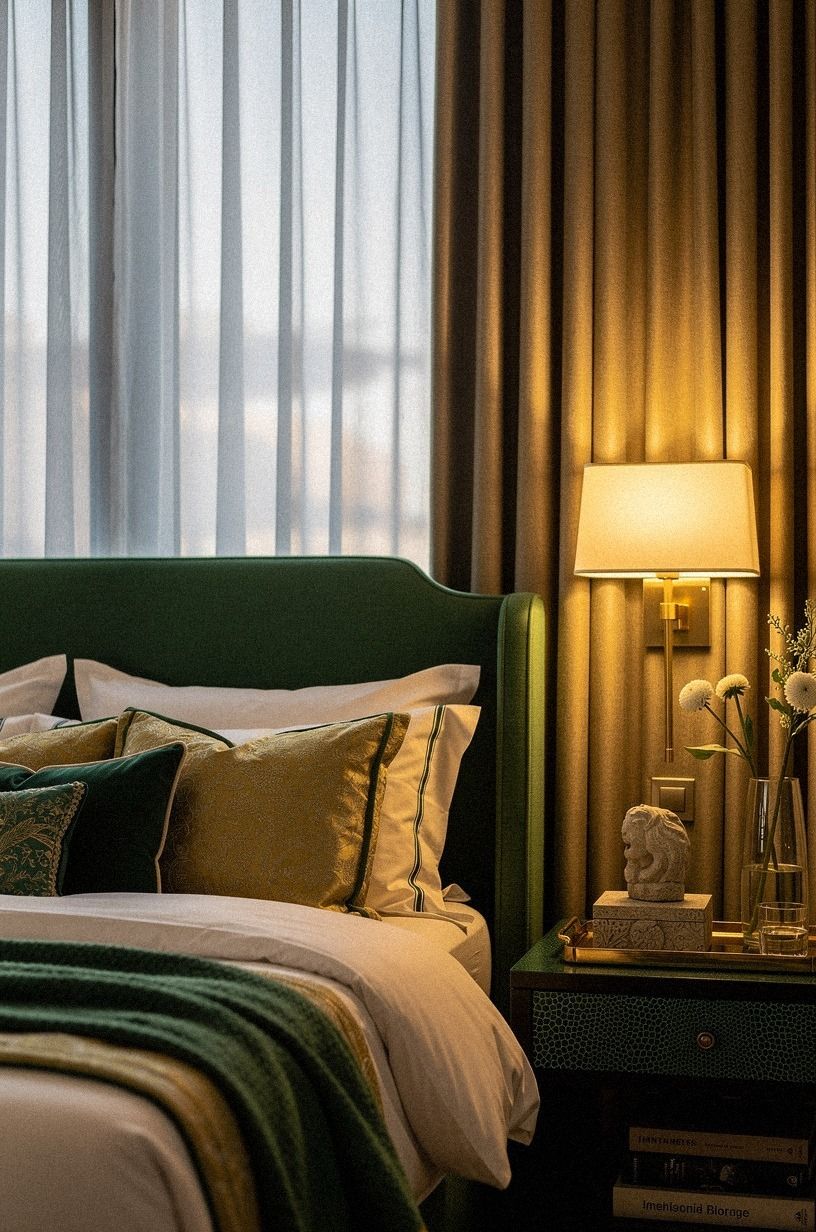
Winter bedrooms often need curtains that soften glare without making the window disappear. Hang the rod close to the ceiling and extend it past both sides of the window so the panels frame the opening rather than covering half the glass.
Cream linen-blend drapes are my first choice because they filter afternoon light into a soft haze. They don’t block every ray, and that’s useful when you want a room that wakes gradually. Add a blackout lining if you sleep during the day, but keep the visible fabric relaxed and natural.
For a narrow room, use one wide panel on each side instead of several skimpy panels. The fuller width gives the window more presence. You’ll also avoid the stiff, pinched look that comes from trying to make two small panels cover a large opening.
I’d skip icy gray curtains with a cool white wall. They can flatten the room and make the bed look disconnected.
Choose cream linen beside warm neutrals, or emerald if your walls are pale. Add a small gold or shagreen accent so the fabric echoes one quiet detail already in the bedding.
10A quiet reading corner
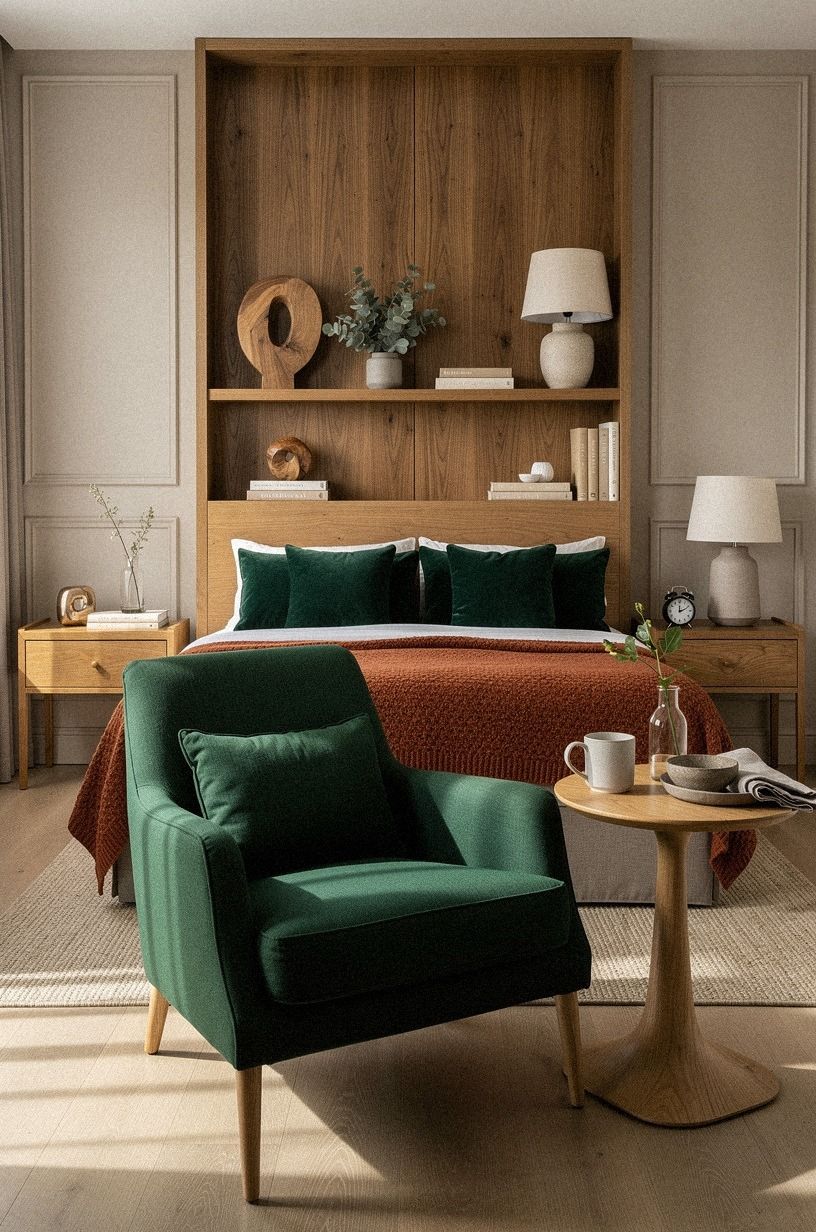
A winter bedroom benefits from one place that isn’t the bed. Add a compact chair, a small table, and a light source so you can read without turning the whole room into a sleeping zone.
A forest-green upholstered chair brings color, but I’d use it carefully. Too much saturated fabric beside a thick duvet can become visually heavy. Pair it with a slim natural-oak table and a woven basket so the corner has structure.
If your room is tight, choose a simple forest-green chair or a natural-oak stool that can slide beneath a desk. You don’t need a complete lounge suite. Your goal is a seat where you can fold laundry, read two pages, or put on socks without sitting on the bed.
A compact book-matched walnut footstool can add comfort without overwhelming the corner. And don’t place the chair in front of a radiator or block the closet door.
Measure the walking path first. A beautiful corner that interrupts your morning routine won’t feel peaceful for long.
11Spend on comfort, save on clutter
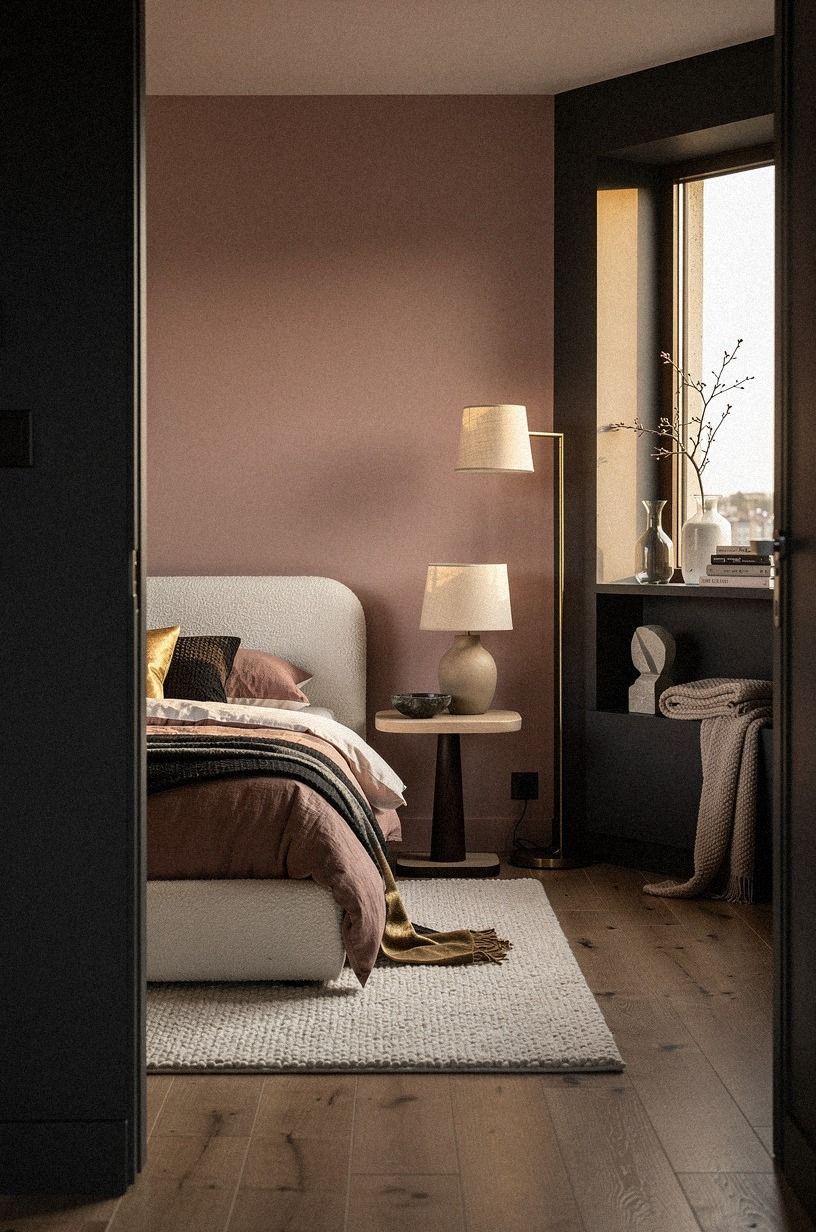
A warm bedroom can cost far less than a full renovation, but the total rises quickly when you buy every layer at once. Start with bedding and lighting, then decide whether paint, a rug, or curtains will solve the next visible problem.
For a smaller purchase, you might begin with washed-linen bedding, a lamp, and a secondhand frame. Those changes can make the room feel warmer before you commit to a rug or headboard. I’d rather see you buy one convincing material than five inexpensive objects that don’t relate to each other.
The table gives you a realistic US range, but your room doesn’t need to reach the high tier to feel inviting. If you’ve got $100, wash and restyle what you own, move the bed if the layout allows it, and use warm bulbs before buying decor. Your eye notices light and scale first.
12The hygge color pair
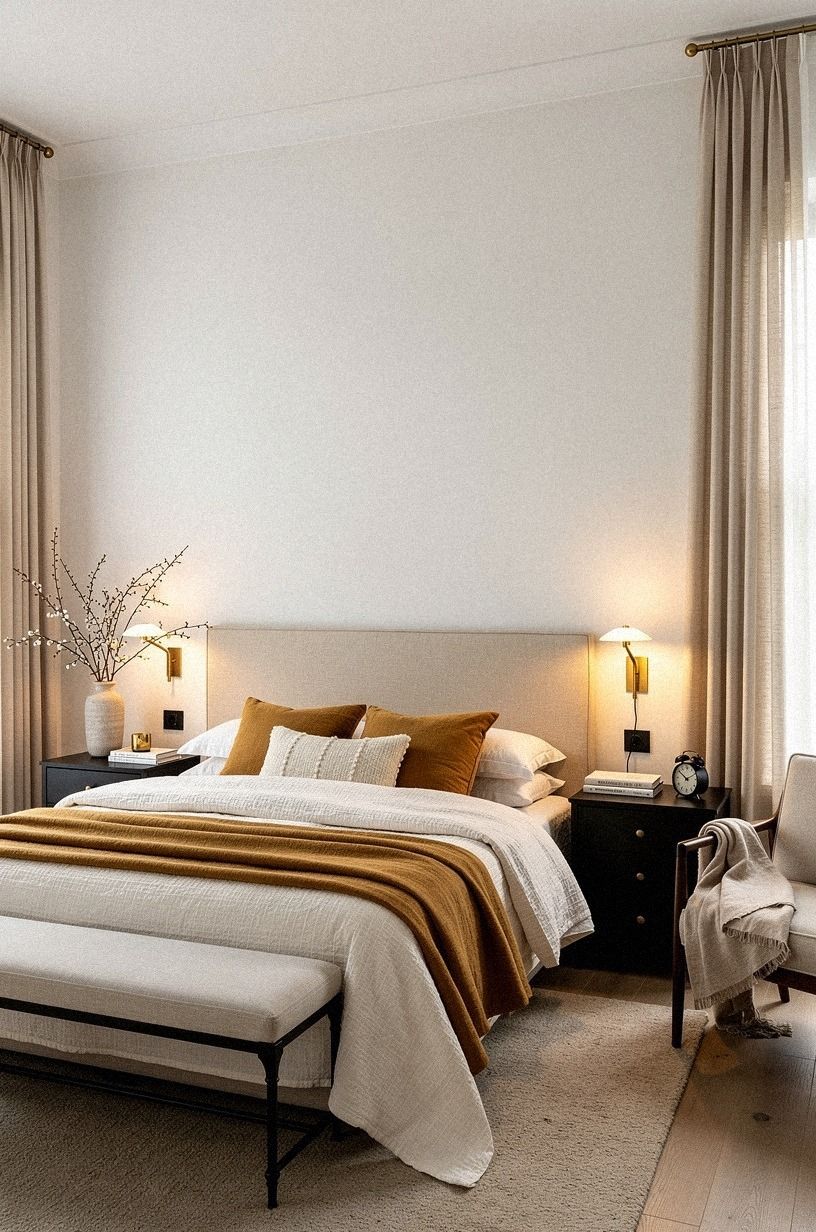
A winter bedroom needs contrast, but not the kind that shouts across the room. Pair one warm white wall color with camel textiles and one black accent. Sherwin-Williams Alabaster SW 7008 works with camel bedding, a black lamp, and unlacquered brass hardware.
I’d avoid combining several pale neutrals without a darker anchor. The room can look washed out, especially on cloudy afternoons. Add unlacquered brass through one lamp or picture frame, then keep the black accent small enough to give the palette weight.
If you love darker bedrooms, use black through a headboard, curtain rod, or bedside table rather than covering every wall. Keep the ceiling warm white so the room still feels restful at night, especially in a smaller space.
A warmer Benjamin Moore White Dove OC-17 can bring a soft, welcoming mood to a large bedroom. Use it with camel bedding and black details so the result stays layered rather than flat.
You can also try Farrow & Ball School House White if you want a slightly deeper warm neutral. Check the paint sample in morning and evening light before buying a full gallon.
13Create a hotel-style landing zone
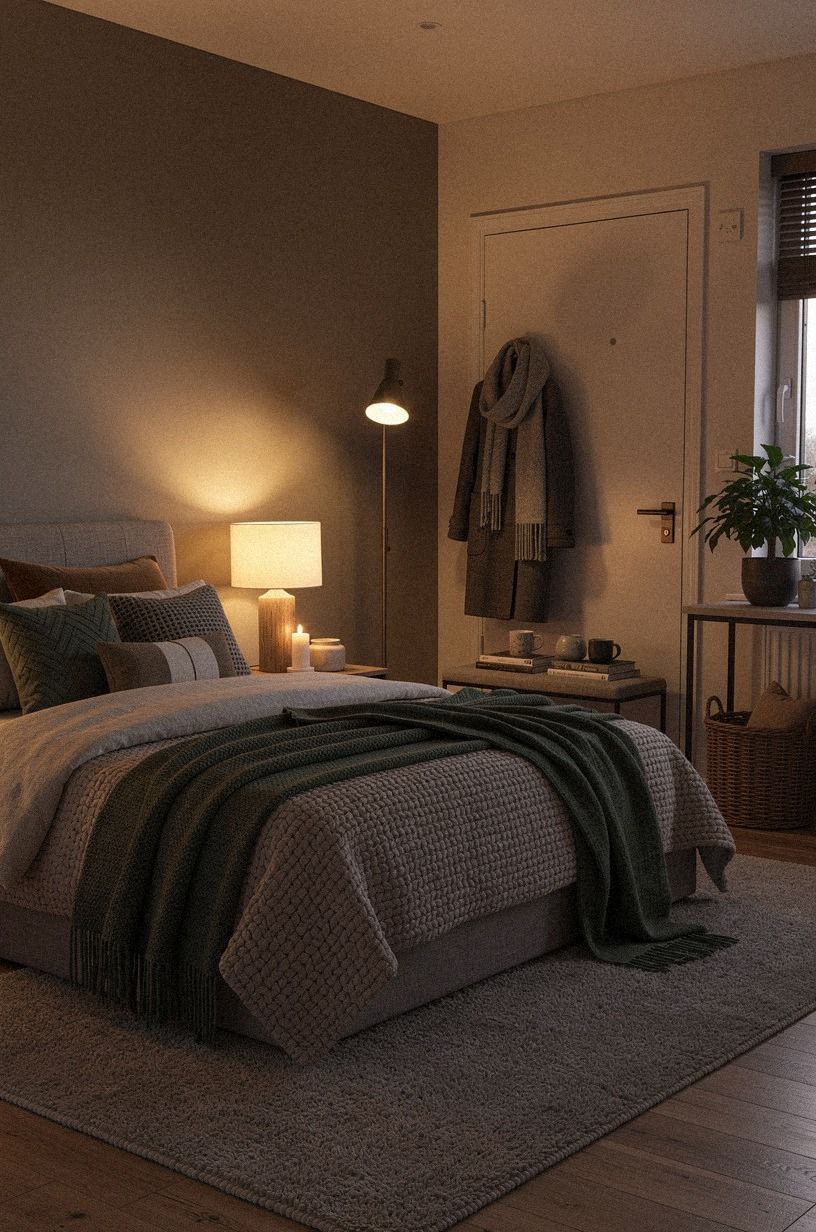
The last layer is practical: give every bedtime object a place to land. A small tray on the nightstand, a hook behind the door, and a basket near the bench can make your room feel calmer without adding visual clutter.
Use a midnight-blue mohair velvet bench for extra blankets, a copper catchall for jewelry, and one ivory accent instead of a crowded gallery wall. These materials add texture while keeping the surfaces easy to clear. Your room will feel more luxurious when the useful things aren’t scattered everywhere.
I’d skip the oversized bedroom bench if it leaves less than a comfortable walking path around the bed. A narrow midnight-blue mohair velvet stool can hold a folded robe and take up far less space. Scale matters more than having every familiar hotel detail.
For a renter, removable hooks and a slim tension shelf can create the same landing zone without drilling. You’ll get the visual calm of a custom setup, and you can take it with you when the lease ends. That small bit of order is what makes hibernating in your room feel like a choice, not a pileup.
The opinion I’d give a friend about winter bedrooms
I used to think a winter bedroom needed more: more blankets, more pillows, more baskets, more amber glass. Then I spent a weekend removing half of those things and paying attention to what the room was doing after dark.
The cold feeling wasn’t caused by a lack of objects. It came from hard overhead light, bare flooring, and bedding with no texture.
That changed how I shop. I now look for one material that feels good in my hand, one light source that lands below eye level, and one color with enough depth to hold the room together. Farrow & Ball Setting Plaster works because it catches the warm part of the day.
Linen works because it wrinkles instead of looking stiff. Wool works because it adds heat visually and physically.
I’ve also learned that a small bedroom doesn’t need to imitate a hotel suite. A queen bed already takes up 60×80 inches, so forcing in a large bench and two wide nightstands can make the room frustrating. A simple stool, one strong lamp, and a rug that extends 18 to 24 inches beyond the bed may give you more comfort than a full furniture set.
My unpopular opinion is that the bed doesn’t have to be perfectly styled every morning. Leave one throw folded loosely.
Let the linen crease. Keep a book open on the nightstand.
The warmest rooms show signs of being used, and that lived-in evidence is more inviting than a polished arrangement you can’t touch.
If you’re deciding where to spend, choose the layer you’ll feel every night. That might be the rug under your feet, the bulb beside your pillow, or the duvet that keeps you comfortable.
You don’t need all 13 ideas. You need the two that answer the actual problem in your room.
What People Always Want to Know
What is the best winter bedroom idea for a small bedroom?
The best choice is layered bedding with a wall-mounted light, because it adds comfort without using floor space. An IKEA HEMNES nightstand or a slim table can hold essentials while leaving the walking path clear. Keep the palette light, then add one dark textile for depth.
Where can I find winter bedroom pieces on a budget?
Look at IKEA, Wayfair, and Target for bedding, lamps, and small furniture. Facebook Marketplace and local thrift shops can turn up solid wood nightstands for much less. You don’t need matching pieces, and a coat of paint can bring mismatched furniture into the same palette.
How much does a cozy winter bedroom makeover cost?
A typical budget refresh runs about $200 to $800 for bedding, paint, shades, and art. You can spend less by washing and rearranging what you own first. A rug, headboard, or custom drapes moves the project toward the $1,500 to $5,000 mid-range tier.
Can I create a cozy winter bedroom on a budget?
Yes, and you can begin with three low-cost moves: rotate your furniture, switch to warm 2700K bulbs, and layer a blanket across the bed. Add a thrifted wood stool, a removable curtain panel, or an IKEA throw when your budget allows.
Is a cozy winter bedroom worth it in a small space?
Yes, because a small room needs fewer layers to feel settled. Use a rug that extends 24 inches past the bed, a wall-mounted lamp, and one narrow nightstand. Your limited square footage can make the room feel intimate instead of unfinished.
Is a cozy winter bedroom a good idea for a rental?
Yes. Use peel-and-stick art, a tension rod, removable hooks, plug-in sconces, and a freestanding headboard. You can create a warm bedroom without permanent changes, and you’ll be able to reuse most of the pieces after you move.
Where I’d Start First
If I had to pick one, I’d start with layered lighting. A warm lamp below eye level changes the room after sunset, while extra pillows mostly occupy the bed. Pin this idea for later and pair the lighting with your existing bedding before buying anything else.