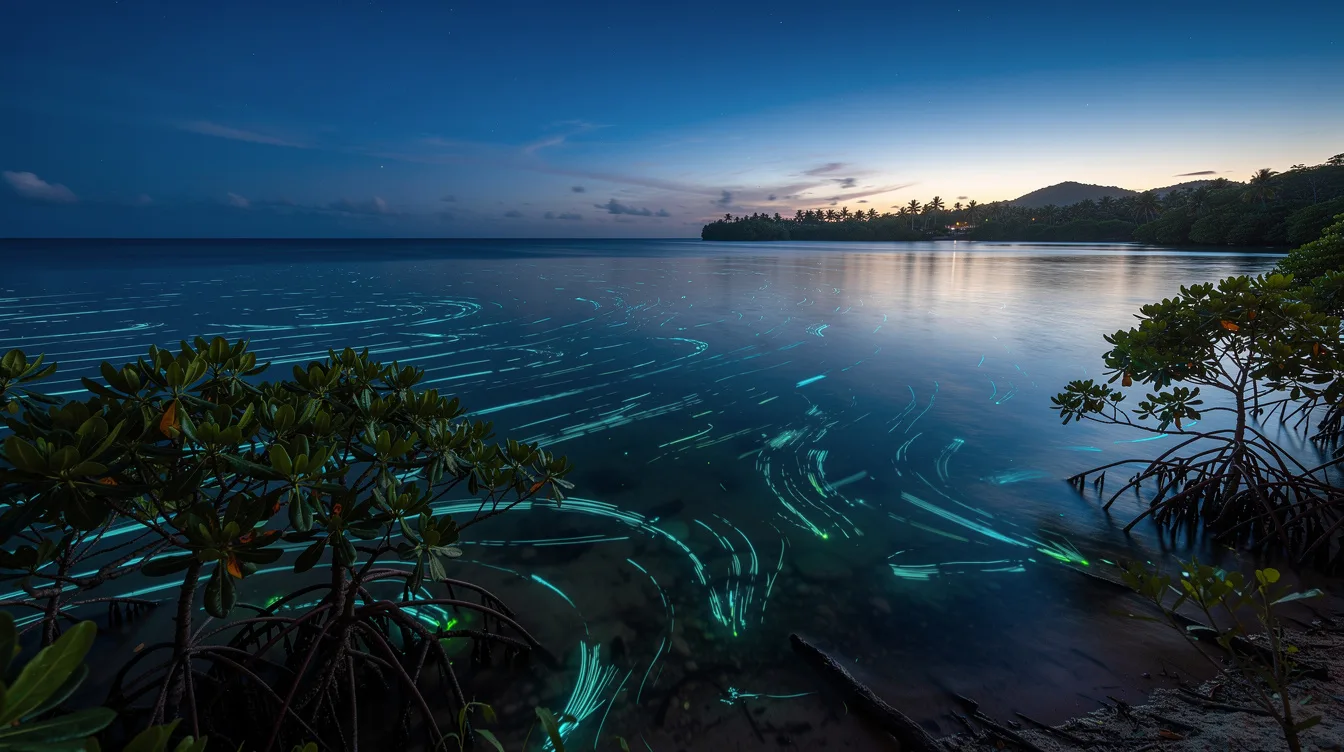
Vieques sits just 8.1 miles east of Puerto Rico, yet nightfall changes the rules. In Mosquito Bay, tiny dinoflagellates produce blue-green flashes whenever the water moves. Stir it with a paddle or your hand, and the darkness answers.
That contrast is the island’s appeal. Vieques feels close on a map, but its beaches, refuge, and slower rhythm create real distance from San Juan. And because the bay is best experienced on a moonless night, timing matters as much as the view.
Mosquito Bay turns a short paddle into the main event
Mosquito Bay is often presented as the world’s brightest bioluminescent bay. The claim matters less once your kayak starts moving, because every stroke sends brief blue-green sparks across the water.
And the effect is easiest to notice when the sky is dark. Choose a guided kayak or boat outing on a night without moonlight, then watch the wake break into scattered light. You’ll see the glow, but you won’t get a polished theme-park show.
That limitation is part of the experience. The bay depends on darkness and movement, so cloudy water, bright moonlight, or a poorly timed outing can soften the effect. Read more about [Puerto Rico’s night experiences](/en/puerto-rico/) before you plan around one evening.
Vieques is compact, but the beaches don’t sit next door
The island sounds manageable until you realize the beaches and refuge sites are spread out, with limited public transportation between them.
And the reward is variety without resort sprawl. Sun Bay and Media Luna work well for a swimming day, while quieter beaches offer snorkeling, diving, hiking, or a bicycle ride with salt in the air.
My opinion is simple: don’t treat Vieques as a quick beach stop. Rent a car, golf cart, or suitable vehicle if you can, because the island is far more enjoyable when you aren’t waiting on the next ride.
Can you see the refuge without rushing?
Yes, but give it room in your schedule. More than half of Vieques National Wildlife Refuge is protected, with beaches, mangroves, lagoons, dry subtropical forest, and coral reefs.
And the refuge is where the island feels most open. You may notice sea turtles, manatees, or brown pelicans, but the point is the quiet between stops. Bring water, move at a patient pace, and follow every marked access rule.
The trade-off is clear: protected land means fewer services and less convenience. You won’t find a continuous strip of developed beach facilities, which is exactly why the shore can feel so calm when you arrive.
Esperanza or Isabel Segunda? Pick your base carefully
Esperanza, on the south coast, puts you closer to beaches, waterfront restaurants, bars, and Mosquito Bay. The mood is easygoing, with evening air carrying the smell of salt from the shore.
And Isabel Segunda makes more sense if you want the ferry port, local services, or the airport nearby. Neither base gives you everything, so your choice should follow the kind of days you want to have.
For a short stay, plan on 3 to 4 nights. That gives you time for a beach day, the refuge, a bay outing, and a final morning without turning every hour into a transfer.
How do you get to Vieques without losing the day?
You can take a ferry from Ceiba, which reaches Vieques in about 30 to 45 minutes. The ferry costs less, but you’ll need to manage the trip to the terminal and reserve early for busy weekends and holidays.
And flying from San Juan is faster. The local airport is Antonio Rivera Rodríguez, and flights leave from San Juan or Isla Grande. If your visit lasts only two nights, the extra cost may buy you more time on the island.
Vieques has a past you need to respect
The U.S. Navy left Vieques in 2003 after decades of military use. Some former military land is now part of the refuge, but other areas remain closed or regulated because cleanup continues and unexploded ordnance may still be present.
But this isn’t background scenery. Stay on open roads and marked trails, obey signs, and never cross a barrier for a better photograph. The island feels remote, but its history is close beneath the surface.
By the time your paddle lifts from Mosquito Bay, the water goes dark again. That brief blue-green flare is the souvenir, and the quiet afterward is the part you’ll remember.