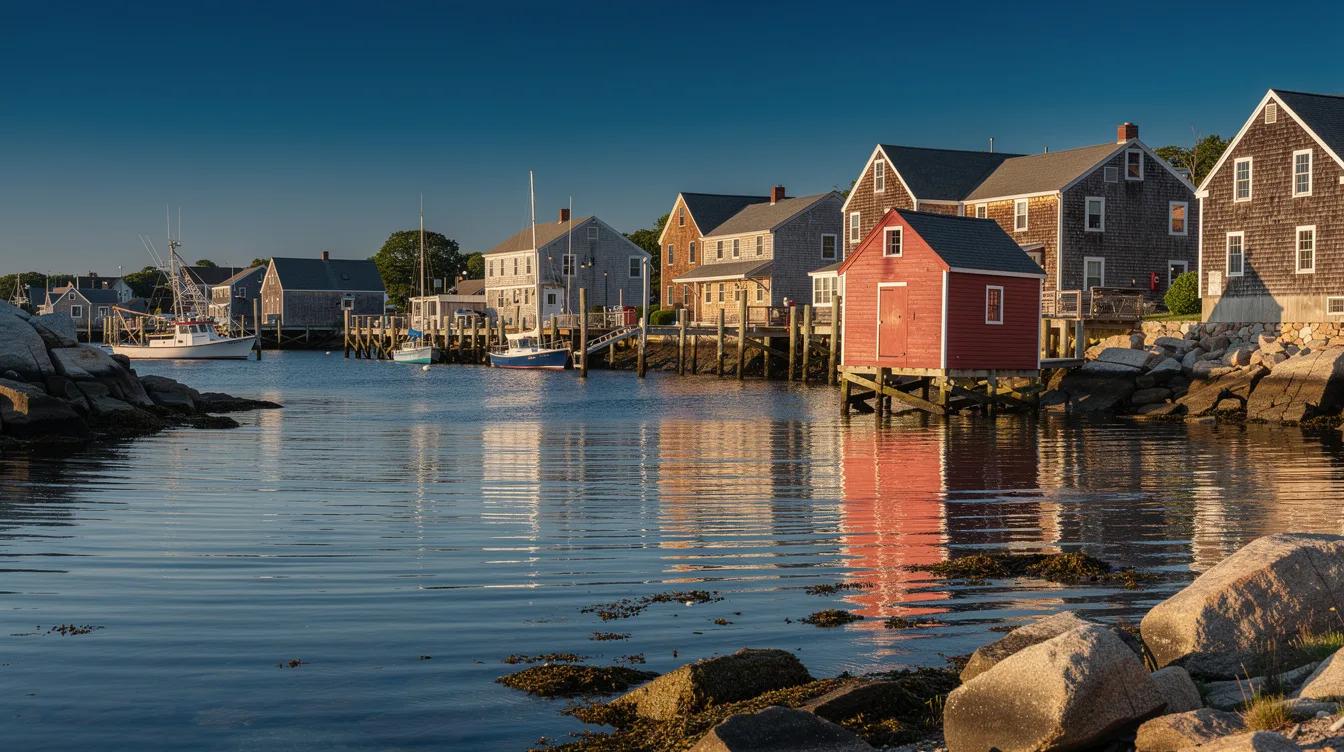
Rockport sits at the tip of Cape Ann, about 39.8 miles northeast of Boston, yet it feels far removed from the city. The MBTA reaches town in about one hour from North Station, which makes this one of Massachusetts’ easiest slow-travel escapes.
But the short ride isn’t the whole appeal. Rockport rewards you for walking slowly, lingering beside the harbor, and letting the day take its shape around the water. You can arrive without a car, leave the schedule mostly empty, and still see the town’s defining sights.
The train ride changes the pace
The MBTA’s Rockport Line ends here, so you won’t need a connection or a rental car to reach the center. By car, the trip takes about 45-60 minutes depending on traffic, but the train lets you watch the city give way to coastal scenery.
And that makes a difference when you’re planning a day trip. You can step off the train ready to walk toward Bearskin Neck instead of searching for parking. I think Rockport works best this way, because the town’s pleasures are close together and easy to miss when you’re focused on driving.
But summer and fall weekends draw plenty of visitors, especially around the harbor. Arrive early if you want a quieter start, since parking and the narrow streets around Bearskin Neck become harder to manage later in the day.
Bearskin Neck leads straight to the harbor
Bearskin Neck is the town’s most recognizable walk, with independent shops, restaurants, galleries, and views over Rockport Harbor. The route feels compact rather than formal, which suits a place where the best plan is often to pause whenever the water catches your eye.
And the harbor is where Rockport earns its reputation as an artist’s town. You can hear boats shifting against their lines while the facades and fishing details reflect in the water. The setting is busy in summer, but it rarely feels hurried.
At the end of the walk, Motif No. 1 stands on the dock as a small red fishing shack. It became Rockport’s iconic image and one of its most famous artistic subjects.
You don’t need a long visit to understand why painters and photographers keep returning to it.
More than 30 galleries keep the town looking outward
Rockport has more than 30 galleries, along with the Rockport Art Association & Museum. The town is linked to one of the oldest artist colonies in the United States, and that history still shapes the streets around the harbor.
But this isn’t a museum district that asks you to move from room to room on schedule. You can browse a gallery, step outside into the sea air, and find a completely different view waiting across the street. My preference is to leave time for this wandering, because the visual rhythm is more interesting than a checklist.
And when lunch calls, the harbor area keeps the choice simple. Look for seafood, a lobster roll, or lobster, then take your meal near the water if you can. The salt air and boat traffic make even a short break feel connected to the place.
Halibut Point adds cliffs and open water
Halibut Point State Park gives the day a wilder edge. The former granite quarry has coastal trails, rocky cliffs, tide pools, and broad views across the Atlantic. On clear days, you can see toward Maine and New Hampshire.
And this is where you should go if the center begins to feel too polished. The stone underfoot and open wind change the mood quickly, while the shoreline gives you room to slow down again. You can make it an afternoon outing or stay closer to town.
But the park is a different experience from Bearskin Neck, not a replacement for it. Rockport’s charm comes from that contrast: a compact harbor followed by exposed coast. If you prefer an easier pause, Front Beach is accessible on foot from the village and works especially well in summer.
How should you spend one day in Rockport?
Start at Bearskin Neck, walk to Motif No. 1, and continue along the harbor and breakwater. Then choose between the galleries and Front Beach in the village, or Halibut Point for coastal trails and cliffs.
And don’t overpack the itinerary. Rockport is best as a one-day escape or a one-to-two-night coastal stop, with enough time to sit near the harbor and watch the light change. You won’t find a completely quiet town in summer or on fall weekends, but early morning still has a softer sound.
By late afternoon, the boats settle against the dock and the red fishing shack catches the last light. That small shift is reason enough to take the train home slowly.