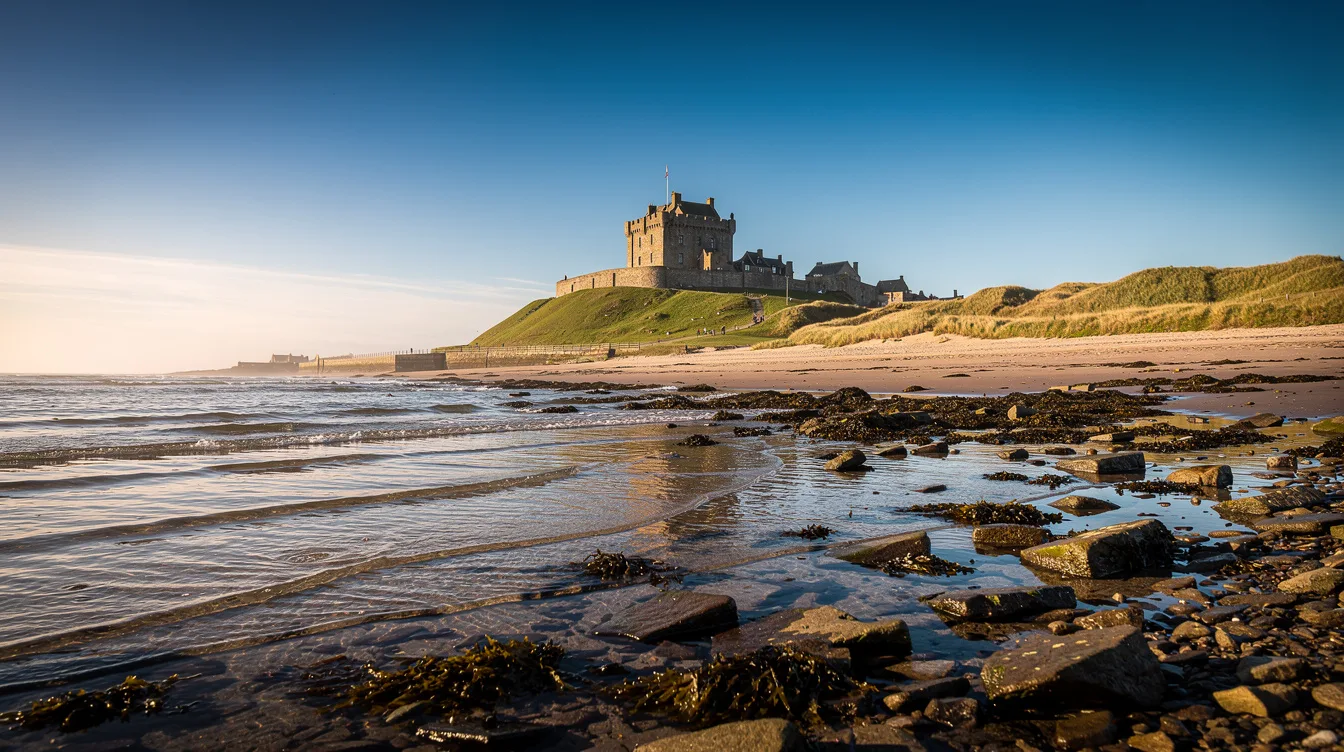
Holy Island, also called Lindisfarne, disappears beneath the tide twice a day. The causeway connecting it to Northumberland is covered at high tide, cutting the island completely from the mainland. And that means the real question isn’t whether you can visit, but when you can cross.
The crossing depends on the tide, not your itinerary
The causeway sits about 5 miles from the A1 near Beal. Around low tide, the road is usually open for a window, but that window changes every day. And you should check the official crossing timetable before leaving, because a rough rule is no substitute for the day’s exact conditions.
But the water can cover the road quickly. Never drive once water begins spreading across the surface, and leave a generous margin before the causeway closes. Cars are regularly caught by the rising tide, which can turn a relaxed visit into an emergency.
Can you cross to Holy Island whenever you want?
No. You can cross only during the published safe periods around low tide. Arrive soon after the causeway opens, then plan to leave well before the next closure.
And if you want to stay overnight, book ahead and accept that the evening tide may leave you on the island.
Why 635 still matters on this small island
In 635, a monastery was founded on Lindisfarne, turning the island into an important center of Anglo-Saxon Christianity. The Lindisfarne Gospels, illuminated manuscripts from the 7th century, were produced here. And the island’s history feels unusually concentrated for such a small place.
Later Viking raids, including attacks near the end of the 8th century, made the monastery a symbol of the Viking era in Britain. The surviving priory is now a photogenic ruin, with its famous rainbow arch framing views toward the village and coast. But the site isn’t just a backdrop for photographs.
It gives the island its weight.
The priory and castle make the detour worthwhile
Lindisfarne Priory carries the oldest historical charge, with ruins tied to the island’s religious past. The village nearby is quieter and more practical, with cafés, pubs, shops, a harbor, and local producers. And you can spend several hours moving between history and the shoreline without needing a packed schedule.
Lindisfarne Castle stands on a rocky promontory above the sea. The Tudor fort dates from the 16th century and later became a residence in the early 20th century. But reaching it involves a paved ramp and steps, so bring sturdy shoes if uneven ground slows you down.
What the tide reveals beyond the village
At low tide, mudflats, dunes, stranded boats, and broad coastal views change the island’s character. Migratory birds gather across the reserve, including ducks, geese, and waders. And the changing light is one reason photographers linger after the main visitor rush has gone.
The Pilgrims’ Way crosses sands and mudflats marked by poles. It should be attempted only by people who understand the tides and current conditions. But this is precisely where Holy Island demands respect: the route looks open until the sea begins reclaiming it.
How to plan a visit without getting stranded
A visit of 4 to 6 hours is enough for the village, priory, castle, and a coastal walk. Arriving early or staying into late afternoon can make the island feel calmer after buses and day visitors depart. And you should keep your day flexible, because the causeway controls every movement.
From Berwick-upon-Tweed, the railway station is about 9.9 miles from the castle. Bus 477 connects Berwick with Holy Island according to its timetable and the season, though service details need checking before travel. The island itself is free to enter, while the castle, priory, and parking charge fees.
Holy Island fits neatly into a Northumberland road trip linking Newcastle, Alnwick, Bamburgh, and Berwick-upon-Tweed. But it isn’t a stop you can squeeze between fixed appointments. The causeway decides when the visit begins and ends, and the island has the final word.
By the time the tide covers the road, the mainland feels suddenly far away. The last safe crossing has passed, and Lindisfarne is quiet behind the water.