
The short answer: a book club craft night runs $200 to $800 for the whole setup, and most of that goes to things you’ll reuse. I hosted one in February where nobody crafted. We sat in a lit-from-above living room, talked about the book for eleven minutes, and everyone left by 8:40. The problem wasn’t the book. It was the lighting and the fact that I’d put out scissors but no table.
- ✓ Start With One Long Table Instead of a Circle of Chairs
- ✓ Kill the Overhead Light and Build a Three-Source Stack
- ✓ Anchor the Craft Zone With a Rug Big Enough to Overlap Furniture
- Start With One Long Table Instead of a Circle of Chairs
- Kill the Overhead Light and Build a Three-Source Stack
- Anchor the Craft Zone With a Rug Big Enough to Overlap Furniture
- Layer Textiles in Three Weights, Not Three Colors
- What You’ll Need Before Anyone Arrives
- Hang the Art at 57 Inches and Stop Guessing
- Paint the Room Before You Buy Anything Else
- Build a Snack Board That Doesn’t Compete With the Craft
- Should You Pick the Craft, or Let Everyone Bring Their Own?
- Swap the Overhead Bulbs Over Buying New Lamps
- Float Two Small Side Tables Instead of One Big Coffee Table
- Curtain the Windows to Kill the Black Mirror
- Mix Seating Heights So the Room Has a Conversation Shape
- Frame the Book Itself as the Centerpiece
- Set Up a Drying and Drop Zone Before You Need One
- Layer One Scent, Not Four
- Build a Music Floor, Not a Playlist
- Send Everyone Home With the Thing They Made, Wrapped
1Start With One Long Table Instead of a Circle of Chairs
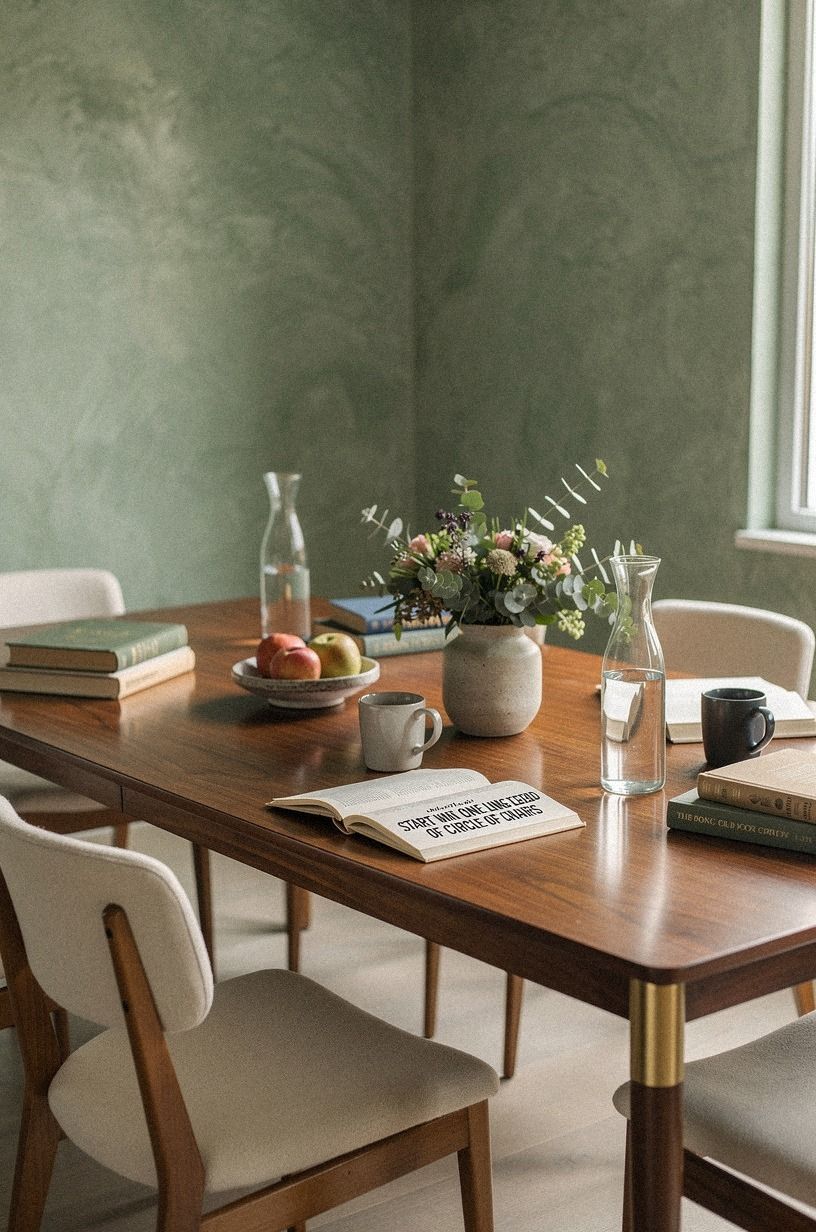
Here’s the thing about book club crafts for adults: they need a horizontal surface, and a coffee table isn’t one. People hunch.
Their backs hurt by the second glass. You want a real table, or a rented folding one draped in something heavy.
I use a 6-foot folding table with a warm-cream cloth over it, set against hand-applied Venetian plaster, and the drape is what sells it. A Target Threshold tablecloth runs about $30 and hides the plastic legs entirely.
Don’t use a plastic cover, it sounds cheap every time somebody sets down a mug. If your dining table seats six and you’ve got eight coming, borrow a card table and butt it against the end.
Mismatched height is fine under a long cloth. Nobody’s measuring.
2Kill the Overhead Light and Build a Three-Source Stack
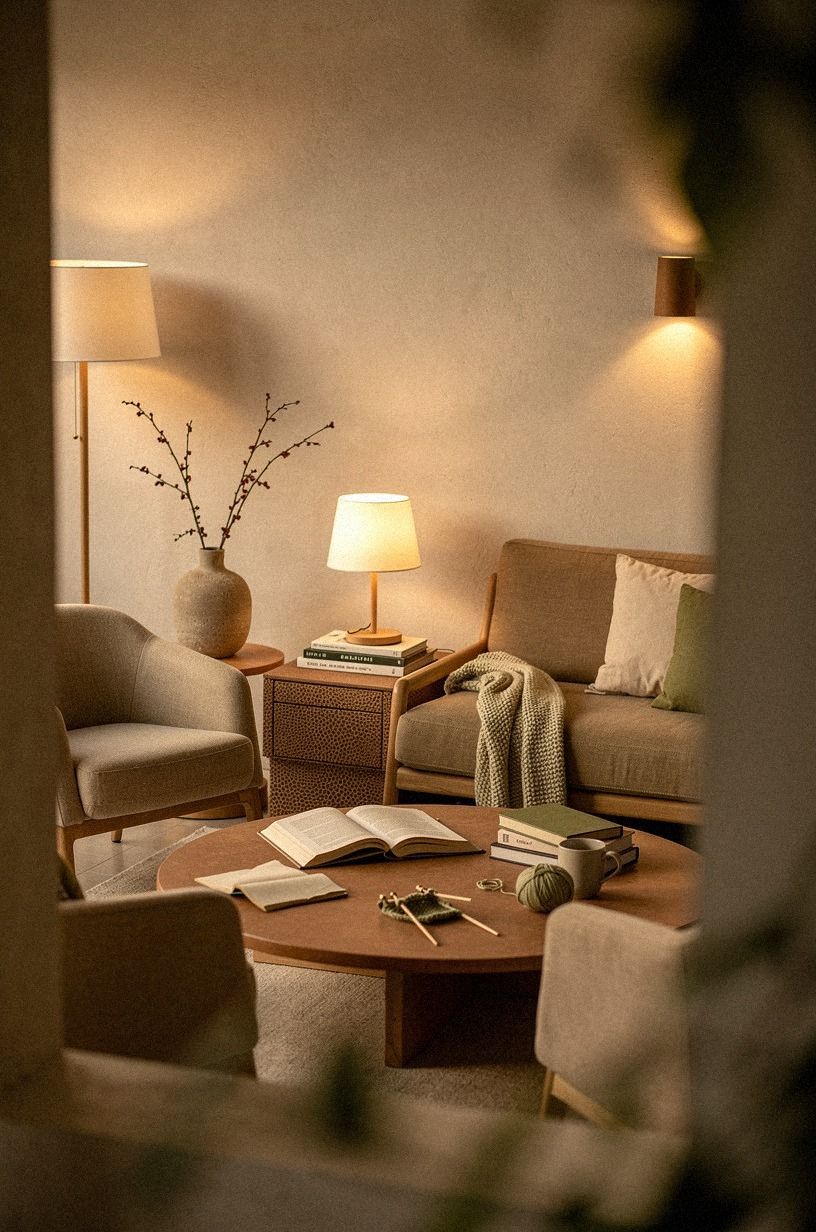
Overhead light is what made my February night feel like a permit hearing.
3Anchor the Craft Zone With a Rug Big Enough to Overlap Furniture
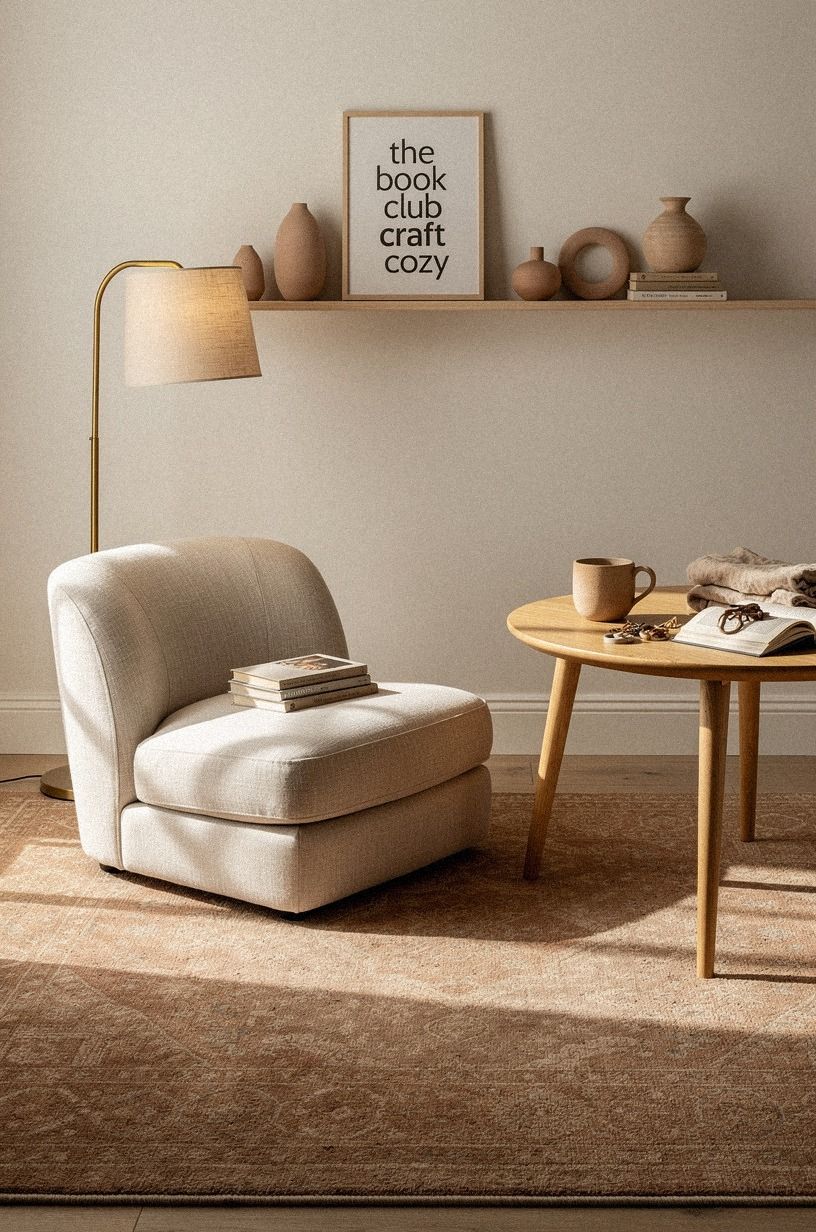
A small rug floating in the middle of a room reads like a bath mat. Your rug needs to be large enough that the front legs of every seat sit on it, minimum. That usually means 8×10 or 9×12 in an average living room, and yes, that’s a real expense: a wool rug runs $400 to $1,500.
If that’s out of reach, layer. A cheap jute base in 9×12 with a smaller washed Belgian linen piece on top costs less than one good rug and looks deliberate. I did this for three years and only one person ever asked. (She asked because she wanted to copy it.)
4Layer Textiles in Three Weights, Not Three Colors
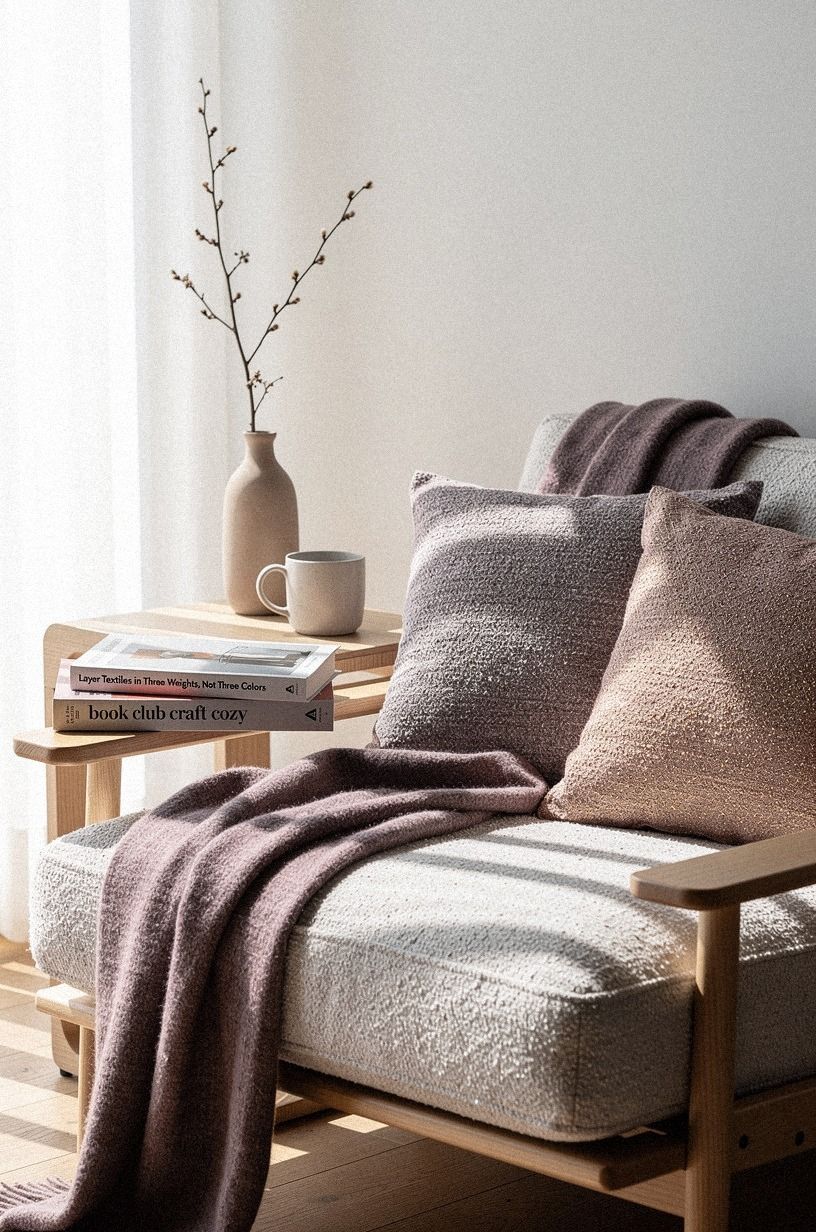
Most people layer by color and wonder why the room still feels flat. Layer by weight instead. One heavy thing, one mid, one light: an organic bouclé throw on the sofa arm, a Turkish cotton blanket folded on a chair, a gauzy linen runner down the table.
Same plum, grey, and rose-gold family, different densities. Your eye reads texture before it reads hue, which is why a restrained room with four fabrics feels richer than a five-color room in one fabric.
I’d skip the matching throw-and-pillow set. It’s tidy, sure, but tidy isn’t the same as gathered, and gathered is what you’re after on a craft night.
5What You’ll Need Before Anyone Arrives
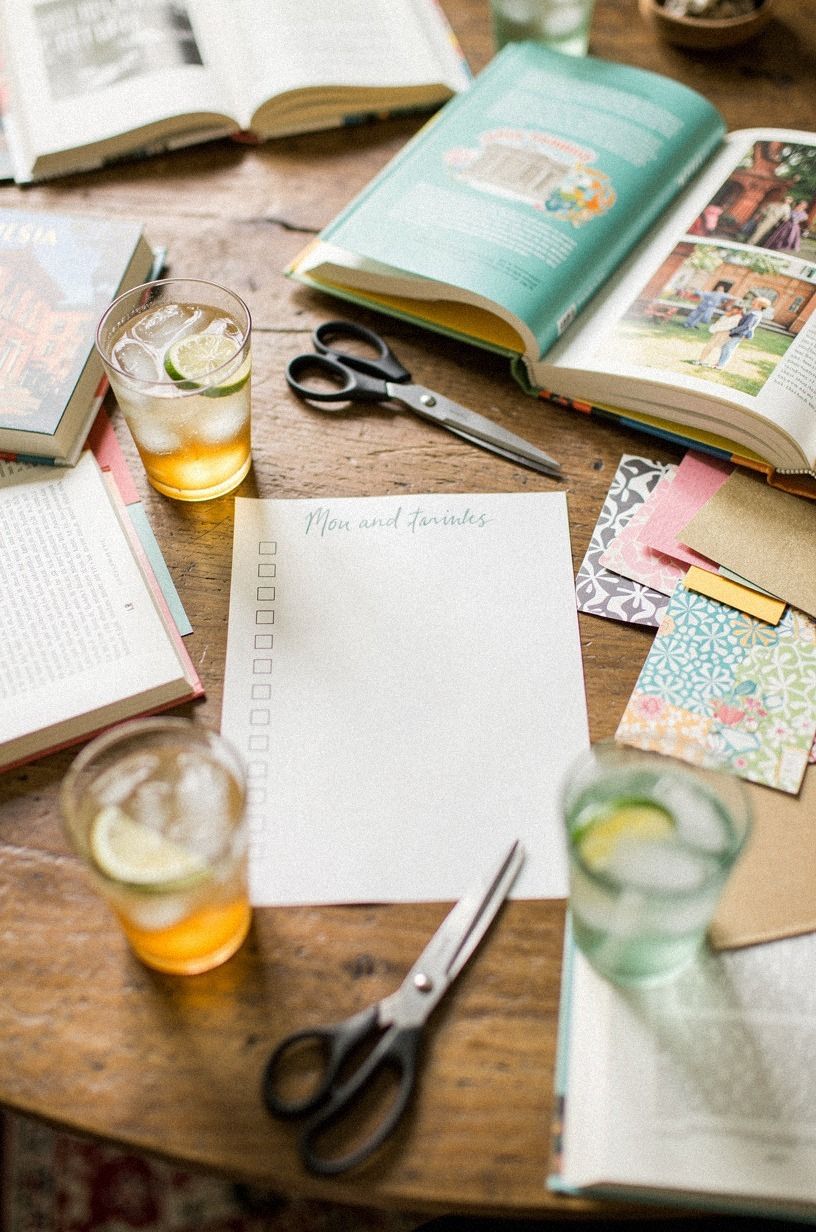
Rough list, and I mean rough. Scissors that actually cut (test them, seriously).
A shallow tray per person so supplies don’t migrate. Two rolls of tape minimum, because one always vanishes.
Wet wipes within arm’s reach.
Then the craft-specific stuff, which depends on what you picked. For bookmarks: cardstock, a bone folder, embroidery floss. For candle-pouring: soy wax flakes, wicks, and a thermometer you don’t mind ruining.
Budget about $8 to $15 per person for materials, which is less than dinner out!
Most craft nights live entirely in the first row, and honestly that’s the row that changes a room the fastest.
6Hang the Art at 57 Inches and Stop Guessing
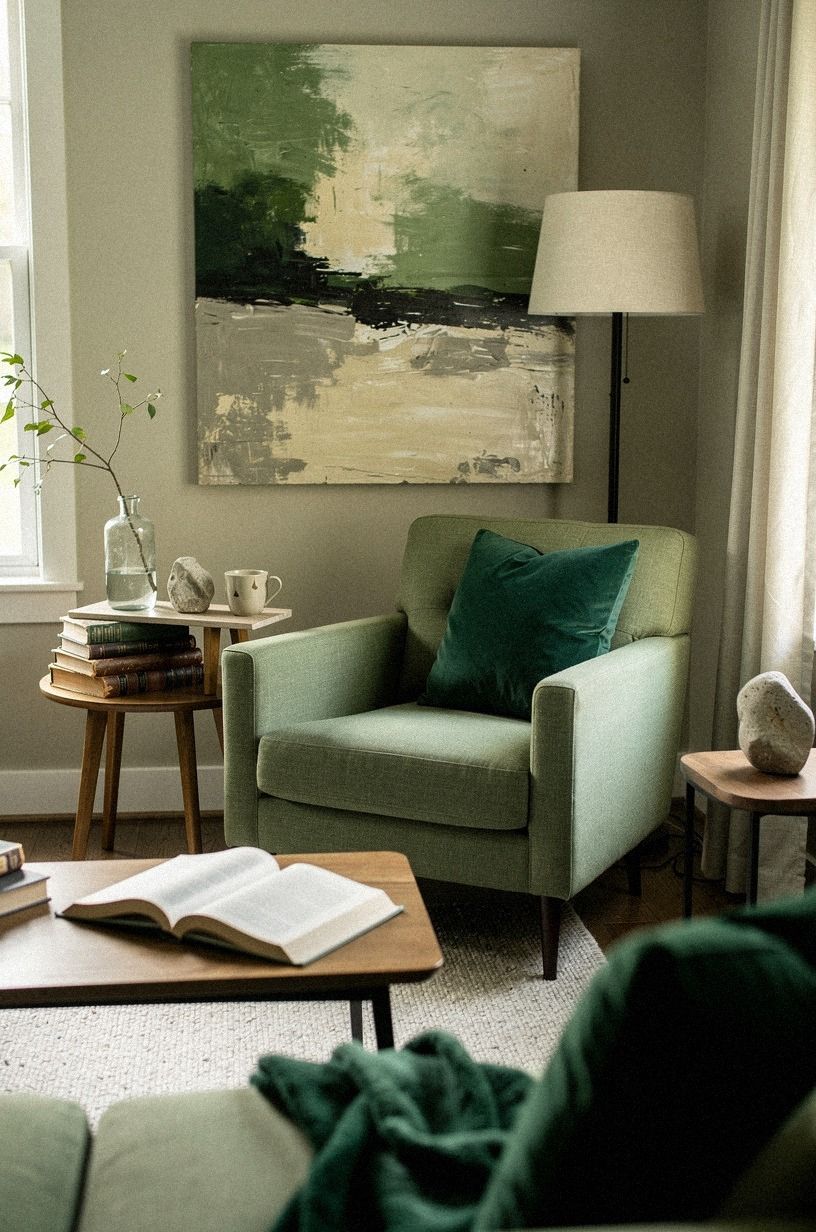
Gallery standard puts the center of a piece 57 to 60 inches from the floor.
7Paint the Room Before You Buy Anything Else
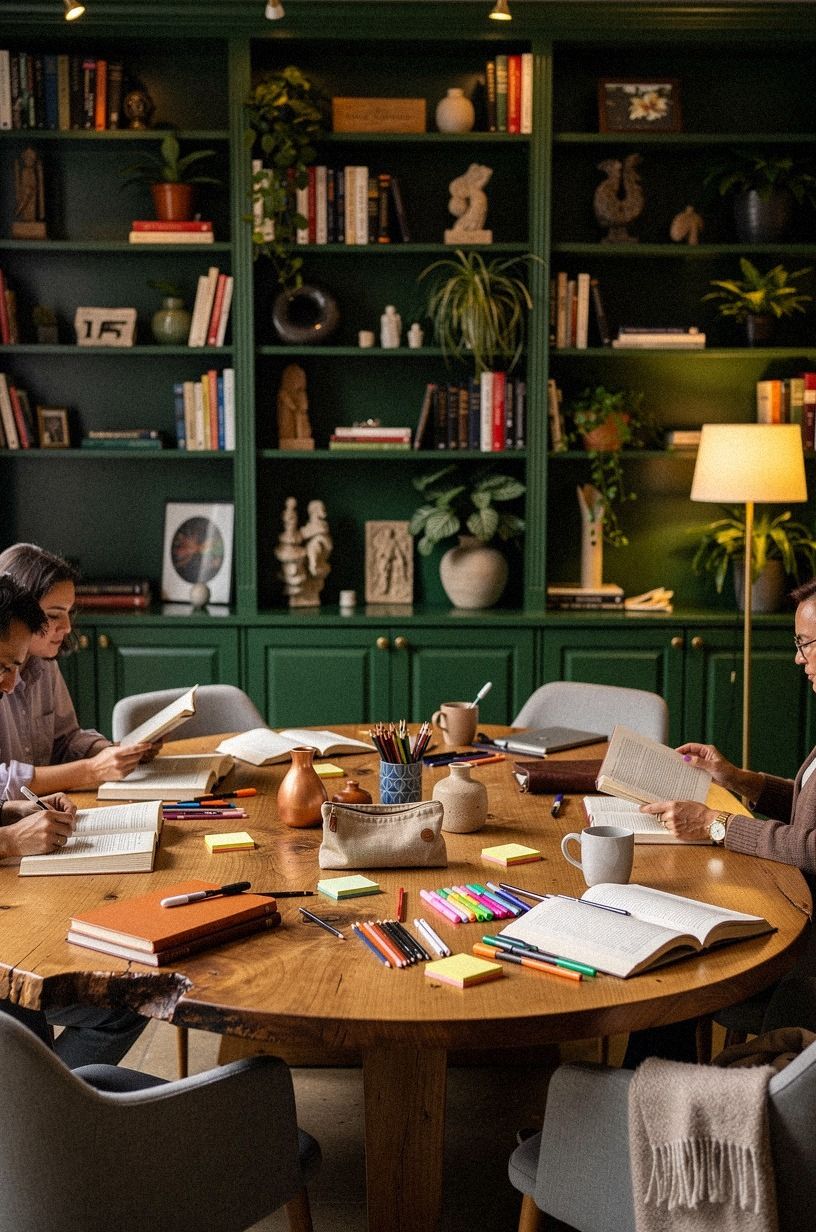
If the walls are fighting you, nothing you put in front of them helps. Farrow & Ball Studio Green No. 93 gives the room a deep forest base and works beautifully with natural oak. Sherwin-Williams Cavern Clay SW 7701 brings in rust warmth without turning the room orange.
If you use Carrara marble nearby, its subtle gray veining keeps those colors from looking flat.
Paint for a DIY room job runs $200 to $600 all in. That’s a weekend and a drop cloth. I’d avoid a default rental gray here, not because it’s bad but because it’s everywhere, and a book club room should feel like somebody’s house, not a rental listing.

8Build a Snack Board That Doesn’t Compete With the Craft
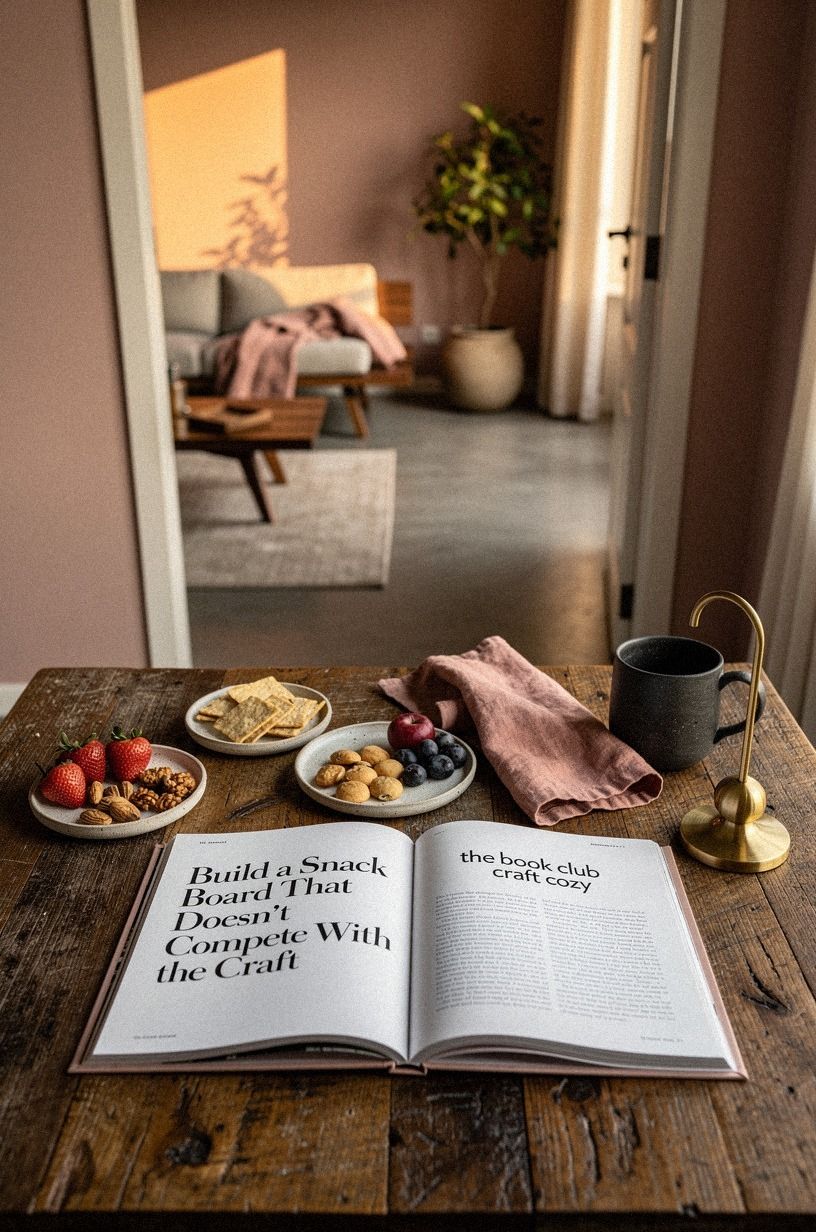
Food on the craft table is a disaster. Glue, wax, and brie do not belong within a foot of each other. Put the board on a side surface, ideally reclaimed weathered teak, and make people stand up for it, which also gets bodies moving mid-evening.
Keep it dry and one-handed: hard cheese cubes, almonds, dried figs, seeded crackers. Nothing that drips. If you want a drink component, a spritz board travels well and looks generous for what it costs, and this 15-minute Aperol spritz board is the format I keep going back to.
For a winter meeting, a slow casserole in the oven does more for the room’s smell than any candle, and these winter vegetables that turn casserole night into a ritual are what I rotate through from October on.
9Should You Pick the Craft, or Let Everyone Bring Their Own?
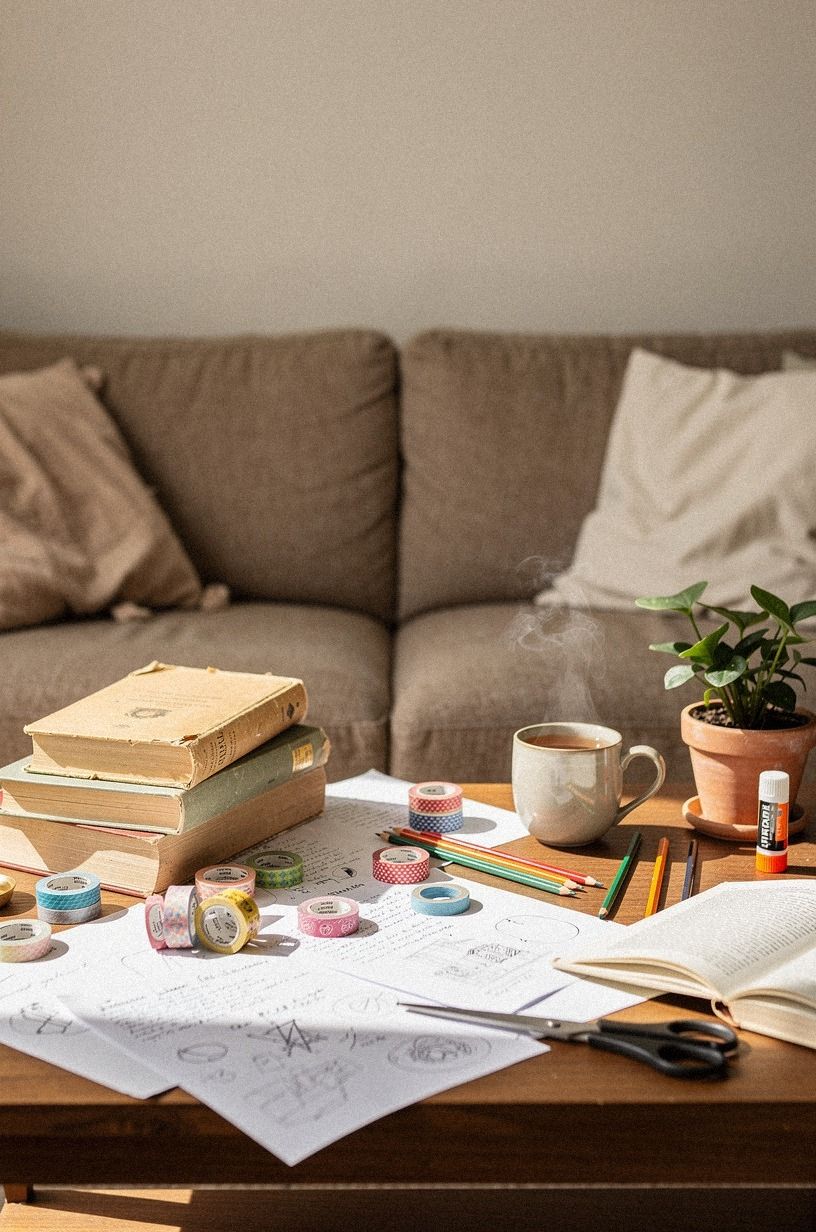
You pick it. I know that sounds bossy.
But I’ve run it both ways and the bring-your-own version splinters the room into six people doing six things with no shared language. One craft means everyone hits the same snag at the same moment, and that snag is where the actual conversation happens. Girls night crafts work on friction, not on freedom.
Pick something that takes 40 to 60 minutes with hands busy and mouths free. Bookmarks, block-printed napkins, pressed-flower cards. Avoid anything that needs full attention, like anything with a hot glue gun and small parts, because then nobody talks and you’ve hosted a workshop.
10Swap the Overhead Bulbs Over Buying New Lamps
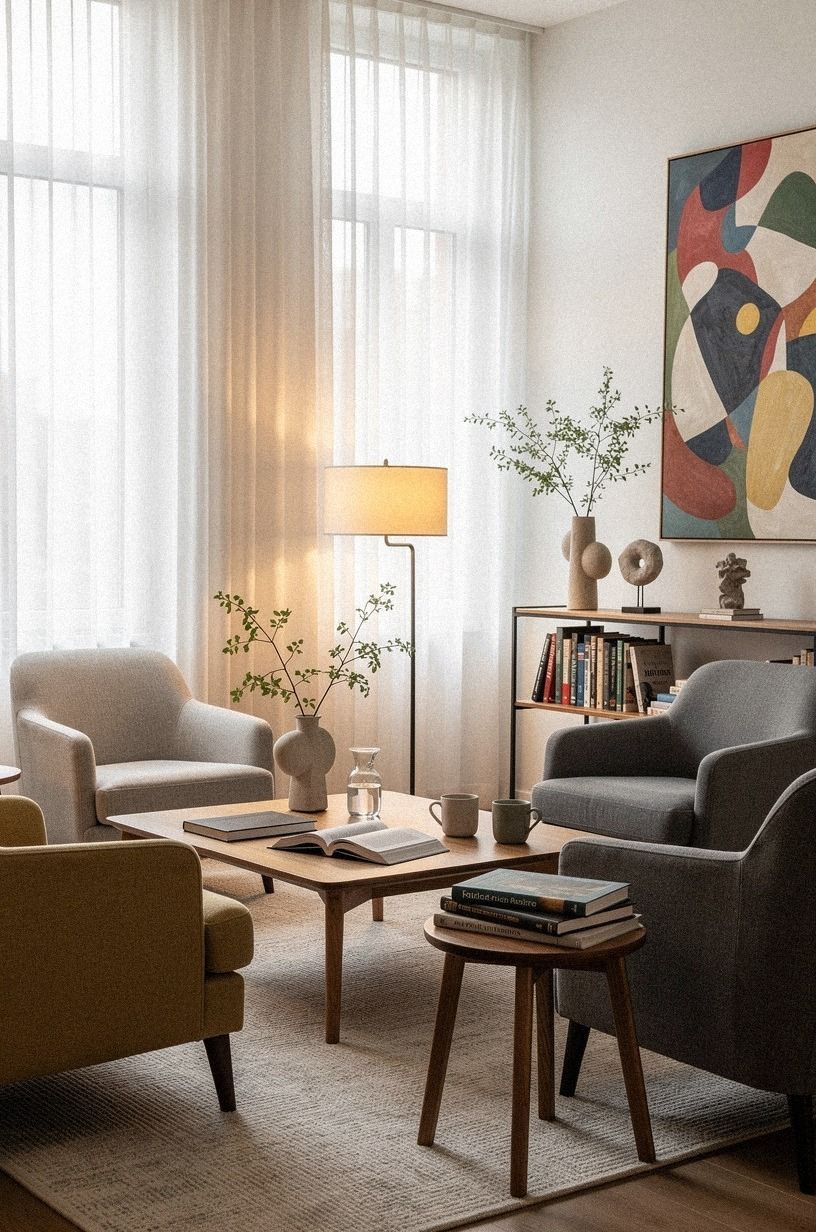
Cheapest move on this list. Most homes are running 4000K bulbs in the ceiling and wondering why the room feels like a pharmacy at night.
Pull them and put in 2700K. A four-pack runs about $12. Do it in every fixture in the sightline, not just the room you’re using, because a cold hallway glowing through a doorway wrecks a warm room instantly.
This is the same reason your morning window habit keeps homes hotter at night matters more than people expect: the small environmental stuff compounds. You’ll notice the bulb swap the first evening. Everyone else will just say the room feels different and not know why.
11Float Two Small Side Tables Instead of One Big Coffee Table
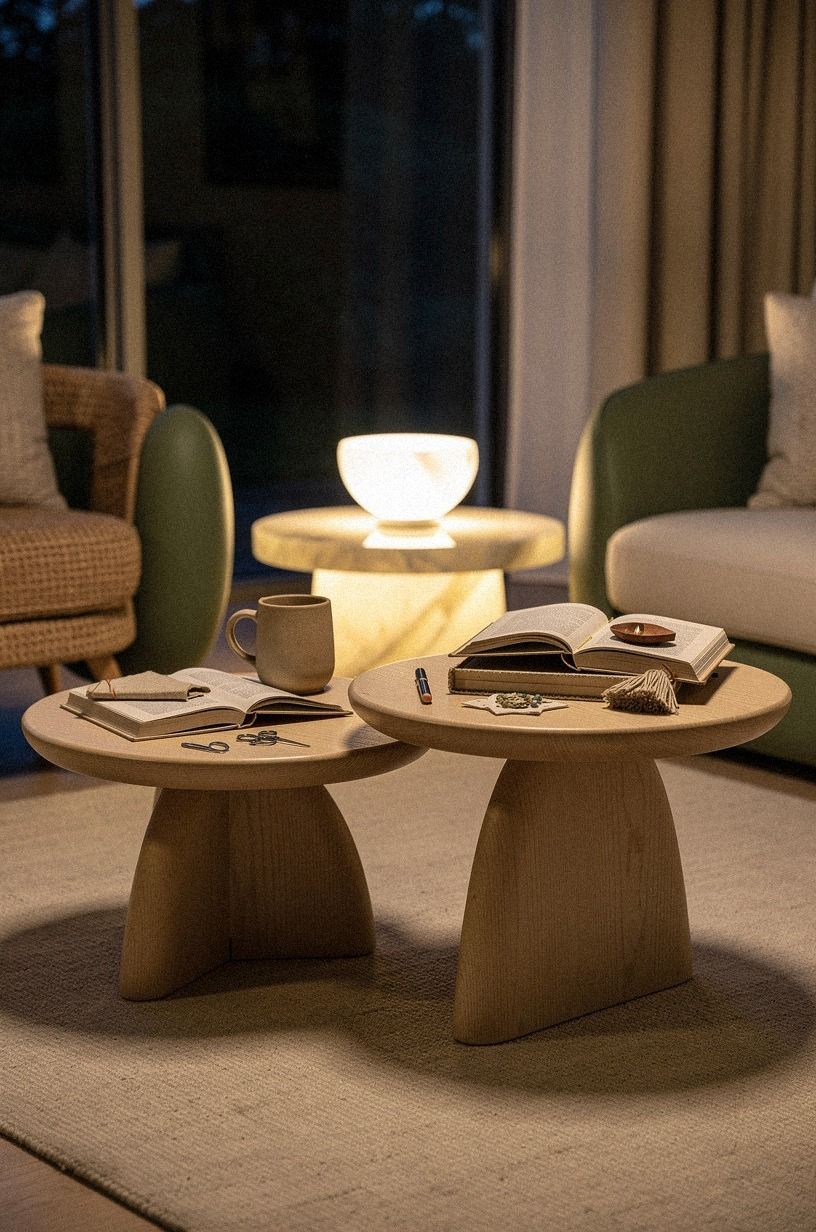
A coffee table is a wall between people.
12Curtain the Windows to Kill the Black Mirror
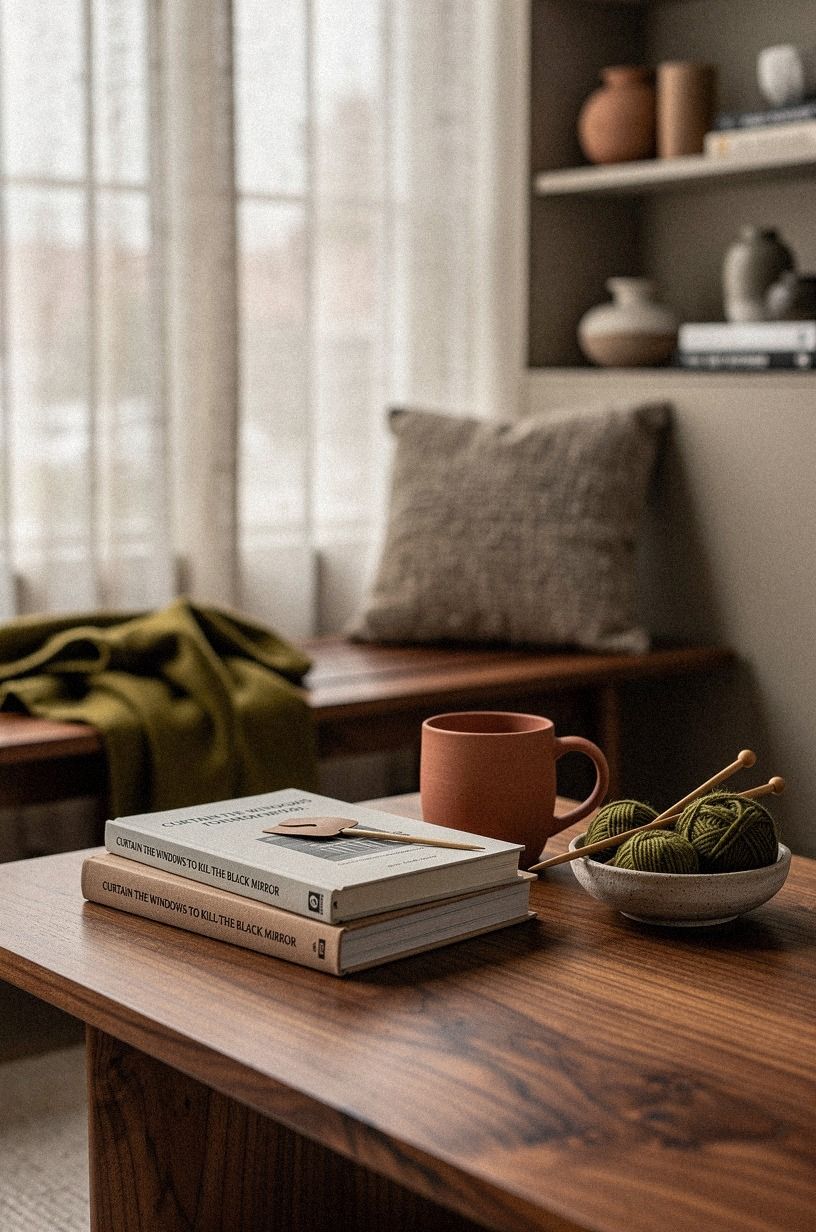
At night, an uncurtained window is a black rectangle that throws your own reflection back at you, and it makes a room feel exposed. Hang the rod 4 to 6 inches above the window frame and run the panels all the way to the floor.
Floor-length panels in a pair cost $120 to $400. IKEA does an unlined version that reads honest at a quarter of that, though you’ll want to iron them once and then never again.
Let a book-matched walnut console or sideboard carry the room’s richer texture. The floor-length part isn’t negotiable. Curtains that stop at the sill make a wall look like it’s wearing shorts.
13Mix Seating Heights So the Room Has a Conversation Shape
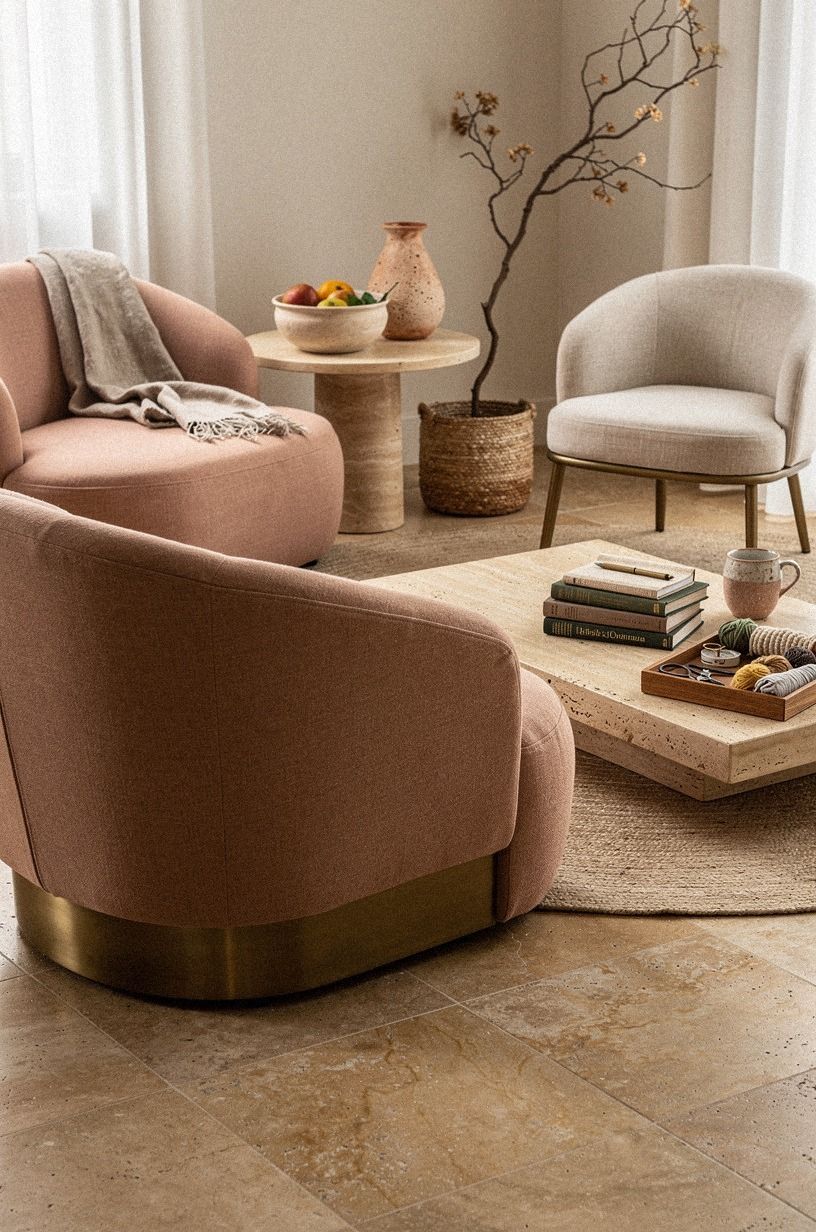
Eight matching dining chairs is a boardroom. Mix in a low armchair, a bench, a floor cushion for the one person who always ends up on the floor anyway.
The height variety does something to how people talk, and I can’t fully explain it, but rooms with three seat heights get louder and stay later. A low ottoman works double as seat and footrest. A warm travertine side table gives the lower seating something substantial beside it.
IKEA KALLAX on its side, topped with a cushion, is a bench for under $80 and stores craft supplies inside it. Just keep every seat within about 8 feet of the craft surface.
Past that, people drift out of the conversation and start checking their phones.
14Frame the Book Itself as the Centerpiece
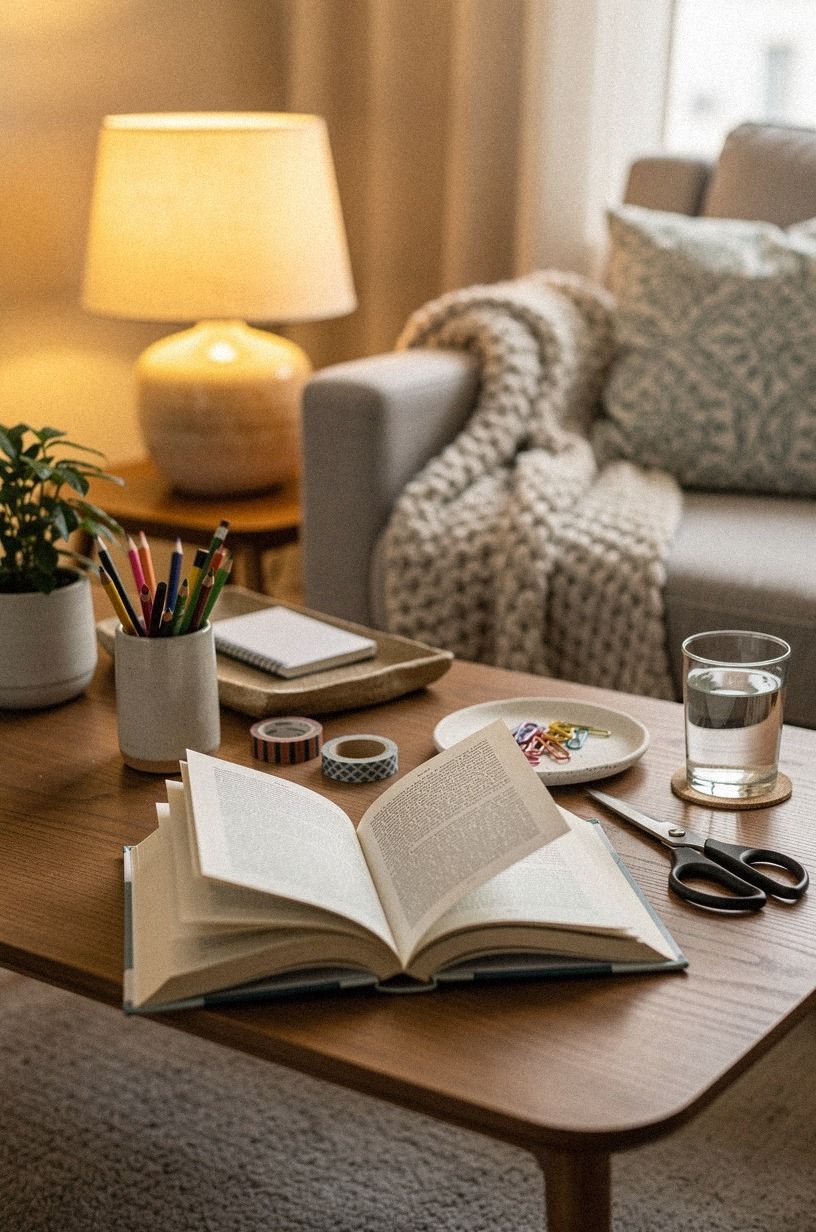
The book is the reason everyone came. Treat it like an object, not an afterthought sitting spine-up on a stack of mail.
Stand a copy on a small unlacquered brass easel at the table’s center, or lay three copies flat in a stagger with a sprig of eucalyptus across them. If you’ve got an old edition, use that one.
Foxing and a cracked spine make it feel lived-in, which is a strange thing to type but it’s true. I’ve run a couples version of this too and the book-as-centerpiece move held up even with a very mixed crowd, which I wrote about after trying a couples book club one Valentine’s Day.
15Set Up a Drying and Drop Zone Before You Need One
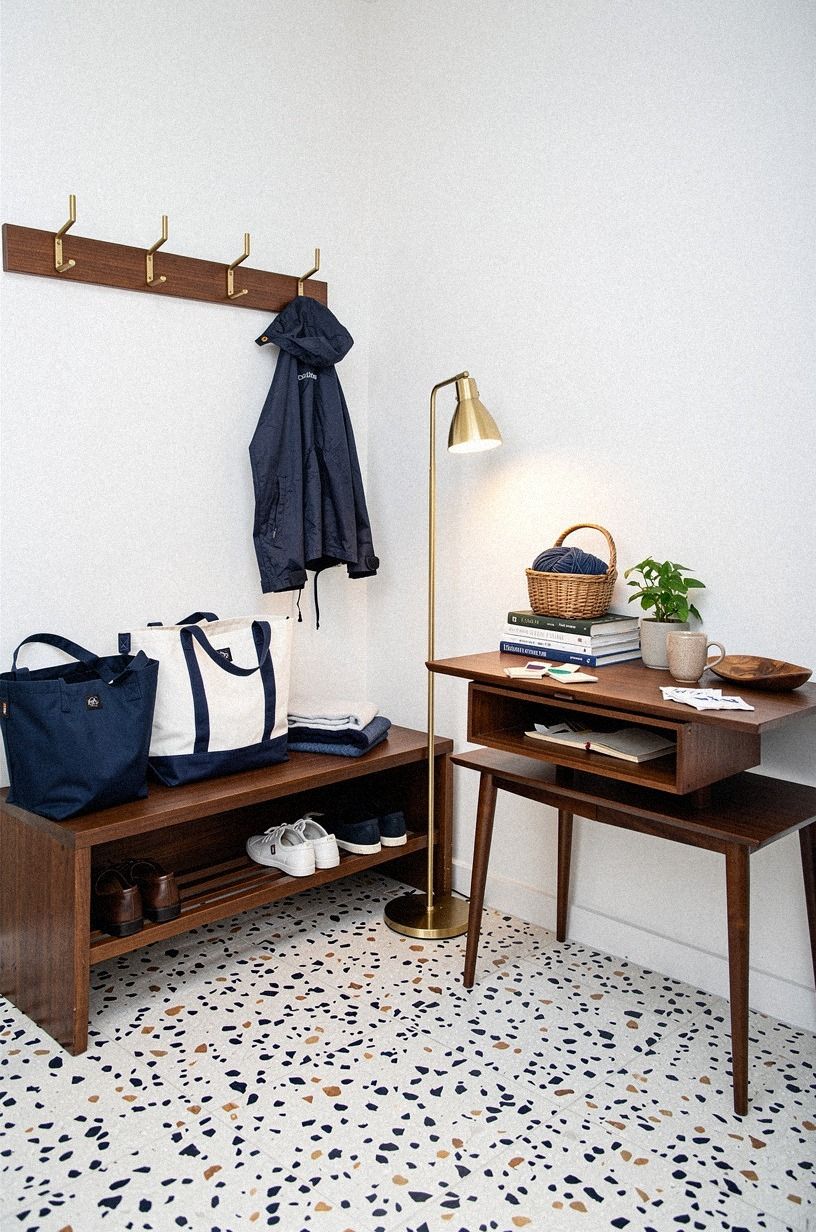
Nobody plans for wet paint. Then it’s 9:30 and there are twelve damp bookmarks and no flat surface that isn’t holding food.
Clear a shelf or a windowsill in advance and line it with parchment. Label it with a sticky note so people find it without asking you.
If your craft involves anything with a cure time, candles, resin, painted ceramics, this zone needs to be somewhere the host won’t have to walk past with a vacuum for two days. I learned this after the third knocked-over tray of wet block-print napkins. Plan the boring part and the fun part runs itself.
16Layer One Scent, Not Four
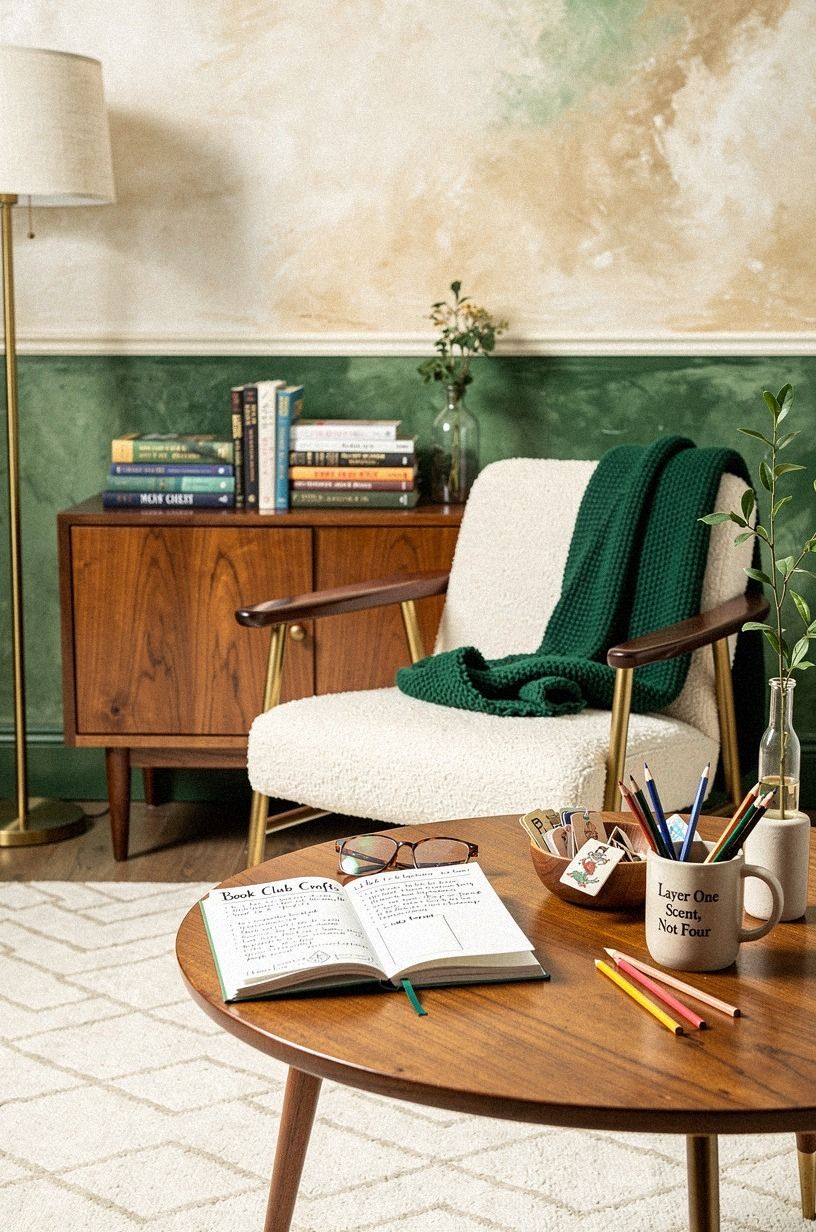
Four competing candles plus a diffuser plus whatever’s in the oven equals a headache by 9pm.
17Build a Music Floor, Not a Playlist
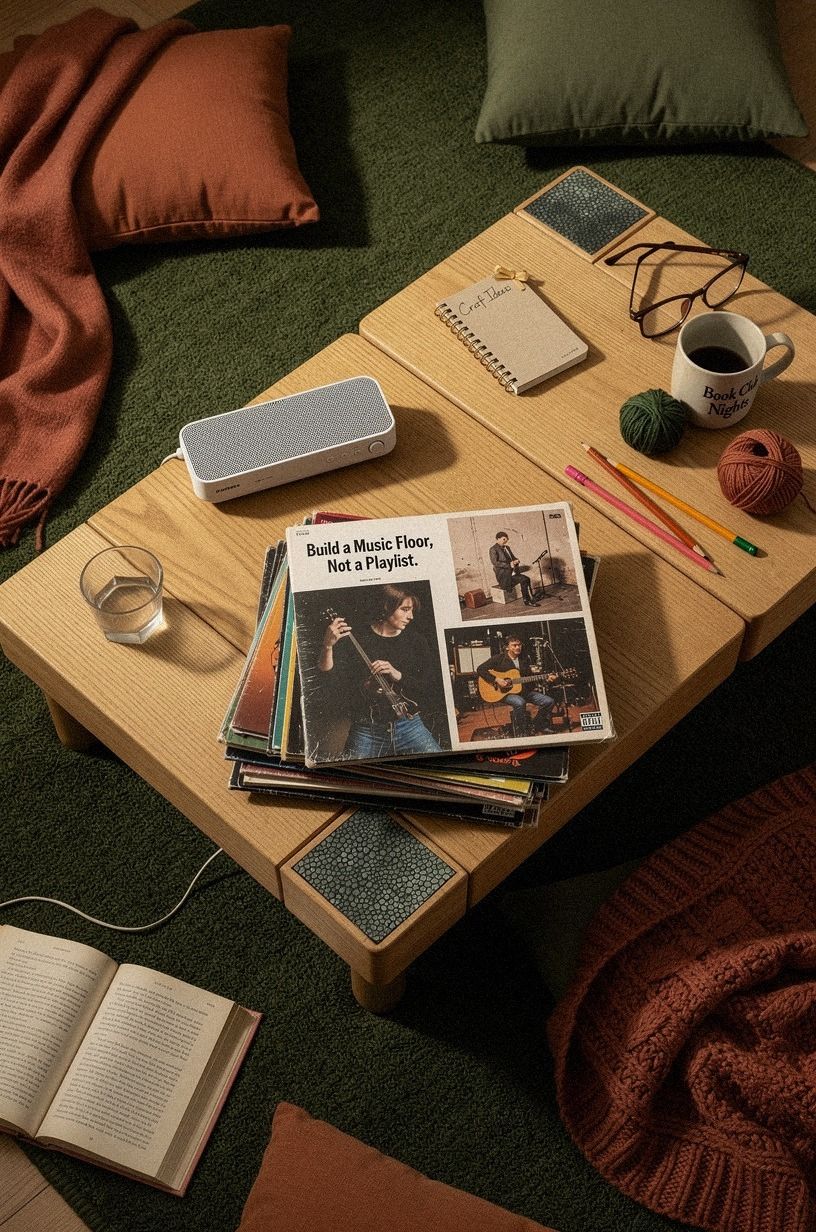
A playlist has peaks. A floor has none, which is what you want under conversation.
Instrumental, 60 to 80 bpm, nothing with lyrics people know, because the second someone recognizes a chorus the room’s attention splits. Set the volume so a person across the table has to lean in slightly to hear you.
That lean is the whole point. Too quiet and every pause feels like a silence; too loud and nobody talks at all.
I keep one three-hour ambient set queued and never touch it once guests arrive.
18Send Everyone Home With the Thing They Made, Wrapped
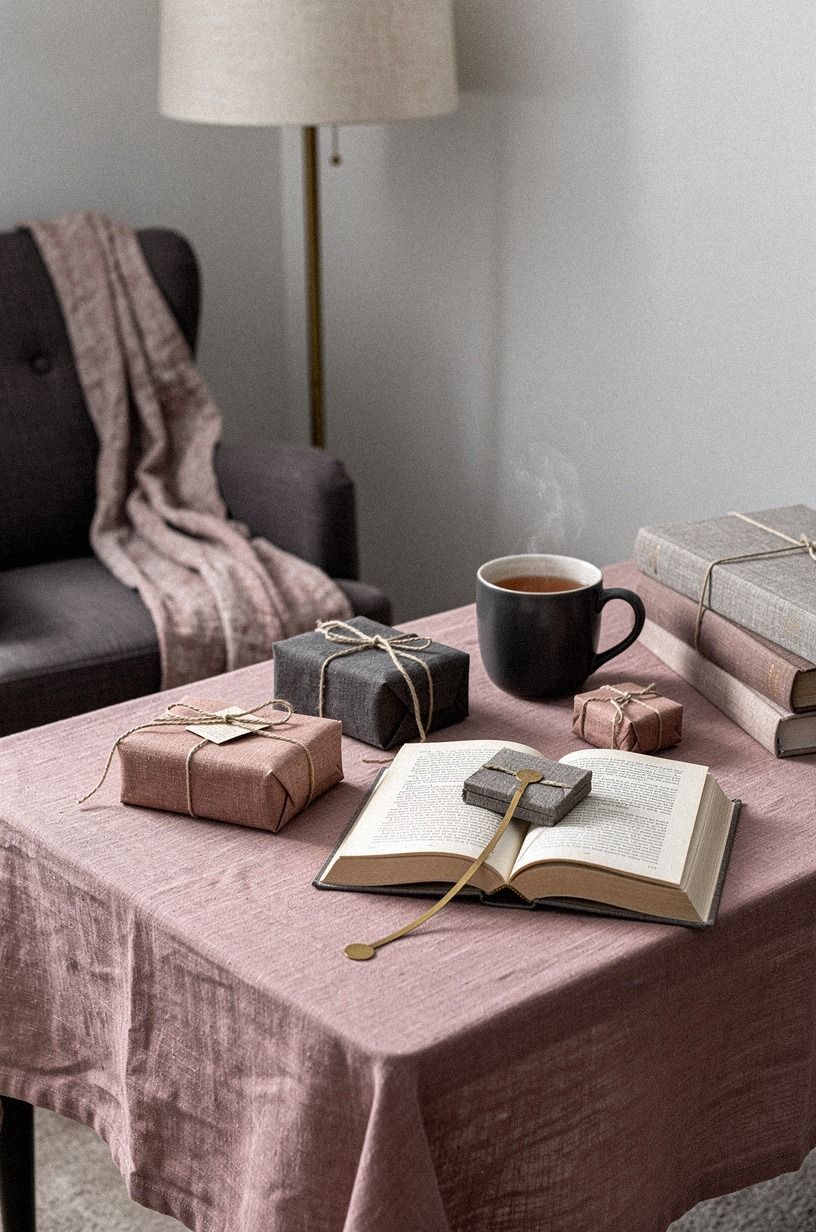
The last two minutes decide how people remember the night.
Wrap each finished piece in washed Belgian linen or plain tissue before guests leave. It makes the craft feel intentional instead of like something they need to carry home in a grocery bag.
What I Got Wrong for Two Years of Hosting
I ran a book club for two years before I understood that I was hosting a discussion and decorating for a party, and those are different rooms.
The discussion room wants inward-facing seats, low warm light, and a surface per person. The party room wants flow, a bar, and open floor.
I kept building the second one and then wondering why everyone was polite and gone by nine. The furniture was fine.
The arrangement was working against the evening I actually wanted.
Here’s what I’d tell anyone starting: the craft isn’t the point, and the book barely is either. The craft exists to give hands something to do so that mouths get honest.
There’s a reason people talk more in cars and kitchens than in living rooms, and it’s not the room’s decor, it’s that nobody’s looking directly at anybody. A craft table manufactures that same sideways attention.
You’re both looking at the paper. The eye contact is optional.
And that’s exactly when somebody finally says the real thing about the book, or about their marriage, or about the job they’re about to quit.
So when I say hang the art at 57 inches or run the curtains to the floor, I’m not being precious about interiors. Those choices lower the room’s temperature in a specific way: a room that feels finished stops demanding attention, and then people can give their attention to each other.
An unfinished room is loud. You notice the bare window, the too-high picture, the ceiling glare, and some small part of your brain keeps filing complaints all evening.
I also spent too long chasing a finished look. I wanted the polished room.
Then one February night the room was fine and the evening was dead, and I finally understood the ranking. Comfort first, light second, surfaces third, and the look shows up on its own once those three are handled. My current room isn’t the prettiest one I’ve built.
It’s the one where people stay past eleven, and I’d trade the polished look for that every single time.
One more thing, since it took me embarrassingly long: buy the ugly practical stuff. The wet wipes, the extra scissors, the parchment for the drying zone. Nobody notices a roll of paper towels, but the night goes sideways without it.
A Few Things Worth Answering
What’s the best setup for a small book club craft night?
One long surface and three light sources beats everything else. A 6-foot folding table with a linen cloth over it seats six comfortably and costs about $60 total with the drape.
IKEA and Target both carry the pieces. That’s your best value move.
Where can I buy book club craft ideas supplies on a budget?
IKEA, Target, and Wayfair cover the furniture and textiles side. For craft materials, a local art supply shop usually beats the big-box price on cardstock and floss. Facebook Marketplace is where I find side tables under $30, which is the cheapest upgrade available.
How much does a book club craft night cost to set up?
Plan on about $200 to $800 for the room-level stuff: textiles, paint, lighting, organization. Per-night craft materials run $8 to $15 a person. Rearranging furniture and swapping bulb color temperature are essentially free and do the most work.
Can I do this on a $100 budget?
Yes, and it’ll look better than you’d expect. Swap every bulb to 2700K for $12.
Rearrange seating into three heights using what you own. Spend the rest on one good tablecloth and craft materials. That’s the whole difference right there.
Is a dedicated craft setup worth it in a small space?
Yes, and small rooms have an advantage here: people are already close, so conversation happens without effort. Push seating to the walls, keep the craft table central, and leave a clear path to the snacks. Small rooms feel intimate when the lighting’s low.
Is this a good idea for a rental?
Yes. Tension rods handle curtains with zero holes.
Peel-and-stick hooks hold art up to about 5 pounds. A large layered rug covers flooring you can’t change, which is the biggest visual fix a renter has.
No landlord conversation required.
What’s the most common mistake?
Leaving the overhead light on. It flattens everything, makes skin look tired, and quietly tells people the evening is functional rather than social.
Turn it off, light two lamps at eye level and below, and the room’s whole mood shifts. Free to fix, takes ten seconds.
Where I’d Start First
If I had to pick one step, I’d swap every bulb in the room to 2700K. Twelve dollars. You can’t warm up a room lit like a parking garage, and every throw and candle you buy afterward will be fighting that ceiling instead of building on it.