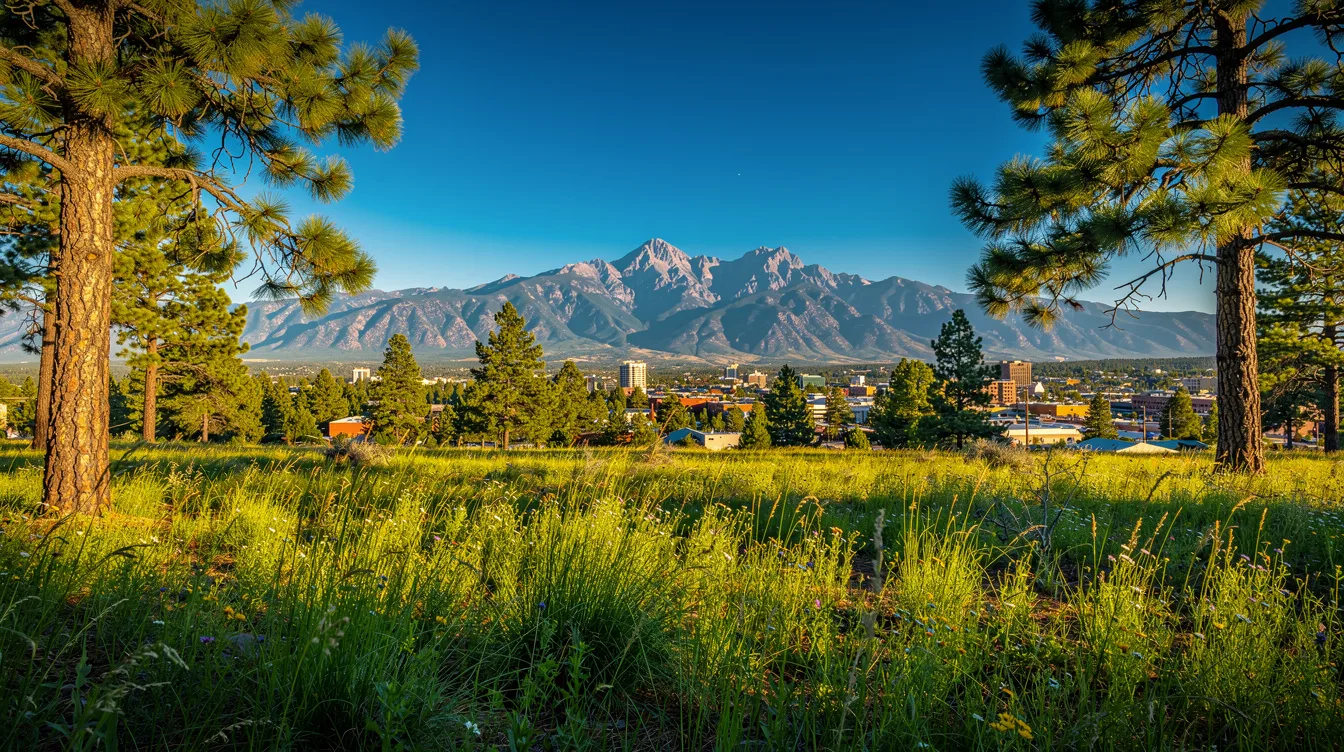
In 2001, Flagstaff became the world’s first International Dark Sky City. That distinction matters after sunset, but the bigger surprise arrives earlier: this Arizona city feels alpine, wooded, and cool rather than dusty and desert-hot.
Flagstaff sits in northern Arizona at the foot of the San Francisco Peaks, about 74.6 miles south of the Grand Canyon’s South Rim. You can reach it from Phoenix in roughly 2 hours and 30 minutes by road, then trade cactus heat for pine-scented air and cold evenings.
Why Flagstaff feels unlike the Arizona in your head
And that contrast is the city’s strongest argument. Forests surround Flagstaff, summer highs generally sit in the low 80s, and winter can bring nearly 9 feet of snow to the downtown area.
But altitude changes the practical details. You’ll want a warm layer after dark, even during summer, and roads near the San Francisco Peaks can become difficult after a storm. The city is an easy base, but weather still gets a vote.
For your first visit, come in May or June, then return in September or October if you prefer cooler trails and fewer heat-related limits. October also brings autumn color in the aspens, while April can feel unsettled, with sharp temperature swings and late snow.
The night sky is the reason to stay late
And Flagstaff’s dark-sky status isn’t a decorative label. The stars become the evening’s main event when you leave the brighter downtown streets.
Start at Lowell Observatory for astronomy exhibits and the history of Pluto’s discovery. Then step outside later and let your eyes adjust. The payoff is quiet and gradual, not theatrical, which makes the experience feel more personal.
But don’t treat the observatory as a quick daytime stop. You’ll get more from Flagstaff if you plan around darkness, because the city’s defining feature only appears once storefronts close and the roads grow quiet.
Route 66 gives the city a human scale
And downtown Flagstaff is where the trip becomes less about scenery and more about staying awhile. Historic Route 66 runs through the city, with retro motels, restaurants, local breweries, and the steady energy of Northern Arizona University.
The city had 76,831 residents in the 2020 census, enough to support a real food and coffee scene without feeling like a resort built around visitors. You can walk downtown, hear conversations spilling from patios, and still reach pine forest quickly.
But Flagstaff isn’t polished in every corner, and that’s part of its appeal. If you want a large resort district or reliably warm nights, Phoenix fits better. If you want a town where road-trip history and college life overlap, stay here.
Four directions lead to very different days
And the city works best as a base because the surrounding sites don’t repeat themselves. Drive toward Sunset Crater Volcano National Monument for cinder fields and lava, or continue to Wupatki National Monument for ancestral pueblo ruins in red desert country.
Walnut Canyon brings cliff dwellings and wooded canyon trails, while the San Francisco Peaks offer hiking in summer and skiing at Arizona Snowbowl in winter. You can build an active day, but you shouldn’t assume every trail will be gentle.
From there, the Grand Canyon South Rim is a feasible day trip, especially when lodging in Tusayan or inside the park is expensive or unavailable. Sedona and Oak Creek Canyon pull you south toward red cliffs and seasonal swimming, giving you a completely different afternoon.
Can you use Flagstaff for a Southwest road trip?
Yes, and I think it’s a better multi-night base than Phoenix if nature is your priority. And the city puts the Grand Canyon, Sedona, Route 66, and volcanic sites within one practical travel plan.
Fly into Phoenix if you need the broader international connections, then drive north on I-17. Flagstaff also has a regional airport with service to several major US hubs, though you’ll still want a car for the surrounding parks.
But the trade-off is winter driving and cool evenings. Pack for changing conditions, watch the forecast near the peaks, and leave room in your schedule for the sky to darken.
By the time the last downtown lights soften against the pines, Flagstaff feels less like a stop between parks and more like the reason to stay one more night.