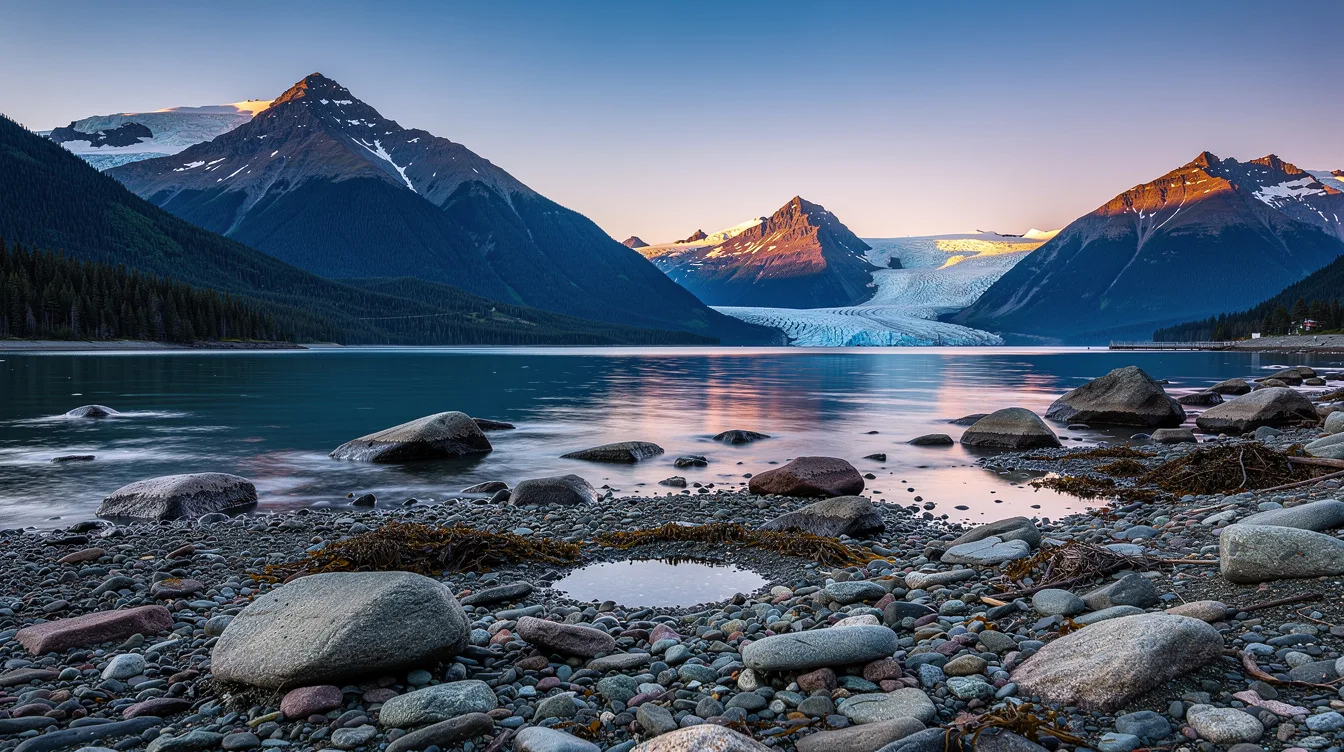
At 118.1 miles from Anchorage, Seward is where an Alaska itinerary turns toward ice. The town sits at the end of the Seward Highway, at the head of Resurrection Bay, and glacier cruises begin here. Plan your Alaska route around that shift, because Kenai Fjords deserves more than a hurried stop.
But the distance is useful, not decorative. You can drive from Anchorage in about 2 hours 30 minutes, or take the Alaska Railroad Coastal Classic in roughly 4 hours 30 minutes. And when the bay opens ahead of you, the road feels like part of the trip rather than a transfer.
Kenai Fjords turns a harbor town into a national park gateway
And the main reason to come is Kenai Fjords National Park, known for tidewater glaciers and frequent marine wildlife sightings. A cruise can last 6 to 8 hours, which gives you time to watch for humpback whales, orcas, sea otters, seals, sea lions, and puffins.
But you should treat the boat trip as the day’s anchor. The water, mountains, and ice keep changing as the vessel moves through the fjords, while the cold air and engine thrum make the experience feel properly remote.
These cruises are popular from June through August, so reserve early if your dates are fixed. See the park from the water when you want the clearest answer to why Seward matters.
Can you see wildlife from Seward?
Yes, marine wildlife is one of the town’s strongest draws. And you don’t need to build a complicated itinerary around it, since the cruise route combines glacier viewing with opportunities to spot animals in open water.
But sightings are never a guarantee, and the boat ride takes most of a day. That trade-off is worthwhile in my view, because the fjords give you a better sense of Alaska’s scale than a quick overlook ever could.
Exit Glacier gives you an easier day on land
And when you want solid ground, Exit Glacier is about 10 to 15 minutes from town. An easy trail of roughly 2,625 feet brings you closer to one of Alaska’s most accessible glaciers.
But don’t expect the land excursion to replace the cruise. Exit Glacier gives you a shorter, more physical look at the ice, while Kenai Fjords puts glaciers and wildlife into one long day on the water.
You can pair the glacier with the Alaska SeaLife Center, a research, rescue, and aquarium facility focused on Alaska’s marine animals. Build a land day around Exit Glacier if you’d rather keep your schedule flexible.
Summer brings 19 hours of light and tighter bookings
And May through August is the practical window for a first visit, with the best access for cruises, wildlife viewing, hiking, and Exit Glacier. In summer, Seward can receive up to 19 hours of daylight, so you’ll have time for a late walk after returning from the water.
But July is the busiest period, and summer lodging, rental cars, and boat excursions can fill quickly. May and June bring long days with generally lighter crowds, while August can be good for marine viewing and salmon fishing with more rain.
The town stays active beyond the harbor, but it isn’t a big city. You’ll find the Small Boat Harbor, a waterfront, Lowell Point, and the Alaska SeaLife Center, with the smell of saltwater following you between stops.
Stay overnight, then let the highway do the rest
And sleeping in Seward makes more sense than rushing back to Anchorage after a cruise. You can spend one day on Kenai Fjords and another at the glacier, then return along the Seward Highway toward Anchorage and Turnagain Arm.
But Seward asks you to plan around nature’s timetable. The town’s appeal is concentrated in the water, ice, and wildlife rather than shopping or nightlife, which is exactly why you should stay near the harbor or center.
Mount Marathon rises directly above town and hosts a well-known race every July 4. Use Seward as your overnight base, then watch the last light settle across Resurrection Bay before the boats come back in.