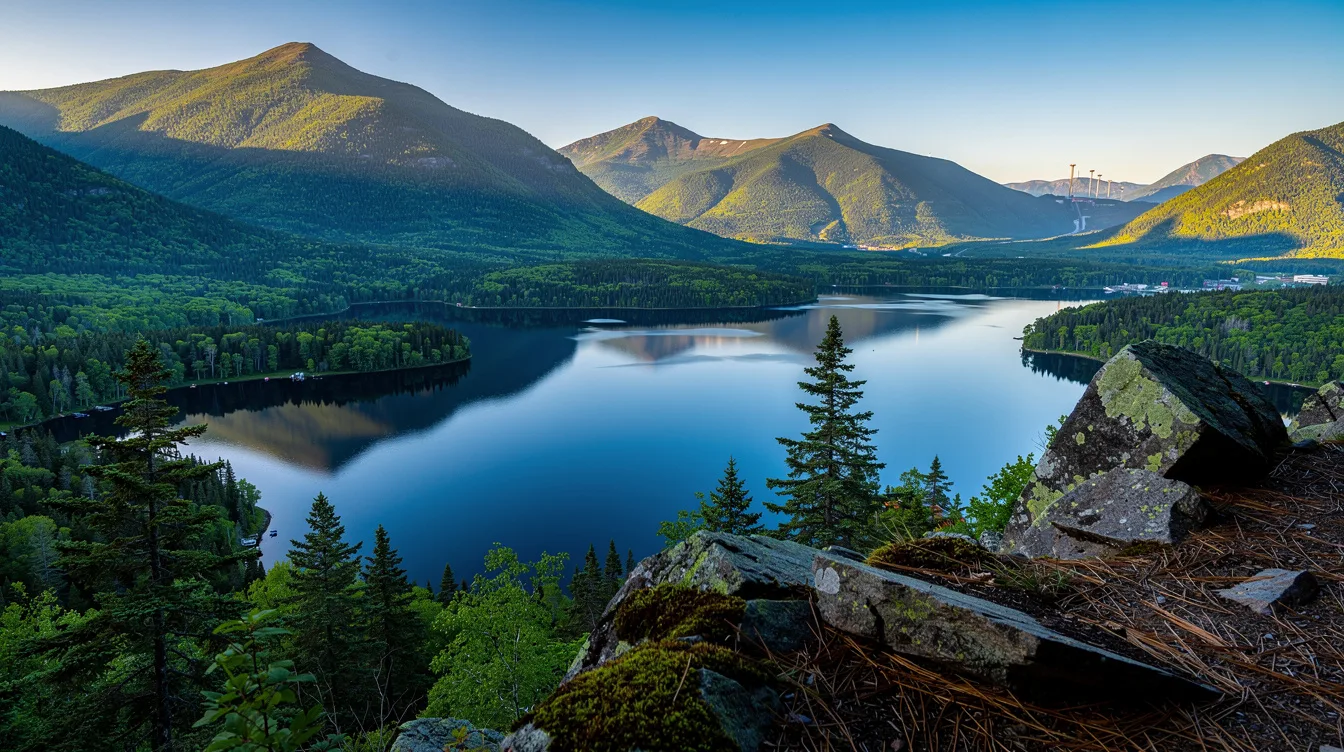
But Lake Placid hosted the Winter Olympics in 1932 and 1980, including the United States hockey victory known as the Miracle on Ice. That history still shapes the village, but the real pleasure is how quickly the crowds give way to mountain roads, quiet water, and cold Adirondack air.
And you can feel the sports story without treating the town like a museum exhibit. The Olympic sites remain part of daily life, while Main Street, Mirror Lake, and the surrounding trails keep Lake Placid grounded in the present.
1980 still gives this Adirondack village its pulse
But the best place to begin is the Olympic Center, where Lake Placid’s winter history becomes physical. You can walk through exhibits, see the skating facilities, and understand why this small village became one of the most recognizable sports settings in the United States.
And the 1980 hockey game remains the emotional center. The United States faced the Soviet Union here, and the upset became larger than the rink, which is why even visitors who don’t follow hockey usually know the phrase.
But Lake Placid isn’t frozen in that moment. Skiing, skating, bobsleigh, luge, and skeleton continue to shape the visitor experience, so you can spend a morning with Olympic history and an afternoon outdoors. Browse the wider Adirondacks before deciding how much time to reserve for the village.
At 1,804 feet, the setting changes the pace
And 1,804 feet above sea level, Lake Placid feels cooler and more compact than many New York escapes. The village sits between Lake Placid and Mirror Lake, with the Adirondack Mountains rising around it.
But the water is the reason you should slow down. You can kayak, paddle, boat, or fish, then return to Main Street for restaurants and small shops. The contrast is useful: outdoor adventure is close, but you won’t need to abandon ordinary comforts.
And nearby Whiteface Mountain gives the area its strongest winter pull. Hiking in the High Peaks, including routes around Mount Marcy, extends the appeal into warmer months, though you should choose activities according to conditions and your own stamina.
Can you reach Lake Placid without making it complicated?
But the village is remote enough to feel special, not remote enough to become difficult. It sits about 49.7 miles southwest of Plattsburgh, and the drive takes roughly two to three hours from Montréal.
And from New York City, plan on about five hours by car. You can fly commercially through Albany, Burlington, Montréal, or Plattsburgh, then rent a car for the final stretch. Lake Placid’s local airport mainly handles private and charter flights.
But don’t plan this as a quick urban weekend. A stay of two to four days makes more sense because the appeal depends on moving between water, mountains, Olympic sites, and village streets. My view is that a car gives you far more freedom, especially outside winter.
Fall brings color, crowds, and higher prices
And the strongest autumn window is generally late September to mid-October, although altitude and weather shift the timing. You’ll see the season change across the mountains, while cool air settles over the lakes in the morning.
But this is also one of the expensive periods to visit. Winter weekends, summer weekends, and peak foliage dates can raise lodging and rental-car costs, so book early if your dates are fixed. The village is lively then, but never metropolitan.
And athletes return in warmer months for cycling and the Ironman Lake Placid, held here since 1999. You may prefer the roads when they’re quiet, yet the event explains why endurance sports feel so woven into local identity.
But Lake Placid works best when you accept its limits. It isn’t a large city, and there’s no reason to pretend otherwise. By evening, the mountains darken above Mirror Lake, and the water holds the last thin light long after Main Street quiets down.