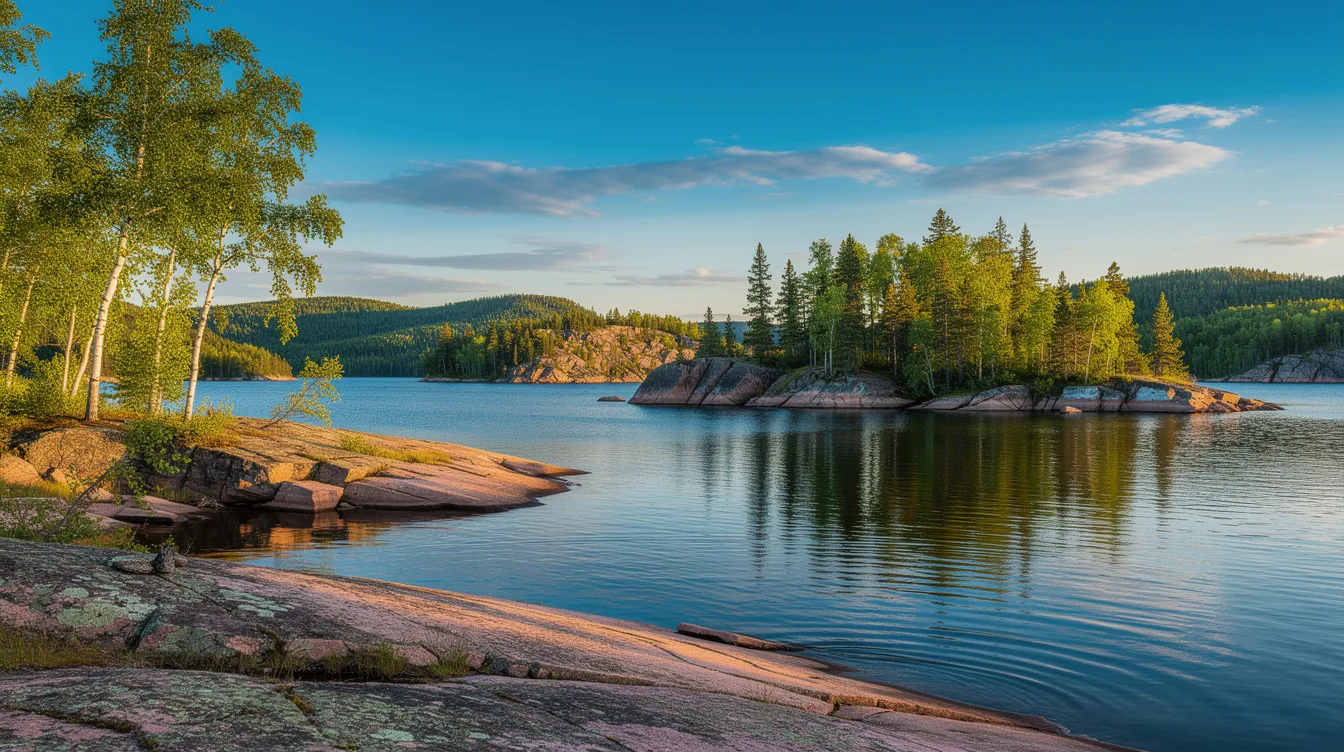
Ely sits about 108.7 miles north of Duluth and acts as a major gateway to the Boundary Waters Canoe Area Wilderness. From this small St. Louis County city, you can move toward lakes, forests, and canoe routes within one of North America’s major wilderness areas.
But Ely is a base for outdoor travel, not an urban weekend destination.
Why Ely is the Minnesota gateway that matters
The Boundary Waters is the reason most travelers come, and the geography makes Ely useful. The wilderness combines interconnected lakes, boreal forests, and canoe routes linked by portages. You’ll feel the trip change as paved streets give way to water, trees, and the quiet work of carrying a canoe.
But access remains manageable from the Twin Cities. Ely is about two hours from Duluth and roughly four hours from Minneapolis-Saint Paul, so you can reach serious wilderness without flying to a remote outpost. I think that balance is the town’s strongest appeal: isolated enough to feel different, but reachable by car.
And the city sits relatively close to the Canadian border, which adds to its northern character. You won’t find a dense resort district here. Instead, the town has lodges, canoe outfitters, small shops, and straightforward restaurants built around people heading outdoors.
From iron country to an outdoor base
Ely grew through iron mining and logging before tourism became central to the local economy. The last underground mine closed in 1967, accelerating the shift toward canoeing, fishing, hiking, skiing, and wildlife travel. And that history still gives the town a practical feel rather than a polished resort personality.
The city has about 3,268 residents, according to the 2020 census. But the small population doesn’t mean there’s nothing to do after you leave the water. You can spend part of a rainy afternoon learning about the region’s mining past or preparing for a longer wilderness trip.
And the transition is visible in the way Ely organizes itself around the outdoors. Canoe outfitters and lodges help visitors plan, while the surrounding Superior National Forest gives the town its wooded setting. My opinion is simple: Ely works best when you treat it as a staging ground, not the final attraction.
Summer starts on the lakes
Summer is the main season for canoeing and water activities in the Boundary Waters. You can paddle between lakes, camp in the wilderness, fish, and follow routes that require portages between waterways. And the rhythm is physical: quiet paddling, wet gear, and the occasional pause beside a forested shore.
But wilderness access is regulated. Permits may be required depending on the season and entry point, and the most sought-after routes need advance planning. You should arrange those details before arriving, because the town can’t erase a full permit calendar once you’re there.
And the region rewards travelers who accept a slower pace. There are no quick scenic loops that replace time on the water. I’d plan fewer ambitions and more room for weather, portages, and the satisfying silence that settles after a paddle stroke.
What to do when the canoe stays on shore
Ely has two well-known wildlife attractions: the International Wolf Center and the North American Bear Center. Both focus on education and conservation, so you can build a useful town day around wildlife before returning to the lakes. And you’ll appreciate that option when rain or fatigue changes your plans.
The local airport is Ely Municipal Airport, with the code LYU. But most visitors approach by road from Duluth or Minneapolis-Saint Paul, making the drive part of the transition into northern Minnesota. You’ll notice the destination feeling more remote because the journey is gradual rather than instant.
And you can use Ely as a comfortable pause before or after a wilderness outing. Stock up, review your route, and let the town’s simple Northwoods atmosphere reset your expectations. I prefer that practical character to a place that tries to turn every canoe trip into a luxury package.
Choose your season, then accept the trade-off
Summer is best for canoeing and lake activities, while autumn brings color through the forests. Winter shifts the experience toward snow, skiing, and other Nordic activities. And each season changes the town’s tempo, from busy water routes to quieter streets and snow underfoot.
But Ely is isolated, and that matters when you plan. You’re choosing a nature-focused stay rather than a city break, with limited urban distractions and a stronger need to prepare. The reward is a place where the wilderness begins close to town, not after a long transfer.
And that is why Ely earns its gateway reputation. You arrive by road, gather what you need, and head toward lakes connected by canoe routes. By evening, the forest is dark beyond the last lights, and the paddle rests against the side of the boat.