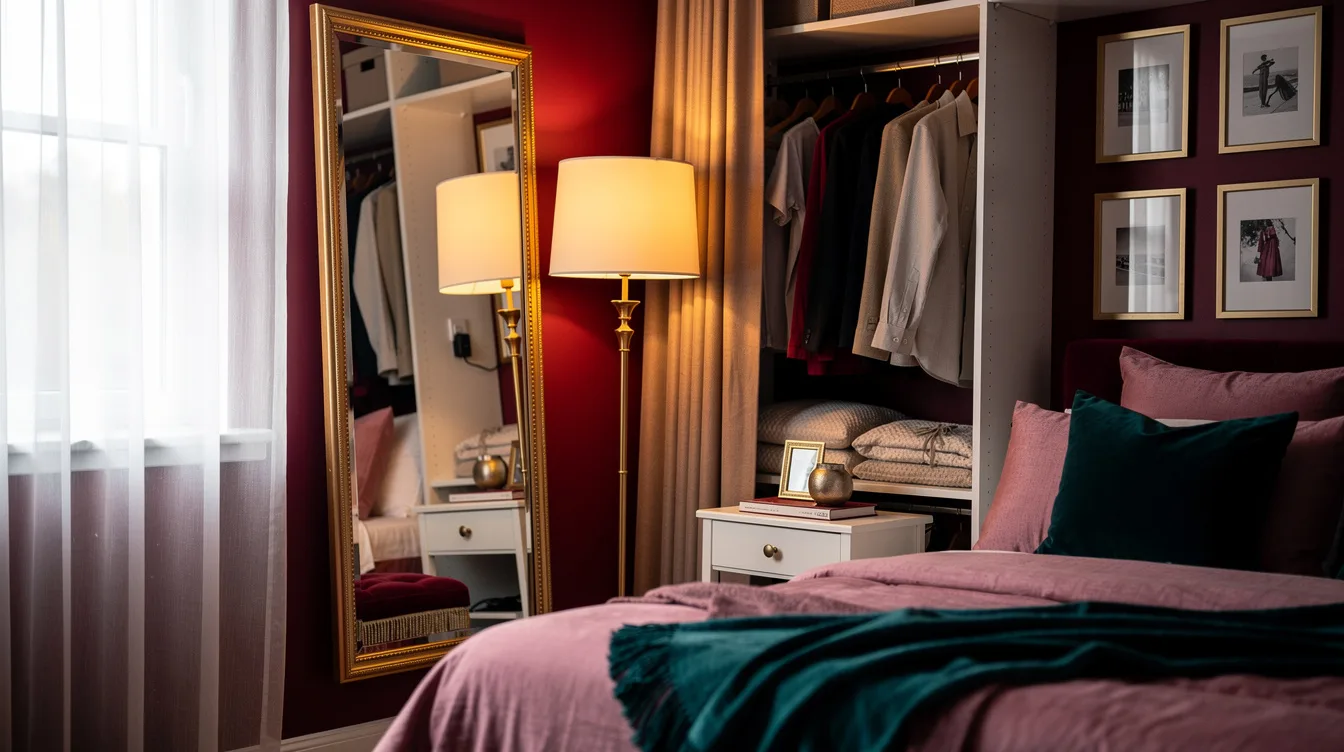
I once positioned a bedroom mirror where it reflected the window, the bed, and every glare-producing bulb in the room. Moving that roughly 160 to 180 cm tall mirror to a wall perpendicular to the window made dressing easier and gave the bedroom softer daylight.
The key is simple: light the person standing at the mirror, not the glass itself. A shaded, dimmable source placed slightly to the side does more for the room than a bare bulb aimed straight into the reflection.
Turn the Mirror Toward the Window
My first move was placing a full-length mirror on the wall perpendicular to the main window. This angle catches daylight from the side, which helps with dressing without bouncing a harsh rectangle of light around the room.
For a typical bedroom, a mirror roughly 160 to 180 cm tall works well beside the closet. I prefer this layout to placing glass directly opposite the window because it keeps the reflection useful and calmer.
Build a Soft Dressing Zone
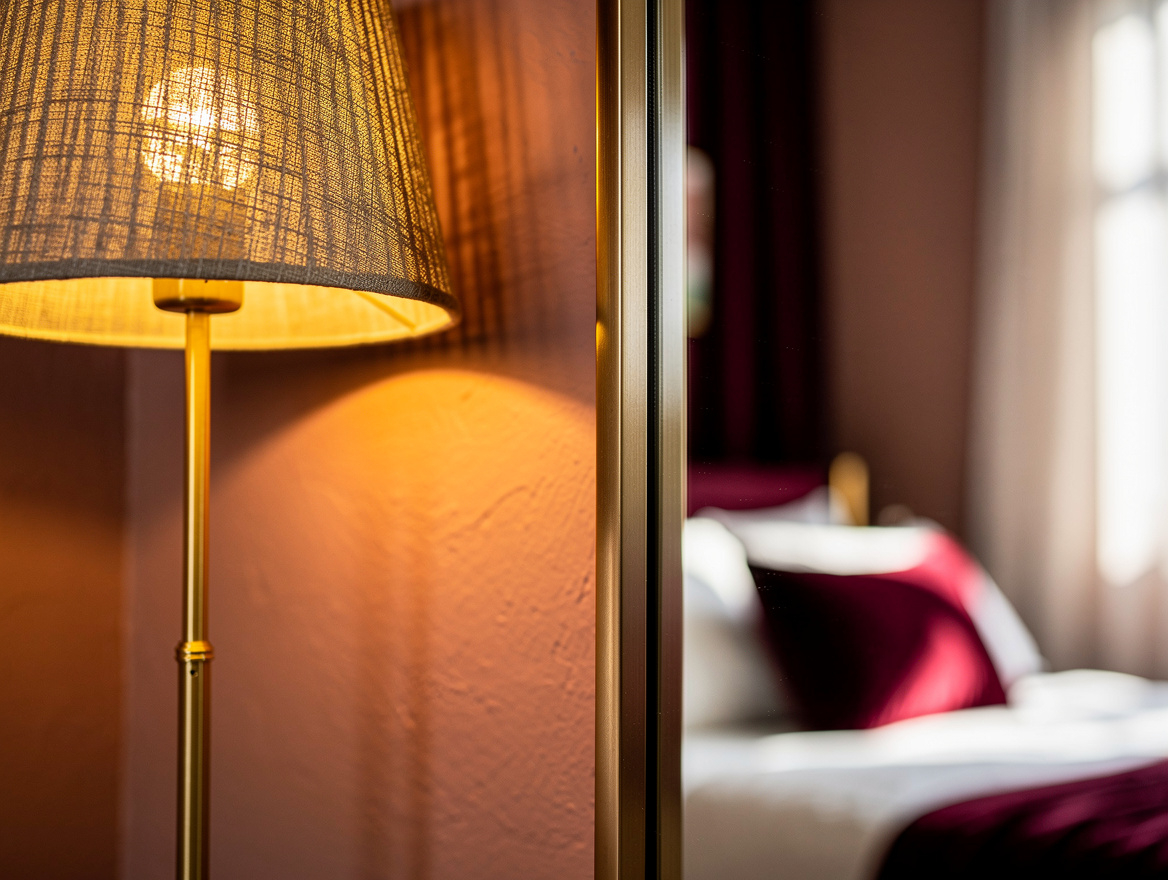
A floor lamp set roughly 30 to 60 cm beside the mirror gives the wardrobe wall its own gentle lighting layer. Choose a shaded fixture with a warm, dimmable bulb so the light reaches your clothes without appearing as a bright spot in the glass.
Leave about 60 to 75 cm of clear floor in front of the mirror when the room allows it. That small landing zone makes outfit checks easier and keeps the area from feeling squeezed by the closet door.
Frame the Dresser With Sconces
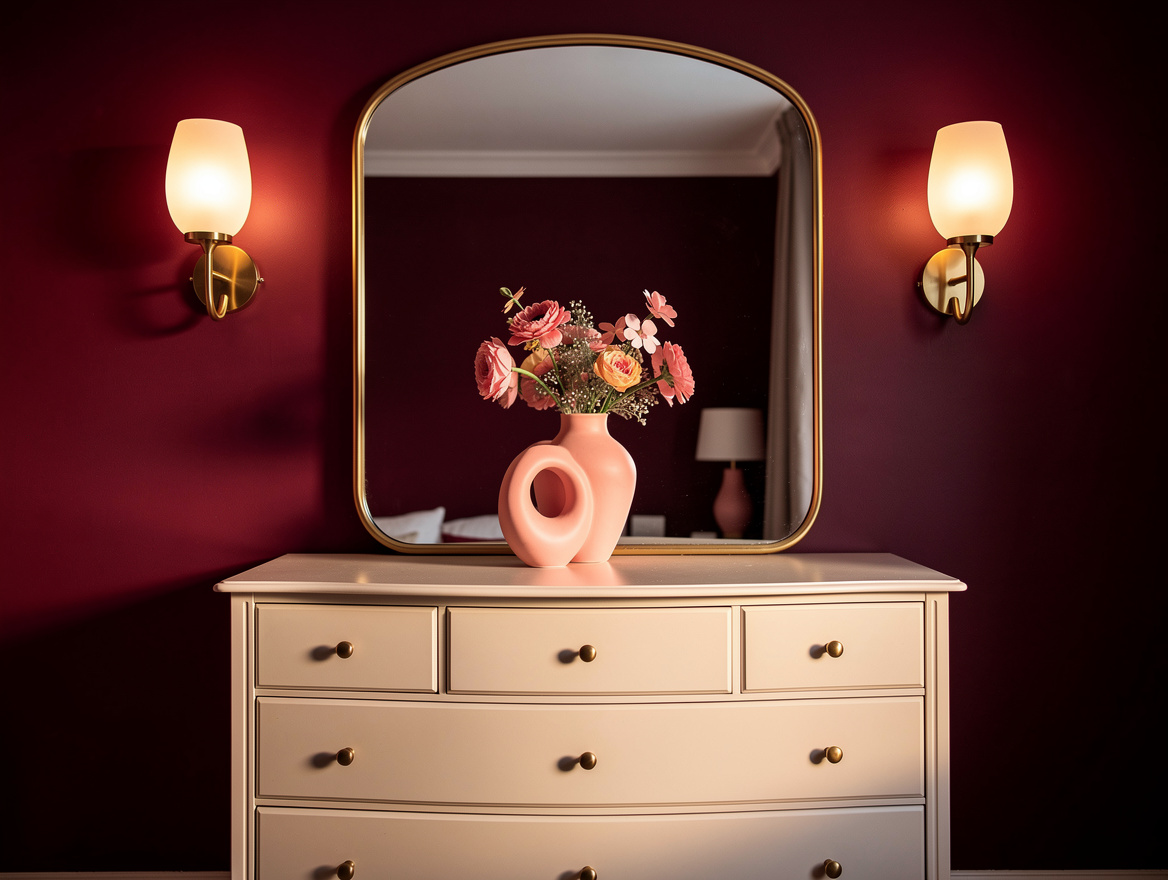
Above a dresser, I use a round mirror that measures about two-thirds to three-quarters of the furniture’s width. With a typical 120 to 150 cm dresser, that proportion leaves enough breathing room for a balanced arrangement.
Pair it with wall sconces on both sides, placing the light sources around face height when standing at the dresser. Opal glass or a fabric shade is more comfortable than a clear filament bulb staring back from the reflection.
Keep the Bed Out of View
A leaning arched mirror can sit near a window and still feel decorative, but I avoid aiming it directly at the bed. The best reflection is a clean wall, artwork, greenery, or a slice of the window rather than rumpled bedding or a bright nighttime light.
If the window is the only strong daylight source, center the mirror approximately across from it, then shift the glass about 10 to 20 cm off-center if that removes the bed from view. This slight adjustment often improves the room more than buying a larger mirror.
Shift the Glow to Face Height
For makeup or grooming, the most flattering setup puts light in front of you. Two plug-in sconces beside the mirror create even coverage, while one shaded lamp behind the viewer can work in a tighter bedroom.
I would skip a bare overhead bulb because it tends to deepen shadows beneath the eyes and brows. A warm dimmable setting around 2200K to 2700K is typically more restful in the evening than cool white light.
Anchor the Tall Glass
A tall IKEA mirror or similar wardrobe piece should be secured to the wall when it leans, especially in a home with children or pets. The anchor matters even more when the mirror is heavy or placed near a walking path.
For a dark bedroom, an LED full-length mirror near the dressing zone can add practical light, but choose one with dimming and warm-light modes. Built-in LEDs should support the room’s lighting instead of becoming the only bright source.
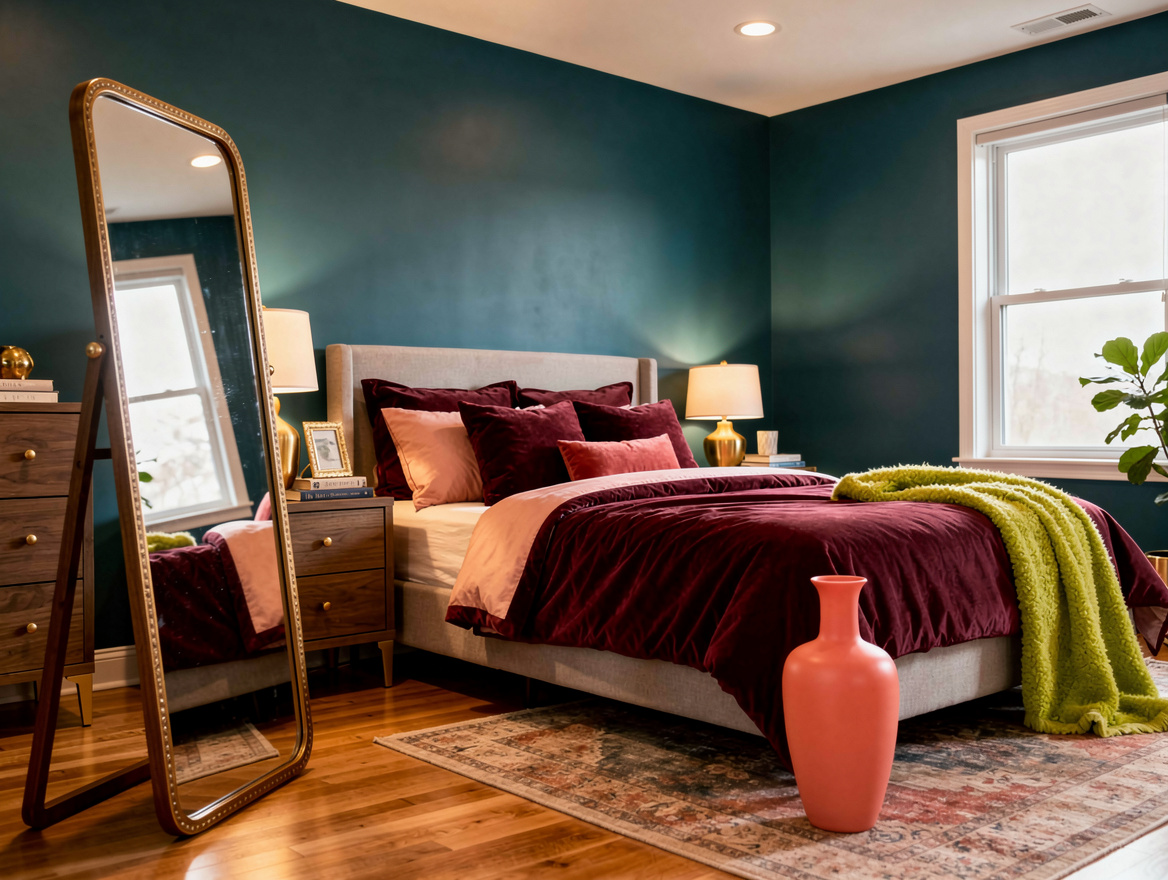
Start by turning the mirror perpendicular to the main window, then remove the bed from its reflection. Once the angle works, add one soft lamp beside it and adjust the brightness after sunset.
Mia Carter writes about small-space living and budget home makeovers. She has restyled three rentals and tests most ideas in her own 45 sqm flat.