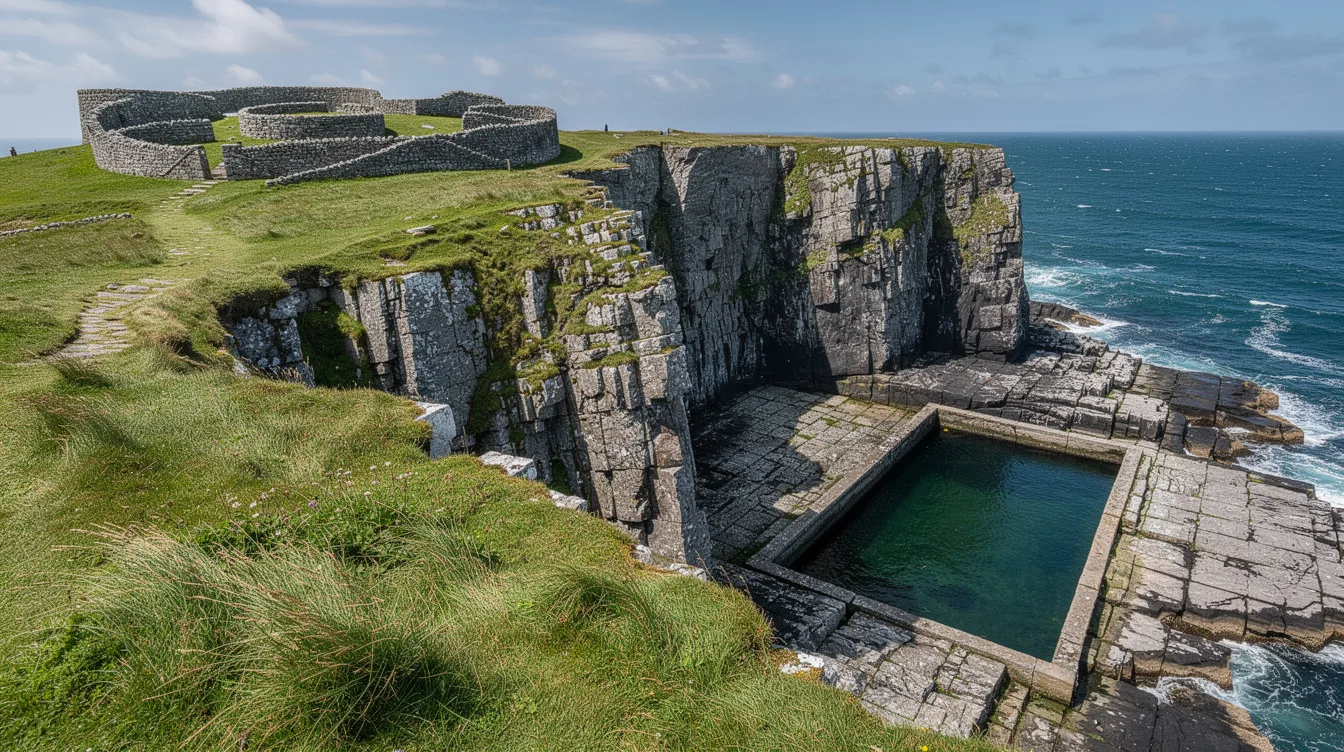
Inis Mór is where Ireland’s Atlantic edge turns theatrical: 328-foot cliffs rise above Dún Aonghasa, while Poll na bPéist forms a remarkably rectangular sea pool nearby. The two sights sit close enough to shape a day, but the exposed limestone and rough water demand respect. You’ll remember the wind first.
And the island is easier to reach than its remote feeling suggests. A ferry from Rossaveal takes about 40 minutes across Galway Bay, while seasonal services run from Galway City in about 90 minutes and Doolin in about 20 minutes. That makes Inis Mór remote, but not difficult to reach.
Why the cliffs and sea pool belong together
At Dún Aonghasa, the fort stands above cliffs roughly 328 feet high, with the Atlantic breaking far below. The approach crosses uneven limestone, so wear proper shoes and leave room for the wind. I think the fort is best understood from the edge, where the stonework and open sea create real tension.
And nearby Poll na bPéist looks almost too precise to be natural. The rectangular pool is cut into the limestone and connected to the sea through underground channels, but it isn’t a casual swimming hole. If swells or rain arrive, stay well back from the edges and treat the water as a view, not an invitation.
From there, you can follow routes toward Kilmurvey Beach or continue across the island’s cracked stone pavement. The Atlantic air smells clean and mineral-rich, while the dry-stone walls break the wind in short stretches. You’ll find beauty here, but comfort comes second.
The stone beneath your feet is older than the fort
Inis Mór’s limestone formed approximately 330-350 million years ago, when sediments settled in a shallow tropical sea. Ice and erosion later shaped the surface into slabs divided by deep cracks. And because the rock drains water quickly, the island often feels spare, hard-edged, and surprisingly varied underfoot.
But the island isn’t empty stone. Grassy patches fill some cracks, and the sheltered spaces support plants from Arctic, Mediterranean, and alpine environments. You don’t need a specialist’s eye to notice the contrast.
One step is pale rock and salt wind, the next is soft grass pressed flat by weather.
Kilronan gives the day a practical center
Kilronan is where most visitors arrive, hire bicycles or e-bikes, find food, and connect with ferry services. Passenger ferries generally don’t take visitor cars, so cycling, walking, minibuses, and horse-drawn carriages shape the pace. I’d choose an e-bike if you want to see more without turning the day into a workout.
And the island is large enough to reward slowing down, roughly 7.5 miles long and 1.9 miles wide. Around 800 people live here, and Irish remains a strong part of local life. You can cover the main sights in a day, but an overnight stay gives the roads back to the island after the ferries leave.
Can you see the main sights without rushing?
Yes, if you start promptly from Kilronan and keep the route focused. Ride toward Dún Aonghasa and Kilmurvey Beach, then consider the Wormhole only when conditions are calm. Save time for the return journey, because weather can disrupt crossings and exposed roads feel slower than they look.
There’s more than one fort to find
Beyond Dún Aonghasa, Black Fort offers a rougher clifftop walk with fewer managed paths and fewer tour groups. The Seven Churches sit inland among ruins, graves, and a round tower, giving the island another mood entirely. You’ll see why a first visit can feel archaeological without becoming solemn.
At the same time, a coastal route can include the seal colony viewpoint before you return to Kilronan. The island’s attractions are spread across working roads and open ground, not arranged like a park. That’s the appeal, and also the catch: windproof layers, waterproof clothing, and sturdy footwear matter even on a sunny morning.
Choose summer, but watch the water
Summer is the easiest season for a first visit, especially if you want cycling, longer daylight, and a better chance of settled conditions. But Rossaveal services generally operate year-round, subject to weather. Check the live timetable before leaving Galway, and book early if you’re traveling on a weekend or during school holidays.
For practical planning, the Aran Islands work well as a day trip from Rossaveal, while Doolin suits travelers combining Inis Mór with the Burren or Cliffs of Moher. I’d stay overnight if atmosphere matters more than checking boxes. By late afternoon, the limestone turns pale under the Atlantic light, and the last ferry feels very far away.