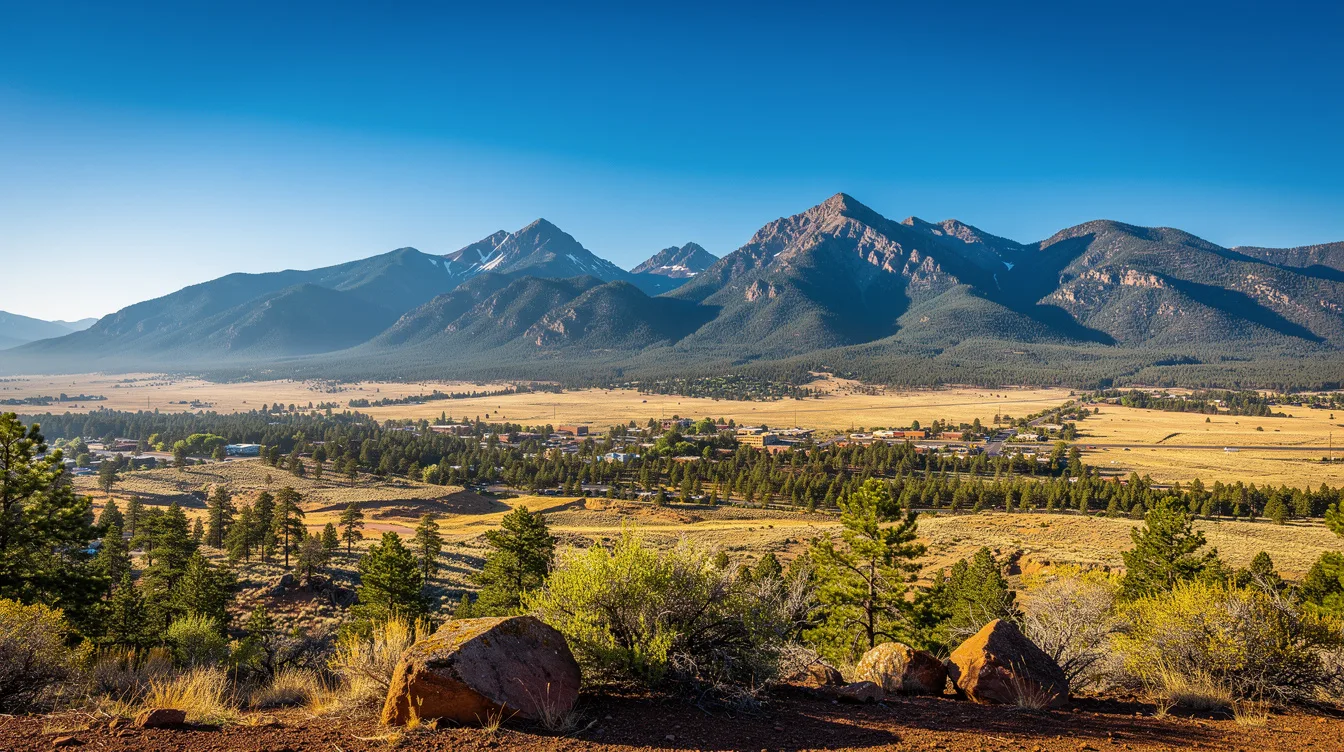
Flagstaff is the Arizona city where nine feet of snow can fall beneath some of the darkest skies in the country. That combination feels almost contrary to the state’s desert reputation, but the city sits high among pine forests and the San Francisco Peaks.
And the stars here aren’t just a pleasant bonus. Flagstaff has official international recognition for protecting its night sky, while Lowell Observatory is where Pluto was discovered in 1930. You can spend the afternoon in cold mountain air, then watch the sky sharpen after sunset.
Why Flagstaff feels unlike the Arizona you expect
Flagstaff lies in Coconino County. It works as a practical base for the South Rim, yet it feels like a destination rather than a roadside pause.
But the altitude changes the experience immediately. Summers are generally cooler than Phoenix, and the surrounding pines replace the red-rock heat many travelers associate with Arizona. You’ll still need a warm layer after dark, especially when the air turns sharp near the forest edge.
Downtown gives the city its easiest rhythm, with cafés, restaurants, breweries, and the old Route 66 corridor close together. And the railroad still helps shape the town’s character. It’s active, but never frantic, which makes Flagstaff a comfortable place to stay before or after the Grand Canyon.
For a broader trip, you can use Flagstaff as your Grand Canyon base. The city has more evening life and services than the areas immediately around the park, though winter roads can complicate the drive.
Snow, peaks, and a real winter season
Flagstaff averages 9 feet of snow each year. That number changes the city’s personality. Sidewalks turn quiet, rooftops collect white cover, and Arizona Snowbowl becomes the obvious draw on the San Francisco Peaks.
And winter visitors need to take conditions seriously. You should check the roads before heading toward the Grand Canyon or higher elevations, and you may need suitable tires. The trade-off is worth it if you like ski days followed by a warm meal downtown.
Humphreys Peak is the highest point in Arizona. The research notes give a corrupted elevation range, so the practical takeaway is simple: this is serious high-country terrain, not a casual stroll above town.
But you don’t have to climb the peak to feel its presence. Nearby routes open the door to hiking. Start early, carry water, and remember that cool air can disguise how hard the altitude works.
Can you see stars in the city?
Yes, and Lowell Observatory is the reason to plan an evening around it. The observatory is tied to Pluto’s discovery in 1930, while Flagstaff’s official dark-sky protections help keep artificial light from washing out the view.
And the difference appears after sunset. The sky grows dense with stars, the pines become black shapes, and the temperature drops faster than visitors expect. You’ll want a jacket even after a mild summer afternoon.
My opinion is that astronomy gives Flagstaff its strongest identity. Ski towns can feel interchangeable, and gateway cities can blur together. Here, the night sky supplies a clear reason to stay past dinner.
For planning, you can read about dark-sky travel in Arizona before choosing an evening visit. Keep your plans flexible.
What to explore beyond downtown
Walnut Canyon National Monument brings you to cliff dwellings and traces of Sinagua communities near the city. And Sunset Crater Volcano and Wupatki National Monument make a strong paired outing, linking volcanic ground with ancestral pueblo sites.
You can also drive toward Sedona and Oak Creek Canyon, or follow Route 66 through northern Arizona. The road-trip options are generous, but they spread outward quickly. Pick one direction for the day instead of trying to collect every stop.
When should you visit Flagstaff?
May through October suits hiking and excursions, with October often bringing calmer conditions and autumn color. December through March is the season for snow and skiing, though storms can affect travel plans.
If you visit then, plan outdoor time early and leave room for weather delays. Flagstaff is easiest when you accept its shifts rather than trying to control them.
By night, the last light leaves the San Francisco Peaks, snow or no snow, and the stars take over above the quiet pines.