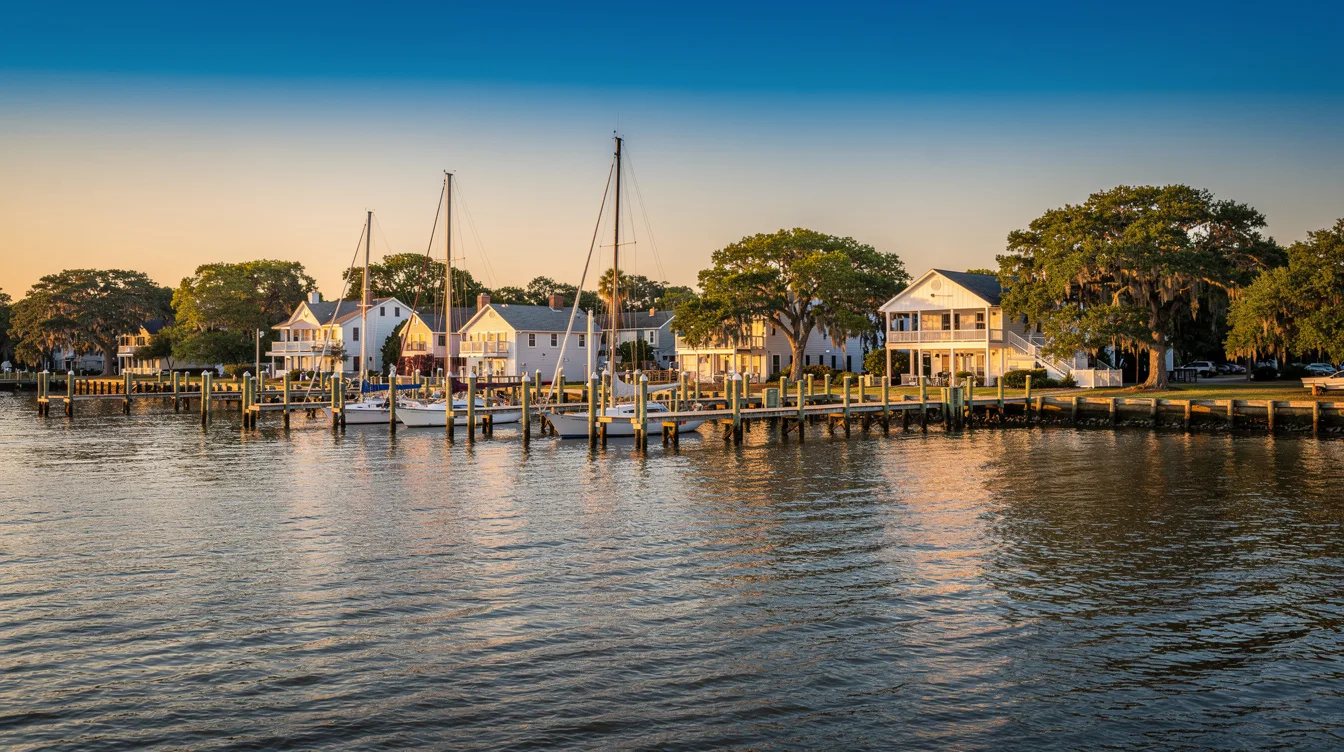
Southport, North Carolina, has a curious double life. Most of the year, this small coastal town feels quiet and unhurried. Around July 4, though, the annual North Carolina 4th of July Festival brings tens of thousands of visitors to the waterfront.
That contrast is the reason to go. Southport had just 3,971 residents in 2020, so the festival changes the town’s scale completely. You can arrive for the crowds, then stay for the slower streets, old buildings, and boats moving toward the mouth of the Cape Fear River.
Why thousands come to Southport every July
And the festival is the main event, held annually around July 4. Streets and waterfront areas fill with visitors celebrating Independence Day, while the town’s maritime setting gives the holiday a distinctly coastal feel.
But Southport doesn’t feel like a major resort city. That’s the appeal, in my view. You’ll see a small historic town hosting a very large gathering, with the Atlantic nearby and the river opening toward Bald Head Island.
If you’re planning a North Carolina trip, place Southport near other coastal stops rather than treating it as a standalone beach destination. The festival draws the headline crowd, but the town rewards travelers who allow time around it.
A film town with a real waterfront
And movie fans have a clear reason to look closer. Southport was used as a filming location for Safe Haven, and a local route identifies 11 filming locations connected with the movie.
But the town doesn’t depend on its screen appearance. The waterfront, tree-lined streets, and older buildings carry their own visual pull. You can follow the film connection, then turn toward the river and find a place that feels more lived-in than staged.
The historic center includes buildings and sites dating from the 18th and 19th centuries. That history gives Southport texture without making it feel like an outdoor museum. Walk slowly, because the best details are easy to miss from a car.
The river comes before the beach
And Southport’s waterfront is better suited to wandering than to a full beach day. The Southport Pier and Riverwalk follow the water, with views toward boats, nearby islands, and the broad meeting point of river and ocean.
But you shouldn’t come expecting a large urban beach. For swimming, Oak Island is generally the better choice, while Southport concentrates on restaurants, shops, maritime history, and water-based activities.
You can also visit the Fort Johnston, Southport Museum and Visitors’ Center or the North Carolina Maritime Museum at Southport. The exhibits cover local history, navigation, shipwrecks, the Civil War, and the Lower Cape Fear region.
Can you reach an island from Southport?
Yes. Bald Head Island is accessible by ferry from Southport, and the island is known for Old Baldy, its historic lighthouse, and a setting without ordinary automobile traffic.
And the ferry adds another layer to a Southport visit. You leave a compact mainland town, cross the water, and arrive somewhere with a noticeably different pace. You’ll want to check the operating details before traveling because ferry access shapes the day.
Southport also has a ferry route to Fort Fisher and the Kure Beach area across the Cape Fear River. That makes the town useful for a broader coastal itinerary, especially if you’re linking Wilmington, Oak Island, and Bald Head Island.
How long should you stay?
And one to three nights is the right range for most travelers. Stay longer around the July 4 festival if you want the full event atmosphere, but expect a busier town than the one described in quieter travel brochures.
But Southport works just as well as a measured stop near Wilmington. Its location in Brunswick County puts you close to the river’s Atlantic outlet, while the historic center gives you reasons to walk after the day’s driving is finished.
You’ll find a town that is lively during the festival but calm beyond it. By evening, the waterfront settles back into its usual rhythm, with boats on the darkening river and the Atlantic just beyond the channel.