
Yes, cheap charcuterie board ideas can look generous under $20 if you build around contrast instead of quantity. I once bought too many meats, then watched half of them dry out before guests arrived. Now I shop for color, crunch, and one soft centerpiece. It’s warmer, faster, and nobody misses the excess!
Don’t overthink: Build the Grocery-Store Grazing Grid.
- Layer the Two-Board Base
- Build the Grocery-Store Grazing Grid
- Swap Meat Quantity for Contrast
- Anchor the Board on a Sheet Pan
- Use the Three-Height Bite Stack
- Frame Brie with Green and Gold
- Choose Wood Over Marble
- Arrange a Board by Color
- Mix Warm and Cool Bites
- Make the Candy-Station Crossover
- Layer Crackers Over Cheese
- Build the Sweet-Salty Corner
- Mix the Budget Grazing Board by Texture
- Use a Simple Cost Ladder
- Serve Four Without Overfilling
- Pack a Rental-Friendly Picnic Board
- Why Does the Board Look Expensive?
- Finish with the Warm Winter Version
1Layer the Two-Board Base
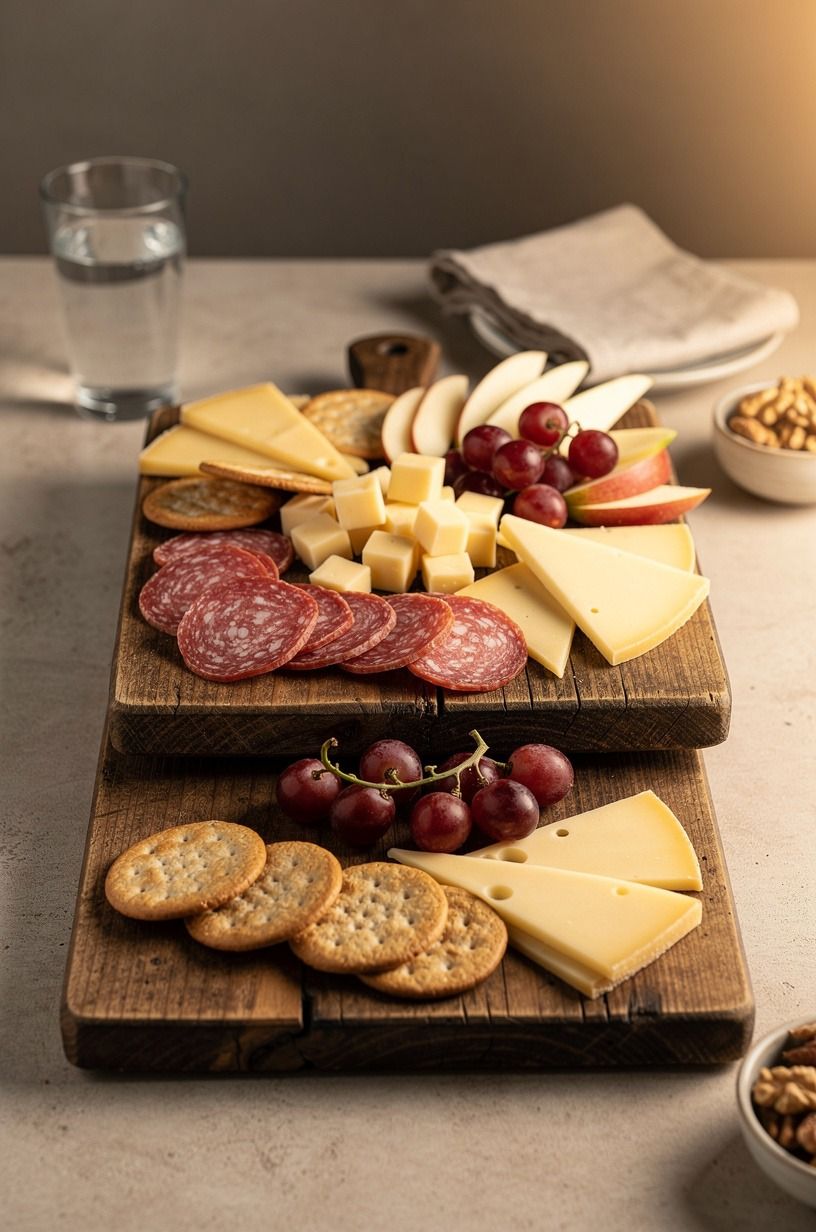
A charcuterie board on a budget looks fuller when you overlap two small surfaces instead of spreading six ingredients across one enormous platter. Use a natural-oak cutting board beneath a forest-green ceramic plate, then let the plate peek out at one corner. You’ll create height without buying a serving set, and your guests won’t have to reach across a crowded landscape.
Start with one sliced cheese, one folded meat, and one crunchy item on the lower board. Put the soft cheese or fruit on the upper plate. I’d skip a flat marble slab here because it makes a small spread feel colder and less generous.
For the warmest look, add a rust-colored napkin near one edge. Keep deep-pile mohair velvet to a nearby accent rather than placing food directly on it. If you’re planning a larger gathering, this self-serve candy station idea has the same useful principle: give every category its own little landing spot.
Typical cost by tier (US averages):
2Build the Grocery-Store Grazing Grid
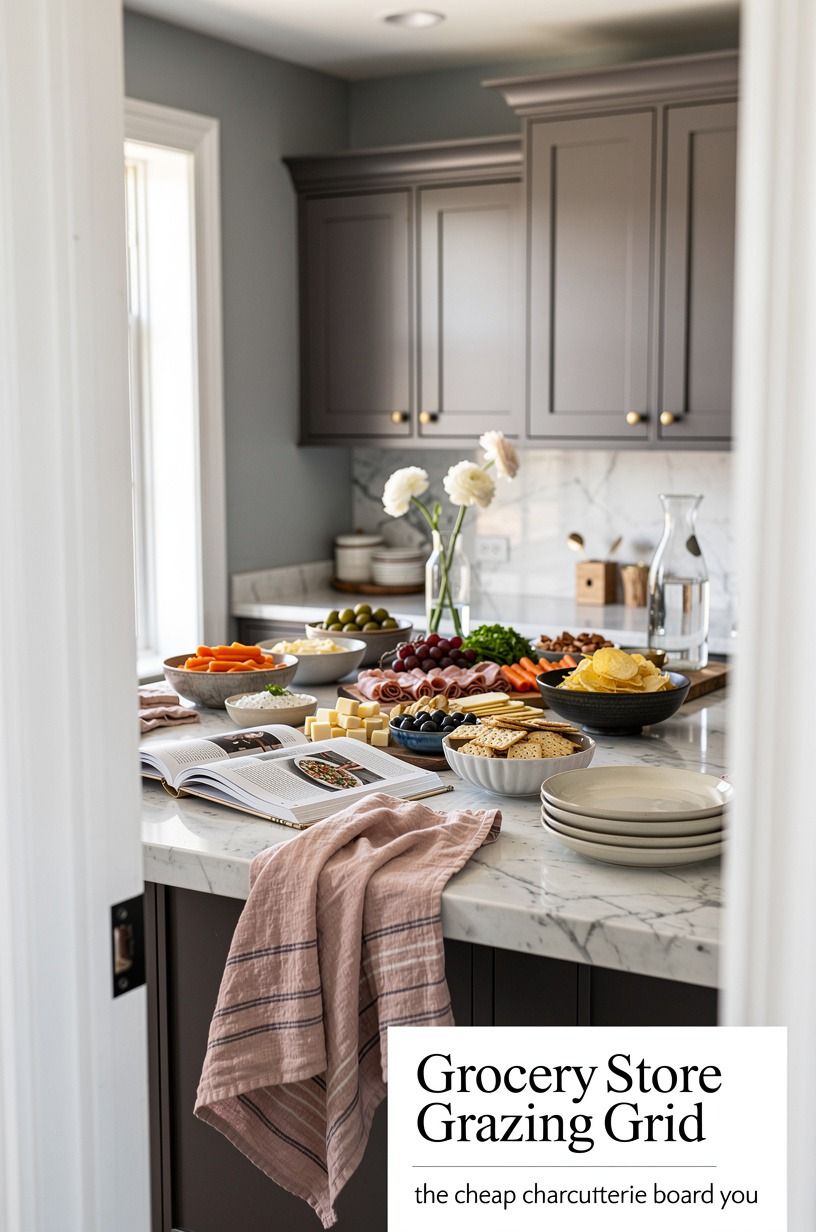
You don’t need specialty-shop ingredients to make affordable charcuterie ideas feel considered.
3Swap Meat Quantity for Contrast
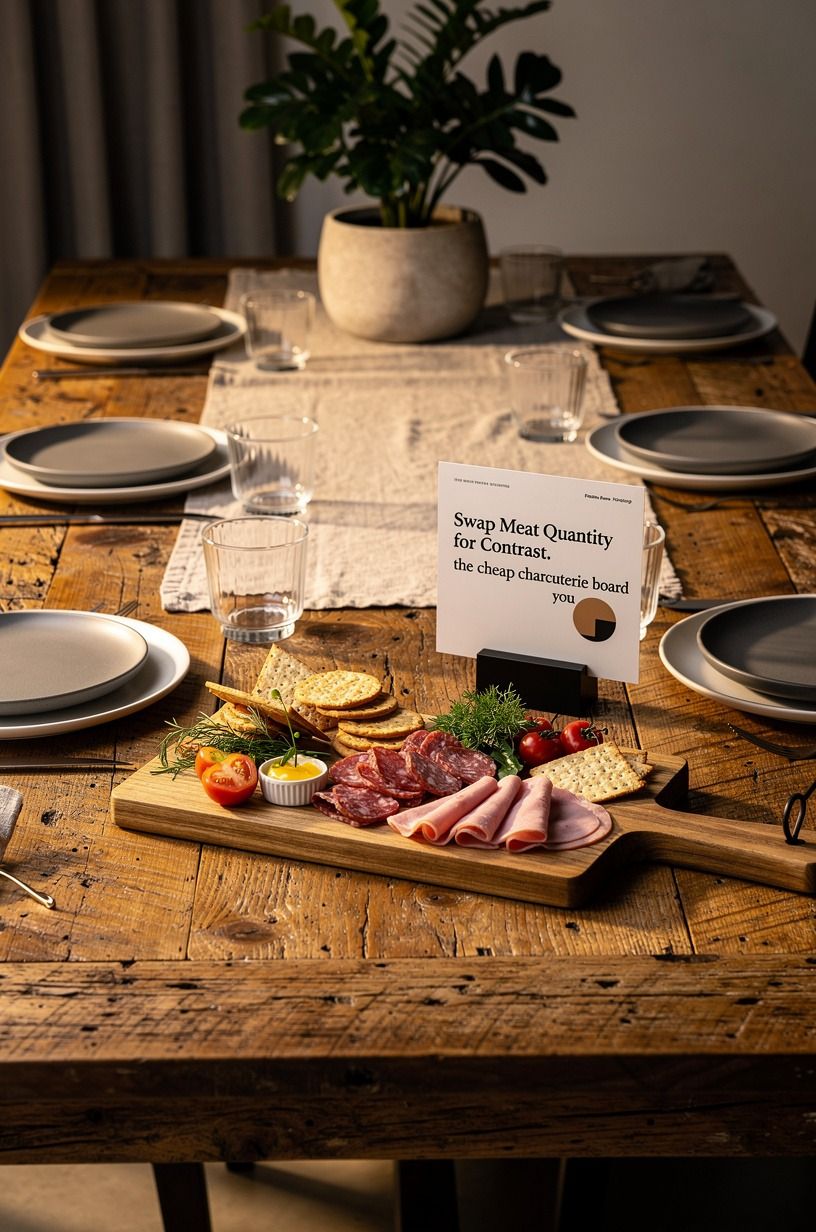
Most hosts overspend on meat because they think the board needs three or four varieties. It doesn’t. Choose one folded salami and make the rest of the spread do more work with texture, color, and temperature.
Your guests will remember the contrast, not the number of packages.
A few curls of pepper salami bring a bold, rustic note, especially beside mild cheese and crisp fruit. Add mustard in a tiny bowl, then scatter roasted nuts around it. I’ve found that a strong condiment makes one meat taste more complete, while extra meat often just sits there looking tired.
You can keep the slices in a loose fan, but don’t build a stiff spiral that nobody wants to disturb. Guests should be able to grab one piece without dismantling the whole corner. And if you’re serving outdoors, keep the meat shaded and replenish it in small batches.
4Anchor the Board on a Sheet Pan
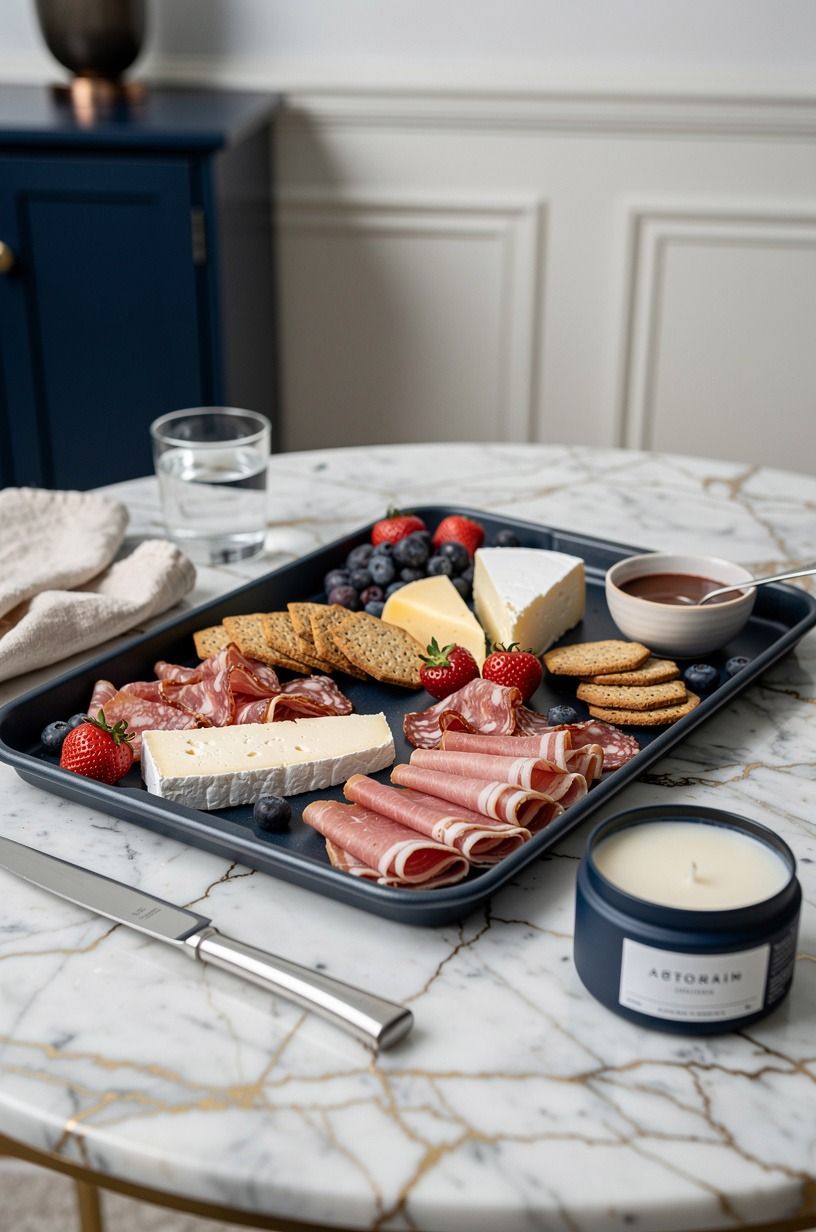
A rimmed baking sheet is one of the best charcuterie board ideas under $20 because it gives you space, structure, and a surface you probably already own.
5Use the Three-Height Bite Stack
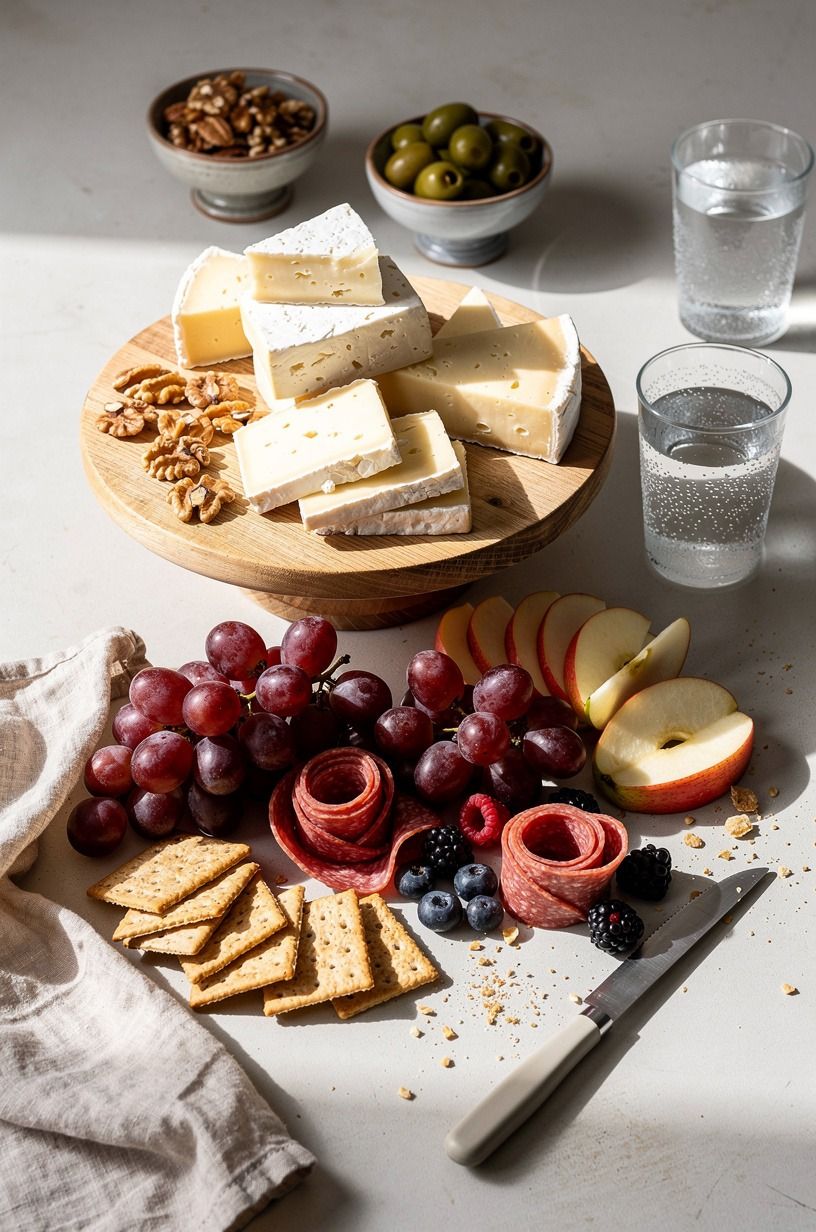
The Three-Height Bite Stack keeps a budget grazing board from looking like a flat pile of groceries. Give yourself three levels: a low cracker layer, a medium cheese layer, and one taller element such as a jar, bowl, or upright fruit cluster. You’re styling with height, not buying more food.
Place sage-green ceramic ramekins at the back of the cerused white-oak board for olives or jam. Put cheese wedges in front, then tuck crackers beneath them so the edges overlap. The arrangement should feel slightly uneven, because a perfect grid looks like a store display.
Why spend more when the same ingredients can look twice as generous with a little elevation? I wouldn’t use tall stemware for this job.
It tips easily and blocks conversation across the table. A low bowl is safer, calmer, and much easier for your guests to reach.
6Frame Brie with Green and Gold
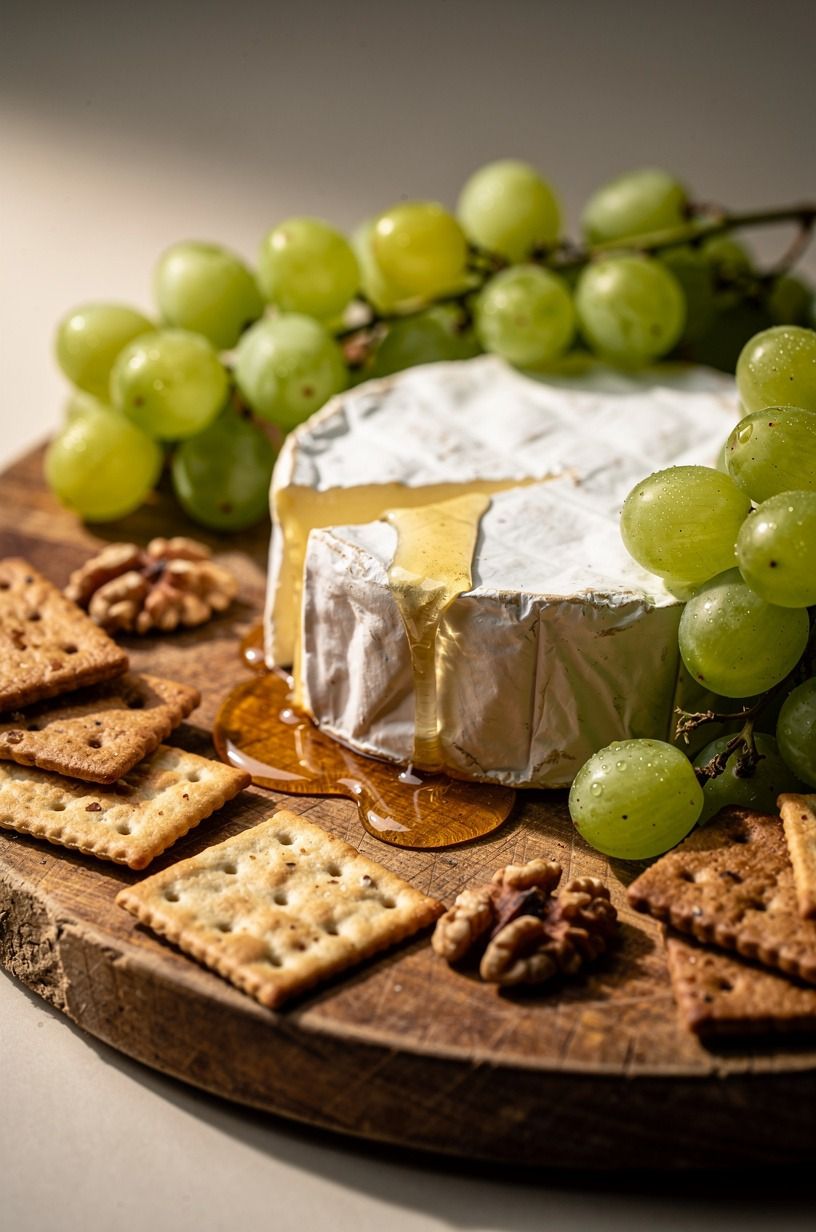
Soft cheese makes an inexpensive board feel celebratory, but the surrounding ingredients matter more than the label. Set a small round of double-cream brie on a stone-colored platter near a corner, then frame it with olive-toned grapes, rosemary, and a few terracotta crackers. You’ll create a little focal point without adding another expensive ingredient.
The rosemary is mostly visual, so you won’t need much. Tuck two sprigs beneath the cheese and let a few needles point toward the fruit.
I made the mistake of scattering herbs everywhere once, and the board tasted like a shrub. Keep them grouped and guests will understand what’s edible.
If brie is outside your budget, use a small block of cream cheese and top it with pepper jelly. It’s softer and less polished, but the red color gives your board an inviting lift. The warm travel hosting inspiration from an Arctic wonderland is a reminder that simple food looks best when the setting carries some of the mood.
7Choose Wood Over Marble
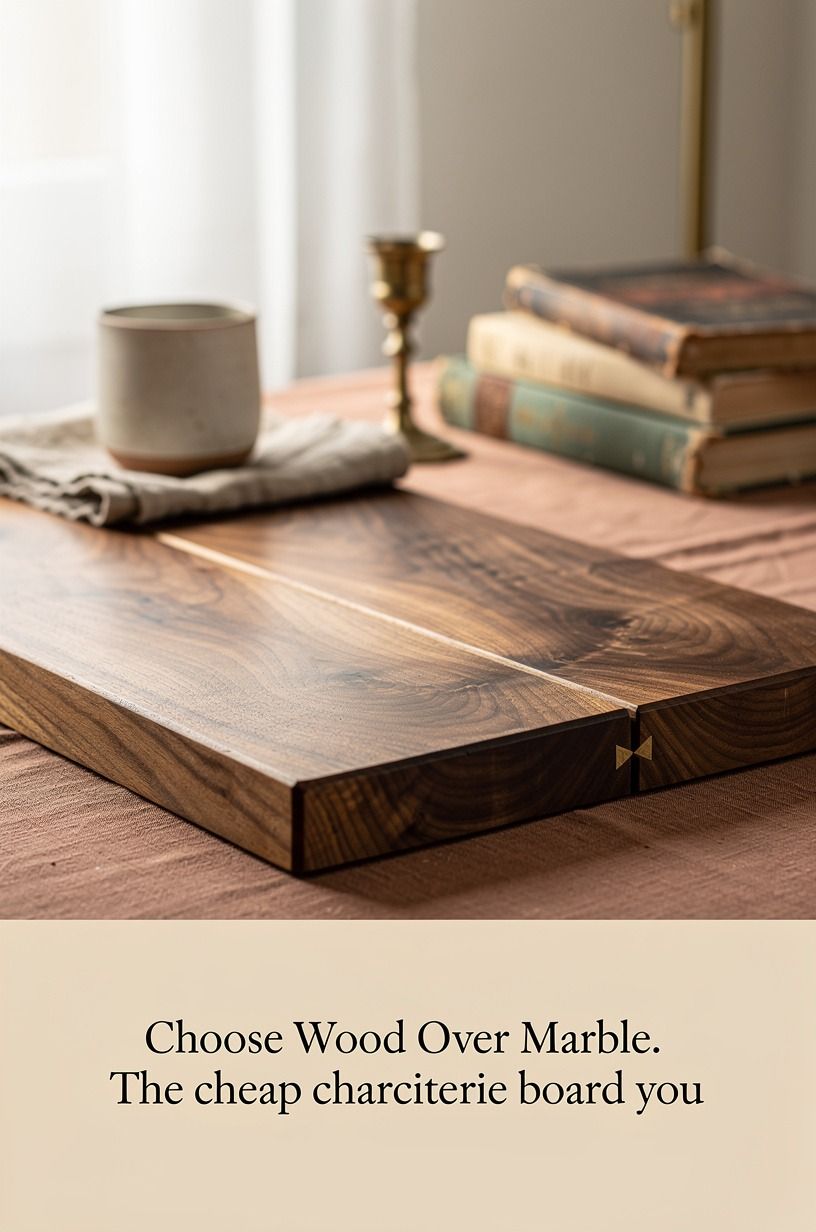
For a rustic budget grazing board, book-matched walnut is the better call.
8Arrange a Board by Color
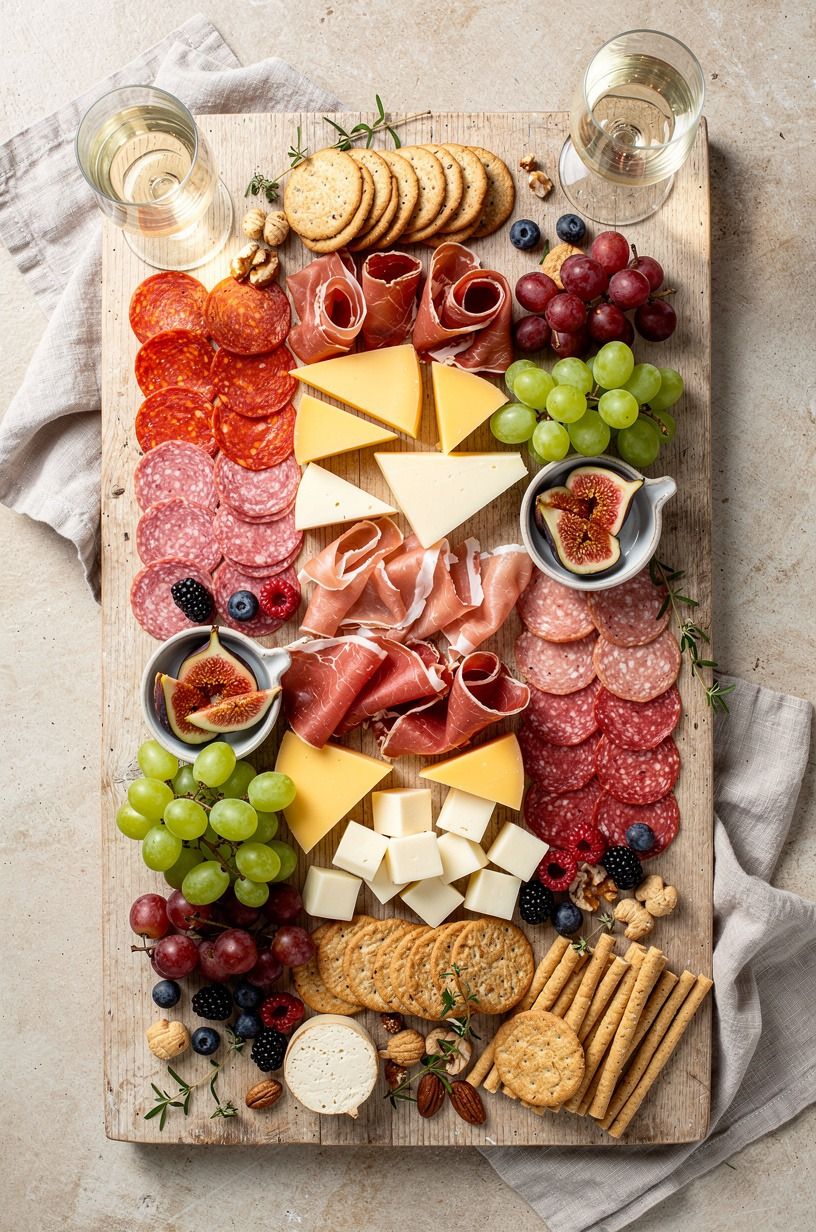
Color can make a cheap charcuterie board look more expensive before anyone tastes it. Start with one warm color, one cool color, and a neutral. For example, pair plum-colored grapes, gray crackers, and pale cheese with a small rose-gold dish.
You’ll get a soft, earthy palette without buying decorative extras.
Use plum grapes in a small cluster instead of separating every stem. The shape gives your board movement, and the fruit stays easier to pick up. Add plum jam or a few dried cherries if the spread needs another warm note.
But don’t match every ingredient too closely. A board made entirely of beige food can look flat, even when it tastes good.
I’d avoid adding beige pita chips beside pale crackers. Choose one crisp shape with a darker edge instead, and your guests will see the difference immediately.
9Mix Warm and Cool Bites
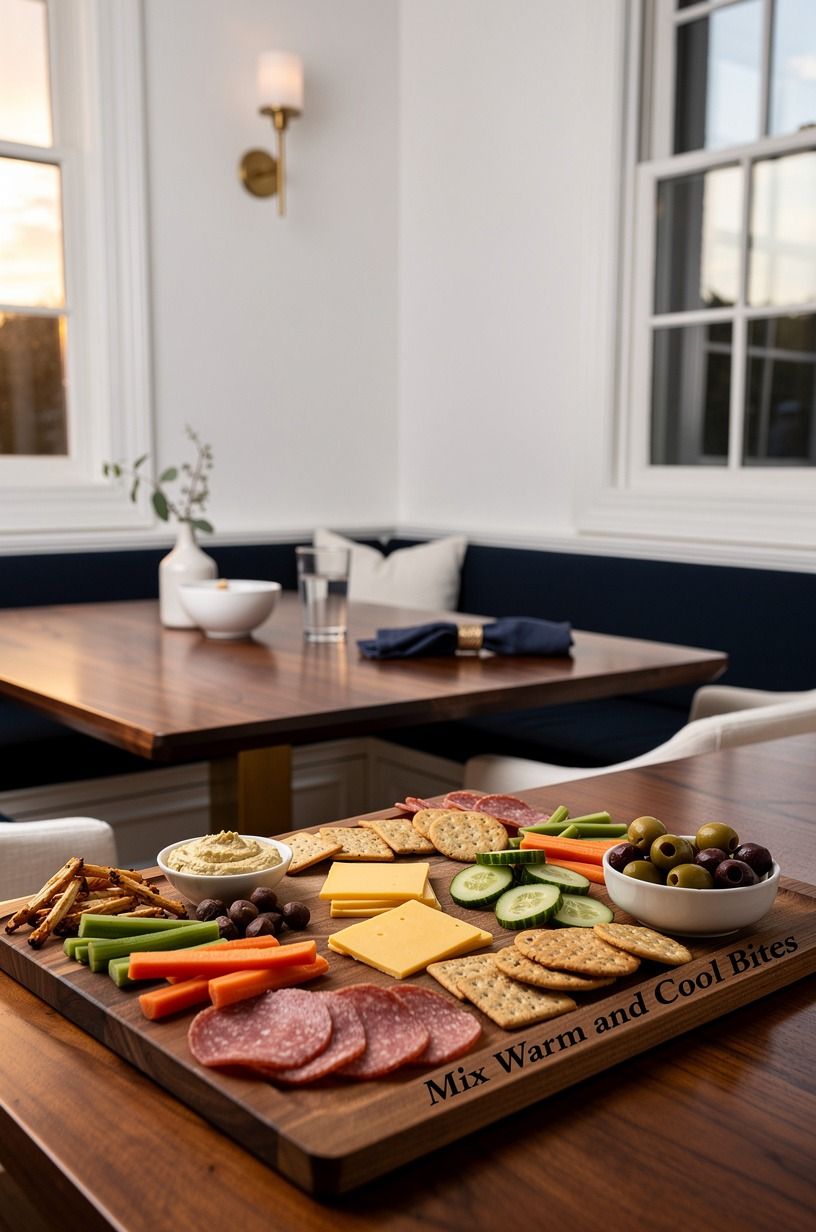
A comforting board needs temperature contrast, not only visual variety.
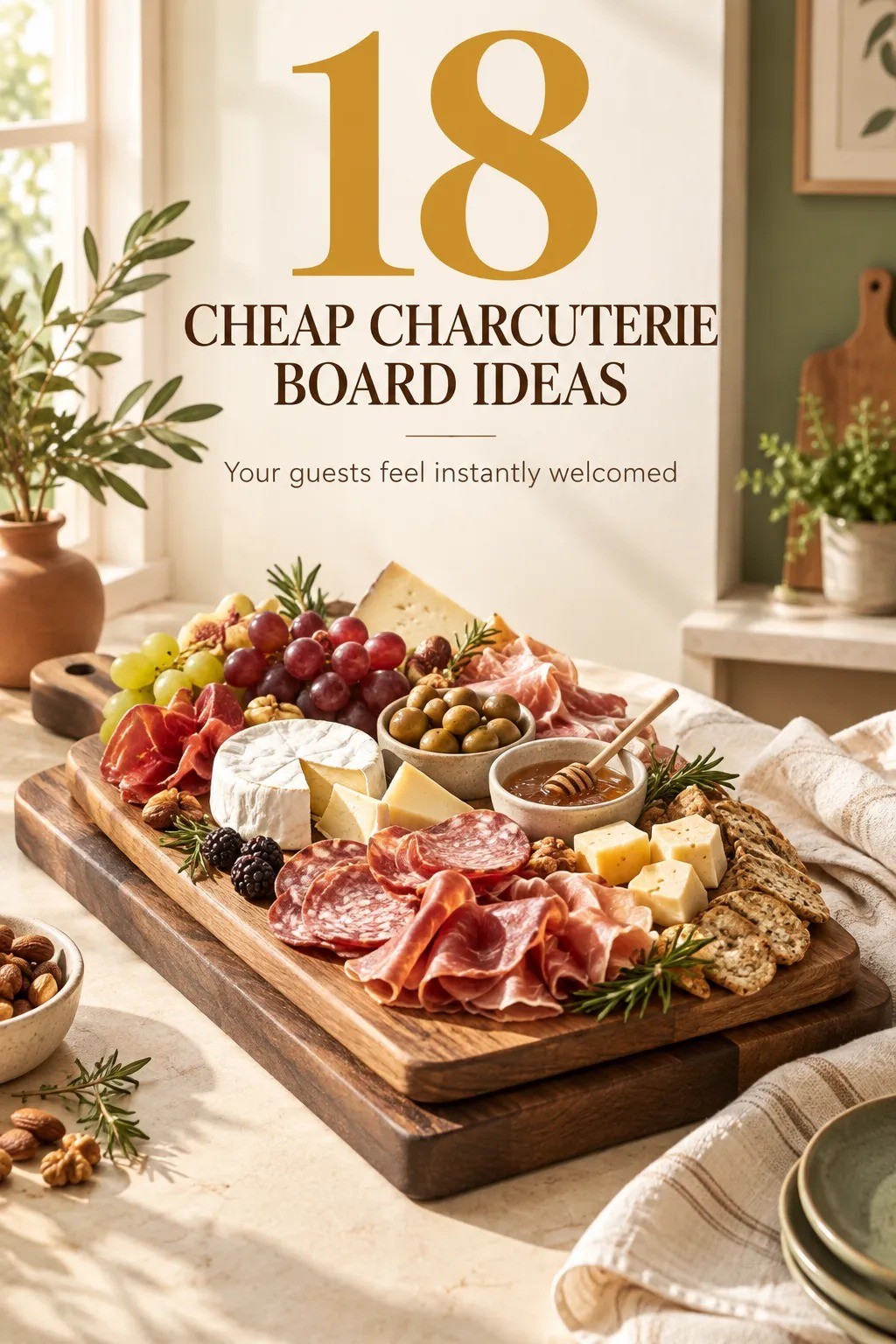
10Make the Candy-Station Crossover
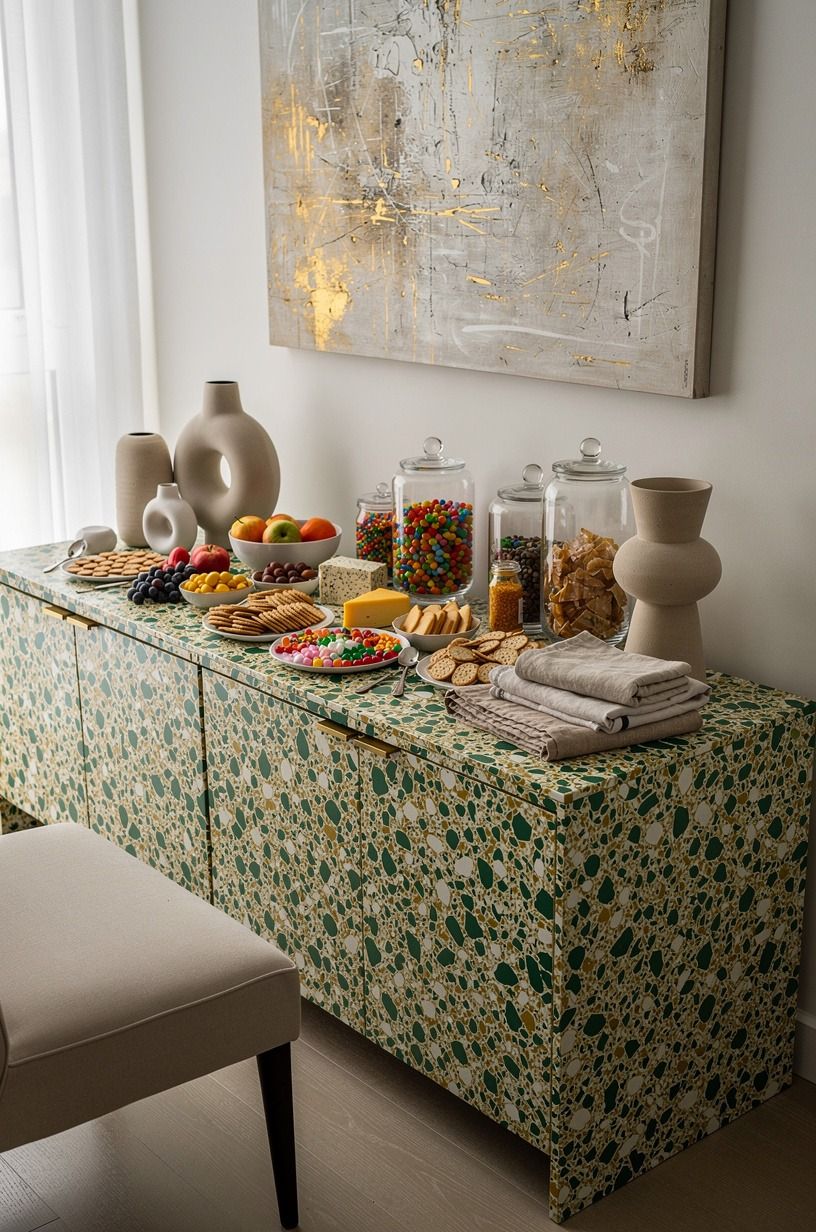
A last-minute hosting board can borrow the best idea from a candy station: keep the small, high-interest items contained. Use one cup for chocolate, one for nuts, and one for olives instead of letting everything roll across the platter. Your board will look cleaner, and guests can serve themselves without touching every ingredient.
Choose cream-colored chocolate squares with a simple wrapper-free finish. Their light color works with an emerald-green dish and gold accents, while the bitter edge keeps the spread from feeling sugary. I’d place them beside dried fruit rather than next to the meat, so the flavor paths stay clear.
You can use coffee cups, tiny bowls, or clean jam jars if you don’t have ramekins. None of this needs to match.
In fact, matched vessels can make a low-cost board feel staged. An oversized-chip terrazzo tray can add interest if you already have one, but a plain platter works just as well. If you’re hosting a crowd, this self-serve candy station guide will help you think through traffic flow.
11Layer Crackers Over Cheese
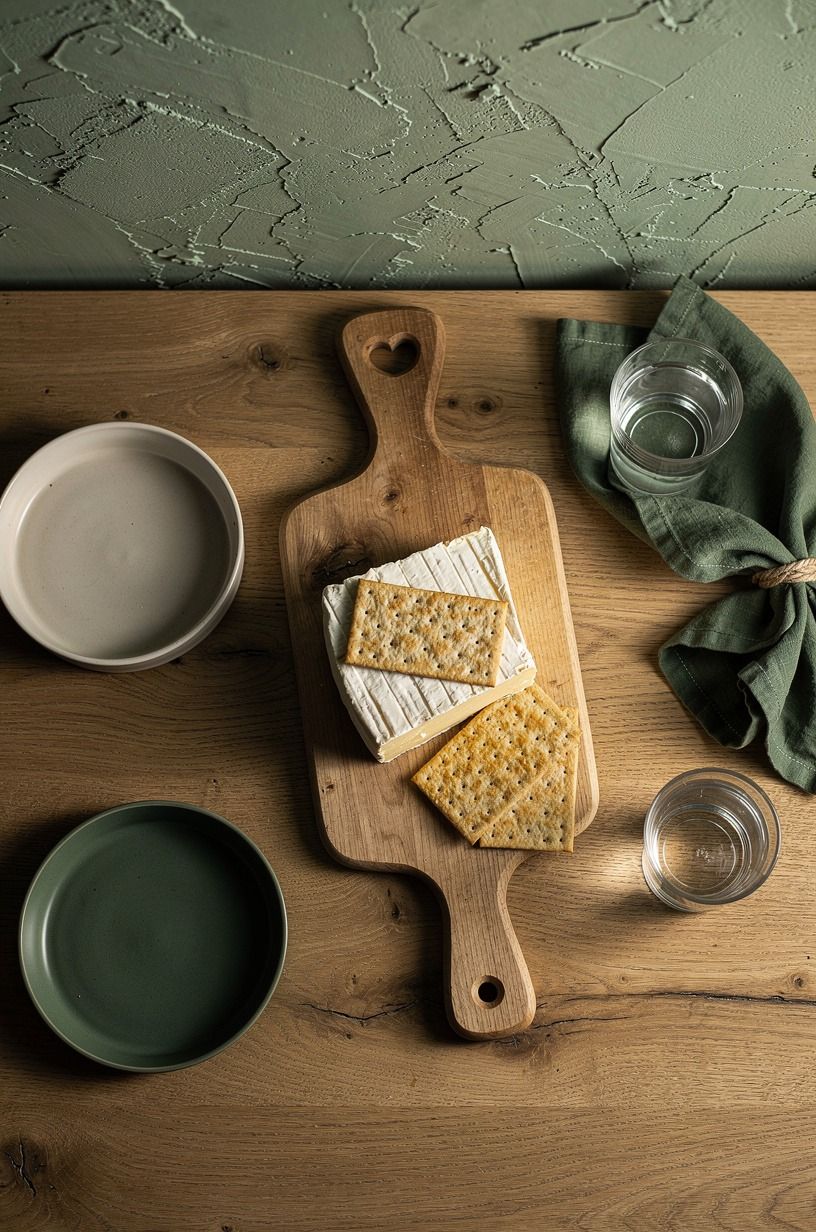
Crackers are usually the cheapest part of the board, but they can also make it look careless. Instead of placing them in a straight stack, overlap them beside the cheese and let a few point toward the center. You’ll create a fan shape that feels abundant without using more food.
Use seeded multigrain crackers for color and a little nuttiness. Their rough surface looks good against smooth cheese, and they’re sturdy enough for jam or soft spreads. I’d place only half the package on the board, then keep the rest nearby for refills.
Don’t hide every cracker under another ingredient. Guests need to see what they’re picking up, especially if you’re serving people with allergies.
A clear layout is friendlier than a crowded one. And if you’re setting the board near a buffet, leave a little room at the edge for used knives and napkins.
12Build the Sweet-Salty Corner
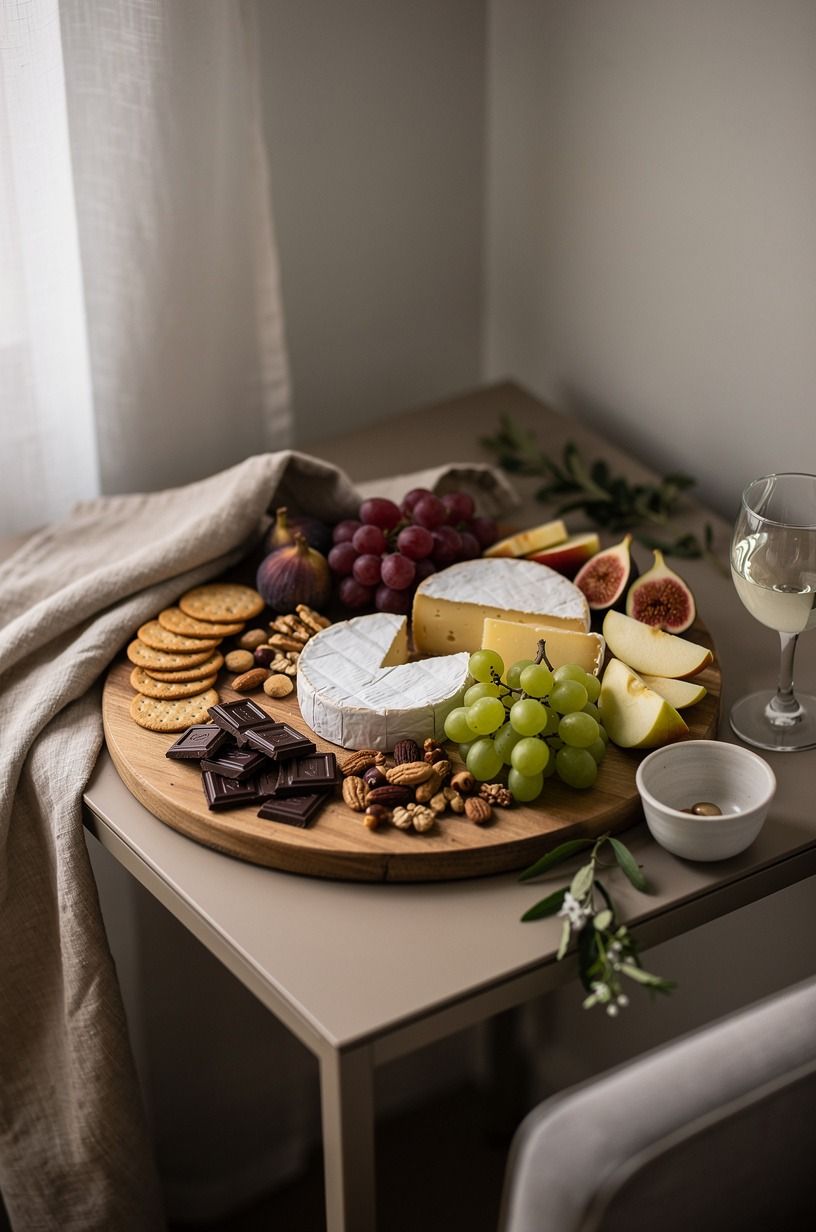
A sweet-salty corner gives your affordable charcuterie ideas a strong finish.
13Mix the Budget Grazing Board by Texture
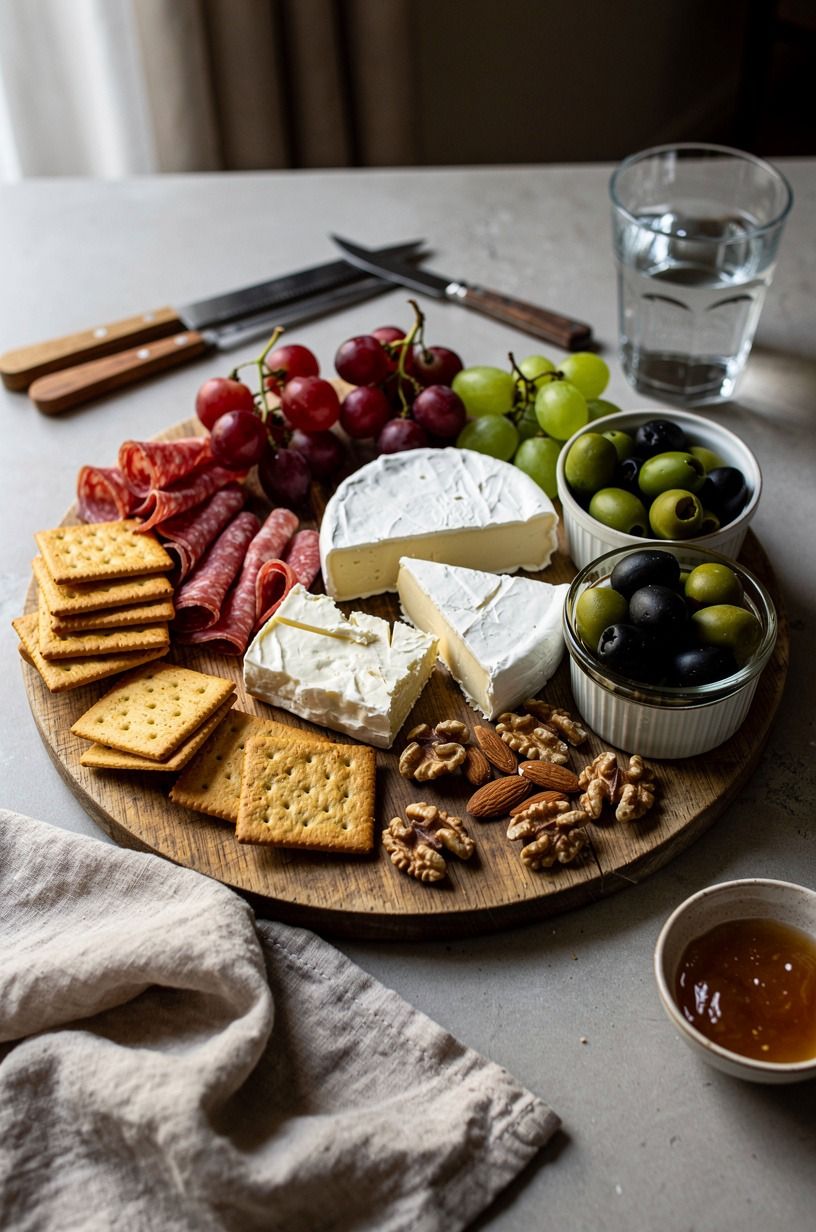
When your ingredients are inexpensive, texture becomes the detail people notice first. Aim for something creamy, something crisp, something chewy, and something juicy. You’ll get a more sophisticated bite without needing imported ingredients or elaborate garnishes.
Try dried pears for the chewy section. They bring a warm camel color, a soft edge, and enough sweetness to balance salty meat. Put them beside crackers, not directly on top of cheese, because the sticky surface can make the arrangement look messy.
A board that’s all soft food feels heavy, even if it looks pretty. I’d skip adding another spread when you already have brie and jam. Use toasted bread, crisp apples, or roasted nuts instead.
And if you’re planning a spontaneous gathering, this article about spontaneous trips and flexible plans fits the same relaxed spirit.
14Use a Simple Cost Ladder
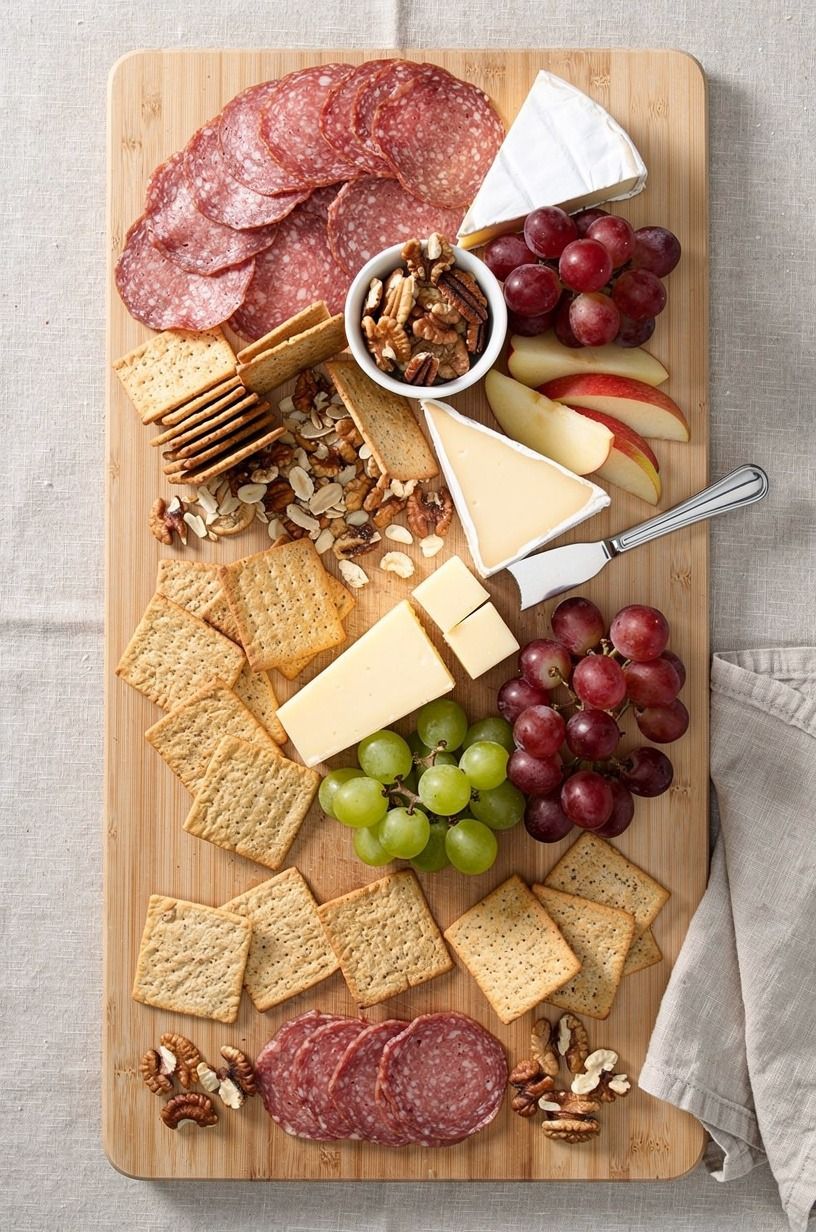
Under $20 doesn’t mean every item has to be the cheapest option.
15Serve Four Without Overfilling
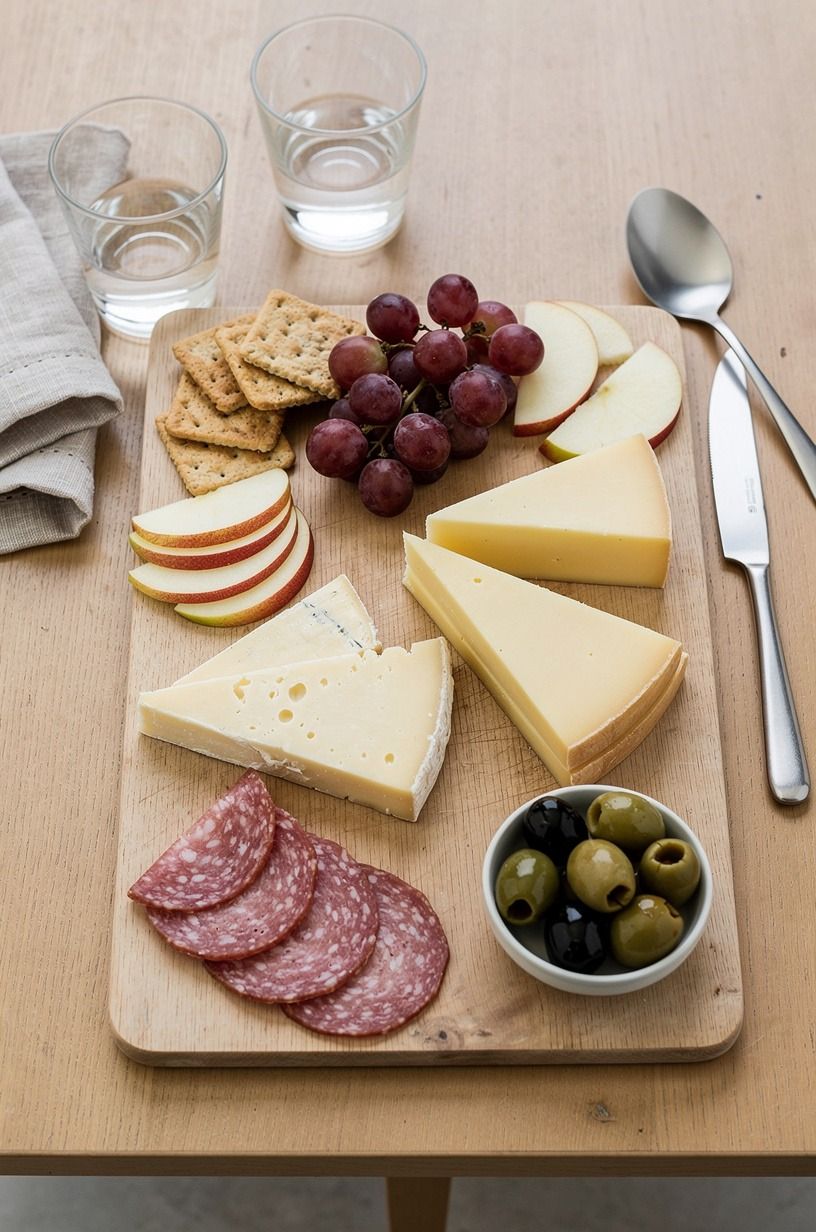
A board for four people should feel easy to reach, not packed edge to edge. Give each guest a visible path to cheese, crunch, fruit, and something salty. You’ll use fewer ingredients and avoid the awkward moment when everyone is afraid to take the last slice.
A small wedge of Manchego cheese can become the visual anchor if you slice part of it and leave the rest intact. That signals how to serve it, while the remaining piece makes the board look generous. Add crackers on one side and fruit on the other.
I’d skip arranging every slice into a flower. It takes time, uses space badly, and falls apart as soon as someone serves themselves.
Loose folds look more inviting. And if you’re hosting outside, set out half the board first, then replenish before the edges look bare.
16Pack a Rental-Friendly Picnic Board
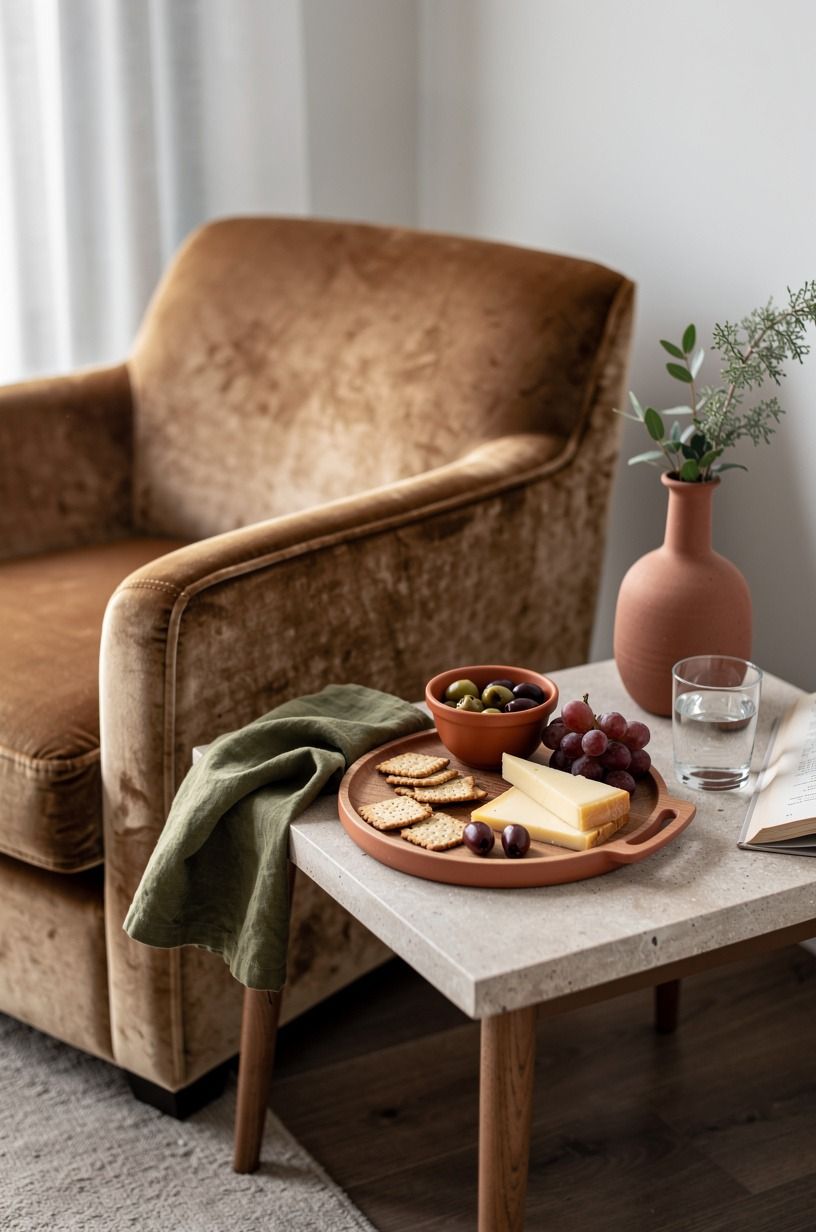
A portable charcuterie board works best when every ingredient has a lid, a wrapper, or a sturdy shape. Use a shallow container instead of carrying a finished arrangement across the yard or down the stairs. You’re protecting the food and saving yourself from a dramatic cheese slide.
Choose terracotta containers for crackers and dried fruit, with small screw-top jars for mustard and olives. Keep soft cheese in its original wrap until you arrive. Once you’re settled, assemble the board in under a few minutes and let the casual shapes stay casual.
This setup also suits renters because nothing needs to be nailed, mounted, or permanently stored. I’d keep one cutting board and two small jars in a kitchen drawer for spontaneous guests. If your gathering is in a tight outdoor area, these storage bench ideas may help you create a serving surface without crowding the table.
17Why Does the Board Look Expensive?
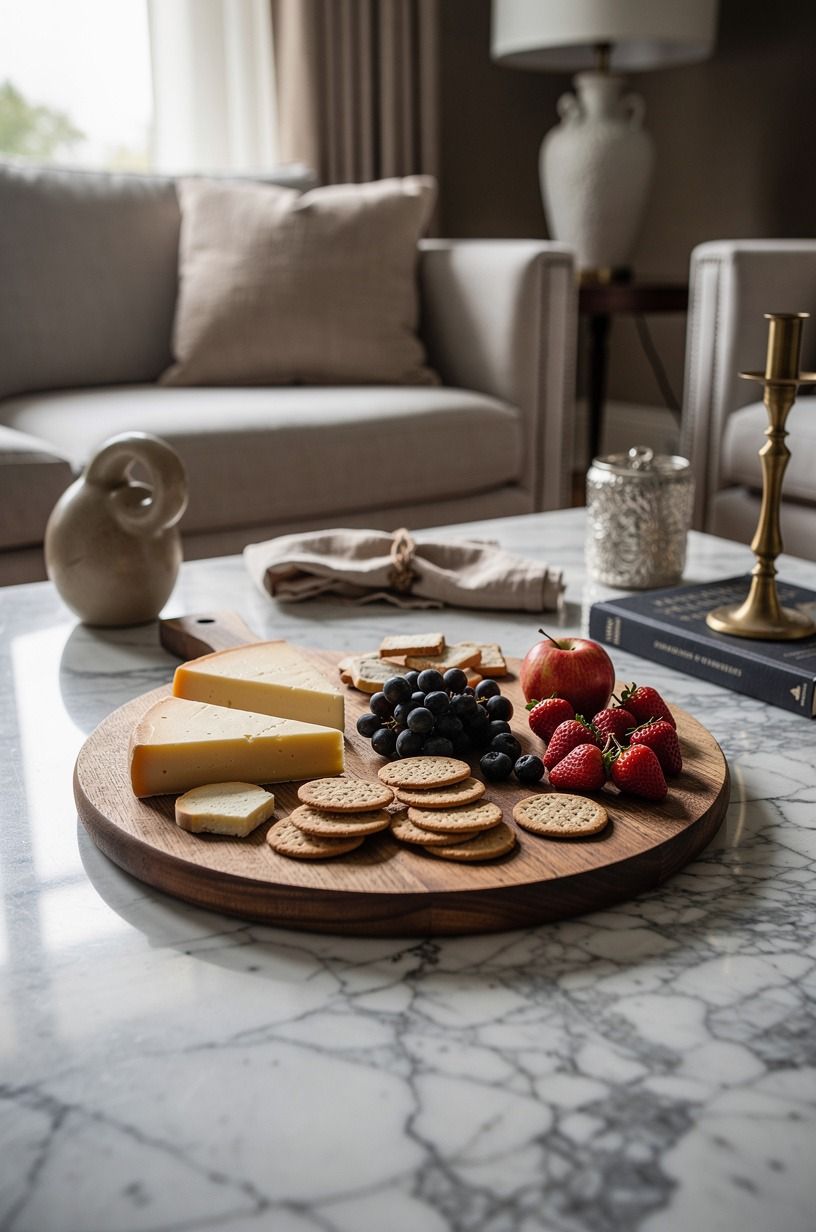
A cheap charcuterie board looks expensive when the ingredients are grouped with restraint. The move isn’t more garnish.
It’s repeating one color, one texture, and one shape in a few different places. You’ll create a visual thread that makes the board feel assembled rather than emptied from a shopping bag.
Use clay-colored crackers beside a pale cheese, then repeat their warm tone with nuts or dried fruit. A Carrara marble surface with subtle gray veining can add quiet polish, while linen and aged-brass accents keep the setting relaxed. I’d avoid scattering bright berries across every corner because the board can start to look noisy.
This style is having a moment because people want hosting to feel relaxed and personal. A board that’s a little uneven feels more inviting than a rigid restaurant plate. And if you’re curious about how design trends return with a twist, this 60s mod revival story offers a playful reference for mixing old and new.
18Finish with the Warm Winter Version
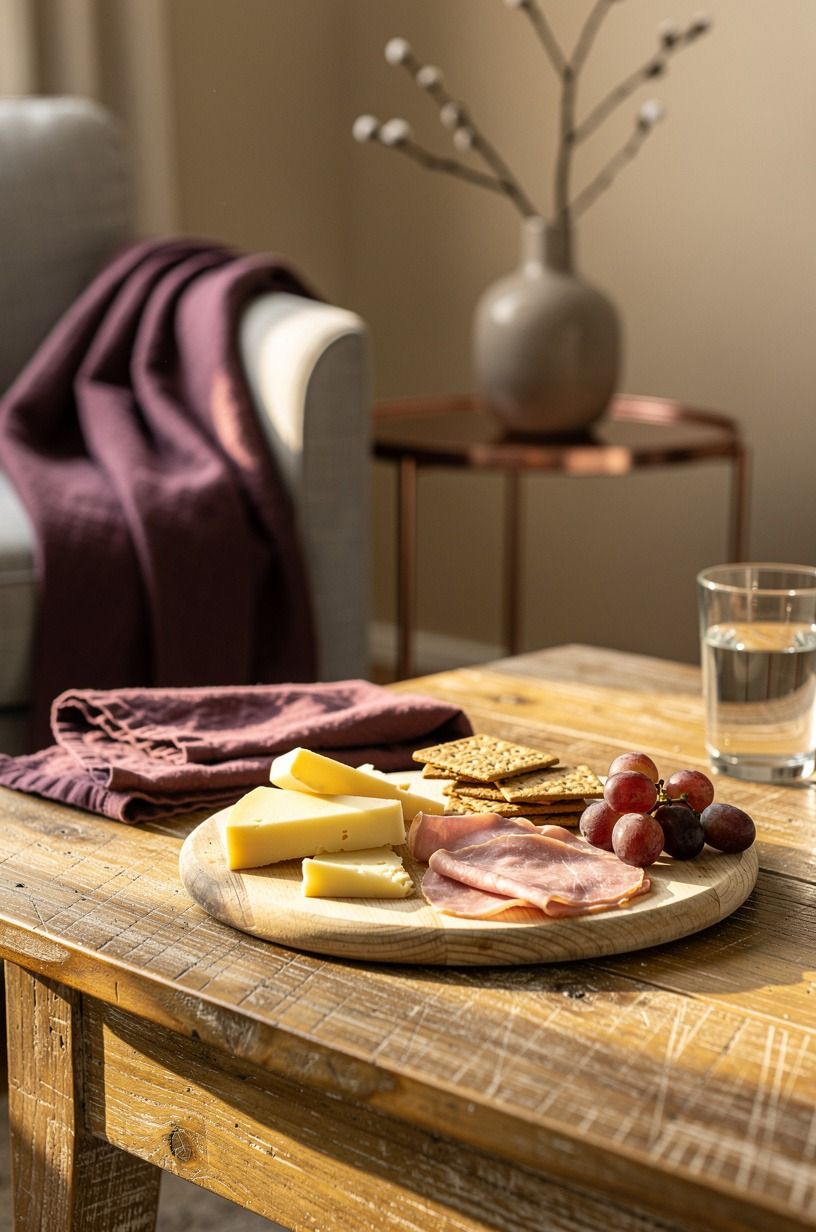
For fall or winter hosting, shift your affordable charcuterie ideas toward deeper colors, toasted flavors, and soft spice.
The Board Is a Small Lesson in Generosity
I used to think a good charcuterie board needed abundance in the loudest sense, with several meats, imported cheese, and enough garnish to cover every inch of wood. That approach looked impressive for ten minutes.
Then guests started eating, and the structure disappeared. The board had been designed for a photograph rather than for people reaching, talking, and returning for one more bite.
Now I think generosity comes from making the next choice easy. Your guest should see where the cheese is, which cracker belongs with the jam, and whether that little bowl holds olives or something sweet.
You don’t need a label for everything, but you do need breathing room. A few open spaces make the food feel accessible, while a crowded board asks people to disturb the whole arrangement before they’ve even settled in.
The most useful shift is choosing one ingredient with a point of view. That might be a sharp cheddar, a smoky salami, or a fig jam with enough acidity to wake up plain crackers.
Everything else can be simple. Fresh green grapes and ordinary nuts become much more appealing when they’re supporting a clear center instead of competing for attention.
I’ve also learned that a board should match the mood of the gathering. A sheet pan works for a noisy game night.
A small wooden board feels right for two friends and a bottle of wine. A portable container makes more sense outdoors. If you’re forcing the wrong format, even good food feels awkward.
Choose the surface first, then edit the ingredients until the board can do its job without explanation.
What People Always Want to Know
What is the best cheap charcuterie board for a small gathering?
A small wooden board with one soft cheese, one folded meat, grapes, crackers, and jam is the strongest choice. A bamboo cutting board works well because it’s warm, sturdy, and useful afterward. Keep the ingredients in separate clusters so your guests can serve themselves without taking apart the whole arrangement.
Where can I buy charcuterie board pieces on a budget?
Look at Target, IKEA, Wayfair, thrift stores, and Facebook Marketplace for boards, bowls, and small jars. IKEA pieces are especially useful when you want simple shapes without a matching set. You don’t need affiliate products for this project, and second-hand serving pieces often add more personality.
How much does a cheap charcuterie board cost?
A focused board can stay under $20 when you buy one cheese, one meat, one fruit, one cracker, and one spread. Pantry staples such as nuts, honey, and mustard can lower the total further. The free part is the styling, since grouping and height change the look more than extra ingredients.
Can I create a charcuterie board on a budget?
Yes, and you’ll get the best result by choosing one strong centerpiece and filling around it with affordable produce. Sharp cheddar gives you a lot of flavor for a small amount, while apples, crackers, and olives add volume. Use a cutting board you already own and skip decorative picks.
Is a cheap charcuterie board worth it in a small space?
Yes, because a small board keeps the food close and limits waste. One compact platter can sit on a coffee table, kitchen island, or narrow balcony surface. Place the largest item near one corner, then build outward so guests can reach every section without leaning across the whole table.
Is a charcuterie board a good idea for a rental?
Yes. Use a removable linen runner, a cutting board, and small bowls instead of mounted storage or permanent decor. A tension shelf can hold napkins, while a portable tray keeps the serving area contained.
When the gathering ends, everything lifts away without marks, holes, or a complicated cleanup.
What color works best for a budget grazing board?
Warm cream, deep green, red fruit, and natural wood create a welcoming palette without extra decoration. Farrow & Ball Pigeon No.25 can inspire a soft blue-gray table accent, while Benjamin Moore White Dove OC-17 works as a clean backdrop. Keep the food colors varied so the board doesn’t look flat.
Where I’d Start First
If I had to pick one, I’d start with the sheet-pan board. Its rim keeps olives and grapes from escaping, and the metal makes inexpensive food look crisp instead of cluttered. Build it with one cheese, one meat, and one sweet finish.
Pin this budget charcuterie guide for later and keep the pan ready for your next unexpected guest.