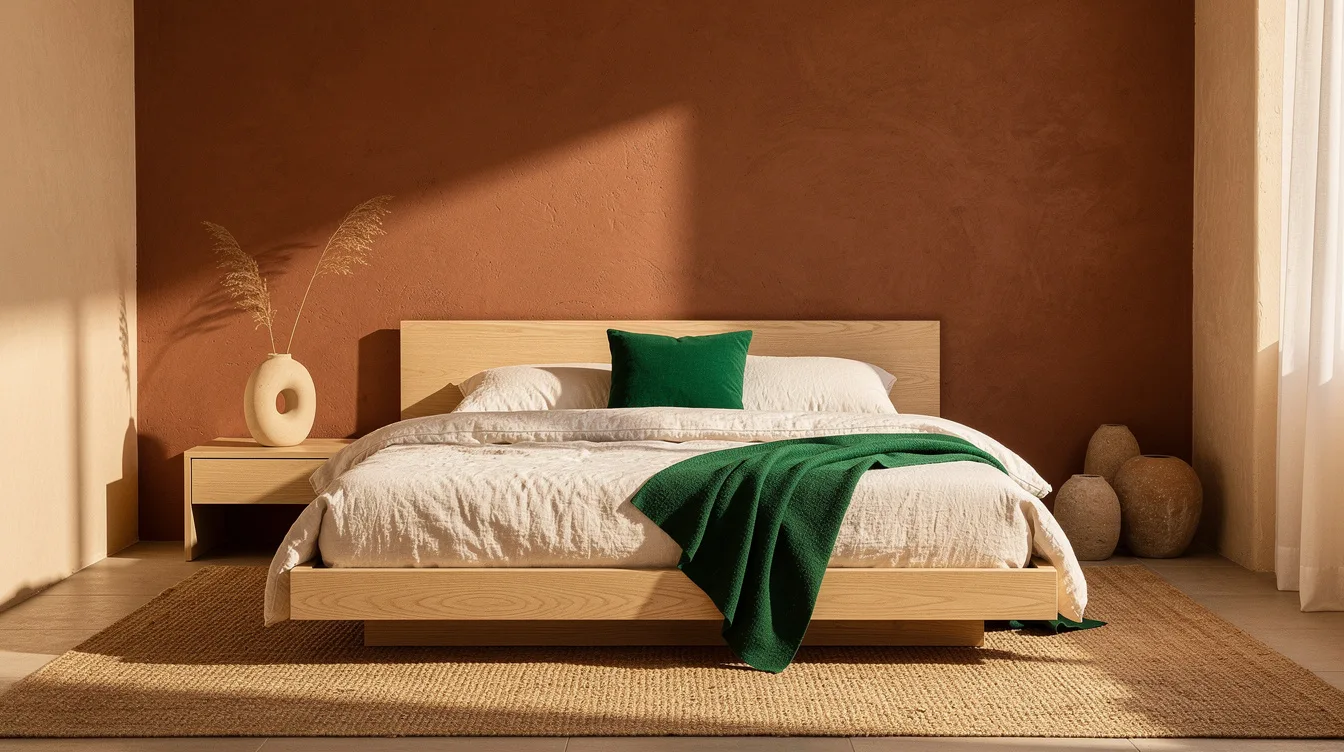
The difference between a desert modern bedroom and a crowded boho room can be one overfilled shelf. In a typical 14-to-20-square-meter bedroom, warm walls, pale oak, washed linen, and one clay-toned focal point create enough atmosphere without covering every surface in woven decor.
The winning formula feels architectural first and tactile second. Start with the large shapes, then add natural fibers and a controlled dose of terracotta, rust, or olive.
Build the Palette Around Warm Neutrals
A desert modern bedroom needs visual quiet before it needs color. Start with warm ivory, sandy beige, or soft taupe on the main walls, then let clay and rust appear in smaller, deliberate areas.
A typical starting balance is about 70% warm neutrals, 20% wood and natural fibers, and 10% clay, ocher, olive, or muted rust. This ratio keeps the room grounded while giving the palette enough heat to feel connected to the landscape.
Cool gray walls work against the mood because they flatten the warmth of oak, linen, and terracotta. Choose a mineral-looking beige instead, with a matte finish that absorbs light softly.
Anchor the Bed With Pale Wood
The bed should provide the room’s strongest architectural line. A low white oak platform bed or honey-toned ash frame brings structure without making the bedroom feel heavy.
For a rental-friendly alternative, look for a simple wood bed from IKEA or Wayfair with a gently rounded headboard. Skip ornate carving and glossy finishes, which pull the room toward themed decor.
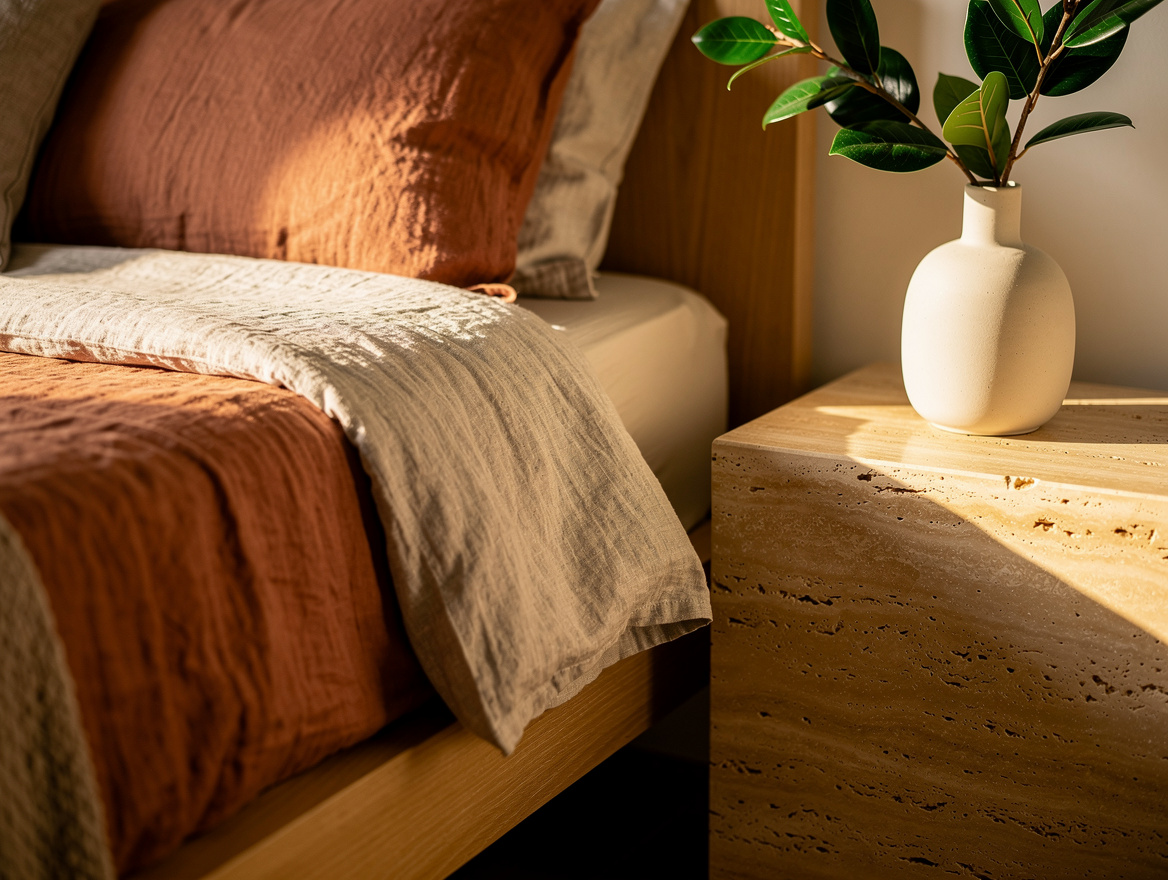
Keep the nightstands visually light. Floating wood shelves, a narrow travertine table, or one compact pedestal on each side gives the bed room to breathe and preserves the calm, low-slung profile.
Use Clay as a Focused Accent
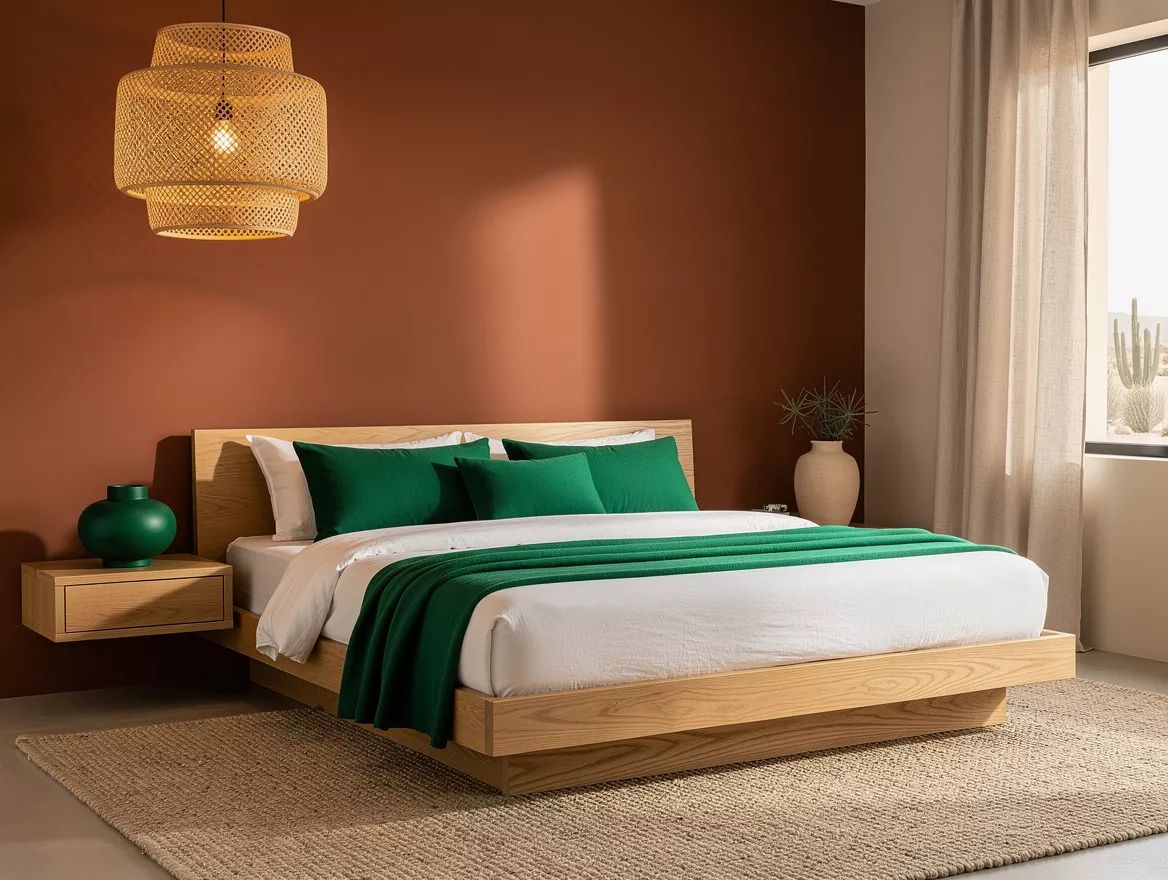
Clay tones have more impact when they occupy one clear zone. Paint the wall behind the bed in a muted burnt-clay shade, or use the color on a headboard, quilt, or broad lumbar pillow.
A full terracotta room can feel enclosed, especially when the bedroom receives limited daylight. Designers generally get a fresher result by pairing one saturated plane with creamy walls, pale wood, and a quiet ceiling.
Look for paint at Home Depot or Lowe’s in dusty terracotta, red earth, canyon beige, or softened adobe. The right color should look brown enough in shadow and gently rosy in direct morning light.
Layer Linen Over Natural Texture
Texture carries the style more convincingly than a collection of desert accessories. Dress the bed in washed natural linen, then add a cotton coverlet or wool throw for contrast.
Choose flax, oatmeal, faded clay, or soft tobacco rather than bright white. A rumpled surface gives the room the relaxed character of a handmade interior while keeping the palette restrained.
Underfoot, use a thick jute rug, a low-pile wool rug, or a wool-jute blend. A generous rug should extend beyond the sides of the bed, because a small mat makes the furniture feel disconnected from the room.
Limit Woven Decor to Key Pieces
Woven material belongs in this bedroom, but repetition quickly creates a bohemian look. One paper or woven pendant can soften the ceiling, while a cane bench or rattan chair adds a second tactile note.
Keep the rest of the furnishings in solid wood, aged bronze, matte ceramic, or stone. IKEA and Target both make it easy to find simple baskets and lamps, but choose pieces for their shape and texture rather than filling every surface.
Avoid matching rattan nightstands, baskets, mirrors, and lamps in the same corner. One or two woven elements feel intentional; five begin to announce a theme.
Finish With Imperfect Stone and Ceramic
The final layer should look collected slowly, even when the room was planned in a weekend. A matte clay vase, travertine tray, or rough limestone lamp adds the quiet irregularity that keeps modern furniture from feeling sterile.
Place a single ceramic vessel on a nightstand, then leave space around it. A low stack of books, a small olive branch, or one sculptural object is enough when the materials already carry visual weight.
For affordable finishing pieces, check Walmart, Target, or Amazon for unglazed ceramic and stone-look accessories, then edit the selection hard. The strongest room has fewer objects, better surfaces, and clear breathing space around the bed.
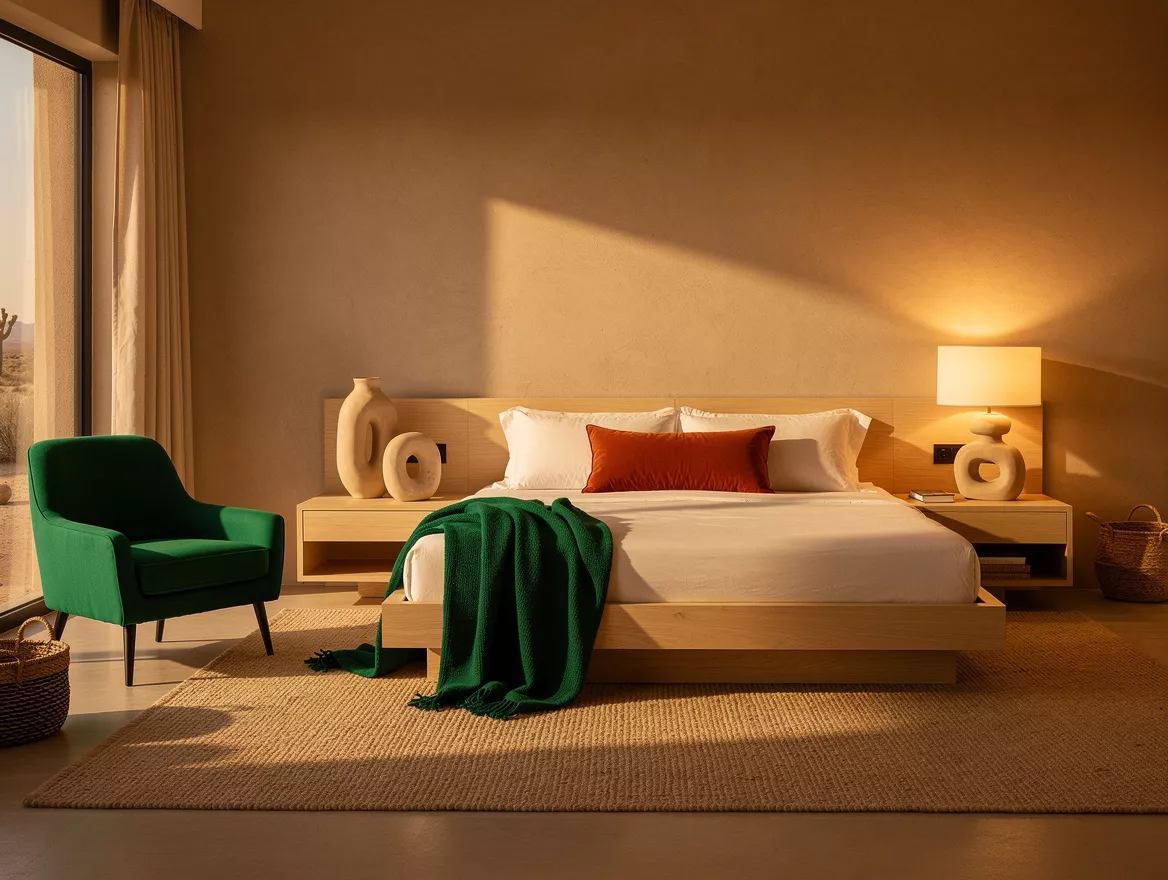
Choose the wall color before buying accessories, then build outward from the bed with one wood tone and two textile textures. That order gives every later clay, ceramic, and woven detail a place to belong.
Mia Carter writes about small-space living and budget home makeovers. She has restyled three rentals and tests most ideas in her own 45 sqm flat.