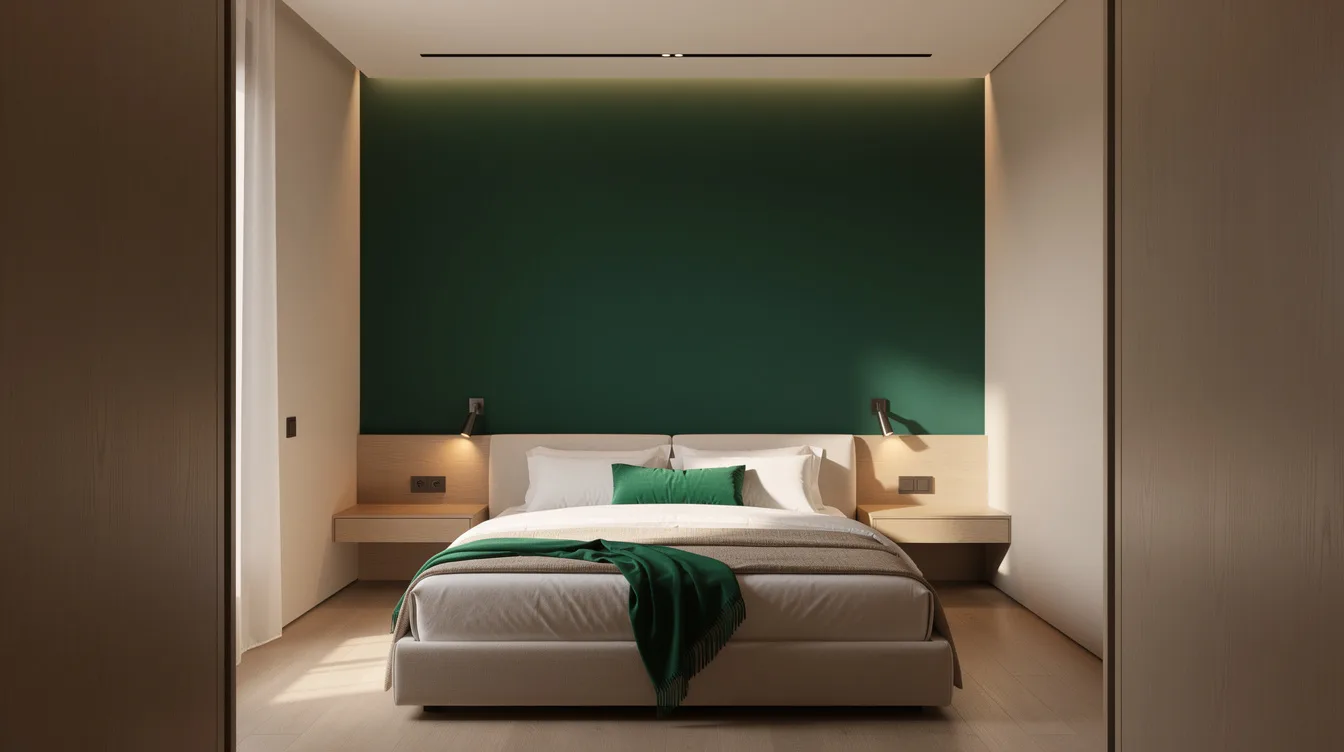
The bed may fit, but the lighting often makes a narrow bedroom feel tighter than it is. In a typical room about 7 to 10 feet wide, one ceiling point leaves the corners dim while a bulky floor lamp steals the only clear walkway.
The better answer is layered light: a slim central fixture, wall-mounted reading lamps, and one indirect source at the far end. Every layer should keep the floor and bedside surfaces open.
Build a Slim Ambient Base
A narrow bedroom needs one calm layer of general light, not a single harsh bulb hanging over the bed. Center a low-profile fixture in the room, or shift it slightly toward the closet and door so the bed stays visually quiet.
Choose a compact IKEA ceiling fixture roughly 20 to 45 cm wide, with about 1,500 to 2,500 lumens for the room. That output is typically enough for everyday tasks without making a low ceiling feel crowded.
A flush mount with frosted glass spreads light more evenly than an exposed filament bulb. Put the main circuit on a dimmer, because full brightness rarely feels right once the room is ready for sleep.
Mount Reading Light at the Bed
Clear bedside surfaces by moving reading light onto the wall. This is the strongest layout choice for a bed around 140 to 160 cm wide, especially when the nightstands are narrow or the walking path is tight.
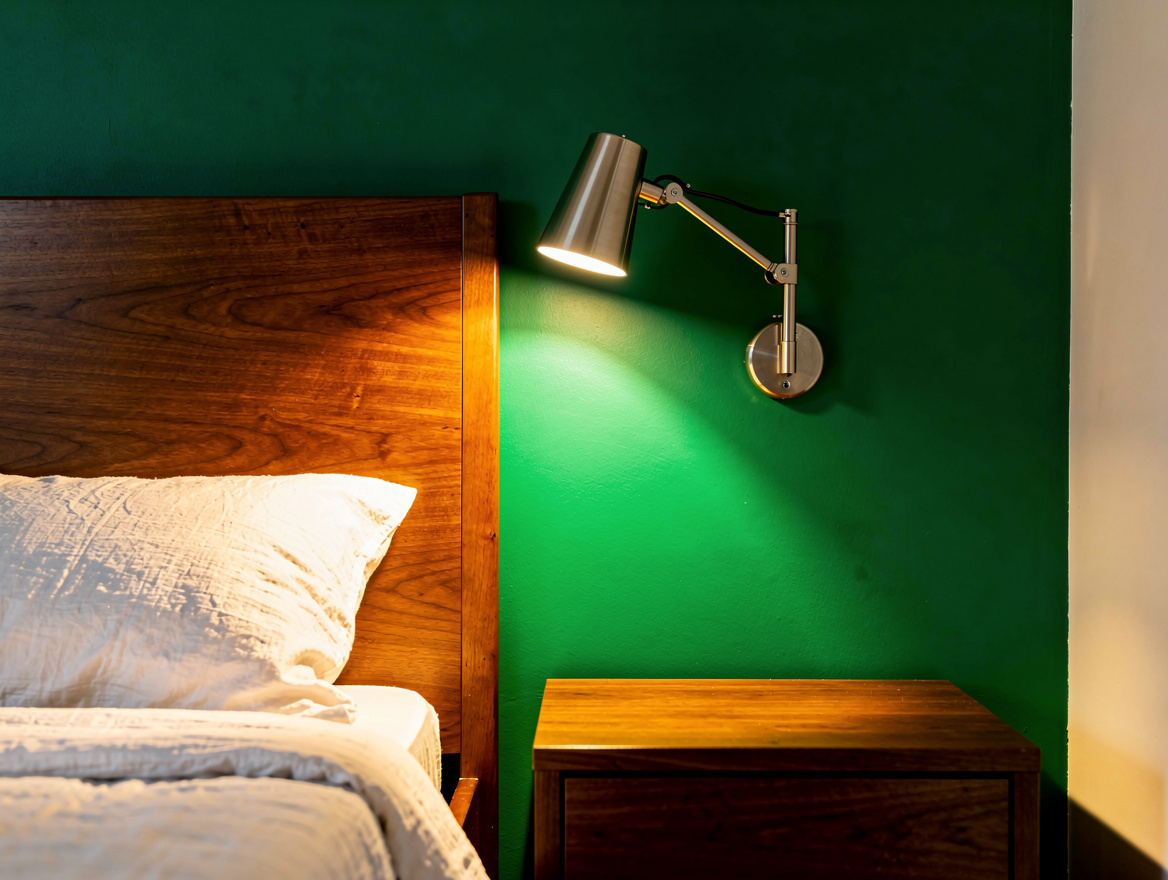
Install Wayfair swing-arm sconces with their centers typically 100 to 120 cm above the floor, or about 30 to 45 cm above the mattress top. Aim each shade toward the pillow so the beam stays personal instead of crossing the room.
Keep each wall light projecting roughly 15 to 25 cm into the room, and select an arm that folds flat when the walkway is constrained. Adjustable heads matter more than oversized shades here.
Stretch Depth at the Far End
Long, narrow rooms often feel like hallways because every light source stops at the bed. Add one indirect glow at the window, desk, or far wall to pull the eye through the full length of the room.
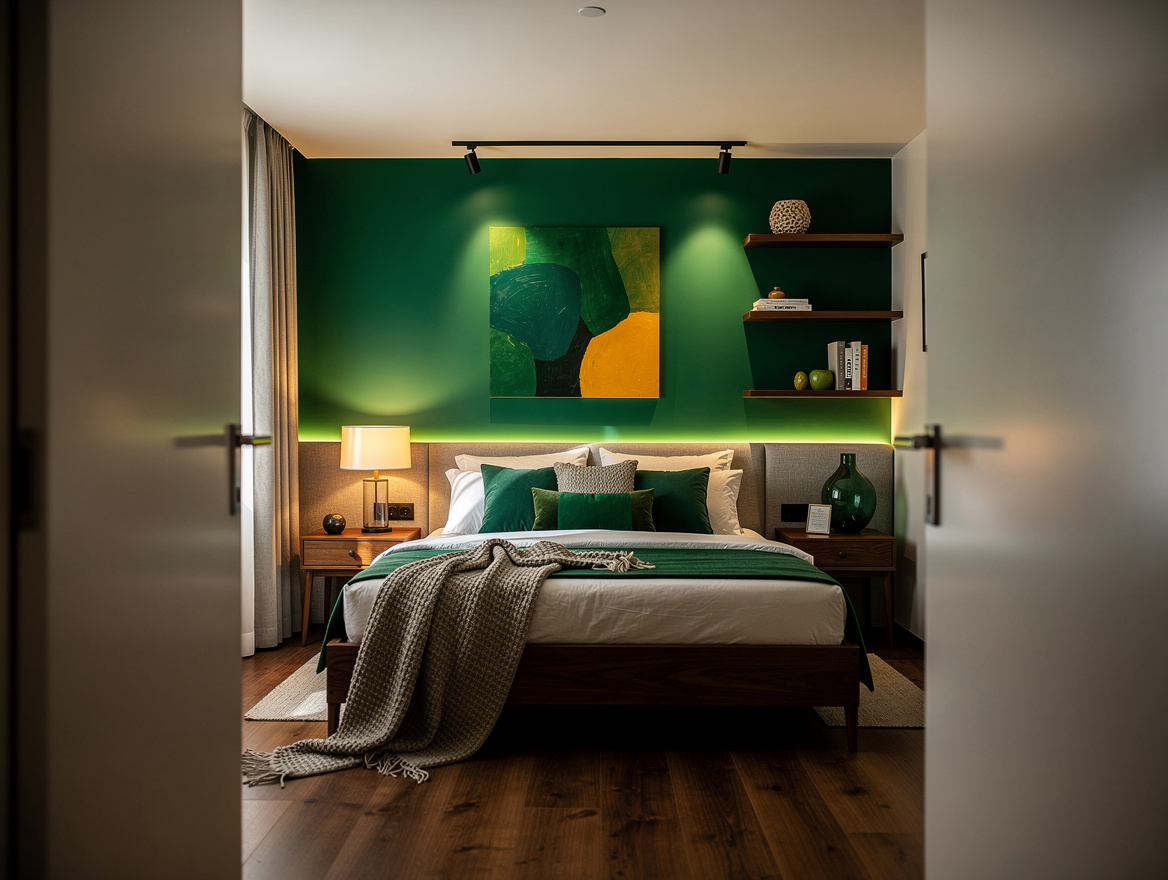
Hide an IKEA LED strip behind the headboard, above the curtain rail, or on top of a closet, aiming for roughly 800 to 1,500 lumens in total. Warm light around 2,700K to 3,000K makes the walls recede without turning the room orange.
Keep the source concealed and the glow dimmable. A visible strip of diodes looks unfinished, while reflected light creates depth with almost no floor-space penalty.
Aim Track Heads at the Walls
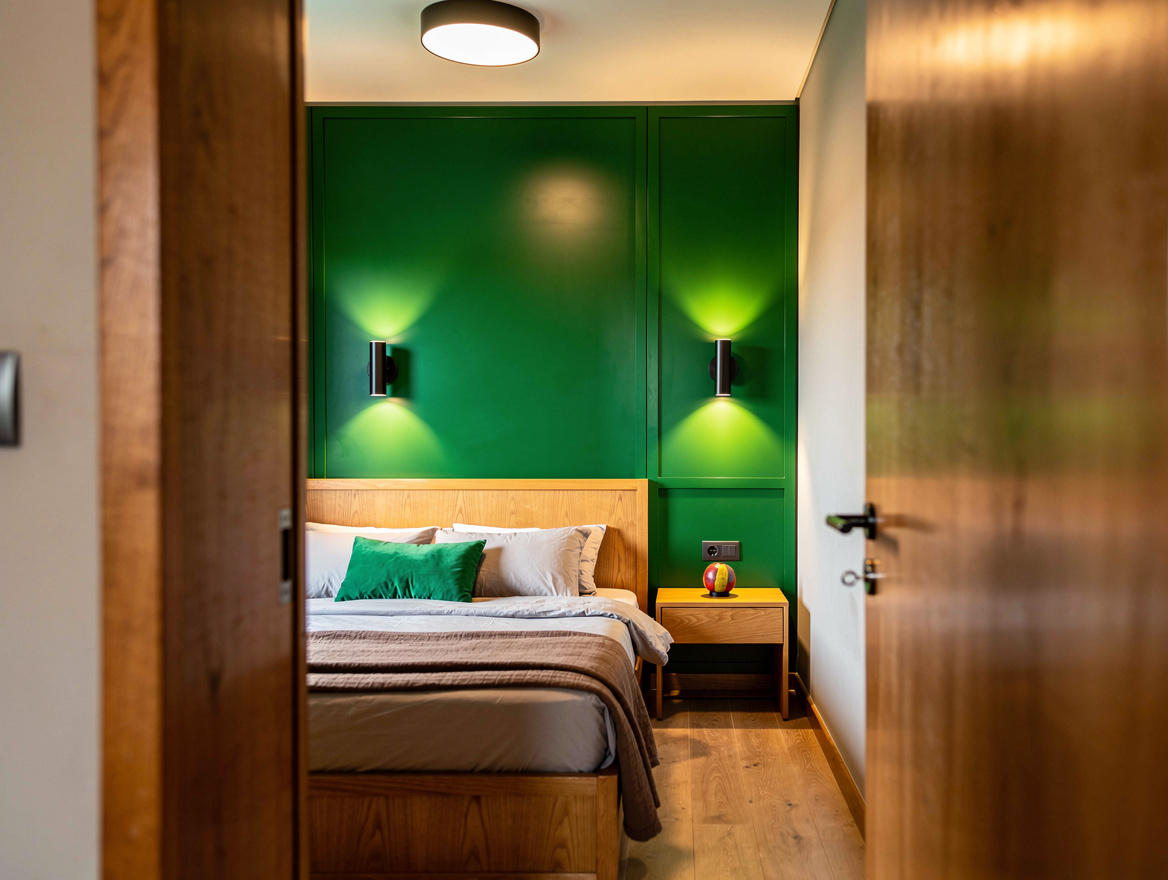
For a bedroom only about 2.1 to 2.5 meters wide, point light toward the walls instead of flooding the center. This breaks up the tunnel effect and gives artwork, curtains, or textured paint a useful visual role.
Use a Lowe’s two-head track light running parallel to the long walls, with one head washing the closet side and another grazing the opposite wall. A three-head version can work when the room also contains a desk, but more heads are rarely better.
Choose a matte black metal track when the room needs definition, or a white fixture when the ceiling should disappear. Keep the track compact and dimmable so the ceiling does not become the room’s main feature.
Light Storage Without Flooding the Room
Closet lighting should solve a practical problem without forcing every lamp in the bedroom to turn on. Place task light inside the closet or beneath a shelf, where it can reach folded clothes and shoes without spilling glare onto the bed.
An Amazon motion-sensor LED bar with a typical 3,000K to 4,000K color temperature works well for storage. Use a warmer source near the mirror, but keep the closet slightly cooler so clothing colors are easier to distinguish.
Near the floor, add an optional amber night light under the bed or along the baseboard. Keep its output very low, ideally 2,700K or less, so late-night circulation does not trigger full alertness.
Tune Color and Controls
The most polished narrow-bedroom layout uses separate controls for ambient, reading, and indirect light. That lets the room shift from getting dressed to reading to sleeping without adding another visible fixture.
Choose Home Depot dimmers rated for the installed bulbs and use 2,700K light across the main layers. Warm color makes the room feel settled, while dimming prevents the ceiling fixture from dominating the bed.
Use bulbs with CRI 90 or higher around a mirror and closet, where accurate clothing colors matter. A simple white wall, warm bulb, and controlled glow will usually look more expensive than a crowded collection of mismatched lamps.
Start by mounting the reading lights, then add the ceiling fixture and far-wall glow around them. That order protects circulation first, which is the decision that makes the entire narrow room work.
Mia Carter writes about small-space living and budget home makeovers. She has restyled three rentals and tests most ideas in her own 45 sqm flat.