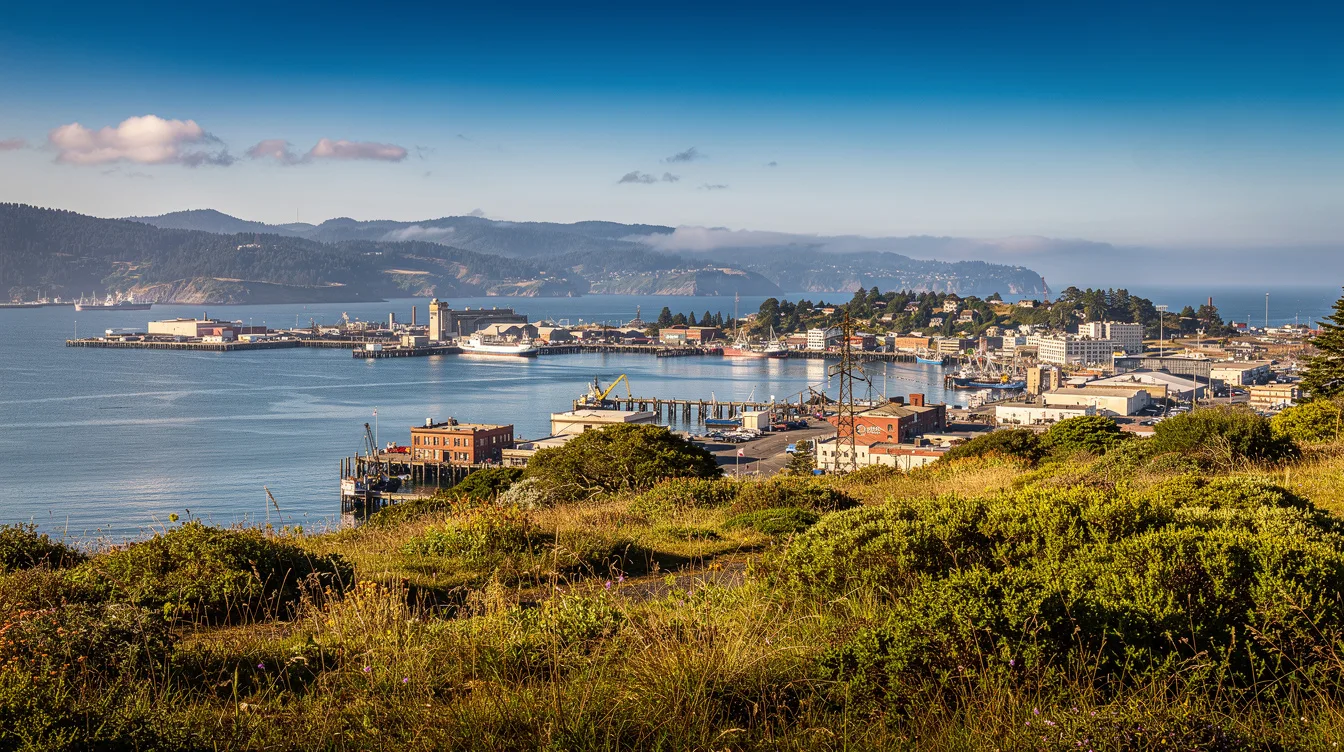
Eureka sits on US Route 101, making it the largest coastal city between San Francisco and Portland, Oregon. But the drive takes 5 to 6 hours over 279.6 miles north of San Francisco, so this isn’t a casual detour. You come here when the redwoods, cool air, and old port towns are the point.
And that distance changes the mood. The farther north you drive, the more California gives way to fog, wet forests, and a Pacific coast that feels less polished. Eureka is remote, but not difficult to reach if you’re already following the Redwood Coast.
Why Eureka earns the long drive
Humboldt Bay gives Eureka its working edge. The city sits along the bay and US Route 101, with a port, maritime history, and access to kayaking, bird-watching, fishing, and shoreline walks.
But the appeal isn’t a single postcard view. You get a city with enough restaurants, galleries, and independent shops to make an overnight worthwhile, while the surrounding coast quickly pulls you outdoors.
And if you prefer places with a little friction, Eureka has it. The weather stays cooler and wetter than Southern California, including in summer, so bring warm layers and rain protection.
The city had 26,512 residents in the 2020 census, giving it a useful scale for travelers. It feels substantial enough for supplies and a meal, but small enough that Old Town remains easy to explore on foot.
Old Town keeps the past in view
Old Town Eureka is the natural place to begin. Restored Victorian facades line a district filled with galleries, restaurants, independent stores, and buildings tied to the region’s timber era.
And the architecture rewards slow looking. You can spend an hour noticing trim, windows, and painted details before stepping into a shop or stopping for coffee.
The Carson Mansion is one of the city’s most recognizable Victorian landmarks. It was built in the late 19th century, when timber and maritime trade shaped Eureka’s fortunes.
But don’t expect a preserved movie set. Eureka is a working city, and that contrast is part of its character. Historic buildings sit beside an active port and ordinary daily life.
Redwoods begin beyond the city streets
Redwood Coast access is Eureka’s strongest practical advantage. The city makes a useful base for exploring Humboldt Redwoods State Park and areas connected with Redwood National and State Parks.
And you should plan your time around the trees, not squeeze them into the final hour. The forests are the reason many travelers accept the long road from San Francisco.
The region also brings together foggy coastline, temperate rainforest, and wild Pacific views. Because the marine climate stays cool and damp, the experience feels far removed from the dry, sunny California associated with Los Angeles or San Diego.
But the trade-off is real. Roads and weather can slow a day, and a visit built around hiking needs flexible plans. Check conditions before leaving town.
Can you make Eureka a coastal road trip stop?
Yes. A stay of 2 to 4 nights gives you time to combine Eureka with Arcata, Trinidad, the redwood avenues, and part of the Pacific coast.
And that length suits the place. One night can feel rushed, while several nights let you follow the weather, linger in Old Town, and give the forests more than a hurried drive-by.
The city also works well for travelers who want varied days without changing hotels. You can spend one morning around Humboldt Bay, an afternoon among Victorian buildings, and another day heading toward the redwoods.
What to know before you go
Don’t pack for the California stereotype. A light waterproof jacket matters more here than beachwear, even when the rest of the state is hot.
But Eureka’s isolation is also its advantage. The drive filters out traffic, leaving a place with an alternative, handmade feel shaped partly by nearby Arcata and Cal Poly Humboldt.
The city was founded in 1850, during the Gold Rush era, though its economy grew mainly through redwood logging, maritime trade, and fishing. The Wiyot had long lived in the area, calling the locality Jaroujiji.
And by evening, Eureka feels best without a strict schedule. Fog softens the bay, the old facades darken, and the road north waits beyond town. That is the reward for staying where the highway finally slows.