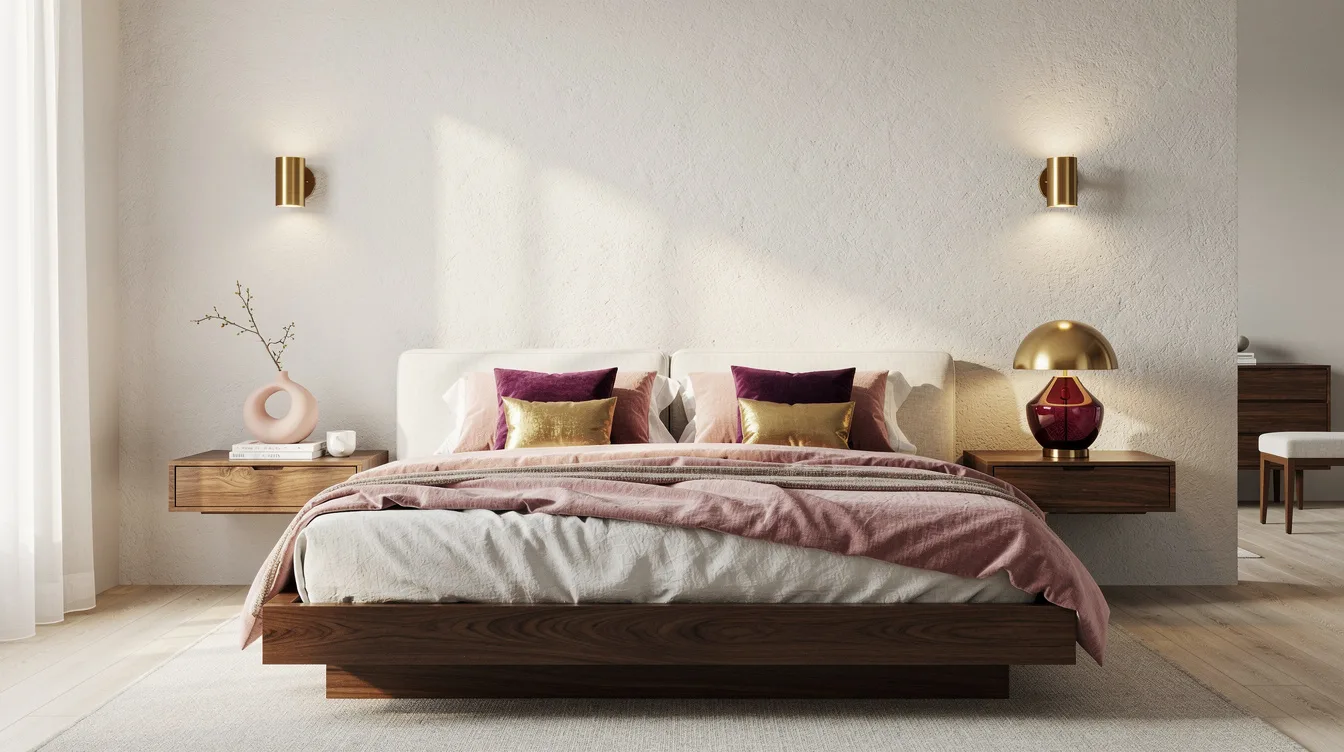
The first thing I notice in a couple’s bedroom is often the bed’s visual weight. A low-profile platform can make the room feel calmer and wider, but only when a queen’s 60 by 80-inch footprint still leaves both people a comfortable route around it.
The goal is a low line with everyday ease, not a mattress sitting too close to the floor. I build the decision around finished height, walking clearance, materials, and the way two people actually use the room.
Set the Finished Sleep Height First
I start with the sleep surface, because a low frame can look perfect in a showroom and feel awkward every morning. A practical setup usually lands at roughly 20 to 23 inches from the floor to the top of the mattress.
For most couples, that means pairing a 9 to 12-inch platform with an 11 to 13-inch mattress. A 6 to 8-inch frame with a 10-inch mattress creates a striking 16 to 18-inch profile, but it can make standing up harder, especially after a long night.
The low platform bed should hold the mattress on slats or a solid deck, so a box spring normally has no place in the plan. I always check the frame height, mattress thickness, and clearance beneath the bed together before ordering.
Fit the Queen Around Real Walking Paths
A queen is the practical minimum for two adults, measuring 60 by 80 inches. I use that footprint as the starting point, then protect about 24 to 30 inches of walking space on each accessible side.
A room around 10 by 10 feet can work when circulation is tight, but more space makes the bed feel intentional rather than wedged in. The queen mattress should leave enough room for both partners to get in, out, and around the bed without brushing a dresser.
For a couple’s bedroom, I prefer a centered layout over pushing the bed against one wall. That small decision gives each person equal access to a nightstand, a light, and the floor on their side.
Warm the Horizontal Line With Wood
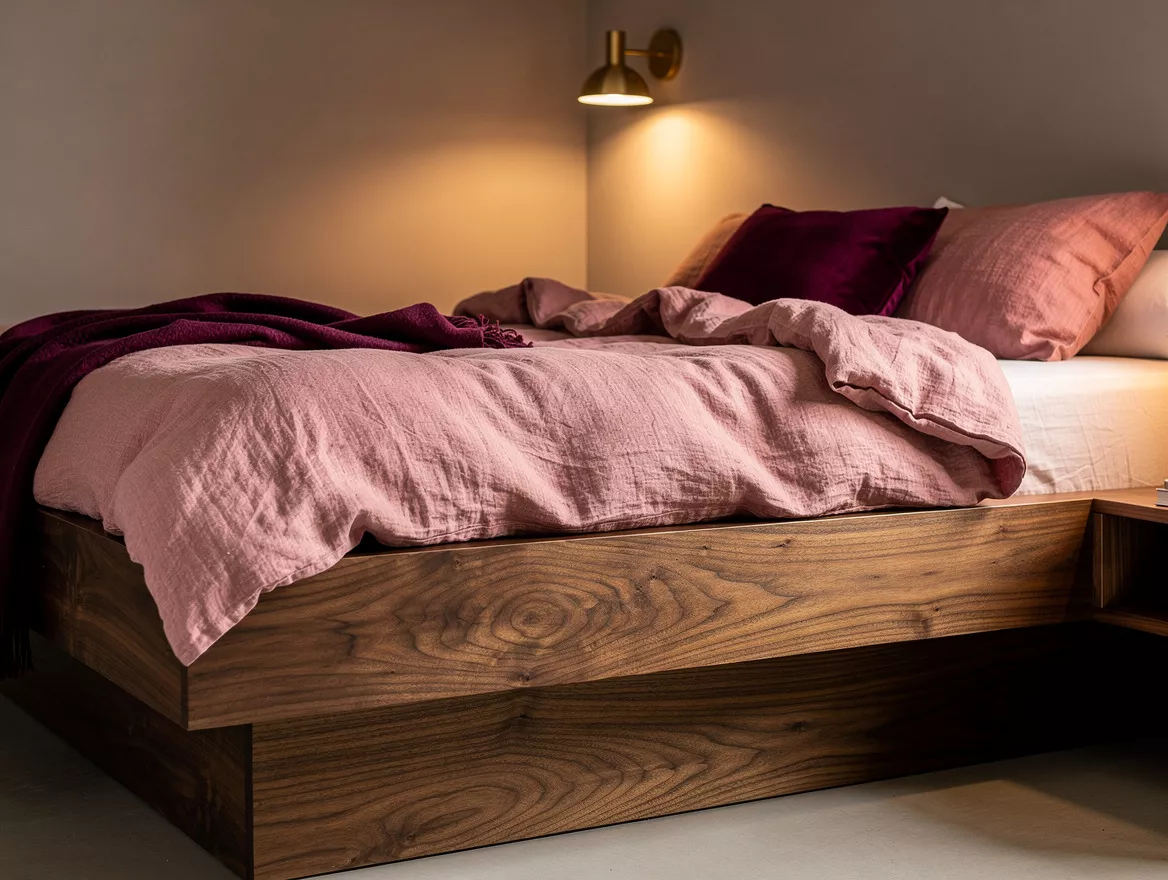
The low silhouette needs warmth, or the room can start to feel like a showroom. I favor an oak, walnut, acacia, or ash frame, with the grain doing quiet visual work around the mattress.
An oak platform with an oversized headboard or a wall-mounted wood panel makes the bed feel anchored without adding a tall, bulky structure. IKEA offers useful reference points for this restrained look, while Lowe’s can help source matching wood boards for a custom wall treatment.
Off-white linen bedding, a heavy cotton throw, and a paper or linen pendant keep the palette tactile. I would skip a bare black metal frame here, because its thin lines can make an already-low bed feel cold.
Soften the Frame for Reading in Bed
Couples often use the bedroom for reading, watching television, or talking before sleep, so comfort matters as much as proportion. A padded headboard gives both people a better backrest and reduces the hard echo that wood and plaster can create.
I look for performance upholstery in flatweave fabric, felt, chenille, or velvet, especially when pets or breakfast in bed are part of daily life. Removable or cleanable covers are worth prioritizing over a delicate fabric that demands constant caution.
Around $1,200 is a typical price point for a substantial upholstered queen platform from a direct-to-consumer brand, though materials and construction can move that figure considerably. Wayfair and Target are useful places to compare fabric tones, while the bed itself should earn its space through sturdy rails and reliable slats.
Create a Floating Base With Shadow
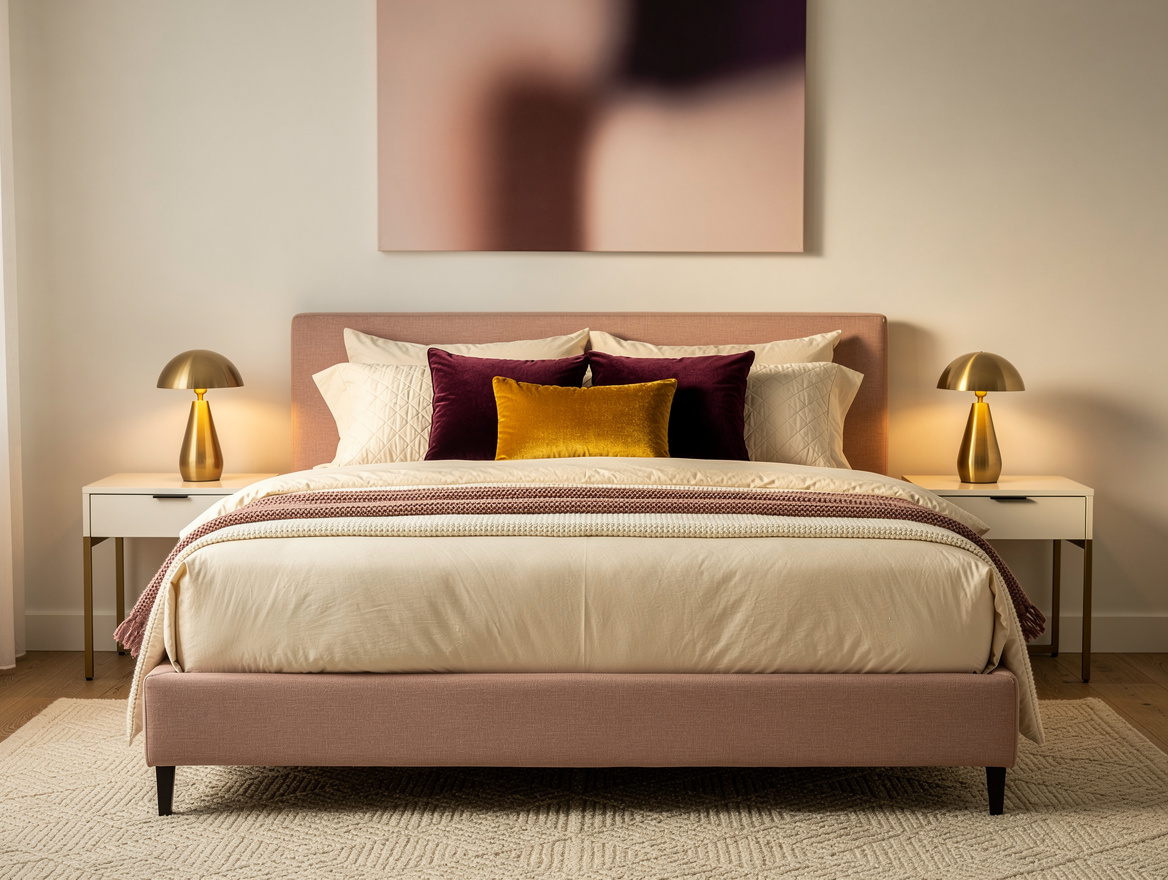
The floating effect comes from a recessed base, concealed legs, or a platform that extends beyond a smaller support structure. The eye reads the dark gap beneath the bed as shadow, which makes the room feel wider.
I like walnut veneer or smoked oak for this approach, paired with a slim rug that stops short of hiding the base. A black-stained ash frame can also work, but it needs warm bedding and softer lighting to keep the composition from becoming severe.
Keep the under-bed area visually quiet. A solid deck or closely spaced wood slats give the bed a finished appearance, while plastic bins and exposed storage undo the architectural quality immediately.
Layer Light Without Crowding the Bed
A low bed already creates a strong horizontal line, so lighting should rise from the wall instead of filling the nightstands. I use a pair of wall sconces with adjustable shades, leaving each partner a clear surface for a book, water glass, or phone.
Choose warm bulbs, soft linen shades, or a paper pendant to keep the room gentle after dark. Amazon and Home Depot carry many fixture styles, but the important detail is placement: the light should fall over the shoulder, not directly into either person’s eyes.
Finish with a tonal rug, restrained artwork, and two narrow floating nightstands. Cream, taupe, clay, olive, charcoal, and deep blue all suit the boutique-hotel direction, provided the room keeps one dominant wood tone.
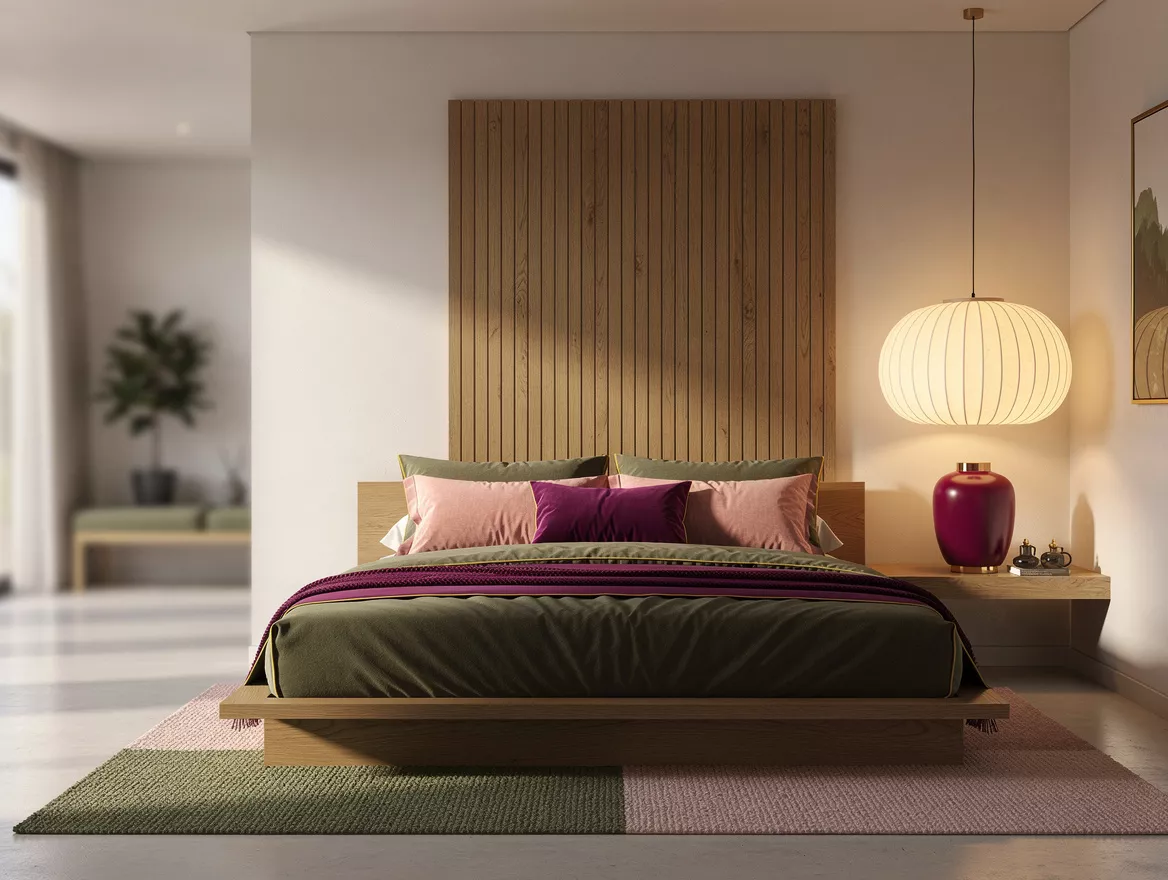
Measure the room, mark the queen footprint with painter’s tape, and test the walking paths before choosing a frame. That simple floor plan will tell you whether to pursue an ultra-low Japanese-inspired look or the more comfortable height of a practical platform.
Mia Carter writes about small-space living and budget home makeovers. She has restyled three rentals and tests most ideas in her own 45 sqm flat.