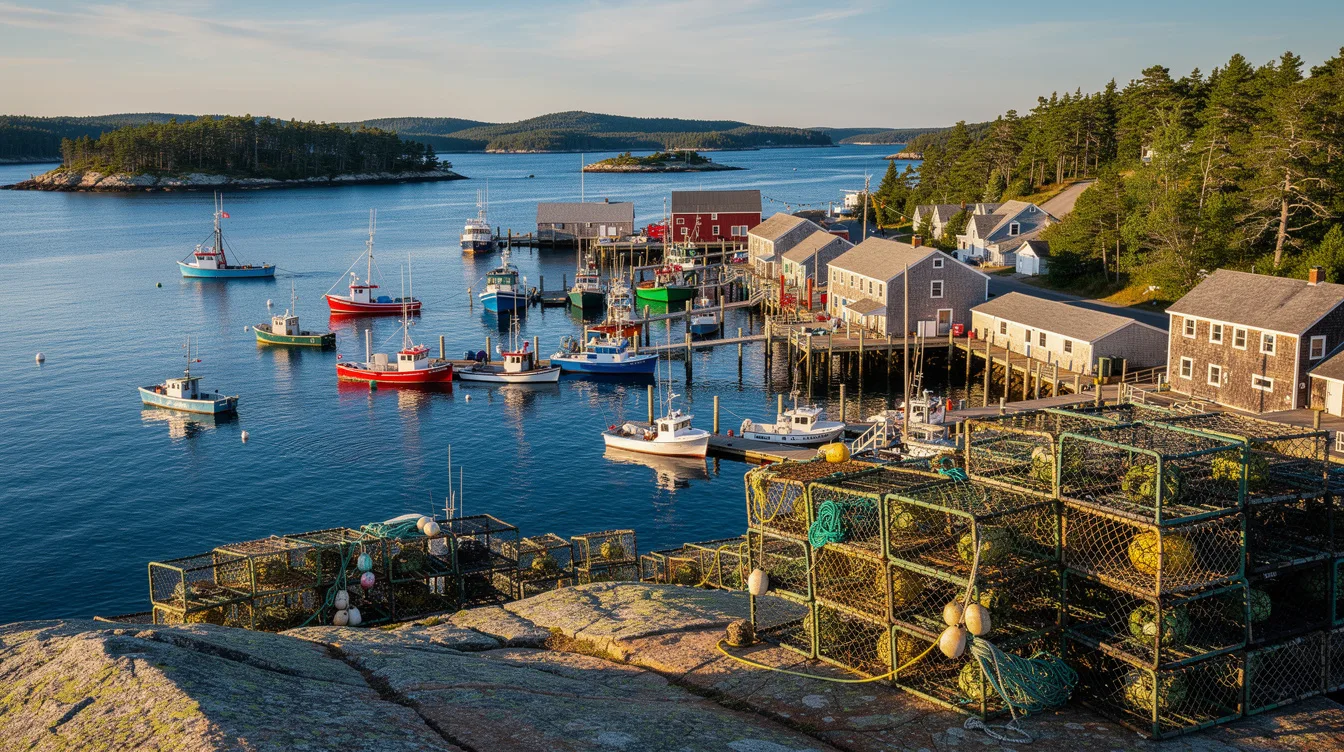
And Stonington is where Maine’s lobster industry still meets the visiting public. At the southern tip of Deer Isle, this small Hancock County town is presented as the state’s principal lobster landing port, and its waterfront remains a working place.
But the harbor isn’t scenery arranged for visitors. Fishing boats, lobster traps, piers, and businesses tied to the sea still shape the shoreline. You can walk beside the water and feel the difference between a pretty harbor and one that earns its keep.
The harbor is the reason to come
And the working waterfront gives Stonington its strongest character. The boats and docks belong to the fishing economy first, so visitors see a town at work rather than a coastal display built around them.
But the setting still rewards a slow walk. From the harbor, you can look across Penobscot Bay, with rocky shorelines, wooden village buildings, and the pale Atlantic haze that gives this part of Maine its subdued summer mood.
You’ll find small shops, galleries, and seafood businesses around the village. The town feels quieter and less urbanized than the better-known areas around Bar Harbor, though that calm comes with fewer services.
Stonington’s past still shapes its scale
And the town was incorporated in 1897, a date that helps explain its settled, working character. Stonington isn’t a new resort town with an old-looking center; its identity grew from the harbor and the communities around it.
But you don’t need a museum itinerary to notice that history. Continue through the village and you’ll encounter Burnt Cove, Oceanville, Green Head, and Clam City within the town’s wider territory.
The town had 1,056 residents in the 2020 census. That small population keeps the place intimate, but it also means restaurant tables, rooms, and basic services can become limited during the summer season.
Main Street leads toward the water
And Main Street is the natural starting point for exploring Stonington. You can pair a harbor walk with local shops, galleries, and views toward the islands without needing an ambitious plan.
But the village rewards attention more than speed. Stop where the road meets the waterfront, watch the boats, and let the smell of salt air and seafood replace the usual pressure to keep moving.
You should also look for the Stonington Opera House, a local venue for performances, films, and cultural events. It adds another side to the town, where fishing remains central but art has found a lasting place beside it.
Can you reach an island from Stonington?
And Isle au Haut is accessible by ferry from Stonington, giving you a way to extend the trip beyond Deer Isle. The island connects with a wilder coastal setting and part of the Acadia National Park network.
But you’ll want to check the ferry details before building your day around it. The research confirms access from Stonington, though it doesn’t provide a sailing schedule, fare, or crossing time.
You can also kayak, sail, or arrange coastal observation around Deer Isle. The surrounding archipelago makes the water part of the experience, although conditions and availability will determine how much you can do.
How do you get there?
And you’ll reach Stonington from the mainland by following ME-15 across the Deer Isle-Sedgwick Bridge. The town sits about 159.7 miles northeast of Portland, Maine, or roughly 257 kilometers.
But that distance is part of the appeal. The drive takes you away from Maine’s busier coastal centers and toward a slower harbor where lobster boats still define the view.
Plan ahead for the summer season, especially if you need lodging or a restaurant reservation. Stonington has fewer services than Portland, Camden, or Bar Harbor, and that limitation is easy to feel once the day’s visitors arrive.
You’ll come for the lobster port, then stay for the quieter rhythm around it. By evening, the harbor’s working boats sit against the gray-blue water, and the town feels most itself beside the docks.